REVIEW · PAMUKKALE
Private Tour to Pamukkale, Hierapolis Ancient City, Laodicea Ancient City
Book on Viator →Operated by Turkey Experiences · Bookable on Viator
Three ancient cities in one long day. The private trip strings together Pamukkale, Hierapolis, and Laodicea with door-to-door transport, a guided plan, and enough freedom for the best part: the white travertines. If you get Enver as your guide, you’ll likely appreciate how smoothly he keeps the day moving and explains what you’re looking at.
What I like most is the logistics for a first-timer: hotel or airport pickup, a flight between Istanbul and Denizli (depending on your option), then private driving for the rest. You also get a proper pause in the middle of it all—guided ruins, then time to walk the travertines and take in the thermal pools area at your own pace.
One thing to consider: the schedule is packed, and the on-site time at each ruin is limited. That can make the day feel a bit like a hit list if you want to linger for photos and slower reading, especially around Laodicea and parts of Hierapolis.
In This Review
- Key Things to Know Before You Go
- How the Day Works: Flights, Hotel Pickup, and Private Timing
- Pamukkale Natural Park and the White Travertines: What to Do With Your Time
- Hierapolis Ancient City: Necropolis, Roman Baths, Gates, and the Big-Name Ruins
- Travertines Walking and Thermal Pools: Swim Options and Extra Fees
- Lunch, Karahayit Handcraft Workshop, and What That Stop Adds
- Laodicea Excavations: Artifacts, the Seven Churches Connection, and the Time-Limit Reality
- Valuing the Route: Why This Combination Makes Sense
- Price and What You’re Paying For at $173.37 Per Person
- Who This Tour Fits Best (and Who Might Want Another Option)
- Should You Book This Pamukkale, Hierapolis, and Laodicea Private Tour?
- FAQ
- How long is the private tour?
- Is hotel pickup and drop-off included?
- What happens if I’m starting in Istanbul?
- Are entrance fees and lunch included?
- Can I swim at Pamukkale, and is it included?
- Is there a vegetarian lunch option?
- Is this tour private or shared with other groups?
Key Things to Know Before You Go

- Private door-to-door transport from your hotel area (or airport, depending on option) to the Pamukkale region
- Hotel-to-airport-to-site flow: fly Istanbul ↔ Denizli, then you’re met and driven for the full day
- Major Hierapolis highlights on the same route, including Necropolis and the Roman Baths area
- Travertines time with a shoes-off walk down the white terraces during the paid sightseeing portion
- Laodicea Excavations with an archaeological focus plus its link to the Seven Churches of Revelation
- Lunch plus an extra stop after lunch that’s more about local materials and crafts than more ruins
How the Day Works: Flights, Hotel Pickup, and Private Timing

This is set up for one thing: you don’t want to spend a full day fighting buses or figuring out connections. Your start depends on your chosen option. If you’re coming from Istanbul, the day typically begins with pickup from your Istanbul hotel, then transfer to Istanbul airport for a flight to Denizli/Cardak. After landing, your private driver meets you at the terminal exit and drives you to Pamukkale.
Once you’re in the Pamukkale area, you meet your private guide and switch into full sightseeing mode. The tour length can run from about 7 to 16 hours, which tells you it’s a daylight-heavy plan—part sightseeing, part travel time, part eating and breaks.
The practical upside of private transport is control. You get a licensed guide working the route for you, plus a vehicle that stays with your group so you’re not coordinating your own moves. The tradeoff is the day is planned down to the hour, so you’ll feel the clock at multiple stops.
You can also read our reviews of more city tours in Pamukkale


Pamukkale Natural Park and the White Travertines: What to Do With Your Time
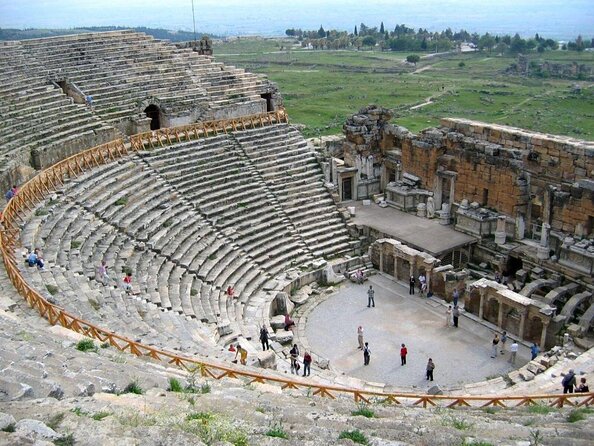
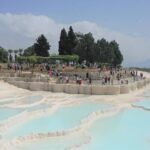
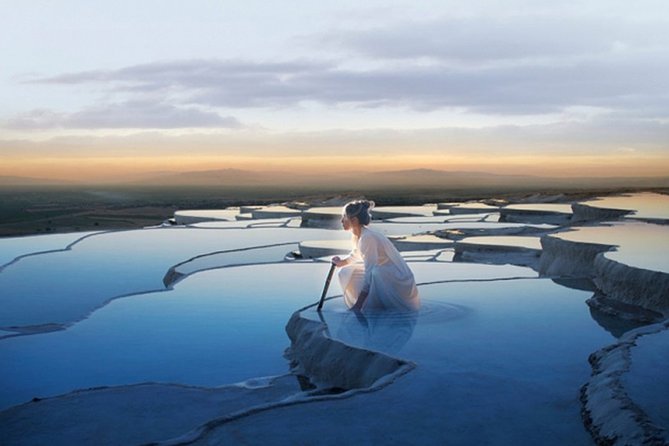
Pamukkale’s white terraces are the headline, and this tour schedules both guided and free time around them. After pickup in the Pamukkale/Karahayit area, you head to the Pamukkale Natural Park. Expect a mix of walking, viewpoints, and that signature feel of climbing and descending across the terraces.
You’ll then move into the Hierapolis segment and later get another stretch dedicated to the travertines. The key moment is the free time—about 75 to 90 minutes—when you can explore the natural area and even swim in the travertines. After that, you rejoin your guide for walking on the terraces from up to down without shoes and socks, using the “white travertines” walking route.
A small practical tip: pack shoes you can quickly remove and re-wear, and plan for damp footing. Your feet and socks will be part of the plan, so don’t treat this like a normal museum day.
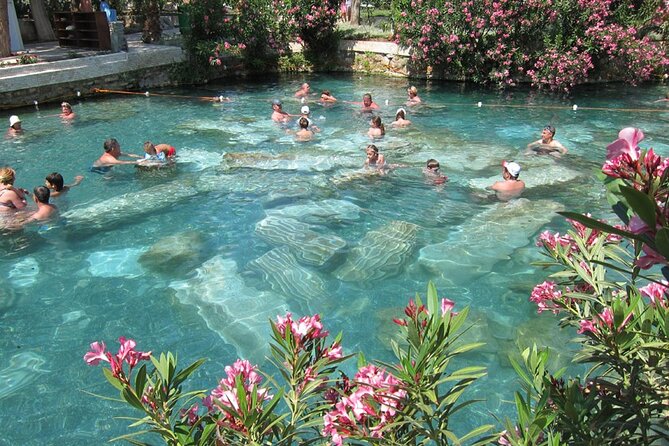
Also watch the swim details. The tour data says the ticket for swim at Ancient Pool / Cleopatra’s Pool is not included, even though you’ll have time where swimming in the white travertines area is part of the experience. If those specific pools matter to you, confirm what access you’re covered for before you go.
Hierapolis Ancient City: Necropolis, Roman Baths, Gates, and the Big-Name Ruins
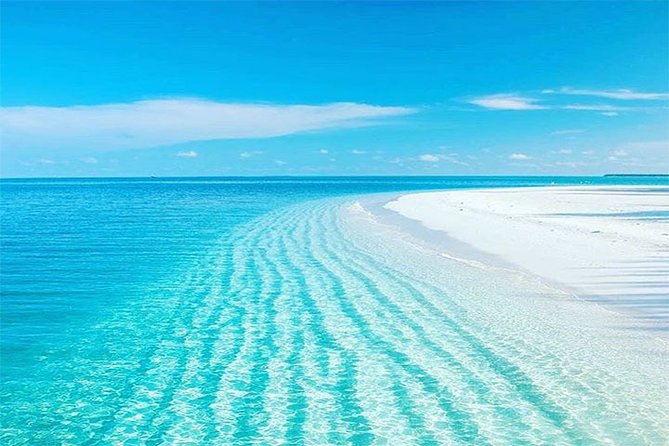
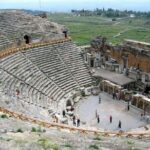
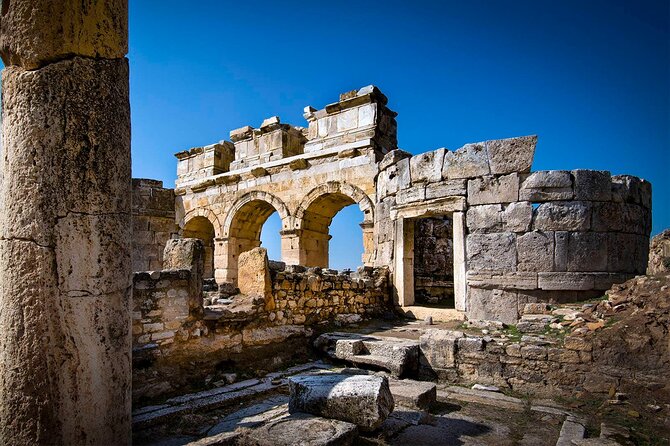
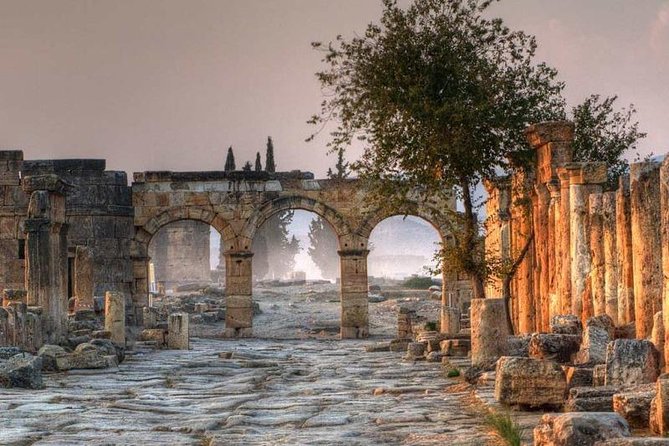
Hierapolis is where you’ll feel the most “Roman city” energy, and the tour gives you a long list of stops packed into the sightseeing block. The guide works you through major areas such as the Necropolis, Roman Baths, Domitian Gate, Latrina, Oil Factory, Frontinus Street, Agora, Byzantium Gate, Triton Fountain, Cathedral, Apollon Temple, Plutonium, Theater, and the Antique Pool.
That’s a lot of pieces, and the value here is that they’re connected in one route. Instead of hopping around the site on your own, you get the “what is this and why it mattered” context attached to the architecture you’re seeing.
What to focus on while you’re there:
- The Necropolis: it’s part of why Hierapolis feels like a living history museum. Look for how tombs and memorial spaces spread through the city’s layout.
- Roman Baths and the water story: Pamukkale’s thermal setting makes the baths feel more than decorative. It’s one of those places where the environment shaped daily life.
- Gates and major monuments: Domitian Gate and the other entrances help you understand how people moved through the city. Even if you only glance, you’ll likely spot the logic of the layout.
Time is the balancing act. This Hierapolis block is listed as about 1 hour for the stop, so you’ll be hitting highlights rather than staying long enough for deep reading at every point. If you love slow archaeology photos and lots of interpretation, build in the idea that this tour prioritizes seeing more different locations rather than spending one hour per monument.
Travertines Walking and Thermal Pools: Swim Options and Extra Fees
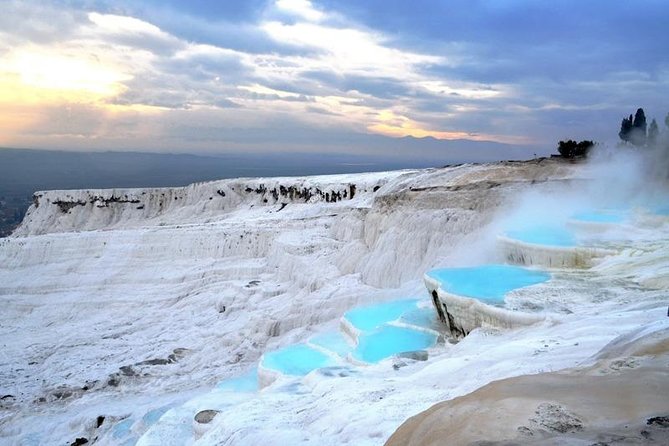
After Hierapolis, you’ll head back to the travertines area for the “hands-on” portion of Pamukkale. This section matters because it’s the easiest part to remember later: the white terraces, the warm-water vibe, and the famous step-down walk.
You’ll have 1 hour 30 minutes allocated here, split between free time (about 75 to 90 minutes) and guided walking (the shoes-off portion). It’s one of the best uses of your day because you’re not just looking—you’re moving across the terraces and getting that tactile feel of the place.
Here’s the key money detail: the tour says the ticket for swim at Ancient Pool / Cleopatra’s Pool is not included. That means you might still be able to swim in the travertines during your free time, but if you want the specific named pools, plan on paying separately.
If you’re traveling with limited time tolerance, this is worth thinking through. Decide early whether a special pool ticket is a priority, or whether the terrace walking and general swimming time is enough.
Lunch, Karahayit Handcraft Workshop, and What That Stop Adds
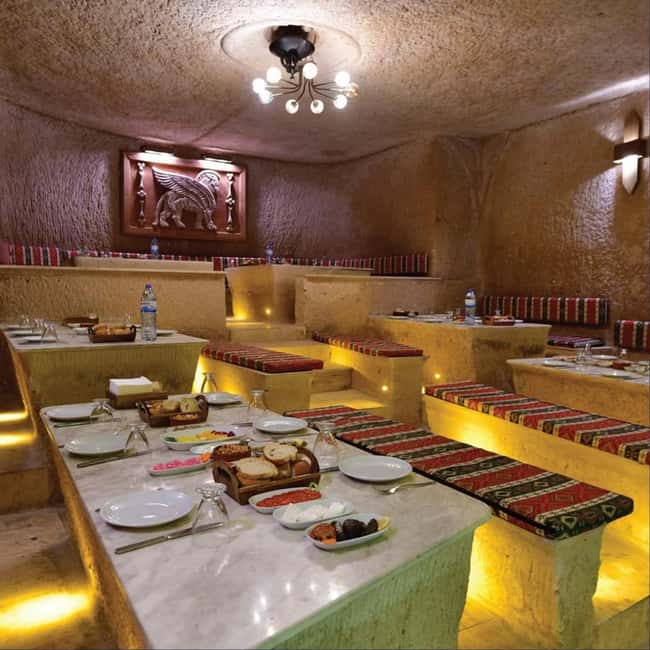
Between ruins and travertines, you’ll get a traditional Turkish lunch at a restaurant stop. The lunch is included, and it’s scheduled as about 1 hour.
Right after lunch, you’ll stop in Karahayit for a traditional handcraft workshop and a short lecture about stones/metals associated with the Pamukkale area. The tour lists this as 30 minutes, and it’s clearly meant to add a local-material angle to the day—how the region’s features connect to products and craft.
This is the part that can divide expectations. If you came mainly for archaeology, you might find the workshop less satisfying than another long ruin stop. If you like learning how local materials translate into everyday objects, it can be a nice break from walking in heat and sun.





Laodicea Excavations: Artifacts, the Seven Churches Connection, and the Time-Limit Reality
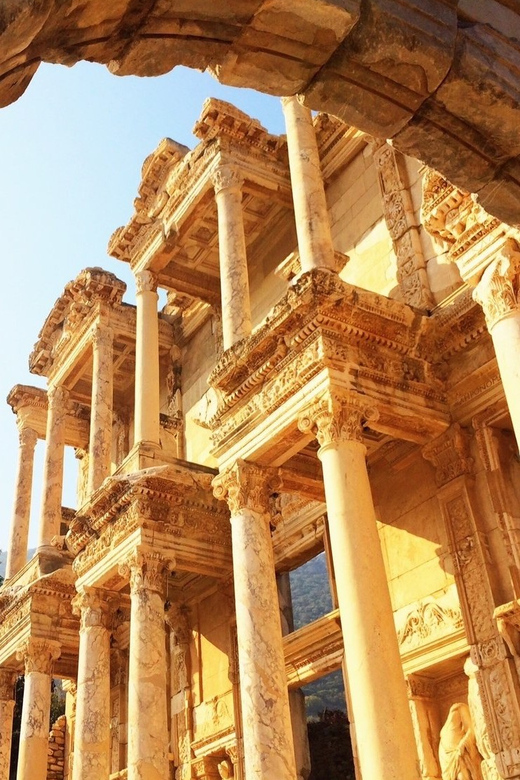
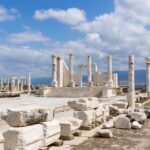
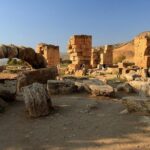
After lunch and the Karahayit stop, the day turns toward Laodicea through the excavations area. This is the more scholarly-feeling portion because it’s built around archaeology and artifacts rather than a single iconic structure.
Laodicea’s excavations have revealed artifacts dating from around 3500 BC to 3000 BC, which gives the site a long timeline. The name is tied to Seleucid history: it’s said to come from King Antiochus II naming the city for his wife Laodike in the 3rd century BC, during a thriving period. Later, it connects to Pergamum rulers, then Rome, then a later period of importance from the 4th to 6th centuries.
One extra layer you’ll hear on this tour is its link to the Seven Churches of Revelation. That matters because it changes the way you interpret what you’re seeing. Even if the ruins are fragments, you’re watching a site that held religious and political weight at different stages.
Your visit time here is about 1 hour, and that’s exactly where the “packed day” feeling comes from. Laodicea isn’t rushed because it’s unimportant. It’s rushed because the tour is trying to cover three major historic zones in one trip.
Valuing the Route: Why This Combination Makes Sense
Pamukkale on its own is already a full day for many people. Add Hierapolis and Laodicea, and suddenly you’re taking on a lot of walking, plus the need for interpretation that helps you connect the dots.
This tour’s value is how it groups related areas:
- Pamukkale gives you the natural wonder and thermal setting.
- Hierapolis shows you the Roman/Byzantine-era layers tied to that thermal landscape.
- Laodicea gives you a separate archaeological story and a religious-cultural connection.
Because this is private, you can ask your guide simple “why” questions while you’re standing in front of gates, baths, and excavation areas. And because transportation is handled, you’re not spending your best energy trying to figure out schedules.
Price and What You’re Paying For at $173.37 Per Person
At $173.37 per person, you’re paying for more than sightseeing. You’re paying for:
- a licensed private guide
- hotel/airport pickup and drop-off
- fully air-conditioned private transportation
- entrance fees
- lunch
- and, depending on your option, flight tickets between Istanbul and Denizli
It’s not a “cheap bus tour” price. But in Turkey’s Aegean region, the combo of flights plus private driving plus guided entry fees usually costs more than people expect.
So what do you get for your money? The biggest value is time saved. Instead of planning travel yourself, you’re handed a structured day that compresses the three-site experience into a single booking.
There’s also the practical benefit of smaller-group flow. With private transport, you tend to lose fewer minutes dealing with confusion, long waits, or multiple transfers.
If you’re the kind of traveler who wants a slower pace at each archaeological stop, you might decide the price is still fair but that you’ll need to be okay with the time-limit nature of the itinerary. If you want to see the breadth—Pamukkale plus two major historic cities—this pricing can feel like good tradeoffs.
Who This Tour Fits Best (and Who Might Want Another Option)
This tour works well for you if:
- you want private transportation and pickup from your hotel or airport
- you prefer a guide who manages the route so you’re not coordinating the day yourself
- you want to see Hierapolis and Laodicea without committing to multiple long transfers
It may feel less ideal if:
- you hate strict schedules
- you want long, unhurried time at one ruin site
- you’re hoping for a purely travertine-only day without workshop or lunch stops
Physical comfort matters too. The tour notes moderate physical fitness. You’ll be walking across uneven terrain, climbing and descending terraces, and spending time on your feet.
Should You Book This Pamukkale, Hierapolis, and Laodicea Private Tour?
I’d book it if your goal is maximum historical variety plus the signature Pamukkale travertines, all with private help and transport. The structure makes sense: Roman-era Hierapolis highlights, a focused travertine walking-and-swimming window, then an archaeological stop at Laodicea tied to later Roman and religious tradition.
I would not book it if your ideal day is slow and deeply archaeological, with long stays at fewer sites. Because the schedule is designed to cover three big destinations, you’re more likely to feel “see the highlights” than “live in the details.”
If you do book, plan your priorities: decide whether the specific Ancient Pool / Cleopatra’s Pool swim ticket is worth adding for you, and come ready for a long day of standing and walking.
FAQ
How long is the private tour?
The tour duration is listed as 7 to 16 hours (approx.). The exact length depends on which option you choose and your flight timing.
Is hotel pickup and drop-off included?
Yes. The tour includes hotel or airport pick-up and drop-off, plus private transportation in a fully air-conditioned, non-smoking vehicle.
What happens if I’m starting in Istanbul?
For options that depart from Istanbul, you’ll be picked up from your Istanbul hotel, transferred to Istanbul airport, fly to Denizli/Cardak, then be met by a private driver and driven to the Pamukkale area for the tour.
Are entrance fees and lunch included?
Yes. Entrance fees and lunch are included in the price.
Can I swim at Pamukkale, and is it included?
You’ll have free time (about 75 to 90 minutes) to explore and swim at the white travertines. However, the ticket for swim at Ancient Pool / Cleopatra’s Pool is not included.
Is there a vegetarian lunch option?
Yes. A vegetarian option is available. You’ll need to advise the provider at booking if you want it.
Is this tour private or shared with other groups?
It’s a private tour/activity. Only your group participates, and a minimum of 2 people is required per booking.