REVIEW · PAMUKKALE
From Antalya or Kemer: Full-Day Pamukkale & Hierapolis Tour
Book on GetYourGuide →Operated by Akhilleus Tourism · Bookable on GetYourGuide
Pamukkale feels like walking on moonlight. This full-day trip pairs the surreal cotton-white terraces of Pamukkale with the Roman-scale ruins of Hierapolis, plus an open buffet lunch. I especially like the hotel pickup/drop-off and the guided time at both sites, which saves you from guessing your way around. The main trade-off is simple: it’s a long day with big bus time, and you’ll likely pay entrance fees on the spot.
Here’s the thing: Pamukkale isn’t just pretty from a distance. You’ll actually get a walk on the calcium-rich travertines, and that changes the whole experience. Then you pivot into history at Hierapolis, where the Roman Theater and necropolis help you picture what a thermal resort city was like in ancient times. If you want maximum comfort, and you need short travel days or step-free access, you should think twice.
In This Review
- Key things to know before you go
- Pamukkale’s white terraces: Cotton Castle walking tips and best moments
- Hierapolis ruins and the Roman Theater: what your guided hour gives you
- Cleopatra’s Antique Pool: optional swim, extra cost, and closure reality checks
- The 14-hour day: Antalya travel time, break rhythm, and comfort
- Price and value: what you pay vs. what you’ll still pay on site
- Lunch at Pamukkale: included buffet plus the drink reality
- Practical tips that make this tour smoother
- Who this Pamukkale and Hierapolis day trip suits best
- Should you book this tour?
- FAQ
- How long is the Pamukkale & Hierapolis full-day tour?
- What’s included in the price?
- Are entrance fees included?
- Is lunch included, and what kind of lunch is it?
- Can I swim at Cleopatra’s Pool?
- Where do I meet the tour if I’m staying in Antalya’s Old Town (Kaleiçi)?
Key things to know before you go
- Pamukkale barefoot walk: You’ll be able to step onto the warm travertines, so treat your feet like part of the itinerary, not an afterthought.
- Skip-the-line entrance: There’s a separate entrance, which helps on crowded days.
- Hierapolis guided hour: You get a real walkthrough of the big sights, including the Roman Theater and the necropolis area.
- Cleopatra’s Pool is optional and not guaranteed: Swimming costs extra, and there have been reports of closures or access issues.
- Long coach day, planned breaks: Expect multiple stop-and-stretch moments, including a breakfast break in the Korkuteli area.
- Open buffet lunch is included: Food is covered, but drinks can cost extra.
Pamukkale’s white terraces: Cotton Castle walking tips and best moments
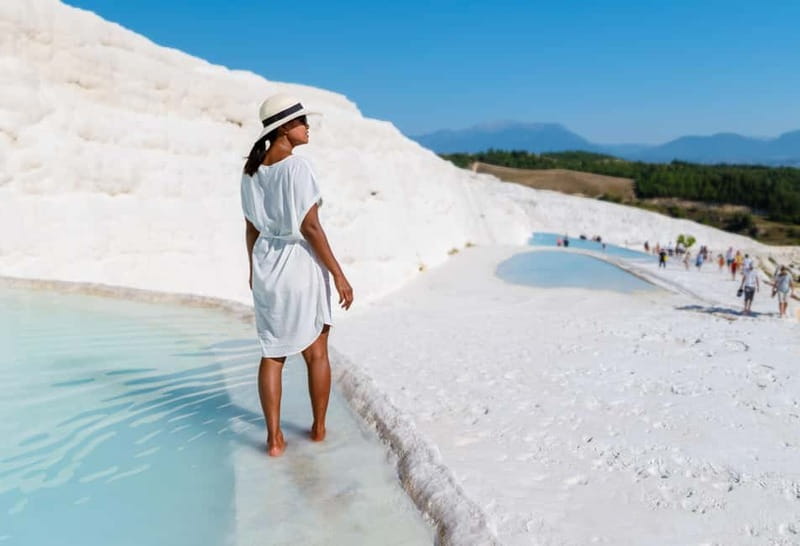
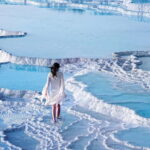
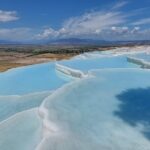
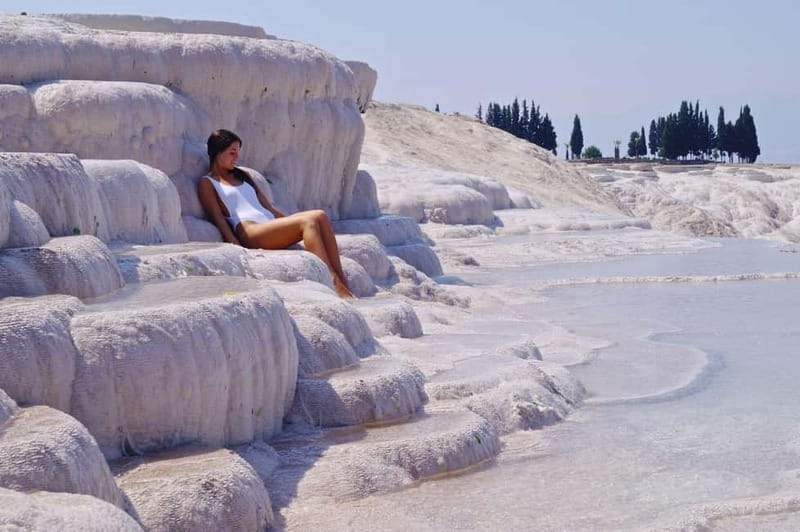
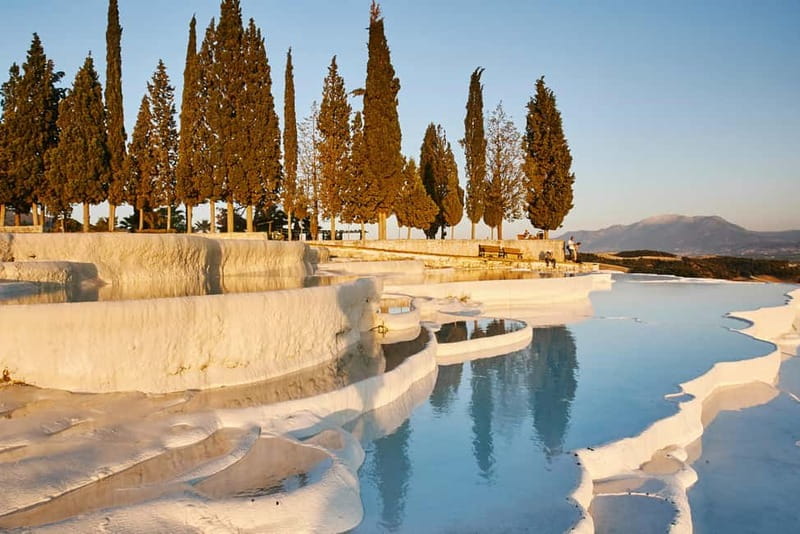
Pamukkale is famous for a reason: it looks unreal, especially the first time you see the bright white travertine “stairs.” These terraces form over time from thermal water rich in calcium, and the whole area is treated like a living monument. On your tour, you’ll have a guided segment plus time to explore on your own.
The big practical win here is the barefoot walk. You’re not just taking photos—you’re stepping onto natural formations that hold warm mineral water. Bring a camera you can handle one-handed, because you’ll want pics, and you’ll also want a calm moment to look back at the terraces without rushing your footwork.
One thing I suggest: plan for texture and crowds. The terraces can get busy, and the circulation can feel like a slow moving line. If you’re sensitive to heat or prefer controlled pacing, arrive ready to go slowly and keep your shoes off for as long as you feel comfortable.
Also, pack like you’re doing two activities in one: sightseeing and a light thermal soak. Your tour info calls out sunglasses, comfy clothes, and swimwear, and those aren’t just suggestions.
A few more Pamukkale tours and experiences worth a look

Hierapolis ruins and the Roman Theater: what your guided hour gives you
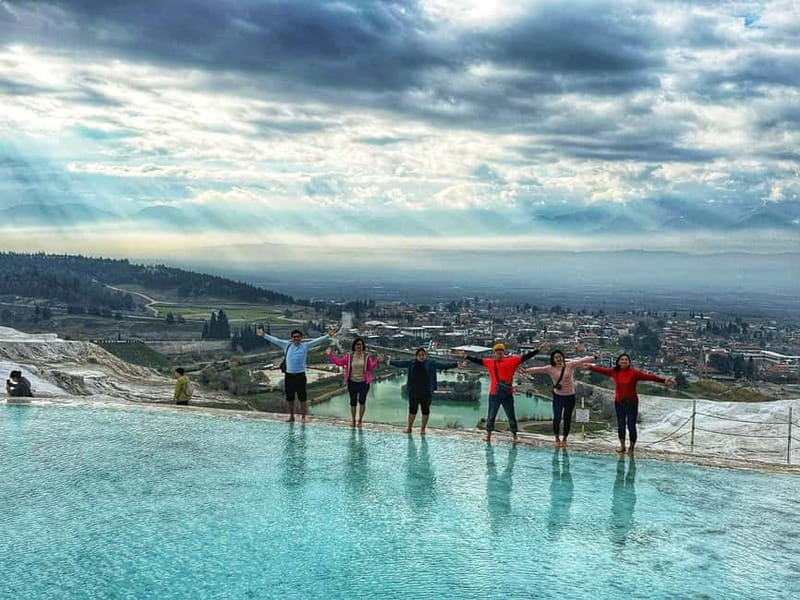
Hierapolis sits next to Pamukkale, so the transition from mineral-white “castle” to stone ruins is easy. Hierapolis was founded as a thermal spa area around the 2nd century BC, and the town grew into a major destination. That matters because the ruins aren’t random rock piles—you’re seeing a place designed around healing waters, trade, and public life.
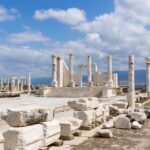
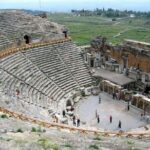
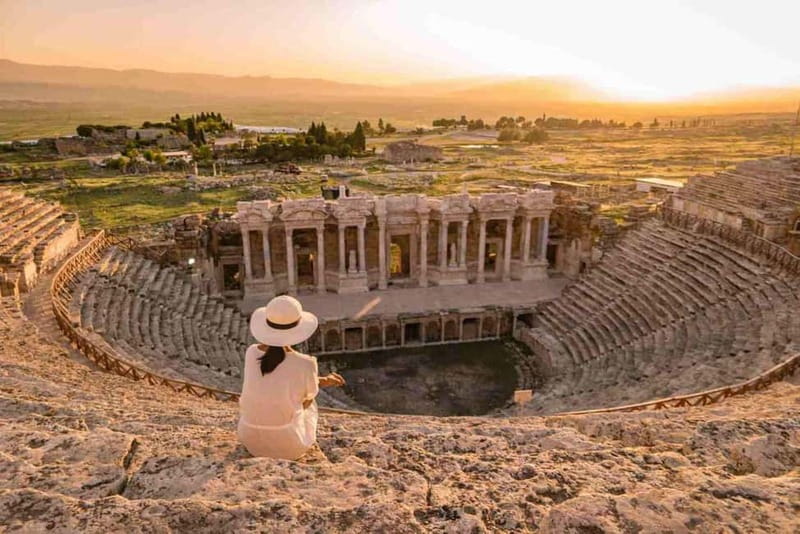
Your guided time focuses on the Roman Theater and the broader site areas, including the necropolis. The Roman Theater is the headline: it once seated over 12,000 spectators, and even today you can feel how “public” this city was. It’s the kind of spot where a good guide makes you look at angles and sections differently, not just where you stand for a picture.
Then there’s the necropolis area, described as one of the largest ancient cemeteries in Anatolia. Even if you don’t read every inscription, you can get the big picture fast: in a place like this, daily life wrapped around death rituals just like it does anywhere else. If you’re into Roman architecture and how cities were planned, you’ll get more from your hour here than you’d expect.
In the reviews, guides like Kaan, Inci, Apo, Ibrahim, Kan, and Enji come up repeatedly for clear explanations and patience. That lines up with what you want on a site this large: someone who helps you connect the dots without turning it into a lecture.
Cleopatra’s Antique Pool: optional swim, extra cost, and closure reality checks
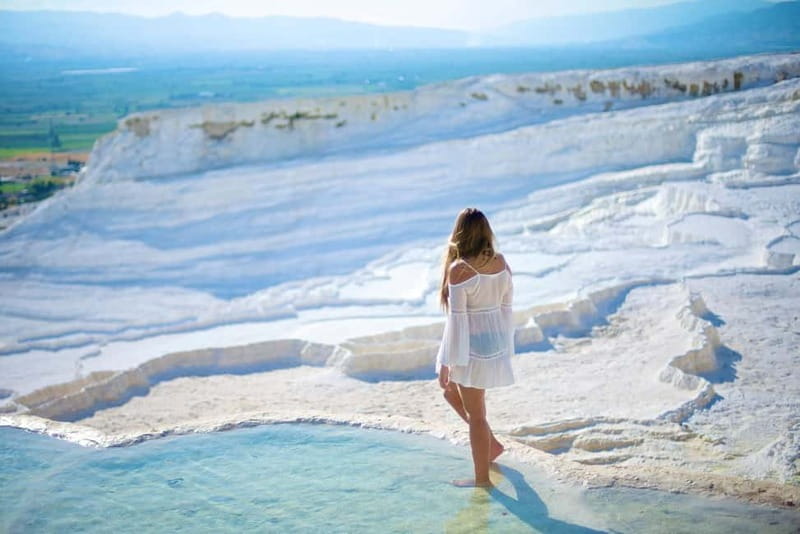
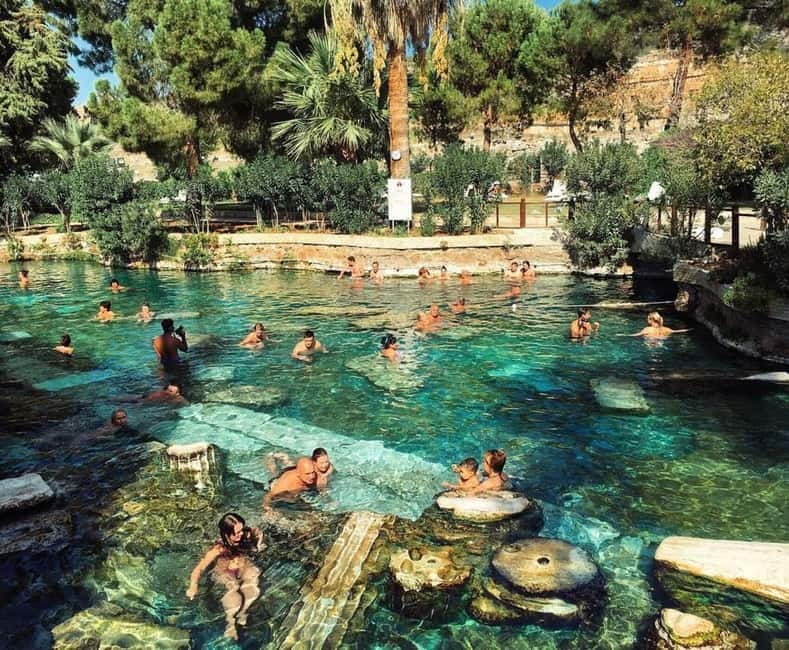
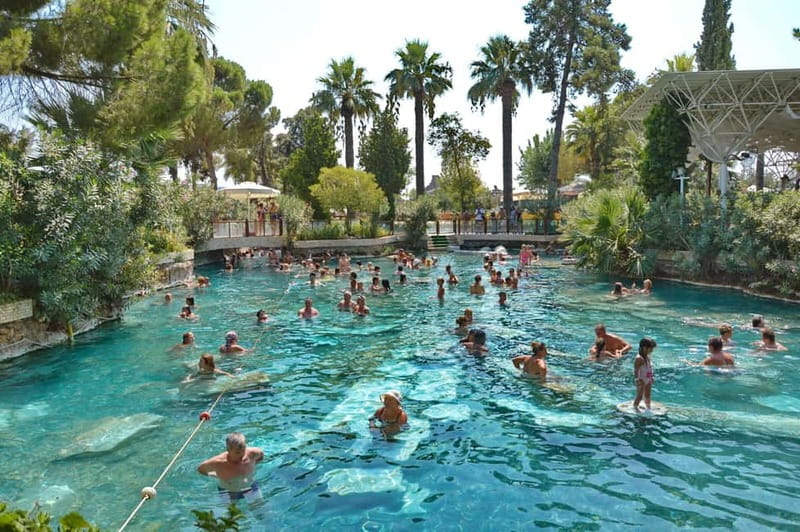
Cleopatra’s Pool is the famous one, also called the Antique Pool. The story is that Cleopatra swam there, and the pool area includes submerged marble columns from an earlier era. It’s a fun concept because it mixes a myth with a tangible physical setting.
On this tour, swimming is optional and comes with an additional fee. You also get a guided visit and time at the pool area, but the swim part is where you need to be flexible. A couple of recent experiences flagged two common issues: the pool may be closed for maintenance at times, and the on-site guidance about what you can do might not match what people hoped for.
So here’s my advice if this is a must for you: treat the Cleopatra’s Pool swim as a bonus, not a guaranteed feature. If the water access is limited, you can still enjoy the setting for photos and the historic context. But don’t assume you’ll pay for a swim and definitely get it.
What to bring is straightforward from the tour info: swimwear and a towel. If you can, also carry cash, because optional activities and entry-related add-ons can be paid on the day.
And if the site is crowded, remember this is a thermal pool setting, not a private spa. Expect people, lines, and lots of photo moments happening at once.
The 14-hour day: Antalya travel time, break rhythm, and comfort
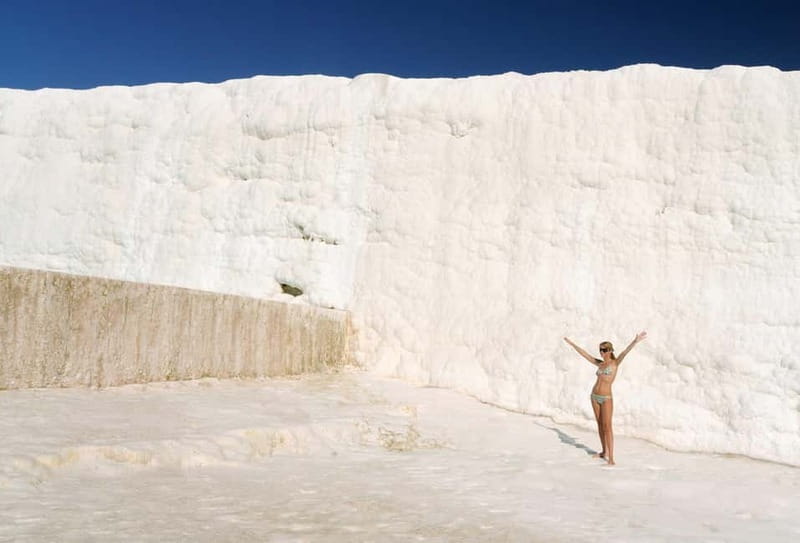
The itinerary runs about 14 hours, and most of that is the road between the coast and Pamukkale. The transfer is described as roughly 3 hours each way from Antalya to Pamukkale, and you’ll also feel the total time add up once you include the in-between stops.
Your coach day includes a few “reset” points that matter more than you might think. There’s a break in the Korkuteli area with breakfast time (about 45 minutes). There’s also a Denizli Province stop with a shopping and arts & crafts market visit (another 45 minutes), plus additional short breaks sprinkled through the schedule.
If you’re prone to motion sickness, this is where you’ll want to be prepared: bring water, keep hydrated, and try to get a seat where you can look forward. The vehicle is described as air-conditioned, which helps, but it’s still a long ride.
The Kemer and Antalya side pickup/drop-off also means you might share the day with people from different hotels and neighborhoods. It can feel efficient because everything is timed, but it can also mean the clock moves fast once you’re on the bus.
One review noted that pickup timing communication could be clearer, like getting a heads-up about exactly when the call happens. The practical fix is simple: confirm your pickup details as soon as you book, and don’t assume the only info you’ll get is on a ticket.
Price and value: what you pay vs. what you’ll still pay on site
At around $37 per person, this tour sells itself on value: round-trip transfers, a live English-speaking guide, insurance, and an open buffet lunch. You also get help with entry logistics via a separate entrance, which can cut friction at busy sites.
But the big cost item you should plan for is entrance fees. Entrance fees are not included in the listed price. In reviews, people mentioned an extra payment for entries, and one person specifically referenced roughly an extra €30. That doesn’t mean everyone pays the same amount, but it does tell you what to expect: you’ll want cash ready for tickets and any optional add-ons.
Drinks can also be a surprise. Lunch is included, but reviews say beverages can be pricey. So if you’re budgeting, eat what you want at the buffet, then buy drinks like you’re in a tourist zone—because you are.
Also keep in mind: you’re paying for a day that mixes two major stops plus a third optional stop, with time for guided walkthroughs. If you try to DIY this, the biggest savings you might imagine usually disappears into transport costs, entrance tickets, and time lost in logistics.




Lunch at Pamukkale: included buffet plus the drink reality
Lunch is an open buffet included in the tour, with about 1 hour on the schedule. This is one of those rare cases where the “included” part actually matters, because Pamukkale isn’t the easiest place to find a fast, convenient meal plan between walking activities and ruins time.
What to expect: typical Turkish buffet choices, enough variety to find something you can eat confidently, and a chance to sit down after the morning. If you’re planning to swim later (or even just change clothes), this is a good time to slow down and think through the order of operations.
The practical caution is that beverages aren’t necessarily priced like they are at home. Some reviews call out that drinks can cost a lot. If you want water, plan to buy it—or consider bringing a small amount if allowed and practical.
Practical tips that make this tour smoother
Meeting point rules matter. The tour notes that many Antalya hotels have privacy rules, so you meet at the main entrance gate, not the reception. If you’re staying in Antalya Old Town (Kaleiçi), buses can’t reach narrow streets, and you’ll meet in front of McDonald’s instead.
Bring the right stuff. The tour list is solid: comfortable shoes, sunglasses, swimwear, towel, camera, comfortable clothes, and cash. Even if you skip the swim, you’ll thank yourself for towel and swimwear if access conditions change and you end up wanting a quick dip.
Go easy on your feet. Pamukkale’s terraces are a barefoot experience. That means comfortable walking becomes part of your prep, and you should avoid shoes that make getting around difficult once you’re barefoot for the mineral-water sections.
Children and passports. If you’re traveling with kids, the tour info is specific: children must present a valid passport at museum entrances to verify age for free admission. Entry is free for children aged 0–8, which can make this a nice family day—if everyone is comfortable with a long coach ride.
Accessibility note. This tour is not suitable for people with mobility impairments. If you need step-free transport or limited walking, plan a different approach.
Who this Pamukkale and Hierapolis day trip suits best
This is a great pick if you want one organized day that hits the two headline sites: Pamukkale terraces and Hierapolis ruins. It also works well for people who don’t want to coordinate buses, ticket lines, and navigation on the day.
History lovers get real value from the guided hour at Hierapolis, especially around the Roman Theater and necropolis areas. And if you’re a “photo but also understand what I’m seeing” type, the guide’s role matters a lot.
It’s also a strong fit for families with young children (age rules allow free entry for ages 0–8), as long as the day’s length and walking style won’t be a problem.
Where it’s weaker: anyone who hates long drives, anyone who expects Cleopatra’s Pool swimming to be guaranteed, or anyone who needs strong mobility support.
Should you book this tour?
Book it if you want an efficient, guided day from Antalya that pairs a world-famous natural site with major Roman ruins—without the stress of arranging transport and entry on your own. The value is strongest when you count the included lunch, transfers, and guide time, not just the two headline stops.
I’d think twice if you’re going for Cleopatra’s Pool swimming as the main reason to come. The tour lists swimming as optional and sometimes access can change, so treat it as a bonus. And if your priority is a relaxed schedule with minimal bus time, this is more of a full-day mission than a slow Sunday outing.
If you’re willing to plan for entrance fees, bring cash and the right swim/walk gear, and enjoy a structured day with a good guide, this is a solid way to experience Pamukkale and Hierapolis in one go.
FAQ
How long is the Pamukkale & Hierapolis full-day tour?
The tour duration is 14 hours, including hotel pickup and drop-off from the Antalya region.
What’s included in the price?
Round-trip hotel transfers, an open buffet lunch, insurance, and a guide are included.
Are entrance fees included?
No. Entrance fees are not included, so you’ll need to budget for tickets on the day.
Is lunch included, and what kind of lunch is it?
Yes. You’ll have an open buffet lunch with about 1 hour scheduled.
Can I swim at Cleopatra’s Pool?
Swimming at Cleopatra’s Pool (Antique Pool) is optional. It’s listed as an additional fee, so it may not be included in what you pay upfront.
Where do I meet the tour if I’m staying in Antalya’s Old Town (Kaleiçi)?
If your hotel is in Kaleiçi and buses can’t access your street, the meeting point is in front of McDonald’s. Details are provided after confirmation.