REVIEW · PAMUKKALE
Pamukkale and Hierapolis Small Group Tour
Book on Viator →Operated by Moonstar Tour · Bookable on Viator
White cliffs beat the postcard. This small-group day threads Pamukkale travertines and Hierapolis ruins into one tight schedule with a real guide and included meals.
I like that you’re not stuck figuring out logistics: you get hotel pickup to an air-conditioned ride and admission coverage.
One thing to weigh: Cleopatra Pools swimming costs extra, and the day involves some solid walking on uneven ground.
You’ll feel the value in two ways. First, you get a structured route that mixes the hot springs vibe at Karahayit with the big sights at Hierapolis and the showpiece white terraces at Pamukkale. Second, you get a guided explanation in English, plus a local lunch included—so your day stays efficient instead of turning into a hunt for tickets, bus times, and meeting points.
The only drawback is timing and comfort. The tour packs several stops into about 6–7 hours, and you’ll be on your feet for a while, including time up at Hierapolis and walking over sharp-edged terraces at Pamukkale.
In This Review
- Key things that make this tour worth your time
- Why Pamukkale and Hierapolis work best with a guide
- Getting there smoothly: the 9:30 start and a tight 6–7 hour loop
- Karahayit hot springs: start with the warm mineral water
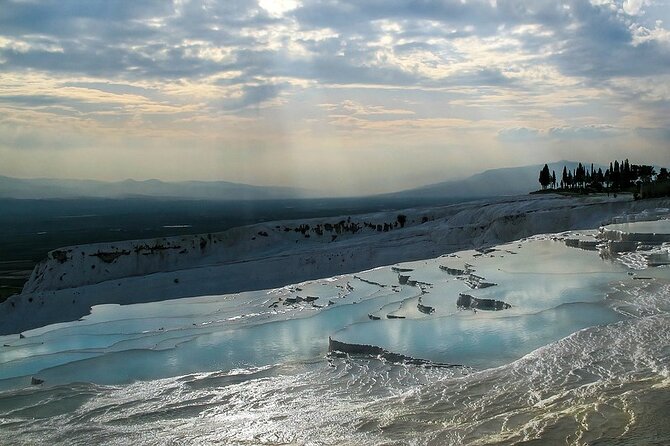
- Pamukkale Natural Park: walking the white travertine cliffs
- Hierapolis from the north gate: Roman ruins with named highlights
- Cleopatra Pools: optional antique swimming, separate ticket
- Pamukkale’s textiles and the short shopping stop
- Price and value: what $107 includes (and what it doesn’t)
- Who should book this Pamukkale and Hierapolis small-group tour
- Final call: should you book this tour?
- FAQ
- What time does the Pamukkale and Hierapolis tour start?
- Is hotel pickup included?
- How long is the tour?
- Is Cleopatra Pools included in the tour price?
- What’s included besides entrance fees?
- What’s the group size limit?
Key things that make this tour worth your time
- Air-conditioned van with hotel pickup and drop-off in Pamukkale, so you start relaxed
- Karahayit hot mineral water as a warm-up stop before the main Pamukkale sights
- Pamukkale Natural Park time on the white travertines, including a full hour at the cliffs area
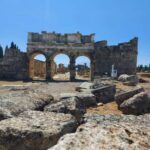
- Hierapolis ruins with a guided route through major landmarks like Frontinius Street and the Temple of Apollo
- Cleopatra Pools is optional, and you can choose whether to swim (extra entrance fee applies)
- A short shopping stop focused on Pamukkale’s textiles (and you may also see onyx items)
Why Pamukkale and Hierapolis work best with a guide
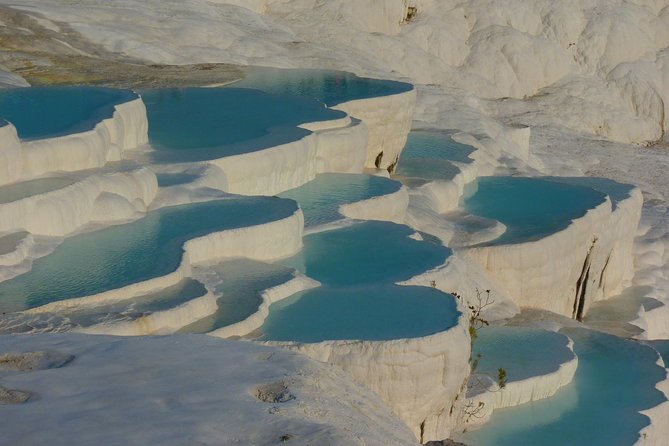
Pamukkale and Hierapolis are famous for good reason. The travertines look unreal until you’re standing near them, and the ruins around Hierapolis give you context for what you’re seeing beyond the views.
What makes a guided format practical is the pacing. You’re shown where to go first, then moved along before your time evaporates. That matters here because the ground changes quickly: smooth tourist paths near the terraces, rougher terrain in spots, and the uphill nature of the Hierapolis site.
I also like how the tour balances “wow” moments with interpretation. You don’t just get dropped at gates; you get an order to follow—north gate into the ancient city, then a route through the big named features, before finishing back at Pamukkale for the textile and onyx-style shopping stop.
You can also read our reviews of more tours and experiences in Pamukkale.


Getting there smoothly: the 9:30 start and a tight 6–7 hour loop
This trip runs from 9:30 am and typically lasts 6–7 hours. If you’re staying in Pamukkale, pickup is offered from any hotel in the area, and the guide will come to the reception about 15 minutes before the scheduled pickup time.
Two small logistics notes that make your day easier:
- Wear shoes you can handle for walking time, then plan for bare-foot exposure at Pamukkale on the drier terraces where sharp ridges can be painful. You’ll want to pace your steps.
- Keep a light plan for lunch timing. The day includes a local lunch, but the total schedule can still feel full, especially if your group moves slowly at the ruins.
Group size is kept to a maximum of 15 travelers, which is big enough to feel social but small enough that you’re usually not just herded through.
Karahayit hot springs: start with the warm mineral water

The first stop is Karahayit, known for rust-red hot mineral water. This stop works as a buffer. You’re warming up your body before you start the heavier walking of Hierapolis and then the travertine terraces at Pamukkale.
You’ll typically spend about 45 minutes here, including the included admission. The main value is how it changes your expectation for the rest of the day: you’re not only chasing scenery, you’re seeing the geothermal side of the region early.
Tip: If you’re the type who hates cold starts, this is a smart opening. But if you’re sensitive to heat, treat it as a short soak, not a spa hour.
Pamukkale Natural Park: walking the white travertine cliffs
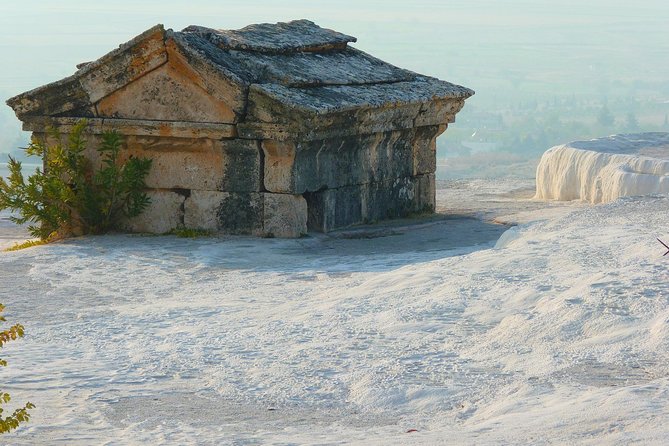
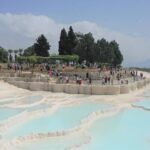
Next comes the big moment: Pamukkale Natural Park and the walk to the white travertines. You’ll spend about 2 hours in this area, and admission is included.
This is where people get starry-eyed—because the terraces really do look like someone painted white steps over the hillside. But the practical part is what you feel underfoot. On the drier parts, the mineral ridges can be sharp, and you may end up walking barefoot for sections. Plan on slow, careful steps and expect the “beautiful but slightly painful” reality that comes with rough travertine.
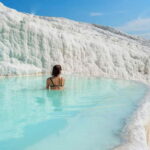
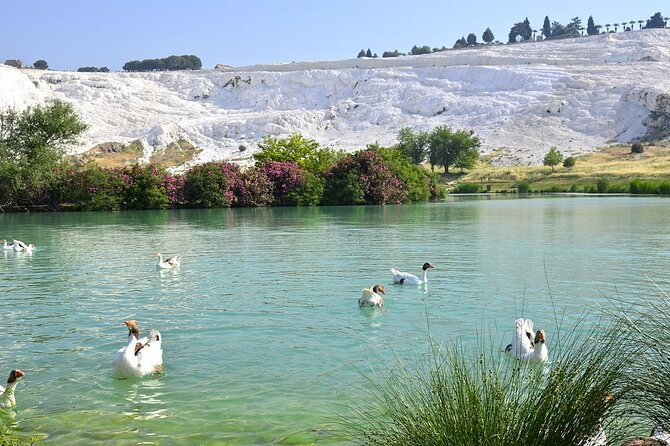
Why the timing helps: you get enough time not just for photos, but also for a real wander along the cliffs and the hot water zones. The tour includes about another hour to explore the cliffs and enjoy the hot waters on the terraces.
What to bring mentally:
- Take it slow. This isn’t a race through a museum.
- Bring water and a hat if you’re visiting in warmer months.
- If you’re going to swim later at Cleopatra Pools, think of Pamukkale as the terrain experience.
Hierapolis from the north gate: Roman ruins with named highlights

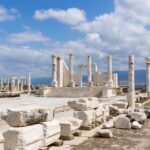
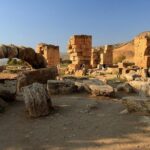
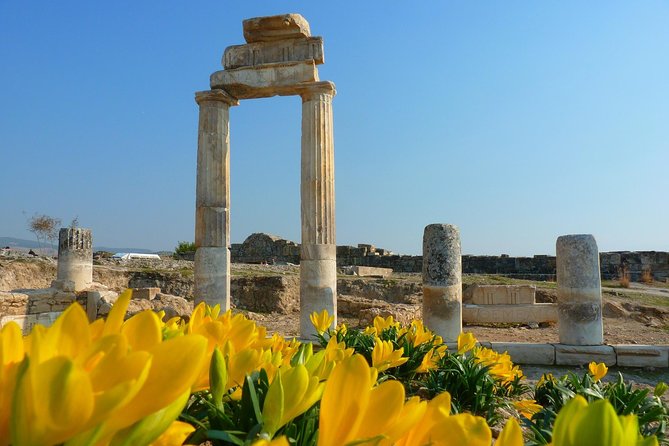
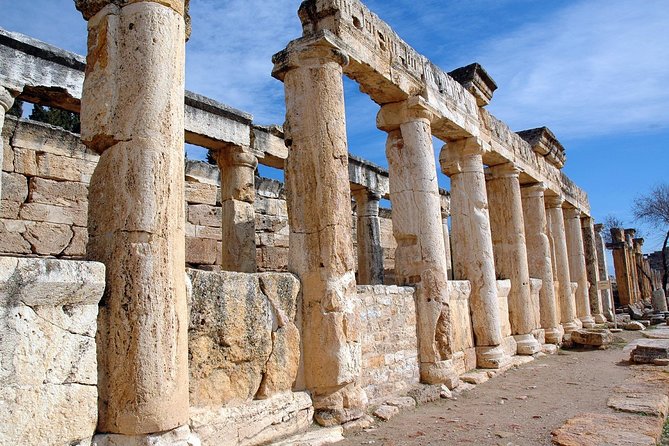
Then the day shifts from white terraces to ancient city bones. You’ll head to the north gate of Hierapolis and start exploring the ruins with guided stops that include:
- Necropolis
- Bath and Basilica
- Frontinius Gate and Frontinius Street
- Latrina
- Northern Byzantine Gate
- Fountain of the Tritons
- Temple of Apollo
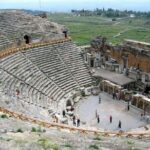
You’ll spend about 1 hour here. That time may sound short, but the ruins are spread and there’s some uphill movement—especially if you want to reach the more elevated areas like the theater zone.
This is one place where a guide really matters. Hierapolis can feel like scattered stones if you don’t get a route and context. With a guide, you’re more likely to recognize what you’re standing in front of—bath areas, gate systems, and major street layouts—rather than just ticking off ruins like a photo scavenger hunt.
Comfort note: If you know you’ll struggle with stairs or steep patches, plan for slower pacing and don’t be shy about asking the guide to pause.






Cleopatra Pools: optional antique swimming, separate ticket
After Hierapolis, you’ll reach Cleopatra Pools for about 1 hour. You can go just to look, but there’s also an option to swim in the antique pool.
Here’s the key practical detail: the Cleopatra Pools entrance fee is not included. So if you want to swim, budget for a separate ticket at the site.
This stop is worth it if you like the idea of combining story and setting—ancient water, not just modern pools. But don’t feel pressured. If you’d rather conserve energy after Pamukkale and Hierapolis, treat Cleopatra Pools as a scenic break.
If you do plan to swim, bring your swim gear and remember that you’re still in a walking-heavy day.
Pamukkale’s textiles and the short shopping stop
Toward the end, you’ll spend about 30 minutes back in Pamukkale for a textile-focused stop. The tour notes that Pamukkale is famous for textile products, and if the group agrees, you’ll see higher-quality items.
This part is quick, but it’s also where you can slow down and talk to shop staff—if you’re in the mood for souvenirs that feel connected to the area. If you’re not interested, use the time for a calm break, a final look around, or just to reset your feet.
Depending on your route that day, you may also see onyx showpieces mentioned as a shopping option elsewhere in the experience. Either way, keep your souvenir mindset practical: buy only what you’re happy to carry.
Price and value: what $107 includes (and what it doesn’t)
At $107 per person, this tour aims to be an efficient value play because you’re paying for more than just the sights.
What’s included:
- Entrance fees for Pamukkale & Hierapolis
- Modern vehicle with A/C
- Professional English-speaking guide
- Local lunch
- Pick-up and drop-off from your hotel in Pamukkale
What’s not included:
- Cleopatra Pools entrance fee
- Drinks
- Tips
A quick reality check: entrance fees in Turkey’s top sites can be expensive, and that’s part of the cost profile of any guided package. The upside of paying for the tour is that you’re also covering the guide time, transportation, parking/operational costs, and the fact that your day is routed so you don’t lose hours between stops.
If you’re the kind of traveler who loves DIY planning, you might be tempted to do Pamukkale and Hierapolis on your own. But if you’d rather spend your energy on the terraces and ruins—not bus schedules and ticket lines—this package is built for that.
Who should book this Pamukkale and Hierapolis small-group tour
This tour fits best if you want:
- A single-day plan that hits Pamukkale and Hierapolis without transfers stress
- Guided context while you’re walking around a big, spread-out ruin site
- Included lunch and included admissions so you don’t juggle ticket stops
It’s also a solid match for couples, friends, and solo travelers who want small-group energy without going fully private.
It might be less ideal if:
- You want lots of free time with zero structure
- You strongly dislike walking on uneven terrain or being barefoot for parts of Pamukkale
- You’d rather skip the guided format to shop around for the cheapest entrance options
Final call: should you book this tour?
I think you should book it if you want a smooth, guided day where Pamukkale and Hierapolis actually connect into a coherent route. The included admissions, hotel pickup, air-conditioned transport, and local lunch are the core value, and the small group size keeps things from feeling chaotic.
I’d hesitate if you’re on a tight budget for activities beyond basic entry, because Cleopatra Pools has an extra fee, and the walking demands at Pamukkale are real. Still, if you go in prepared—water, careful steps, and realistic expectations—this is one of those days where the effort pays off quickly.
FAQ
What time does the Pamukkale and Hierapolis tour start?
The tour starts at 9:30 am.
Is hotel pickup included?
Yes. Pickup is offered from any hotel in Pamukkale, and you should be ready at your hotel reception about 15 minutes before the pickup time.
How long is the tour?
It runs for about 6 to 7 hours.
Is Cleopatra Pools included in the tour price?
No. You can visit Cleopatra Pools for about 1 hour, but the entrance fee is not included in the tour price.
What’s included besides entrance fees?
You’ll get transportation in an A/C vehicle, a professional English-speaking guide, local lunch, and pick-up and drop-off in Pamukkale. You’ll also receive a mobile ticket.
What’s the group size limit?
The tour has a maximum of 15 travelers.