REVIEW · ISTANBUL
Byzantion Walk Path and City Walls of Istanbul
Book on Viator →Operated by Taha Guide of Turkiye · Bookable on Viator
In This Review
- A walking route with power and purpose.
- Key highlights before you go
- Why the Byzantion Walk Path is worth your morning
- Stop 1: Yedikule and the Golden Gate area
- Stop 2: Silivrikapı’s Byzantine gate details
- Stop 3: Mevlanakapı and the Theodosian Walls system
- Stop 4: Chora Museum mosaics and frescoes (the indoor payoff)
- Price and value: what $372.07 really means
- Timing, meeting point, and how the day feels
- What makes the guide matter on this route
- Who should book this wall-and-museum route
- Should you book? My honest take
- FAQ
- How long does the Byzantion Walk Path and City Walls tour take?
- Is the tour private?
- Are the attractions on the route included in the price?
- Is Chora Museum ever closed during this tour?
- What time does the tour start, and where do we meet?
- What languages is the tour offered in?
- Is the walking route suitable for mobility issues?
- What’s the policy if weather cancels the experience?
A walking route with power and purpose.
This is one of the smartest ways to see Istanbul’s Byzantine defenses, and I love how the stops connect into a single story you can actually walk. You’ll get Theodosian Walls context in plain talk while you move through real gate areas like Yedikule, Silivrikapı, and Mevlanakapı. The other thing I like: you finish at the Chora Museum, which hits you with some of the best surviving Byzantine mosaics in the city. The main consideration is physical comfort—this is not the best choice if your legs are a problem.
You’ll meet at 9:00 am at the German Fountain Binbirdirek near At Meydanı Cd in Fatih, then head out to the wall line. The tour is private (just your group), and the guide factor matters: guides such as Taha (and teams including Ally/Taja) are known for clear explanations and checking in about breaks so the day stays enjoyable, not rushed.
If you’re chasing classic photos only, this might feel a little more “history engineering” than “postcard moments.” Still, that’s exactly why it’s good—your route is built around how Constantinople got defended for centuries.
Key highlights before you go
- Private group pacing: your guide can shape the walk around your group and questions.
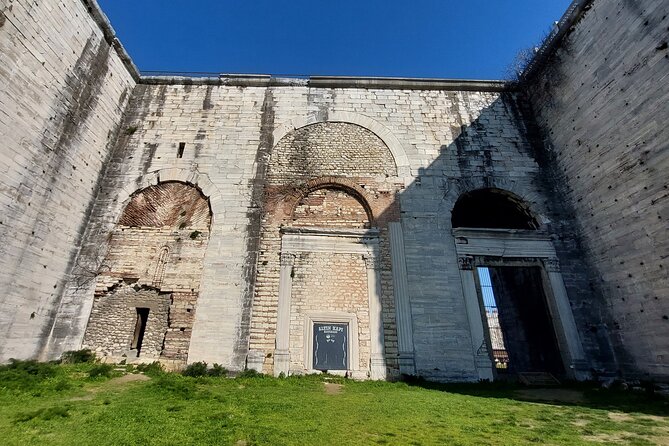
- City walls you can trace with your own eyes: gates, towers, and wall sections are all part of one route.
- Free admissions for the wall stops: Yedikule, Silivrikapı, and Mevlanakapı don’t require paid tickets.
- Chora Museum as the finale: a major art stop with Byzantine mosaics and frescoes (ticket not included).
- A guide who checks the tempo: people mention guides asking about breaks and keeping things smooth.
You can also read our reviews of more walking tours in Istanbul



Why the Byzantion Walk Path is worth your morning
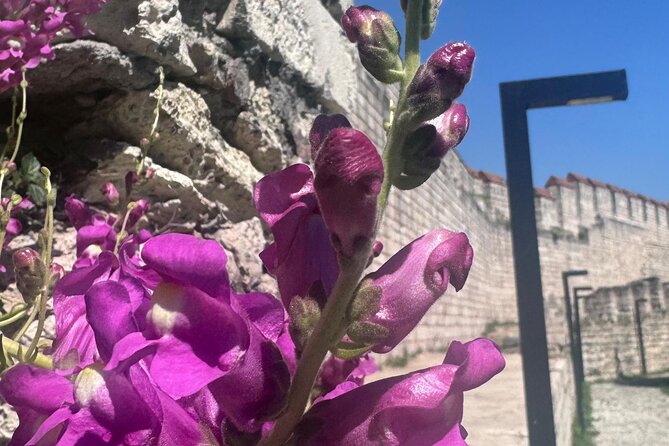
The pitch here is simple: you’re not just looking at walls from far away—you’re walking along a defense line that mattered. The Byzantion Walk Path and City Walls route is designed to give you orientation fast. In a few hours, the skyline stops being random. You start seeing how gates and wall sections fit together like parts of a system.
I like this format because it teaches by movement. Instead of lecturing in one spot, the guide can explain what you’re standing next to: why a gate mattered, why towers were placed where they were, and how the wall system was built to resist repeated siege attempts.
There’s also a practical benefit. The itinerary is short-stop focused. That means fewer long detours and less time stuck inside just to learn. You spend your energy outdoors on the wall segments, then reward yourself with Chora Museum’s indoor art highlight.
Stop 1: Yedikule and the Golden Gate area
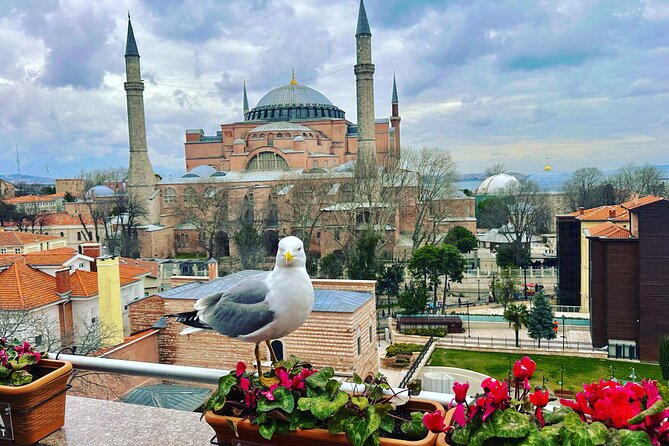
Yedikule is the opener, and it’s a strong one. You’ll head to the Yedikule area to see the biggest part of Istanbul’s city walls, including the area associated with the Golden Gate. This is one of those places where the name alone pulls you in, but the walls themselves do the real work.
Here’s what makes it more than a quick photo stop: Yedikule has deep layers of use. In Ottoman times, it was known for gate activity and dungeons, and the wall complex sits inside that long timeline of control and confinement. Even if you’re not an archaeology person, you can feel the “stronghold” vibe just from the scale.
Time-wise, you’re allotted about 1 hour 30 minutes at this first stop. That’s long enough to get the backstory, understand what you’re looking at, and still not feel like you’re dragging your feet before you’ve even hit the main wall explanation.
Admission at this stop is free, which helps you manage overall costs. If you’re budgeting for a museum-heavy day, that matters.
Stop 2: Silivrikapı’s Byzantine gate details
After Yedikule, you move on to Silivrikapı, described as a next main gate north of Belgrad Kapı. This is where the walk shifts from “big gate energy” to “specific defensive design.”
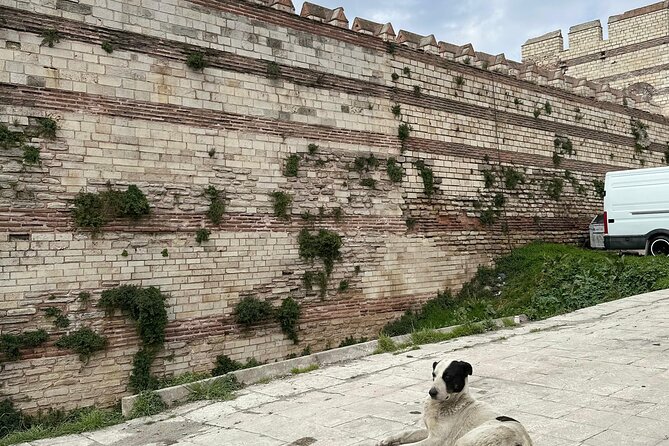
Silivrikapı sits between two polygonal gateway towers. That matters, because tower shapes and placement weren’t decorative. They were part of the defense logic—fields of view, supported structures, and how soldiers could respond during an approach or siege.
One of the more interesting notes here is the building style: the gate was renewed in the Late Byzantine period using irregular stones with brick rows placed between. I like stops like this because they train your eye. After you see this sort of construction detail once, you start spotting patterns in other wall sections across Istanbul.
This stop is shorter—around 40 minutes—so think of it as a focused checkpoint rather than a long wandering segment. It’s also another free admission stop, which keeps the day efficient.
Stop 3: Mevlanakapı and the Theodosian Walls system
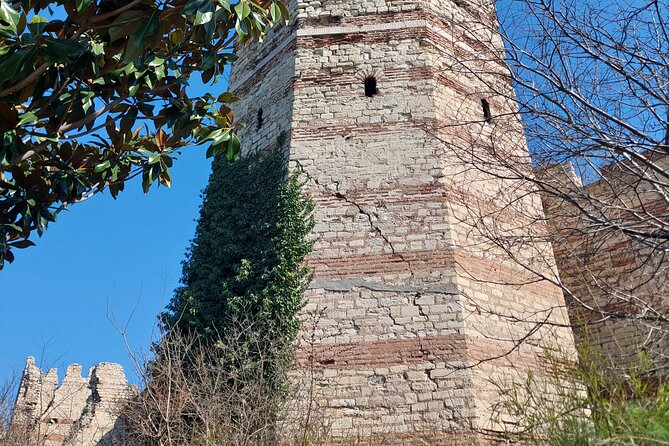
Now you get the big idea: the defenses that held off invaders for more than a millennium. At Mevlanakapı, the tour centers on the Theodosian Walls, which were built as a multi-layered system rather than just one wall.
Here’s the useful framing the guide gives you as you walk:
- a deep moat
- an outer defense wall
- a massive inner wall about 12 meters high
The key point is the design purpose: this wasn’t built expecting walls to hold forever under constant assault. It was built to absorb damage and resist siege engines, including cannon fire. You’re not just looking at stone. You’re looking at an engineered defense strategy.
You’re allotted about 45 minutes for this wall-walk section. That’s the right length for two reasons. First, it’s enough time to understand the system and connect what you saw in earlier gate areas. Second, it’s not so long that it turns into a slow shuffle.
If you want one “aha” moment from this tour, this is where it usually happens. The city starts making tactical sense.
Admission is also free at this stop, so this is one of the best value sections of the entire route.
You can also read our reviews of more city tours in Istanbul





Stop 4: Chora Museum mosaics and frescoes (the indoor payoff)
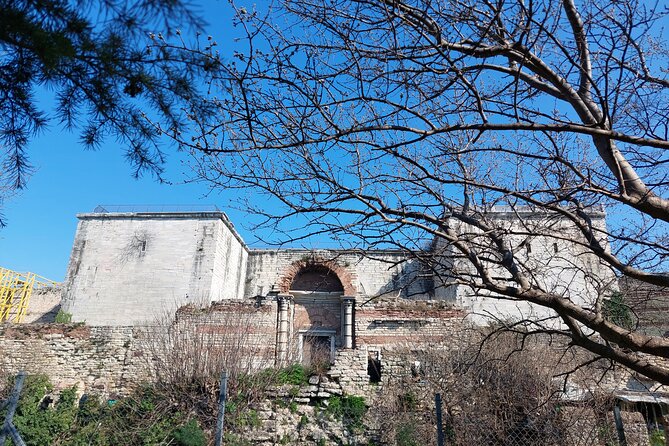
After the walls, you shift to art. The Chora Museum is the finish line, and it’s the stop most people remember because it hits hard visually and emotionally.
The museum is located in the former Church of the Holy Savior in Chora. What you’re seeing today is famous for the surviving collection of Byzantine mosaics and frescoes. The tour frames these as standout works from the 14th century, tied to the Palaeologan Renaissance—a period known for a shift toward naturalism and human feeling compared to earlier Byzantine art.
I like how this ending gives you a contrast. Outdoors, you learn about defense systems and survival. Indoors, you see beauty created for worship and meaning. It’s a reminder that Byzantium wasn’t only about armies and walls.
A couple practical notes:
- Admission is not included for Chora Museum.
- It’s closed on Fridays, so plan around that if your trip lands on a Friday.
You get about 1 hour 20 minutes here. That’s enough time to see the main mosaics without feeling like you’re being herded.
Price and value: what $372.07 really means
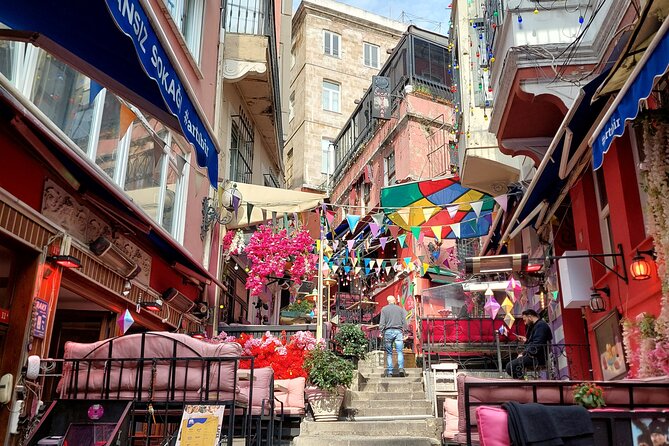
The price is $372.07 per group, up to 15 people. That structure is important: you’re not paying per person automatically like many city museum tours.
Here’s how to think about value without guessing too much. If your group fills closer to 15, the effective cost per person can drop a lot. If it’s smaller, your per-person total will be higher, and you’ll want to make sure you’re getting enough guide time and comfort from the pacing.
Why this can still be a good deal even for smaller groups: several stops have free admissions, so your money goes into the guide and the overall flow of the route rather than stacking paid entry fees at every corner. The one exception is Chora Museum, where you’ll plan for the museum ticket separately.
If you’re deciding whether to book, ask yourself one question: do you want someone to translate what you’re seeing at the wall line and connect it to the art at Chora? If yes, the group-price model can feel fair fast.
Timing, meeting point, and how the day feels
You start at 9:00 am at the German Fountain Binbirdirek, At Meydanı Cd, 34122 Fatih/İstanbul. The tour ends back at the meeting point, so you’re not left figuring out a transit puzzle at the end.
Total duration is listed as 1 to 5 hours. In real terms, that range is usually about pace and how long the group spends at each area (especially the museum). If you care about catching light for photos or you want a slower art focus at Chora, you’ll want to give yourself a little flexibility.
The tour also notes moderate physical fitness. That’s sensible: you’re walking a wall route and doing an indoor museum finish. It’s not recommended for anyone with leg problems, so be honest about your mobility before you book.
Good news for logistics: it’s near public transportation, and the guide meets you up front—no need to arrive 20 places early just to line up.
What makes the guide matter on this route
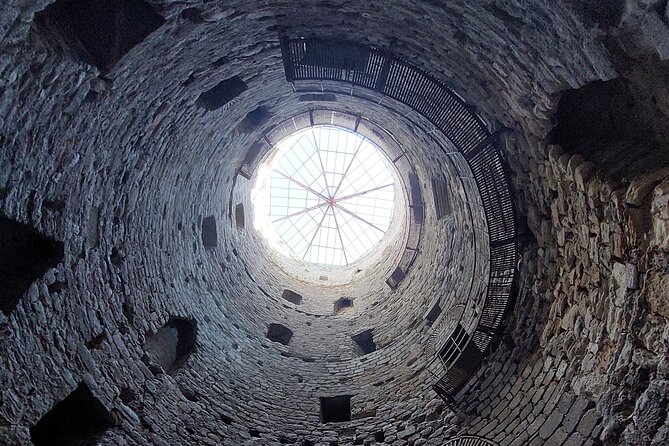
On a walls-and-museum day, the guide isn’t just narration. They help you interpret what’s otherwise easy to misread. In your case, the tour works because the guide connects three things:
1) where a gate sits in the defensive layout
2) how wall engineering served as protection
3) how Byzantine culture continues inside Chora’s mosaics
The names that show up strongly include Taha, plus mentions of Ally and Taja as guide team members on other occasions. Across those comments, a common pattern is friendly professionalism and a habit of checking whether you want breaks.
That matters because this isn’t a “click through five stops as fast as possible” style. The wall line benefits from pausing. The mosaics benefit even more. A guide who keeps asking about comfort helps the day feel like sightseeing, not a test.
Who should book this wall-and-museum route
This is a great fit if you:
- like when a tour explains how things were built, not only who ruled
- want a morning outdoors route that still ends with a major indoor art stop
- are traveling with a small group and prefer a private setup
- want a guide who can tailor the walk to your interests and questions
It’s not the best choice if you:
- have significant leg or mobility issues (it’s specifically noted as not recommended)
- need a fully sedentary tour format
If you’re in Istanbul for the first time and you want a “Byzantium angle” that isn’t stuck inside one big building, this is one of the more direct ways to do it.
Should you book? My honest take
I’d book this if you want to feel oriented in Istanbul’s Byzantine layer—walls, gates, and then the art at Chora Museum. The free admissions at the first three stops help the math, and Chora Museum is the kind of payoff that makes the morning feel worthwhile instead of just educational.
I’d think twice if you dislike walking or you know your legs get tired quickly, because the route is built around wall segments and a museum visit afterward.
If you’re deciding between this and a more generic city-walk tour, choose this one when your goal is understanding the defensive logic of Constantinople—and finishing with mosaics that prove the culture wasn’t only about survival.
FAQ
How long does the Byzantion Walk Path and City Walls tour take?
The duration is listed as 1 to 5 hours, approximately.
Is the tour private?
Yes. It’s a private tour/activity, and only your group participates.
Are the attractions on the route included in the price?
Admission is free for Yedikule, Silivrikapı, and Mevlanakapı. Chora Museum admission is not included.
Is Chora Museum ever closed during this tour?
Yes. Chora Museum is closed on Fridays.
What time does the tour start, and where do we meet?
The start time is 9:00 am, and the meeting point is German Fountain Binbirdirek, At Meydanı Cd, 34122 Fatih/İstanbul.
What languages is the tour offered in?
It’s offered in English.
Is the walking route suitable for mobility issues?
It is described as requiring moderate physical fitness and not recommended for anyone with leg problems.
What’s the policy if weather cancels the experience?
It requires good weather. If it’s canceled due to poor weather, you’ll be offered a different date or a full refund.