REVIEW · ISTANBUL
3 Days Ephesus, Pamukkale, Priene, Miletus and Didyma Tour from Istanbul
Book on Viator →Operated by Puerto Travel Turkey · Bookable on Viator
Ancient sites, but with real logistics.
This 3-day Western Turkey trip stitches together Ephesus and the quieter Ionian ruins like Priene, Miletus, and Didyma, then tops it off with Pamukkale and Hierapolis. You’ll travel by air from Istanbul to Izmir, sleep in the Kusadasi area, and enjoy expert guiding plus included museum and site entries (with a couple notable add-ons).
What I like most is the way your day starts early—when Ephesus is calmer—so you can actually see Celsus Library and the big-picture layout instead of only bumping through crowds. Second, I like the pacing choices: you get a downhill walk through Ephesus from the Upper Gate, a break for Turkish food, and then time at the coast in Kusadasi before tomorrow’s long archaeological day.
One thing to consider: the touring is active. You’ll do walking on uneven ground, stairs at places like the Terrace Houses, and a barefoot limestone walk at Pamukkale, so plan on wearing comfy shoes and choosing your “must-see” spots carefully.
In This Review
- Key points that matter before you book
- Istanbul to the Aegean: how the flights set the tone
- Day 1: Virgin Mary’s House and Ephesus without the worst crowd crush
- The downhill Ephesus route that actually helps
- Terrace Houses vs. the rest of Ephesus
- The Experience Museum: a helpful last step
- Selcuk food break and the Temple of Artemis photo layer
- Kusadasi hotel night: where the trip gives you breathing room
- Day 2: Priene and Miletus, then the massive sacred nerve center at Didyma
- The big value of Day 2: less crowded but still huge
- Didyma’s Temple of Apollo: the “columns you feel in your chest”
- Day 3: Hierapolis necropolis, Cleopatra Pools choices, then Pamukkale’s cotton terraces
- Hierapolis first: “City of the Dead” with big views
- Cleopatra Pools: free entry, but swim ticket costs extra
- Pamukkale thermal terraces: what to expect when you go barefoot
- Price and value: what you’re really paying for at $1,017.48
- Who this tour fits best (and who should rethink it)
- Practical tips to make the days feel easier
- Should you book this tour?
- FAQ
- How long is the tour?
- Do I get picked up from my Istanbul hotel?
- Is transportation included between cities and sites?
- Are entrance fees included?
- Are meals included?
- What flights are included?
- What language is the tour guided in?
- How many people are in the group?
- Can I swim at Cleopatra Pools?
- Is the tour suitable for everyone physically?
Key points that matter before you book
- You fly twice: Istanbul → Izmir on Day 1, then Denizli (DNZ) → Istanbul on Day 3, with transfers handled for you.
- Ephesus is timed for comfort: you start from the Upper Gate and walk downhill for a better flow through the main sights.
- You get more than Ephesus: Priene, Miletus, and Didyma are treated as full stops, not quick side photos.
- Some entries cost extra: Terrace Houses in Ephesus and swimming at Cleopatra Pools aren’t included.
- Small group: up to 15 travelers, which usually means fewer bottlenecks and easier guiding.
- Guides can adapt: based on past experiences with guides like Güfte (with her husband Ogun) and Yavuz, there’s room to adjust to what you care about.
Istanbul to the Aegean: how the flights set the tone
This tour runs on a classic “fly out, drive the ruins, fly back” plan. On Day 1 you’re picked up at your Istanbul hotel and taken to the airport at least 3 hours before your flight. Then you land in Izmir, meet your driver holding your name at the exit gate, and head toward Selcuk (about 60 minutes).
This matters because it buys you time. Instead of losing your first day to an all-day bus ride, you’re already in the region when the sites are at their most workable—cooler mornings and earlier crowds.
On Day 3, you’re not stuck in one more long drive back to Istanbul. You leave Pamukkale, transfer to Denizli Cardak Airport (DNZ), and catch your flight to Istanbul. After you land, you’re picked up for the hotel door-to-door transfer.
A few more Istanbul tours and experiences worth a look
Day 1: Virgin Mary’s House and Ephesus without the worst crowd crush
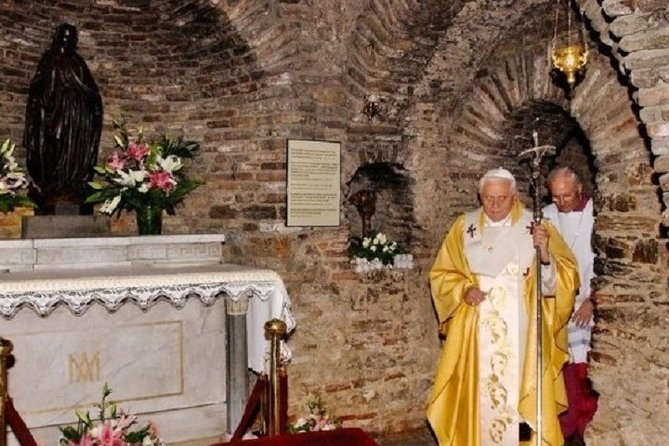
Your first major stop is the Virgin Mary’s House at Mt. Koressos. You’ll have about 45 minutes here, including admission, and there’s time for a quiet visit—light a candle, spend a bit of time with your intentions, and leave a note on the Wishing Wall. It’s a soft landing before the Roman grandeur starts.
The downhill Ephesus route that actually helps
Next comes Ancient City of Ephesus, and the way you enter is part of the value. You start from the Upper Gate and walk downhill along marble streets. That downhill flow is practical: it keeps the route logical, and it helps you hit the big monuments without constant backtracking.
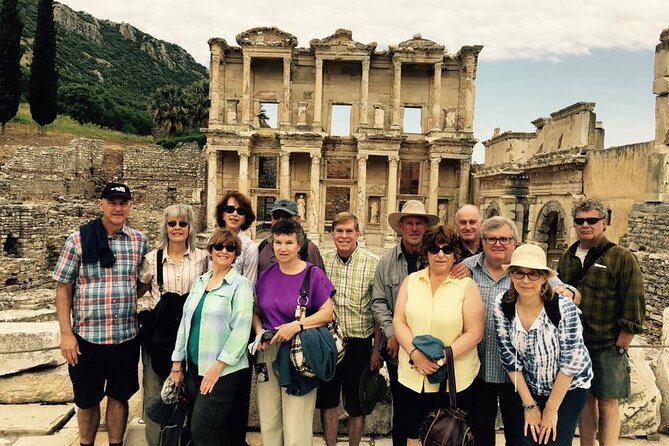
You’ll stand before Celsus Library, visit the Temple of Hadrian, and sit in the Great Theatre, known for its association with St. Paul’s preaching. It’s the kind of stop where a good guide makes the stones feel connected—your job is mostly to look up and take your time.
Terrace Houses vs. the rest of Ephesus
After the main ruins, you can add Ephesus Terrace Houses. This is often the “wait, that’s inside?” moment. The covered structure includes private-villa features: mosaic floors, fresco remains, and even the idea of private heating systems. There are glass walkways and you should expect stairs inside.
Here’s the catch: entry isn’t included. If you’re the type who likes seeing how elite households worked (instead of only temples and streets), this is worth budgeting extra.
The Experience Museum: a helpful last step
Then you finish Ephesus with the Ephesus Experience Museum. It’s located inside the ancient city area and uses 360-degree screens, 3D audio, and sensory effects to show the city as it would have looked in its Golden Age. You get 30 minutes and included admission, which makes it a good way to lock in the story after hours of ruins.
If you’re tired, this is also a relief. It’s not another long climb—just a concentrated reset.



Selcuk food break and the Temple of Artemis photo layer
Between sites, you’ll get a break in Selcuk at a selected local restaurant area. Lunch and drinks aren’t included, but the stop is built for you to eat something Turkish—meze-style starters, hot mains, and local desserts. You’ll also have a breather before the afternoon history hits again.
Then you head to the Temple of Artemis, one of the Seven Wonders of the ancient world. Today you mainly see a single surviving column—but the viewpoint is what you’re really after. You’ll get a chance to frame multiple eras in one photo: the pagan temple layer, the Isa Bey Mosque, and the Basilica of St. John.
You’re also timed here for an easier emotional transition: the site feels like a pause between big architecture and your hotel check-in.
Kusadasi hotel night: where the trip gives you breathing room
After Day 1’s historical block, you drive to Kuşadası and check into a 4-star hotel. The remainder of the evening is free.
This is smart. After two intense halves of the day, you’ll appreciate the option to walk the promenade, grab seafood near the Aegean, or just sit and decompress. Tomorrow starts with more ruins, and you’ll go farther if you sleep well tonight.
Day 2: Priene and Miletus, then the massive sacred nerve center at Didyma
Day 2 begins with a drive to Priene, often called the Pompeii of Anatolia. The reason this stop feels different is setting: it’s calmer than Ephesus, surrounded by pine trees, and set against the steep slopes of Mt. Mycale.
You’ll walk the original 2,500-year-old grid streets—including the Bouleuterion (Senate House)—and stand by the Temple of Athena, funded by Alexander the Great himself. The views over the Meander Plain are a big part of the payoff here.
Then you continue to Miletus, once a major maritime power and a place tied to early Western philosophy through figures like Thales. Your walk includes the Grand Theatre, which rises dramatically over the flat plains, plus the Baths of Faustina. If you’re interested in the Bible, you’ll also hear context about Acts 20, where St. Paul speaks to elders of Ephesus.
The big value of Day 2: less crowded but still huge
This is the part of the trip many people underestimate. Ephesus is famous, but Priene and Miletus feel like the “real” archaeology side of the region—same ancient influence, fewer tourist bottlenecks.
Next is the coastal stop in Didyma, with a lunch break at a local restaurant. Again, meals aren’t included, but you have a straightforward choice: fresh seafood when it’s available, or traditional options like pide or kebab.
Didyma’s Temple of Apollo: the “columns you feel in your chest”
Your grand finish on Day 2 is the Temple of Apollo at Didyma. This wasn’t a city in the typical sense—it was a sacred oracle center, second only to Delphi. The temple complex is built at a scale that makes you think about time differently. The famous tunnel-like route into the inner sanctuary helps create that sense of stepping inward.
You’ll also see the Head of Medusa sculpture, one of the iconic images from antiquity. If you like monumental sacred architecture, this is the site you’ll probably remember most from the Ionian leg.
Later, you drive back toward the coast through cotton fields and olive groves and return to your Kusadasi hotel in the late afternoon.
Day 3: Hierapolis necropolis, Cleopatra Pools choices, then Pamukkale’s cotton terraces
On Day 3, you start with the road to Pamukkale (about 2.5–3 hours). The drive runs through the Meander Valley area, where you’ll see cotton fields, fig orchards, and villages. The guide will share history as you approach the Cotton Castle.
Hierapolis first: “City of the Dead” with big views
At Hierapolis, also called the Holy City for its religious significance, you begin with the Necropolis, described as the largest ancient cemetery in Anatolia. You’ll also walk through the monumental Frontinus Gate, then visit the theater for a panoramic view back toward the white terraces below.
You get around 2 hours at Hierapolis, plus included admission for the stop.
Inside the Hierapolis Archaeology Museum, housed in restored Roman Baths, you’ll see sarcophagi, statues, and friezes from Hierapolis and nearby Laodicea. The Hall of Statues is a strong highlight, showing mythological figures and gladiator reliefs.
Cleopatra Pools: free entry, but swim ticket costs extra
Then come the Cleopatra Pools. The experience here is built around the idea of submerged ancient marble columns from a temple that fell into the water during an earthquake.
The pool area entry is free, but swimming requires an extra ticket, which isn’t included. If you want the full “champagne waters” idea (warm, mineral-rich thermal water), budget for the add-on. If you just want to see it and take photos, you can do that without paying for swimming.
Pamukkale thermal terraces: what to expect when you go barefoot
Finally, you reach Pamukkale Thermal Pools, known for its snow-white limestone terraces formed by calcium-rich thermal springs over millennia. You’ll take off your shoes and walk barefoot on warm terraces. It’s hard to describe until you do it: you’re not just looking at a sight—you’re stepping into it.
You get about 45 minutes here, with included admission. This is where you’ll take your “instant postcard” photos—but do also look for the way the water changes texture around the edges.
A lunch break follows in Pamukkale town at a selected local restaurant. Meals aren’t included, but you’ll get a chance to reset before the return drive and airport transfer.
Price and value: what you’re really paying for at $1,017.48
At about $1,017.48 per person for 3 days, this isn’t a cheap tour. But you are buying convenience plus a lot of logistics that would otherwise be a headache: hotel in the Kusadasi area, air-conditioned transfers, a professional guide, and entry fees for many core sights and museums.
The biggest “value math” points are:
- Flights are handled, saving you from an all-day travel slog, even though the domestic flight tickets aren’t included in the price.
- Entrance fees are included for key sites and museums, so you’re not counting nickel-and-dime tickets all trip long.
- You visit multiple “big name” and “lesser-known big” ruins—Ephesus plus Priene, Miletus, and Didyma—without forcing you to base-hunt on your own.
The main cost surprises to plan for are the add-ons that are explicitly not included: Terrace Houses in Ephesus and swimming at Cleopatra Pools. If those are priorities for you, account for them when budgeting.
Who this tour fits best (and who should rethink it)
This tour fits you best if you:
- want a focused Western Turkey route with Ephesus + Ionian sites + Pamukkale in just 3 days
- like having a guide connect the monuments into a clear story
- prefer small-group touring (up to 15) over large bus crowds
- have moderate mobility and can handle walking plus stairs
It may be a tougher match if you:
- strongly dislike walking long distances on uneven ancient stone
- need long sit-down breaks between active stops
- don’t want to go barefoot for Pamukkale
Practical tips to make the days feel easier
A few details can make a big difference on a tight schedule like this:
- Bring comfortable walking shoes with good grip. You’ll move a lot across ancient sites.
- For Ephesus Terrace Houses, wear shoes that handle stairs well, since the structure includes stair climbing.
- For Pamukkale, accept that you’ll be barefoot for the terraces. Plan your timing so you don’t feel rushed.
- Expect to pay for lunch and dinners yourself. The tour provides meal breaks and selected restaurant stops, but they’re not included.
- If you’re the “photo first” person, start your mornings with a game plan. The early Ephesus timing helps, but light and lines still matter.
Should you book this tour?
If you want an efficient, guide-led sampler of Western Turkey’s headline ancient sites—and you’re comfortable with active sightseeing—this is a strong booking. The combination of early Ephesus timing, the inclusion of Priene and Miletus (often skipped), and the full Pamukkale/Hierapolis payoff makes the schedule feel earned rather than rushed.
I would book it if Terrace Houses and/or Cleopatra Pool swimming are on your list, too—because they’re the only clear add-ons you should consciously plan for. If those two don’t interest you, you can still enjoy the tour’s main included experiences without feeling like you missed anything essential.
If you want, tell me your travel month and what you care about most (Christian sites, Roman architecture, or landscape-style photos). I can suggest how to prioritize the optional stops on your days.
FAQ
How long is the tour?
It runs for about 3 days.
Do I get picked up from my Istanbul hotel?
Yes. Pickup is offered, with transfers by air-conditioned vehicle.
Is transportation included between cities and sites?
Yes. All transfers use an air-conditioned vehicle.
Are entrance fees included?
Yes, entrance fees to sites and museums are included, except for the Ephesus Terrace Houses and swimming at the Cleopatra Pools.
Are meals included?
Breakfast is included for 2 days. Lunch, dinner, and drinks are not included.
What flights are included?
Domestic flight tickets are not included. The tour includes transfers to help you coordinate flights based on the schedule, including the transfer between Istanbul and Izmir on Day 1 and the transfer to DNZ on Day 3.
What language is the tour guided in?
The tour is offered in English.
How many people are in the group?
The maximum group size is 15 travelers.
Can I swim at Cleopatra Pools?
The pool area entrance is free, but swimming requires an extra ticket that is not included.
Is the tour suitable for everyone physically?
It’s recommended for travelers with moderate physical fitness since there is walking and stairs in some sites, such as inside the Terrace Houses. Service animals are allowed.