REVIEW · ISTANBUL
8 Days Seven Churches of Revelation MINI Group Tour including Istanbul
Book on Viator →Operated by Small Group (Max. 10 Pax) & Private Tours in Turkey · Bookable on Viator
Revelation turns into real geography in eight days. This small-group route (max 10 people) moves at a human pace while you cover Istanbul plus the Seven Churches sites in western Turkey with a Bible-oriented guide who keeps tying the places to the text. I like how the day structure balances big sights with time to look, not just snap photos. The trade-off is that it’s an active itinerary—ancient sites mean uneven ground, lots of walking, and a moderate physical fitness level helps.
You’ll also feel the planning in the details: all-in ground transport, domestic airfare included, and entrance fees handled with pre-paid access via your guide. One thing to know up front is the Hagia Sophia setup: since live guiding isn’t allowed there after Jan 15, 2024, you’ll need a smartphone and headphones (or buy at the entrance).
In This Review
- Key Highlights You’ll Actually Notice
- Istanbul Arrival: Airport Meet-Up and a Real Start
- Sultanahmet Power Day: Hippodrome, Blue Mosque, Topkapi, Hagia Sophia, Bazaar
- Bosphorus Views and Basilica Cistern Before You Fly to Izmir
- Pergamon to Thyatira to Smyrna: Revelation’s Cities on the Ground
- Sardis, Philadelphia, Laodicea, Then Pamukkale Thermal Time
- Ephesus and the Surrounding Biblical Sites You’ll Want to Slow Down For
- Back to Istanbul: Free Afternoon With One Clear Mission
- Price and Logistics: Is $1,684 Good Value?
- Who This Tour Fits Best (and Who Might Prefer Another Style)
- Should You Book This Seven Churches of Revelation + Istanbul Tour?
- FAQ
- How many people are in the group?
- What kind of hotels will I stay in?
- Are airport transfers included?
- Are domestic flights included?
- What meals are included during the tour?
- Are entrance fees included?
- Is Hagia Sophia included, and is there any special rule?
- What happens if a site or market is closed?
- Is there a luggage limit for the domestic flights?
Key Highlights You’ll Actually Notice
- Max 10 people for more questions and less crowd stress
- Licensed Bible-oriented guiding focused on Revelation’s locations, not just sightseeing
- Domestic flights + air-conditioned minivan so you don’t lose half your day in transit
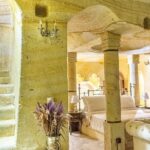
- Comfortable hotels: boutique/4-star in Istanbul and Izmir, plus a thermal stay in Pamukkale
- Major sites with included entrance fees, often with pre-paid tickets for smoother entry
- Hagia Sophia requires headphones, so pack the right tech
Istanbul Arrival: Airport Meet-Up and a Real Start
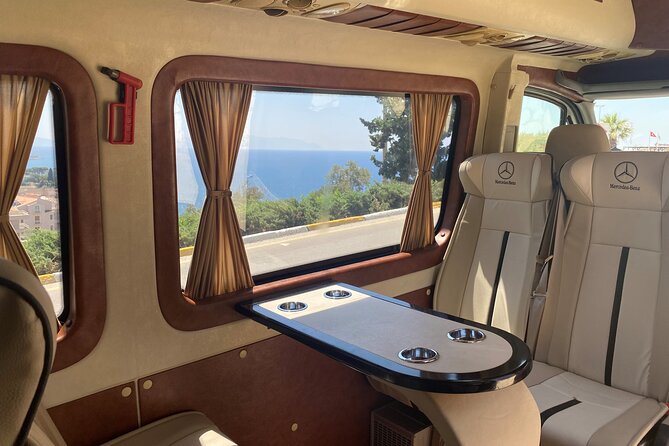
Your trip kicks off with an airport representative meeting you at either Istanbul Airport (IST) or Sabiha Gökçen (SAW). You’ll get a private transfer to your Istanbul hotel for an overnight stay. This matters more than it sounds. Istanbul can be chaos on arrival day, and even a short delay can mess up your energy for a sightseeing-heavy schedule.
You’re also getting the “right first night” hotel plan: boutique or 4-star options in the Old City area (like Yasmak Sultan or Dosso Dossi Old City, or similar). That location choice helps you settle in faster and reduces the back-and-forth once the tour starts moving.
If you’re the type who likes to know where you’ll sleep before you land, this tour style is comforting. You’re not juggling buses and schedules right away.
You can also read our reviews of more tours and experiences in Istanbul.
Sultanahmet Power Day: Hippodrome, Blue Mosque, Topkapi, Hagia Sophia, Bazaar
Day 2 is a classic Istanbul hit—but the order is smart, and your guide context makes it feel less like a checklist.
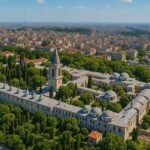
You begin at Hippodrome Square, where chariot races once roared and later, Byzantine-era unrest played out around the same area. It’s a good opener because it frames Istanbul as layered: Roman roots, Byzantine control, Ottoman transformation.
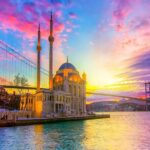
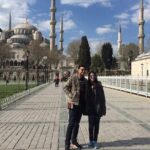
Next comes the Blue Mosque, famous for its Iznik tiles. The exterior is dramatic, but the real pull is how the tile work ties the mosque to the broader Ottoman art world.
Then you walk to Topkapi Palace, the Ottoman sultan residence plus the administrative and educational center. You’ll visit Topkapi with the weapons section included, which adds variety beyond the usual rooms-and-courtyards vibe.
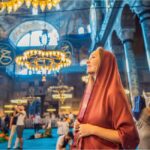
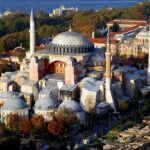
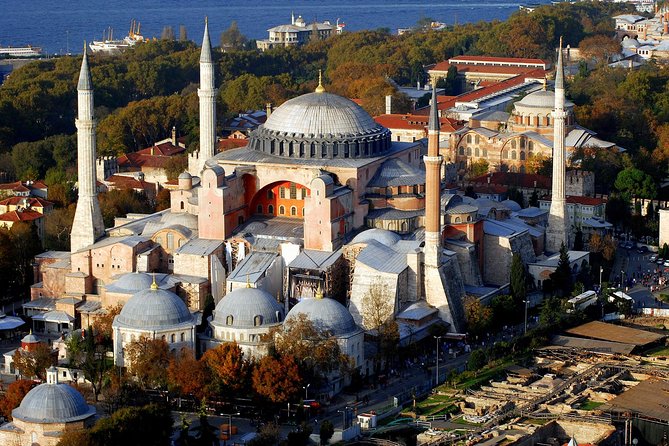
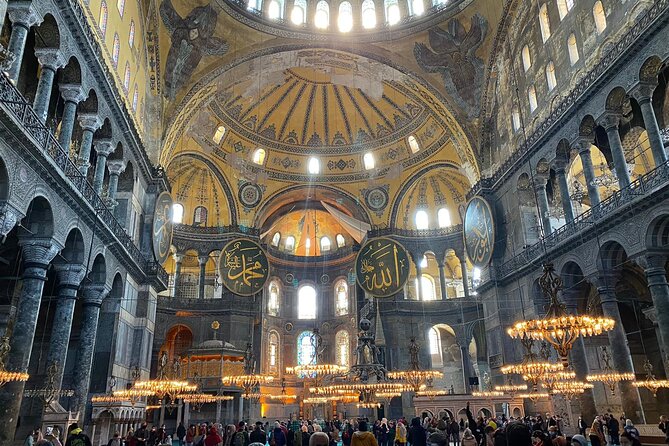
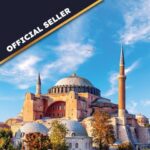
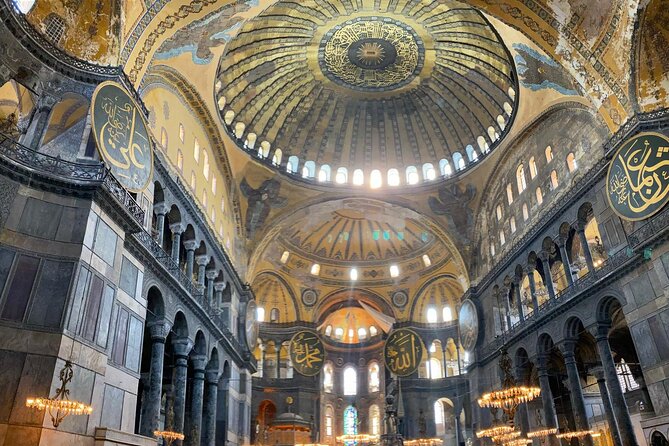
After lunch, it’s a short walk to Hagia Sophia (Ayasofya). Important practical update: after Jan 15, 2024, live guiding isn’t allowed. You’ll follow a headphone-style system using your smartphone and headphones, or buy headphones at the entrance for about $3.50. If you don’t have a smartphone, you’ll rely on signs and provided information. That can feel odd if you love commentary—but it also means you’re free to go at your own pace inside.
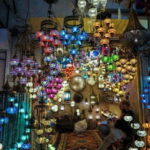
To round out the day, you end at the Grand Bazaar, one of the world’s oldest covered markets. The scale here is huge: 58+ covered streets and over 1,200 shops, with daily visitor counts reported in the hundreds of thousands. You’ll spend about an hour and a half, with shopping categories like jewelry, pottery, spices, and carpets.
What I like about this day: it packs major landmarks but keeps the flow readable. What to watch: it’s still a long day of walking and entry procedures, and Istanbul sites can feel crowded.
Bosphorus Views and Basilica Cistern Before You Fly to Izmir
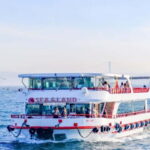
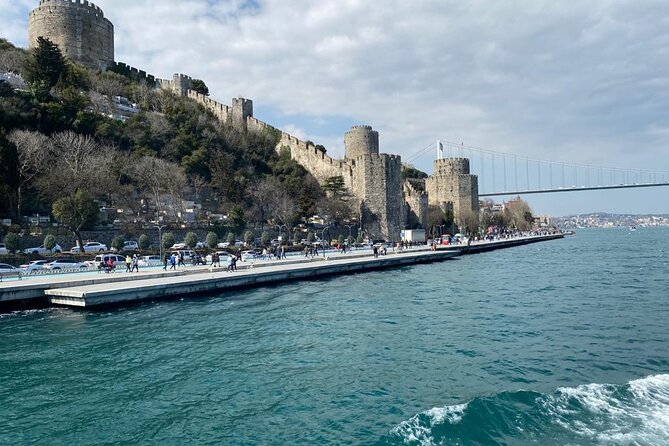
Day 3 starts with a half-morning mix of local flavor and big water views. After breakfast, you’ll head out to the Spice Market, then continue to the port for a Bosphorus boat trip. This stretch is a classic for good reason: you see the European-Asian waterway divide with shorelines lined by wooden villas, palaces of marble, fortresses, and fishing villages.
A boat day is a smart reset after museum-style time. Even if you’re not a “scenery person,” it’s a break for your feet and helps you understand the geography of Istanbul beyond postcards.
In the afternoon, you visit the Basilica Cistern, an underground water storage hall that’s now one of the most atmospheric interiors in the city. It’s a bit eerie in a good way—columns, shadow, and the sense of space underground.
Then comes the practical travel pivot: transfer to the airport and fly to Izmir. You’re looking at about an hour for the Istanbul airport transfer and domestic flight day timing, with your arrival and onward transfer to your Izmir hotel in the afternoon or evening.
Izmir hotels are another comfort detail. Options include DoubleTree by Hilton Alsancak or Hilton Garden Inn Bayrakli, or similar—solid choices for resting between ancient-site days.
Pergamon to Thyatira to Smyrna: Revelation’s Cities on the Ground
Day 4 is the start of the Seven Churches thread, and it runs like a geography lecture you can walk through.
You drive to Pergamon (Bergama), one of the Seven Churches sites tied to Revelation (Rev. 1:11; 2:12). Here you explore the acropolis and major ruins, including what’s described as the steepest theatre in the world. The Asklepion is also a major highlight—a classical medical center that helps you see how ancient cities blended faith, healing, and public life.
You’ll also see the Altar of Zeus, referenced in connection with the throne imagery in Revelation. And because this place was a cultural powerhouse, you get to look at marble columns of the Temple of Trajan and the library, noted for rivaling Alexandria in volume estimates and inspiring parchment.
Then you continue to Tepe Mezari, tied to Thyatira (Rev. 1:11; 2:18–24; Acts 16:14). This area connects to the dye trade, including the purple dye link (Lydia being from Thyatira).
Before hotel check-in, you enjoy a panoramic ride through Smyrna. It’s presented as the third largest city in Turkey and another Seven Churches location (Rev. 2:12–17), with a stop for the Clock Tower. The panoramic approach is useful here because Smyrna isn’t just ruins; it’s a living city layered over history.
Why this day works: it moves from world-famous monumental Pergamon to smaller, more archaeology-focused Thyatira remains, then zooms out to understand the broader city context of Smyrna. Possible drawback: you’ll want comfortable shoes, because each site is built on real terrain, not flat museum floors.
Sardis, Philadelphia, Laodicea, Then Pamukkale Thermal Time
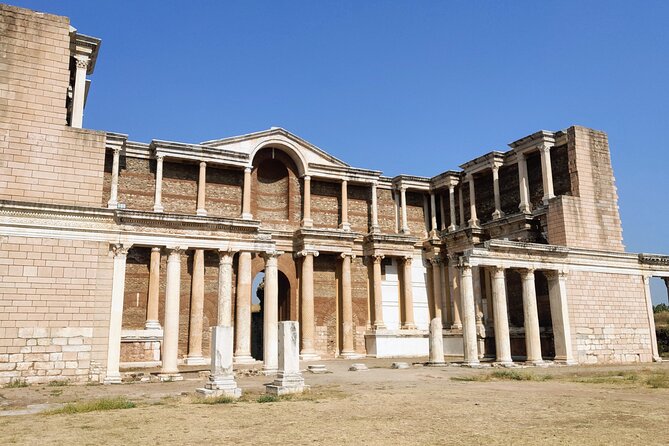
Day 5 starts early for Sardis (Sardes), described as the picturesque Seven Churches area and tied to Revelation (Rev. 1:11; 3:1–4). You’ll visit the Temple of Artemis and see features like a restored gymnasium and a reconstructed synagogue. There’s also a historical roadway context—part of the royal Persian Road from Susa to Sardis—and the Pactolus river connection, described as the golden river.
Then you head to Philadelphia, now Alasehir, tied to Revelation (Rev. 1:11; 3:7). This church is described as the only one not censured, and the site visit focuses on remaining Byzantine basilica features made of brick, including an arch and some 11th-century frescoes.
After that it’s on to Laodicea, the last of the Seven Churches. This place is approached as a crossroads city—built on the Lycus tributary of the Meander River, and used for commerce and logistics because of its road connections. That framing matters because Revelation’s messages often land differently when you understand the economic role of a city.
Finally, you shift into the healing-city mood with Hierapolis & Pamukkale. You stay overnight in a thermal hotel, with Pamukkale known for the white terraced formations formed by hot mineral water cascading over cliffs. It’s called the cotton fortress, and the concept of therapeutic waters is tied to the area historically.
What I like: the emotional arc. You move from warnings and identity themes in Revelation’s cities to a literal place associated with healing and recovery. What you should plan for: expect a long day and a wet/uneven walk at Pamukkale. If you love soaking and you can manage slippery surfaces, it’s a good fit.

Ephesus and the Surrounding Biblical Sites You’ll Want to Slow Down For
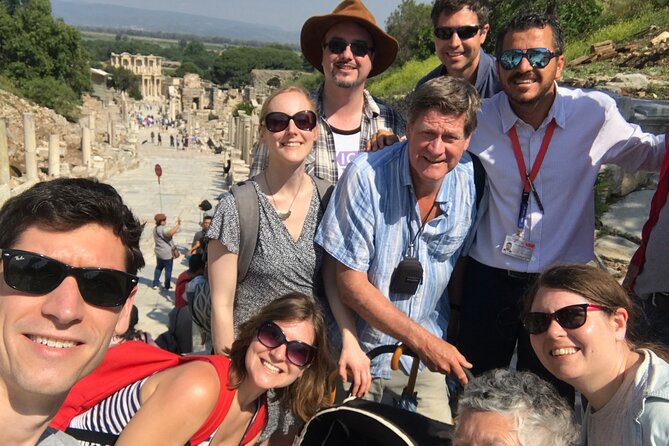
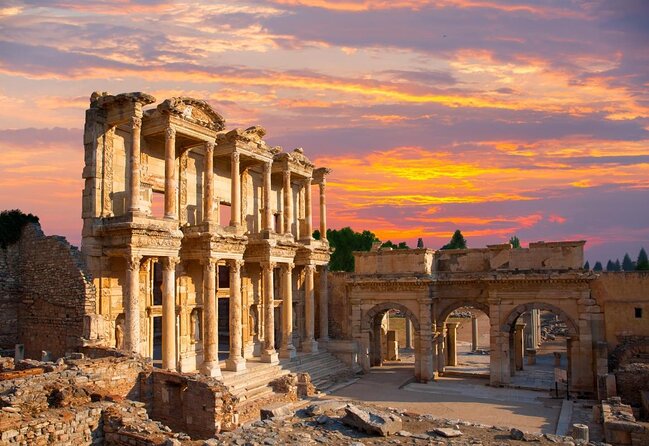
Day 6 is the big one for many people: Ephesus. You visit the ancient city and important religious sites in the region, including the Basilica of St. John. The tour frames Ephesus as a place where Paul lived and preached for years, and where an epistle was addressed to the Ephesians.
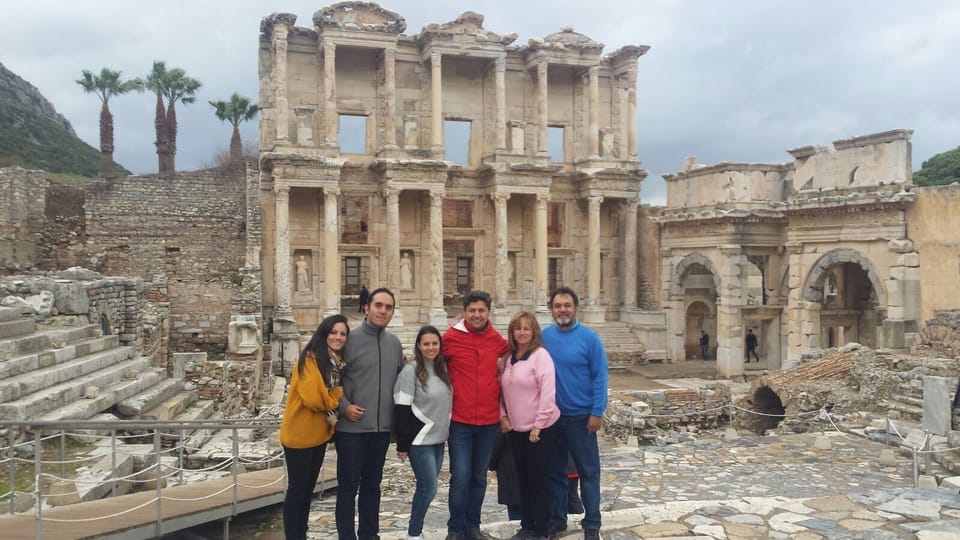
The ruins walk is built around major public spaces: marble streets lined with buildings, the Baths of Scholastica, the Library of Celsus, the Temple of Hadrian, and the Theatre. The Temple of Diana of the Ephesians is part of the story too, as one of the Seven Wonders of the ancient world.
Then you go out to Meryemana (the House of Virgin Mary) on the Aladag Mountains, about five miles from Ephesus. The tour presentation includes the tradition that Mary came to Ephesus with St. John and lived there until her death, plus the idea that the site became a pilgrimage place in the late 1800s and was visited by Pope Paul VI on July 26, 1967.
Back closer to town, you visit Saint John Kilisesi, connected to the belief that John spent his last years in the area around Ephesus and is buried on the southern slope of Ayosoluk Hill.
You finish with the Temple of Artemis stop—shorter at about 15 minutes—then drive back toward Kusadasi for a resort-town sightseeing pass, including places like Marina and the port area, plus a mention of Ceravanserail and a Grand Bazaar passage. Dinner and overnight follow.
Why this day feels worth it: the itinerary doesn’t treat Ephesus as one ruin block. It connects city life, religious memory, and surrounding sites tied to the same region. What to watch: you’ll be switching between indoor/outdoor ruins and hillside sites. Bring sun protection and keep water handy.
Back to Istanbul: Free Afternoon With One Clear Mission
On Day 7, you fly from Izmir back to Istanbul after breakfast, arriving for a noon-time schedule. A representative transfers you to your hotel, then you get an afternoon free to explore Istanbul on your own. That free time is not random—it’s a chance to revisit what hit you hardest earlier, do a slower browse, or simply recover.
This is also where your earlier choices matter. If you loved the Ottoman vibe at Topkapi and the Blue Mosque, you might circle the Sultanahmet area again. If the underground world at Basilica Cistern impressed you, you might look for more quiet corners.
On Day 8, you transfer to the airport for your international flight and the tour ends.
Price and Logistics: Is $1,684 Good Value?
At $1,684 per person, this isn’t a cheap trip. But value isn’t just sticker price. It’s what you avoid.
You’re getting:
- 7 nights in boutique/4-star hotels (with specific hotel examples by area)
- Domestic flights included (Istanbul to Izmir and back)
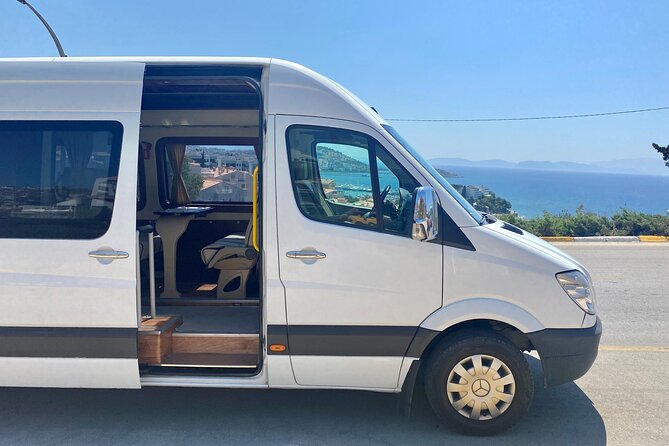
- Transportation in an air-conditioned minivan/minibus
- Entrance fees handled with pre-paid tickets via your licensed guide
- A Bible-oriented, professional licensed guide
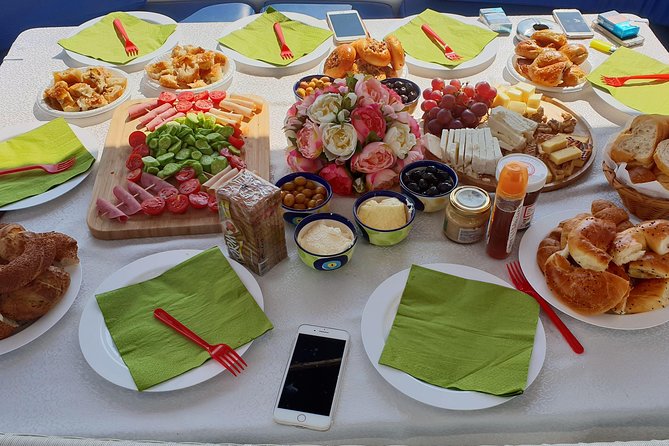
- Multiple meals included (the package lists 7 breakfasts and 2 dinners, while the tour highlights 11 freshly prepared meals)
Where costs usually explode on DIY travel is in domestic flights plus entrance fees plus the time cost of transit. This tour compresses all of that into one plan so you’re not coordinating between cities with limited time.
The possible drawback for value: you’re paying for structure. If you want total freedom, self-guided travel might appeal more. But if you prefer someone else to manage routing, tickets, and timing, the cost starts to make sense.
Also keep in mind the domestic flight baggage limits listed: 15 kg check-in and 8 kg cabin. If you travel light, you’ll like this. If you pack big, check your bag weight early.
Who This Tour Fits Best (and Who Might Prefer Another Style)
This mini group format is best for you if:
- You want Revelation sites in a guided, text-connected way
- You prefer max 10 people so the tour doesn’t feel like herd management
- You’re okay with a full schedule and want help moving between Istanbul, Izmir, and the Seven Churches areas
- You like comfortable lodging at the end of each busy day
It may not be ideal if:
- You need lots of downtime between major stops
- You get annoyed by audio/headphone rules at Hagia Sophia
- You’re extremely sensitive to walking on uneven ancient surfaces (the tour requests moderate physical fitness only)
A practical note: some key entrances or shopping days swap based on closures. For example, Topkapi can be replaced by the Underground Cistern on Tuesdays, and Grand Bazaar can be replaced by Spice Market on Sundays. On certain dates in July and September, Grand Bazaar is replaced by Arasta Bazaar. Blue Mosque hours can also shift on Fridays (from 14:30 to 16:30). That kind of substitution is normal for Turkey travel, and this tour flags it in advance.
Should You Book This Seven Churches of Revelation + Istanbul Tour?
Book it if you want:
- One organized path through the Seven Churches geography plus Istanbul highlights
- A small group and licensed Bible-oriented guidance that gives meaning to what you’re seeing
- Less stress on tickets, transport, and domestic flights
- Comfortable hotels each night, including a thermal stay in Pamukkale
Consider skipping or comparing if:
- You want a slow, flexible pace with lots of free roaming every day
- Hagia Sophia’s headphone-only setup would frustrate you
- You’re looking for ultra-long time at just one site (this is a multi-city plan)
My bottom-line take: for many people, this is one of the most efficient ways to connect Revelation’s places to real streets without doing logistics gymnastics.
FAQ
How many people are in the group?
The tour runs as a small group with a maximum of 10 travelers.
What kind of hotels will I stay in?
You’ll have 7 nights in boutique or 4-star hotels. Istanbul stays are in options like Yasmak Sultan or Dosso Dossi Old City (or similar). Izmir stays are in options like DoubleTree by Hilton Alsancak or Hilton Garden Inn Bayrakli (or similar). Pamukkale includes a thermal hotel like Colossae Thermal or Pam Thermal Hotel (or similar). Kusadasi includes options like Efe Boutique or similar.
Are airport transfers included?
Yes. You’ll be met at the airport on arrival in Istanbul with a name sign and get a private transfer to your hotel. You also get transfers tied to the domestic flight day and the Istanbul airport connection on the last day.
Are domestic flights included?
Yes. Domestic flights between Istanbul and Izmir are included. International flights are not included.
What meals are included during the tour?
The included meals listed are 7 breakfasts and 2 dinners. The tour also highlights 11 freshly prepared meals during the experience.
Are entrance fees included?
Yes. Entrance fees are included, and your guide will have pre-paid tickets to help you skip the line.
Is Hagia Sophia included, and is there any special rule?
Hagia Sophia is included. The update is that live guiding is not allowed after Jan 15, 2024. You’ll need smart phones and headphones during the visit. If you don’t have headphones, you can buy them at the entrance for about $3.50.
What happens if a site or market is closed?
If museums are closed, an alternative similar museum is visited. The tour notes specific swaps: on Tuesdays Topkapi can be replaced by Underground Cistern; on Sundays Grand Bazaar can be replaced by Spice Market; and on certain listed dates Grand Bazaar can be replaced by Arasta Bazaar. It also notes Blue Mosque hours on Fridays.
Is there a luggage limit for the domestic flights?
Yes. The listed limits are 15 kg for check-in and 8 kg for cabin luggage.