REVIEW · ISTANBUL
Topkapi Palace with Harem Walking Tour with Guide
Book on Viator →Operated by Turkey Escapades · Bookable on Viator
Palace secrets start at the gates. I like this tour because it mixes Topkapı’s layout (gates, courtyards, and gardens) with the story behind what you’re seeing, not just big rooms and photos. Best of all, you get access to the Harem section, which is the one area that most people rush past or skip on their own. The main drawback is simple: it’s a long walking day inside big, spread-out spaces, and you’ll need to budget time for entry tickets since they’re not included.
I also appreciate the guide setup. This is led by a professional English-speaking historian guide, and the group is kept small (max 10), so you can ask questions as you move. One guide name that comes up is Ulan, and the vibe is practical—what matters, what to notice, and where the stories hide in plain sight.
Finally, plan your ticket timing. The tour price covers the guide and time, but it doesn’t cover entry into Topkapı Palace areas, the Harem section, or Aya Irini, so you’ll want to be ready to pay the official fees separately.
In This Review
- Key highlights to look forward to
- Where you meet and how the morning flows
- Topkapi Palace from Babu Humayun Gate: how the route makes sense
- The palace’s court machinery: Divan-ı Humayun and the Justice Tower
- The part many people skip: the Harem section experience
- Kitchens, petitions, and gates: small stops that add up
- Hagia Irene (Aya Irini) in the outer courtyard: Byzantine layers you can still read
- Tickets, price, and what $47.66 really buys you
- Timing and walking: plan for a real stamina test
- Who should book this Topkapi + Harem + Hagia Irene tour
- Should you book this tour?
- FAQ
- FAQ
- What is the duration of the Topkapı Palace with Harem walking tour?
- What language is the guide?
- Is the tour price enough to cover entrance tickets?
- Where does the tour start?
- What time does the tour start?
- How large are the groups?
- What parts of Topkapı Palace are visited?
- Does the tour include the Harem section?
- Is Hagia Irene included?
- Is a mobile ticket provided?
- Is free cancellation available?
Key highlights to look forward to
- Babu Humayun Gate entry: You start from the palace’s main “front door” route and move step-by-step.
- Harem section focus: You spend real time where many self-guided visits feel rushed.
- Court-and-power buildings: You pass places like Divan-ı Humayun and the Justice Tower with context.
- Aya Irini (Hagia Irene) in the outer courtyard: Byzantine church layers you can actually see.
- Small group walking pace: Max 10 travelers, guided so you don’t get lost.
- Mobile ticket: You’re set up for easy check-in once you’re there.
Where you meet and how the morning flows
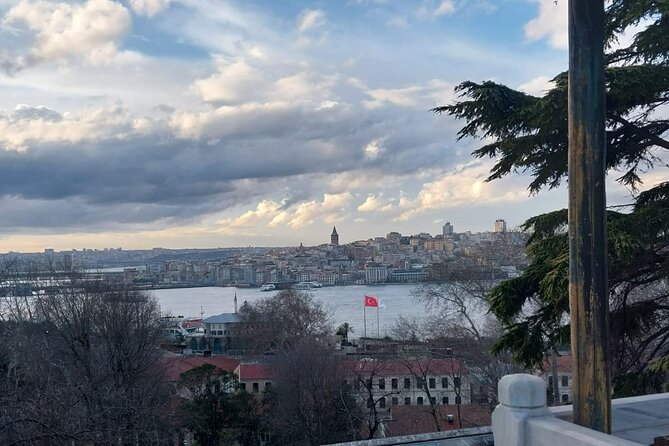
This tour starts at 9:30 am at the Fountain of Sultan Ahmed III in Sultanahmet Square, by Topkapı Sarayı (Cankurtaran area). The meeting point is easy to recognize and close to public transportation, which matters because you’ll likely want to arrive with a little buffer before the group heads into the palace grounds.
The tour ends back at the same meeting spot. That sounds minor, but it’s a real time-saver at the end of a walking-heavy day. You won’t have to figure out where to reconnect, and you can transition straight to your next plan in Sultanahmet without extra travel.
You can also read our reviews of more walking tours in Istanbul



Topkapi Palace from Babu Humayun Gate: how the route makes sense
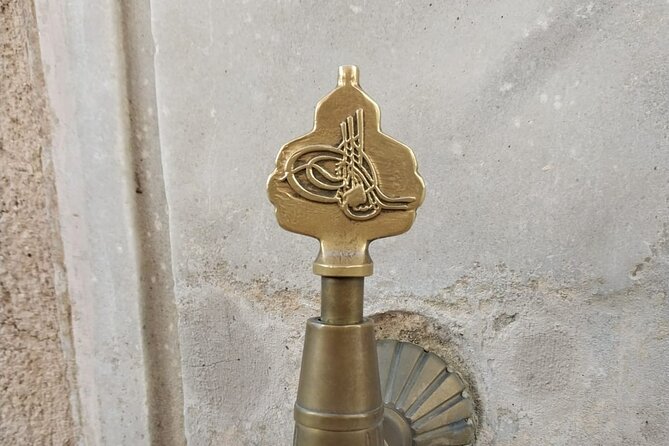
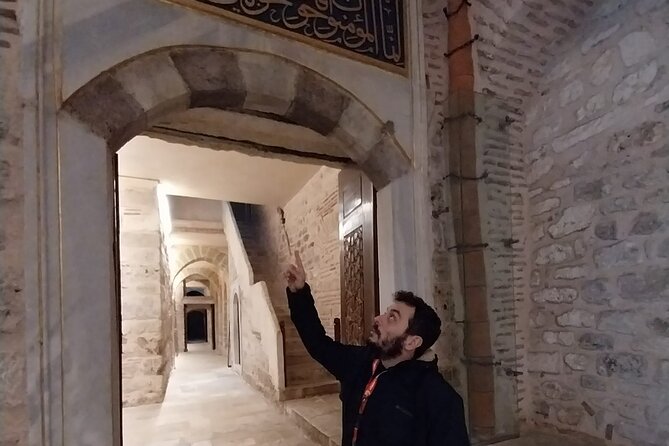
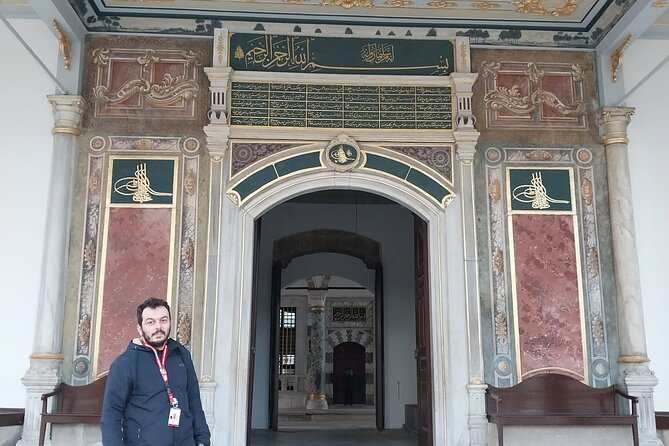
Your first big moment is entering Topkapı Palace from the Babu Humayun (Gate of the Humayun) route. This is a smart way to start, because it sets the palace up as a working center—an Ottoman place of governance and education as much as a showpiece.
Instead of treating the palace like a random set of halls, the guide walks you through how the space is organized: gates, gardens, and the palace’s internal “logic.” You’ll get stories and details tied to the specific points you pass, including places like:
- Royal Mint
- Babu Selam gate
- Fatih open air museum
- Kitchens of the Palace
- Babussade gate
- Chamber of Petitions
- Enderun (the Interior Service of the Imperial Court)
One practical benefit: the palace is huge, and without a plan you can easily end up backtracking. This guided route helps you keep your mental map straight. Even if you’re not a “museum person,” you’ll likely appreciate how the tour frames Topkapı as a system—entry, control, service, law, and the household spaces that sat at the center of power.
The palace’s court machinery: Divan-ı Humayun and the Justice Tower
As you move through the interior spaces, you’ll reach some of the core governance zones that people often only glance at. The itinerary includes the Divan-ı Humayun and the Justice Tower—and the value here is in the explanation.
Divan-ı Humayun refers to the imperial council structure, the place where decisions were discussed and formalized. You might think of the palace as purely royal, but this part makes it clear it was also administrative: rules, petitions, and judgment worked through dedicated areas.
The Justice Tower connects that idea to how justice and authority were performed. With the guide’s storytelling, you’re not just looking at stone—you’re seeing how the Ottoman state projected order. That’s the kind of context that makes Topkapı feel alive, even if you’re standing in rooms that are long past their original function.
The part many people skip: the Harem section experience
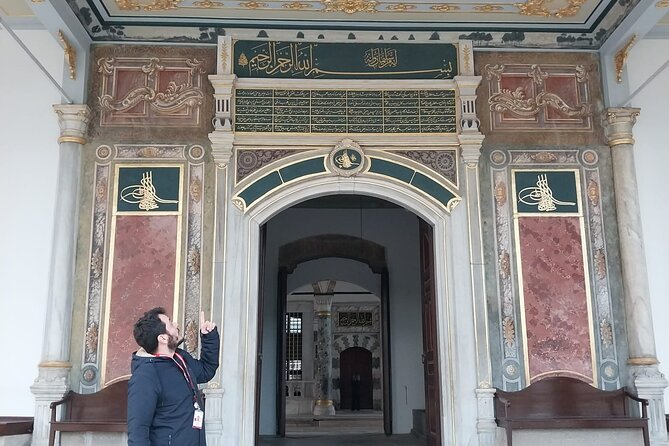
If you care about seeing the palace’s most dramatic “behind the scenes” area, this tour leans into it. The Harem section isn’t treated like a quick photo stop. You spend about an hour there, and the guide explains how the space and lives inside it worked.
Here’s what you should expect to learn and notice:
- The Harem was built at the end of the 16th century.
- It functioned as a labyrinth of around 300 rooms, with tiled spaces linked by courtyards and fountain gardens.
- The Harem is described as having over 400 rooms overall, with lavish marble hallways and arched doorways that emphasize wealth and status.
You’ll also get the social and educational structure behind it. One of the key lessons is that Islamic law forbade enslaving Muslims, so many women in the Harem were originally Christians or Jews, often received as gifts from powerful nobles and potentates. Girls from Circassia—an area associated with today’s Georgia and Armenia—were favored for their beauty, according to what you’ll be told.
The tour also explains training after entry into the Harem: girls were schooled in reading and writing, converted to Islam, and taught skills like playing instruments, singing, and dancing, along with the broader expectations of their role in the imperial household.
A quick consideration: the Harem is visually impressive, but it also means more walking inside complex corridors. If you’re sensitive to crowds or long indoor routes, wear comfortable shoes and give yourself permission to pause if you need a breather.
Kitchens, petitions, and gates: small stops that add up
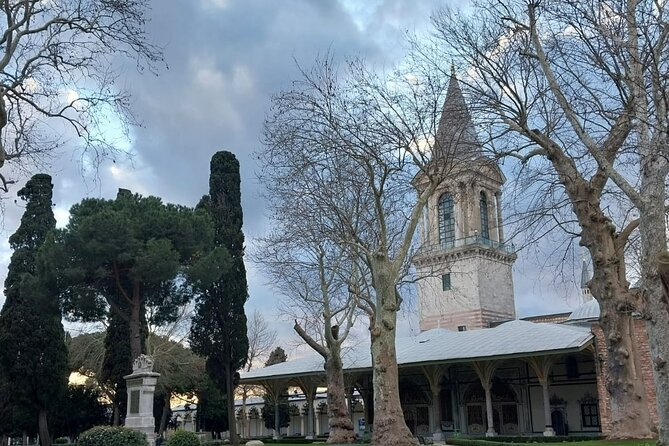
Between the “big ticket” highlights, the tour includes places that can easily be overlooked if you’re only focused on the Harem or the biggest museum rooms. This is where guided context pays off.
You’ll pass:
- Kitchens of the Palace: a reminder that this wasn’t just ceremonial. There was day-to-day logistics.
- Chamber of Petitions: a clear sign that the palace functioned as a place where people tried to influence decisions.
- Babussade gate and other gates: each one helps you understand the palace’s layered boundaries—public to controlled, controlled to private.
These stops don’t always get a long lecture, but they’re described in a way that helps you connect the dots. By the time you reach the Harem, you’ll understand why it sits at the center of an empire’s social world, not just as a separate attraction.
You can also read our reviews of more guided tours in Istanbul




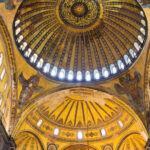

Hagia Irene (Aya Irini) in the outer courtyard: Byzantine layers you can still read
After the palace segment, you head to Hagia Irene (also called Aya Irini Museum). This is located in the outer courtyard of Topkapı Palace, and it’s presented as the second largest church after Hagia Sophia.
What makes this stop especially interesting is the way the building’s story stacks over time:
- The church was originally built on the site of an older temple dating to 330.
- During Emperor Justinianus’s reign, the Nika Revolt in 532 caused major devastation, including to Hagia Sophia and Hagia Irene, and both were rebuilt.
- After the fall of Constantinople, Hagia Irene wasn’t converted into a mosque, so it was used as loot and later as a gun depot for a long period (called the Harbiye Warehouse).
Architecturally, it’s described as a typical Byzantine structure, and the “sacred peace” meaning of Hagia Eirene is explained as a first location where Turkish museology was born. Even if you’re short on time, this stop tends to feel like a helpful punctuation mark: you finish one imperial world (Ottoman palace life) and then look at an earlier one (Eastern Roman/Byzantine religious power).
Entry tickets are not included, so you’ll be dealing with official fees here too. Still, the guided framing makes it easier to understand what you’re looking at instead of just walking around an exterior courtyard building.
Tickets, price, and what $47.66 really buys you
Let’s talk money plainly. The tour costs $47.66 per person and includes a professional English-speaking historian guide. What it does not include is the entrance fee to the relevant areas (noted as €55 per person in the provided pricing info) and separate entry tickets for the Harem section, Aya Irini Church, and the Topkapi Palace Museum.
The good news: there’s also a combined ticket option mentioned for those areas, listed as $26. You may see different numbers depending on how ticket categories are packaged at the time, but the consistent message is clear: you’ll pay extra at the gate or via the guide for entry.
One smart tip that can save stress: it’s possible to buy tickets through the guide and skip the line, with one commonly cited official price around 1500 TRY. Prices can change, but the practical benefit is what you want—less time chasing ticket booths and more time with your guide where the explanations help.
So is the tour worth it? For me, yes—if you want context and a structured route inside Topkapı. If you’re the type who enjoys wandering alone and you don’t mind reading everything yourself, you might find a DIY strategy cheaper. But if you want the palace’s gates, court spaces, and Harem explained in the right order, the guide value is doing real work.
Timing and walking: plan for a real stamina test
With a duration of about 3 hours 20 minutes, it’s not an all-day marathon. But inside Topkapı, “not all day” still equals plenty of walking, plus the time you’ll spend transitioning between palace zones and Aya Irini.
Keep this in mind:
- The Harem stop alone is a time sink because it’s a maze of rooms and connections.
- Hagia Irene is shorter (about 20 minutes in the plan), but you still need time to enter and reorient.
- Since entry tickets are extra, build in a little buffer for that part of the morning.
The tour is offered in English and capped at 10 people, so you should generally get a pace that feels human—not like herding in a crowd.
Who should book this Topkapi + Harem + Hagia Irene tour
This tour is a great fit if:
- You want a guided walkthrough that makes Topkapı’s layout feel logical.
- You specifically want the Harem section and not just a quick peek from the outside.
- You enjoy palace and court details, like petitions and council spaces.
- You’re visiting Sultanahmet and want Hagia Irene handled in the same morning.
It may be less ideal if:
- You hate walking or have limited mobility, because the palace routes can be physically demanding.
- You’re only interested in the broadest “top highlights” and don’t care about how they connect.
Most people can participate, and the small group size helps. Still, treat comfortable shoes as non-negotiable.
Should you book this tour?
I’d book it if you’re aiming for value that’s more than just access. For $47.66, you’re buying expert guided interpretation, a route that starts at the right gate, and focused time in the Harem section. That combination is what turns Topkapı from a checklist into a story you can follow.
I’d hesitate only if you already planned to do everything independently and you’re confident navigating palace ticketing and timing on your own. In that case, you might save a bit, but you’ll miss the structure that keeps the palace from feeling like one long maze.
FAQ
FAQ
What is the duration of the Topkapı Palace with Harem walking tour?
The tour lasts about 3 hours 20 minutes.
What language is the guide?
The tour is offered with an English speaking historian tour guide.
Is the tour price enough to cover entrance tickets?
No. Entrance fees are not included, and you must buy tickets separately for the Harem section and Aya Irini Church, as well as the Topkapi Palace Museum.
Where does the tour start?
The meeting point is the Fountain of Sultan Ahmed III, Sultanahmet Meydanı, Topkapı Sarayı, Cankurtaran, 34122 Fatih/İstanbul.
What time does the tour start?
The start time is 9:30 am.
How large are the groups?
The tour has a maximum of 10 travelers.
What parts of Topkapı Palace are visited?
You’ll visit areas including Babu Humayun Gate, Royal Mint, Babu Selam gate, Fatih open air museum, Kitchens of the Palace, Harem Section, Justice Tower, Divan-ı Humayun, Treasure, Babussade gate, Chamber of Petitions, and Enderun.
Does the tour include the Harem section?
Yes, the Harem section is included as a major part of the tour.
Is Hagia Irene included?
Yes. The tour includes Hagia Irene (Aya Irini) Museum in the outer courtyard of Topkapı Palace.
Is a mobile ticket provided?
Yes, the tour includes a mobile ticket.
Is free cancellation available?
Yes, you can cancel for free up to 24 hours in advance for a full refund.