REVIEW · ISTANBUL
Istanbul: Short Guided Walking Tour of Old City Istanbul
Book on GetYourGuide →Operated by TURISTA TRAVEL AGENCY · Bookable on GetYourGuide
Old City Istanbul is a lot to take in. This short walk strings together the biggest sights in a tight route, with time-saving help that keeps you moving without feeling rushed.
What I like most is the small-group size (limited to 10), which makes it easier to hear the guide and ask quick questions. I also like that the tour includes an express security check, so you’re not burning time in the slow parts of the process.
One thing to consider: the Hagia Sophia stop is outside-only (no entrance), so if you’re hunting for interior time, you may need a separate ticket or a different tour.
In This Review
- Key highlights worth planning for
- A 3-hour Old City route that hits the big names
- Hagia Sophia from the outside: scale, history, and what to look for
- Blue Mosque: Iznik tiles, six minarets, and a design you can spot instantly
- The Byzantine Hippodrome: where sport and politics rubbed shoulders
- Obelisk of Theodosius and Serpentine Column: reading stone like a local
- German Fountain of Wilhelm II: a surprise detour through later Istanbul
- Price and logistics: when $41 feels fair (and when it might not)
- The guide makes the difference: Tulay and Songu style
- Who this tour suits best
- Should you book this Old City Walking Tour?
- FAQ
- FAQ
- How long is the Istanbul Old City walking tour?
- How much does the tour cost?
- Is Hagia Sophia included with an entrance ticket?
- What sights are included in the tour?
- Is there food included?
- What group size should I expect?
- What language is the tour guide?
- What should I bring or avoid?
- Are there any site closure or opening notes I should know?
Key highlights worth planning for
- Outside viewing at Hagia Sophia still gives you the scale and setting you need to appreciate what you’ll see next.
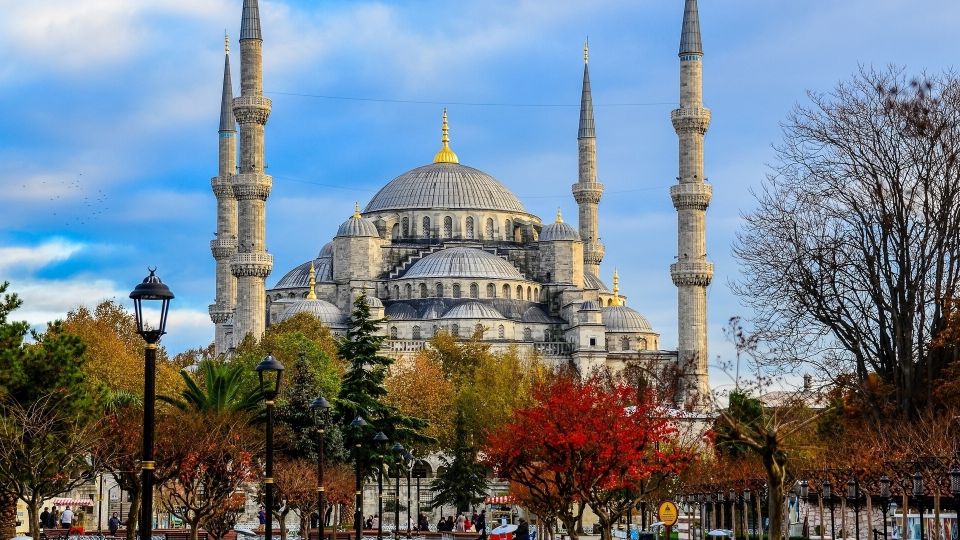
- The Blue Mosque exterior and its iconic blue Iznik tile reputation are front-and-center in a short span.
- Hippodrome monuments like the Obelisk of Theodosius and the Serpentine Column are easier to understand with a guide in plain language.
- German Fountain of Wilhelm II adds a later layer of Istanbul’s story to a mostly ancient route.
- Guides such as Tulay and Songu are described as professional and friendly, with a strong focus on making the landmarks click fast.
A 3-hour Old City route that hits the big names
This tour is designed to be a high-impact introduction to Sultanahmet’s triangle: Hagia Sophia, the Blue Mosque, and the Hippodrome area. You’re walking a compact loop, so you spend less time figuring out where to go and more time learning what you’re looking at.
At 3 hours, the pace works best if you’re also comfortable doing short stretches of walking without frequent long pauses. The tour runs in English, with a live guide, and it keeps group size small enough that it feels more like a guided walk than a moving crowd.
One practical note: the tour info says no luggage or large bags. If you’re traveling with a big daypack, keep it compact. Comfortable shoes matter too, because even short distances in Istanbul’s old streets can add up.
You can also read our reviews of more walking tours in Istanbul



Hagia Sophia from the outside: scale, history, and what to look for
Hagia Sophia is the starting point for good reason. Even when you’re only viewing it from outside, the building’s sheer presence teaches you a lot. It was built in the 6th century by Emperor Justinian as a basilica and later became the best-known symbol of Byzantine architecture.
Here’s the key: learning the building’s timeline changes how you see the façade and the surrounding area. You’ll hear that Hagia Sophia served as the largest cathedral in the world for nearly a thousand years, then changed hands when Sultan Mehmet II converted it into a mosque in 1453. That shift matters, because it explains why this structure feels layered, even at a glance.
Because the tour is outside-only, don’t expect an interior sweep. Instead, use this stop to set your mental picture before you go exploring on your own later. If you’re wondering about timing, the provided info notes that Saint Sophia is open on Mondays between 01 April and 30 October—so it can help you plan an add-on if your dates line up.
Also keep your eyes open for perspective. From the outside, the best “aha” moment usually comes when you step back and see how the building dominates the square. That’s the kind of scale a guide can help you notice fast.
Blue Mosque: Iznik tiles, six minarets, and a design you can spot instantly
Next up is the Blue Mosque, the one facing Hagia Sophia. Its nickname is tied to the interior blue-toned Iznik tiles, but even from outside you can understand why it’s famous once you know what to look for.
The most recognizable feature is the six minarets. These minarets aren’t just decoration; they signal the mosque’s status and the ambition behind its design. The name also connects to Sultan Ahmet, and your guide can help you connect that to where the mosque sits in the overall story of Ottoman-era Istanbul.
There’s also an important caution to manage expectations. The tour info says the Sultan Ahmed Mosque (Blue Mosque) was scheduled to be closed to visitors between March 1, 2018 and May 15, 2018 due to renovations. That window is old, so treat it as an example of how closures can happen, not a promise for your exact day. If you’re going in peak season, I’d still confirm hours close to your travel date.
Even with that caveat, this stop is valuable because it links visually to Hagia Sophia. Standing between these two monuments in one walk gives you an immediate sense of how Istanbul changed religious architecture over centuries.
The Byzantine Hippodrome: where sport and politics rubbed shoulders
After the mosque area, you move into the Hippodrome zone—often the part people skip on their own until they realize it’s the connective tissue of old Constantinople. This was the center of major chariot races, athletics, and political activity.
If you’ve ever looked at a few ruins and thought, So what happened here, this is where a guide earns their fee. The monuments scattered around the Hippodrome are not just photo props. They’re pieces of a civic stage that mattered to daily life and state power.
The tour highlights several specific objects in this area:
- Obelisk of Theodosius
- Serpentine Column
- German Fountain of Wilhelm II
- Plus other Hippodrome monuments associated with the square
The Obelisk is the headline for a reason: an obelisk gives you a vertical “anchor” in a flat space, which helps you understand how crowds would have moved around the arena. The Serpentine Column is another clue, since it’s a recognizable, distinctive form that would have made the site visually memorable.
What makes this stop practical for your time is that the guide helps you connect each piece to the larger function of the Hippodrome. Instead of collecting random names, you understand why those objects were installed where they are.
Obelisk of Theodosius and Serpentine Column: reading stone like a local
This is where your tour experience can feel like it “clicks.” The Hippodrome area is packed with artifacts, but without context, you might miss the logic.
With a good guide, the Obelisk of Theodosius stops being just an ancient stick in the ground. You start thinking like a spectator: this was a landmark in a huge public event space. It also helps you visualize how the square would have looked when it was alive with sound, crowd movement, and ceremony.
The Serpentine Column adds a different kind of understanding. Its shape stands out, and that visual difference can help you remember the story it represents. Even if you don’t know every historical layer on day one, you’ll leave with a stronger sense of the Hippodrome’s identity.
This is also where group size helps. When you’re not competing with a full bus of people, you can step close enough to look carefully and then step back when the guide explains how the pieces relate to the arena layout.
You can also read our reviews of more guided tours in Istanbul





German Fountain of Wilhelm II: a surprise detour through later Istanbul
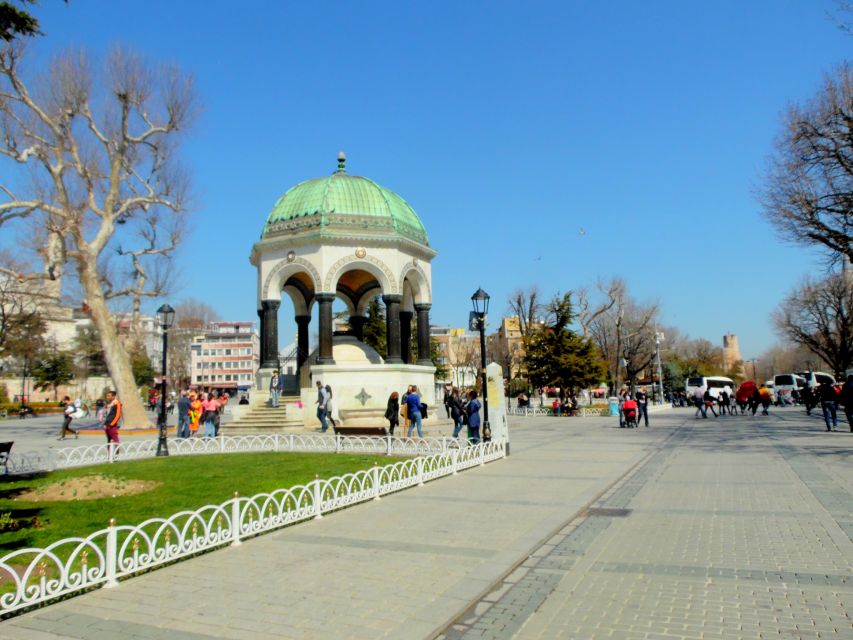
The Hippodrome tour portion isn’t only “ancient.” You also see the German Fountain of Wilhelm II, which adds a later historical layer. That matters because Istanbul isn’t frozen in one era. It’s a city that keeps reusing space, repurposing symbols, and leaving behind new chapters.
A fountain might not sound like a headline, but it’s a good reminder that the city’s monuments reflect different relationships over time. You get a more complete feel for why Istanbul still looks the way it does: older structures set the stage, and later periods mark their presence on the same ground.
I also like this kind of stop because it’s easy to overlook when you build your day from only the world-famous names. If you want photos plus meaning, this is the kind of object that makes your walk feel more “lived-in” and less checklist-ish.
Price and logistics: when $41 feels fair (and when it might not)
At $41 per person for a 3-hour guided walk, the value depends on what you want out of your time. If you want a guided introduction that handles the confusing parts—like where to stand, what to notice, and how the landmarks connect—this price can make sense.
Here’s the value math as I see it:
- You’re paying for a local expert guide who translates the sites into a coherent story.
- You get express security check support, which can save meaningful time on crowded days.
- You get a small group (up to 10), which often improves both pace and conversation.
If you’re expecting major paid-entry experiences at every stop, you should know the Hagia Sophia component is outside-only. That doesn’t ruin the tour, but it changes the cost-to-experience ratio. One downside that came up for a guest was that the value felt dubious for what they received—so if you’re the type who needs ticketed interiors to feel satisfied, compare your priorities carefully.
Logistics are mostly smooth, but don’t ignore the human factors. One experience included hotel pickup that ended up being unclear in its timing and explanation, then moving to a central meeting spot. So if you like precise plans, I’d build in a buffer and keep your expectations flexible on the first part of the day.
Also remember: no meals or drinks are included. If you’re doing this in the morning, plan a coffee or quick bite after. You’ll enjoy the walking portion more if your energy level stays steady.
The guide makes the difference: Tulay and Songu style
This tour is short, so your guide strongly affects the outcome. When the guide is strong, the landmarks stop feeling random and start feeling connected.
One guide named Tulay was described as great and excellent, with an experienced, warm, entertaining delivery. Another guide, Songu, was noted as knowledgeable, friendly, and helpful, including giving time for people to explore at each location. Those are the traits you want on a short walk: clear explanations plus enough room to look around without feeling herded.
In practical terms, a good guide will do three things well:
- Tell you what matters before you move on.
- Give you quick “what to look for” prompts so you don’t drift.
- Keep the group organized without turning it into a sprint.
Even with a small group, you’ll appreciate a guide who explains the flow so you know what comes next.
Who this tour suits best
This is a good match if you want:
- A first day in Istanbul’s Old City and you’d like a guided orientation
- A compact route with major landmarks you can recognize immediately
- A chance to understand the Hippodrome beyond names on a sign
- An English-speaking guide with a calmer small-group setting
It’s less ideal if:
- You strongly want interior time at Hagia Sophia during this exact outing, since the stop is outside-only
- You expect a tour to handle every detail of your schedule with zero uncertainty, given how meeting timing can vary
- You’re traveling with bulky luggage, since the tour restricts luggage or large bags
If you like structure but also like to roam, the design of this walk gives you a foundation. After this, you can choose whether to spend more time inside specific sites on your own.
Should you book this Old City Walking Tour?
I’d book this tour if you want a smart introduction and you value a guide who can connect the dots fast. It’s built for efficient sightseeing: Hagia Sophia’s scale from the outside, the Blue Mosque’s signature silhouette, and the Hippodrome monuments that explain what the area used to be.
I wouldn’t book it as the only plan if your dream Istanbul day depends on interior entrances at every stop. Hagia Sophia is outside-only here, and that changes what you should expect for the time you spend.
If you’re flexible on minor meeting logistics and you’re bringing comfortable shoes, this is one of those “do it early” experiences that can make the rest of your trip easier.
FAQ
FAQ
How long is the Istanbul Old City walking tour?
It lasts 3 hours.
How much does the tour cost?
The price is listed as $41 per person.
Is Hagia Sophia included with an entrance ticket?
No. You’ll see Hagia Sophia from outside, since entrance is not included.
What sights are included in the tour?
You’ll visit Hagia Sophia, the Blue Mosque, and the Byzantine Hippodrome area, including the Obelisk of Theodosius, Serpentine Column, and the German Fountain of Wilhelm II.
Is there food included?
No. Meals and drinks are not included.
What group size should I expect?
It’s a small group, limited to 10 participants.
What language is the tour guide?
The tour is in English.
What should I bring or avoid?
Bring comfortable shoes. The tour does not allow luggage or large bags.
Are there any site closure or opening notes I should know?
The info provided notes the Blue Mosque was closed to visitors between March 1, 2018 and May 15, 2018 due to renovations. It also notes Saint Sophia is open on Mondays between 01 April to 30 October.