REVIEW · ISTANBUL
Istanbul Private Tours: 1, 2 or 3 Day Highlights
Book on Viator →Bookable on Viator
Istanbul rewards the curious, and this private highlights plan helps you get your bearings fast. You’ll see the big Ottoman and Byzantine anchors in a smart order, with a licensed guide who can explain how the city changed over time, from Constantinople to modern Istanbul. I especially love the tight cluster of major sights in the old-city stretch and the way the route adds both architecture and street life, not just photos. One possible drawback: it’s a full-day style outing, so expect a lot of walking and a steady pace.
This is a private tour for your group, offered in English, with pickup when your hotel is in the city center or near Galata port (otherwise you meet at Sura Design Hotel & Suites). Guides like Ozgur and Ali are called out in feedback for making the day feel smooth and for adjusting the pace and focus to match your needs, which matters when you’re trying to pack in iconic stops. It’s priced at $200 per group (up to 5 listed) for a 6 to 20 hour experience window, and it’s typically booked about 39 days in advance.
In This Review
- Key highlights you’ll feel on the ground
- How the 1–3 day structure keeps Istanbul from feeling chaotic
- Price and value: $200 per group, plus what you’ll still pay
- Hippodrome: the Constantinople stadium that still leaves a mark
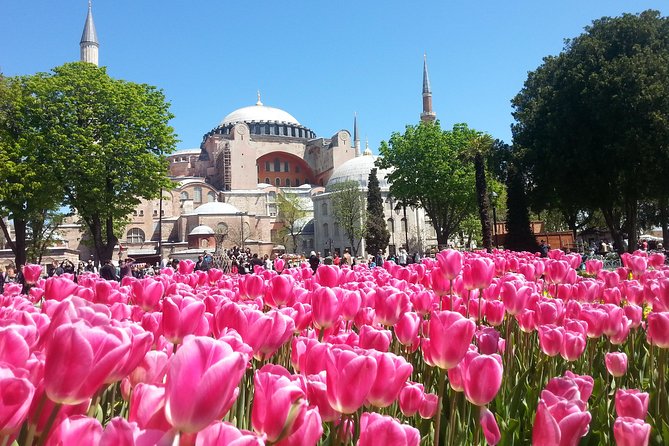
- Blue Mosque and Hagia Sophia: two landmarks, one city’s identity puzzle
- Basilica Cistern and Caferaga Medresesi: where Istanbul shows its engineering brain
- Grand Bazaar and Spice Market: shopping time with a guide to keep you oriented
- Bosphorus boat tour plus modern Istanbul: see the city from the water and street level
- Suleymaniye, Rustem Pasha, and the Ottoman craft details you’ll remember
- Walls of Constantinople plus Fener and Balat: the city’s layers on foot
- Your guide’s role: why Ozgur and Ali get named
- Timing tips and closure realities that can affect your exact day
- Should you book this Istanbul private tour?
- FAQ
- Is this tour private?
- Where does the tour start and end?
- Is hotel pickup included?
- What’s the tour duration?
- What’s included in the price?
- Are admission tickets included for all stops?
- Are there closures on certain days?
- Can I cancel for a full refund?
Key highlights you’ll feel on the ground
- Licensed guide + private group focus: you’re not stuck with a big herd of strangers.
- Old-city classics in one flow: Hippodrome, Blue Mosque, Hagia Sophia, and Basilica Cistern sit close enough to make sense.
- Ottoman design stops (not just the headline sites): Caferaga Medresesi, Suleymaniye, and Rustem Pasha Mosque add depth.
- Bosphorus views without planning stress: a public boat tour keeps it simple and scenic.
- Golden Horn neighborhoods included: Fener & Balat gives you a different Istanbul angle than the main monuments.
How the 1–3 day structure keeps Istanbul from feeling chaotic
The headline here is simple: you can choose 1 day, 2 days, or 3 days, and your route will pull from a set list of core landmarks around the Historic Peninsula and the Golden Horn, plus Bosphorus and modern Istanbul stops. The total time can run from about 6 to 20 hours, so the tour can fit short visits or longer stays if you want more ground covered.
What makes this plan work is the mix of eras and settings. You start with the grand public face of Constantinople (Hippodrome), move into Ottoman religious architecture (Blue Mosque and major mosques), and then add the quieter behind-the-scenes style of places like medreses and cisterns. After that, you shift to water and modern streets, which helps your brain reset between heavy monuments.
If you like your Istanbul days planned but not rigid, this format is built for you. It’s private, but still structured enough that you won’t waste hours figuring out routing.
You can also read our reviews of more private tours in Istanbul

Price and value: $200 per group, plus what you’ll still pay
The tour is listed at $200 per group (up to 5 in the pricing note), and it’s designed for a small private group. The bigger value play is time: in a single day or over a couple days, you’ll hit a lot of the city’s top anchors with a guide to connect the dots.
Here’s what’s included versus what’s not:
- Included: a licensed professional local guide and pickup from your hotel lobby when eligible.
- Not included: lunch, and admission fees where noted on the plan (some sites are free, while Hagia Sophia and Basilica Cistern are marked as not included).
For most people, the value comes from avoiding the main tourist friction points: crowding, unclear ordering, and wondering what you’re looking at once you get there. You’re also getting a private group experience, which usually means you can ask follow-ups without feeling rushed.
Just plan on entrance fees and meals being on your own. That’s the only real budget surprise.
Hippodrome: the Constantinople stadium that still leaves a mark
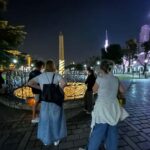
Your tour often begins at the Roman Hippodrome, a chariot-racing arena that once sat at the center of Constantinople’s public life. Today it’s an open-air museum feeling, and that’s exactly why it’s a great first stop. You get the story of the city’s ancient civic energy before you hit the massive religious buildings.
The specific monuments you’ll look for help anchor the timeline. The Obelisk of Theodosius (brought in the 4th century) is the big visual reference point, and it gives your guide an easy entry into how power and culture moved around the empire. You’ll also see the Serpent Column and the German Fountain, which adds a later layer of history people often miss when they only focus on the headline monuments.
Consideration: it’s not a building you’ll walk inside for long. If you’re expecting a mega-museum stop, this one works more as a narrative opener.
Blue Mosque and Hagia Sophia: two landmarks, one city’s identity puzzle
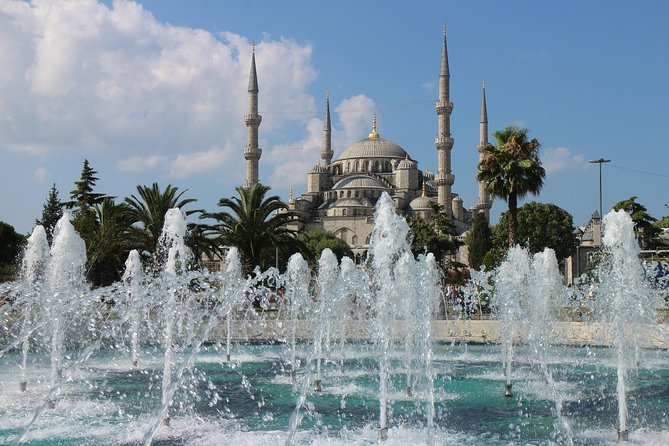
This is where Istanbul clicks for many people: Ottoman architecture and Byzantine roots living close enough to compare.
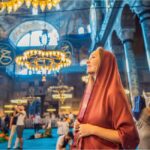
At the Blue Mosque (Sultan Ahmed Mosque), you’ll spend time on the exterior and then go inside. The interior focus is on the famous blue tiles, the big prayer hall, hand-painted tilework, stained glass, and calligraphy, with sunlight filtering through windows. The mosque also tends to be a calmer stop when you go with a plan, since it’s not just about looking—it’s about understanding why it’s shaped the way it is.
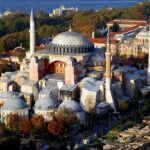
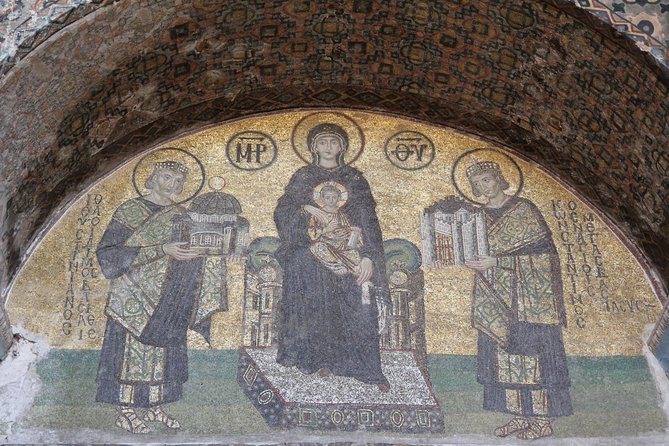
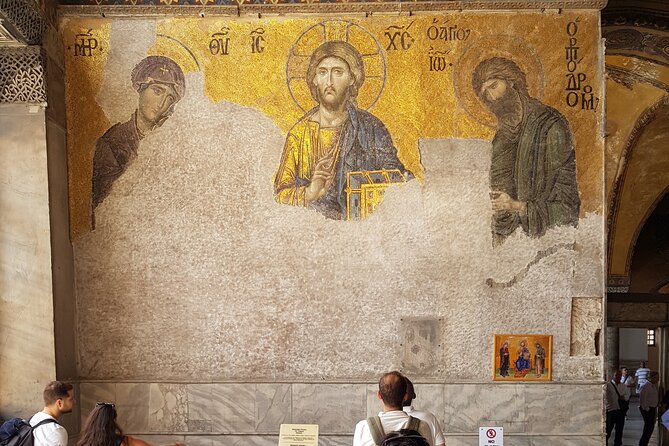
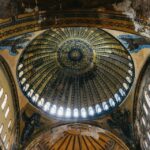
Then comes Hagia Sophia Grand Mosque on the plan (noted as a museum on the information given). You’ll connect its 6th-century cathedral origin with its later transformation into a mosque, and then its current museum role. Look for the mosaics, calligraphy, and the dome impact your guide will point out.
Two practical timing notes you should know:
- On Fridays, the Blue Mosque can be limited until around 2:00–2:30 pm due to the sermon, and there may be only outer visit on Fridays.
- Hagia Sophia can close during prayer times, so your guide may adjust timing if you land in a prayer window.
This is a strong pairing because your guide can help you compare how each empire used art and space to communicate faith, authority, and imagination.
Basilica Cistern and Caferaga Medresesi: where Istanbul shows its engineering brain
If the big monuments are the front-of-house, the Basilica Cistern is the back stage. It’s an underground reservoir built in the 6th century under Justinian I, and you’ll walk through raised walkways among marble columns over still water. The atmosphere is intentionally dim and echo-prone, so your guide’s storytelling helps you slow down and actually notice details.
The Medusa heads are one of the most talked-about features, and it’s the kind of object that feels almost too strange to be real. That reaction is useful—it makes you pay attention, which is the point of including this stop instead of only doing photo landmarks.
Caferaga Medresesi is a different kind of stop: an exhibition hall with art and music displays in a building attributed to Mimar Sinan, built as a religious school originally. Today it’s arranged with multiple halls decorated with student and Turkish artists’ works. It’s short on the schedule, but it adds a creative break between heavy architecture stops.
Consideration: Basilica Cistern is marked as admission not included, so expect a separate ticket cost. It’s also indoor and can feel cooler than the streets, so bring a light layer.
A few more Istanbul tours and experiences worth a look


Grand Bazaar and Spice Market: shopping time with a guide to keep you oriented
The plan includes the Grand Bazaar and the Spice Market (Misir Carsisi), both listed as free entry in the time blocks you’re given. That’s great, because even if you don’t buy much, you’ll get the atmosphere and the context.
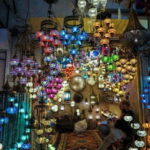
In the Grand Bazaar, you’re looking at one of the oldest and largest covered markets, with thousands of shops lining its lanes. What a guide adds here isn’t just navigation. It’s helping you understand what you’re seeing—types of goods, what different sections are known for, and how the market fits into the city’s older commerce patterns.
Then you’ll go to the Spice Market, dating back to the 17th century in the information provided. This stop is all about sensory cues: spices, herbs, dried fruits, nuts, teas, Turkish delight, and sweets. If you’re food-curious, it’s a chance to learn what spices mean, not just see them.
Practical note: Grand Bazaar is closed on Sundays, and both the Grand Bazaar and Spice Market have seasonal closure windows during Ramadan religious fest days, Eid al Adha dates in 2025, and Republic Day (October 29). If your travel dates match those, your guide will likely rework your day.
Bosphorus boat tour plus modern Istanbul: see the city from the water and street level
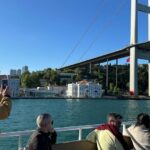
One of the smartest parts of this plan is the shift to the Bosphorus Strait via a boat tour. You’ll ride on public boats, usually around 2 hours, with panoramic skyline views and a guide calling out what you’re passing.
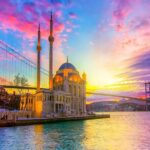
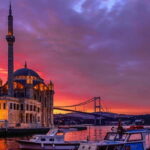
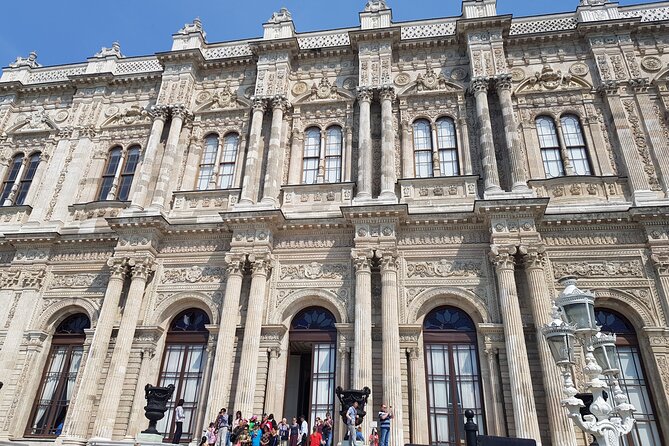
You’ll get views of historic palaces and mosques along both sides of the water. The information highlights Dolmabahçe Palace, Ortaköy Mosque, and Rumeli Fortress as landmarks the tour points out. Even if you’ve seen photos already, the water angle makes the city’s geography make more sense fast.
After the boat, you head toward modern Istanbul:
- Taksim Square as the leisure-and-transit heart of the Beyoglu area.
- Istiklal Caddesi, the pedestrian boulevard with 19th-century buildings, plus side streets with cafes, bars, and shopping.
- Galata Tower (outer visit only), built in 1348 and linked to fire protection, later use as a prison and observation tower.
- Dolmabahçe Palace as a museum now, built mid-19th century and connected to royal residence before the sultanate was abolished in 1922.
- Galata Bridge near the Golden Horn.
This section is where your day can start to feel less about single monuments and more about Istanbul’s rhythm. If you’re the type who gets tired of interiors, this is a good balance.
Suleymaniye, Rustem Pasha, and the Ottoman craft details you’ll remember
When people say Ottoman architecture, they often think only of the biggest names. This tour adds two spots that help you see the craftsmanship up close.
At Suleymaniye Mosque, commissioned by Suleiman the Magnificent and designed by Mimar Sinan, you’ll focus on the dome, minarets, courtyard setting, and inside details like tilework and calligraphy. The schedule gives it enough time to feel like more than a quick stop.
Then comes Rustem Pasha Mosque, described as a smaller, more intimate site in the Eminonu area. The key draw is the intense focus on interior tilework, including Iznik tile patterns with floral motifs and geometry, plus stained glass light effects. It’s the kind of place where you can actually pause and notice the details because the space is scaled for stillness.
Why these matter: they show Ottoman design as lived space, not just a grand exterior. That makes the rest of Istanbul’s architecture click.
Walls of Constantinople plus Fener and Balat: the city’s layers on foot
Two late stops in the plan shift you into neighborhoods where the story feels more human.
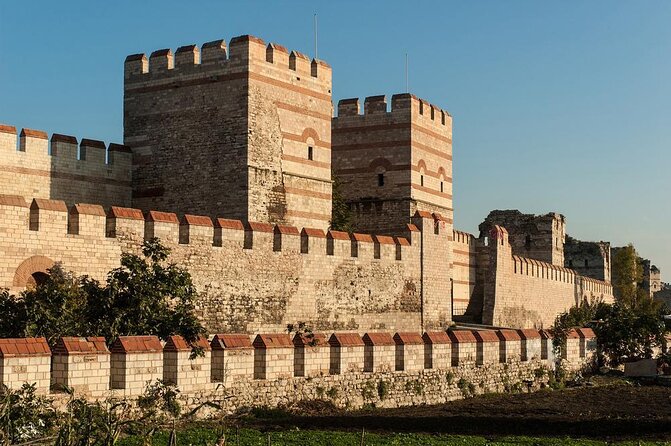
At the Walls of Istanbul, you’ll learn they were constructed in the 5th century under Theodosius II, then expanded and strengthened later under Leo I. Even in the short time allotted, it helps you understand why Istanbul’s defenses shaped how the city developed.
Then you go to Fener & Balat along the Golden Horn. The plan highlights colorful Ottoman-era house facades, cobblestones, and nearby landmarks including the Church of St. George and the Greek Orthodox Patriarchate and Fener Greek High School. The idea here is simple: you get a Golden Horn walk that feels different from Sultanahmet’s monument strip.
Finally, you’ll reach Fener Rum Patrikhanesi (the Church of St. George is referenced as major Eastern Orthodox church in the information provided). The schedule lists time for this area and reinforces the Byzantine and Eastern Orthodox threads that run through Istanbul’s identity.
Consideration: neighborhood time is time that can stretch depending on pace, photos, and how often you stop. This is a good thing if you like wandering, but it means you’ll want comfortable shoes.
Your guide’s role: why Ozgur and Ali get named
This type of tour rises or falls on the guide, and the feedback you have here points to two patterns.
First, guides like Ozgur are praised for taking time to explain and adapting to what you actually need. That’s a big deal when your day includes both free-entry outdoor monuments and ticketed indoor stops. You don’t want a robot-style script.
Second, Ali is described as friendly and hugely informative, with smooth pacing and a sense of being looked after. That kind of flow matters because some stops are time-boxed, and you’ll feel it if the day is poorly stitched together.
If you value clarity—why you’re seeing something, what to notice, and how to prioritize—you’ll probably find this tour style fits you.
Timing tips and closure realities that can affect your exact day
A plan this packed needs a few date checks up front:
- Blue Mosque Fridays: only outer visit is possible until around 2:00–2:30 pm due to the sermon timing noted in the information.
- Hagia Sophia: can close during prayer times.
- Grand Bazaar: closed on Sundays.
- Ramadan, Eid al Adha, and Republic Day closures: Grand Bazaar and Spice Market can be closed during the listed 2025 dates.
- Topkapi Palace is noted as closed on Tuesdays, though it’s not one of the stops you’re given in this itinerary.
Also, this is a walking-focused itinerary in the sense that many highlights are close together in a pedestrian-friendly area. If your group wants to move fast, you’ll be fine. If you want slow strolls every stop, plan for a shorter focus or more breaks.
Should you book this Istanbul private tour?
I’d book this if you want a private, guide-led Istanbul highlights plan that covers both the headline monuments and the in-between places that make the story make sense. It’s especially good if you have limited time and you don’t want to spend that time figuring out what goes where.
Skip it or adjust expectations if you hate walking, or if your dates land on known closure days and you want a guaranteed visit to every single site. Also, remember that some major stops have admission fees not included, so your final cost may be a bit higher after you factor those in.
If you’re traveling with up to a small group and you like your day explained, not just photographed, this is a strong way to experience Istanbul without the usual chaos.
FAQ
Is this tour private?
Yes. It’s a private tour for your group (described as up to 8 people), and only your group participates.
Where does the tour start and end?
The start point is Sura Design Hotel & Suites in Fatih. The tour ends at Grand Bazaar in Beyazıt.
Is hotel pickup included?
Pickup is included if your hotel is located in the city center or Galata port. If not, your guide meets you at the Sura Design Hotel, and for centrally located hotels the guide picks you up on foot.
What’s the tour duration?
It runs about 6 to 20 hours, depending on the option you choose (1, 2, or 3 days).
What’s included in the price?
A licensed professional local tour guide is included, plus hotel/lobby meeting where pickup applies. Admission fees for sites marked as not included, as well as lunch, are not included.
Are admission tickets included for all stops?
No. The itinerary marks some places as admission free, while others (such as Hagia Sophia Museum and Basilica Cistern Museum) are listed as admission not included.
Are there closures on certain days?
Yes. Grand Bazaar is closed on Sundays. Blue Mosque has limited access on Fridays until around 2:00–2:30 pm, with only outer visit possible on Fridays. Hagia Sophia can be closed during prayer times. Grand Bazaar and Spice Market can also close during listed Ramadan, Eid al Adha dates, and Republic Day.
Can I cancel for a full refund?
You can cancel for a full refund if you cancel at least 24 hours before the experience start time. If you cancel less than 24 hours before, the amount paid is not refunded.