REVIEW · ISTANBUL
Istanbul City Walk: Colors, Culture & History Fener Balat Tour
Book on Viator →Operated by Tourmania · Bookable on Viator
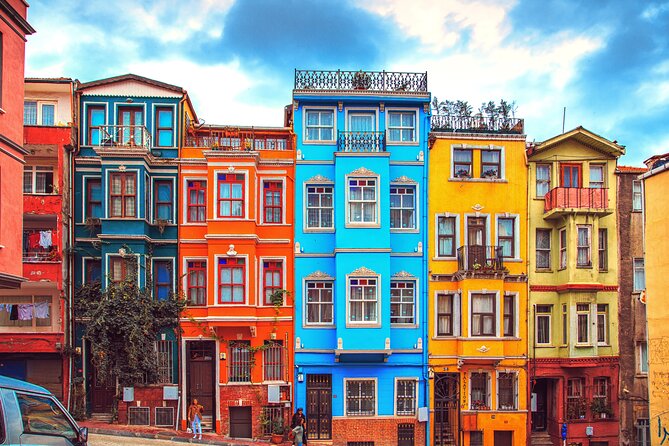
Balat and Fener feel like Istanbul’s living color wheel. This guided walk strings together Greek, Bulgarian, and Jewish landmarks with Byzantine-to-Ottoman-to-modern street scenes. I like how the route is photo-friendly without turning into a theme park.
I also like the pace and the way the stops connect into a story: you’ll see why the Ecumenical Patriarchate in Fener (Phanar) matters, and why local schools and churches are more than pretty buildings. One thing to consider: on rare occasions, city closures can force last-minute changes, so build a little flexibility into your day.
In This Review
- Key things to love about the Fener Balat City Walk
- Walking Istanbul’s layers in Balat and Fener
- Price and what you’re really paying for (and what you’re not)
- Where you start: Balat Merkez Şekercisi and the route feel
- Stop-by-stop: what you’ll see and why it matters
- Stop 1: Balat neighborhood Muhtarligi (the colorful Jewish quarter vibe)
- Stop 2: Colorful streets and the Ayvansaray–Balat–Fener timeline
- Stop 3: The art nouveau stairs (a photo stop that isn’t just for show)
- Stop 4: Fener, center of the Greek Orthodox community
- Stop 5: Dimitrie Cantemir Museum Café area (a quieter breather)
- Stop 6: Private Fener Greek High School and the stakes of survival
- Stop 7: Saint Stephen’s Bulgarian Orthodox Church (the Iron Church nickname)
- Stop 8: The Ecumenical Patriarchate of Constantinople (Phanar’s most important symbol)
- Stop 9: Fener Rum Patrikhanesi (the neighborhood’s Orthodox presence, summed up)
- The kind of guide that changes the whole walk
- Pacing, photos, and what to do with your time
- A fair warning: closures and communication can be tricky
- Who this tour fits best
- Should you book Istanbul City Walk: Colors, Culture & History Fener Balat Tour?
- FAQ
- Is this tour in English?
- How long is the walking tour?
- How much does it cost?
- What’s included in the price?
- Are there entrance fees at every stop?
- Where do we meet, and how does the tour end?
- Do I need a lot of walking ability?
- Is transfer provided?
- What if the city has closures or the tour can’t run?
Key things to love about the Fener Balat City Walk
- A compact 2-hour route focused on highlights, not a long grind
- Small group size (max 15), so the guide can actually keep track of you
- Lots of free outdoor viewing plus included entry at the Patriarchate
- Stair and street photo stops that are genuinely worth slowing down for
- Multi-community Istanbul: Jewish quarter houses, Orthodox churches, Greek education sites
- Guide energy stands out in the feedback, with help for questions and pictures
Walking Istanbul’s layers in Balat and Fener
Balat and Fener are where Istanbul stops being a list of famous monuments and starts feeling personal. You walk through neighborhoods that have housed different communities for centuries, and you can see the timeline on the street itself. The colors on the houses, the church buildings, and the school-era architecture all work together like a “side-by-side” history lesson.
This tour is built for that kind of seeing. It’s about 2 hours, and it keeps you moving between key corners where the city’s cultural layers overlap. For me, the big win is that you’re not just looking at landmarks—you’re learning how they fit together as the same city, with different communities shaping the streets around them.
And yes, you’ll likely take a lot of photos. The route includes a popular art nouveau stair spot and multiple “turn the corner and wow” streets. If you hate slow tours, this one usually won’t feel like one.
You can also read our reviews of more walking tours in Istanbul


Price and what you’re really paying for (and what you’re not)
At about $30.17 per person for a 2-hour guided walk, the cost feels fair when you compare it to what’s included: guided walking and entrance fees. Most stops are described as free to visit, and the Patriarchate stop is marked as included.
So your money mostly buys three things:
- A route that doesn’t waste time
- A guide who can connect the sites instead of listing them
- Access/entry where it counts
Two practical notes: there’s no transfer included, so you’ll want to handle getting to the meeting point yourself. Also, it’s offered in English, and the group is limited to 15 travelers, which usually helps keep the experience smooth.
Where you start: Balat Merkez Şekercisi and the route feel
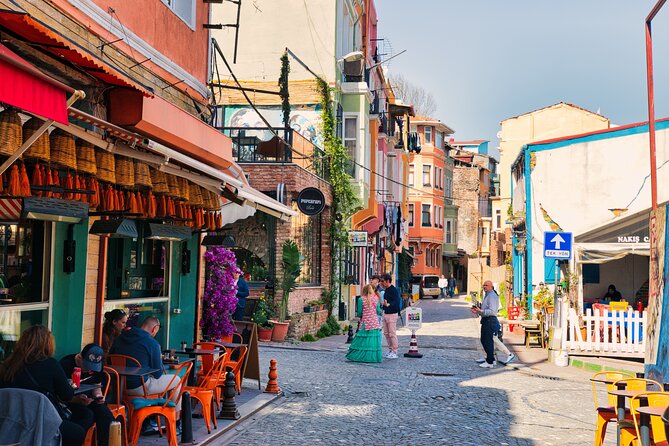
You meet at Balat Merkez Şekercisi, Ayvansaray, Leblebiciler Sk. No:33, 34087 Fatih/İstanbul. The tour ends back at the meeting point, so you’re not dealing with a long end-of-day logistics problem.
The area is marked as near public transportation, which matters because Balat/Fener can be a bit tricky to reach by taxi during busy periods. If you’re planning your day around this, I’d treat it like a “neighborhood block” you can plug into the rest of your Istanbul itinerary.
Physical note: the tour calls for moderate physical fitness. That doesn’t mean you need hiking gear, but you should expect walking and stairs, including the famous stair segments.
Stop-by-stop: what you’ll see and why it matters
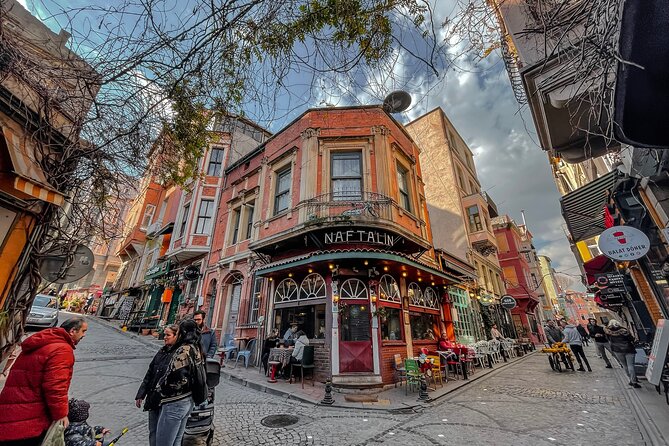
Stop 1: Balat neighborhood Muhtarligi (the colorful Jewish quarter vibe)
You begin in Balat, at the Muhtarligi area. This is described as a historic Jewish quarter with colorful houses. The point here isn’t a single building to “check off.” It’s the atmosphere: streets where architecture and community memory blend into the everyday view.
Why it’s worth a moment: even at the first stop, you start recognizing the “layers” theme—how different histories occupy the same small space.
You can also read our reviews of more city tours in Istanbul


Stop 2: Colorful streets and the Ayvansaray–Balat–Fener timeline
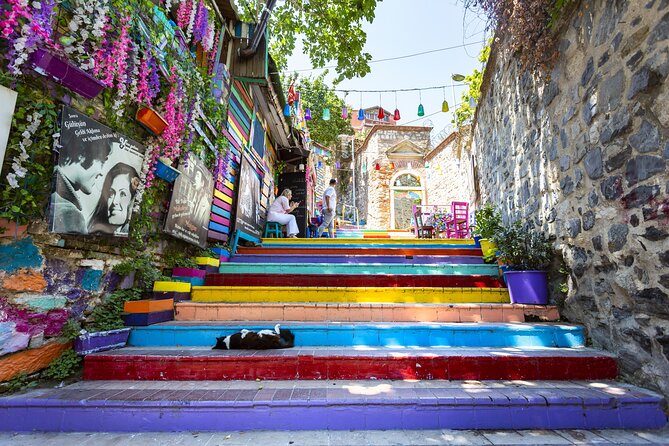
Next comes the Colorful Stairs / colorful streets stretch that links Ayvansaray, Balat, and Fener. This section is described as a miniature chronicle of Byzantine, Ottoman, and modern times, with monuments and multiple communities in one area.
That line can sound poetic, but on the ground it helps you frame what you’re seeing: these aren’t isolated neighborhoods. They’re overlapping chapters of the same city.
Practical tip: take your photos, then look up at the street geometry. These streets reward the angle more than the subject.
Stop 3: The art nouveau stairs (a photo stop that isn’t just for show)
You’ll hit another “Colorful Stairs” area described as an elegant set of 19th-century art nouveau stairs, popular for photos, en route toward Galata Tower.
This is the part where your legs do a little work for a clean reward: a stair scene that’s instantly recognizable and easy to frame. If you’re the kind of person who only takes photos when the view is perfect, this one is designed for that instinct.
Stop 4: Fener, center of the Greek Orthodox community
Then it’s Fener—described as the historic center of the Greek Orthodox community. This is where the neighborhood starts to feel more “institutional,” with religious architecture and long-running civic presence.
What I like about this stop is that it sets you up for what comes next: the tour isn’t random; it’s steering you toward the big Orthodox leadership sites in Fener.
Stop 5: Dimitrie Cantemir Museum Café area (a quieter breather)
At the Dimitrie Cantemir Museum Cafe area, you’re in the Dimitrie Cantemir House / Museum area. The tour gives you about 10 minutes here, which tells you the intent: it’s not a long museum detour, but a chance to reset.
Why this matters on a walk tour: you need a pause to process what you’ve just learned. A short café stop area can make the rest of the route feel less like a sprint.
Stop 6: Private Fener Greek High School and the stakes of survival
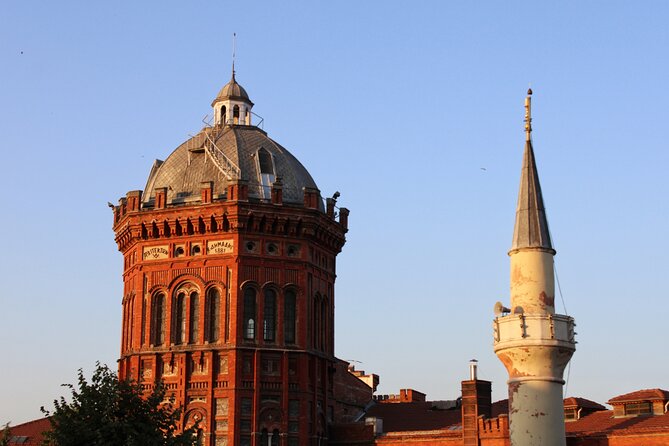
Next is a big one: Private Fener Greek High School. This is described as the Great School of the Nation, tied to the ancient Greek language, ancient philosophy, and history, and also to the Orthodox legacy.
Here the story gets real. The tour notes 560 years of operation (with a major role in educating Orthodox Greek students) and says the school is endangered of closing.
This is where a guided walk does better than a self-guided wander. You get the context for why you should look twice at a school building: it’s part of a living chain of education and identity, not just old stone.
Stop 7: Saint Stephen’s Bulgarian Orthodox Church (the Iron Church nickname)
Then you’ll see Saint Stephen’s Bulgarian Orthodox Church, described as the Bulgarian Iron Church and noted as still in use in Istanbul.
That detail—still in use—changes how you experience it. You’re not only viewing history; you’re seeing an active religious building within the neighborhood’s broader mix of Orthodox communities.
Stop 8: The Ecumenical Patriarchate of Constantinople (Phanar’s most important symbol)
This is a headline stop: the Patriarchate Of Constantinople (the Ecumenical Patriarchate).
A few key points from the tour description:
- It’s one of the autocephalous churches that make up the Eastern Orthodox Church.
- It’s headed by the Ecumenical Patriarch of Constantinople, described as the first among equals.
- The name listed is Bartholomew as the current patriarch.
- The Patriarchate has been located in the Phanar (Fener) district since the late 16th century.
- This stop has about 20 minutes, and admission is included.
This stop is valuable because it anchors the whole walk. Earlier you’re learning about communities and education and local churches. Here you’re seeing the larger religious leadership center that helps explain why Fener/Phanar is such a powerful chapter in Istanbul’s Orthodox story.
Practical tip: wear something comfortable and be ready for quiet, respectful viewing. This isn’t a place you experience by rushing.
Stop 9: Fener Rum Patrikhanesi (the neighborhood’s Orthodox presence, summed up)
Finally, you finish with Fener Rum Patrikhanesi. It’s listed as a stop with a shorter time window, admission marked as free.
Think of it as the neighborhood “wrap.” After the Patriarchate stop, this helps you connect the leadership site back to the daily geography of the district.
The kind of guide that changes the whole walk
The biggest praise in the feedback isn’t just the route—it’s the guide. I’ve seen walking tours that feel like a script. This one aims to feel like a conversation.
In particular, Furkan / Furkam is mentioned by name in the feedback for being enthusiastic and able to explain religion and history, plus being attentive and helpful with pictures. One person even described guide help with a Turkish coffee request, which is the kind of thoughtful “you’re in the right neighborhood” service that makes a tour feel human, not mechanical.
Will you get that exact guide? You can’t count on it from the tour details alone. But based on the tour’s reputation for friendly, energetic explanations, you should expect clear storytelling—and chances to ask questions as you walk.
Pacing, photos, and what to do with your time
The tour is designed as short segments, often around 10 minutes per stop, with a longer 20 minutes at the Patriarchate area. That structure keeps the group moving while still giving you time to:
- look closely at buildings
- take photos at stair spots
- absorb the historical links
If you’re a “photos first” person, the best strategy is simple: take your wide shots at the stair moments, then slow down at the church and school stops to capture details later. Don’t burn all your time at the most scenic angle; the most meaningful learning often happens when you stop and listen.
A fair warning: closures and communication can be tricky
One drawback that showed up in the experience data is that sometimes the tour can be affected by unexpected city closures, with last-minute communication. In the example shared, the tour was canceled about an hour before, and guests had to scramble with extra transport costs.
This doesn’t mean you should assume problems every time. It does mean you should:
- keep your schedule flexible that day
- avoid tight connections right before the tour
- double-check for updates if your day is heavy
It’s not a “deal breaker,” but it’s the kind of travel reality you should plan for.
Who this tour fits best
You’ll enjoy this walk most if you:
- like walking tours that connect religion, education, and community history
- want neighborhoods that are colorful and photo-friendly without being only a photo safari
- enjoy learning through context, not just reading plaques
- prefer a small group experience
If you want only the biggest “postcard Istanbul” sights in minimal time, this might feel more specific and local than you expect. But if you want the Istanbul behind the headlines—this hits the right nerve.
Should you book Istanbul City Walk: Colors, Culture & History Fener Balat Tour?
I’d book it if you want an efficient, guided way to understand how Balat and Fener became what they are: a shared Istanbul shaped by multiple faiths and long-running institutions. The value looks strong for the price, especially with the guide-led flow and entry included at the Patriarchate stop.
I would hesitate only if your schedule is extremely rigid or you can’t handle potential last-minute disruption from local closures. If you have buffer time, this is the kind of tour that makes a neighborhood feel real fast.
FAQ
Is this tour in English?
Yes, the tour is offered in English.
How long is the walking tour?
The tour lasts about 2 hours.
How much does it cost?
The price is $30.17 per person.
What’s included in the price?
The tour includes a guided walking tour and entrance fees.
Are there entrance fees at every stop?
Most stops are listed as free, and the Patriarchate stop is listed as included. Some individual sights may still depend on what’s open on the day.
Where do we meet, and how does the tour end?
You meet at Balat Merkez Şekercisi, Ayvansaray, Leblebiciler Sk. No:33, 34087 Fatih/İstanbul, and the tour ends back at the meeting point.
Do I need a lot of walking ability?
The tour requires moderate physical fitness, and the route includes stair and street segments.
Is transfer provided?
No. Transfer is not included, so you’ll need to reach the meeting point on your own.
What if the city has closures or the tour can’t run?
If city conditions interfere, there may be changes. The provided experience info also notes the tour can be canceled due to poor weather, with an alternative date or a full refund.