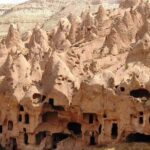
Underground Istanbul can feel like a secret movie set. This Ghost City Istanbul Walking Tour strings together ancient monuments and two major cisterns, and it does it at a human pace with a guide who turns myths into something you can actually picture, especially with Rose’s storytelling style and connections like Medusa and the evil eye. I also love how the stop choices balance showy spots with quieter ones, so you’re not stuck only in the longest lines or the loudest rooms, particularly at Theodosius Cistern.
One thing to plan for: cistern admission isn’t included (so you’ll want to budget for entry fees at the underground stops), while the Serpent Column and one park cistern are free. If you’re the type who hates ticket math mid-day, that’s your only real friction point.
In This Review
- Key things you’ll notice right away
- Starting at German Fountain: where the walk makes sense
- Serpent Column at the Hippodrome: the bronze that makes myths tangible
- Çemberlitaş Column (Burnt Column): Constantine’s dated marker in stone
- Theodosius Cistern: the underground stop that feels calmer
- Basilica Cistern near Hagia Sophia: 336 columns and a renovated feel
- Gülhane Park Sarnıcı: the smaller cistern in the park
- How the 2–3 hour walking pace really works
- Price and value: what $64.46 buys you
- The guide experience: what to expect from the storytelling
- Who should book this Ghost City Istanbul Walking Tour
- Should you book it? My practical verdict
- FAQ
- FAQ
- How long is the Ghost City Istanbul Walking Tour?
- Is the tour offered in English?
- What is the price per person?
- What’s included in the tour price?
- Are cistern tickets included?
- How big is the group?
- Where do you meet and where does it end?
- Is there a mobile ticket?
- What is the cancellation policy?
Key things you’ll notice right away
- A tight 2–3 hour route that hits big landmarks without turning your day into a marathon
- Serpent Column and Çemberlitaş Column give you the Constantinople “spine” above ground
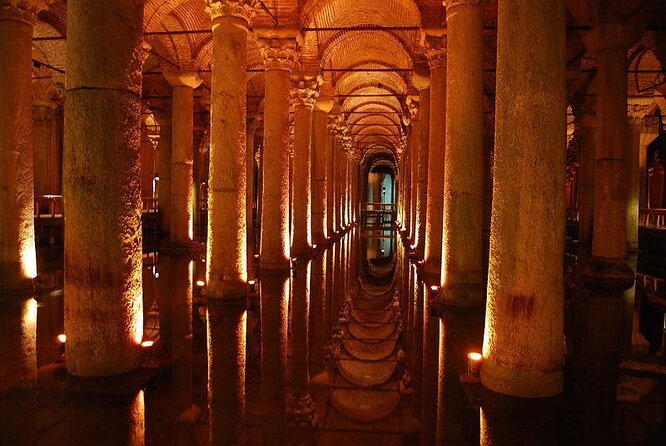
- Theodosius Cistern (30 minutes) is often less crowded than the famous cistern next door
- Basilica Cistern (30 minutes) is the headline: 336 marble columns in a renovated setting
- A max group size of 15 keeps questions and pacing friendly, in English
Starting at German Fountain: where the walk makes sense
The tour starts at the German Fountain (Binbirdirek, At Meydanı Cd, Fatih). It’s a sensible meeting point because it’s in the historic core and stays close to the area you’ll be exploring. You’ll end at the Basilica Cistern area (Alemdar, Yerebatan Cd. 1/3), so you can usually roll straight into more sightseeing afterward.
What I like about this kind of format is that it keeps your bearings. You’re not doing random U-turns across Istanbul. You’re following a line through landmarks that all connect to the city’s Byzantine-era water and power systems, plus the earlier games and ceremonies tied to the Hippodrome zone.
You’re also dealing with a small group (up to 15), which matters more than it sounds. It means your guide can pause, answer questions, and keep everyone together when the streets get narrow or when people stop to take photos.
You can also read our reviews of more walking tours in Istanbul



Serpent Column at the Hippodrome: the bronze that makes myths tangible
Stop 1 is the Serpent Column, the ancient bronze column at the Hippodrome of Constantinople. It’s known by a few names (including the three-headed serpent reference), and that alone tells you this column has been “explained” in lots of ways over time.
In a Ghost City style tour, this stop works as a setup. Before you go underground, you get a grounding point in how Istanbul collected symbols and reused them across eras. The column is free to visit here, and you’ll spend about 10 minutes—long enough to read the vibe and learn the key story beats without dragging.
Practical tip: treat this as your orientation moment. If you’re not sure how the city’s different periods connect, ask your guide one question right at this stop. It’s much easier once you’ve seen one anchor landmark.
Çemberlitaş Column (Burnt Column): Constantine’s dated marker in stone
The next monument stop is Çemberlitaş Column, also called the Burnt Column or Column of Constantine. It was built in 330 to honor Emperor Constantine I.
This isn’t just a photo-op. It’s your mid-walk timeline check. When you see a dated monument like this, it sharpens the story for everything that comes later, especially once you start thinking about how water systems and civic buildings were planned, maintained, and repurposed.
One consideration: columns are what they are—open air, no indoor shelter. So if you have strong sun or heat sensitivity, bring a cap and water. The tour pace is still manageable, but it’s not an all-indoor route.
Theodosius Cistern: the underground stop that feels calmer
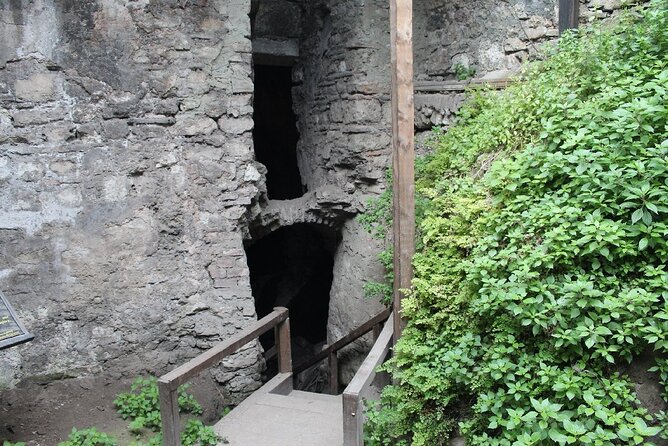
Stop 2 is the Cistern of Theodosius (about 30 minutes). Tickets here are not included, so you’ll want to plan for entry costs before you go in.
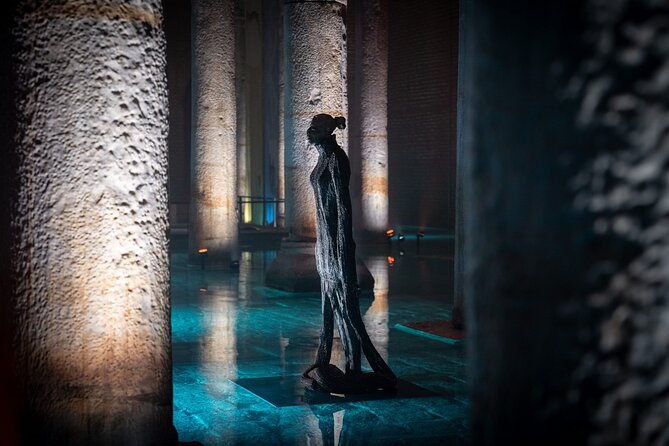
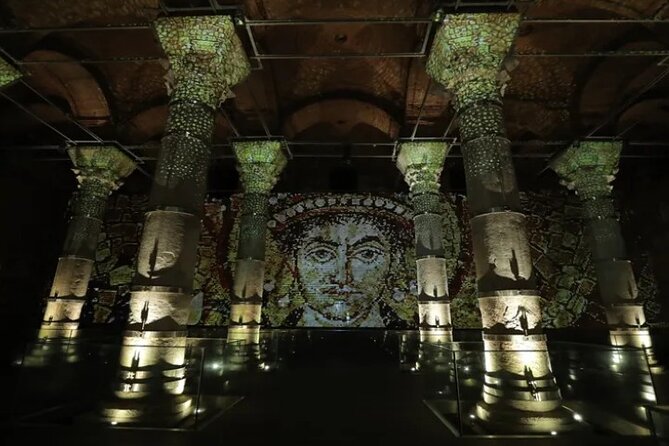
This is the kind of cistern that works especially well for first-time cistern visitors. You’re underground, the lighting is dim, and the space gives you that instant “how did they build this” reaction. The setting is Byzantine-style in feel, with arched columns and reflective pools that help the architecture look almost too perfect to be real.
The best part for many people is the atmosphere. Compared with the most famous cistern, this one tends to feel less overwhelmed. That matters because it lets you actually look up, trace the column rhythms, and take in the way the light plays off the water.
What to expect: you’ll spend enough time to settle in. If you rush, you’ll miss the geometry. If you slow down, you’ll notice details the quick visitor wave usually skips.
Basilica Cistern near Hagia Sophia: 336 columns and a renovated feel
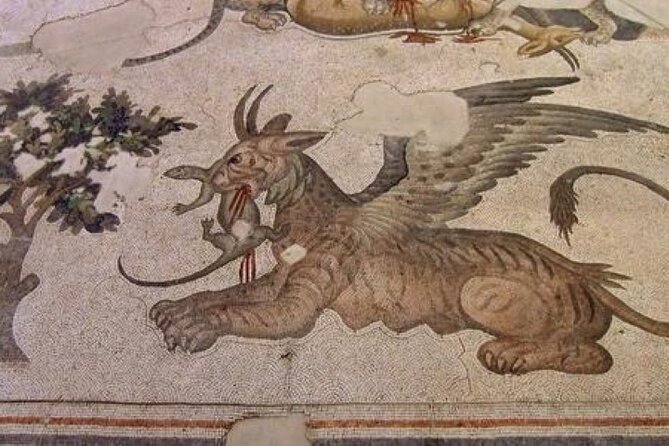
Stop 3 is the Basilica Cistern (about 30 minutes). Like Theodosius Cistern, admission tickets are not included.
This is Istanbul’s cistern headline. You’re walking into one of those spaces where the scale hits you even if you think you’ve seen everything. The room is supported by 336 marble columns, rising from the water to create a forest effect. It’s dim and moody in a way that makes photos look dramatic even with basic phone cameras.
The tour notes that it has been recently renovated, which is worth caring about. Renovation usually means steadier surfaces and less clutter that can make it hard to focus on the view. It can also mean the cistern is more comfortable to navigate, even though it’s still an underground environment.
Drawback to keep in mind: this is also the cistern people most often plan to see, which can mean crowds at peak times. Your best strategy is to follow your guide’s timing and not get stuck trying to find the perfect photo spot immediately. You’ll get more from the architecture if you let the guide steer you through in a logical flow.
You can also read our reviews of more city tours in Istanbul





Gülhane Park Sarnıcı: the smaller cistern in the park
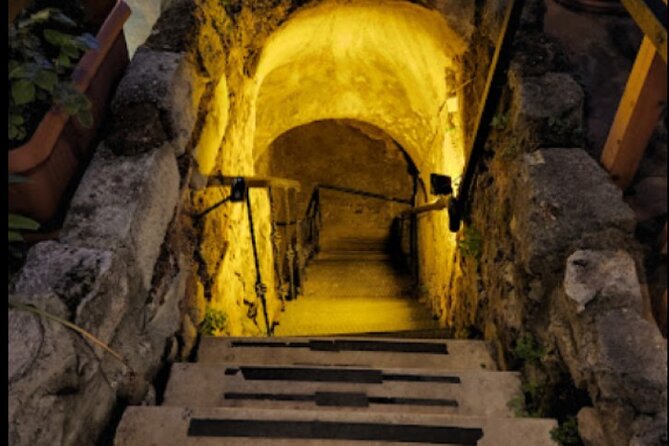
Stop 4 is Gülhane Park Sarnıcı (about 10 minutes). This one is listed as free, and it’s a fun closing act.
Here’s what makes it interesting: it was once used as an aquarium, and it’s now open to the public. That history gives the cistern a slightly different vibe than the two big underground reservoirs. It feels more like a pause between major sights than a full, heavy finale.
If you want a “breather stop,” this fits. It lets your brain absorb what you just saw underground—then you get a light reset in a public park setting.
How the 2–3 hour walking pace really works
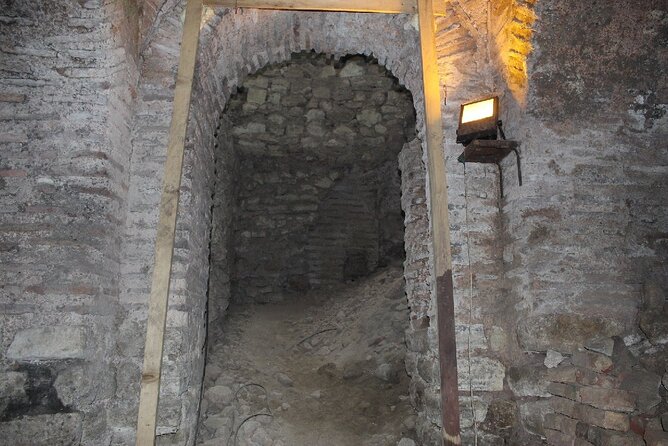
This tour runs 2 to 3 hours. That’s a sweet spot for Istanbul. Long enough to make the underground sections feel meaningful, short enough that you’re not exhausted afterward.
With a maximum of 15 people, you won’t be stuck in a huge crowd line waiting for someone to read every sign. You’ll still have to factor in entry times at the cisterns since tickets aren’t included in the tour price. But you’re not spending an entire day on logistics, which is why this works well for a half-day plan.
Also, this is an English-offered experience, which matters because the story is half the point. A cistern is a cistern, yes. But the connections between monuments, myths, and civic engineering are what turn it from “I saw columns” into “I understand why these places mattered.”
Price and value: what $64.46 buys you
The price is $64.46 per person for an approximately 2 to 3 hour tour, in English. The included items are professional guidance and all local taxes. Tickets and entry admissions are not included, and tips are also listed as not included.
So where’s the value? For me, the best part is you’re not piecing together a route yourself across multiple major sights. You’re getting a guided thread through:
- Hippodrome-era landmarks (Serpent Column and Çemberlitaş Column)
- Two major cisterns (Theodosius and Basilica)
- A bonus park cistern (Gülhane Park Sarnıcı)
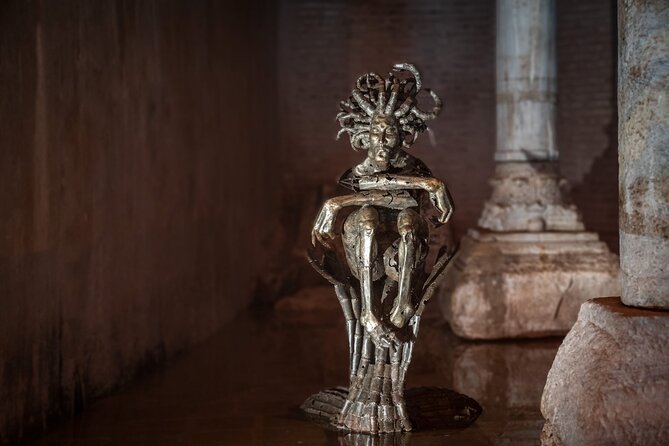
If you were to visit these on your own, you’d still spend time figuring out how to order them and what to pay attention to. Here, the guide helps you know what you’re looking at—especially when the stories connect to things like the Medusa imagery and the evil eye, and even the idea of Turkey’s own queen of snakes (as part of the myth connections shared during the tour).
One caution on value: since cistern admissions aren’t included, your final total will be tour price plus entry fees. It’s still often worth it for the guided flow, but do the quick mental math so it doesn’t surprise you later.
The guide experience: what to expect from the storytelling
The standout praise here is consistent: the guide approach is warm, engaging, and patient, with answers that don’t feel rushed. People also highlight Rose by name, describing her enthusiasm and how she makes historical links feel logical instead of random.
This matters because cisterns can be visually stunning but conceptually slippery if you don’t get context. With the right guide, you start connecting:
- monumental symbols above ground
- dated imperial markers
- underground engineering and water storage
- myth imagery people kept using across generations
Even if your guide isn’t Rose, this tour’s format suggests you’ll get that same style: story-led, Q-and-A friendly, and built around making the landmarks click.
Who should book this Ghost City Istanbul Walking Tour
Book it if you like:
- walking tours that make you stop and think
- Byzantine-era architecture and how it shows up underground
- mythology and symbol stories tied to specific places
- a small-group pace (up to 15 people)
It’s also a solid choice for first-timers who want a tight route without juggling too many separate plans. If you already know Istanbul well and want something offbeat beyond the cistern classics, you might still enjoy it for the combined cistern pairing plus the extra park cistern stop.
If you’re short on time and your priority is only the single most famous cistern, then this might be more than you need. But if you want the full “Ghost City” feel—monuments above, water systems below—this route fits.
Should you book it? My practical verdict
I’d book this tour if you want a guided route that connects Istanbul’s surface landmarks to its underground world, and you’re okay paying extra for cistern entry tickets on the day.
I’d hesitate if you:
- dislike paying separate admissions at multiple stops
- want an all-indoor experience with no outdoor walking between points
- have a very strict timing window where even a small delay could ruin plans
If you do book, do two things to get your money’s worth:
- plan on budgeting for cistern admission on top of the tour price
- be ready to ask one good question at Serpent Column or Çemberlitaş Column so the rest of the story lands faster
FAQ
FAQ
How long is the Ghost City Istanbul Walking Tour?
It lasts about 2 to 3 hours.
Is the tour offered in English?
Yes, the tour is offered in English.
What is the price per person?
The price is $64.46 per person.
What’s included in the tour price?
Professional guidance and all local taxes are included.
Are cistern tickets included?
No. Tickets and entry admissions are not included for the cistern stops.
How big is the group?
The tour has a maximum of 15 travelers.
Where do you meet and where does it end?
The tour starts at the German Fountain in Binbirdirek, and it ends at the Basilica Cistern area on Yerebatan Cd.
Is there a mobile ticket?
Yes, the tour uses a mobile ticket.
What is the cancellation policy?
You can cancel for a full refund up to 24 hours in advance of the experience start time.