REVIEW · ISTANBUL
Full Day Historical Walking Tour of Istanbul Old City from Hagia Sophia
Book on Viator →Operated by Istanbul on Tour City Tours · Bookable on Viator
Old Istanbul goes big fast. This tour strings together the main Sultanahmet sights with an English guide and a group capped at 9. I love the small-group feel (less waiting, easier pace) and I love how much you can cover in one day with free entries at Hagia Sophia, the Blue Mosque, and the Hippodrome. My only caution is that it’s still a long walking day (about 6 to 8 hours), and you’ll want solid shoes.
You also get a more practical side of the city beyond big monuments. The experience includes a behind-the-scenes look related to leather production (and, in some departures, craft/shop stops can show up along the way), which is fun if you like how products are made. The drawback: lunch isn’t included, and you’ll pay separate entrance fees for the palace/cistern depending on the day.
In This Review
- Key highlights you’ll care about
- A Small-Group Old City Day Centered on Sultanahmet
- Entering Hagia Sophia: From Cathedral to Mosque to Museum
- Blue Mosque Details You Should Actually Notice
- Sultanahmet Hippodrome: Where Chariots and Politics Mixed
- Topkapi Palace Power: Royal Residence and Admin Headquarters
- Tuesday Swap: Basilica Cistern and Istanbul Underfoot
- Hagia Irene Museum: A Short Stop With a Byzantine Spine
- Leather, Carpet, and the Craft-Stop Reality Check
- Walking Time, Comfort, and How to Stay Sane
- Price and Value: What $43.54 Buys You (and What It Doesn’t)
- Who This Tour Fits Best
- Should You Book This Tour?
- FAQ
- What time does the tour start, and how long is it?
- Is the tour in English?
- How big is the group?
- Are entrance tickets included for Topkapi Palace and the Basilica Cistern?
- What happens on Tuesdays when Topkapi Palace is closed?
- Can I cancel for a full refund?
Key highlights you’ll care about
- Max 9 people means a calmer pace around famous landmarks
- English-speaking guiding keeps the story clear without nonstop lecturing
- Hagia Sophia + Blue Mosque are timed to let you see both without bouncing around the city
- Hippodrome square fragments give context for the Byzantine-era social scene
- Topkapi Palace fee not included (and Tuesday swap to the cistern) affects your total cost
- Leather/craft detours can be worth it, but shop-heavy days aren’t for everyone
A Small-Group Old City Day Centered on Sultanahmet
If you want Istanbul’s Old City highlights, Sultanahmet is the place. This tour is built around the tight cluster of sights around Hagia Sophia and the Blue Mosque, so you spend less time in transit and more time looking up at domes, reading stone, and figuring out what came first.
The group size is capped at 9. That matters more than you might think. With a small group, your guide can answer questions without repeating everything five times, and it’s easier to keep everyone together at doorways and busy street corners. It also helps on a day that’s long enough to test your legs.
The format is straightforward: a 10:00 am start, mobile ticket, English guide, and you end back at the same meeting point. You’re not getting a “bus-and-photo-stop” day. You’re doing a walking tour with enough structure to make the history feel connected.
You can also read our reviews of more walking tours in Istanbul



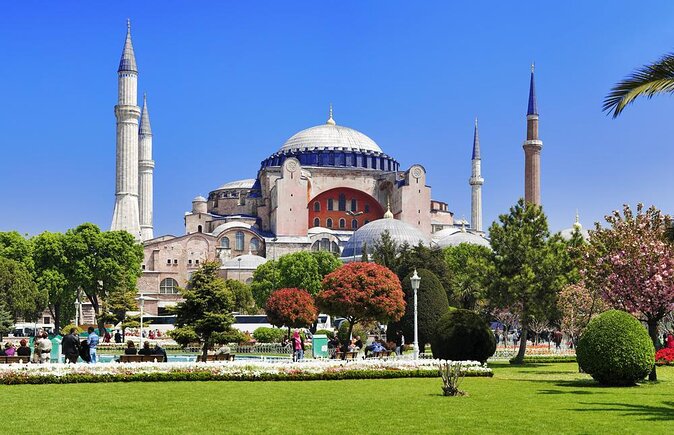
Entering Hagia Sophia: From Cathedral to Mosque to Museum
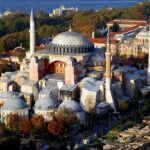
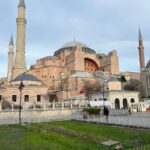
Hagia Sophia is the kind of place that makes you stop walking. Even if you’ve seen photos, the scale hits different when you’re standing inside and seeing the architecture do its thing—especially the way light moves through the space.
This stop covers the full timeline in one place. Hagia Sophia was built in 537 as a patriarchal cathedral in Constantinople, then served as the largest Christian church in the eastern Roman/Byzantine world for long stretches. After the Ottoman conquest in 1453, it became a mosque. It was secularized as a museum in 1935, and then re-opened as a mosque in 2020.
Two practical tips help you enjoy it more. First, keep your expectations flexible: Hagia Sophia is a functioning mosque now, so your visit may feel different than the old “museum only” vibe. Second, plan for a bit of waiting and rule-following around access. The tour notes the admission is free, which is a real value plus, but it doesn’t mean the building is easy-flow all the time.
If your goal is to understand how Istanbul can hold multiple identities in one skyline, this is the anchor stop.
Blue Mosque Details You Should Actually Notice
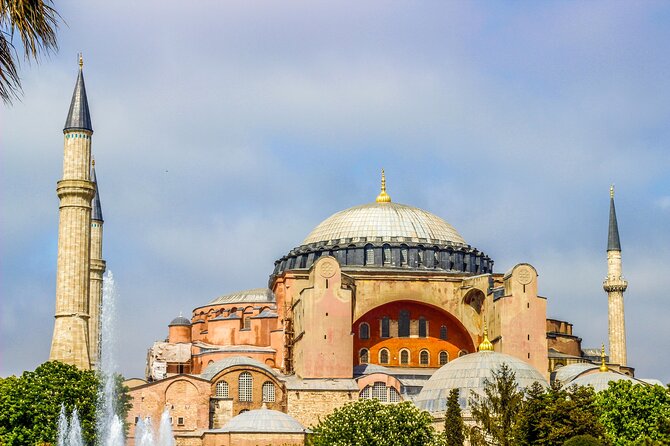
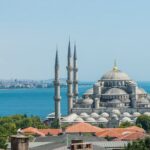
A short walk later, you reach the Blue Mosque (Sultan Ahmed Mosque). It’s next door in the way that makes Sultanahmet feel like one continuous “greatest hits” area.
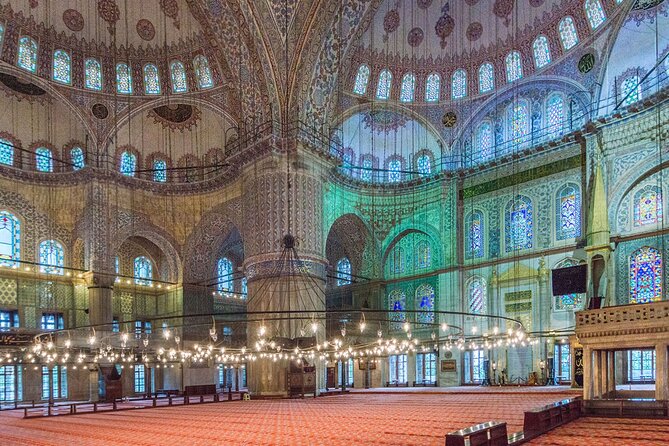
Here’s the thing: the Blue Mosque is not just a pretty exterior. It’s functioning, and it’s decorated in a specific style that rewards close attention. The mosque was built between 1609 and 1616 during Ahmed I’s rule, and its külliye includes Ahmed’s tomb, a madrasah, and a hospice. Inside, hand-painted blue tiles line the walls. At night, the lighting is designed to frame the domes and minarets with a blue glow—though on your tour day you’ll likely be seeing it in daylight, so look for the tile work and geometry instead.
The tour lists this stop at about 45 minutes and notes the admission is free. That’s good value and also keeps the day moving. Still, with a busy site, you’ll want to arrive ready to focus. If you spend your time only taking pictures, you’ll miss the patterns and calligraphy that make the interior feel intentional rather than just decorative.
Also, there’s one real-world consideration: parts of the mosque complex can be under renovation at certain times. If you’re traveling during a renovation window, you might see scaffolding or reduced access. Your guide can still give context even if viewing is limited.
Sultanahmet Hippodrome: Where Chariots and Politics Mixed
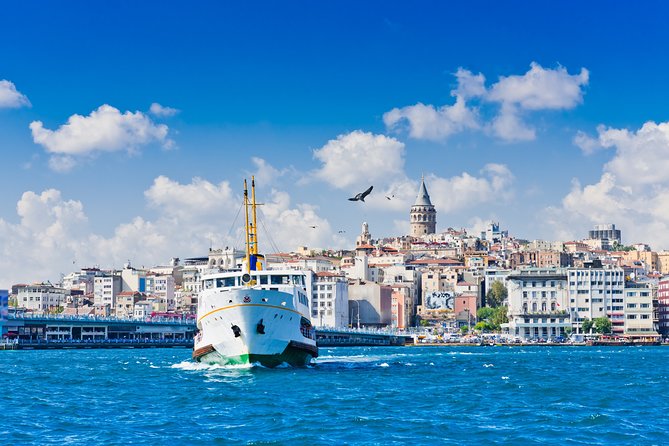
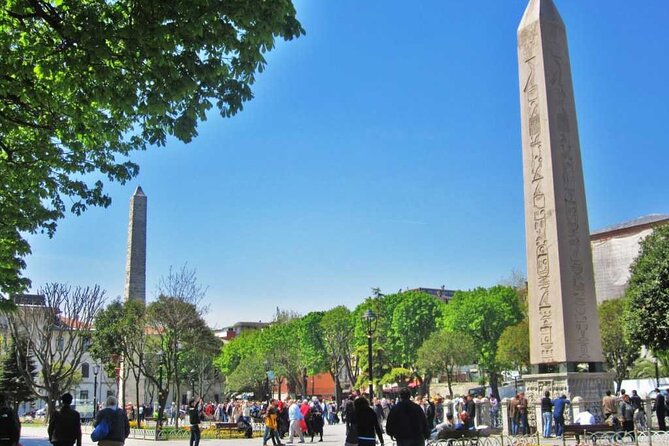
Next up is the Hippodrome of Constantinople—now Sultanahmet Meydanı (Sultan Ahmet Square). Today it’s a square with only fragments of the original structure surviving, so don’t expect a fully intact stadium.
That said, it’s an important stop because it explains how city life worked in Byzantine times. Horse and chariot racing weren’t just sport; they were major social and political events. Hippodromes were common in Greek, Roman, and Byzantine cities, and Istanbul’s was a central stage for public energy.
Why this matters on a walking tour: without this context, the square can feel like “another plaza.” With the story, it becomes part of the city’s rhythm—where crowds gathered, and where power and identity played out through spectacle.
This stop is also free, and it’s scheduled for around 45 minutes. That’s the right length. It gives you context without dragging the day.
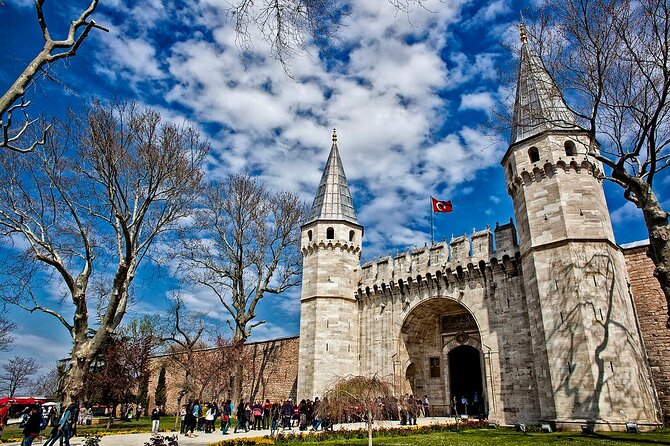
Topkapi Palace Power: Royal Residence and Admin Headquarters
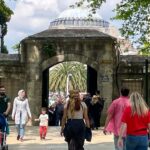
Topkapi Palace is where the day can either feel like a sprint to fit everything in—or like a calm, structured museum visit, depending on your energy. The tour allots about 1 hour here, with the entrance ticket not included.
Topkapi isn’t just “a palace.” In the 15th and 16th centuries, it served as the main residence and administrative headquarters of the Ottoman sultans. When you look at the scale of the museum now, it helps you picture how governance and daily life were tied together.
Budget note, because it affects your total travel cost: Topkapi Palace admission is listed at 750 Turkish Liras and isn’t included. That can surprise first-timers because the tour’s earlier stops are free. I’d treat the palace ticket as a guaranteed add-on cost, then decide later if you want to extend your time in the museum on your own.
Also, pacing matters here. One hour is not enough to “see everything.” But it is enough to get the big ideas: Ottoman power, court life, and the way the palace functions as a museum of state. If you love focused tours, this length is ideal. If you’re the type who reads every plaque, you might want to plan a separate return visit another day.
You can also read our reviews of more city tours in Istanbul




Tuesday Swap: Basilica Cistern and Istanbul Underfoot
On Tuesdays, Topkapi Palace is closed, and the tour swaps in the Basilica Cistern instead of the palace visit. The Basilica Cistern is an underground water storage complex—one of several hundred ancient cisterns beneath Istanbul—and it’s described as the largest of them.
The key word here is underfoot. In a city famous for monumental architecture above ground, the cistern gives you a different kind of engineering awe: water systems built to support a huge population, tucked below the streets.
Admission isn’t included for the Basilica Cistern, and the listed fee is 450 Turkish Lira. Plan for that cost the same way you plan for a museum ticket elsewhere. You’ll also want to dress for indoor temps. Even on hot days, cistern air can feel cooler and damp.
If you’re wondering whether the cistern feels worth it compared to a palace visit: it usually does, because it’s visually specific. The columns, the dim atmosphere, and the sense of scale make it feel cinematic even when you’re there in daylight.
One more practical angle: I’ve seen guide behavior on this tour that can improve your experience at the cistern, like help with quicker entry using a museum pass. Still, don’t assume that’s automatic every day—think of it as a bonus when it happens.
Hagia Irene Museum: A Short Stop With a Byzantine Spine
After the palace area, there’s a quick stop at Hagia Irene Museum. This building dates back to the Byzantine era, and it’s described as one of the oldest structures inside the Topkapi Palace complex.
This is the kind of stop that’s easy to underestimate. It’s shorter (around 20 minutes), and it doesn’t come with the immediate wow-factor of Hagia Sophia or the Blue Mosque. But that’s exactly why it’s valuable. You get another layer of Byzantine presence within the Ottoman framework—proof that the palimpsest of Istanbul isn’t only about one major monument.
If you’re the type who loves “supporting characters” in a city’s story, you’ll appreciate Hagia Irene. If you only want the biggest-ticket sights, you might wish you had more time here—or you might enjoy that it keeps the day from running too long.
Leather, Carpet, and the Craft-Stop Reality Check
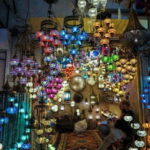
The tour highlights mention a behind-the-scenes look at leather production, and some departures also include craft or shop stops as part of the day’s flow. That’s not unusual in Istanbul-based tours, and it can be interesting—especially if you’re curious about how products are made and how local businesses operate.
Still, keep expectations grounded. Some people enjoy these stops because they learn something tangible. Others find the shop component consumes time or feels sales-driven. The best way to handle this is to decide in advance what you want.
If you love crafts and don’t mind a short detour, treat it as part of the Istanbul experience beyond monuments. If you’d rather spend every minute sightseeing, politely stick to your priorities and ask your guide what’s worth the time before committing to anything.
And one practical move: set a budget mindset. Entrance fees are clearly not included for certain sites, but shop purchases can add up fast if you aren’t watching.
Walking Time, Comfort, and How to Stay Sane
This is a full-day tour that runs about 6 to 8 hours, starting at 10:00 am. That means comfort matters more than you think. Wear shoes you can walk in for hours and socks that won’t betray you after the first long queue.
Even though several sites have free entry, you’ll still deal with people density, security rules, and the basic rhythm of popular Istanbul landmarks. The small group size helps, but your legs still get the final say.
Also, bring water and plan for lunch on your own. Lunch isn’t included. Your guide may suggest where to eat, and you’ll get time to do it, but you should come prepared to make a decision without expecting a pre-booked meal.
Weather is another factor. Istanbul can be windy and changeable. If you show up with rain gear (or at least a small umbrella), you’ll feel less stressed when conditions shift.
Price and Value: What $43.54 Buys You (and What It Doesn’t)
At $43.54 per person, this tour can be a strong value if you factor in what’s included and what you’d otherwise pay for guide time.
What you do get:
- An English-speaking guide
- A structured route that hits several major Old City anchors
- Free-admission stops for Hagia Sophia, the Blue Mosque, and the Hippodrome
What you pay separately:
- Topkapi Palace entrance is listed at 750 Turkish Liras
- Basilica Cistern entrance is listed at 450 Turkish Lira
- Lunch is not included
So the “true” cost depends on the day you visit. If you go on a non-Tuesday schedule with Topkapi included, your main add-on is the palace ticket. If you’re on Tuesday, your add-on shifts to the cistern ticket.
One caution: some people have complained about mismatches between advertised entrance prices and what they were asked to pay on the day. I can’t promise every departure will match the exact numbers listed, so I suggest bringing enough cash/ready payment options for museum fees. Think of it as protecting your day, not worrying about the money.
If you hate logistics, this still works because the tour takes care of sequencing and guiding. But if you track every lira, double-check the day’s entrance fees before you commit inside.
Who This Tour Fits Best
This tour is a great fit if you want:
- A first-timer overview of Istanbul’s Old City in one go
- A guided explanation of how Istanbul’s religious and political identities changed over centuries
- A manageable group size so you can ask questions and keep your pace
It’s also a decent option for families, since the tour description frames it as enjoyable for the whole family. That said, it’s still lots of walking, so bring patience and plan breaks.
If you only want the absolute top sights and hate any detours, this tour may feel too structured because of the craft/leather/shopping component. But you can manage that by using your energy selectively and asking what’s time-sensitive versus optional.
Should You Book This Tour?
Yes, I’d book it if your priorities match the route: Hagia Sophia, the Blue Mosque, the Hippodrome area, and then either Topkapi or the Basilica Cistern depending on the day. The small group size and English guiding make a big difference for a day like this, and the free-entry sites help keep the cost sensible.
I’d think twice if you’re very price-sensitive about entrance fees or if you strongly dislike shop stops and sales pressure. In that case, message the operator before you go (or ask your guide right at the start) about what’s planned that day and whether any craft stops are optional.
If you do book: show up early, wear comfortable shoes, and treat entrance fees as expected add-ons. Do that, and you’ll get a satisfying, story-rich Old City day that ties Byzantine and Ottoman Istanbul together without wasting time.
FAQ
What time does the tour start, and how long is it?
It starts at 10:00 am and runs about 6 to 8 hours.
Is the tour in English?
Yes, it includes an English-speaking guiding service.
How big is the group?
The tour has a maximum of 9 travelers.
Are entrance tickets included for Topkapi Palace and the Basilica Cistern?
No. Topkapi Palace entrance is not included (750 Turkish Liras), and the Basilica Cistern entrance is also not included (450 Turkish Lira).
What happens on Tuesdays when Topkapi Palace is closed?
On Tuesdays, the tour swaps Topkapi Palace for a visit to the Underground cistern/Basilica Cistern instead.
Can I cancel for a full refund?
Yes. You can cancel up to 24 hours in advance for a full refund.