REVIEW · ISTANBUL
Private Walking Tour: Hippodrome, Blue Mosque, Hagia Sophia
Book on GetYourGuide →Operated by Booking Guide Turkey · Bookable on GetYourGuide
Istanbul’s Sultanahmet feels like a timeline you can walk through, and this private half-day tour is built for exactly that. I like how the stops connect the Blue Mosque to Hagia Sophia’s Byzantine and Ottoman layers, and I also like that the guide keeps the stories practical as you move. One watch-out: Blue Mosque access can be limited during renovations, so the inside experience may not match the ideal version.
You’re also getting a true small-group vibe (up to 10) with an English-speaking live guide. That matters here, because you’re not just looking at famous buildings—you’re learning what to notice while you’re standing there, not hours later back at your hotel.
In This Review
- Key Things I’d Highlight Before You Go
- Sultanahmet in 4 Hours: What This Private Route Does Well
- Blue Mosque (Sultanahmet Mosque): Iznik Tiles, Domes, and the Renovation Reality
- Roman Hippodrome Relics in Sultanahmet Square: Obelisk and Serpent Column
- Hagia Sophia: From Justinian’s Church to Ottoman Mosque Mosaics
- The Guide Factor: Why Private and Small Group Works Here
- Price and Value: Is $117 a Good Deal?
- Who This Tour Suits Best (And Who Might Want Another Option)
- Should You Book This Private Walking Tour?
- FAQ
- FAQ
- How long is the private walking tour?
- What sites are included in the tour?
- What language is the live guide?
- How big is the group?
- What is the price per person?
- Are entrance fees included?
- Is there a guide included?
- Is the tour available every day?
- Can I cancel for a refund?
- Is there a way to book without paying right away?
- What should I know about the Blue Mosque during renovations?
Key Things I’d Highlight Before You Go
- Sultanahmet Square walk-through: you’ll connect the Roman Hippodrome to Constantinople’s public life.
- Blue Mosque tile-and-light focus: Iznik-style blue tones, domes, calligraphy, and stained-glass windows are the point.
- Hagia Sophia mosaics and symbolism: Byzantine art inside a building that shifted religions after 1453.
- Short, efficient route: four hours keeps you from burning a full day on transit in a tight historic zone.
- Guides can add extras: I’ve seen guides like Josh and Idyll praised for being on time and helpful beyond the script.
Sultanahmet in 4 Hours: What This Private Route Does Well
This tour targets a compact slice of Istanbul where the city’s big empires overlap in real space. You’ll start around Sultanahmet’s most iconic landmarks, then move through the Roman-era arena site, finish at Hagia Sophia, and come out with the feeling that you understand the neighborhood, not just the buildings.
The route makes sense because these places speak to each other. The Hippodrome area helps you picture Constantinople as a place where crowds gathered for spectacle. The Blue Mosque shows a later Ottoman aesthetic that still draws power from architecture. Hagia Sophia then ties it together, because it’s the same kind of “world stage” building in a different era—first Byzantine, then Ottoman.
With a private walking tour, you’re also not stuck in a huge group shuffle. A guide can adjust pacing, point you toward what to prioritize inside, and help you avoid wasting time where you don’t need to linger.
You can also read our reviews of more walking tours in Istanbul



Blue Mosque (Sultanahmet Mosque): Iznik Tiles, Domes, and the Renovation Reality
The Blue Mosque—officially the Sultanahmet Mosque—was built in the 17th century under Sultan Ahmed I. It’s famous for the interior’s blue Iznik tiles, but the real magic is how the tiles, domes, calligraphy, and stained-glass windows work together to change the feel of the room.
Inside, you should slow down and look for how the space is organized. The guide’s job is useful here: without context, you can end up staring at the decorations like they’re just pretty patterns. With context, the details start to read like design choices—how light is controlled, how the calligraphy directs your attention, and how the domes create that sense of height.
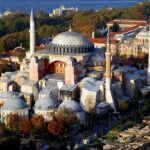
Outside, you’ll see the signature profile: the mosque’s spacious courtyard and its six towering minarets. It’s one of Turkey’s most photographed monuments for a reason. Even if your main goal is the interior, don’t skip the outside angles because they help you connect the scale to what you’ll see later at Hagia Sophia.
Now the practical bit: access can be disrupted. Reports from recent tours include cases where the Blue Mosque was closed for renovations for a stretch of time, and cases where it was only partially accessible both outside and inside. So I strongly recommend you check the day’s status before you bank on a full interior visit. If you arrive and access is limited, your guide can at least help you make the most of what’s open—still worthwhile, but not the same as a full, uninterrupted look inside.
Roman Hippodrome Relics in Sultanahmet Square: Obelisk and Serpent Column
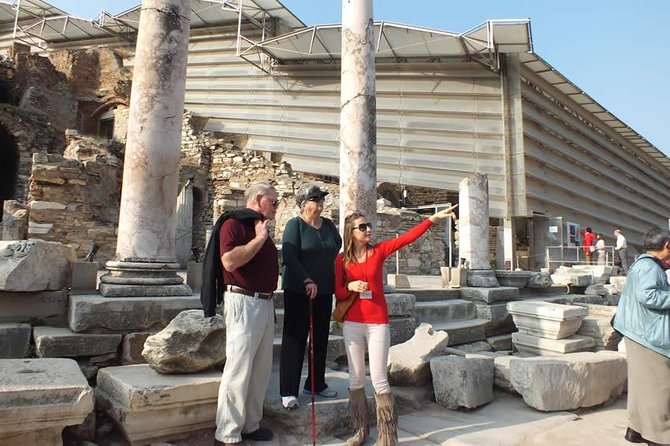
Between the mosque and Hagia Sophia, you’ll spend time at Sultanahmet Square, which is linked to the Roman Hippodrome of Constantinople. This is where chariot-race energy becomes history you can physically stand on.
The Hippodrome wasn’t a quiet museum courtyard. It was Constantinople’s social hub—crowds, festivals, and political tension all bouncing around the same arena. Walking through this area gives you a better sense of why later rulers cared so much about public spectacle and monumental architecture.
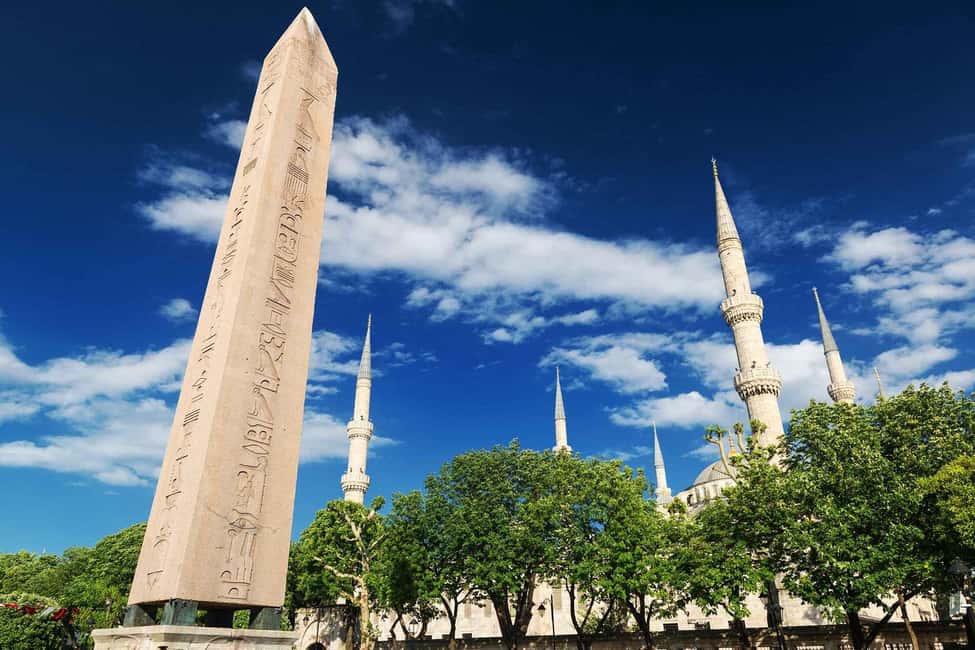
You’ll see standout relics from that arena, including the Obelisk of Theodosius and the Serpent Column. These are the kind of objects that look like “just old columns” until you connect them to the place they came from: a massive civic stage where the city gathered.
What makes this stop valuable isn’t that you’ll stare at one artifact for an hour. It’s that you’ll get the context that turns the sight into a story. With your guide pointing things out, you can start imagining where spectators stood and how events would have moved across the space.
One consideration: this is a walking stop with atmospheric context, not a long sit-down exhibit moment. If you’re the type who hates moving quickly between major sights, you might wish for a touch more time here. Still, it’s a smart use of half-day time because it sets up the “Byzantine-to-Ottoman” transition you’ll see at Hagia Sophia.
Hagia Sophia: From Justinian’s Church to Ottoman Mosque Mosaics
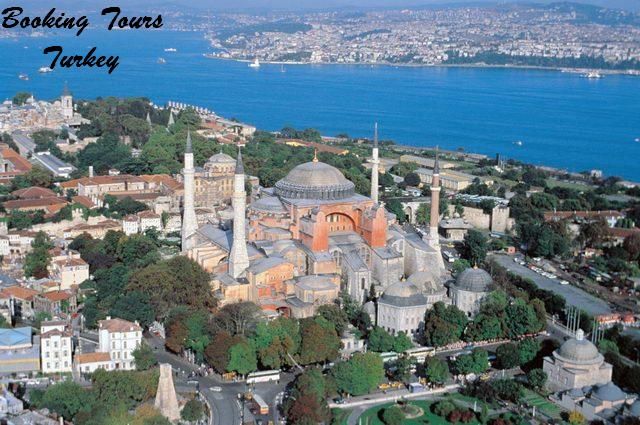
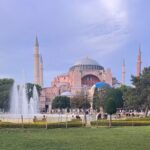
Hagia Sophia is the reason many people come to Istanbul’s historic center, and for good reason. Built in 537 AD under Emperor Justinian, it was the largest church in the world for over a thousand years. Architects studied its structure for centuries because the huge dome creates that floating feel over the central nave.
When you walk inside, the building doesn’t just look impressive. It changes your sense of scale. The dome, the open space, and the way light hits the interior all work together, even if you don’t know every technical term.
Inside, you’ll see Byzantine treasures—especially mosaics, paintings, and sculptures. These aren’t random decoration; they’re story systems. They point to emperors, saints, and the divine, and they show how Byzantine religious art communicated power and belief in one package.
After the Ottoman conquest in 1453, Hagia Sophia was converted into a mosque. That’s where the building becomes more than a single-era monument. You’ll experience a layered space where Islamic and Christian traditions overlap in one place. Today it’s often treated as a symbol of cultural resilience and harmony, not because the past was simple, but because the building kept living through change.
Practical tip: if you care about the mosaics, don’t treat Hagia Sophia as a quick photo stop. You’ll get more value by looking slowly at surfaces and asking your guide what connects the artwork to the era. A good guide can steer you toward what to notice without turning your visit into a lecture.
The Guide Factor: Why Private and Small Group Works Here
This is the kind of tour where a guide really matters, because your time is limited and the sights are layered. With a live English-speaking guide, you’re not just getting basic facts. You’re getting the “what to look for” layer that turns iconic buildings into meaningful experiences.
There are clues in past feedback about what works. Guides like Josh have been described as personable, knowledgeable, and worldly, and tours have been noted as running on time. Another guide name you might see in real experiences is Idyll, praised for always answering questions and even helping beyond the scheduled stops by walking guests toward the Basilica Cistern afterward.
That doesn’t mean every guide will add extra stops. But it does suggest the best version of this experience comes when you feel comfortable asking questions. The small-group limit (up to 10) helps with that. In a huge crowd, you can feel invisible. Here, your guide can actually respond.
Also, you’ll appreciate the private walking format if you like setting your own rhythm. Even with a schedule, the guide can likely adjust how long you linger outside the Blue Mosque or what details you prioritize inside Hagia Sophia.
You can also read our reviews of more private tours in Istanbul


Price and Value: Is $117 a Good Deal?
At $117 per person for about four hours, you’re paying for a guide and a tight, efficient route that covers three of the biggest sights in Sultanahmet. Entrance fees are not included, so you should budget separately for ticketed access.
That’s the key value equation: the listed price is for the human layer—interpretation, direction, and pacing. Since you’re walking between landmarks that are already famous, you’re not really paying to get through a door. You’re paying to understand what you’re seeing while you’re standing there.
How to judge value for your own trip:
- If you want the most time possible with a guide helping you look smarter at Blue Mosque and Hagia Sophia, $117 is reasonable for a half-day.
- If you’d rather move slowly on your own and don’t care much about explanations, you may find a self-guided plan cheaper.
- If the Blue Mosque interior access is limited on the day you travel, you might feel the value dip slightly because the most dramatic inside highlights may not be fully available.
My practical advice: confirm what you’ll get that day. If the Blue Mosque interior is accessible, you’re in for a stronger payoff. If it’s limited, still go—but adjust expectations and lean on your guide for alternatives within open areas.
Who This Tour Suits Best (And Who Might Want Another Option)
This tour is a great fit for first-time Istanbul visitors who want the highlights of Sultanahmet without getting lost in ticket lines and confusing context. It’s also ideal if you like your travel history with real-world visuals—tiles, mosaics, domes, and relics—rather than just reading about them later.
It can be less ideal if:
- you dislike walking for long stretches in a concentrated area,
- you need guaranteed access to every interior space regardless of renovation schedules,
- or you prefer deep museum-style time at one site instead of covering multiple landmarks in one half-day.
If you’re traveling with kids, the mosaics and calligraphy may be a hit, but the pacing might feel fast. If you’re traveling with seniors or anyone with mobility concerns, you’ll want to consider whether the walking-heavy route is comfortable for you.
Should You Book This Private Walking Tour?
Yes, I’d book it—especially if you’re planning a first Istanbul visit and want a smart way to connect the Roman Hippodrome to the Ottoman and Byzantine powerhouses you’ll see right afterward. The biggest reason to choose it is the guide-driven focus: you’ll get help noticing details at the Blue Mosque and Hagia Sophia that a quick self-guided stop would miss.
My only real hesitation is the Blue Mosque renovation/access variable. If you can accept that the interior might be restricted on some dates, the tour remains solid because Hagia Sophia and the Hippodrome context still deliver the “walk-the-empires” experience. If inside access is a must for your trip, check conditions before you finalize your plans.
FAQ
FAQ
How long is the private walking tour?
It runs for 4 hours.
What sites are included in the tour?
You’ll visit the Ancient Hippodrome area in Sultanahmet Square, the Blue Mosque (Sultanahmet Mosque), and Hagia Sophia.
What language is the live guide?
The live tour guide speaks English.
How big is the group?
It’s a small group limited to 10 participants.
What is the price per person?
The price is listed as $117 per person.
Are entrance fees included?
No. Entrance fees to attractions are not included.
Is there a guide included?
Yes. A guide is included.
Is the tour available every day?
It is not available on Monday.
Can I cancel for a refund?
You can cancel up to 24 hours in advance for a full refund.
Is there a way to book without paying right away?
Yes. The tour offers reserve now & pay later.
What should I know about the Blue Mosque during renovations?
The Blue Mosque’s access can be limited when renovations are happening, so your inside visit may vary depending on the day.