REVIEW · ISTANBUL
Half Day Walking Tour of Old Istanbul
Book on Viator →Operated by SGA Travel · Bookable on Viator
Old Istanbul hits fast, with a smart route. This walking tour lines up the key sights around Sultanahmet and the Grand Bazaar area with an English-speaking guide, and I like that entrance tickets are included so you spend less time figuring out costs. I also like the story-first way guides connect landmarks to daily life and belief. One drawback to plan for: even though it’s sold as about four hours, the pace can stretch if you stop often for questions or photos, so keep your evening flexible.
You start at the German Fountain (Binbirdirek area), right where the old monuments cluster, and you finish at Spice Market in Eminönü. It’s built for good weather, runs with a small group capped at 8, and uses a mobile ticket. If you want to see a lot of Istanbul’s highlights in one focused walk, this format makes sense.
In This Review
- Key Highlights Worth Your Time
- Starting at the German Fountain: a clean entry point into Sultanahmet
- Sultanahmet Square: columns and obelisks you can’t unsee
- Blue Mosque: six minarets outside, blue tiles inside
- Hagia Sophia: where Christian and Islamic elements sit side by side
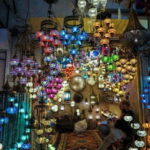
- Grand Bazaar via Divanyolu: a souk walk with context and bargaining tips
- Sahaflar Carsisi (Old Book Bazaar): printed history and student energy nearby
- Süleymaniye Mosque complex: a calmer mosque stop with Bosphorus views
- Rüstempaşa Mosque: İznik tiles in about 80 patterns
- Spice Market finale in Eminönü: tasting as the tour winds down
- Price and value: what you’re really paying for
- Guide quality and how flexibility shows up in real time
- Who should book this Old Istanbul walk
- Should you book Half Day Walking Tour of Old Istanbul?
- FAQ
- FAQ
- What does the tour include?
- How long is the Half Day Walking Tour of Old Istanbul?
- Where do I meet the guide?
- Where does the tour end?
- Is lunch included?
- Is the guide English-speaking?
- What is the group size?
- Is this tour suitable for most travelers?
- What happens if weather is bad?
- Can I cancel for free?
Key Highlights Worth Your Time
- Small group, easier pace: capped at 8 travelers for more guide time.
- Entrance tickets handled: you get in without separate ticket stress.
- Mosques plus markets in one thread: religious architecture and souk life back-to-back.
- Tile-spotting at Rüstempaşa: İznik designs you can actually look at up close.
- A guide who explains what you’re seeing: named guides like Huseyin, Koray, and Eser are known for clear storytelling.
- Spice Market tasting at the end: a tasty wrap-up instead of a hard stop.
Starting at the German Fountain: a clean entry point into Sultanahmet
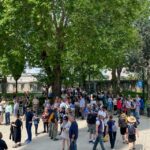
The meeting point is the German Fountain near Binbirdirek (At Meydanı Cd). That matters more than you might think. Sultanahmet is packed with landmarks, so starting at a recognizable point helps you skip the mental map scramble and get moving quickly.
You begin the day with context for what you’re about to see. Instead of bouncing between big sights like a checklist, the guide frames the area’s layers of rule, faith, and empire. That kind of orientation is what turns a walk from photos-only into an actual understanding of the place.
This tour is also scheduled for 9:00 am, which is usually a smart time in Istanbul—cooler heads, better light, and more energy for walking. And because it’s designed around major sites, you’ll be in the right neighborhoods without needing to constantly navigate cross-city.
You can also read our reviews of more walking tours in Istanbul



Sultanahmet Square: columns and obelisks you can’t unsee
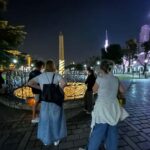
Your first major stop is Sultanahmet Square, where your guide meets you and pulls the story together in a way that’s easy to follow. You’ll see the Egyptian Obelisk and the Serpentine Column, plus the Colossus and the Column of Costantine Porphyrgenitus (spelled as presented in the tour details).
What I like about this first segment is that it sets the tone: Istanbul’s history isn’t hidden. It’s in the stones, the reused monuments, and the way different eras left marks in the same public space. You get that early mental hook that helps later when you enter places like Blue Mosque and Hagia Sophia—because you understand they’re not isolated buildings. They’re part of a long, complicated city narrative.
A practical note: this is the kind of stop where your guide will likely spend time explaining details. If you’re the type who likes to ask questions, this is a good moment to do it while you still have the “full attention” stage of the tour.
Blue Mosque: six minarets outside, blue tiles inside
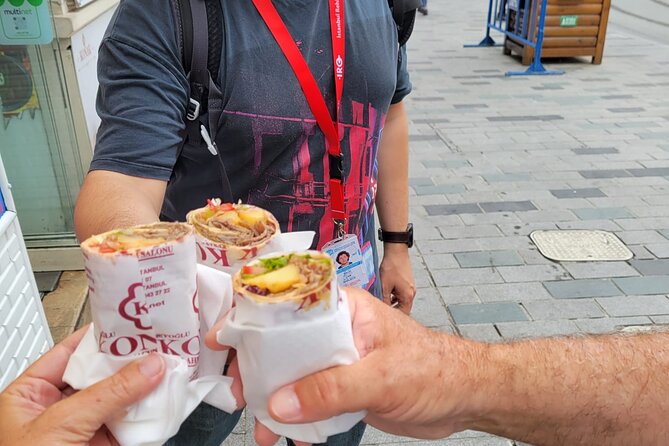
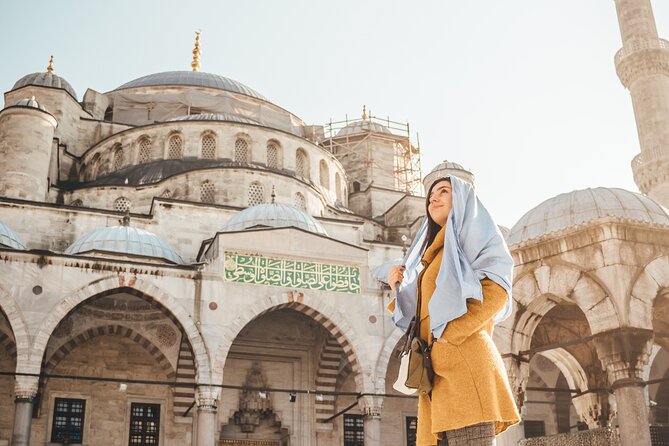
Next up is the Blue Mosque, famous for its six minarets and the interior tiles. Outside, it doesn’t scream blue at you. Inside, that’s where the magic happens. You’ll be amazed by the blue tilework prepared for the mosque in the 17th century.
One useful thing the guide usually emphasizes here is that this isn’t just a stand-alone worship space. It’s described as a complex building, where people historically would also socialize. That detail changes how you look at the mosque. You’re not only viewing religious art—you’re seeing how a community used the space.
The time on site is about 30 minutes. That’s short enough to keep the day moving, but usually long enough to look slowly at the interior tile patterns and let the scale sink in. If you’re sensitive to crowds or need a slower pace, ask your guide how they manage timing once you’re inside.
Hagia Sophia: where Christian and Islamic elements sit side by side
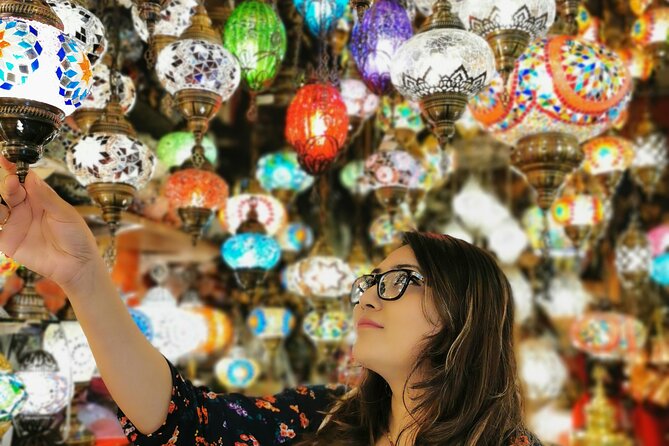
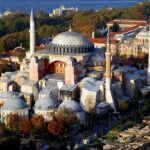
After Blue Mosque, you continue to Ayasofya, better known in English as Hagia Sophia. The guide connects the site’s Christian and Islamic elements, so you don’t treat it as one story. It’s both, and the building reflects that layered past.
This stop is also timed at about 30 minutes, with admission included. That matters because it keeps the tour smooth: you’re not stuck waiting while others purchase tickets or argue about entrances.
If you like big architectural “wow” moments, Hagia Sophia is a core reason to book a guided half-day. A guide can point out the meaningful contrasts—what stayed, what changed, and what that says about the city’s continuity and change.
Grand Bazaar via Divanyolu: a souk walk with context and bargaining tips
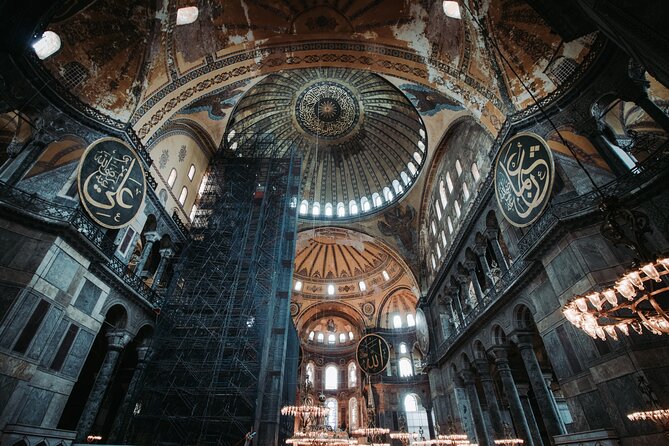
From Hagia Sophia, you head toward the Grand Bazaar area along Divanyolu Street, described as originally mapped by Constantine the Great. That’s a clever route choice because it puts you in motion between two major monuments and then drops you into one of the world’s most famous market interiors.
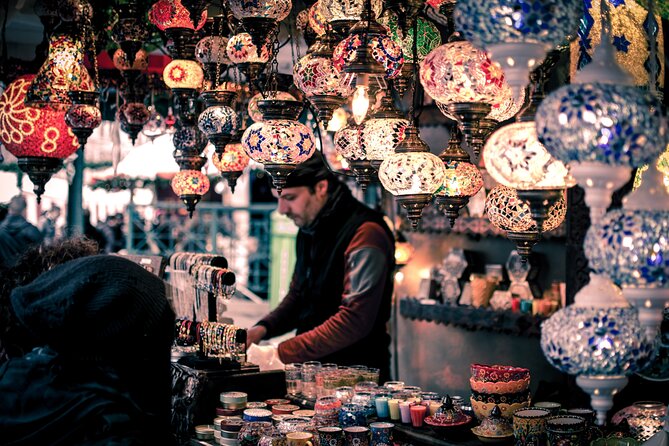
Once you’re at Grand Bazaar, you don’t just wander. The guide helps you understand bargaining culture—how it works and what to expect in the tone of transactions. Even if you don’t plan to buy much, knowing the “rules of the game” makes the whole place feel less chaotic.
This stop is about 45 minutes, which is a good amount of time to look around without burning the whole day inside corridors. You’ll also get the advantage of walking through backstreets of the bazaar area, which often feels more like local market life than like a themed shopping mall.
One thing to keep in mind: Grand Bazaar is famous for being busy. If you’re going with a shopping mission, this is a fine segment. If you’re not, treat it like a living museum of commerce—watch how sellers display goods and how the space flows.






Sahaflar Carsisi (Old Book Bazaar): printed history and student energy nearby
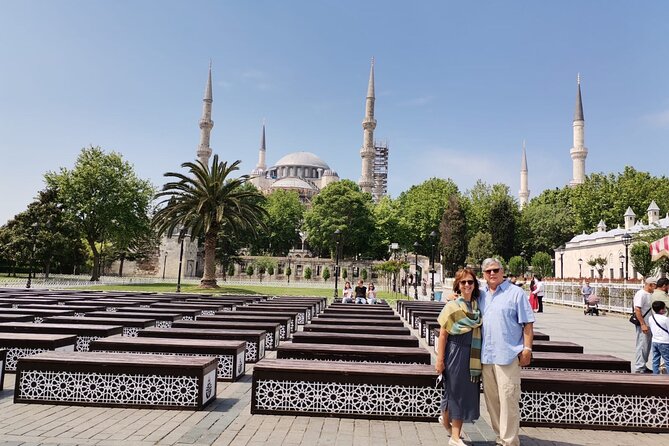
After the Grand Bazaar main areas, you stop at the Old Book Bazaar, also known as Sahaflar Carsisi. The tour highlights it as a place where you can see the first books printed in Turkey.
Even better, the surrounding context is part of the point. Istanbul University is nearby, and the area sells not only historical books but also modern ones for students. That mix gives the book bazaar a real pulse—you’re not just browsing for antiques. You’re looking at a place that still serves readers and learners.
Time here is short, about 15 minutes, so think “browse and absorb” rather than “buy and research.” If you find something you want to read or collect later, jot down what catches your eye and consider coming back when you have more time.
Süleymaniye Mosque complex: a calmer mosque stop with Bosphorus views
Then you move to the Süleymaniye Mosque complex. This is one of the tour’s standout shifts: you trade some of the crowded bazaar energy for a monumental mosque setting.
The guide attributes the design to Mimar Sinan, the imperial architect, with construction dated between 1550 and 1557 (as given in the tour details). That name carries weight in Istanbul’s architecture, and having it explained while you’re standing in the complex helps you remember it.
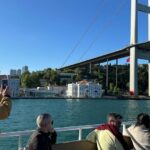
You’ll also get views of the Bosphorus and the Golden Horn. That makes this segment feel more open and gives you a “breathing space” in the middle of the walk. Time on this stop is about 30 minutes, and you’ll have a chance to sit on the carpet inside while learning Islamic history.
This is where the tour becomes more than sightseeing. It’s a moment to slow down, listen, and look at the mosque as a whole system—building, community space, and skyline viewpoint.
Rüstempaşa Mosque: İznik tiles in about 80 patterns
After Süleymaniye, you visit the tiny Rüstempaşa Mosque (Rüstem Pasha Mosque). “Tiny” is the right word. This is not a huge main hall. The payoff is detail.
The reason this mosque is famous is the İznik tiles. They appear in a wide variety of floral and geometric designs, and the tour notes there are around 80 different patterns. You’ll see them up close on more than one surface, including areas connected to mihrab and minbar, plus walls and façades in the porch area.
If you love design, this stop is a gift. The guide’s attention to pattern variety helps you stop treating it like decoration and start seeing it like structured visual language.
Time is about 30 minutes and admission is free. It’s long enough for careful looking, but not so long that you lose momentum before the final market stop.
Spice Market finale in Eminönü: tasting as the tour winds down
The tour ends at Spice Market (Misir Carsisi) in Eminönü. Instead of finishing with a hard-to-navigate “good luck,” you get a satisfying wrap-up.
Spice Market is still a center of shopping for locals. The tour points out different sections for different products: fish market, cheese market, coffee section, and Turkish delight section, plus more. Even though your time here is about 30 minutes, it’s practical because you can taste Turkish delights and spices as you go.
This ending is also psychologically smart. You’ve spent the morning in stone and tile and architecture. The final segment turns your senses on—smell, taste, and color. It’s a good transition from “learning” to “reward.”
If you want to buy gifts, this is the moment. Keep an eye on what you sample, because it’s easier to choose when you already know you like the flavors.
Price and value: what you’re really paying for
The price is $138.18 per person for about 4 hours. That sounds straightforward until you consider what’s included: all fees and taxes, plus entrance tickets.
For a guided half-day in a concentrated area like Sultanahmet and Eminönü, that inclusion is part of the value. You’re not paying extra on the day for entry, and you’re not stuck coordinating schedules when ticket lines become the bottleneck.
The small group size—maximum 8 travelers—is another part of the “why this costs what it costs.” Small groups reduce the time you spend waiting for everyone to catch up, and they increase the chance your guide can adapt.
You can also lean on English-language guidance. For Istanbul’s history and architecture, explanation matters. If you’re the kind of traveler who likes to understand what you’re looking at, paying for a guide tends to feel worth it fast.
One last value note: the tour description calls it half day, but the experience can stretch depending on pace and questions. That’s not always a bad thing. It just means you should schedule the rest of your day with a little breathing room.
Guide quality and how flexibility shows up in real time
The strongest praise in the guide experience is consistency: clear historical storytelling and flexibility. Names that come up include Huseyin, Koray, and Eser.
Koray is described as very knowledgeable and strong at explaining the main sites and mosques. Huseyin is noted for adapting to interests, which is the kind of flexibility that makes a walking tour feel personal rather than scripted.
Eser is highlighted as an amazing storyteller and passionate guide. In one case, the tour ran longer than the half-day promise, and an additional mosque stop had to be skipped due to another evening plan. The practical lesson: if you have commitments later, tell your guide early so time tradeoffs are handled responsibly.
Eser also offered a choice to walk or ride the tram to cover ground faster. That’s a smart option if you’re trying to protect time or manage energy. Even if you prefer walking, it helps to know that there can be adjustments.
Who should book this Old Istanbul walk
This tour is best for you if:
- You want major monuments and markets in one outing without building your own route.
- You like a guide who explains meaning, not only location.
- You prefer small groups (max 8) and a manageable pace.
- You want entrance tickets included and don’t want extra day-of admin.
It’s less ideal if:
- You have a hard evening deadline and can’t tolerate the possibility of running long.
- You dislike guided time and prefer to roam completely on your own.
Because the tour ends in Eminönü at Spice Market, it also fits well with plans for a later meal or a second shopping pass—just give yourself enough time buffer.
Should you book Half Day Walking Tour of Old Istanbul?
If your goal is a high-impact introduction to Sultanahmet’s monuments and the souk world, this is a strong choice. Included entrances, a small group, and English guidance remove a lot of day-of friction. The route covers architecture-heavy stops (Blue Mosque, Hagia Sophia, Süleymaniye, Rüstempaşa) and then balances them with shopping and tasting at Grand Bazaar and Spice Market.
My booking advice: do it if you want structure and context, and you can keep your evening flexible. If you’re the type who plans a second appointment at 7:00 pm sharp, message the operator or your guide expectations early—because the “half day” can stretch when you get a great guide who talks and adapts.
FAQ
FAQ
What does the tour include?
It includes all fees and taxes plus entrance tickets. You’ll also receive a mobile ticket for the experience.
How long is the Half Day Walking Tour of Old Istanbul?
The duration is about 4 hours.
Where do I meet the guide?
The meeting point is in front of the German Fountain at Binbirdirek, At Meydanı Cd, 34122 Fatih/İstanbul.
Where does the tour end?
The tour ends at Spice Market in Eminönü, in front of the Spice Market area near Rüstem Paşa.
Is lunch included?
No. Lunch and snacks are not included.
Is the guide English-speaking?
Yes, the tour is offered in English.
What is the group size?
The maximum group size is 8 travelers.
Is this tour suitable for most travelers?
The tour states that most travelers can participate.
What happens if weather is bad?
The tour requires good weather. If it’s canceled due to poor weather, you’ll be offered a different date or a full refund.
Can I cancel for free?
Yes, you can cancel for free up to 24 hours in advance for a full refund.