REVIEW · ISTANBUL
Crossroads of Humanity: Istanbul Half-Day Tour
Book on GetYourGuide →Operated by Gray Line Turkey · Bookable on GetYourGuide
Churches without the crowds. This half-day route follows Christianity’s physical trail through Istanbul, from Orthodox power centers to Byzantine mosaics you can actually see and study. You’ll start at the Patriarchate at Fener, then work your way through some of the city’s most meaningful monuments tied to healing legends, imperial visits, and changing Christian history.
What I really like is how the tour turns big themes into specific stops. You get firsthand stories behind the monuments, and you’ll be looking closely at Byzantine artistry at places like St. Savior in Chora (Kariye Museum), where mosaics and frescoes help you understand why these buildings mattered. Another plus: the guide service feels personal—one noted guide, Ertuğrul, is described as calm and patient, with an assistant helping keep everything moving smoothly.
One drawback to weigh: timing and closures can affect the pace. St. Chora is closed on Wednesdays, and if a site is closed on the day you go, the full route may not run exactly as expected. That’s the kind of thing you’ll want to check before you lock in your schedule.
In This Review
- Key things you’ll notice on this tour
- Istanbul’s Christian crossroads, in plain sight
- Patriarchate at Fener: the Orthodox starting point and Constantine’s impact
- Panagia of Blachernae and the Hagiasma healing legend
- St. Savior in Chora (Kariye Museum): mosaics, frescoes, and a key closure day
- Pantocrator (Zeyrek): a labyrinth of church life and everyday spaces
- St. Mary Pammacaristos (Fethiye): Paleologan refinement and a former Patriarchate connection
- Balıklı’s Zoodochos Pege: an underground cistern and the gold fish tradition
- St. Sergius and Bacchus: why people call it a mini Hagia Sophia
- Time, pace, and logistics that matter in only 4 hours
- Price and value: what $354 really buys you
- Who this tour suits best (and who might want a different plan)
- Should you book Crossroads of Humanity?
- FAQ
- How long is the Istanbul Half-Day Crossroads of Humanity tour?
- What’s included in the price?
- Where does the tour start?
- Which languages are available for the live guide?
- Is St. Chora open every day?
- Do I need a passport?
- What should I do after I book?
- Are hotel pick-ups available everywhere?
- When do the free shuttle pick-ups happen?
- Are pets or smoking allowed?
Key things you’ll notice on this tour
- Starts at Fener: you begin at the heart of Orthodox Christianity, then get the Constantine context early
- Byzantine art you can study: mosaics and frescoes at St. Savior in Chora (Kariye Museum)
- Religion with physical details: holy-water ideas, church legends, and architecture you can photograph
- A complex, not a checklist: Pantocrator (Zeyrek) includes churches plus daily-life spaces like baths and hospice areas
- Underground wonders: Balıklı’s cistern and the famous gold fish tradition
- Private comfort for a short window: private A/C transportation keeps the 4 hours realistic
Istanbul’s Christian crossroads, in plain sight
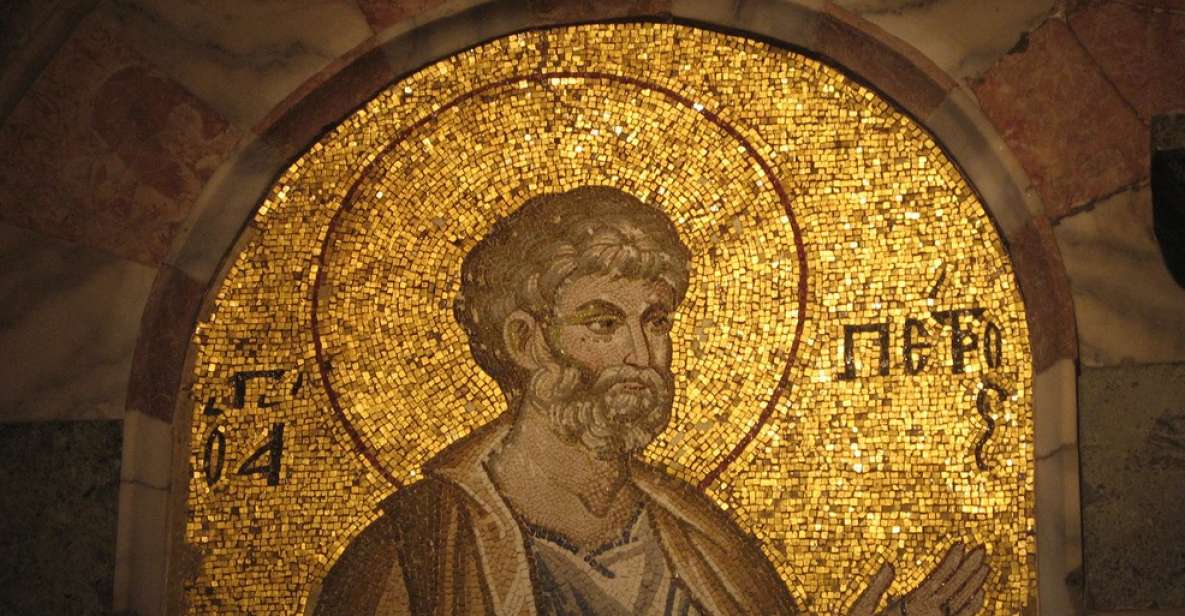
Istanbul earned the idea of being a crossroads the hard way: empires changed, borders shifted, and religious life adapted without asking permission. This tour makes that history physical. You’ll see how one city could host major Orthodox centers, imperial legends, and Byzantine architecture that still shapes what people imagine when they think of Christian Istanbul.
In a half-day, you can’t cover everything. What you can do is get the “why” behind the buildings you’ll recognize later—especially when you visit these neighborhoods on your own afterward. I like that the route focuses on tracing Christian continuity through real sites instead of talking in broad generalities.
A few more Istanbul tours and experiences worth a look

Patriarchate at Fener: the Orthodox starting point and Constantine’s impact
You begin at the Patriarchate at Fener, which sets the tone for the whole morning or afternoon. This is not just a pretty church stop—it’s a statement about where Orthodox Christianity’s power and identity were shaped in Istanbul.
Your guide explains why Constantine the Great’s declaration that Christianity became the religion of the Roman Empire mattered. It wasn’t only a spiritual shift; it changed the political and cultural center of gravity, and the seat of church life moved toward Istanbul. That early context helps everything you see later make sense, including why certain buildings were built where they were and why later communities kept returning to them.
Practical tip: dress modestly and be ready for some walking. Even when the transport is private and comfortable, these neighborhoods are still a city, with staircases and uneven spots that can slow you down if you’re not used to it.
Panagia of Blachernae and the Hagiasma healing legend
Next you’ll visit the Church of Panagia of Blachernae, tied to a story most visitors hear about early in their Istanbul Christian research: the Hagiasma, the fountain of holy water. The belief is that the waters could help with healing, and your guide shares how emperors were connected to this practice.
Whether you take the miracle as literal or symbolic, the point is the same: people came here for cleansing, comfort, and hope. When you’re looking at the architecture afterward, it becomes easier to understand why certain religious sites attracted imperial attention. They weren’t only churches—they were places where faith met daily life, including health and ritual.
From a photo perspective, this stop is good for street-level context. You’ll get a feel for how these monuments sit in the city now, not just how they might have looked centuries ago.
St. Savior in Chora (Kariye Museum): mosaics, frescoes, and a key closure day
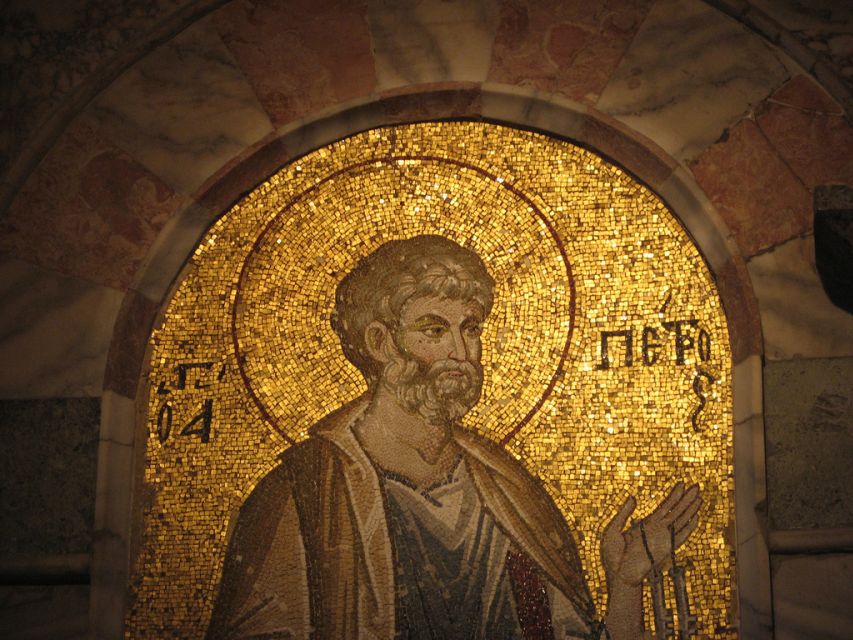
Then comes one of the most visually rewarding stops: St. Savior in Chora (Kariye Museum). This was once a Byzantine monastery dedicated to Jesus, and that original purpose shows up in what you’ll see inside—especially the preserved mosaics and frescoes.
This is where I think you’ll get the strongest “wow, this is specific” feeling. Instead of hearing vague claims about Byzantine art, you’ll be pointed toward the details that make these images powerful: composition, color, and storytelling in scenes that were meant to teach as well as inspire.
Important scheduling note: St. Chora is closed on Wednesdays. If you’re choosing your day based on the artwork here, pick carefully. If your tour date lands on Wednesday, you’ll want to confirm the plan with the operator so you don’t get stuck with a major gap.
Pantocrator (Zeyrek): a labyrinth of church life and everyday spaces
After Chora, the tour shifts from museum-level art to lived-in complexity. Pantocrator (Zeyrek) is described as a labyrinthine complex with multiple functions in one setting. You’ll explore churches and funerary chapels, and you’ll also hear about baths, a hospice for the aged, and even spaces connected to travelers arriving in more modern times.
That mix is what makes this stop more than a couple of buildings. Byzantine architecture wasn’t built only for ceremony. It was organized for community needs—care, burial, hospitality, routine. When your guide connects those purposes to the design, the complex stops feeling like a maze and starts feeling like a map of how people actually lived around faith.
Photo tip: take a moment to look for the way corridors and entrances create movement. Even if the views aren’t instantly postcard-ready, the geometry is part of the story here.




St. Mary Pammacaristos (Fethiye): Paleologan refinement and a former Patriarchate connection
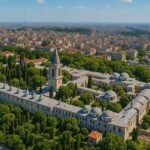
Moving toward the water, you’ll visit the Church of St. Mary Pammacaristos (Fethiye) ruins. These are 11th-century remains tied to the Paleologan Age, and the key idea is refinement. Your guide points out the aesthetic qualities that help explain why this wasn’t an ordinary church site.
There’s also an important historical note: it was once connected to the Patriarchate after conquests. In other words, this wasn’t a “side chapel” in the Christian map. It occupied a place in the larger story of how church authority and identity were reorganized over time.
For your visit, expect ruins more than intact interiors. The value is in understanding the layers—what survived, why it mattered, and how it fits into the wider shift of Christian centers across centuries.
Balıklı’s Zoodochos Pege: an underground cistern and the gold fish tradition
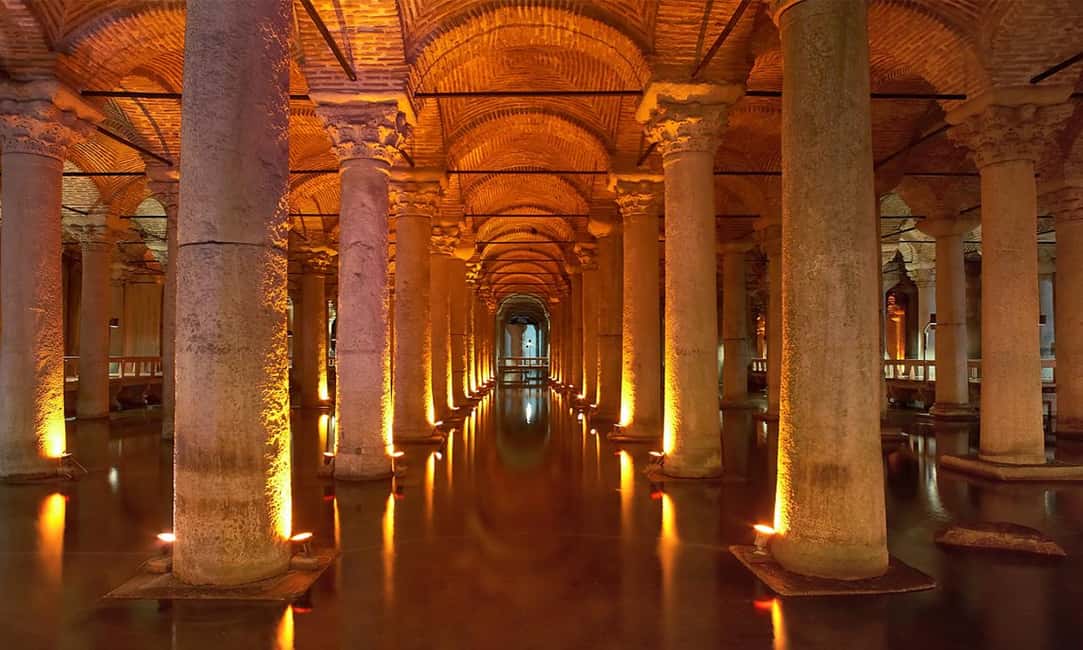
Next is Zoodochos Pege at Balıklı, and it comes with one of Istanbul’s most unusual visual stories. This stop includes an underground cistern filled with gold fish linked to a miracle tradition involving fish.
Even if you’re not chasing religious legends, this is one of those places that feels different the moment you arrive. Underground water features don’t just look odd; they create a mood—cooler air, dimmer light, and that feeling of stepping into an older world that still has meaning today.
Your guide also connects this site to cleansing and holy water themes that echoed earlier stops like Blachernae. When you put the legends side by side, you start seeing the pattern: faith expressed through tangible spaces—water, ritual, and architecture built to hold those beliefs.
St. Sergius and Bacchus: why people call it a mini Hagia Sophia
Finally, you’ll visit St. Sergius and Bacchus, widely noted as an excellent example of Byzantine architecture. You may notice it looks like a miniature Hagia Sophia, and your guide explains why: it’s connected as a precursor style that influenced later Byzantine design.
This is a strong last stop because it gives your eyes a clear reference point. Once you understand what you’re seeing—how the structure supports the visual impact—you’ll be able to spot Byzantine design principles even when you’re not in a specific monument.
If you like architecture, this ending works well. It’s a visual payoff after the storytelling stops earlier in the route.
Time, pace, and logistics that matter in only 4 hours
This is a 4-hour private tour with private A/C transportation, so the time budget is the main thing to think about. In a short window, the difference between a good schedule and a frustrating schedule is huge.
A big practical help: your tour includes skipping the ticket line and covers the museum entrance fee (important for Chora/Kariye). It also includes donations to churches, so you don’t have to figure out payment rhythms on the fly.
Pickup and drop-off are also built for convenience, but with one catch. Free pick-up/drop-off is offered from centrally located hotels, and after booking you’ll need to call the local supplier to confirm the exact shuttle timing and availability. Shuttle pick-up runs in two windows: 08:00–09:00 or 13:00–14:00, and the ride can take 45 to 60 minutes depending on where you’re staying.
If your hotel isn’t accessible, you’ll be given an alternative meeting point. For the smoothest experience, plan to be ready at the pick-up time and keep your phone on for any supplier updates.
Price and value: what $354 really buys you
At $354 per person, this isn’t a bargain-basement tour. So is it worth it? For me, the value depends on what you compare it to.
Here’s what your price includes:
- private guiding in English or Spanish
- private A/C transportation
- museum entrance fee
- donations to churches
- parking and VAT (18%)
- free pick-up and drop-off from central hotels
- and you get skip-the-ticket-line service
That bundle matters because Istanbul can be time-expensive. If you were trying to do these stops on your own, you’d spend extra time managing transit, entry lines, and the small uncertainties of church visits. The guide also does something you can’t easily recreate: connecting each site’s story to the next one so the route feels like a single narrative, not separate dots on a map.
If your group wants a guided, photo-friendly plan with transport and admissions handled, the cost starts to make more sense. If you’re traveling light and comfortable navigating on your own, you could possibly save money—but you’d lose the connecting tissue that explains why each monument sits where it does.
Who this tour suits best (and who might want a different plan)
This one fits best if you:
- want Christianity’s physical traces in Istanbul, not just a general overview
- care about Byzantine art and architecture, especially mosaics and frescoes
- like a guided pace in a tight half-day window
- prefer private comfort and not cramming into a larger group
It may not be the best match if you:
- have a strict schedule and can’t risk a site being closed (remember St. Chora is closed on Wednesdays)
- prefer totally independent travel where you decide everything minute-by-minute
Also, if you’re sensitive to crowds, the private format and skip-the-line approach can reduce stress during key entry times.
Should you book Crossroads of Humanity?
If your goal is to understand how Istanbul’s Christian story was shaped by emperors, faith traditions, and Byzantine building choices, this tour is a smart use of time. The most compelling parts are the guided links between stops and the chance to see mosaics, frescoes, and Byzantine architecture in one compact route.
I’d book it if you’re going on a day when St. Chora is open and you want the convenience of private transport plus admissions handled. I’d think twice if your schedule includes a Wednesday or if you can’t tolerate the tour changing due to closures.
FAQ
How long is the Istanbul Half-Day Crossroads of Humanity tour?
It lasts 4 hours.
What’s included in the price?
It includes private guiding, private A/C transportation, donations to churches, museum entrance fee, skip-the-ticket-line, parking, and VAT (18%), plus free pick-up/drop-off from central hotels.
Where does the tour start?
It begins at the Patriarchate at Fener.
Which languages are available for the live guide?
The tour offers live guiding in English and Spanish.
Is St. Chora open every day?
No. St. Chora is closed on Wednesdays.
Do I need a passport?
Yes. Bring a passport or ID card.
What should I do after I book?
After booking, you need to call the local supplier to learn the exact time and confirm free shuttle availability.
Are hotel pick-ups available everywhere?
Pick-up is only available for centrally located Istanbul hotels. If your hotel isn’t accessible, you’ll get an alternative meeting point from the supplier.
When do the free shuttle pick-ups happen?
Free shuttle pick-ups run between 08:00 and 09:00 or between 13:00 and 14:00, and the ride can take 45 to 60 minutes.
Are pets or smoking allowed?
No. Pets aren’t allowed, and smoking isn’t allowed.