REVIEW · ISTANBUL
Byzantian and Ottoman City Tour Museum fees Lunch Inc
Book on Viator →Operated by Kuantum Travel - Turkey Tours 2026 · Bookable on Viator
One day in Istanbul, and you get the big story. This Byzantian and Ottoman City Tour strings together the landmarks that shaped the city, from the Hippodrome era to the Ottoman court.
I love how the day is built for speed without feeling rushed. You get major stops like the Blue Mosque, Hagia Sophia, and Topkapi Palace, plus the museum entries that many people end up paying for separately.
The only real trade-off is time: it’s a long 8 to 9 hours. You’ll spend a fair bit of it walking inside sites, then riding between them in a group.
In This Review
- Key Highlights at a Glance
- Why This Byzantine-to-Ottoman Route Feels Efficient
- Pickup, Group Size, and Comfort in an A/C Van
- Hippodrome Monuments: The Spina Story in 15-Minute Chunks
- German Fountain: A Surprise Link to 1901
- Obelisk of Theodosius: Egypt to Constantinople
- Serpent Column and the Remaining Pieces
- Walled Obelisk: A Mirror Across the Spina
- The Blue Mosque: Quick Visit, Big Visual Impact
- Hagia Sophia Grand Mosque: A Building That Refuses to Stay One Thing
- What to Look For (Without Needing a Degree)
- Topkapi Palace: Where Ottoman Power Shows Up in Gems and Relics
- The Practical Challenge: You’ll Want to Move
- Hagia Irene Museum: The Quiet Neighbor in the Same Zone
- Grand Bazaar: 4,000 Shops, One Survival Strategy
- A Simple Approach You Can Use
- Lunch Included: The Break That Makes the Long Day Work
- Price and Value: Is $300 Fair for This “Tickets + Lunch” Day?
- Where You Still Might Spend Extra
- Who This Tour Suits Best
- Should You Book This Byzantine and Ottoman City Tour?
- FAQ
- What sites are included on this tour?
- How long is the tour?
- Is hotel pickup included?
- Are entrance fees included?
- What about lunch and drinks?
- What language is the tour?
Key Highlights at a Glance
- Museum tickets included for key stops like Hagia Sophia and Topkapi Palace, so you lose less time at the door
- A/C vehicle with roundtrip pickup, which matters in Istanbul’s heat
- Hippodrome monuments in sequence, including the German Fountain and the Obelisks
- Hagia Sophia’s layered story, from 6th-century church to later mosque and museum phases
- Topkapi Palace with sacred treasures, including the Holy Mantle and Chamber of Sacred Relics
- Lunch included, and it’s part of why this tour feels good value
Why This Byzantine-to-Ottoman Route Feels Efficient
This is the kind of Istanbul day that helps you get your bearings fast. Instead of hopping randomly between neighborhoods, you follow a clear storyline: Byzantine power and public life first, then Ottoman rule and court culture.
The route is also practical. You’re not just “seeing famous buildings” from the outside—you’re getting into the sites where the artwork, relics, and inscriptions explain what changed over the centuries.
And yes, you’re fitting in a lot. But it’s structured around major anchor stops, which keeps the day from feeling chaotic.
You can also read our reviews of more city tours in Istanbul
Pickup, Group Size, and Comfort in an A/C Van
The tour is set up for an easy start. Pickup and drop-off are included, and you meet at Cumhuriyet Caddesi, Harbiye (Cumhuriyet Cd., Istanbul). They ask you to be ready in your hotel lobby, which saves time if you don’t want to self-navigate early on.
The vehicle is new and air-conditioned, and that’s not a small detail in Istanbul. You’re moving between heavy-hitters like the Hagia Sophia area and Topkapi Palace, and sitting comfortably in transit keeps your energy for the walking parts.
Group size stays reasonable too: a maximum of 30 travelers. That’s big enough to feel lively, but small enough that the guide can still manage the flow.
Hippodrome Monuments: The Spina Story in 15-Minute Chunks
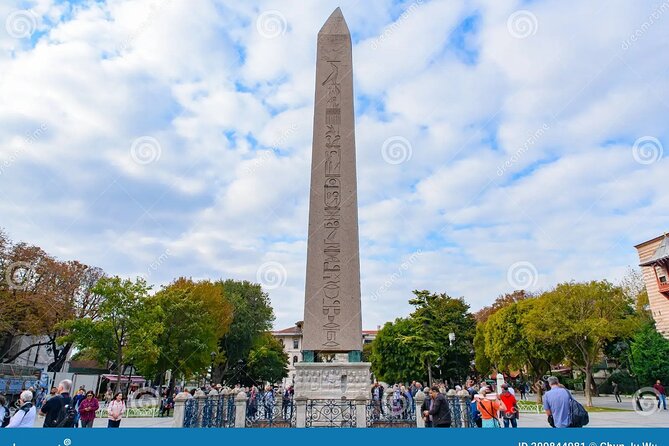
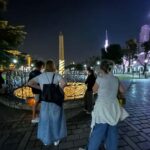
You start with the Hippodrome, the center of public spectacle in Constantinople. This area is famous, but the best part here is how the tour guides you through the monuments like they’re a set of clues.
You’ll move through four surviving (or identifiable) elements that once sat along the spina—the long central divider of the Hippodrome. The time is tight for each stop (about 15 minutes), so the goal isn’t lingering. The goal is context, so you can actually understand what you’re looking at.
German Fountain: A Surprise Link to 1901
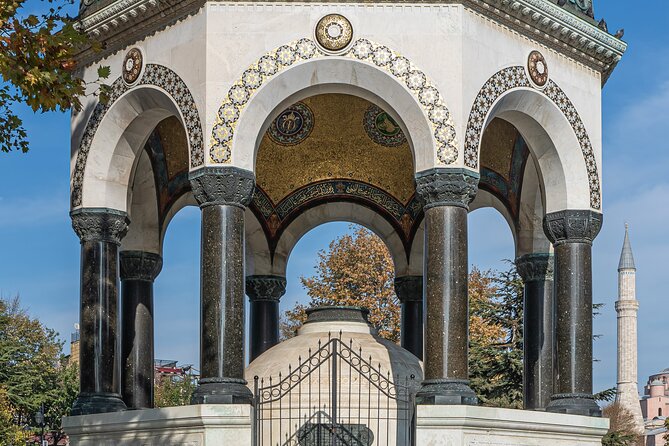
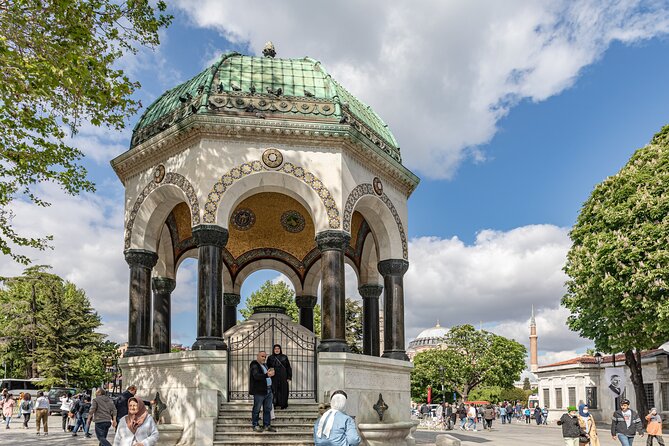
Next up is the German Fountain, located in Sultanahmet Square across from the tomb of Sultan Ahmet I. It was presented by German Kaiser Wilhelm II to the sultan and the city, made in Germany in a neo-Byzantine style, and erected in Istanbul in 1901.
One thing I like about this stop is how it shows Istanbul isn’t only “ancient vs. ancient.” Even later rulers tried to connect themselves to earlier styles and legitimacy.
Obelisk of Theodosius: Egypt to Constantinople
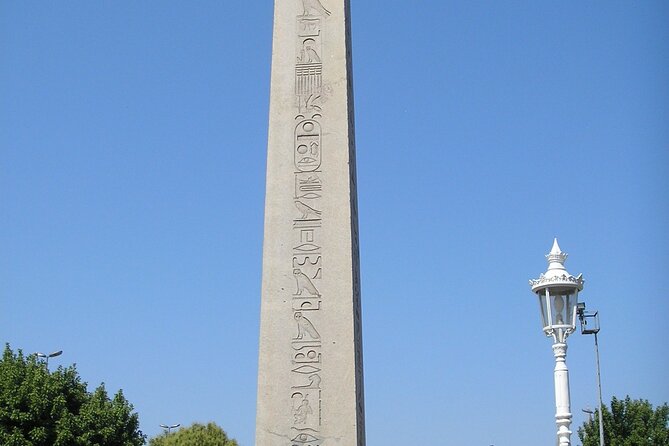
Then you see the Obelisk of Theodosius, which has a long paper trail. It was originally commissioned by Pharaoh Tuthmosis III in the 15th century BC, and later it ended up on the Hippodrome spina during Theodosius I’s reign (390).
The story includes a victory angle too. It was erected in the Hippodrome in part to commemorate the defeat of usurper Maximus and his son Victor in 388.
You can also read our reviews of more museum experiences in Istanbul



Serpent Column and the Remaining Pieces
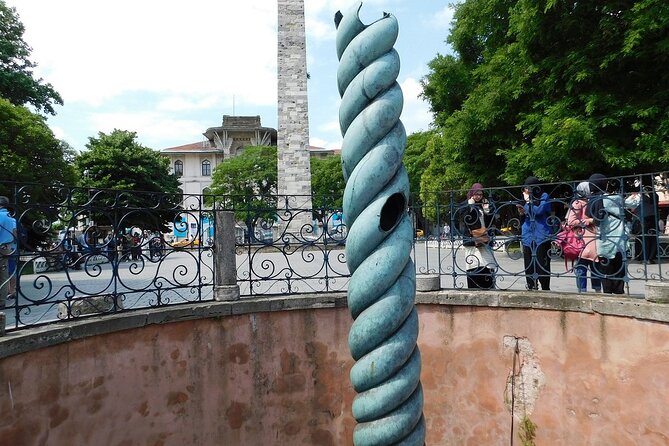
The Serpent Column is one of the three remaining monuments of the Hippodrome of Constantinople. It stands halfway between the Obelisk of Theodosius and the Masonry Obelisk, helping you visualize the layout even though most of the original decoration is gone.
Walled Obelisk: A Mirror Across the Spina
Finally, the Walled Obelisk comes into view. It’s about 32 meters high and is believed to mirror the Obelisk of Theodosius on the spina, similar to how other Roman circuses used paired obelisks.
If you like history that feels physical—like you can point at where things stood—this segment works well. Just don’t expect long museum-style explanations at each monument. You’re getting guided orientation more than deep lectures.
The Blue Mosque: Quick Visit, Big Visual Impact
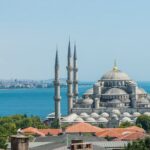
After the Hippodrome area, you head to the Blue Mosque. It’s known as the Blue Mosque because of its beautiful blue Iznik tiles.
This stop is shorter (around 30 minutes). That’s enough time to see the key visual elements, but it’s also worth managing expectations: it’s not a sit-down photo session.
If you want the best experience here, arrive mentally ready for crowds and quick movement. The value is that you pair it with Hagia Sophia right after, so the religious architecture contrast lands immediately.
Hagia Sophia Grand Mosque: A Building That Refuses to Stay One Thing
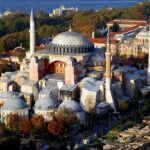
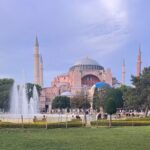
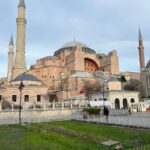
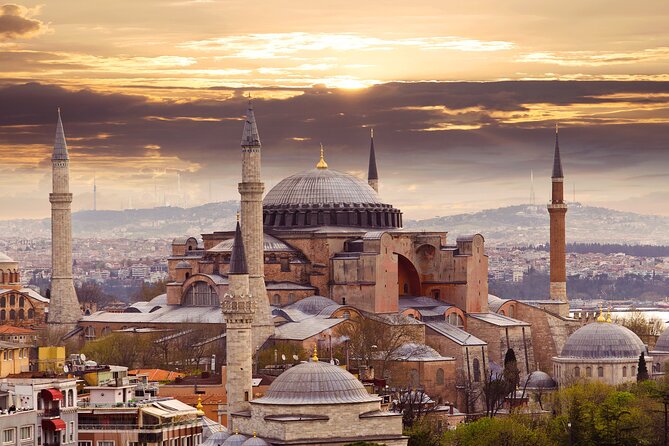
Hagia Sophia is the headliner for most people, and this tour treats it like it deserves attention. You’ll spend about 1 hour here, and the admission ticket is included.
The story starts in the 6th century, when it was built as a Christian church under Byzantine emperor Justinian I. Later it became a mosque, then a museum, and then a mosque again.
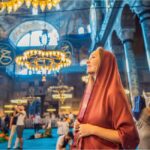
What makes this stop so satisfying is that you don’t just see one era’s idea of glory. You see multiple layers at once: Islamic inscriptions and minarets alongside lavish Christian mosaics.
What to Look For (Without Needing a Degree)
Inside, I’d focus on three things:
- the mix of Christian art and Islamic calligraphy
- the scale of the interior space
- how the building reads like a record of political and religious change
A good licensed guide helps a lot here, because you’ll understand what you’re noticing rather than just walking through a big famous room.
Topkapi Palace: Where Ottoman Power Shows Up in Gems and Relics
Topkapi Palace is next, and it’s where the day shifts from public spectacle to private court power. You get about 1 hour inside, with admission included.
The palace served as the residence and power center of Ottoman sultans from the 15th to the 19th centuries. The collection includes precious gems, jewelry and throne-like displays, and costumes worn by sultans and their families. You also see miniatures and major ceremonial/religious items.
The Holy Mantle and the Chamber of Sacred Relics are specifically mentioned as highlights here. Even if you’re not a “relic person,” it’s still a powerful way to understand how Ottoman rulers used objects, ritual, and myth to legitimize authority.
The Practical Challenge: You’ll Want to Move
Topkapi can feel like a maze if you’re alone. With a guide and a timed slot, you’re less likely to spend your hour in the wrong wing.
Just be ready: one hour in a palace like this is never “enough.” It’s more like a curated entry point—enough to feel the scale and leave you with a list of what you want to return for.
Hagia Irene Museum: The Quiet Neighbor in the Same Zone
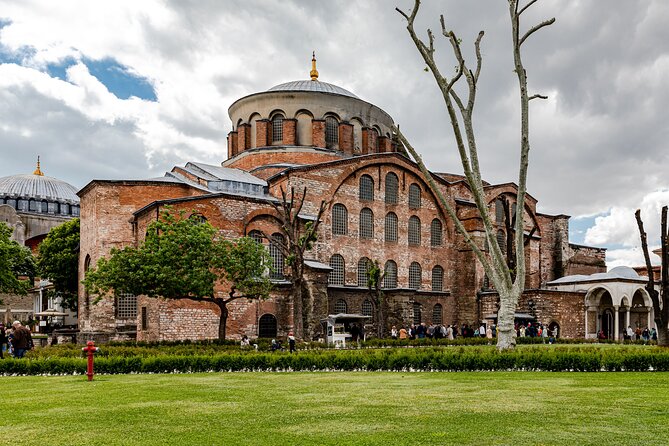
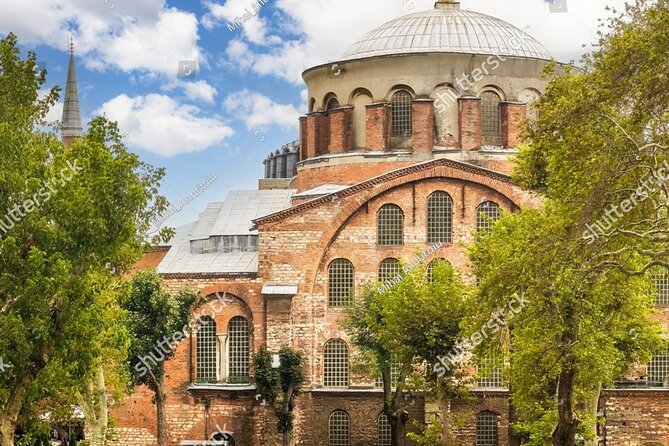
Hagia Irene Museum is a smart add-on because it’s connected to the Hagia Sophia and Topkapi area story, but it doesn’t grab your attention in the same obvious way. You’ll have about 45 minutes, and admission is included.
It was built around the same period as Hagia Sophia, with its 4th-century origins. The name Hagia Irene Church is given as meaning Godly or Holy Wisdom in Greek. After the conquest of Istanbul, it was incorporated into the grounds of Topkapi Palace and converted into a mosque.
The good part for your experience is that the building structure saw no major changes after conversion. That makes it a steadier place to compare “then vs. later” without the same level of dramatic redevelopment you might see elsewhere.
Grand Bazaar: 4,000 Shops, One Survival Strategy
The Grand Bazaar is where the tour moves from monuments and museums into daily life, trade, and craft. You get about 1 hour, with admission listed as free.
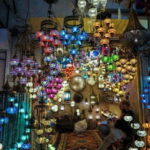
It’s described as a labyrinth with more than 4,000 shops, each trade clustered into its own sections. You’ll hear about goldsmiths’ street, carpet sellers, and Turkish arts and crafts like handpainted ceramic plates, hand-honed copperware, brassware and trays, water ewers, onyxware, and meerschaum pipes.
Here’s the honest angle: in an hour, you won’t “finish the bazaar.” You’ll do something smarter—get oriented, see what’s being made, and decide whether you want to return later.
A Simple Approach You Can Use
I’d treat it like a curated walkthrough:
- pick one craft category to check out closely
- ask the price ranges early, then decide
- don’t get pulled into five overlapping shop pitches at once
With a guide, you’re less likely to feel lost in the maze, which is the real win.
Lunch Included: The Break That Makes the Long Day Work
Lunch being included is one of the best hidden benefits of this tour. You’re out for 8 to 9 hours, and you’re visiting big-ticket sites where hunger can mess with your patience.
This tour includes lunch (drinks are not included). Based on the tone of the feedback, the meal is treated as genuinely local and enjoyable, not just a placeholder stop.
If you’re trying to decide whether this tour is worth it, think of the included lunch as part of the price you’re saving from your own planning. It also protects your energy for the late stretches of the day.
Price and Value: Is $300 Fair for This “Tickets + Lunch” Day?
At $300 per person, this isn’t the cheapest way to see Istanbul. But the value case here is pretty clear: you’re paying for a guided route plus all entrance fees, and that includes museum entries at key sites.
You also get roundtrip pickup and drop-off, and the vehicle is A/C. Those three things—guide, admissions, and comfortable transport—are usually where DIY plans quietly get expensive once you add up tickets, taxis, and time wasted finding the right entrances.
The tour’s rating and recommendation rate are also strong: it has a 5 out of 5 average from 11 reviews, and it’s recommended by 100%. That doesn’t guarantee perfection, but it suggests this format consistently hits the mark.
Where You Still Might Spend Extra
The tour lists what’s not included: drinks and personal expenses. So if you’re someone who likes bottled water, tea, or coffee on the move, budget a little.
Who This Tour Suits Best
This tour fits best if you want a structured day covering major Byzantine and Ottoman sites without turning Istanbul into a logistics project.
You’ll likely enjoy it if:
- you want an organized path that reduces decision fatigue
- you prefer spending money on included tickets rather than standing in lines or scrambling for admissions
- you want a guide to explain how the eras connect
It’s also a good match for first-timers who care about seeing the key landmarks and understanding what changed over time.
On the flip side, if you hate group pacing or you want long, slow museum time, you might find the short time slots feel a bit brisk. This tour is built for coverage and context, not for lingering.
Should You Book This Byzantine and Ottoman City Tour?
If you want a day that feels efficient, comfortable, and ticket-solved, I think this is a strong choice. The combination of guided storytelling, included admissions at the big stops (Hagia Sophia, Topkapi Palace, Hagia Irene), plus lunch gives you a lot of value for a single $300 day.
My only caution is simple: commit to the full-day rhythm. Wear comfortable shoes, hydrate, and expect that each stop is designed to give you the essentials and the meaning, not a long personal browse. If that sounds like your style, you’ll leave with a clear picture of Istanbul’s Byzantine-to-Ottoman transformation.
FAQ
What sites are included on this tour?
The tour includes stops at the Hippodrome area monuments, the Blue Mosque, Hagia Sophia Grand Mosque, the Grand Bazaar, Topkapi Palace, and Hagia Irene Museum.
How long is the tour?
The total duration is about 8 to 9 hours.
Is hotel pickup included?
Yes. Roundtrip pickup and drop-off transfers are included, and you meet at Cumhuriyet Caddesi Harbiye. They ask you to be ready in your hotel lobby.
Are entrance fees included?
Yes. All entrance fees are included, and tickets are listed as included for Hagia Sophia, Topkapi Palace, and Hagia Irene Museum.
What about lunch and drinks?
Lunch is included. Drinks are not included.
What language is the tour?
The tour is offered in English, and you’ll receive a mobile ticket. Confirmation is received at the time of booking.