REVIEW · ISTANBUL
Istanbul Archaeological Museums Entry Ticket & Audio Guide
Book on GetYourGuide →Operated by Istanbul Tourist Pass® · Bookable on GetYourGuide
QR code meets ancient marble. With a digital ticket and an audio guide in 25 languages, the Istanbul Archaeological Museums make it easy to switch from street life to statues and sarcophagi fast. You can also move at your own pace, which matters in a site like this where the best rooms are the ones you choose to linger in.
I especially like two things: the convenience of the skip-the-line entry (so you spend less time waiting) and the audio guide’s wide language choice, so you’re not stuck with a basic summary. You’ll also get commentary that helps you connect objects to the people and rituals behind them, not just the dates.
One consideration: even with the ticket, you still face mandatory security checks, and the full experience can be shorter than you expect if you mainly want the headline pieces. If your QR ticket has trouble scanning, you may need to contact the supplier to sort it out.
In This Review
- Key points to know before you go
- QR tickets and audio setup: emails, internet, and scanning reality
- Getting there from Gulhane: the tram stop and a short walk
- What one day in the Istanbul Archaeological Museums really looks like
- Main highlights to prioritize: Hermes, Aphrodite, and the big tomb rooms
- The Alexander Sarcophagus: why it’s worth your time
- Ottoman-era contrast: the Enameled Kiosk Museum (1472) and the Old Eastern Works
- Renovation, signs, and toilets: the small frictions that affect your flow
- Value for $25: when this ticket feels like a win
- Who should book this, and who should skip it
- FAQ
- What does the ticket include?
- Do I need internet on my phone?
- Can I skip security lines with this QR ticket?
- Where do I get the QR codes and the audio guide?
- Are passports required at the museum?
- How do I get there?
- What languages are available on the audio guide?
Key points to know before you go

- Skip-the-line QR entry for the Archaeological Museums, but security screening is still required
- Audio guide in 25 languages (Arabic, English, Turkish, Japanese, Persian, and more)
- Plan around internet access on your smartphone to retrieve the QR tickets
- Expect a classic museum flow across multiple buildings, including Ottoman-era rooms
- Some navigation details can be a bit rough (signposting and access can vary by ongoing work)
- Passport checks may be required for all visitors and children to validate age
QR tickets and audio setup: emails, internet, and scanning reality

This ticket experience is simple in theory: you get QR codes for museum entry, plus an audio guide link. The details are what can trip you up, so read them like a checklist.
First, you receive your two entry ticket QR codes and the audio guide link via separate e-mail from the supplier (Istanbul Tourist Pass®). That means you should search your inbox for both messages before leaving your hotel. If you only find one, you may think everything is ready when it isn’t.
Second, you need an internet connection on your smartphone to pull up the QR tickets. There’s no “download once and forget it” guarantee here. So before you walk over, connect to data or Wi‑Fi and keep enough battery for the last stretch.
Third, the QR codes are only meant to be shown when you are near the entrance. Don’t stress over them mid-walk—just have them accessible. Near the gate, hold your screen steady and be ready to confirm it scans.
And finally, even with the “skip-the-line” promise, you cannot skip security. Expect the usual mandatory checks for everyone. The practical win is that you’re not stuck in the separate ticket queue.
A few more Istanbul tours and experiences worth a look



Getting there from Gulhane: the tram stop and a short walk

The meeting point is straightforward. Take the T1 Bağcılar–Kabataş tram, get off at Gulhane station, and walk about 5–10 minutes to the museum. This location is handy because Gulhane is easy to reach without complicated transfers.
I like this approach because it reduces time wasted on transit “maybe” plans. You’re planning around a museum visit, not a scavenger hunt. Once you’re on foot, follow the signs for the museum complex area and focus on arriving a little early so you can go through security calmly.
What one day in the Istanbul Archaeological Museums really looks like

Your experience lasts one day, and you enter on your own. That matters: there’s no live guide herding you between rooms. Your audio guide is the brain of the visit, not a person with a microphone.
Inside, you’re moving through collections tied to several civilizations—especially objects from Greece, Egypt, and Mesopotamia, along with other ancient cultures. The audio guide is designed to help you see the connections: not just what an artifact is, but why it mattered. As you go, you’ll encounter everything from towering religious and mythic statuary to finely made everyday objects. The best rooms are the ones where you slow down and let the audio explain how the object fits into a larger story of belief and daily life.
A key practical point: the museum buildings can include areas under renovation or with limited access. That means you might find some entrances blocked or circulation changed. Build in flexibility. Even a great plan needs a few detours.
Main highlights to prioritize: Hermes, Aphrodite, and the big tomb rooms
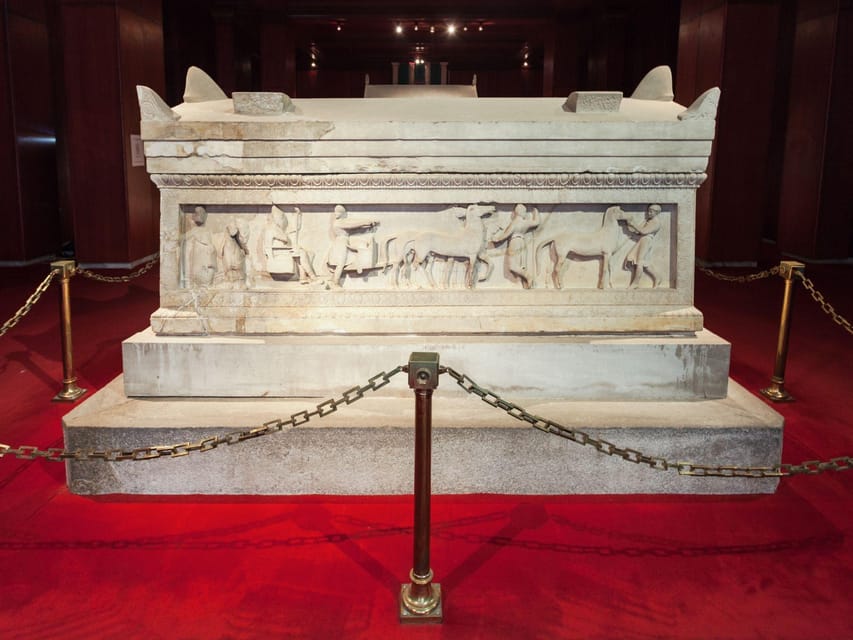
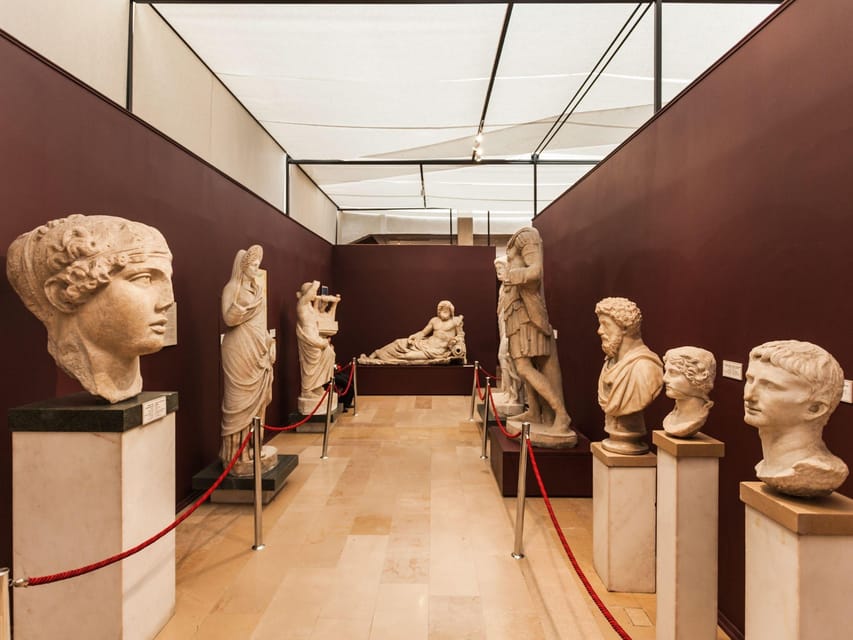
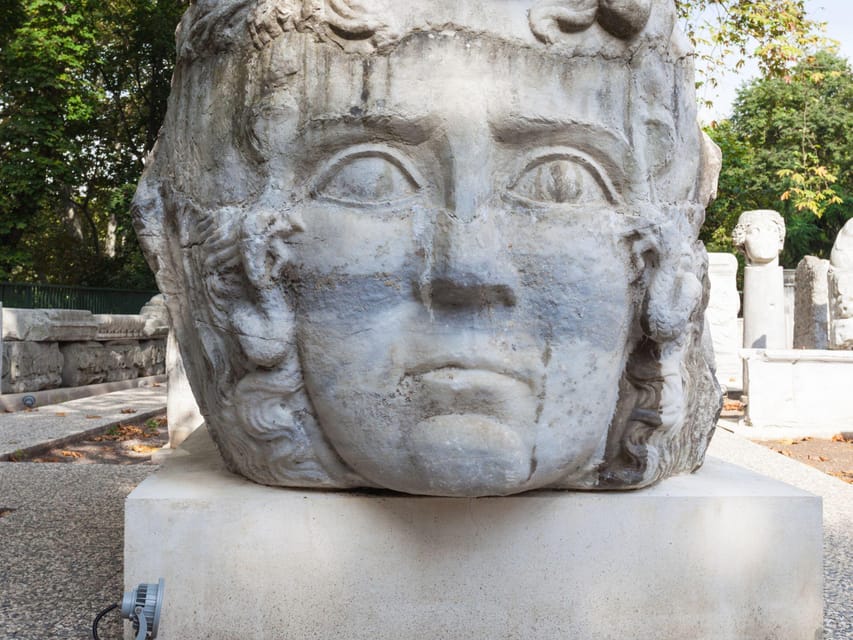
If you’re the type who wants the “I came for this” pieces, you’ll be happy here. The highlights include iconic works such as the Statue of Hermes and Aphrodite. These are the kinds of objects that also make the audio guide worth using, because the narration helps you interpret what you’re looking at rather than just admiring the craftsmanship.
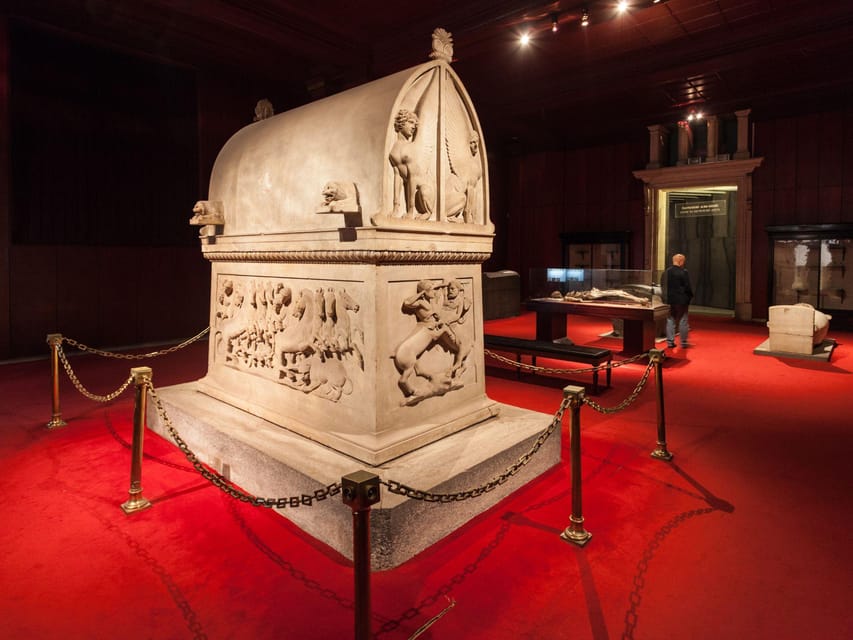
Then come the tomb-related highlights, which are a different kind of “wow.” Don’t rush past them. The museum is known for rooms like the Crying Women Tomb, the Lykia Tomb, and major sarcophagus displays. Tomb art tends to feel personal: expressions, patterns, and symbolic scenes can make ancient funerary life feel less distant.
Here’s how I’d plan it for value: pick one “statues and gods” stretch and one “tomb and narrative” stretch. If you try to do everything in one sprint, you’ll end up treating the audio like background noise instead of a tool.
The Alexander Sarcophagus: why it’s worth your time
The Alexander Sarcophagus is listed as one of the key treasures, and that usually means it’s both visually striking and interpretively rich. Even if you’re not a hard-core art historian, sarcophagi reward attention because they often combine scenes, style, and symbolism in one object.
With an audio guide, you’re not just looking at carvings—you’re tracking how the scenes connect. The museum’s audio format is helpful for that kind of “read while you look” experience. If the audio numbering or pacing feels slightly off in a room, it’s still worth sticking with it long enough to match the object in front of you.
Tip I’d follow: when you reach a major highlight, stop moving for a minute and let the audio orient you. Then resume. That small habit makes the visit feel guided even without a person leading you.
You can also read our reviews of more guided tours in Istanbul




Ottoman-era contrast: the Enameled Kiosk Museum (1472) and the Old Eastern Works
One reason the museum complex stands out (in a good way) is the time jump. You’re not only watching Greece and the Near East in ancient settings—you’re also seeing later layers of Ottoman-era art.
A standout stop is the Enameled Kiosk Museum, established in 1472 by Fatih Sultan Mehmet. This is your chance to catch a different kind of visual language: early Ottoman artistry with enamel and decorative design. It’s a useful counterweight to the more “classical” material elsewhere in the complex.
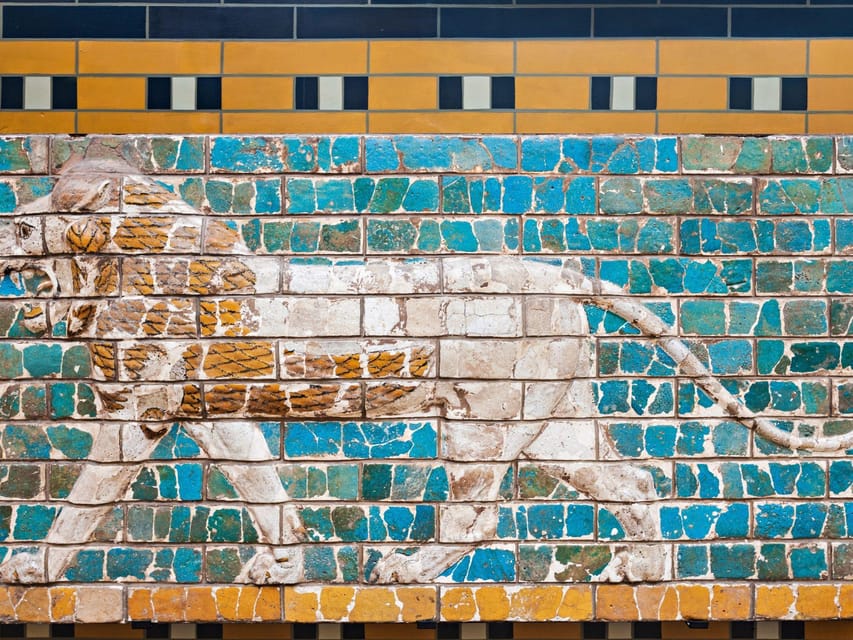
Also included is the Old Eastern Works Museum, which showcases artifacts from Anatolia, Mesopotamia, Egypt, and Arabia. That mix helps you see how cultures shared motifs, techniques, and ideas across time and geography. Even if you focus on the main treasures, this wing can give you the broader context that makes the standout pieces feel less random.
Renovation, signs, and toilets: the small frictions that affect your flow
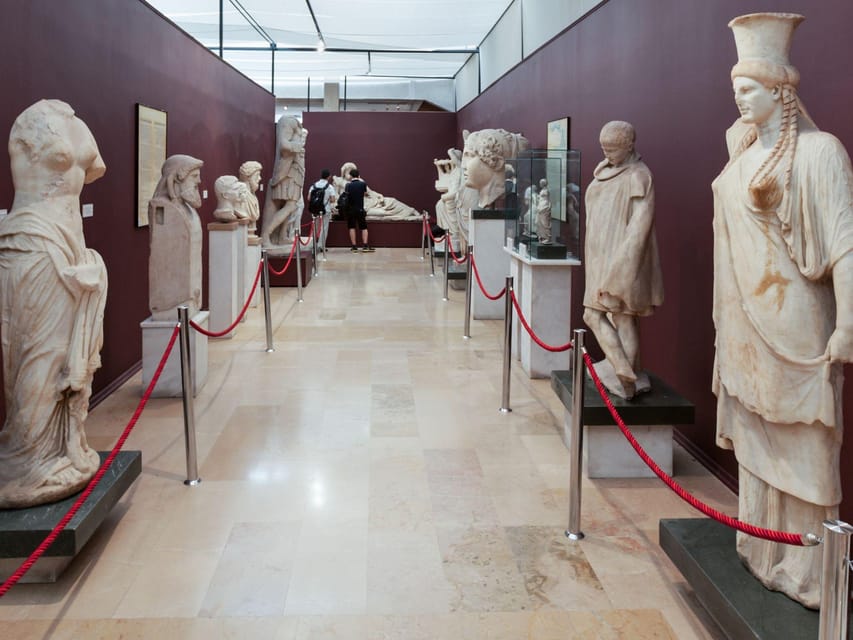
A big part of getting value from a museum ticket is not just what’s inside, but how smoothly you can move around.
Some visitors have run into issues like outside renovation affecting access to certain areas. That can change which routes work best. Plan for the possibility that you won’t follow a perfectly straight path through the complex.
Signposting can also be imperfect. Toilets, in particular, may not be as clearly marked as you’d hope, so I’d recommend locating facilities early so you don’t waste time later.
And if the QR ticket doesn’t scan cleanly, don’t panic. The practical move is to contact the company that provided the ticket if you’re stuck at the entrance. Having that contact info easy to reach on your phone can save time.
Value for $25: when this ticket feels like a win
At $25 per person, you’re paying for two things: skip-the-line entry and an audio guide that covers 25 languages. The value depends on your visiting style.
This is a strong pick if:
- You want independent pacing but still want context
- You’d rather listen than read wall text
- You’re planning to visit more than just the first room you see
It can feel less worth it if:
- You mostly want the headline objects and you tend to move quickly
- You think a museum like this will automatically mean a long day without planning
- You’re likely to get frustrated by scanning or navigation hiccups
Still, compared with buying entry ticket time on arrival plus sorting out audio resources separately, bundling the audio guide and using QR entry often makes the trip simpler. The real savings is time and stress at the entrance.
Who should book this, and who should skip it
This ticket fits best if you want museum access with a guided-feeling companion. I’d book it if you’re coming with someone who likes different things—one person can focus on statues and the other can linger in tomb rooms—while both can use the audio to keep understanding.
You might skip it if you:
- Only want a very short taste and plan to rely on quick photos
- Prefer a guided tour with someone answering questions in real time
- Don’t want to depend on smartphone internet at the moment you arrive
If you do book, go in with a simple plan: identify your top 3–5 stops, then let the audio help you decide what to expand on.
FAQ
What does the ticket include?
It includes the skip-the-line entry ticket for the Archaeological Museums and an audio guide available in 25 languages.
Do I need internet on my phone?
Yes. You need an internet connection on your smartphone to retrieve your QR tickets.
Can I skip security lines with this QR ticket?
No. It is not possible to skip security lines, and mandatory security checks apply to all visitors.
Where do I get the QR codes and the audio guide?
You receive both entry ticket QR codes and the audio guide link via separate e-mail from the supplier, Istanbul Tourist Pass®.
Are passports required at the museum?
Yes. All persons and children may be asked to present their valid passports to validate their age.
How do I get there?
Take the T1 Bağcılar–Kabataş tram to Gulhane station, then walk about 5–10 minutes to the museum.
What languages are available on the audio guide?
The audio guide is available in 25 languages, including Arabic, English, French, German, Japanese, Persian, Russian, Spanish, Turkish, Ukrainian, and more.
Should you book this ticket? If you want a self-paced visit with real context—and you’re comfortable using your phone to show a QR code near the entrance—this is a good value. If you’re not great with smartphone setup or you prefer fully guided storytelling, consider another option.