REVIEW · SELCUK
Pamukkale Day Tour from Selcuk
Book on Viator →Operated by Alaturca Ephesus · Bookable on Viator
Cotton terraces and Roman ruins in one full day. This Pamukkale and Hierapolis tour is interesting because you’re seeing natural wonder and ancient spa-city life on the same schedule, with hotel pickup to make it easy.
I like two things most: the small-group cap (max 15), and the way the day is paced so you get a guided walk plus time to wander on your own at Pamukkale.
One drawback to factor in: it’s an 11-hour outing with early pickup, and you’ll want to plan for extra drinks or paid-on-site add-ons once you’re there.
In This Review
- Key Takeaways Before You Go
- Why Pamukkale and Hierapolis Work as a Pair
- Hotel Pickup, 7:30 AM Start, and the Real Shape of the Day
- Pamukkale Cotton Castle: Travertines, Pools, and How to Enjoy It
- Hierapolis Theater and Apollo Temple: Fast Hits That Feel Big
- Bath, Arch, Necropolis, and the Shift from Pagan to Christian
- Timing, Lunch, and Small Choices That Prevent Frustration
- Value at About $150: What’s Included, What You’ll Still Pay
- Who This Tour Suits Best (and Who Might Want a Different Style)
- Should You Book This Selçuk Pamukkale Day Tour?
- FAQ
- What time does the tour start?
- How long is the Pamukkale and Hierapolis tour?
- Are hotel pickup and drop-off included?
- Is lunch included?
- Are entrance fees included?
- What is the group size?
- What is not included in the price?
Key Takeaways Before You Go

- Small group max 15: less herding, more personal attention.
- Hotel pickup and drop-off: you start and end at your Selçuk hotel.
- All entrance fees included: you don’t have to shop for tickets at each stop.
- Pamukkale free time: after the guided walk, you can soak up the pools at your pace.
- Roman anchors in Hierapolis: theater and Apollo temple give you the big “wow” moments fast.
- Lunch is included: you’ll be fed before the last stretches of walking.
Why Pamukkale and Hierapolis Work as a Pair
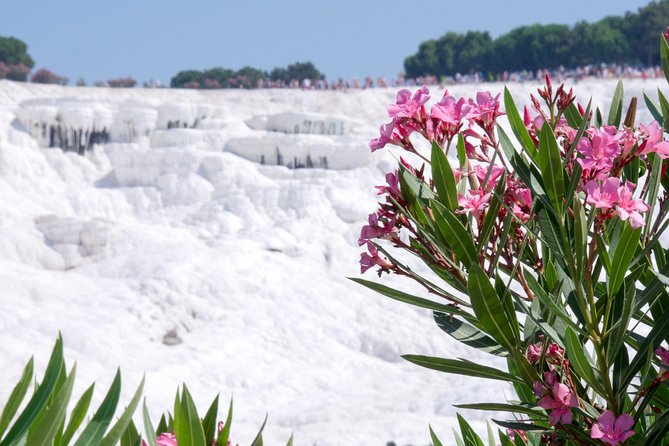
Pamukkale and Hierapolis were always meant to be seen together. Pamukkale gives you the famous white travertines and warm pools, while Hierapolis sits above it on a limestone terrace—an ancient city built on the same thermal attraction. In the background of today’s postcard look is the old story: Hierapolis was founded as a thermal spa in 190 BC by Eumenes II of Pergamon, and people came for the mineral-rich waters.
This tour’s value is that it connects the dots without making the day feel like a slideshow. You’re not only looking at ruins and pools—you’re hearing how the people who lived here believed the waters mattered, and why the city grew around that idea.
And it helps that Pamukkale is a UNESCO World Heritage site, so it’s not random sightseeing. It’s a recognized place with both geology and archaeology, packed into one day.
You can also read our reviews of more tours and experiences in Selcuk.
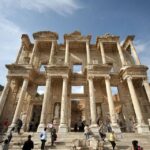

Hotel Pickup, 7:30 AM Start, and the Real Shape of the Day
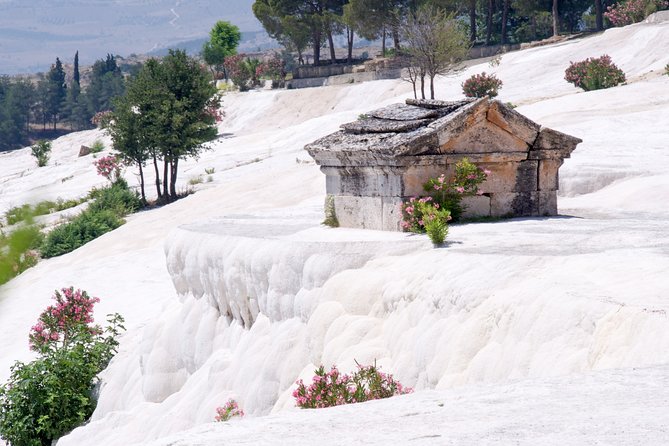
The day starts early. The tour begins around 7:30 AM, and hotel pickup in Selçuk (or Kusadasi) typically runs from 7:15 AM to 7:45 AM. Your exact pickup time is set the day before based on your hotel and other pickups, so don’t assume a fixed minute.
Why this matters: the drive to Pamukkale from the coast area is long enough that the morning schedule is doing real work for you. You arrive while the day is still more comfortable, and you leave before evening traffic can turn into a time sink. Even with that, you should still expect a full day—about 11 hours total.
One more practical note from the way guides handle timing: in a few cases, the bus ride can feel like a long lecture. That’s not guaranteed, but it’s a common risk on full-day coach-style tours. The upside is that the actual walking parts tend to get the attention they deserve.
Pamukkale Cotton Castle: Travertines, Pools, and How to Enjoy It
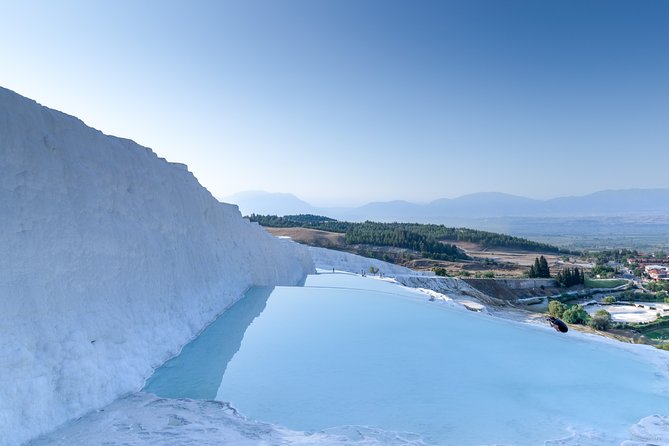
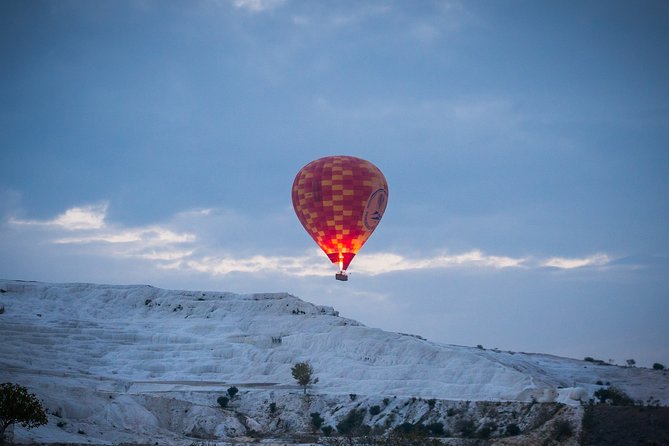
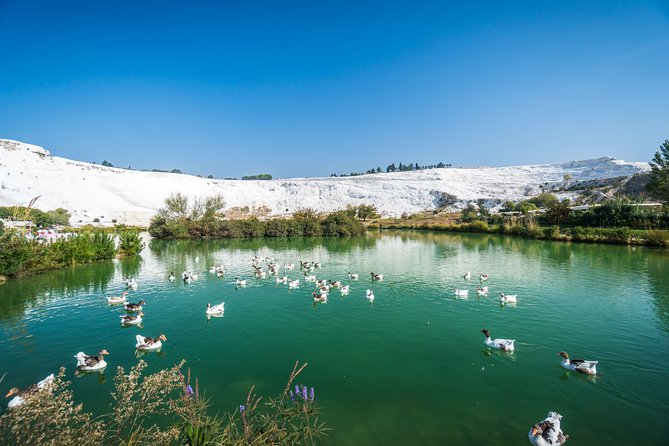
Pamukkale is called Cotton Castle for a reason. From the rim, the mineral deposits look like a frozen waterfall. In real life, it’s less about one single view and more about layers: the terraces, then the pool edges, then the way people move through narrow areas with cameras held high.
This tour gives you about 2 hours at Pamukkale Thermal Pools, which is the right length. It’s enough time to do the guided highlights, then step back and explore photos, angles, and the pool areas you care about. Some people spend most of their time near the best-known pools; others wander more slowly for the textures of the travertines.
A couple of reality checks that can affect your experience:
- Water levels can vary. On some days, you may notice pools that look more like pale basins than active water features.
- Wear from crowds is real. The terraces can look less dramatic than peak-photo expectations if you’re visiting during high volume periods.
Still, even with that, Pamukkale is one of those places where your brain keeps going back to the same question: how did this form? The guide’s walk helps you see what you’re looking at—especially when mineral deposits turn into the stepped, white formations you keep seeing in photos.
Tip that makes a difference: start your free time by picking one section to focus on (terraces or pools). Then switch. If you try to do everything at once, you’ll spend half the time moving and half the time waiting for the best photos.
Hierapolis Theater and Apollo Temple: Fast Hits That Feel Big

Hierapolis is what you see when you look at the height above Pamukkale and realize this wasn’t just a spa—this was a full city.
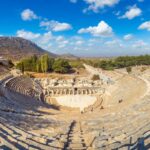
The tour includes a stop at the Pamukkale Theater (Roman Theatre). It’s in the middle of Hierapolis and described as very well preserved. The building goes back to the 2nd century AD, associated with Emperor Hadrian, with later restoration under Emperor Severus. The theater is big—around 8,500 to 10,000 spectators—and it’s structured with seating split into upper and lower parts by a diazoma (a dividing passage).
What you’ll like here is the scale. Even if you’re not a “ruins expert,” a theater gives you instant context: people gathered here, watched performances, and lived city life in a monumental setting.
Next is the Hierapolis Apollo Temple, located along the main street between the theater and a sacred pool. It’s a smaller slice compared with the terraces, but it’s still a strong anchor. The temple’s dimensions are given as about 40 by 60 feet, dedicated to Apollo, with a wide staircase approach. Seeing it after the theater helps you understand how Hierapolis worked as a religious and public hub, not just a scenic stop.
Bath, Arch, Necropolis, and the Shift from Pagan to Christian

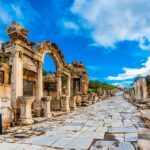
The tour frames Hierapolis as a layer-cake city. You get ruined temples and spa-like baths, plus a towering arch, a necropolis, and the theater you already saw. The point isn’t to memorize names—it’s to recognize how the same place kept changing roles across centuries.
You’ll also hear about the nymphaeum, a monument tied to worship and local nymphs. That matters because it shows what people honored before churches took over the same social space. Then you move into the later shift: pagan structures giving way to churches and St. Philip’s martyrium.
Here’s the key value of this part: it helps you read Hierapolis as a timeline. You’re not only looking at stones. You’re seeing how belief systems moved through the city and how public architecture carried meaning.
If you like places with a story arc—religion changing, spa culture growing, empire-era public life—you’ll find this section satisfying even if you don’t consider yourself a history person.



Timing, Lunch, and Small Choices That Prevent Frustration
This is a long day, so the pacing matters as much as the sights. Lunch is included, and in practice it often feels like a comfort win on a tour like this.
From the way the day is described, lunch is served between the drive out and the core walking time. That’s ideal. You don’t want to arrive hungry at Pamukkale, and you don’t want to eat right before your best walking.
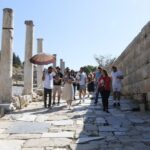
Also, expect that you’ll be moving in and out of multiple zones—terraces, then a city above, then back down. Wear shoes you trust. Travertine areas can be slippery and crowded, and Rome-era stone paths aren’t always level.
One more thing: water and drinks. Your tour includes lunch and guide time, but drinks are not included. So if you’re the kind of person who needs frequent sips in heat, plan ahead. Bring cash/card for water and simple snacks if you want control, especially on very hot days.
Value at About $150: What’s Included, What You’ll Still Pay

At $150.60 per person, the pricing looks fair when you tally the whole day. You’re paying for:
- Hotel pickup and drop-off
- A local guide
- Lunch
- All entrance fees included
- Transportation in a comfortable, air-conditioned minibus
- Fuel and handling fees
That “entrance fees included” part is big. Pamukkale and Hierapolis aren’t free attractions, and you don’t want to spend part of a limited trip arguing at ticket windows.
What you’ll still likely pay for:
- Alcoholic drinks
- Non-alcoholic drinks
- Any optional paid add-ons on-site (if you choose to do them)
One caution, based on real-world experiences: a few guides may try to steer people toward paid extras and lockers with cash requests, even when official counters accept cards. My practical advice is simple: if you want any extra experience, try to pay at the official point when possible, and keep any receipts or proof of purchase. It reduces awkwardness if there’s a mismatch in explanations.
Who This Tour Suits Best (and Who Might Want a Different Style)
This is a good fit if you want a structured day with minimal logistics. The small group (max 15) is a sweet spot for people who dislike big bus crowds, and the hotel pickup makes it work well even if you’re not renting a car.
You’ll probably love it if:
- You want Pamukkale and Hierapolis in one go
- You like a guided orientation first, then free time for photos
- You value included meals and entrance fees
- You appreciate learning the connections—spa culture, city layout, and religious shifts
It may not be your best match if you:
- Hate long rides with lots of commentary (some guides deliver in a long, one-way style)
- Need a very relaxed pace with lots of breaks
- Are sensitive to changes in on-site water look or terrace crowd wear
Should You Book This Selçuk Pamukkale Day Tour?
I’d book it if you want the classic Pamukkale-and-Hierapolis combo with less stress. The included lunch and entrance fees, plus the pickup/drop-off from Selçuk, keep the day feeling like a real trip rather than a collection of errands.
I’d hesitate only if you know you struggle with early starts and long days, or if you’re picky about how much you want to rely on guide delivery style. In that case, choose this tour for the sights and plan your own hydration and pacing so you stay comfortable.
If your priority is seeing Cotton Castle and Hierapolis’ major ruins without coordinating anything yourself, this is a solid choice.
FAQ
What time does the tour start?
Pickup typically begins around 7:15 AM to 7:45 AM, with the tour start time listed as 7:30 AM.
How long is the Pamukkale and Hierapolis tour?
It runs about 11 hours (approx.).
Are hotel pickup and drop-off included?
Yes. Hotel pickup and drop-off are included, with pickups offered from Selçuk or Kusadasi hotels.
Is lunch included?
Yes. Lunch is included in the tour price.
Are entrance fees included?
Yes. All entrance fees are included.
What is the group size?
The tour has a maximum of 15 travelers.
What is not included in the price?
Alcoholic drinks and drinks are not included.