REVIEW · ISTANBUL
Istanbul Bosphorus Sightseeing Cruise with Audio Guide
Book on Viator →Operated by Tourmania · Bookable on Viator
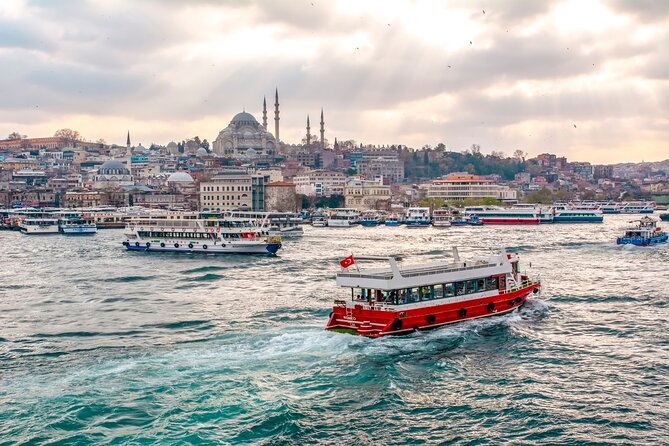
One hour, two continents, countless photos. This Istanbul Bosphorus sightseeing cruise is built for quick wins: you glide past major landmarks with an English audio guide that helps you follow the story as the city slides by. It is also short enough to fit into a packed day without turning your whole itinerary into a single long outing.
What I like most is the mobile audio guide in English, so you can pace yourself instead of scanning signs or depending on a group explanation. Second, the route is packed with big-name scenes in just about an hour, which makes it a solid value if you want the Bosphorus view without committing to a half-day boat day. You also return to the same starting point, which makes planning easier.
One thing to keep in mind: this is a practical, sightseeing-focused boat ride, not a luxury cruise. The experience is great for views and orientation, but you should keep expectations modest for onboard comfort details, like window condition.
In This Review
- Key things to know before you go
- Why this Bosphorus cruise is worth your hour
- Getting on board at Kabataş without losing time
- Using the mobile audio guide so the ride feels guided
- Dolmabahçe Palace: European-style Ottoman power from the water
- Ortaköy Mosque and the bridge drama at water level
- Bosphorus Bridge: when Istanbul started unifying by road
- Rumeli Fortress: defense architecture that still has a job
- Fatih Sultan Mehmet Bridge: the second unifier (and the highway reality)
- Emirgan Park: a green pause on a city trip
- Anadolu Hisarı: the companion fortress on the Asian side
- Küçüksu Pavilion and the European-Ottoman style blend
- Beylerbeyi Palace: summer residence with a view
- Boat comfort and the real onboard expectation
- Price and value: $18.10 for an Istanbul shortcut
- Who this cruise is best for
- Should you book this Bosphorus cruise?
- FAQ
- How long is the Istanbul Bosphorus sightseeing cruise?
- How much does it cost?
- Is there an audio guide, and is it available in English?
- Where does the cruise start and where does it end?
- Do I need a physical ticket?
- How many people are on the boat?
- What happens if the weather is poor?
- Is free cancellation available?
Key things to know before you go
- English audio on your phone: Use the mobile app for an audio guide in English.
- Short timing, big payoff: Plan for about 1 hour and hit multiple Bosphorus highlights.
- Same place start and finish: The cruise ends back at Dentur Avrasya Kabataş İskelesi.
- Simple sightseeing setup: It is designed for convenience and quick orientation more than high-end onboard perks.
- Small group feel: Maximum of 100 travelers, so you are not stuck in an endless crowd.
- Weather matters: Good conditions are required, or you’ll be offered an alternate date or a full refund.
Why this Bosphorus cruise is worth your hour
If you only have one day (or only one calm block of time), Istanbul’s Bosphorus can feel like a lot. The city is huge, neighborhoods are far apart, and it can be hard to know what you are actually looking at. This cruise solves a very specific problem: it gives you an organized view of key sights from the water, without you needing to hop taxis or fight for parking.
At about 1 hour, it works like a “starter dose” of Istanbul by sea. You see palace façades, fortress walls, mosque silhouettes, and both the old-and-new bridge era. Even if you are not a hardcore architecture person, the audio guide helps you connect what you’re seeing to why it matters.
It also has practical extras. The ticket is mobile, and it is sold with an English audio option. That matters because Istanbul can be a place where English signage varies, while audio is consistent.
You can also read our reviews of more boat tours in Istanbul
Getting on board at Kabataş without losing time
The meeting point is at Dentur Avrasya Kabataş İskelesi on Ömer Avni, Meclis-i Mebusan Cd. No:34, 34427 Beyoğlu. The cruise also ends back at the same spot, which is a big deal when you are trying to build the rest of your day. You avoid the headache of “where do we regroup?” or “how do we get back across the city?”
The tour is offered in English, and it is designed so that most travelers can participate. It also allows service animals, and it is listed as being near public transportation—useful if you are mixing this with other sights.
One more timing note: the experience is meant to be straightforward. The best move is to arrive early enough to get settled and start the audio before the boat leaves. If you’re the type who likes to plan photos in your head, you will feel less rushed that way.
Using the mobile audio guide so the ride feels guided
The cruise includes an audio guide via mobile app with multiple languages, and English is part of the mix. This matters because Bosphorus sights are often easy to admire but tricky to interpret. From the water, a palace can look like a pretty wall at first—until you learn what era it came from and what political shift it represents.
Here is how you can get more out of the app:
- Start the audio right away so you hear the context as soon as landmarks appear.
- Keep your phone brightness reasonable so you can both listen and look.
- If you like photos, pause listening for a few seconds when a new sight comes in, then resume right after.
The audio approach is a “mental filter.” It turns random sightseeing into a sequence: Ottoman power, European influence, defense architecture, then modern bridges and city scale.
Dolmabahçe Palace: European-style Ottoman power from the water
Your first major sight is Dolmabahçe Palace (Dolmabahce Sarayi), the late Ottoman royal home before the empire faded. From the Bosphorus, you catch the palace as an object in its environment—less about walking hallways, more about appreciating how it faces the water.
The standout features highlighted by the audio include the giant crystal chandeliers, marble staircases, and lush carpets inside—signals of wealth and a shift toward an European-influenced taste during the palace’s era.
What I like about seeing Dolmabahçe from the cruise is the scale. A palace of this sort can feel abstract when you only see photos. From the water, it becomes a real part of the shoreline story: Istanbul’s waterfront is not just scenic, it is political.
If you want to spend more time here, the cruise does not replace a full palace visit. You’re seeing it from outside and from a distance—great for orientation, not a substitute for interior rooms.
Ortaköy Mosque and the bridge drama at water level
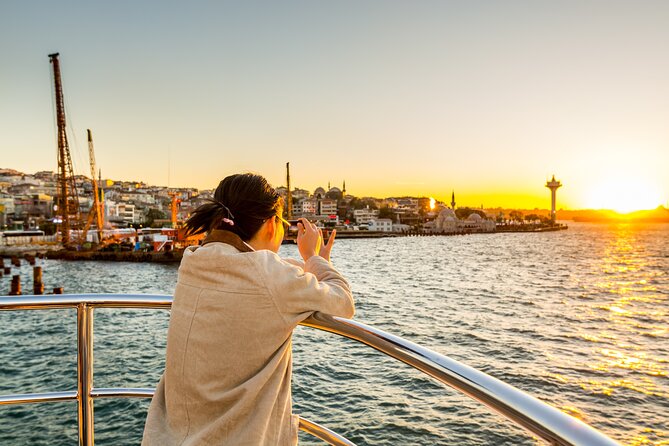
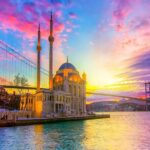
Next up is Ortaköy, with its energy of bars, restaurants, cafés, and nightlife along the waterfront. The main visual anchor is Ortaköy Mosque (Ortaköy Cami), a 19th-century building mixing baroque and neoclassical influences.
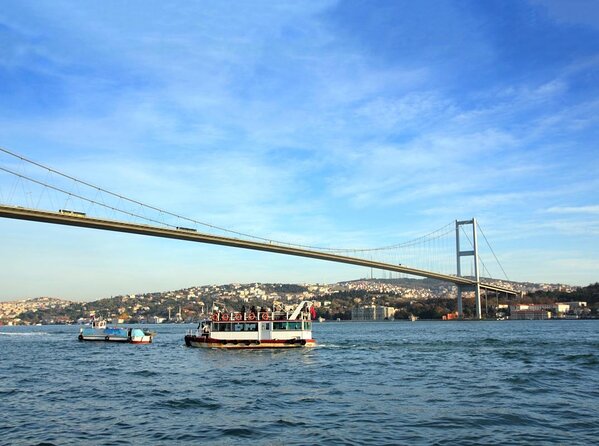
This stop pairs well with what happens next: the Bosphorus Bridge (Bogazici Koprusu). When you are out on the water, the bridge feels less like a landmark you read about and more like a structure that controls the whole view. It connects Europe and Asia, and it also sets the rhythm of how you perceive the shoreline.
A useful way to enjoy this part: look at the mosque silhouette, then look at how the bridge slices the horizon. Istanbul’s defining idea—two continents connected by engineering—feels very literal here.
You can also read our reviews of more guided tours in Istanbul



Bosphorus Bridge: when Istanbul started unifying by road
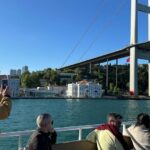
The Bosphorus Bridge opened in 1973 and spans about 1,560 meters (5,118 feet). In the 1970s it was among the world’s longest suspension bridges, and even though rankings changed, it is still a serious sight.
You might think of bridges as just transportation. Here, the audio makes the bigger point: this bridge marked a major change in Istanbul’s modern identity. The cruise gives you that perspective in a simple way—you don’t have to study maps or histories for the structure to feel meaningful.
One consideration: a bridge is wide and fast-moving in your view, so you will want your phone ready if you’re filming. Trying to start audio and aim your camera at the same time can cost you the best seconds.
Rumeli Fortress: defense architecture that still has a job
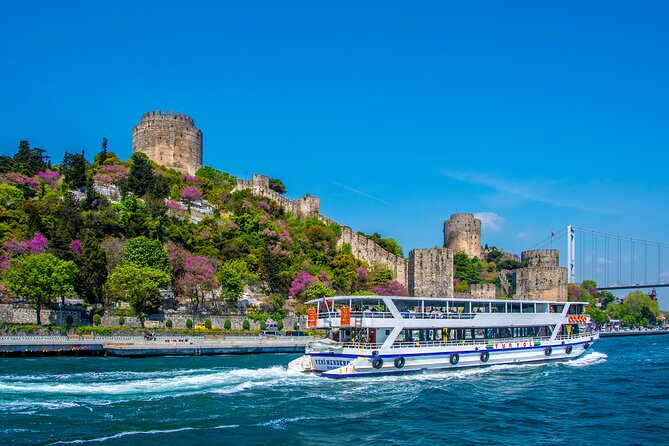
Then you head toward Rumeli Fortress (Rumeli Hisarı), built in the 15th century and tied to the Ottoman campaign against Byzantine Constantinople. The key detail is how quickly it was built—about four months—and how its position helped the Ottomans block aid and supplies.
From the water, fortress walls are easier to respect. They are not just stone, they are strategy made visible. The audio also notes that today the fortress serves as both a historical site and an open-air theater location.
The possible drawback here is simple: fortress sights are powerful, but they can also be visually dense. If you’re the type who gets bored by walls, you may want to keep the audio playing so you know exactly what you’re looking at and why it’s important.
Fatih Sultan Mehmet Bridge: the second unifier (and the highway reality)
After Rumeli Hisarı, the ride also references the idea that Istanbul stayed without connecting bridges for most of its existence. The Fatih Sultan Mehmet Bridge came later, in 1988, and it is part of Istanbul’s O-2 highway.
This is the modern counterpart to the older defenses and palaces. It shifts your mental map from siege and empire to infrastructure and everyday movement. You see how Istanbul kept growing, then solved a new kind of problem: moving people and cars between continents efficiently.
Again, this is more of an orientation moment than a “get out and explore” moment. But for understanding why the city feels like it does today, it helps.
Emirgan Park: a green pause on a city trip
You also pass Emirgan Park (Emirgân Korusu), one of the largest parks in Istanbul and a notable nature break in the urban sprawl. The audio frames it as a weekend favorite thanks to picnic areas and jogging trails.
There’s also a seasonal angle: it is the main venue for the annual Istanbul Tulip Festival, which blooms every April. Even if your trip is outside that month, the park view gives you a sense of how Istanbul balances dense city life with outdoor breathing space.
One caution: from a boat, parks and gardens can look like soft shapes, not detailed spaces. If you want to actually walk a park, this cruise is not the same experience. Still, it is a great visual contrast against the harder edges of palaces and fortresses.
Anadolu Hisarı: the companion fortress on the Asian side
The route also includes Anadolu Hisarı. The audio context connects it to Rumeli Hisarı as part of the Ottoman control strategy—paired defenses across the Bosphorus that mattered for cutting off access.
Anadolu Hisarı is another reminder that the Bosphorus has always been a high-stakes corridor. Waterways decide trade, movement, and power. The cruise makes that idea easy to feel even if you never open a history book.
If you want to go deeper later, consider using the audio as your breadcrumb trail. It helps you know which fortress details are worth researching once you’re off the boat.
Küçüksu Pavilion and the European-Ottoman style blend
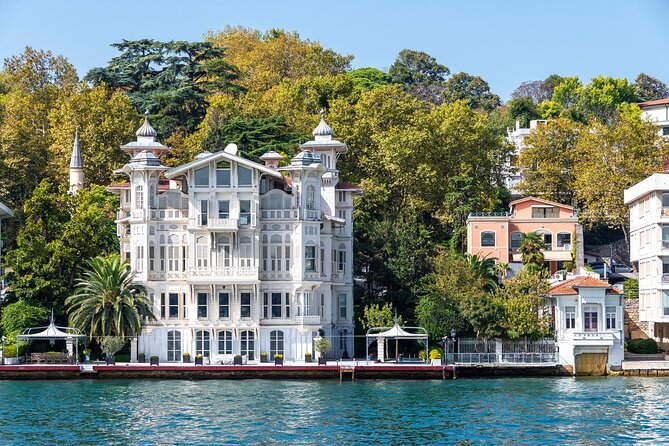
Next comes Küçüksu Palace (Küçüksu Kasri), also called Küçüksu Pavilion (Küçüksu Sarayı). Commissioned in the mid-19th century by Sultan Abdulmecit, it was designed as a summer palace. The audio emphasizes its mix of European and Ottoman design—carved exterior details, sweeping staircases, and interiors with gilded accents and chandeliers.
This part of the ride is where the Bosphorus cruise starts to feel like an art-and-architecture lesson, but without the effort. You can literally watch how tastes shifted over time: from fortress function to palace display, and from older Ottoman patterns to European-influenced decoration.
The cruise angle is exterior viewing and “feel,” not a full interior experience. If you love palace interiors, you’ll likely want to do at least one additional on-land stop later.
Beylerbeyi Palace: summer residence with a view
Finally, the cruise references Beylerbeyi Palace (Beylerbeyi Sarayi). It was historically a summer residence for Ottoman sultans, and the audio notes the presence of 24 rooms mixing Ottoman and Western decoration—along with European-style 19th-century furniture and garden pavilions.
This is a good closing sight because the palace is visible from the Bosphorus Strait, so you’re not left with the feeling that the last hour was wasted. The cruise gives you a clean wrap-up: fortifications and bridges, then the palaces that claim the shoreline as a stage.
If you’re planning photos: plan to keep your attention up through the last stretch. People tend to relax near the end of short tours, but palace façades can be your best-looking frames.
Boat comfort and the real onboard expectation
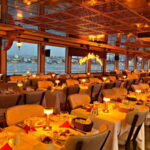
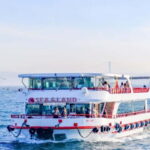
This is a sightseeing cruise, and it feels that way. The ride is designed for convenience. One review note highlighted cracked window glass on at least one boat, which is a good reminder not to expect luxury-level maintenance or an ultra-polished interior.
What that means for you: bring a little patience, and focus on what the boat does well—steady access to viewpoints.
The cruise setup also works like a hop-on, hop-off style route. That’s useful because a short tour becomes more flexible. Instead of feeling locked into a single straight line, you can turn one boat day into a sequence of stops, depending on your time.
And yes, the service quality is a strong point. The experience is repeatedly praised for leaving on time and providing great onboard help when you need it.
Price and value: $18.10 for an Istanbul shortcut
At $18.10 per person, this cruise is priced like an easy add-on—especially considering you get a guided pass by multiple major landmarks in about an hour.
Here’s the value logic I use when I’m deciding on Bosphorus tours:
- You pay for time savings. Instead of coordinating separate trips for palaces, bridges, and fortresses, you get them in one compact loop.
- You pay for orientation. The audio guide helps you recognize what you’re seeing, not just observe shapes.
- You pay for low effort. Getting aboard and listening is simpler than chasing viewpoints across town.
If you are doing Istanbul on a tight schedule, that combo is hard to beat.
Who this cruise is best for
This tour fits well if you want:
- A first-time orientation to the Bosphorus.
- A low-stress day plan that does not swallow half your time.
- An experience with English audio you can control with your own pace.
- A sightseeing format that works well even if you are not a museum person.
It is also a good fit for people who like structure—an ordered sequence of sights with an explanation attached.
If you want a deep, detailed, on-land tour of palaces or fortresses, this will not replace that. Think of it as the “see it all once” pass, then use your favorites to plan a deeper day later.
Should you book this Bosphorus cruise?
Yes—if you want the Bosphorus view with English audio and you like tight itineraries. This is the kind of tour that helps you understand Istanbul’s big themes fast: Ottoman grandeur, European influence, defense across the water, and modern bridges connecting two continents.
Book it especially if you:
- have limited time,
- want a reliable, easy-to-follow plan,
- prefer doing multiple quick sights in one stretch.
Skip it only if you’re hoping for a luxury experience onboard or you want lots of time at each stop. This is built for moving, listening, and looking—not for long walks and extended indoor visits.
FAQ
How long is the Istanbul Bosphorus sightseeing cruise?
The cruise duration is about 1 hour.
How much does it cost?
The price is $18.10 per person.
Is there an audio guide, and is it available in English?
Yes. The tour includes a mobile audio guide, and it is offered in English.
Where does the cruise start and where does it end?
It starts at Dentur Avrasya Kabataş İskelesi in Beyoğlu and ends back at the same meeting point.
Do I need a physical ticket?
No. The tour uses a mobile ticket.
How many people are on the boat?
The experience has a maximum of 100 travelers.
What happens if the weather is poor?
This experience requires good weather. If it is canceled due to poor weather, you’ll be offered a different date or a full refund.
Is free cancellation available?
Yes. You can cancel for a full refund up to 24 hours in advance of the start time.