REVIEW · SELCUK
Private Pamukkale and Ephesus Tours
Book on Viator →Operated by Unique Ephesus Tours · Bookable on Viator
Two days, two icons of western Turkey. This private itinerary ties together ancient Ephesus and the otherworldly Pamukkale travertines in a way that feels efficient without rushing you to death. I like how the tour includes a licensed guide and a driver, so you’re not stuck figuring out transport between stops.
The first day also gives you variety, not just one long ruin crawl. I especially like that lunch is included for both days, which keeps your budget calmer and your day smoother.
One thing to plan for: entrance fees aren’t included. And if you’re aiming for Şirince on a weekend, it can get very crowded, so you may want to be okay with a busier village vibe.
In This Review
- Key things to know before you go
- Private Van Route That Makes Ephesus and Pamukkale Feel Doable
- Day 1 at Ephesus: Artemis, Roman Power, and a Lot of Walking Made Easier
- Meryemana in Ephesus: A Stone House with Two Faiths Around It
- Temple of Artemis: The Best Remaining Clues Are the Small Ones
- Selçuk Context: Ayasoluk Hill and the Names That Tell a Timeline
- Şirince and Kuşadası: Two Quick Mood Shifts
- Day 2 at Pamukkale: Cotton Castle Travertines and the Sacred Pool
- Hierapolis Archaeology Museum: Short Time, Clear Context
- Pamukkale Thermal Pools: The Physics-Story Behind the Blue Tiers
- Price and Logistics: What You’re Really Paying For
- Who This Tour Fits Best (and Who Might Prefer Another Plan)
- Should You Book This Private Ephesus and Pamukkale Tour?
- FAQ
- Is this tour private for just my group?
- What does the $150 price include?
- Are entrance fees included?
- Does the tour include pickup in Selçuk?
- How far in advance is this tour usually booked?
- Can I cancel for a full refund?
Key things to know before you go
- Private group up to 15 with a dedicated driver and air-conditioned vehicle
- Ephesus in two hours, focused on major highlights like Temple of Artemis
- Meryemana (Virgin Mary’s House) with time built in for a quieter, reflective stop
- Şirince for atmosphere, with whitewashed houses, wineries, and the Church of St John the Baptist
- Pamukkale Natural Park + Hierapolis on day two, including the Sacred Pool and necropolis scale
- Two lunches included, so you can spend your energy on sights, not logistics
Private Van Route That Makes Ephesus and Pamukkale Feel Doable
If you want both Ephesus and Pamukkale, this is a practical way to do it. You’re based in Selçuk, and the tour uses a comfortable air-conditioned vehicle with pickup offered, which saves you from stringing together buses or hunting for schedules across two days.
The price is listed as $150 per group (up to 15). That’s a strong value if you’re traveling with friends or family—if the group is full, the cost per person can drop a lot. If it’s just a small group, it’s still a straightforward flat rate, and you’re paying for the convenience of a private guide, private driver, and organized timing.
You’ll also get a mobile ticket, which simplifies check-in on the day. Just note that the tour says entrance fees for stops aren’t included, and drinks aren’t included unless mentioned—so you’ll want some extra cash/card ready for museum and site entry.
You can also read our reviews of more private tours in Selcuk
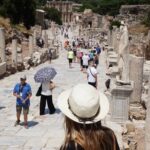
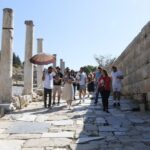
Day 1 at Ephesus: Artemis, Roman Power, and a Lot of Walking Made Easier
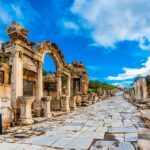
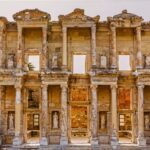
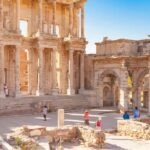
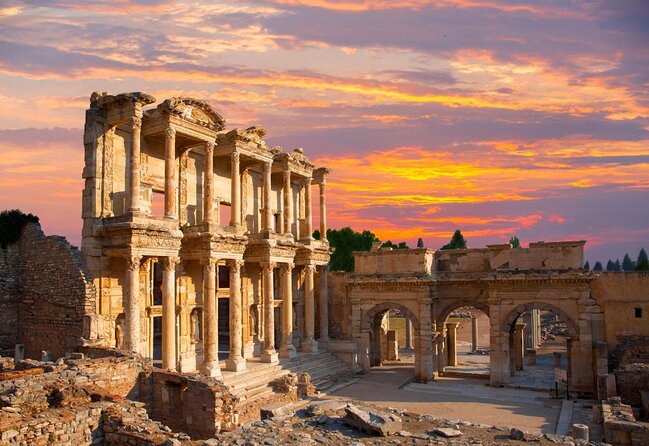
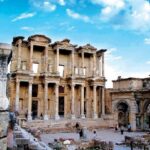
Ephesus is the kind of place where scale hits you fast. In its heyday, it was one of the biggest cities around the Mediterranean, and your guide’s job here is to help you make sense of what you’re seeing in the ruins.
This day gives you about two hours at the Ancient City of Ephesus. The highlights you’ll focus on include reconstructed structures and major monuments, including references to the Temple of Artemis, one of the Seven Wonders of the Ancient World. Even if you’ve seen photos before, being there changes the feel—you can better picture how this city worked when it was at full power.
A good practical tip: treat Ephesus like a museum with outdoor rooms. You’re walking through sections that were once distinct neighborhoods, temples, and civic spaces. With a guide, you’ll spend less time wondering where to look next and more time understanding why these structures mattered.
Meryemana in Ephesus: A Stone House with Two Faiths Around It
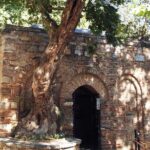
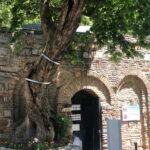
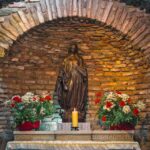
After Ephesus, the tour heads to Meryemana (The Virgin Mary’s House) for about one hour. This is a holy shrine tied to the supposed house where St. Mary spent her last days. Today, you can visit a restored stone house that functions as a chapel.
What I like about this stop is the balance it brings to the day. You’re still in the same region and connected to the Ephesus story, but the tone shifts from ruins and empires to something more intimate and spiritual. The tour notes that Lazarist Fathers conduct mass every day, and that the site serves as sacred territory for Christians and Muslims alike.
The listing also mentions an altar inside the house. Even if you’re not religious, this is one of those places where the atmosphere does the explaining. Keep your pace respectful and don’t expect a quick photo stop—you’ll want a little quiet time to absorb it.
Temple of Artemis: The Best Remaining Clues Are the Small Ones
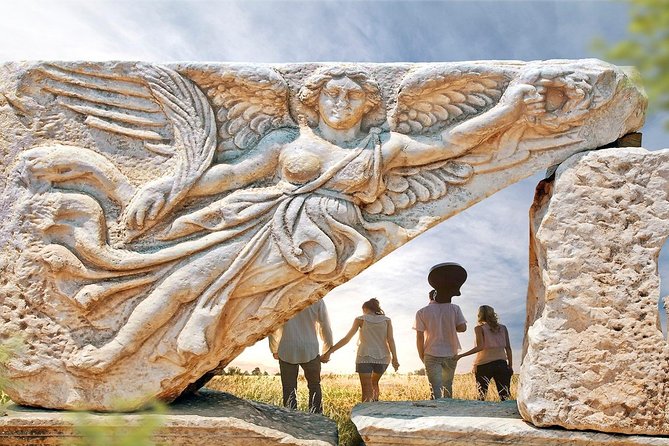
The Temple of Artemis stop is short—about 30 minutes—and that’s exactly why it works. It’s near Ephesus and conveniently paired with the bigger day you’re already having.
The tour description makes it clear the temple has been rebuilt multiple times after being destroyed. The result: there’s not much left of the original structure on site. You can still see one tall column and a handful of marble pieces, plus the broader historical location that archaeologists and museum teams have shaped over time.
From this area, you can also view the ruins of St. John’s Basilica on a hill in Selçuk. That’s a nice “big picture” moment: one spot helps you connect the ancient Artemis story with the Christian timeline that surrounds this region.
Selçuk Context: Ayasoluk Hill and the Names That Tell a Timeline
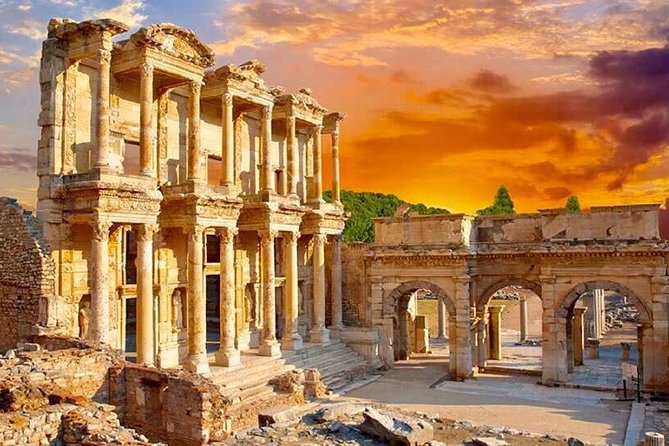
Even when you’re not doing a long museum-style stop, the tour gives you helpful context about Selçuk’s deeper layers. The area includes settlement traces going back far beyond the Roman and Byzantine eras.
The notes point to Ayasoluk Hill and settlement evidence reaching the early Bronze Age (and later periods like Mycenaean and Geometric). It also references different names over time: Greek colonization connections, and a Byzantine-era name tied to St. John.
One practical payoff of hearing this during your day: it helps you stop viewing Ephesus, Selçuk, and nearby sites as separate attractions. Instead, you start to see one long timeline where each era adds new meaning to the same ground.
Şirince and Kuşadası: Two Quick Mood Shifts
Not every stop on this tour has to be a monumental ruin. You get a small village break at Şirince for a short stop and a chance to reset.
Şirince is described as a small mountainous village known for whitewashed stucco homes, fruit-based wineries, and olive groves. The Church of St John the Baptist is mentioned too, including Byzantine frescoes inside (even though the church is noted as neglected by Turkish authorities). The village has that slow-travel feel, and it’s a nice counterweight to the intensity of Ephesus and the heat that often comes with ancient site days.
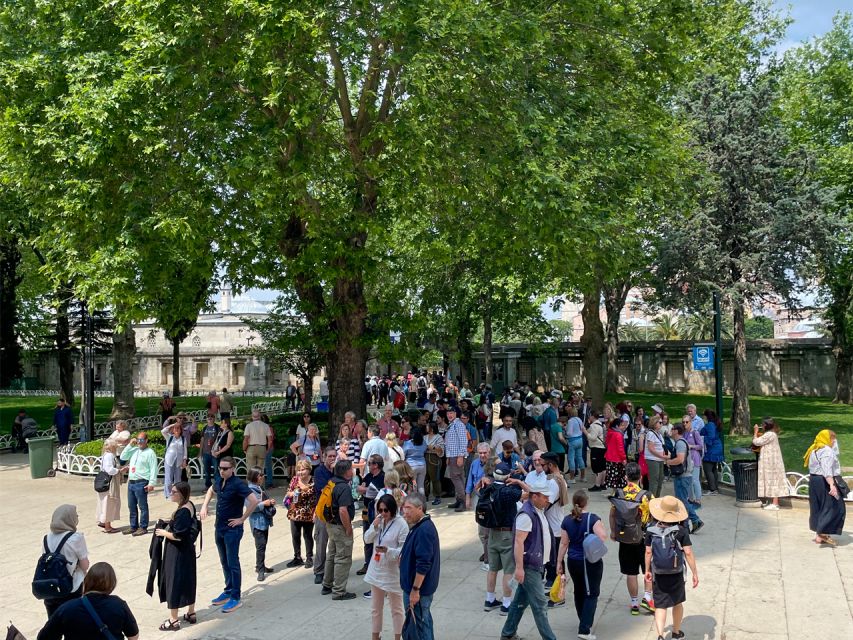
One caution: Şirince can get very crowded on the weekend. If your trip lines up with that, plan to enjoy the village while treating it like a popular stop rather than a quiet escape.
Then there’s a brief Kuşadası stop (about 20 minutes). You’ll get orientation to the town’s bay setting and the Güvercinada (Pigeon Island) connected by a causeway. It’s a short break, mostly for atmosphere and views, not a full sightseeing day—and that works well because you still have a long second day waiting.
Day 2 at Pamukkale: Cotton Castle Travertines and the Sacred Pool
On day two, the tour shifts from archaeology to nature in a way that feels almost like a different planet. The schedule centers on Pamukkale Natural Park, with about two hours there.
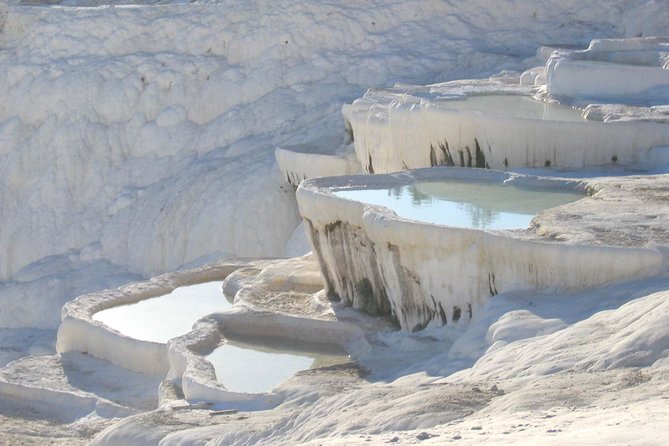
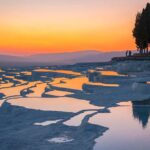
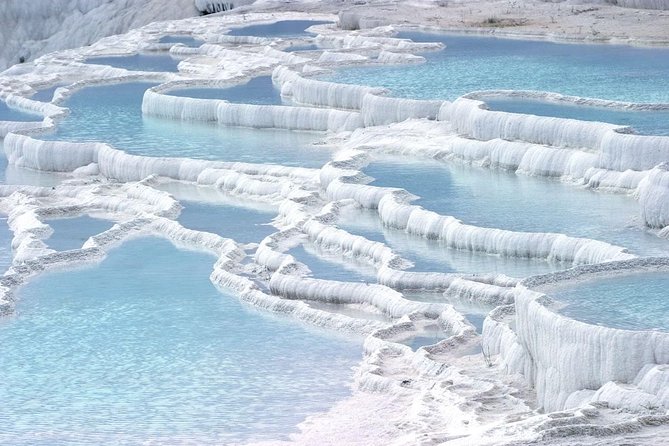
The travertines are the headline: pure white stepped terraces formed by thermal spring water and its chemical properties. In Turkish, Pamukkale’s name refers to the resemblance to cotton piles, and it’s a fitting description. The visual effect is what people come for, but the tour also frames the site in a bigger historical context through what sits around it.
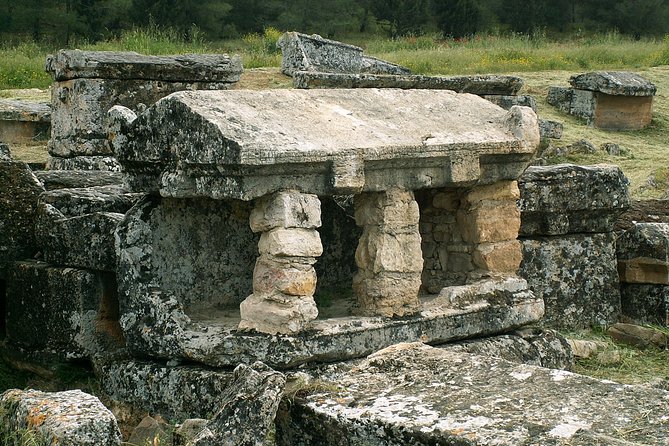
Here you also visit the ancient city of Hierapolis, and the description calls out that it includes the biggest necropolis with 1200 gravestones in Anatolia. That detail helps you understand why Hierapolis matters beyond the hot-spring scenery.
A standout moment is the Sacred Pool, where shallow thermal water ripples over ancient Roman ruins underneath. The effect is unique because you’re essentially looking at life and water right above the remains of another era. It’s one of those places where your brain has to adjust to two realities at once.
Hierapolis Archaeology Museum: Short Time, Clear Context
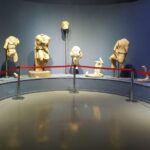
After Pamukkale Natural Park, the itinerary includes Hierapolis Arkeoloji Muzesi for about 30 minutes. Even with a short time block, this kind of museum visit can help you connect the dots.
The listing describes the site as UNESCO-listed hot springs and notes that people say it was one of Cleopatra’s treasured retreats. You also get a clearer view of how the pools and ruins connect: bright white terraces filled with turquoise water formed by calcium hardened over millennia, with the ruins surrounding it.
If you’re the kind of traveler who likes your photos to come with context (and not just labels), this museum stop is a useful use of time. Just don’t expect a half-day museum. Think of it as a gear shift: nature first, then context.
Pamukkale Thermal Pools: The Physics-Story Behind the Blue Tiers
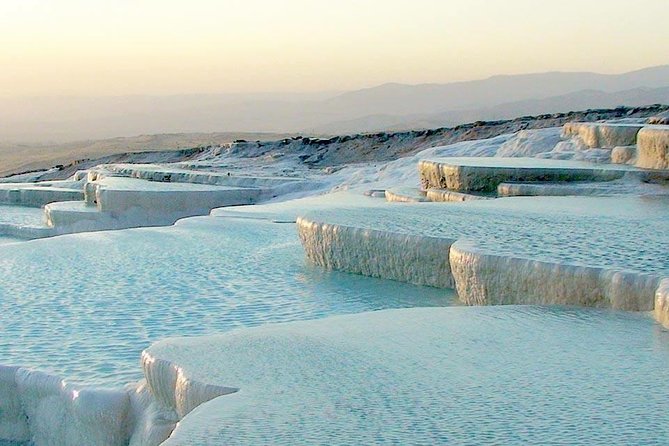
The tour also includes time at Pamukkale Thermal Pools for about 30 minutes. This portion keeps the focus on what you can see: blue pools and tiered terraces shaped by mineral deposits.
The notes explain the name again as Cotton Palace, but this time with added detail about the formation process. It describes how the UNESCO-recognized travertine terraces were formed when hot mineral water calcifies upon contact with carbon dioxide. You’ll also see mentions of waterfalls frozen in stone and blue pools across the tiered terraces.
The practical upside of this stop length is that you won’t feel like you’re spending your whole trip in one place. The downside is that you’ll want to come in ready to choose what you want most—views, photos, or a slower read of the site details—because thirty minutes passes quickly.
Price and Logistics: What You’re Really Paying For
This is a private tour with a dedicated guide and driver, plus air-conditioned transportation. That adds up to something simple: you don’t spend your mental energy on buses, transfers, or figuring out how to jump between Ephesus, Şirince, and Pamukkale.
You’re also paying for organization. The day structure is built around timed stops: Ephesus (about 2 hours), Meryemana (about 1 hour), Temple of Artemis (about 30 minutes), a short Şirince stop, and then day two anchored by Pamukkale Natural Park (about 2 hours) plus museum and thermal pool time.
The big budgeting point is entrance fees. The tour says admission tickets for sights listed in the itinerary aren’t included, even though some stops are marked as free (like Temple of Artemis and Şirince, and the itinerary notes Kuşadası as free). So your true total depends on which sites you enter and what’s required that day.
Lunch is included for two lunches, and that’s a real value perk. You avoid the hassle of finding food on the fly and you don’t lose time hunting for a place that fits your schedule. Drinks aren’t included, so plan on paying for those separately.
If you want to know what you might be like day-to-day, think: you’ll have long enough blocks to see key things, but still enough structure to feel calm. That calm is part of the value.
Who This Tour Fits Best (and Who Might Prefer Another Plan)
This private Ephesus and Pamukkale combo is a strong match if you want to see major sights without the stress of independent transport. It’s also good for mixed-interest groups because it touches multiple sides of western Turkey: ancient urban life, religious history at Meryemana, a village break in Şirince, and then thermal nature at Pamukkale.
The tour being private matters here. With only your group, you get a calmer pace and fewer “where is everyone?” moments. It’s also listed as able to be guided in multiple languages, which is helpful if not everyone shares the same comfort level with English.
One more human detail: in one set of feedback, a guide named Lori stood out for being both personable and making the experience better. If your guide is cut from that cloth, your visit will likely feel more connected and less like you’re just moving from point to point.
Should You Book This Private Ephesus and Pamukkale Tour?
Book it if you want a structured two-day plan that covers the heavy hitters—Ephesus, Meryemana, Temple of Artemis area, Şirince, Pamukkale, and Hierapolis—without you having to coordinate transport yourself.
Skip it (or compare options) if your budget is tight and you prefer to put together the route on your own. Because entrance fees aren’t included, your final spend will be more than the $150 group price once you add site tickets and optional extras like drinks.
Also, if you strongly dislike crowds, watch your timing for Şirince, especially on weekends. It’s a short stop, but it can still feel busy.
Finally, you’ve got flexibility: the tour offers free cancellation up to 24 hours in advance. That makes it easier to lock in the plan without feeling trapped.
FAQ
Is this tour private for just my group?
Yes. It’s a private tour/activity, meaning only your group participates.
What does the $150 price include?
The price covers the private licensed guide, transportation in a comfortable air-conditioned vehicle, a private professional driver, and lunch (2). Entrance fees are not included.
Are entrance fees included?
No. Entrance fees to the sights listed in the itinerary are not included. Some stops are noted as free, but you should still plan for paid admissions where required.
Does the tour include pickup in Selçuk?
Pickup is offered, and the tour starts from the Selçuk area.
How far in advance is this tour usually booked?
On average, it is booked about 27 days in advance.
Can I cancel for a full refund?
Yes. You can cancel up to 24 hours in advance for a full refund.