REVIEW · SELCUK
Ephesus and House of Virgin Mary From Kusadasi or Selcuk
Book on Viator →Operated by FABULOUS TRAVEL · Bookable on Viator
Ephesus feels huge, yet this day stays manageable. On a small-group tour out of Kusadasi or Selçuk, you’ll get a guided sweep through the Roman highlights of Ephesus and then a quieter, more meaningful visit at the House of the Virgin Mary. I especially like that the pacing is built for first-timers: you cover the major stops without the stress of arranging transport and tickets.
One catch: you should plan for a line at Meryemana, and the time there can feel a bit tight. Also, the day can include extra stops for shopping-style presentations, so if you hate that kind of diversion, keep your expectations realistic.
In This Review
- Key Things to Know Before You Go
- Pickup From Kusadasi or Selçuk: Simple Start, Solid Comfort
- Ephesus Museum and the Main Ruins: The Fastest Way to Get Oriented
- Great Theatre: Built for spectacle, used for politics and pain
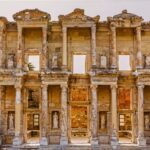
- Library of Celsus: The facade you’ll recognize instantly
- Other classic Ephesus sights you might spot
- Meryemana (House of the Virgin Mary): Meaningful Visit, Expect Waiting
- What to expect in your hour
- Temple of Artemis: One Column and a Big Story
- Isa Bey Mosque: Seljuk Craft Under a Major Church
- Food and Timing: Lunch Included, Drinks Are Not
- Price and Value: Why $81.45 Can Be a Good Deal
- What Might Feel Disappointing: Queues and Shopping Stops
- Who Should Book This Ephesus + Mary’s House Day Trip?
- Should You Book?
- FAQ
- Is pickup offered for this tour?
- What time does the tour start?
- How long is the tour?
- How many people are in the group?
- Does the price include entrance fees?
- Is lunch included?
- What vehicle do you use?
- Do you get a mobile ticket?
- What sites do you visit during the day?
- Is the tour guide English-speaking?
- What if the weather is bad?
Key Things to Know Before You Go
- Small group (up to 15–16 people): easier to hear your guide and move as a group without long waits.
- Hotel or cruise pickup: you start at 8:30 am and let someone else handle logistics.
- Ephesus’s “big three” landmarks: you’ll see the Library of Celsus facade, the Great Theatre, and the main ruin streets.
- Religious stop with historic backing: Meryemana is presented as Mary’s final home, with papal recognition noted in the visit.
- Temple of Artemis basics: only the foundation and one column remain, but the scale and context still hit hard.
- Shopping detours are possible: build in patience, and decide ahead of time if you want to browse or not.
Pickup From Kusadasi or Selçuk: Simple Start, Solid Comfort
This is the kind of tour that works because it removes the friction. Pickup is offered from hotels (or a cruise terminal), and you ride in an air-conditioned vehicle. Start time is 8:30 am, and the total day runs about 8 hours—enough time to cover several major sites without dragging into a full-day marathon.
The group size matters. With a maximum around 15–16 people, you’re not stuck in a massive herd. In practice, that usually means smoother walking, fewer bottlenecks at entrances, and better guide access when you have questions.
You’ll also want a moderate fitness level. This isn’t a chair-and-coffee day. Expect walking across ruin areas and moving between sites, including some stairs and uneven surfaces in historic places.
You can also read our reviews of more tours and experiences in Selcuk.

Ephesus Museum and the Main Ruins: The Fastest Way to Get Oriented
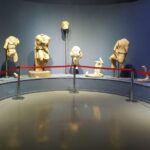
Ephesus is one of those places where the scale can overwhelm you—unless someone gives you a clear path. The day starts with the Ephesus Museum area, then moves into the ancient city as one connected visit.
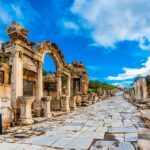
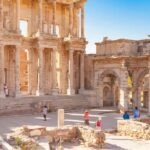
What I like here is the “greatest hits” approach. Ephesus is described as the largest open-air museum in Turkey, with more than 30 structures linked together by streets that still show marks from ancient chariot wheels. That detail is the kind of thing you’ll notice more when you’re not trying to read everything on your own.
Great Theatre: Built for spectacle, used for politics and pain
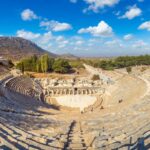
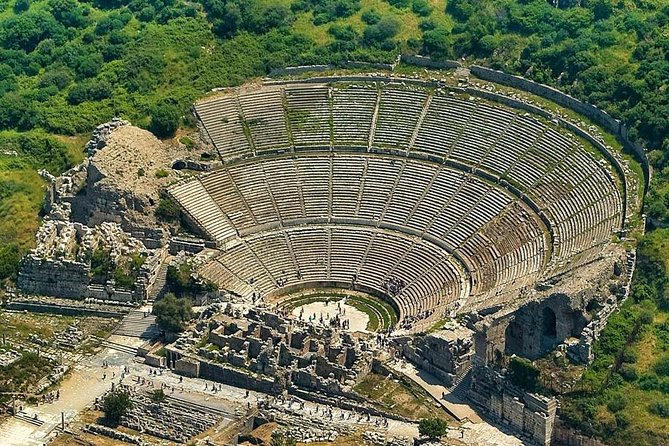
You’ll see the Great Theatre, originally built in the Hellenistic period, later renovated by Roman emperors. It originally held around 25,000 people, which helps you understand how major this city was. The theatre’s story also connects to early Christianity, with St Paul preaching against pagan practices and gladiatorial contests taking place later. Even if you don’t memorize dates, you can feel how performances and public life shaped this city.
Library of Celsus: The facade you’ll recognize instantly
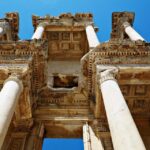
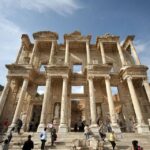
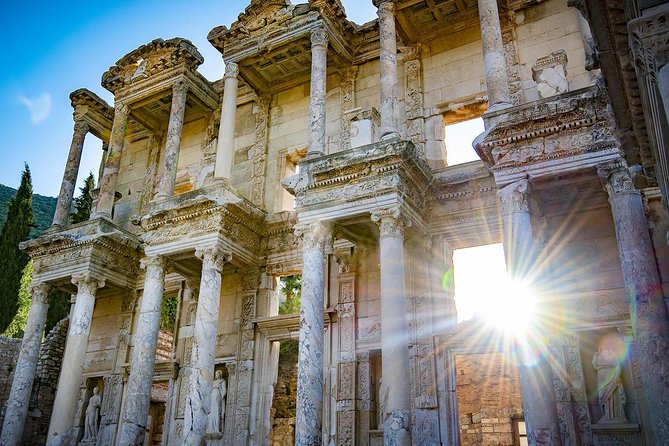
The Library of Celsus facade is likely the most photographed stop. It was built between 115–125, and the face has been remarkably restored. Seeing it in person is different from photos: the proportions and the texture make the whole thing feel like architecture, not just a backdrop.
Other classic Ephesus sights you might spot
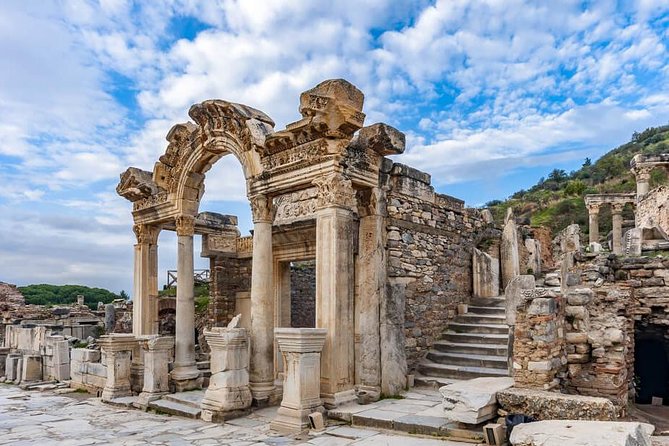
Depending on timing, you may also pass by or see parts of places such as the Odeon Temple, Fountain of Trajan, Temple of Hadrian, stream baths of scholastic, Marble Road, Agora, and the Temple of Domition. Even “just seeing” them is useful because it gives you a mental map. If you ever come back (and many people do), you’ll know where you want to linger.
Practical tip: If you’re the type who likes to stop for photos, this is a good place to do it—but don’t let picture-taking steal your whole focus. In Ephesus, the story is in how these buildings relate to each other.

Meryemana (House of the Virgin Mary): Meaningful Visit, Expect Waiting
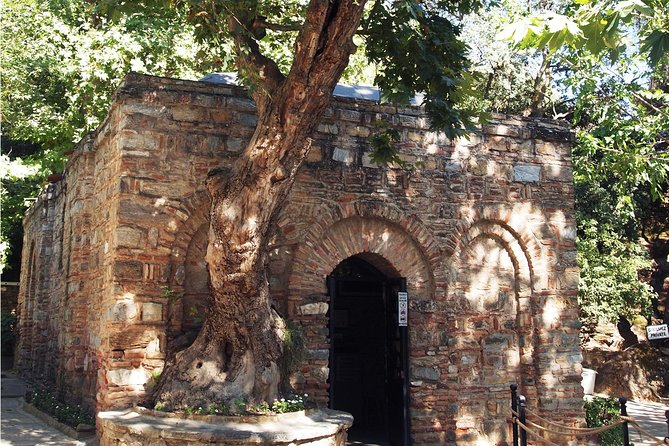
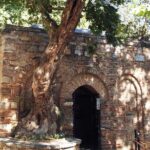
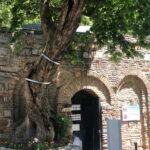
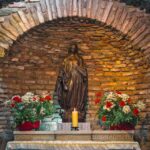
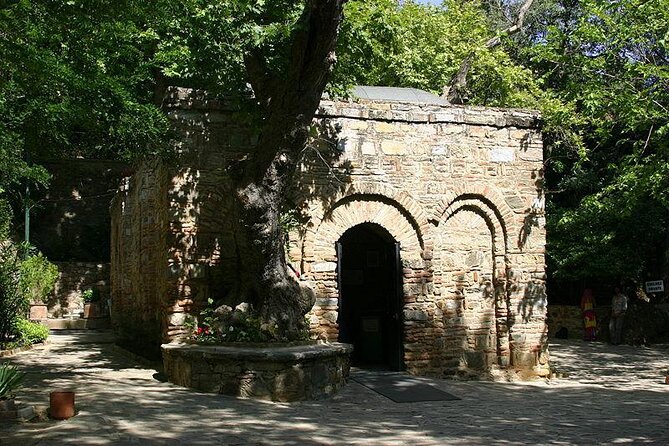
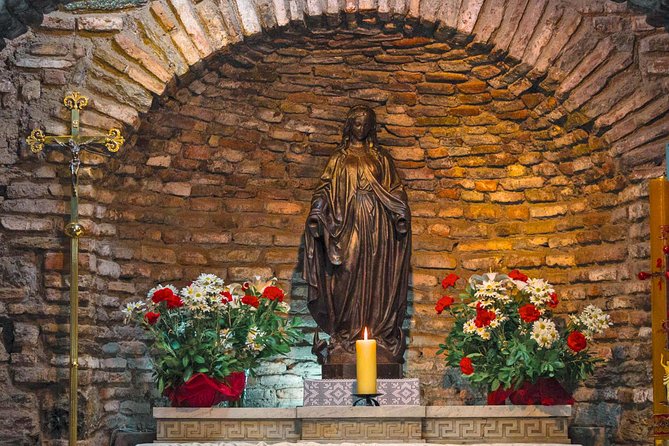
Meryemana, also called the House of the Virgin Mary, is where the tour turns from impressive ruins to something more personal. The visit is framed with a clear story: Mary is said to have been brought to Ephesus by the apostle John after the resurrection of Christ and to have lived her final days there.
The site is presented as being built on the foundations of that house. Authenticity is described as confirmed by Pope IV and Pope John Paul II. Even if you don’t care about papal references, it helps explain why so many people treat the visit as more than a tourist stop.
People often describe the place as uplifting or spiritual, and it’s easy to see why. The atmosphere feels calmer than the theatre and libraries. But the practical reality is that this stop can involve a long queue.
What to expect in your hour
You typically get about 1 hour here. That’s enough time to enter, walk through, and take in the atmosphere—but not enough to linger if you get stuck in line. Some visitors find it more like a walk-through than a deeply guided experience, so arrive with the mindset of absorbing the place rather than hunting for answers at every corner.
Practical tip: If you’re sensitive to crowds, treat this as your “patience test.” Wear comfortable shoes and keep your phone charged, but accept that you may spend a chunk of time simply waiting your turn.
Temple of Artemis: One Column and a Big Story
Then you head to the Temple of Artemis, one of the Seven Wonders of the ancient world. Here’s the key thing: what you’ll see is not the full temple. Only the foundation and one column remain.
Still, the numbers matter. The original temple is described as measuring roughly 425 feet long and 220 feet long. Even with just remnants, that scale helps your brain picture the grandeur that once stood here.
The tour also connects the temple to Paul’s ministry, explaining that his successful preaching in Ephesus was considered a threat to the religious economy around the temple. That link—religion, power, and money—makes the archaeology feel less like trivia and more like cause-and-effect.
Ephesus reached a golden age of culture and art, and the temple was part of that broader identity. You may not leave with a perfect reconstruction in your head, but you’ll leave with a clear sense of why this site earned world-famous status.
You’ll have about 1 hour total, which is enough to see what’s left, understand the context, and move on without fatigue.
Isa Bey Mosque: Seljuk Craft Under a Major Church
The last historic stop is Isa Bey Mosque, described as one of the most delicate examples of Seljuk architecture. It’s located below the basilica of Saint John, which means you’re getting an architectural-layer story: older religious structures stacked under later ones.
Construction is given as 1374–1375, built by master Syrian architect Ali son of Mushimis al-Damishki. Even if you don’t study architecture, you can usually spot Seljuk design through careful details and proportions—things that look “quietly impressive” rather than flashy.
This stop is about 1 hour. It’s a nice finish because it shifts you from Roman-era ruins into a later period, showing that Selçuk/Ephesus is not just one chapter of time.
Food and Timing: Lunch Included, Drinks Are Not
Lunch is included, which is a real value lever on tours like this. You won’t need to scramble for food between sites, and it helps keep the day from falling apart when one stop runs long.
Drinks are not included, so plan on buying water or soft drinks as needed. It’s a small detail, but it affects comfort—especially when you’re walking under sun and heat.
Also, because the schedule is built around multiple sites, you’ll feel the day’s momentum. If you want a slow, solitary pace, this isn’t that tour.
Price and Value: Why $81.45 Can Be a Good Deal
At $81.45 per person, the biggest question is what you’re actually paying for. This price includes entrance fees, transportation, pickup and drop-off, a professional English-speaking guide, and lunch.
That combination is where the value lands. If you tried to piece it together yourself—tickets, local transport, entry lines, and guided interpretation—you’d likely spend similar money or more, and you’d spend extra time managing logistics.
It’s also small-group, which can matter in crowded sites like Ephesus and the House of the Virgin Mary. Fewer people often means you hear the guide better and waste less time circling.
So, who should see this as a good deal? People with limited time, first-timers who want clear context, and anyone who doesn’t want to navigate local details.
One word of caution: the day can include shopping-style stops. If you love browsing, great. If you don’t, it can reduce the value of your time—even when the tour still hits the major monuments.
What Might Feel Disappointing: Queues and Shopping Stops
This is where I’d be honest.
First, queueing at Meryemana can cut into your ability to take in details. If your goal is a quiet, unrushed experience, build in extra patience and don’t plan to treat that hour as a relaxed sit-down visit.
Second, there may be time spent at places that feel more like retail stops than cultural stops—such as a sweet shop, carpet showroom, and a leather shop presentation (with sales people involved). In a perfect world, you’d want more time in the ruins or more time with your guide. In practice, those pauses can make the day feel padded.
There’s also the matter of commentary depth. Some people feel the guide spends more time moving than explaining at each site. That doesn’t mean the sites are shallow—it means your experience depends on whether the guide can balance walking time with detailed storytelling.
Practical approach: If you book, go in with a clear goal:
- See Ephesus’s signature monuments.
- Use the guide for orientation and key stories.
- Treat Meryemana as a meaningful stop, but accept crowds.
If you want long, unhurried time at each place, you may want a different style of tour.
Who Should Book This Ephesus + Mary’s House Day Trip?
This tour fits best if you:
- Want a guided overview of Ephesus without planning transport.
- Like religious history as well as ancient Roman sites.
- Have about a half-day to a full-day slot and want a packed-but-manageable itinerary.
- Prefer a small group under about 16 people.
I’d be cautious if you:
- Strongly dislike shopping stops or pressured retail environments.
- Want maximum time lingering in each site rather than moving on.
- Are sensitive to lines and don’t handle delays well.
One hopeful note: one guide named Feyzullah was singled out for being exceptionally knowledgeable and able to make the visit feel special. When you get a strong guide, this tour level-ups.
Should You Book?
If your priority is a well-organized day that hits Ephesus, Meryemana, the Temple of Artemis, and Isa Bey Mosque—with pickup, entrance fees, lunch, and a guide handled for you—this is a smart value choice.
But if you want a slow, pure archaeology day with no retail detours, consider an alternative format (private tour or self-guided plan) so your time stays in the sites, not in showrooms.
FAQ
Is pickup offered for this tour?
Yes. Hotel pickup and drop-off are provided, and pickup may also be available at a cruise terminal.
What time does the tour start?
The start time is 8:30 am.
How long is the tour?
The duration is about 8 hours.
How many people are in the group?
It’s limited to a small group, with a maximum of around 15 travelers (described as up to 16 participants).
Does the price include entrance fees?
Yes. Entrance fees are included.
Is lunch included?
Yes. Lunch is included, but drinks are not included.
What vehicle do you use?
You ride in an air-conditioned vehicle.
Do you get a mobile ticket?
Yes. Mobile ticket is offered.
What sites do you visit during the day?
You visit Ephesus Museum and the main ruins, Meryemana (the House of the Virgin Mary), the Temple of Artemis, and Isa Bey Mosque.
Is the tour guide English-speaking?
Yes. A professional English-speaking tour guide is included.
What if the weather is bad?
The tour depends on good weather. If it’s canceled due to poor weather, you’ll be offered a different date or a full refund. You can also cancel for a full refund if you cancel at least 24 hours before the start time.