REVIEW · ISTANBUL
Hagia Sophia, Topkapı Palace, Blue Mosque Guided Small Group
Book on GetYourGuide →Operated by Aljazeera Tour · Bookable on GetYourGuide
Five names, one day, thousands of years. This Hagia Sophia, Topkapı Palace, Blue Mosque guided small-group tour strings together Istanbul’s biggest landmarks with enough context to make them click. I particularly like the combo of guided stops at Blue Mosque and Hagia Sophia, where the stories behind the buildings matter almost as much as the views. The other big win is the extra historical “bridge” at the Hippodrome, with monuments that explain what Constantinople was doing before Ottoman rule. One possible drawback: entrance tickets for Hagia Sophia and Topkapı Palace aren’t included, and Topkapı is paid in cash.
You’ll start at Buhara 93 Restaurant in Sultanahmet Square (your guide holds an Aljazeera Tour logo flag), or choose hotel pickup if available. After that, you ride in an airconditioned coach, then do a walking day across key sites, with time built in for browsing the Grand Bazaar at your own pace.
A quick note on logistics: skip-the-ticket line is included, but you still have mandatory security checks at Hagia Sophia and the Blue Mosque. Also, dressing for sacred sites isn’t optional—long pants, long sleeves, and a headscarf are advised.
In This Review
- Key highlights that make this day worth it
- A 7-hour Istanbul loop: how the day flows
- Entering the Blue Mosque: Iznik tiles and the six minarets
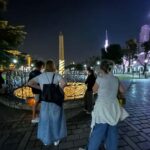
- Hippodrome stops: German Fountain, Serpentine Column, and obelisks
- Hagia Sophia: the 6th-century church that kept changing roles
- Grand Bazaar with free time: bargaining without getting lost
- Topkapı Palace & Harem: imperial rooms and the women’s court
- Hagia Irene Church: the first church of Constantinople
- Price and logistics: is $68 good value here?
- Guides and group feel: what helps the day make sense
- Should you book this guided small-group day?
- FAQ
- Where is the meeting point for the tour?
- Is hotel pickup available?
- How long does the tour last?
- What does skip-the-line mean on this tour?
- Are entrance tickets included in the price?
- Is lunch included?
- What stops are guided versus free time?
- When is the Grand Bazaar closed?
- What should I wear or bring?
- Is the tour in English?
Key highlights that make this day worth it
- Blue Mosque focus on 20,000 hand-painted blue Iznik tiles and Sultan Ahmed I’s vision
- Hippodrome monuments that connect the city’s Roman and Byzantine eras
- Hagia Sophia’s timeline from Justinian-built church to mosque to museum
- Topkapı Palace & Harem access to imperial power spaces and private court life
- Grand Bazaar free time in the world’s oldest and largest covered market (65 streets, 4,000+ shops)
- Hagia Irene for early Constantinople without waiting all day
A 7-hour Istanbul loop: how the day flows
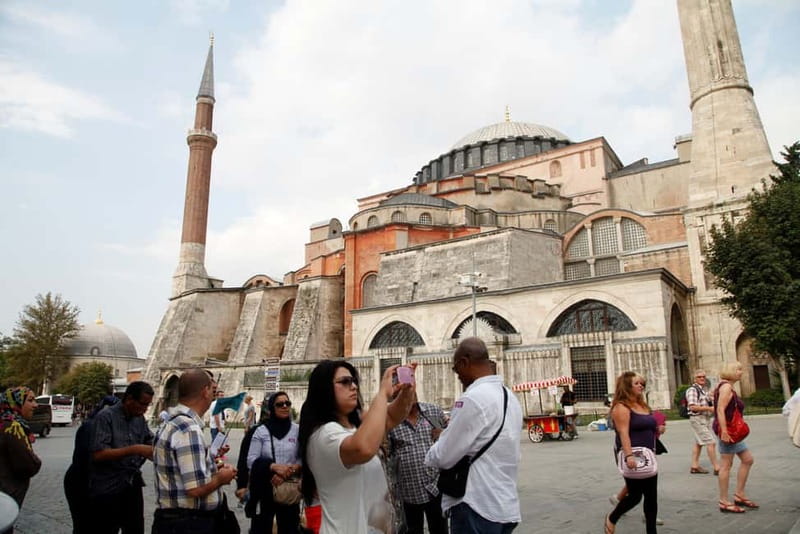
This tour is built like an efficient “imperial history circuit.” You’ll get guided time at the big sacred sites first, then you move into palace life, then finish with a quieter Byzantine stop (Hagia Irene) before you’re returned to your hotel.
The schedule is tight but not chaotic. You’ll have guided walking time where it counts—so you understand what you’re looking at—and then you’ll get free time specifically for the Grand Bazaar, which is the one place you really want to wander at your own speed.
Transport is included as an airconditioned coach, and if you pick hotel pickup, it’s a shared transfer (minibus or midibus). That shared part matters because pickup can be early or late, and each hotel has a fixed pickup time before the tour start.
Plan for a full day in your feet and in your head. This is the kind of tour where the landmarks feel like they’re all talking to each other—church to mosque to empire to market—if you pay attention to what your guide is pointing out.
You can also read our reviews of more guided tours in Istanbul

Entering the Blue Mosque: Iznik tiles and the six minarets
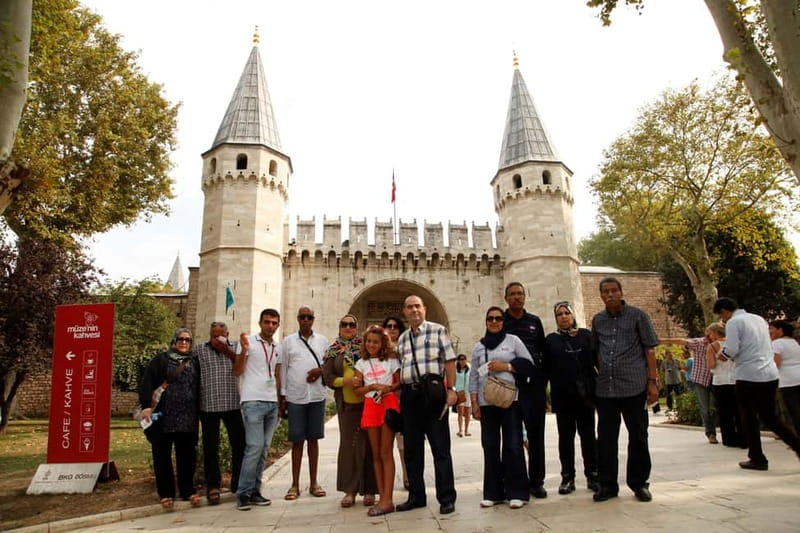
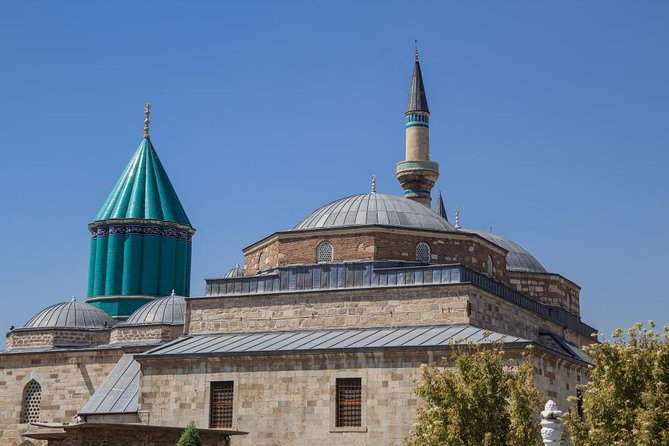
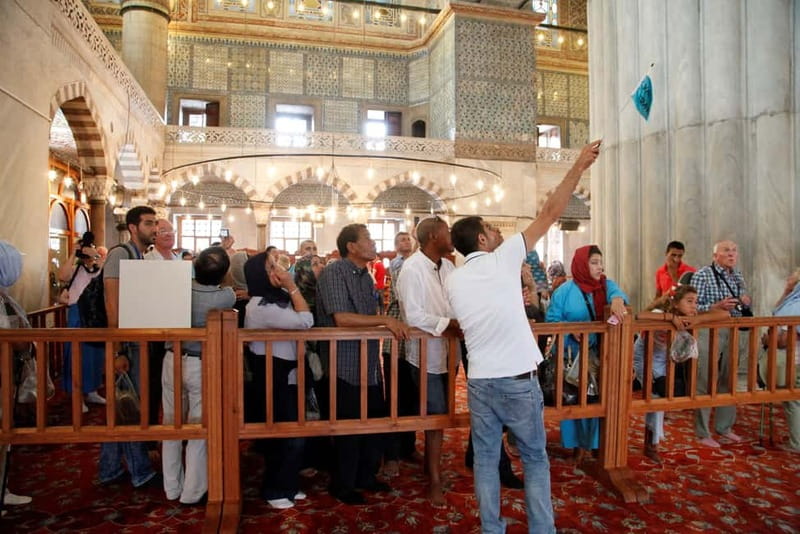
The day kicks off at the Sultan Ahmed Mosque, commonly called the Blue Mosque, and it’s smart to do it early. The guide-led visit helps you spot details most people miss when they just rush in for photos.
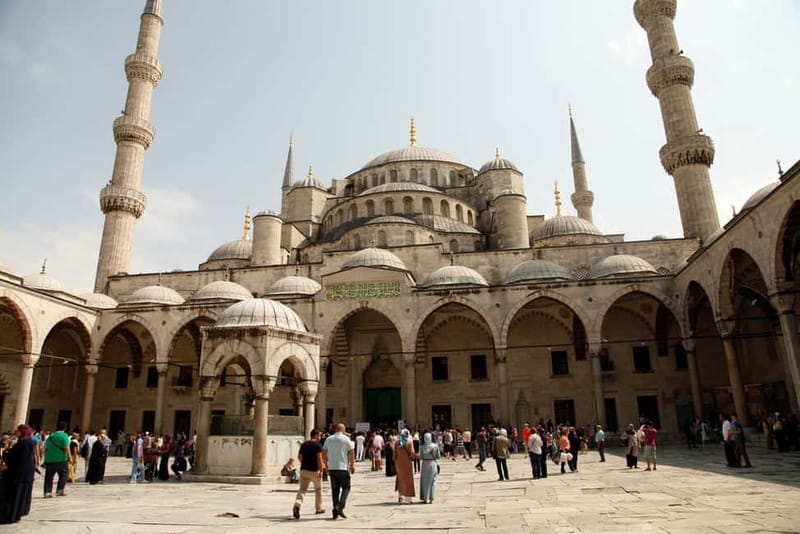
The Blue Mosque is famous for its 20,000 hand-painted blue Iznik tiles and its six elegant minarets. Your guide’s explanations are where those facts become useful. You’ll learn how the mosque was commissioned by Sultan Ahmet I and how it fits into the last major phase of the Classical Ottoman period.
Practical reality check: even with skip-the-ticket-line service, you still go through security. That means you should arrive dressed correctly and keep your daypack easy to handle. Also, think ahead about comfort. Inside and around the mosque, you’ll be standing and walking more than you expect—so comfortable shoes pay off.
What I like about starting here is that it sets the visual language for the rest of the day. Once you’ve seen the tilework and the minarets framed in the Sultanahmet area, Topkapı and the churches later on feel less random and more like one long historical conversation.
Hippodrome stops: German Fountain, Serpentine Column, and obelisks
Right after the Sultanahmet area, you’ll head to the Hippodrome, the old social and sporting center of Constantinople. Even if you’ve never heard the word Hippodrome before, the guided visit helps you understand why these stones mattered.
Expect several major monuments in one stop:
- the German Fountain of Wilhelm II
- the Bronze Serpentine Column
- the Obelisk of Theodosius
- the Column of Constantine
The value here is context. Hagia Sophia and Topkapı are easy to get excited about, but the Hippodrome gives you a sense of daily power and public spectacle—where people gathered, cheered, and argued. It also helps you connect the later Byzantine and Ottoman layers to the older city underneath them.
If you tend to like history that has physical anchors, this is one of the best parts of the day. Those monuments don’t just sit there—they act like timestamps.
Hagia Sophia: the 6th-century church that kept changing roles
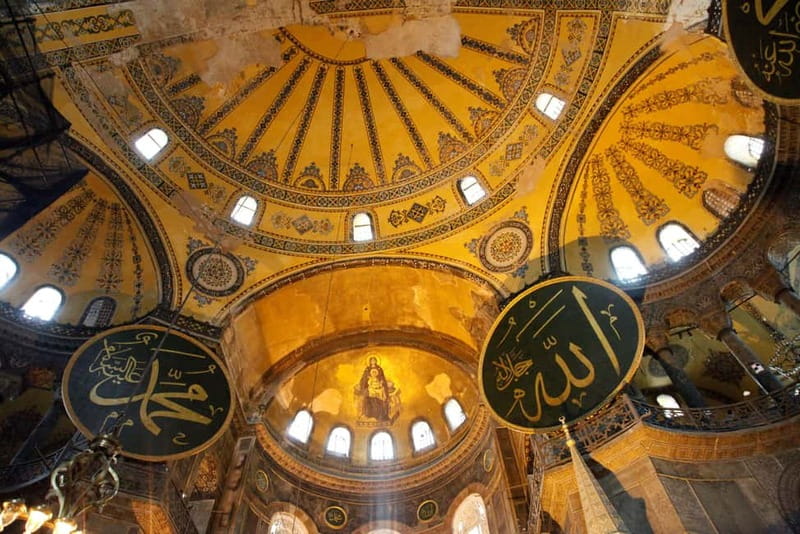
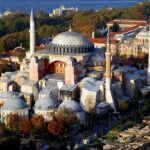
Then comes the grand finale of Byzantine architecture: Hagia Sophia. Built in the 6th century by Emperor Justinian as a Greek Orthodox church, it became the world’s largest church for nearly a millennium. That fact alone tells you this wasn’t a small “pretty building” project—it was meant to signal power.
Your guided visit focuses on its layered story: the building later transitioned from church to mosque and later into a museum. When you hear the timeline, the interior details make more sense. You’re not just looking at one style; you’re seeing how each era reused, reshaped, and reinterpreted the space.
Skip-the-line is included for the Hagia Sophia entrance ticket, but don’t assume that means zero waiting. Security checks are mandatory and can’t be bypassed. This is why your clothing and organization matter. Bring what you need and move calmly through checks.
One more tip: if you’re the type who wants to photograph everything, pace yourself. The building is huge and detailed. I like using the guided time to learn what to look for first—otherwise it’s easy to end the visit with 500 photos and no clear sense of what you actually saw.
Grand Bazaar with free time: bargaining without getting lost
Before the Grand Bazaar, you’ll have a brief stop at a local shop. This is a good moment for souvenirs and handcrafted goods if you want something “right now” rather than hunting later.
Then you’ll gather near the Grand Bazaar’s main gate for guided insights about its history, followed by free time to explore on your own. The Grand Bazaar is described as the world’s oldest and largest covered market, with 65 streets and over 4,000 shops. That scale can feel overwhelming, even when you love shopping.
Here’s what to do with the free time so it actually feels fun:
- Pick one lane first (carpets, jewelry, ceramics, spices), then branch out.
- Decide your budget before you start walking inside.
- If a stall feels too aggressive, move on. The market is big enough that you can.
The “brief local shop” stop plus the guided intro at the gate is a nice pairing. It gives you shopping confidence instead of just dumping you into a maze.
Also, check timing expectations. The Grand Bazaar is closed on Sundays and religious holidays, so if your travel dates fall on those days, your day plan may shift.



Topkapı Palace & Harem: imperial rooms and the women’s court
In the afternoon, you’ll head to Topkapı Palace, the Ottoman sultans’ exclusive residence and administration center for over four centuries. This part of the day is where the tour turns from architecture into power systems—how rulers lived, worked, and protected their image.
You’ll explore opulent chambers and priceless collections, including sacred Islamic relics of the Prophet Mohammed, imperial treasures, Chinese porcelain, weapons, and exquisite calligraphy. The guided component helps you understand what these items represent, not just that they’re valuable.
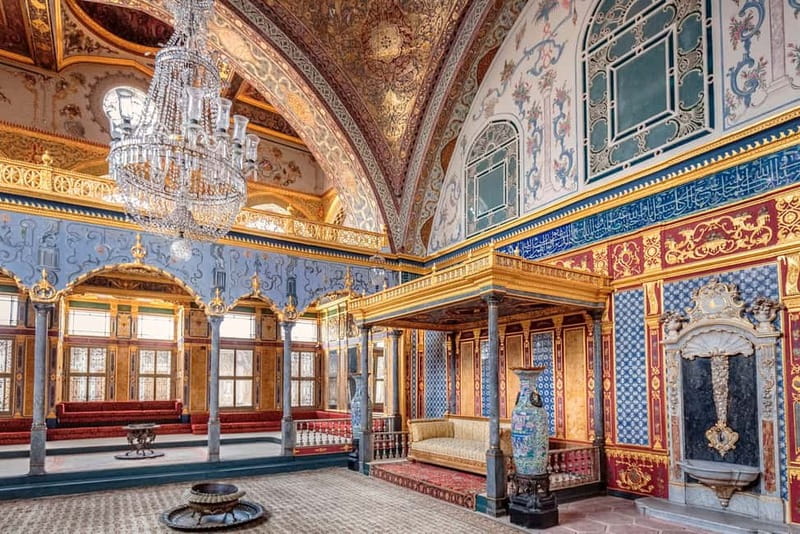
Then you’ll visit the Harem, located within the palace grounds. The Harem wasn’t just one room—it housed the sultan, his mother, wives, concubines, children, and other women of the court. Walking through this section gives you a look at the maze of rooms, courtyards, and private chambers that shaped daily life and politics.
Practical money note: Topkapı Palace & Harem entrance ticket isn’t included, and the skip-the-line entrance ticket cost is 2750 Turkish Lira, paid in cash. Plan for that early, because running out of cash mid-day is the kind of stress you don’t need.
If you like places that explain how societies worked, this is a strong stop. It’s one thing to see grand architecture; it’s another to understand the human routines inside it.
Hagia Irene Church: the first church of Constantinople
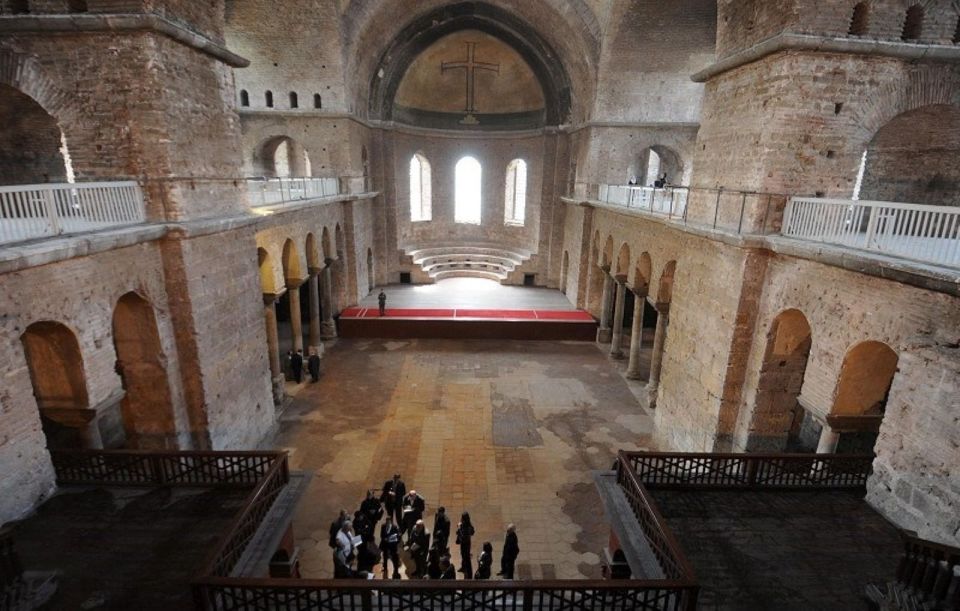
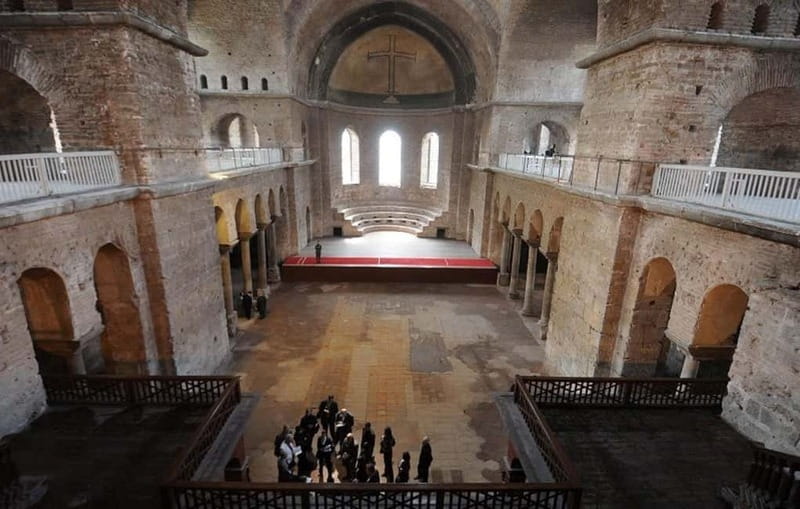
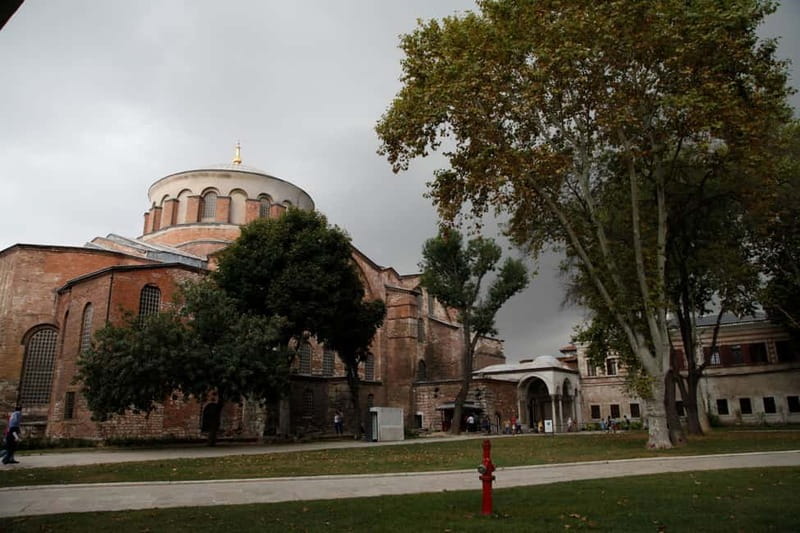
To finish the guided portion, you’ll visit Hagia Irene Church, a Byzantine landmark and the first church built in Constantinople. Compared with Hagia Sophia, this stop can feel more “focused” because the scale and attention are different.
Expect a guided look at how this ancient structure ties into early Christian history and architectural legacy. It’s a useful last chapter because it broadens the story beyond the most famous site and helps you see how the city’s religious landscape formed over time.
It also offers a nice change of pace at the end of a long day. By the time you get here, you’ve already seen the Ottoman and Byzantine giants—so Hagia Irene lands as a sharper reminder that Constantinople had deep roots before the headline monuments.
Price and logistics: is $68 good value here?
At $68 per person for a 7-hour small-group day, the headline price isn’t bad—especially because you get multiple guided visits and guided interpretation across major sites. You also get transport (airconditioned coach), and the tour includes the Hippodrome and Hagia Irene guided visits, not just a “two big icons” day.
The part you need to plan for is ticket costs. Hagia Sophia entrance ticket costs €25 and Topkapı Palace & Harem entrance ticket costs 2750 Turkish Lira, paid in cash. Lunch isn’t included, and you’ll have free time for it instead.
So here’s the value math in plain terms:
- If you’re planning to visit both Hagia Sophia and Topkapı anyway, the $68 price starts to look reasonable because the guided time, included logistics, and added monuments (Hippodrome + Hagia Irene + Grand Bazaar intro) carry real weight.
- If you hate paying extra onsite and prefer fully inclusive pricing, this one might feel pricey once the cash part kicks in.
Logistics are another factor. This is a walking tour, and you’ll be dressed for sacred sites. Your day will be easier if you show up ready—long pants, long sleeves, and a headscarf—and keep your cash accessible for Topkapı.
One more consideration: since the transport is shared when pickup is selected, pickup timing can be early or late. That matters if you’ve got tight plans afterward.
Guides and group feel: what helps the day make sense
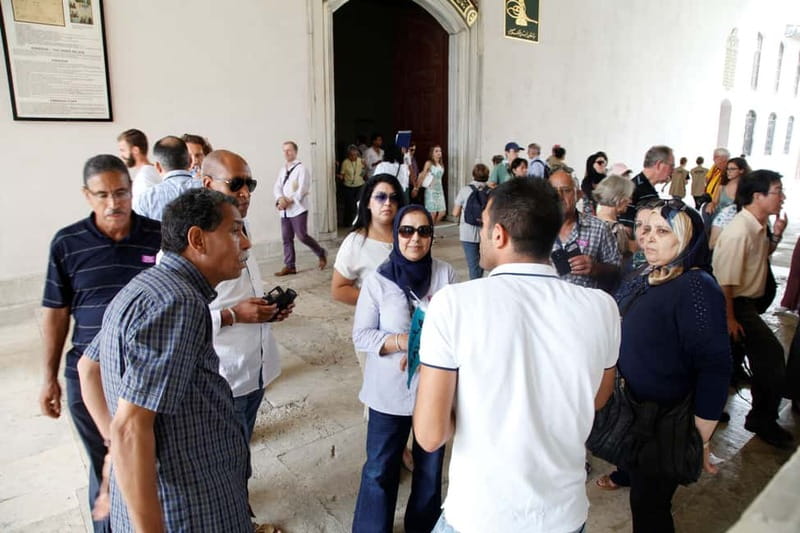
A big reason tours like this work is the guide’s job isn’t just to recite facts—it’s to help you connect the dots fast. I like that this tour uses English-speaking guides and puts guided focus where your attention matters most: Blue Mosque, Hagia Sophia, Topkapı & Harem, and Hagia Irene.
Some guides linked with this operator include Felis, Sean, and Halis. The common thread in their approach seems to be patience when questions pop up and clear explanations that keep the pace moving without making you feel rushed.
You also get a small-group feel. Even without exact group size listed, the day is designed for a shared rhythm: gather, learn, walk, explore, return.
Should you book this guided small-group day?
Book it if:
- You want one organized day that covers Blue Mosque + Hagia Sophia + Topkapı Palace (and the Harem) plus Hagia Irene
- You like guided context more than reading signs alone
- You want a structured day with only one big free-roam segment (the Grand Bazaar)
Skip or reconsider if:
- You strongly dislike paying major entrance fees separately and prefer everything included
- You’re sensitive to religious-site dress expectations and long walking
- Your travel dates include a Sunday or religious holiday, when the Grand Bazaar can be closed
If your goal is to see Istanbul’s most important layers without planning each stop yourself, this tour is a solid fit—just come prepared for the cash ticket step and the security checks.
FAQ
Where is the meeting point for the tour?
Meet your guide in front of Buhara 93 Restaurant at Sultanahmet Square. The guide will be holding an Aljazeera Tour logo flag.
Is hotel pickup available?
Hotel pickup is available if you select the option. It’s a shared transfer, and you’ll need to confirm the pickup location and time with the local operator using the details in your voucher.
How long does the tour last?
The duration is 7 hours.
What does skip-the-line mean on this tour?
Skip-the-ticket line is included for Hagia Sophia and the Blue Mosque, but you still go through mandatory security checks.
Are entrance tickets included in the price?
No. Hagia Sophia entrance ticket costs €25, and Topkapı Palace and Harem entrance ticket costs 2750 Turkish Lira, paid in cash.
Is lunch included?
Lunch is not included. There is free time for lunch during the afternoon portion of the day.
What stops are guided versus free time?
Blue Mosque, Hagia Sophia, Topkapı Palace & Harem, Hippodrome, and Hagia Irene are guided. Grand Bazaar time is free time for shopping.
When is the Grand Bazaar closed?
The Grand Bazaar is closed on religious holidays and Sundays.
What should I wear or bring?
Wear comfortable shoes and bring a scarf/headscarf, sunscreen, and comfortable clothing. Long pants and a long-sleeved shirt are advised for sacred sites, and a scarf is recommended to cover your head.
Is the tour in English?
Yes. The live tour guide speaks English.
If you want, tell me your travel month and whether you’re using hotel pickup, and I’ll suggest a simple plan for what cash to bring and how to pace the day.