REVIEW · ISTANBUL
istanbul old city private tour
Book on Viator →Operated by Oligarch Tour · Bookable on Viator
One meeting point, then a full day of landmarks. This private Istanbul Old City tour strings together the big sights in a way that feels organized instead of frantic. I especially like how it’s built around key Sultanahmet landmarks and keeps the pacing realistic for walking days.
What I like most is the small-group setup (up to 6) with a guide who can steer your time where you care most. I also love that the tour includes public transportation, so you’re not constantly guessing buses or where to stand.
The main thing to consider is that it’s a walking day—expect around 7–8 km—and the two biggest ticketed stops (Hagia Sophia and Topkapi Palace) cost extra.
In This Review
- Key highlights at a glance
- How the day actually feels (6–8 hours, built for walking)
- Starting at the German Fountain: an easy anchor
- Stop 1: Hippodrome and the three obelisks
- The German Emperor II. Wilhelm Fountain: a European twist in Sultanahmet Square
- Stop 2: Blue Mosque (Sultan Ahmed Mosque) and its handmade tile story
- Stop 3: Hagia Sophia Grand Mosque—space, light, and scale
- Stop 4: Topkapi Palace and Harem—2.5 hours of Ottoman power
- Stop 5: Grand Bazaar—how to shop without getting lost
- Price and value: is $180 per group fair?
- The guide factor: why Suleyman keeps showing up in the reviews
- What to wear and bring for a 7–8 km Old City walk
- Who should book this tour
- Should you book this Istanbul Old City private tour?
- FAQ
- How many people are in the private group?
- Is pickup available, and where do we meet if it’s not?
- How long is the tour, and how much walking should I expect?
- Are the museum entrance tickets included?
- What’s included in the price?
- Is lunch included?
Key highlights at a glance

- Private, small-group flow (up to 6) keeps photos, questions, and bathroom breaks from turning into a group fight
- Sultanahmet-focused route hits Hippodrome, the German Fountain, Blue Mosque, and Hagia Sophia in one clean sweep
- Topkapi Palace time is real (about 2.5 hours), not a rushed look from the entrance doors
- Grand Bazaar orientation helps you navigate the chaos faster and shop with less stress
- Licensed guide support can help you move through major entrances more efficiently
- Pickup option can reduce the morning friction if you’re near a main route
How the day actually feels (6–8 hours, built for walking)
This is a private walking tour of Istanbul’s Old City, usually 6 to 8 hours. The route is concentrated around Sultanahmet, but the day still adds up: plan on 7–8 km of walking, uneven pavement, and lots of stopping for viewpoints and explanations.
The schedule also includes transit. Even though it’s a walking tour, the tour includes public transportation, which makes a difference when you’re tired or when landmarks are spaced out.
If you’re the type who gets restless waiting in a line or lost on side streets, the private format helps. With your guide at your pace, you can ask questions, change the order if timing slips, and keep moving without feeling pushed.
You can also read our reviews of more city tours in Istanbul


Starting at the German Fountain: an easy anchor
You begin at the German Fountain (Binbirdirek) at At Meydanı Cd, Sultanahmet. This matters because it’s a very clear reference point in an area where streets curve, signage varies, and tourists blend into the crowd.
If pickup is offered for your hotel, your guide meets you at the hotel reception if you’re near a main transportation route. If you’re not, the guide waits near German Fountain, and they contact you via WhatsApp to guide you to the exact meeting spot.
For a first-time Istanbul visit, I like this approach: you’re not hunting for a random hotel lobby or a landmark that looks the same as 20 others.
Stop 1: Hippodrome and the three obelisks
The day begins at Hippodrome, a 4th-century East Roman (Byzantine) venue built for chariot races. Today, you’re not going for the arena shape—you’re going for the surviving stone trophies that still tell the story.
You’ll see three major obelisks:
- Theodosius Obelisk (often called the Egyptian Obelisk)
- Serpent Column
- Constantine Obelisk
This is a smart early stop because it gives you context before the Ottoman-era buildings take over. It also keeps things practical: the admission here is listed as free, so you’re not burning your budget before you reach the big paid sites.
If you’re short on time or you dislike museum-style pacing, Hippodrome is a good warm-up. You get major historical scale without spending hours inside.
The German Emperor II. Wilhelm Fountain: a European twist in Sultanahmet Square
Right after Hippodrome, you’ll pass the German Fountain located in Sultanahmet Square. The story here is all about gift-giving and political symbolism: Kaiser Wilhelm II sent the fountain from Germany in 1901 to Sultan Abdulhamit.
What I like about this stop is that it breaks the usual “Ottoman only” narrative. The fountain’s architecture differs from Ottoman and European styles, and the inscription is meant as a message of gratitude—small detail, big meaning if you like reading between cultures.
It’s also a relief stop. You’ll likely see it with crowds around, but you can take photos, catch your breath, and reset your eyes before walking toward the Blue Mosque.
Stop 2: Blue Mosque (Sultan Ahmed Mosque) and its handmade tile story
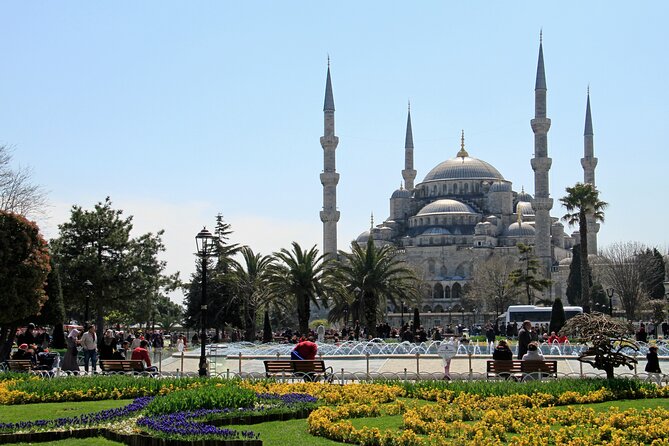
Next up is the Blue Mosque, or Sultan Ahmed Mosque, built in 1616 by the Ottoman Turks. You’ll spend about 45 minutes, and admission is free.
Inside, the highlight is the visual wall of more than 20,000 handmade blue tiles. The tour also points out details like the ostrich eggs hanging on the chandelier, a fun moment because it’s specific—you’ll actually notice it when you know to look.
A practical note: free doesn’t mean easy. This is one of Istanbul’s most visited sites, so expect security checks and crowds. The guide helps you focus on what matters and where to look so you don’t lose time scanning every corner.
If you love architecture, this stop is a strong middle-of-the-day anchor before the heavier ticketed places.
You can also read our reviews of more private tours in Istanbul


Stop 3: Hagia Sophia Grand Mosque—space, light, and scale
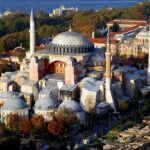
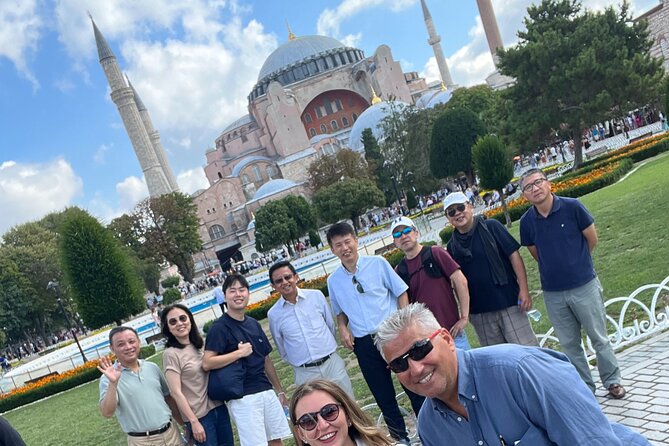
Then you move to Hagia Sophia Grand Mosque (Ayasofya-i Kebir Cami-i Şerifi). You’ll have about 45 minutes, and admission tickets are not included.
Hagia Sophia is big in every way: it used to function as a major Eastern Roman church, it was rebuilt multiple times on the same spot, and it’s famous for the dome’s engineering. You’ll stand in a place where the architecture seems to hold light in midair—plus you’ll see monolithic marble columns and mosaics that have survived centuries.
The best value here isn’t just the “wow” factor. It’s the sense of how one building can hold multiple identities over time. Even if you don’t know the names of every era, your guide’s framing helps you connect what you see to why the building matters.
Drawback to plan for: since tickets aren’t included, you’ll want to budget for entry ahead of time. Also, if timing is tight, 45 minutes goes fast inside. This is one of those places where focusing on a few key viewpoints beats trying to see everything.
Stop 4: Topkapi Palace and Harem—2.5 hours of Ottoman power
Next is Topkapi Palace, including time for the Harem area. You’ll have about 2 hours 30 minutes, and museum entrance tickets are not included.
This stop is where your tour becomes more than landmarks. Topkapi Palace is described as a court world: powerful sultans, political court life, concubines, and eunuchs living and working here from the 15th to the 19th centuries. The palace served 25 different sultans over 380 years, which helps explain why the site feels like multiple mini-cities in one complex.
What I appreciate about giving this place enough time is that you’re not only ticking boxes. You can slow down in pavilions, look at the jewel-filled Treasury, and understand why certain spaces were designed the way they were.
Also, the reviews mention the guide being a licensed tour guide and that this can help with faster entry at major stops like Topkapi Palace and Hagia Sophia. I can’t guarantee every day runs the exact same way, but it’s a real advantage when you’re standing in a busy entrance line.
If you prefer palace life as a story—how people lived, ruled, and moved through rooms—Topkapi is where this tour gives you payoff.
Stop 5: Grand Bazaar—how to shop without getting lost
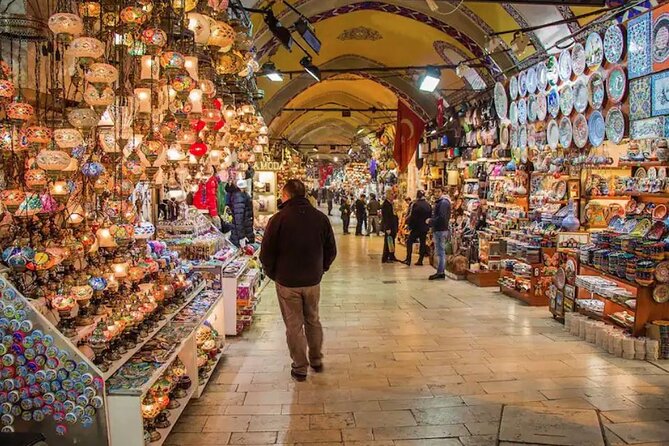
The final anchor is the Grand Bazaar, billed as the biggest indoor bazaar in the world with 3000+ shops. You’ll have about 45 minutes, and entry is listed as free.
The value of a guided approach here is simple: the Grand Bazaar can eat time. With your guide, you get help finding the types of items you want faster, and you also get context for what you’re seeing—like how some carpet “shops” are more like sales centers for Turkish women’s traditional work.
If you’re shopping, this is also a good moment to ask practical questions. Your guide can help you set expectations, avoid overpaying when possible, and navigate the lanes without wandering for an hour just to find one store again.
If you’re not shopping, you can still enjoy it as a cultural slice. Just don’t plan to “see the whole bazaar.” Instead, plan to enjoy one section, pick up a souvenir that feels right, and keep the day from stretching.
Price and value: is $180 per group fair?
This tour costs $180 per group (up to 6) for 6–8 hours. That price isn’t cheap in the absolute sense, but it becomes reasonable once you compare it to the cost of a guide plus the saved hassle of transit and coordination.
Here’s why the structure can feel like good value:
- Private format for up to 6 means you’re not paying per person for a group where you can’t ask questions
- The tour includes a licensed tour guide plus public transportation, which reduces planning stress
- The itinerary covers the highest-impact Old City sights in one loop—Hippodrome, Blue Mosque, Hagia Sophia, Topkapi, and Grand Bazaar
Budget reality check: museum tickets and lunch are not included, and you should plan for tips for guide and driver as well. So your total day cost depends on which entrances you buy and how many.
Still, for the amount of ground covered and the guided interpretation (not just “here’s a photo spot”), it’s a fair way to spend a first day in Sultanahmet.
The guide factor: why Suleyman keeps showing up in the reviews
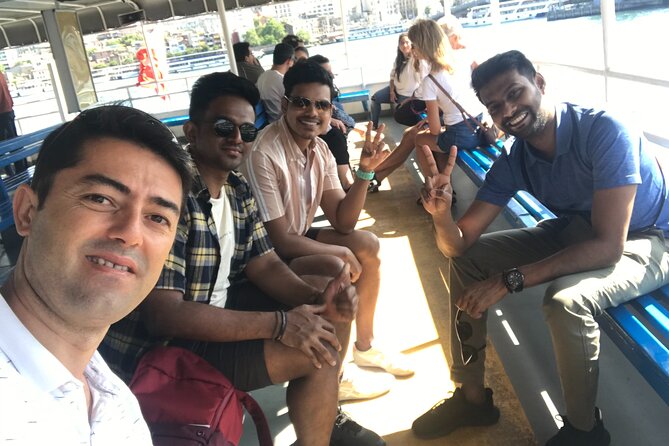
Your guide on this tour is Suleyman (based on the review highlights). The recurring theme is not just facts—it’s the way he manages the day.
People praise him for being patient, professional, and flexible for families and friends. There are also mentions of adapting pacing to make the experience comfortable and efficient, including using helpful transit ideas to reduce strain.
One of the most useful parts for you: the guide doesn’t only talk from a guidebook. He’s described as connecting architecture to everyday culture and daily life, which makes the sights feel less like distant history and more like something you can understand on the street.
If you’re traveling with friends or a mixed-age group, that flexibility can be the difference between a tiring day and a memorable one.
What to wear and bring for a 7–8 km Old City walk
This is a practical walking day, so pack like it’s a full tour, not a quick loop.
I’d bring:
- Comfortable shoes with grip (Old City stone can be slippery)
- Water (you’ll be doing a lot of moving between stops)
- A light layer for mosque interiors and shifting outdoor shade
- Any necessary entry budget for Hagia Sophia and Topkapi since tickets aren’t included
- Patience for crowds—especially around Blue Mosque and the palace complex
Also, plan your timing. You can easily spend more than the posted stop length if you’re taking photos and the crowd shifts. A private guide helps manage that, but you still want to start the day rested.
Who should book this tour
This tour fits best if you:
- Want a first-time Istanbul Old City day with the major highlights tied together
- Prefer a private experience where your questions don’t get ignored
- Like architecture and historical storytelling (Hippodrome context through Topkapi palace life)
- Need help shopping in the Grand Bazaar without wandering for hours
- Are traveling with up to 6 people and want one shared plan
It may be less ideal if you dislike walking long distances or if you only want a fast hit of photos with minimal time inside large sites.
Should you book this Istanbul Old City private tour?
If your goal is to experience Sultanahmet the smart way—organized, guided, and not stitched together from random bus rides—this is a strong choice. The pricing works best when you have a small group and want the guide’s attention rather than a packed group schedule.
Book it if you want the landmarks plus the “why” behind them: obelisks in context, tilework you’ll actually notice, Hagia Sophia’s scale, and Topkapi’s palace logic. I’d pass if you’re aiming for a low-walking day or you don’t want to handle extra ticket costs for the big interiors.
FAQ
How many people are in the private group?
The tour is private and priced per group, with a maximum group size of up to 6 people.
Is pickup available, and where do we meet if it’s not?
Pickup is offered if your hotel is nearby a main transportation route. If not, you meet next to the German Fountain at Binbirdirek, At Meydanı Cd, 34122 Fatih/İstanbul.
How long is the tour, and how much walking should I expect?
The tour runs about 6 to 8 hours. It is a walking tour, and you should plan for roughly 7–8 km over the day.
Are the museum entrance tickets included?
No. Hagia Sophia and Topkapi Palace admission tickets are not included. Some other stops (like Hippodrome and Blue Mosque) are listed as free.
What’s included in the price?
The price includes a licensed tour guide and public transportation. Mobile tickets are offered as well.
Is lunch included?
Lunch is not included. You’ll want to plan your own meal stop during the day.