REVIEW · ISTANBUL
Istanbul: Full-Day Old City Tour with Lunch
Book on GetYourGuide →Operated by TURISTA TRAVEL AGENCY · Bookable on GetYourGuide
Old Istanbul, packed into one smooth loop. This tour strings together the big hitters—Hagia Sophia, the Blue Mosque, Topkapi Palace—and gives you a guided route so the day feels easier than doing it solo. I especially like the way you get inside the Hagia Sophia Museum to see Byzantine mosaics, and I like that the Blue Mosque’s look is explained by pointing out the famous blue tiles up close. One drawback to consider: it’s an active day with lots of walking, so it’s not suitable for people with mobility impairments.
You’ll start with hotel pickup in classic Old City neighborhoods like Sultanahmet and Sirkeci, then end the day with shopping time at the Grand Bazaar and a big cultural finish at Topkapi. I also appreciate that lunch is included, so you don’t spend the day guessing where to eat. The pace and crowds around these landmarks can be intense, so bring comfortable shoes and plan to move.
In This Review
- Key highlights to look for
- A 7-hour Old City route with pickup and express security
- Hagia Sophia Museum: architecture first, mosaics second (and both matter)
- Blue Mosque’s 20,000 tiles: seeing the color pattern, not just the hype
- Hippodrome of Constantinople and Caferağa Madrassah
- Egyptian Spice Market: smells, snacks, and a real pause before shopping
- Lunch break: typical Turkish cuisine with no extra decision fatigue
- Grand Bazaar: shopping time with guidance through gold, jewelry, leather, and spices
- Topkapi Palace: more than a palace, it’s the Ottoman machine
- Price and logistics: what $170 covers (and when it’s a good deal)
- Guide quality is the secret ingredient (Volkan, Songul, and the pacing factor)
- Should you book this Istanbul Old City tour?
- FAQ
- FAQ
- How long is the Istanbul Old City tour with lunch?
- Is lunch included in the price?
- Are drinks included with lunch?
- What’s included besides the sites and lunch?
- Where do you get picked up from?
- Does this tour include an express security check?
- What language is the tour guide?
- Is the tour suitable for people with mobility impairments?
- Is luggage allowed?
Key highlights to look for
- Hagia Sophia Museum entry with Byzantine mosaics so you know what you’re seeing, not just where to stand
- Blue Mosque tile detail explained in a way that makes the building’s signature color click
- Hippodrome of Constantinople stops for the chariot-race setting and the political drama that happened there
- Egyptian Spice Market + Caferağa Madrassah for texture: food smells, then Turkish culture in a quieter stop
- Grand Bazaar shopping time with guidance on gold, jewelry, leather, and spices
- Topkapi Palace as a full government-and-court complex (not only a palace)
A 7-hour Old City route with pickup and express security
This is the kind of tour that works because it’s practical. You get hotel pickup and drop-off from Taksim Square, Aksaray, Beyazit, Sultanahmet, or Sirkeci, which can save you a lot of time when you’re trying to move across neighborhoods. The tour also includes an express security check, which matters in Istanbul. Those lines can steal an hour if you’re unlucky, and here you trade waiting for actual sightseeing.
The listed duration is 7 hours. Some bookings report closer to about 8 hours, which matches the reality of a full Old City sweep—people stop to take pictures, and the pace depends on the group. Expect a walking day. Not just “stroll between monuments,” but real museum-and-street movement.
What I like most is the structure: you don’t just arrive and wander. You move from site to site in a way that builds a story—from Byzantine Istanbul to Ottoman Istanbul—without you needing a history degree.
You can also read our reviews of more city tours in Istanbul
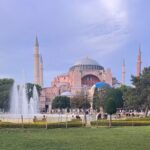
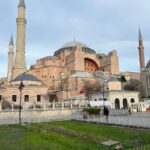
Hagia Sophia Museum: architecture first, mosaics second (and both matter)
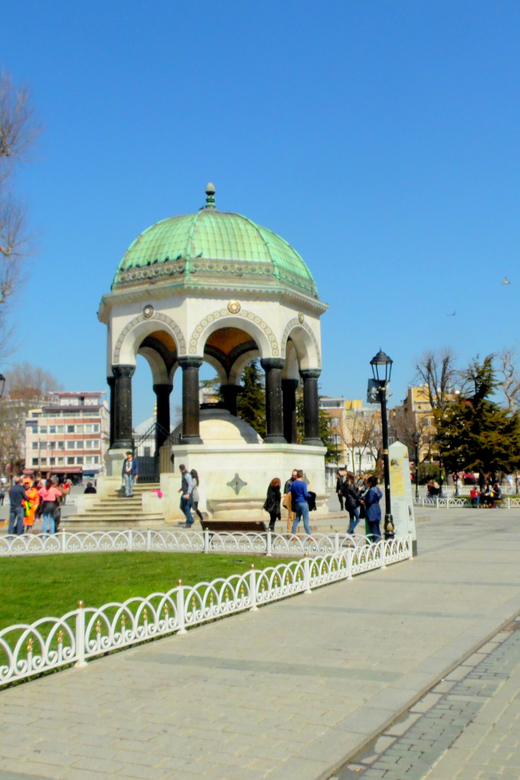
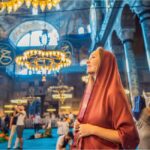
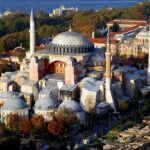
The day begins at the Hagia Sophia Museum, a building people describe as legendary for a reason. You’ll tour the interior as a museum and focus on the visual details, including Byzantine mosaics. If you’ve only seen photos, the inside can feel like information overload. A guide helps you catch what matters before it all blurs together.
Here’s what to watch for while you’re there:
- The overall scale and the way the space is shaped. It’s less about one object and more about how the building “holds” light and movement.
- Mosaic details you might otherwise walk past. These are the part where a description makes the difference between seeing decoration and understanding what you’re looking at.
This is also a good opening stop because you can get oriented fast. Once you understand Hagia Sophia’s visual language, the rest of the day’s Ottoman and Byzantine references start to make more sense.
A note on timing: Hagia Sophia sits in a busy zone. Starting with it early in the loop can help you avoid the worst crush.
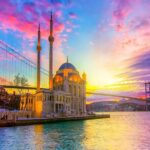
Blue Mosque’s 20,000 tiles: seeing the color pattern, not just the hype
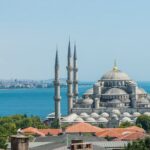
Next up is the Sultan Ahmed Mosque, known for its blue interior tiles. You’ll see why: the famous description is that there are 20,000 blue-toned tiles contributing to that signature look. The guide’s job here is key. With a few pointers, you stop thinking of it as a “blue mosque” and start noticing the design logic—how the patterns guide your eyes and how the space feels different as you move.
Practical tip: this is a place where photos can tempt you to rush. Try to pause at least twice—once near the entrance area and once deeper inside—so you catch how the color shifts with your angle.
This stop also anchors the Ottoman side of the story. You’ll feel the difference compared with Hagia Sophia’s Byzantine vibe, even before you learn every historical detail.
Hippodrome of Constantinople and Caferağa Madrassah
After the major landmarks, the tour shifts into context mode. You’ll head to the Hippodrome of Constantinople, where chariot races were held and where the city’s political center lived for centuries. It’s one of those places that can feel underwhelming if you only expect dramatic ruins. But with the right explanations, you start to understand it as a stage for power—a site of political dramas where Byzantine and later Ottoman life played out across generations.
Two ways this stop pays off:
- You get a better mental map of what Istanbul used to be. The Old City isn’t random. It’s layered.
- You learn the connection between public events and government, which makes other landmarks feel less isolated.
Then there’s Caferağa Madrassah, which helps balance the big monuments with something more human-scale. It’s a chance to learn more about Turkish culture, and madrassahs are a reminder that education and religion were tightly linked in the city’s public life.
If you’re someone who gets monument fatigue, this pairing helps reset your attention. You go from “wow” architecture to “wait, here’s how the city functioned.”
Egyptian Spice Market: smells, snacks, and a real pause before shopping
One of the most enjoyable parts of any Istanbul Old City day is the moment your senses kick in. The tour includes time at the Egyptian spice market, and the payoff is exactly what you’d hope for: you get to soak up the sights and smells of a busy food market. This is where you can slow down a bit and just watch how people shop.
Even if you don’t plan to buy much, you can still use this stop strategically:
- Pick up a few spices as a low-risk souvenir.
- Ask questions about what you’re seeing—spice names and uses can be far more interesting than the price tag.
Just know you’re in a high-traffic area. If you’re sensitive to crowds or strong smells, keep your pace steady and don’t get stuck at the busiest stalls.
A few more Istanbul tours and experiences worth a look


Lunch break: typical Turkish cuisine with no extra decision fatigue
After the earlier landmarks and market time, you get a break for lunch at a local restaurant with typical Turkish cuisine. The big value here isn’t just the food—it’s the relief of not having to figure out what’s nearby and what’s good with limited time.
You should plan to keep moving after lunch. This isn’t a long meal. It’s a reset so you can enjoy the day’s final stops with energy.
One small planning detail: drinks aren’t included. If you know you’ll want something (water especially), set that expectation so you aren’t surprised when you get the bill.
Grand Bazaar: shopping time with guidance through gold, jewelry, leather, and spices
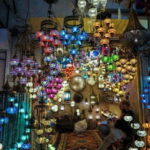
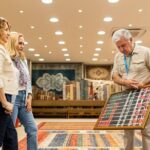
The Grand Bazaar is famous for a reason. During the tour, you’ll discover it with your guide and get time to shop. You’ll find categories like gold, jewelry, leather, and spices—the classic Bazaar mix that attracts first-timers and return visitors alike.
This part is more than retail therapy. A good guide helps you avoid two common problems:
- Getting lost inside the maze-like lanes.
- Ending up in the wrong kind of shop because you didn’t know what to ask.
If you’re going to buy something, decide ahead of time what your target is. The Bazaar can be overwhelming. Having a simple goal—like a specific spice blend, a small leather item, or browsing jewelry—keeps it fun instead of stressful.
Also, remember the tour doesn’t allow luggage or large bags. If you’re traveling with extra gear, travel light or plan to store luggage before you go.
Topkapi Palace: more than a palace, it’s the Ottoman machine
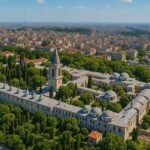
Finishing with Topkapi Palace is a smart move. It’s the largest and one of the oldest palaces said to have survived to the present day, and it served as the primary residence of Ottoman sultans for about 400 years. But the best part is that the palace wasn’t only a private home. It was the center of government and training, including the Divan (executive and judiciary council) and a training school.
That’s why this stop feels satisfying at the end of a packed day: it pulls the themes together.
- Byzantine public life (Hippodrome)
- Ottoman religion and design (Blue Mosque)
- Ottoman power and administration (Topkapi)
What to watch for during your visit: focus on how spaces connect. Without understanding it, palaces can become a sequence of rooms. With an explanation, you start seeing function—where authority sat, where decisions were made, and how the empire prepared people to run it.
Price and logistics: what $170 covers (and when it’s a good deal)
At $170 per person for a full-day tour, this isn’t a budget bargain. It’s priced more like a “buy time and clarity” product. Here’s what you get that helps justify the cost:
- Hotel pickup and drop-off from multiple major areas
- All entrance fees
- Local expert guide in English
- Lunch included
- Express security check to reduce waiting
That package is often cheaper than buying every ticket yourself and paying for a dedicated guide on top. It’s also easier than piecing together a route across multiple neighborhoods, especially if you want to see Hagia Sophia, the Blue Mosque, the Grand Bazaar, and Topkapi in one day.
Two considerations:
- Not suitable for mobility impairments, due to the nature of the route and walking.
- No drinks included, so plan for that extra cost.
If you want the highlights without building an itinerary and without spending half your day in transit, the value can be strong.
Guide quality is the secret ingredient (Volkan, Songul, and the pacing factor)
This kind of tour rises or falls on the guide. In this experience, the guide isn’t just reading facts. It’s about pacing, translating the big sites into understandable pieces, and keeping you oriented in crowded areas.
I’ve seen guides associated with this route such as Volkan, met near Hagia Sophia, described as kind and friendly with a day-long flow that makes distances feel shorter. Another booking paired the day with Ms. Songul, with the same core idea: you’re taken from stop to stop without the day turning into chaos. And in at least one case, a second guide spoke French, which suggests the guiding team can adapt to different group needs.
If you care about getting great photos, guides can also help you position yourself and keep the timing moving so you don’t miss key moments.
Should you book this Istanbul Old City tour?
Book it if:
- You want a one-day Old City checklist: Hagia Sophia, Blue Mosque, Hippodrome, Egyptian Spice Market, Grand Bazaar, and Topkapi
- You’d rather pay for guidance than spend hours planning and ticket-hunting
- You like the idea of entrance fees and lunch included, so you’re not constantly budgeting on the fly
- You prefer an organized route with hotel pickup in Sultanahmet, Sirkeci, or nearby areas
Skip it or think twice if:
- You need a fully step-free, low-walking plan (this tour is not suitable for mobility impairments)
- You’re not comfortable with crowds and noise around major monuments and the Bazaar
- You travel with large luggage (it isn’t allowed)
FAQ
FAQ
How long is the Istanbul Old City tour with lunch?
The tour duration is listed as 7 hours.
Is lunch included in the price?
Yes. Lunch is included as part of the tour.
Are drinks included with lunch?
No. Drinks are not included.
What’s included besides the sites and lunch?
Hotel pickup and drop-off, all entrance fees, and a live English tour guide are included.
Where do you get picked up from?
Pickup is included from hotel locations in Taksim Square, Aksaray, Beyazit, Sultanahmet, or Sirkeci.
Does this tour include an express security check?
Yes. The tour includes skip-the-line via an express security check.
What language is the tour guide?
The tour guide is available in English.
Is the tour suitable for people with mobility impairments?
No. It is not suitable for people with mobility impairments.
Is luggage allowed?
No. The tour does not allow luggage or large bags.