REVIEW · ISTANBUL
Highlights of Istanbul
Book on Viator →Operated by istanbul sightseeing tours · Bookable on Viator
Istanbul history fits into one morning. This small-group route pulls together the big hitters of old Istanbul—hotel pickup, Hagia Sophia, the Blue Mosque, the Hippodrome, the Grand Bazaar with lunch, and Topkapi Palace—without making you bounce around the city. I love how the guide turns the Roman, Byzantine, and Ottoman layers into a story you can follow, and I love that the day is paced around major landmarks rather than random photo stops. One thing to plan for: entrance tickets for some museums are not included, so you’ll want some extra cash for those stops.
You’ll also appreciate the “real guide” feel here: lessons that land, time to ask questions, and help when you hit the busiest parts of the Grand Bazaar. Guides such as Emre and Galat are specifically noted for strong English and for being patient with different needs, including mobility challenges. The only real drawback is that you’ll be walking—mostly on foot—so comfortable shoes matter, even if you’re riding between sights in an air-conditioned vehicle.
In This Review
- Key things I’d circle before you book
- Morning pickup, a manageable pace, and what the day feels like
- Hagia Sophia: the 6th-century cathedral that still controls the room
- Blue Mosque and the Iznik tile effect: what to notice inside
- Hippodrome: the Constantinople hub for chariot races and civic life
- Basilica Cistern: a cool underground reset beneath the old city
- Grand Bazaar with a guide: shopping without the usual chaos
- Topkapi Palace: Ottoman power you can walk through
- Lunch and the small details that make the day feel local
- Guides that actually help you understand what you’re seeing
- Price and value: what $210.25 really covers
- Who should book this Istanbul highlights walk?
- Should you book this tour?
- FAQ
- How long is the Istanbul highlights tour?
- Is hotel pickup and drop-off included?
- Are entrance tickets included for Hagia Sophia and other sites?
- Do I need a scarf to visit the mosques?
- What group size is this tour?
- What language is the tour offered in?
Key things I’d circle before you book
- Max 15 people keeps the pace friendly and the questions actually get answered.
- Hagia Sophia + Blue Mosque + Topkapi covers three eras in one efficient, guided flow.
- Grand Bazaar stop is built in with lunch, so you’re not hungry while you shop.
- Shopping support in the Bazaar helps you haggle without losing your mind.
- Basilica Cistern adds a cool, underground break after the crowds above.
- Guides like Emre and Galat are repeatedly praised for clear explanations and helpful support.
Morning pickup, a manageable pace, and what the day feels like
The tour starts at 8:45 am, with hotel pickup and drop-off included. You’ll mostly move between sights on foot, but you’re not stuck sprinting across Istanbul either—there’s an air-conditioned vehicle used for traveling between stops. That matters because the day centers on heavy hitters that can eat your time if you’re on your own.
This is also a small-group experience, capped at 15 travelers. With a group this size, you’re not just herded past monuments. You have a bit more room to stop, listen, and actually understand what you’re looking at. If you’re the type who likes history but gets tired of lectures, this pace tends to work because each explanation ties to something in front of you.
One practical note: if you’re booking, you’ll be asked for passport details (name, number, expiry, country). That’s not fun, but it helps the day run smoothly at sites where IDs may be required. Also, you’ll need to dress appropriately for mosques—a scarf is requested for ladies.
Finally, plan around weather. It runs in all weather conditions, so wear layers you can adjust, and keep your day bag light enough for walking.
You can also read our reviews of more tours and experiences in Istanbul.

Hagia Sophia: the 6th-century cathedral that still controls the room
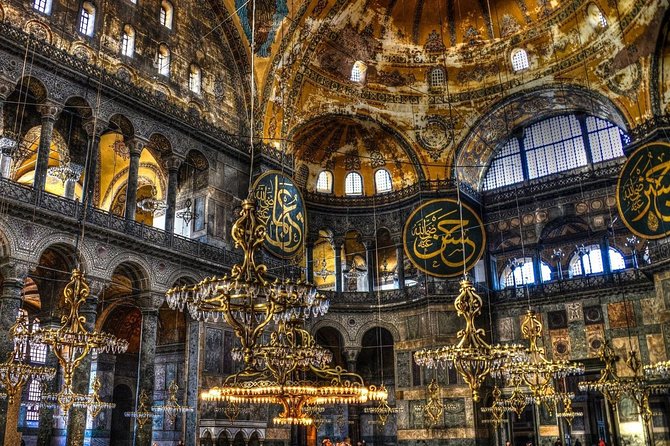
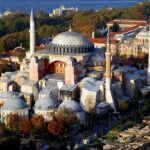
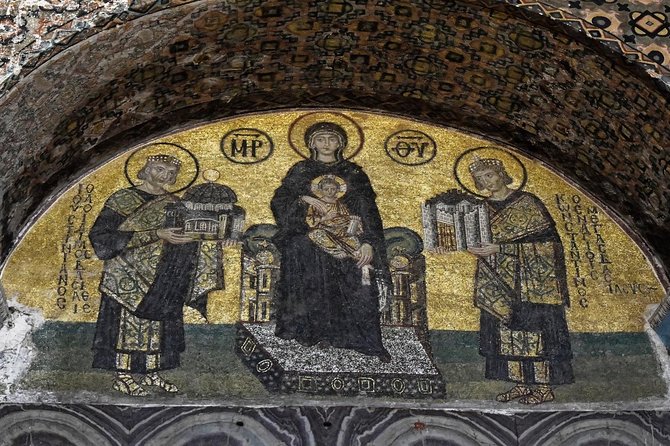
Hagia Sophia is the first big wow. You’ll spend about 45 minutes here, and the building is old enough that it feels less like a landmark and more like a time machine. It dates back to the 6th century, built during the reign of Byzantine Emperor Justinian I, and it became famous for being the largest enclosed space in the world for nearly a thousand years.
What makes Hagia Sophia special on a guided visit is the way the details start adding up. You’ll look at the architecture and then notice the layered design: mosaics, relics, and iron work. Even when you think you’ve seen photos of Hagia Sophia before, being in the space helps you understand why people still talk about its scale and effects on light.
One heads-up: admission ticket is not included for this stop. So set aside time (and budget) to pay your entrance ticket on the day. The payoff is worth it if Hagia Sophia is on your Istanbul must-see list.
Blue Mosque and the Iznik tile effect: what to notice inside
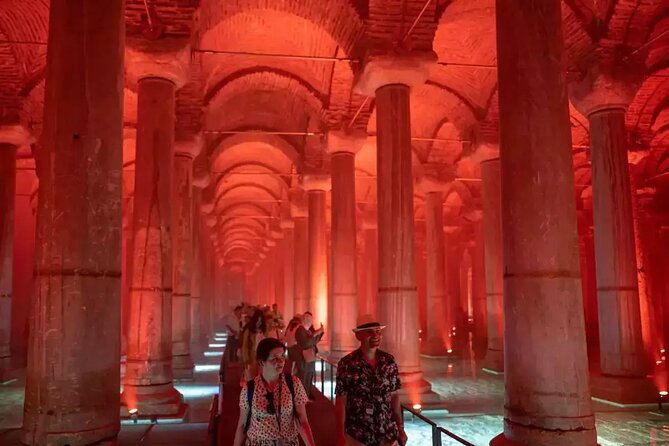
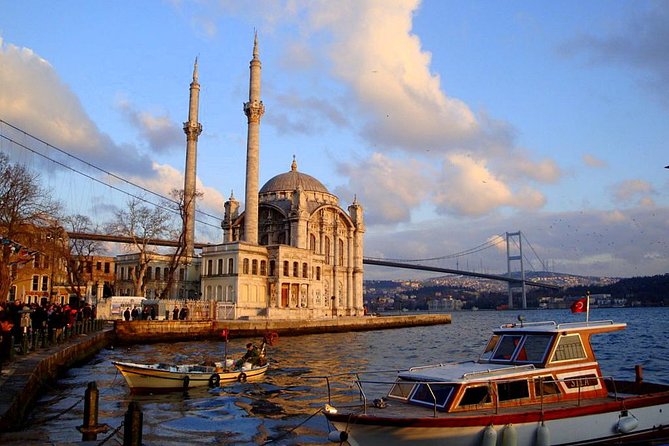
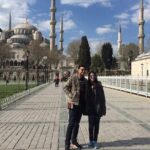
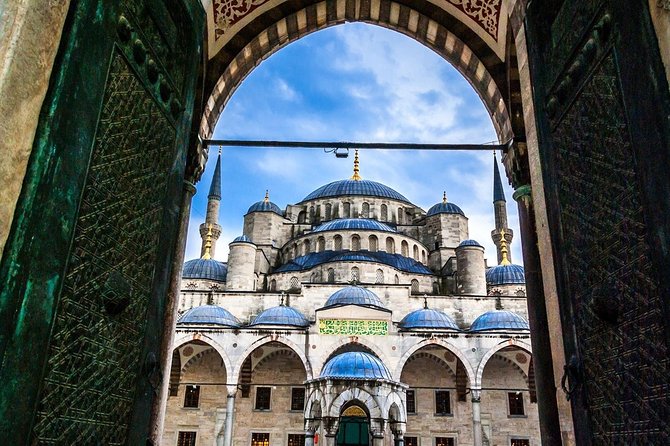
Next comes the Blue Mosque (Sultanahmet Mosque), and the timing here is smart. After Hagia Sophia, you’re primed to compare styles: one place shaped by Byzantine ambitions, the other by Ottoman devotion.
You’ll have about 30 minutes for this stop. The mosque was built under Sultan Ahmet I between 1609 and 1616, and it’s famous for its six minarets—the only mosque in Turkey with that feature. The dome sits about 43 meters high and the mosque has a diameter of 33.4 meters, with 260 windows, which is why daylight plays such a starring role inside.
Now for the visual trick: the name comes from the hand-dyed Iznik tiles—over 20,000 of them—used throughout. When you’re inside, you’ll want to slow down and look at the tilework as a whole, not just one panel. Your guide’s job is to point you to what matters so you don’t feel like you’re speed-scrolling with your eyes.
This stop is free to enter. Still, mosque etiquette matters. Bring a scarf if you need one, and be ready for a bit of waiting depending on prayer times and visitor flow.
Hippodrome: the Constantinople hub for chariot races and civic life
After the big indoor monuments, you get the Hippodrome—about 35 minutes. This square was once the sporting and social center of Constantinople, where locals gathered for chariot races and the kind of public spectacle that shaped daily conversation.
The best part here is learning what’s left, and what those leftovers meant. Only three key ornaments remain from the original grandeur:
- Obelisk of Theodosius
- Bronze Serpentine Column
- Column of Constantine
The Obelisk itself is Egyptian-style and was erected in 1547 BC, once standing around 60 meters tall. Even if you can’t picture that height in your head right away, your guide can help you connect the dots between the scale you see now and what it must have looked like when the square was fully alive.
There’s also the German Fountain, within the Hippodrome area. It was constructed in Germany for Kaiser Wilhelm II’s second visit to Istanbul, and it opened on January 1, 1901. It has three domes decorated with gold mosaics—small compared to the obelisks, but interesting because it shows how the Hippodrome kept getting reused and reinterpreted.
Hippodrome admission is free, so this stop is mostly about context and imagination. It’s easier to picture the crowd when someone explains the vibe.
Basilica Cistern: a cool underground reset beneath the old city
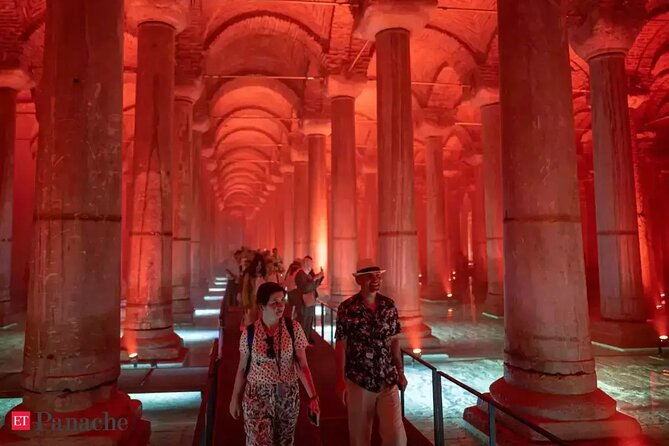
Then you drop down into the Basilica Cistern, also known as Cisterna Basilica (Yerebatan Sarnıcı / Yerebatan Saray). You’ll spend about 35 minutes here, and it’s one of those Istanbul stops that changes your pace.
This is the largest of hundreds of ancient cisterns under Istanbul. It was built in the 6th century during Justinian I’s reign. Even today, it’s kept with little water so you can access it as a museum space.
The practical payoff: you’re getting a break from the sun and crowds, and you’re seeing a different side of how Byzantines managed daily life. If you like historical infrastructure—how cities actually worked—this is a satisfying stop. If you love popular history and puzzles, this one gives you that atmospheric, cinematic feeling without trying too hard.
One more budget item: admission ticket is not included for the cistern. Build that into your day so you don’t feel surprised at the ticket counter.






Grand Bazaar with a guide: shopping without the usual chaos
After walking through monuments and shadows, the day shifts into marketplace mode at the Grand Bazaar. You’ll spend about 1 hour 30 minutes here, and the visit includes admission.
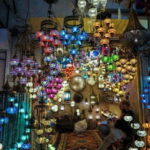
The Grand Bazaar is massive: 58 covered streets and more than 1,200 shops, covering categories like jewelry, pottery, spices, carpets, and leather goods. It opened in 1461, and it’s structured in a way that makes browsing easier than you might expect—shops often cluster by what they sell, so you can move faster from spices to ceramics to jewelry.
One reason a guided stop is valuable here: the guide can give you smart haggling tips. That doesn’t mean you need to buy everything. It just means you’re less likely to get steamrolled—or waste 20 minutes unsure how to start.
There are also bedestens inside, which are domed storage and safe-keeping structures. You’ll hear about the first one built between 1455 and 1461 on the order of Sultan Mehmed the Conqueror. The bazaar is also described as made up of 12 major buildings and 22 doors, which helps you understand why it’s not one simple market—it’s a city-within-a-city.
Lunch fits naturally right before or as part of this market-and-palace rhythm, so you’re not wandering on an empty stomach while you negotiate.
Topkapi Palace: Ottoman power you can walk through
The final centerpiece is Topkapi Palace, the home of the Ottoman court from the 15th to 19th centuries. You’ll explore ornate chambers, courtyards, and gardens, and you’ll see the kind of objects that help explain why Ottoman rulers attracted wealth, artists, and power brokers from far away.
This isn’t just pretty buildings. It’s a lesson in court life and political display—how a palace communicates authority. The treasures span everything from precious Chinese porcelain to jewels and relics connected to the Prophet Mohammed. You don’t need to know Ottoman politics to appreciate the scale of the spaces and how the layout changes your sense of importance as you move from room to room.
As for timing and tickets: the tour description includes museum entrance tickets as generally not included, so it’s smart to plan for Topkapi as a ticketed museum stop. Even if you decide to focus on a shorter route inside, going with a guide helps you avoid getting lost in the complex.
Lunch and the small details that make the day feel local
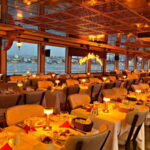
Lunch is included, and that matters more than it sounds. A guided highlights tour can turn into a high-pressure sprint if you’re hungry, and here the meal is part of the built-in timing.
You can also expect it to be chosen with practicality in mind. A highlight from guide feedback is that the lunch tends to feel fresh and authentic, not like you got pulled into a tourist factory.
If you’re planning your day around this tour, treat lunch as your recovery moment. After mosques, stone floors, and walking, you’ll appreciate sitting down before Topkapi and the final stretch.
Guides that actually help you understand what you’re seeing
This is one of those tours where the guide really shapes the experience. With Istanbul, it’s easy to stare at impressive things and still miss what you’re looking at. The guides on this route are described as professional and patient, and they explain complicated timelines in a way that feels clear.
Names that show up with strong praise include Emre and Galat, with feedback emphasizing clear English, thoughtful pacing, and willingness to help people with mobility challenges. One of the best signs of a good guide is simple: they don’t just talk. They adjust to what you want to see, and they help you make decisions in real time—like what to focus on inside a monument, or how to approach shopping in the bazaar.
If you’re the type who loves to ask questions, a small group and a confident guide make the difference.
Price and value: what $210.25 really covers
The price is $210.25 per person for an experience that runs about 5 hours on the schedule, even though the route is often described as a full highlights walking tour with lunch. Either way, you’re getting a structured morning/half-day of multiple top sights.
Here’s what you’re paying for that tends to be worth it:
- Hotel pickup and drop-off
- A local guide
- Air-conditioned vehicle transfers
- Lunch included
- Grand Bazaar admission included
What you should expect to pay extra for:
- Entrance tickets to museums (at least Hagia Sophia and Basilica Cistern are specifically marked as not included)
- Drinks are not included
In other words, you’re not paying for a private driver to take photos. You’re paying for someone to connect the dots across the city’s major eras, handle the flow between stops, and keep you moving at a human pace.
If Hagia Sophia, the Blue Mosque, Basilica Cistern, and Topkapi are all on your list, the guided format usually saves you time and stress—especially if it’s your first visit to Istanbul.
Who should book this Istanbul highlights walk?
This tour is a great fit if:
- You want a high-impact old-city itinerary in one morning/half-day
- You like history but want it explained in plain language
- You’d rather have Bazaar shopping support than wander and guess
- You’re comfortable with moderate walking
It may be less ideal if:
- You hate crowds and want maximum quiet time inside each monument
- You prefer fully self-paced sightseeing
- You’re on a tight budget for entrance tickets (since some are not included)
Also, if you have specific interests, it helps to tell the guide early. The best results come when you match your priorities to the pacing.
Should you book this tour?
If you want Istanbul’s classics—Hagia Sophia, the Blue Mosque, the Hippodrome, the Basilica Cistern, the Grand Bazaar, and Topkapi—with a guide who keeps it clear and manageable, this is an easy yes.
I’d book it now if you’re traveling with limited time and you’d like your day planned around the places that truly define the city. Just budget for museum entrances, pack a scarf if you need one, and wear shoes that can handle a solid walking day.
And if you’re choosing between doing it alone and going guided, the value here is simple: you get context at every stop, plus lunch and a small-group pace that makes the whole thing feel like a guided experience, not a checklist.
FAQ
How long is the Istanbul highlights tour?
The tour duration is listed as about 5 hours, and the route is described as a full highlights walking tour with lunch, so plan on a morning that feels like a longer sightseeing block.
Is hotel pickup and drop-off included?
Yes. The tour includes hotel pickup and drop-off. If your hotel is outside the free pickup area, an extra taxi can be arranged for an additional fee, or you can join from the starting point by your own way.
Are entrance tickets included for Hagia Sophia and other sites?
No for some museums. Hagia Sophia and Basilica Cistern list admission tickets as not included. Entrance tickets for museums are generally not included, while Blue Mosque and Hippodrome have free admission, and Grand Bazaar admission is included.
Do I need a scarf to visit the mosques?
Yes, a scarf is requested for ladies to visit mosques.
What group size is this tour?
It’s a small-group tour with a maximum of 15 travelers.
What language is the tour offered in?
The tour is offered in English, and you receive a mobile ticket.