REVIEW · KUSADASI
Private Ephesus Shore Excursion from Kusadasi with Ticket Option
Book on Viator →Operated by Moira Travel Agency · Bookable on Viator
Cruise days turn fast, and this tour is built for that pace. You’ll roll from Kuşadası Port to UNESCO-listed Ephesus, guided through the ruins and the big-name stops without wasting time in lines. I especially like the private feel, and I like that the “ticket option” can mean faster entry for key sites.
The best part is that you’re not just looking at stones. You get the story behind Amazons, Artemis legends, and Ayasuluk Hill, plus practical guidance on where to spend your limited time. One possible drawback: some departures include extra shopping stops, so if you hate the sales vibe, ask the guide to keep it quick and focused.
In This Review
- Key highlights worth showing up for
- Why This Private Ephesus Shore Excursion Fits Cruise Schedules
- Price and Value: What You Really Get for $12.60
- Meeting at Kuşadası Port Without Losing Time
- Ephesus Ancient City: How to Spend Two Productive Hours
- Temple of Artemis: A 30-Minute Lesson in Power and Legend
- Basilica of St. John: Justinian-Era Church on Ayasuluk Hill
- House of the Virgin Mary: Pilgrimage Meets Archaeological Clues
- Selçuk and Kuşadası Pigeon Island: Two Small Detours That Matter
- Private Pacing: What Guides Do Differently (Ali, Memo, Serdar, and Friends)
- What to Wear and Bring for Uneven Ruins
- Should You Book This Private Ephesus Shore Excursion?
- FAQ
- Is this tour private?
- Where do you meet for pickup?
- How long is the excursion?
- Does the tour include entrance fees?
- Is priority admission available?
- What sites are included during the visit?
- Does the tour end back at the cruise port?
- What should I bring for Ephesus?
- What’s the cancellation policy?
Key highlights worth showing up for
- Priority-style skip-the-line access when you choose the ticket option
- Ephesus with a guide so you know what you’re looking at (and why it matters)
- Stops planned around walking and shade, including Artemis, St. John, and Mary’s House
- Guides like Memo, Ali, and Serdar are known for pacing and smart timing
- Two towns/side sights such as Selçuk and a Kuşadası viewpoint on Pigeon Island
- Private tour format for your group, with port pickup and drop-off
Why This Private Ephesus Shore Excursion Fits Cruise Schedules
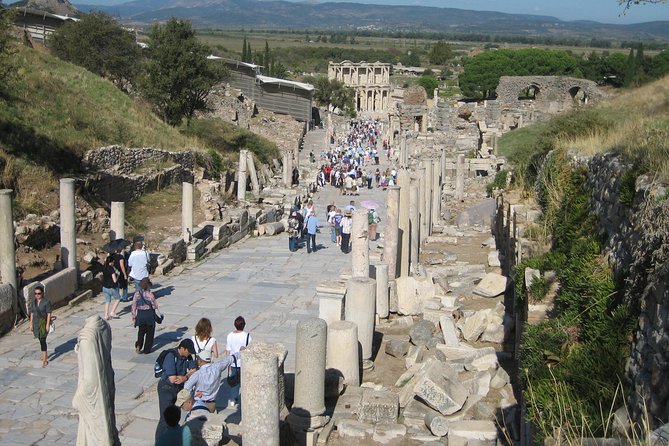
Ephesus is famous, but it’s also big—and cruise passengers do not have the luxury of wandering until they feel like it. This tour’s rhythm is designed for a half-day block (about 4 to 6 hours), so you can actually cover the main highlights without missing your ship.
I also like the “private” element here because it changes the mood. Your guide can set the tempo and keep you moving when you need to, which helps when the site is crowded.
A few more Kusadasi tours and experiences worth a look

Price and Value: What You Really Get for $12.60
At $12.60 per person, this is priced like a budget day trip. The value comes from what’s included: port pickup and drop-off, transportation by luxury vehicle, a professional licensed local guide, and parking fees.
Here’s the key decision: entrance fees. The tour does not include all site tickets by default. But if you select the ticket option, the operator arranges tickets in advance so you can skip long ticket lines at places like Ephesus ruins and the House of the Virgin Mary. For many cruise travelers, saving time at the gates is worth more than the entrance fee itself.
Meeting at Kuşadası Port Without Losing Time
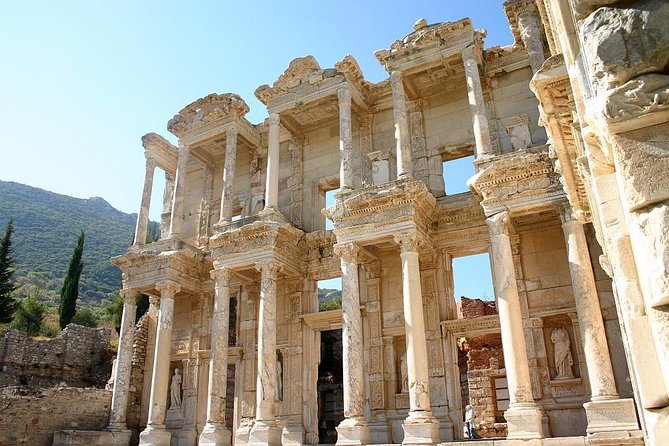
Your guide meets you at the Kuşadası Cruise Port with a sign showing your name. You’re encouraged to connect with the team soon after arriving—within about 30 to 45 minutes—to avoid the biggest crowd surges, school buses, and the hottest waiting time.
This matters because Ephesus timing is everything. A late start doesn’t just cost minutes—it can compress your on-site experience and limit photo breaks, shade stops, and restroom timing.
Ephesus Ancient City: How to Spend Two Productive Hours
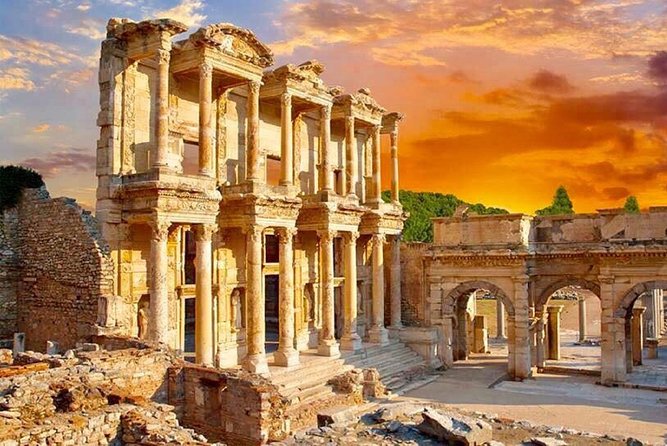
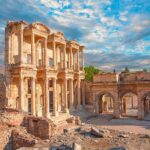
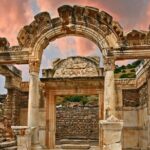
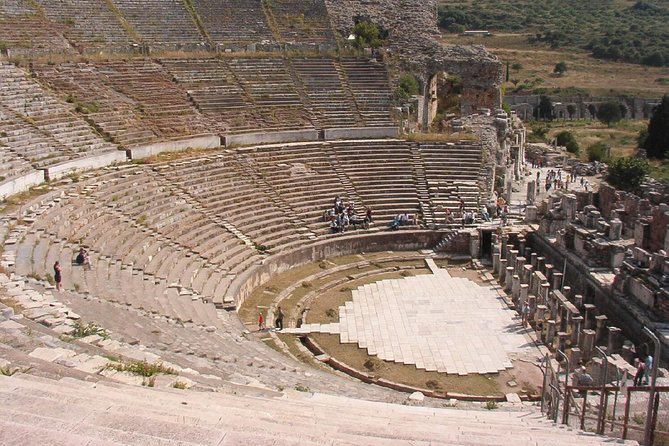
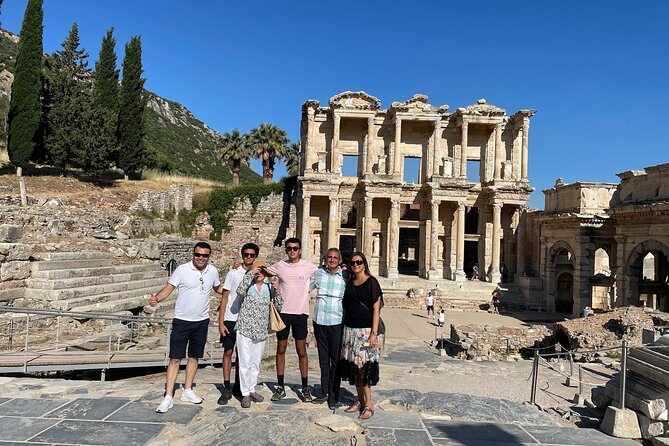
You’ll spend about 2 hours in Ephesus, and the guide’s job is to help you read the site fast. Even if you’ve seen photos, Ephesus is confusing unless someone points out the logic: this wasn’t one simple city with one layout. It was a series of settlements that shifted over time.
What I like in the way this tour frames Ephesus is the “why it moved” story. You learn that the city’s early settlement was on Ayasuluk Hill, then shifted north of Mount Panayır, and later into the valley area between Mount Panayır and Mount Bülbül (associated with Mount Coressus). Eventually, due to harbour silting and repeated raids, the city changed back toward Ayasuluk Hill—so the ruins you see reflect centuries of relocation, not a straight-line timeline.
You also get the fun names and myths that make the archaeology stick. Ephesus is linked to the name Apassas (honey bee) in Hittite records. Legends connect the city’s naming with Amazons, with later Ionian colonists arriving much later. In a place like this, a guide helps you move from fact to understanding quickly.
Practical note: plan for uneven ground. One guide-led day is short; if you’re unprepared for slippery marble and steep steps, you’ll spend energy watching your footing instead of seeing details.
Temple of Artemis: A 30-Minute Lesson in Power and Legend
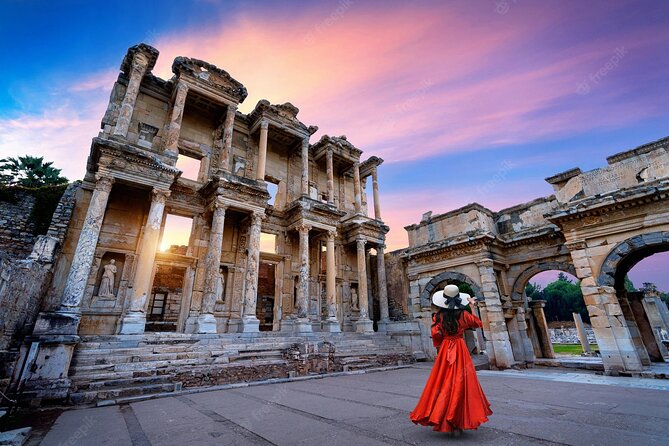
The Temple of Artemis stop is short—about 30 minutes—but it’s not just a quick photo stop. You’ll hear the story of Artemis as a Greek goddess associated with hunt and moon, but venerated in Ephesus in an older form linked with fertility symbolism.
What grabs attention is the description of the original cult image: a wooden figure with multiple breast-like protuberances, and a body wrapped in a pillar-like structure where her feet protrude. Even the coins tell a visual story: the goddess appears with a mural crown like city walls, and mythic serpent imagery shows up in the iconography.
You’ll also get the “fame at any cost” legend. In 356 BC, the temple burned in a famous arson story tied to Herostratus—the origin of the idea of herostratic fame. Later, Alexander the Great reportedly offered to rebuild the temple, but the Ephesians refused the idea of one god building a temple to another.
Good to know: this stop lists admission as free and is timed so you can keep moving to the next major site.
You can also read our reviews of more private tours in Kusadasi

Basilica of St. John: Justinian-Era Church on Ayasuluk Hill
Next is the Basilica of St. John, about 1 hour. The basilica dates to the 6th century, built under Emperor Justinian, and it stands over the believed burial site of St. John—linked in tradition to the apostle and evangelist associated with the Fourth Gospel and Revelation.
What makes this stop interesting is how tradition layers into the physical place. The site connects to long-running identifications that evolved over time: early accounts tie a figure known as John in Ephesus to later identification with John the Evangelist. You may also hear the legend that John wrote his gospel in Ephesus, then died there—and later the story that he didn’t die at all but instead slept, with dust moving like breath above the grave.
If you’re the kind of traveler who enjoys places with meaning beyond the stones, this church stop offers that. If your brain prefers dates only, you’ll still get a clear historic anchor.
House of the Virgin Mary: Pilgrimage Meets Archaeological Clues
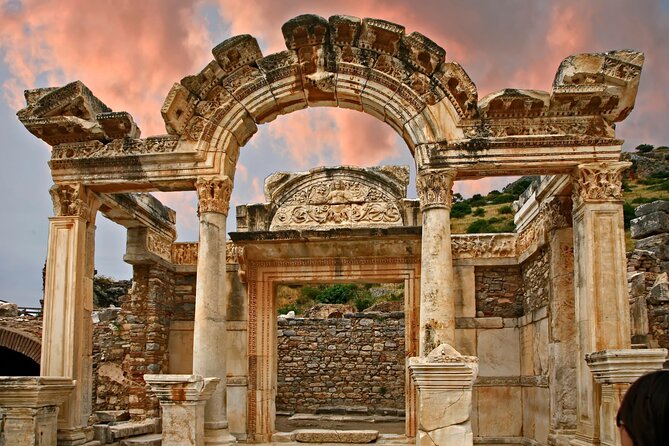
The House of the Virgin Mary is another 1 hour stop, and this one tends to feel personal. The tour explains that Mary visited and lived in Ephesus for a time. The rest of the story hinges on visions recorded by Anne Catherine Emmerich, a German nun who described the house after not traveling there.
According to the account used here, the house was found in 1891 by Paul, Superior of the Lazarists from Izmir, based on Emmerich’s descriptions. Archaeological evidence is presented too: the house is from the 6th century AD, but foundations trace back to the 1st century, which adds a layer of credibility beyond pure legend.
The religious significance is also part of the narrative. The shrine was declared officially in 1896, and popes later visited: Paul VI (1967), John Paul II (1979), and Benedict XVI (2006). If you like history plus atmosphere, you’ll probably enjoy this stop more than you expect from a “tour day” schedule.
From a logistics standpoint, tickets are not included unless you choose the ticket option. If your ship time is tight, pre-arranged tickets can save you from long entry waits.
Selçuk and Kuşadası Pigeon Island: Two Small Detours That Matter
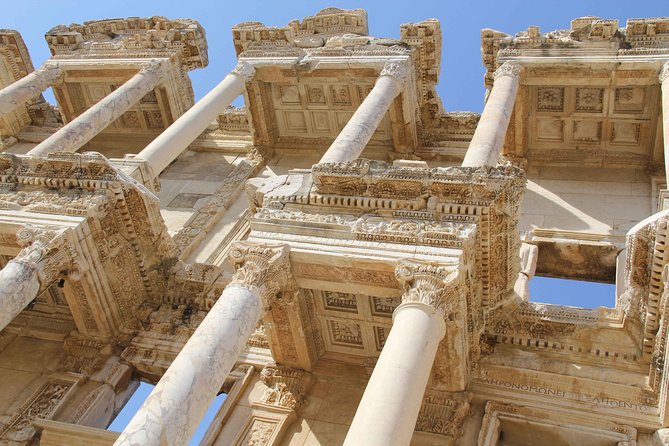
Not every highlight is a ruin. This tour includes time that helps you understand the area’s everyday texture.
Selçuk is described as a laid-back base camp next to the ancient city. You can walk the compact center and see remains like a Roman aqueduct and the ruins of a Byzantine citadel. You’re not there for big nightlife; you’re there to feel the working small-town atmosphere around the archaeological big ticket.
Then there’s Kuşadası’s Byzantine fortress on Güvercin Adası (Pigeon Island). The fortress sits on a causeway-connected island that’s now part of a well-kept public park. There’s a path around the island with information boards and a small lighthouse for views over Kuşadası.
Inside the fortress, you’ll find an unusual detail: a skeleton of a 14.5-meter fin whale, plus models of sailing boats. It’s the kind of stop that breaks up the mental load of archaeology—especially in heat.
Private Pacing: What Guides Do Differently (Ali, Memo, Serdar, and Friends)
The reviews-style feedback you’ll want to care about is simple: the best days happen when the guide makes time management feel effortless. Some guides—names like Memo, Ali, Serdar, Ozz, Furkam, and Murat show up—are credited with good English and with planning when to enter crowded sections.
One practical advantage of a private tour: you can get better photo opportunities because you’re not stuck in a mass herd at fixed times. You can also ask your guide to adjust priorities, like spending more minutes on a specific area of Ephesus if that’s what you care about most.
A smaller heads-up: if you’re sensitive to sales pressure, keep an eye out. A few departures mention gift-shop or lunch add-ons that can feel unnecessary. If you want a stricter plan, tell the guide you’re here for ruins and views—not storefront time.
What to Wear and Bring for Uneven Ruins
Ephesus is not a museum floor. The terrain is uneven and can be slippery, especially on marble stones. If you’ve ever done Pompeii in extreme heat, you already know the feeling: open-air archaeology with little shelter.
Bring:
- Comfortable shoes with grip
- Water (it’s a large site with limited places to buy drinks once you’re inside)
- Sun protection (hat/sunglasses)
- A small snack if you’re the type who gets hangry before the next stop
If you burn easily, plan for that. The itinerary can move quickly from stop to stop, so you want to be comfortable while the guide explains what you’re seeing.
Should You Book This Private Ephesus Shore Excursion?
Book it if you want:
- A guided, cruise-friendly Ephesus day without turning it into a frantic dash
- A plan that covers Artemis, St. John, and the House of the Virgin Mary in about half a day
- The option to skip long lines via advance ticket handling (especially for Ephesus and Mary’s House)
Skip or rethink it if:
- You hate shopping stops and want a strictly ruins-only schedule
- Your expectations are for lots of free time in each location—this tour is built for focused coverage, not wandering at your own speed
If you’re visiting Kusadası for the first time and Ephesus is the big reason you’re there, this is a strong way to make the day count. Just go in with the right footwear, ask your guide to keep shopping tight, and choose the ticket option if your ship schedule is strict.
FAQ
Is this tour private?
Yes. It’s listed as a private tour/activity, meaning only your group participates.
Where do you meet for pickup?
For cruise passengers, the meeting point is at the Kusadası Cruise Port. The licensed guide meets you with a sign that has your name.
How long is the excursion?
The duration is about 4 to 6 hours.
Does the tour include entrance fees?
Entrance fees are not included by default. If you choose the ticket option, tickets are arranged in advance to help you skip long lines for Ephesus ruins and the House of Mary.
Is priority admission available?
Priority-style skip-the-line entry is mentioned if you select the included ticket option.
What sites are included during the visit?
The day includes Ephesus Ancient City, the Temple of Artemis area, the Basilica of St. John, and the House of the Virgin Mary. It also includes additional stops such as Selçuk and a Kuşadası viewpoint/fortress area on Pigeon Island.
Does the tour end back at the cruise port?
Yes. The tour returns you to the Kusadası Cruise Port according to your onboard time.
What should I bring for Ephesus?
Wear shoes for uneven ground and slippery marble, and bring plenty of water since there’s limited shelter and limited places to buy drinks.
What’s the cancellation policy?
Free cancellation is offered. You can cancel up to 24 hours in advance for a full refund.