REVIEW · ISTANBUL
Hagia Sophia & Blue Mosque + Optional Basilica Cistern
Book on GetYourGuide →Operated by Cosmic Tickets & Audios · Bookable on GetYourGuide
Two icons, one smart guide, spot details fast. This tour is built for first-timers who want Hagia Sophia and the Blue Mosque without getting lost in crowds, and you can add the atmospheric Basilica Cistern for underground photo magic.
I like that the visit runs with a licensed English-speaking guide and personal headsets, so you’re not stuck trying to decipher history from a noisy scrum. You’ll also appreciate the way the guide points out architecture and religious details you’d likely miss on your own.
One consideration: security lines and ongoing restoration at Hagia Sophia can affect timing and how much of the main space you get to take in.
In This Review
- Key things I’d plan around
- Sultan Ahmed Mosque: your first Istanbul “wow,” with direction
- Hagia Sophia during restoration: expect limits, still get the story
- Sultanahmet sightseeing stop: a useful reset in the right neighborhood
- Basilica Cistern (optional): the underground stop that changes the pace
- Price and value: what you’re really paying for
- Timing reality: security checks and crowd noise are part of the deal
- Who should book this tour, and who should rethink it
- Should you book it?
- FAQ
- How long is the Hagia Sophia and Blue Mosque tour?
- Is the Basilica Cistern included?
- Where do I meet the guide?
- What dress code should I follow?
- Do you skip the ticket line and do I get help hearing the guide?
- Is the tour wheelchair or stroller accessible?
Key things I’d plan around
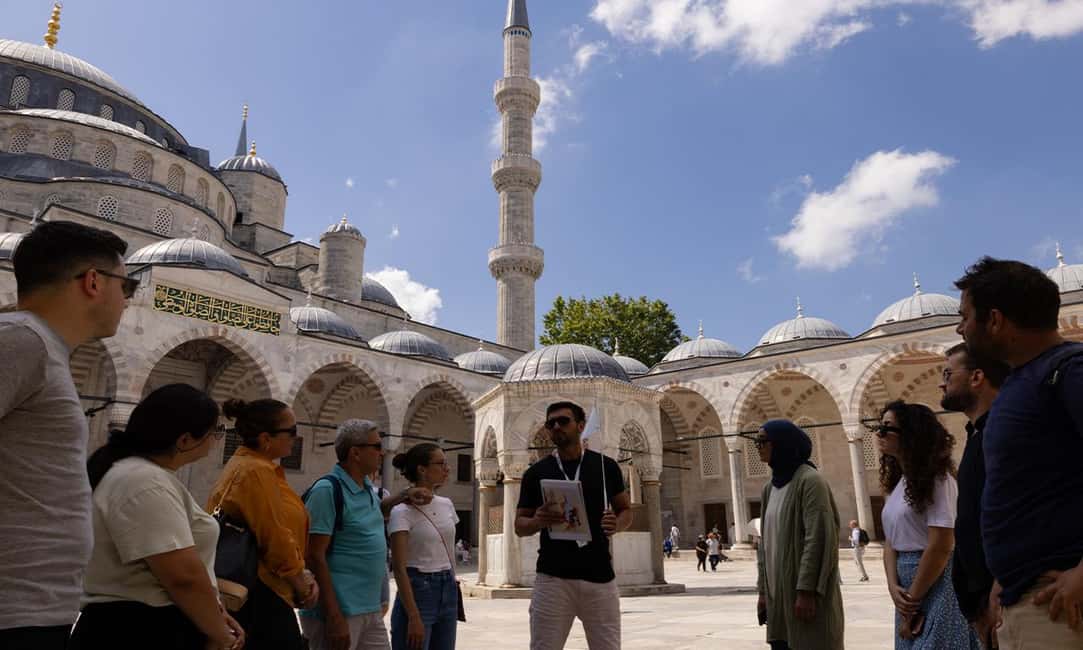
- Skip-the-line entry + headsets meaning you spend more time looking and less time hunting
- Blue Mosque guided tour (about 1 hour) designed to help you read the domes, artwork, and minarets
- Hagia Sophia guided tour (about 1 hour) focused on art and layers of empire and faith
- Sultanahmet sightseeing stop for a breather and smarter photo placement in the historic core
- Optional Basilica Cistern (about 30 minutes) with the famous Medusa heads and a column-filled underground maze
- Guides like Haluk/Hal and Michael show up in the feedback with patient explanations and helpful photo timing
Sultan Ahmed Mosque: your first Istanbul “wow,” with direction
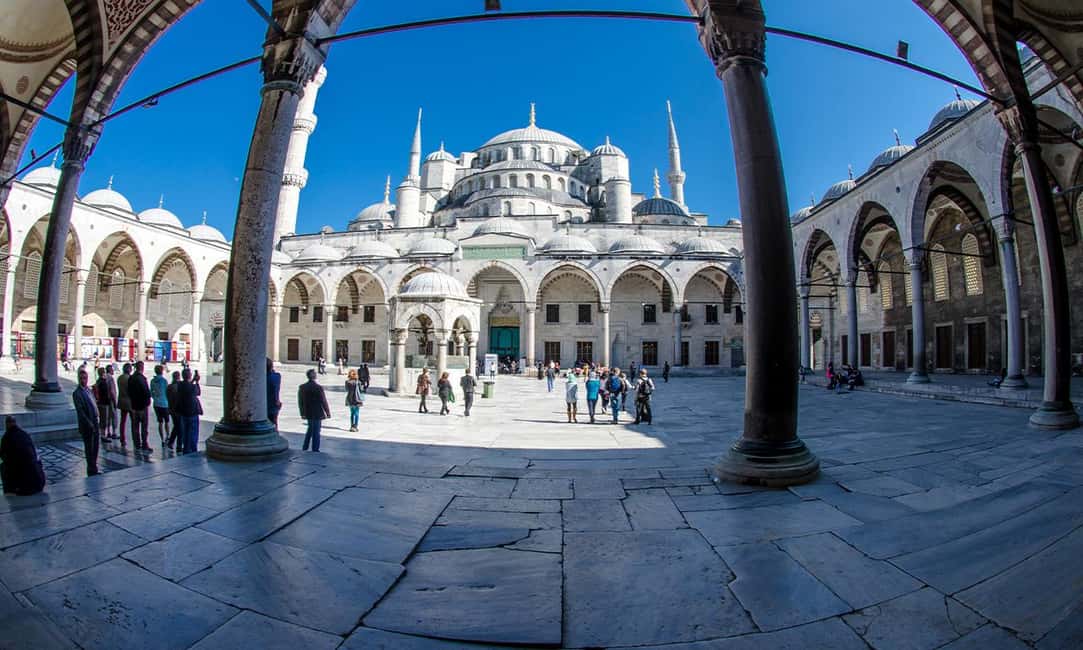
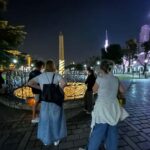
Your day starts near the Hippodrome at Dsign Cafe and the Turkish and Islamic Arts Museum, right beside the Egyptian Obelisk. Look for your guide holding a white MegaPass flag. It’s a great setup because you begin right in the Sultanahmet zone, so you waste less time crossing Istanbul’s busiest central streets.
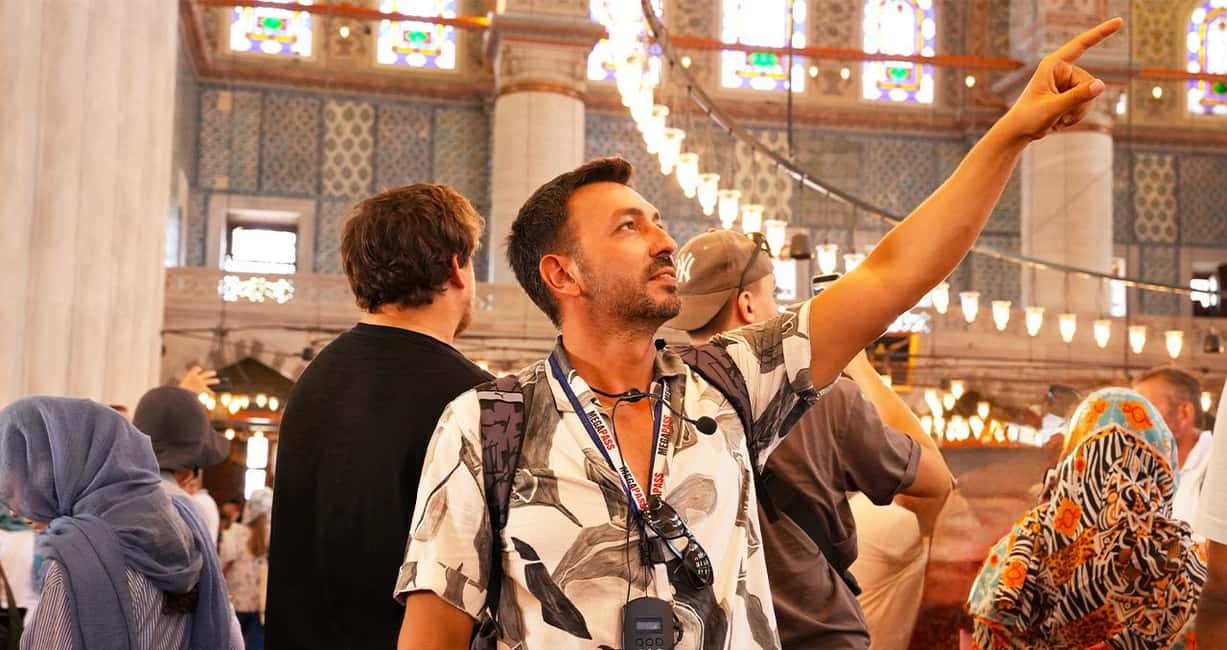
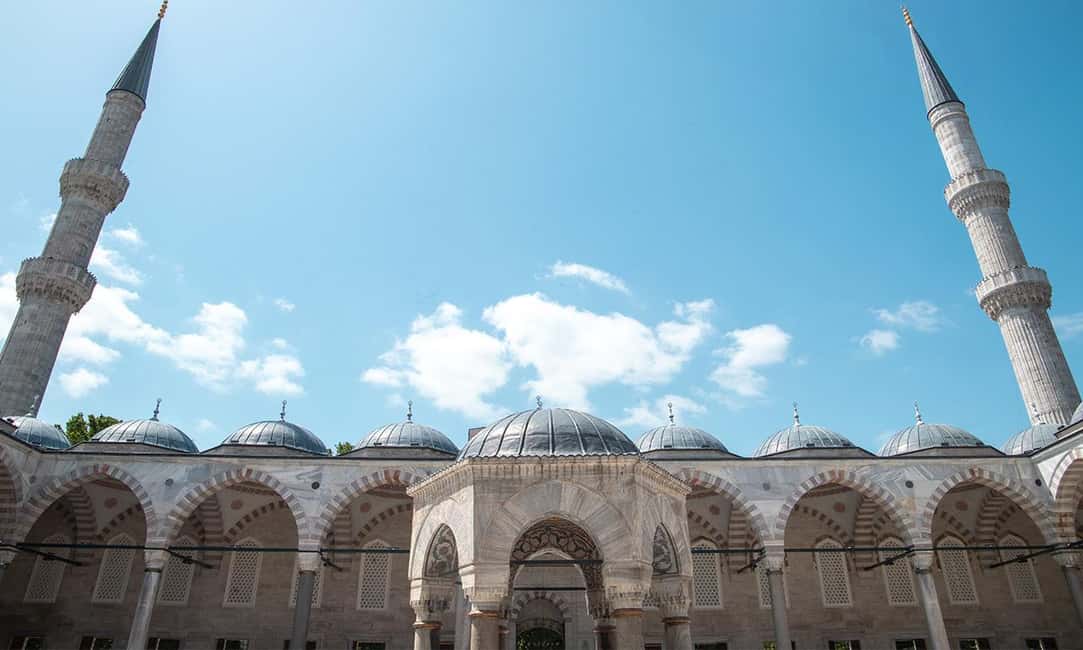
From there, you’ll visit Sultan Ahmed Mosque (the Blue Mosque) with a guided tour lasting about an hour. The value here is not just getting inside. It’s having someone help you notice what matters: the way the building is organized, how the interior space feels, and what the mosque’s decorative language is trying to say. This is the kind of place where you can easily feel overwhelmed if you’re walking without a plan.
Practical tip: plan for the security check before entry. The tour notes that all three sites include airport-style screening, and in busy periods it can take up to 45 minutes. The guide typically keeps the waiting time entertaining with stories and local context, which makes the delay feel less painful.
Also, dress matters. For entry into both the Blue Mosque and Hagia Sophia, women need to cover hair, shoulders, and knees, and men need to cover shoulders and knees. Scarves (about €1) and body covers (about €3) are available at the entrances if you forget.
You can also read our reviews of more tours and experiences in Istanbul.

Hagia Sophia during restoration: expect limits, still get the story
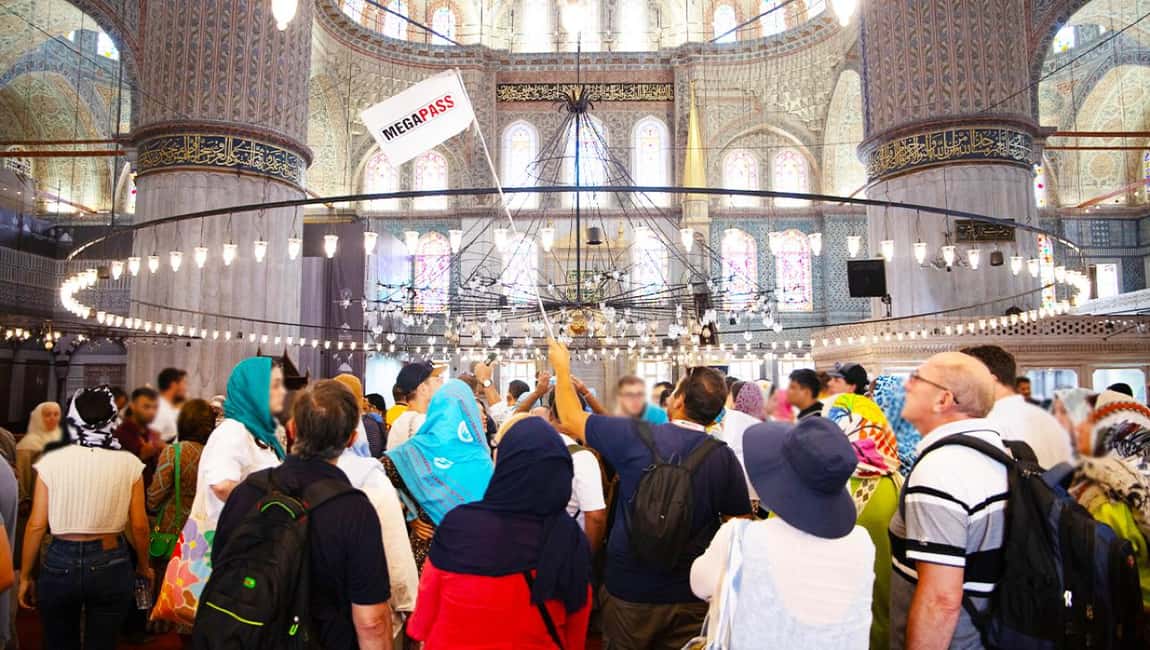
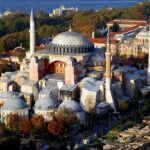
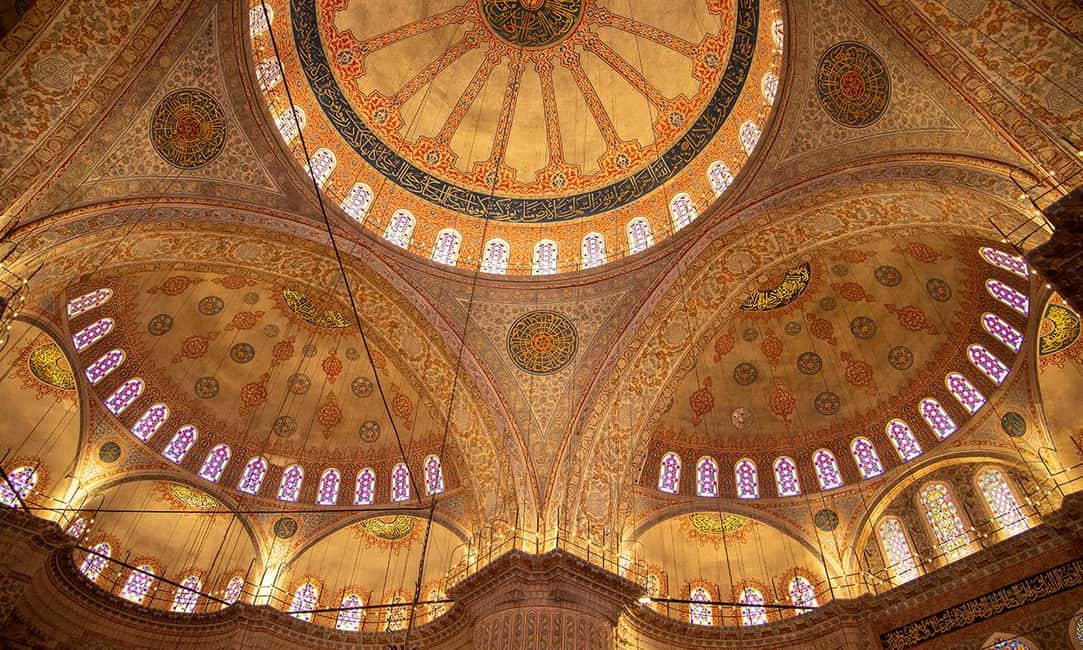
Hagia Sophia is the reason most people come to Sultanahmet. With a guide, you’ll get a structured, paced visit of about one hour, and that time is aimed at helping you understand what you’re seeing: mosaics, domes, and the building’s long life through different eras of power and devotion.
Now the reality check. The tour information says restoration work is ongoing inside and outside Hagia Sophia. One review experience also suggested access limitations can push ordinary visitors to a second-floor viewing area, depending on what’s closed. That doesn’t ruin the visit, but it can change your sense of scale. If you’re imagining a full, unobstructed walk-through of every glorious corner, go in knowing the site is actively being maintained and the viewing experience may not be identical from one day to the next.
Still, this is where guided storytelling pays off. You’re not only looking at famous surfaces; you’re learning how they function—why certain features were preserved, what each layer signals, and why the building holds emotional weight for so many different visitors. And because the tour keeps you moving with a set timeline, you’ll be less likely to miss key viewpoints while you’re trying to photograph over people’s shoulders.
Headsets help, but crowds can make audio tricky in enclosed spaces. If you’ve got sensitive hearing, don’t assume the sound will be perfect. The best move is to position yourself where you can see the guide when possible, not just where you can get a camera angle.
Sultanahmet sightseeing stop: a useful reset in the right neighborhood
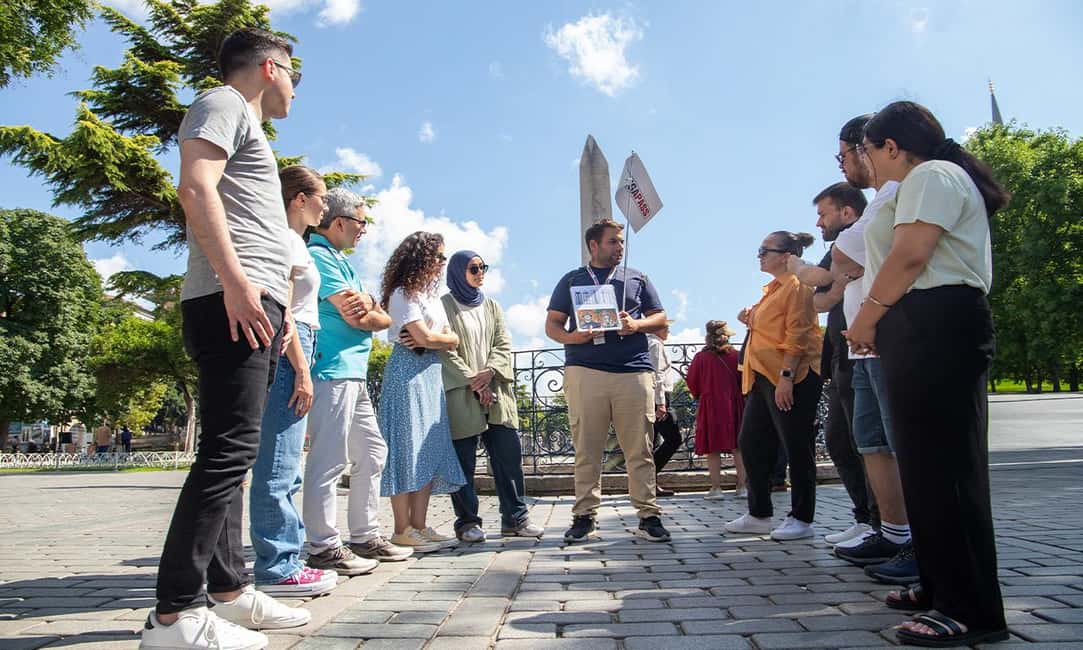
Between the big-ticket monuments, you’ll get a guided sightseeing break in the Sultanahmet district for about 30 minutes. This part matters because it’s not just filler. It helps you connect the dots: where things sit relative to each other, what streets and landmarks mean in the city’s layout, and how to orient yourself for the photos and free time later.
For many people, the first half of the tour is emotional and visually intense. This stop gives your brain a chance to organize what you just learned, and it’s also your chance to spot photo angles you’ll want during your own wandering time.
The best approach during this block is to stay curious and a little flexible. If your guide suggests a viewpoint or a direction, take it. You’ll often get better compositions by following their timing rather than trying to reinvent it while you’re already tired.
Basilica Cistern (optional): the underground stop that changes the pace
If you choose the optional Basilica Cistern, you’re adding a very different mood to the day. The tour describes it as an underground marvel with ancient columns and the famed Medusa heads, and the guided visit lasts about 30 minutes.
Why it’s worth paying attention to: this is Istanbul’s kind of contrast. After two massive, daylight powerhouses of architecture, you go underground into cool, echoing space. The columns create a repeating rhythm that’s hard to appreciate when you’re rushing, which is exactly why a guide helps. You’ll also see details—especially the Medusa heads—that are easy to miss if you treat it like a quick photo stop.
This section is also a timing tradeoff. You’re spending an extra half hour underground, and the tour overall is advertised as 2–3 hours. One review noted the schedule can stretch toward four hours, which often happens with security and crowd flow. If your day is tightly packed with another booking, think carefully before adding the cistern.
Price and value: what you’re really paying for
The price is listed as $54 per person for the combined structure of guided access and time-saving. At this level, you’re mostly paying for three things:
1) a licensed English-speaking guide with storytelling that organizes what you see
2) skip-the-line entry tickets that reduce the most painful part of monument visits
3) personal headsets so you can actually hear explanations in busy rooms
It’s also worth noting that entry inside the Blue Mosque is free. That means your money isn’t simply buying admission. It’s buying the guidance, the ticket handling, and the smoother pacing—especially helpful in Sultanahmet where crowds can make independent visits feel like a game of dodge and wait.
Is it good value? For first-timers with limited time, yes. You’re stacking two of the most famous sites plus an optional third, with a guide managing your order and your attention. If you’re already comfortable self-guiding and you don’t care about learning the religious and architectural meaning, you could potentially spend less. But if you want the most sense per hour, this format is built for that.






Timing reality: security checks and crowd noise are part of the deal
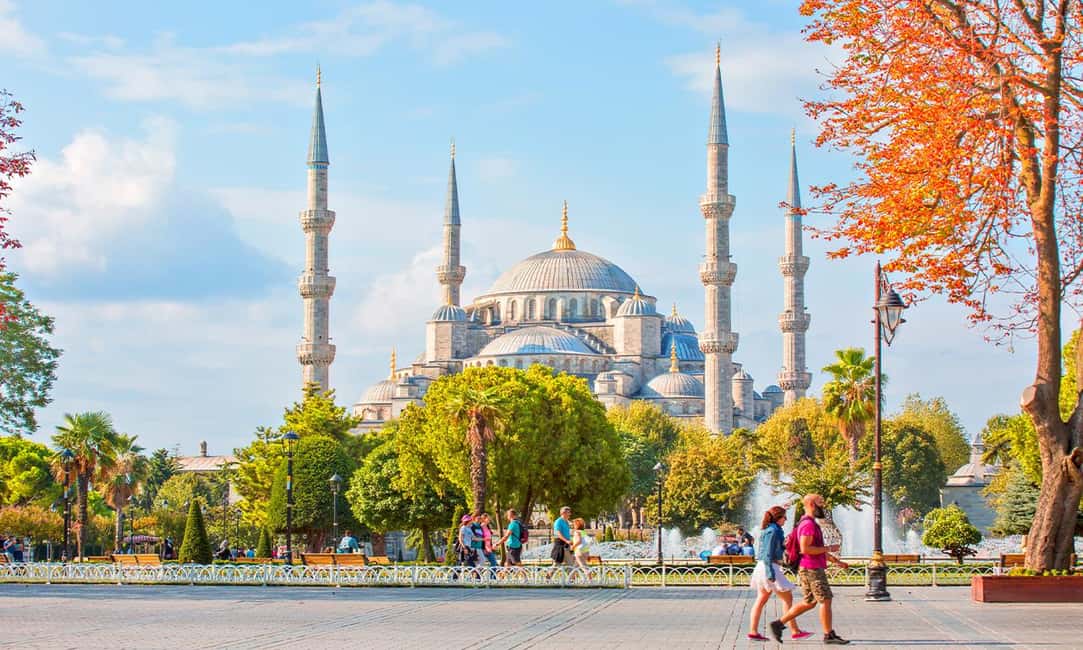
This tour is transparent about airport-style security at all three attractions. It can take up to 45 minutes in busy periods. That’s not a small detail. In Sultanahmet, the difference between a smooth visit and a frustrating one is often how quickly you pass screening.
The guide is supposed to keep you entertained while you wait, which helps. Still, this is where “2–3 hours” can drift. One review described needing to leave earlier than planned because the tour ran longer than advertised. That kind of slip can happen if security is slow, if the sites are more crowded than expected, or if restoration closures affect movement through rooms.
Crowd noise is another factor. Even with earpieces, it can be hard to hear in densely packed areas. If good audio is important to you, position yourself so you can see the guide speaking and try not to get stuck at the edges where sound gets swallowed.
Who should book this tour, and who should rethink it
This tour makes the most sense for people who want structured, story-rich visits to Hagia Sophia and the Blue Mosque without spending hours planning what to look at. It’s also a good fit if your group includes different interests—architecture, religion, photo spots—because the guide can shift focus site to site.
It may not be ideal if you have mobility limits. The tour info states no wheelchair and stroller accessibility, and it’s not suitable for people with mobility impairments. If that applies to you, plan alternatives that match your needs and confirm access routes before committing.
If you’re extremely sensitive to crowds, keep your expectations realistic. The most famous monuments in Istanbul attract constant queues. The skip-the-line helps, but it doesn’t erase the fact you’ll be sharing space with lots of people.
Should you book it?
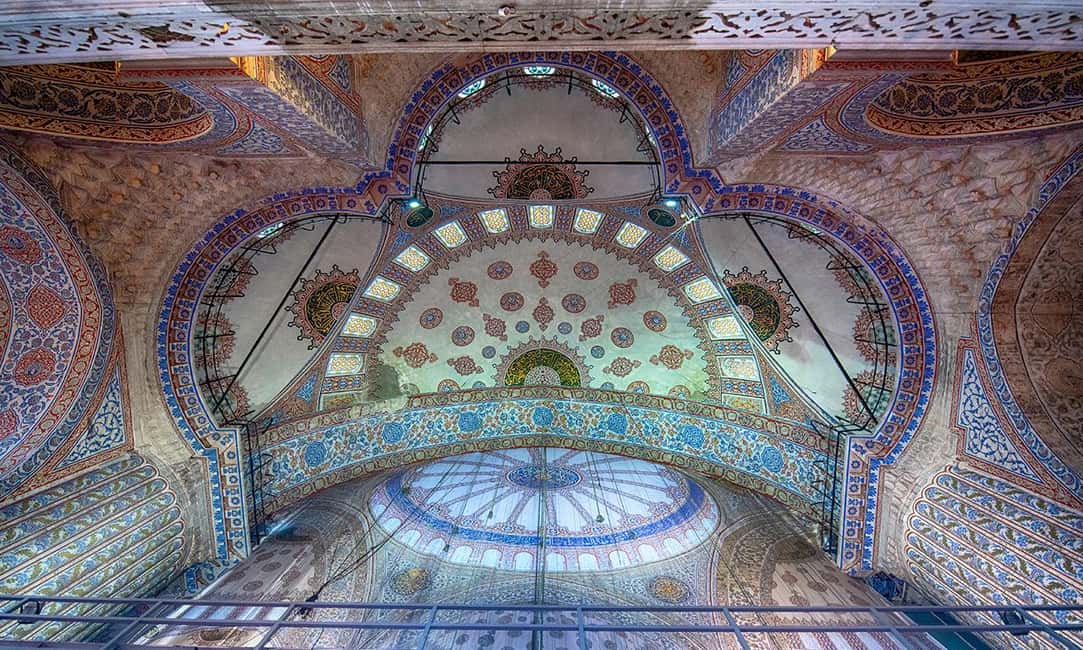
Yes, if you want the fast-track cultural payoff of Hagia Sophia + Blue Mosque with a guide who focuses on what you should notice, and you like the idea of adding the Basilica Cistern for a tonal change underground. It’s a strong choice for first-timers, for short stays, and for anyone who appreciates explanations rather than just sightseeing.
I’d think twice if you have strict timing for the rest of your day, because security and crowd flow can stretch the schedule. I’d also plan for the possibility that Hagia Sophia restoration may affect access and your sense of grandeur. If those two things worry you, consider whether you want a more flexible pace or a different type of visit.
FAQ
How long is the Hagia Sophia and Blue Mosque tour?
The total duration is listed as 2–3 hours. If you select the Basilica Cistern, it adds an additional 30-minute guided visit.
Is the Basilica Cistern included?
It’s optional. You’ll get a 30-minute guided Basilica Cistern tour only if you choose that upgrade.
Where do I meet the guide?
Meet your guide in front of Dsign Cafe and the Turkish and Islamic Arts Museum on the Hippodrome, next to the Egyptian Obelisk. Look for the guide holding a white MegaPass flag.
What dress code should I follow?
For the Blue Mosque and Hagia Sophia, women must cover hair, shoulders, and knees. Men must cover shoulders and knees. Scarves and body covers are available at the entrance if needed.
Do you skip the ticket line and do I get help hearing the guide?
Yes. The tour includes skip-the-line entry tickets and provides personal headsets so you can hear the licensed English-speaking guide more clearly.
Is the tour wheelchair or stroller accessible?
No. The tour is not wheelchair or stroller accessible, and it’s not suitable for people with mobility impairments.