REVIEW · IZMIR
From Izmir: Private Day Trip to Acropolis of Pergamon
Book on GetYourGuide →Operated by Apasas Travel Turkey · Bookable on GetYourGuide
Pergamon rewards the detour. This private day trip takes you to one of Turkey’s most impressive archaeology sites, set high above the plains, with stops that connect Greek kingdoms, Roman rule, and even medical history. You also get the convenience of a private setup, so you spend more time looking and less time figuring things out.
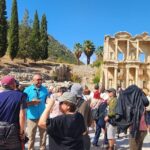
I like two things a lot: a live English guide who can explain what you’re seeing in plain terms, and a private vehicle that keeps the day comfortable. In guide notes from past bookings, names like Eyüp and Vedat come up, and the common thread is clear walking pace, patient answers, and smart stops for photos.
One drawback to plan for is weather. The ruins are outdoors, and if it rains hard, visibility can drop and you’ll have a tougher time reading the details on stone and steep slopes.
In This Review
- Key highlights that make this day trip worth it
- Pergamon’s steep hilltop story (and why your guide matters)
- Getting to Pergamon without turning the day into a logistics project
- Inside the Pergamon Acropolis: where the city shows its power
- What you might spot as you walk
- The Zeus Altar and the reality check of what got moved
- Library of Pergamon and the parchment origin story
- The theatre and temples: reading the city from its public spaces
- Asclepion: Galen, medicine, and a different kind of site
- How a private guide turns hours into meaning
- Price and timing: what $420 per group actually buys you
- What to bring for an 8-hour ruins day
- Who this private Pergamon day trip fits best
- Should you book this Pergamon private day trip?
- FAQ
- What sites are included on the day trip?
- How long is the private tour?
- Is lunch included?
- Are entrance fees included?
- Do we have an English-speaking guide?
- Is this a private group?
- Where can the tour start from?
- Is ticket-line time saved?
- Are parking fees covered?
- Can I cancel for a full refund close to my trip?
Key highlights that make this day trip worth it
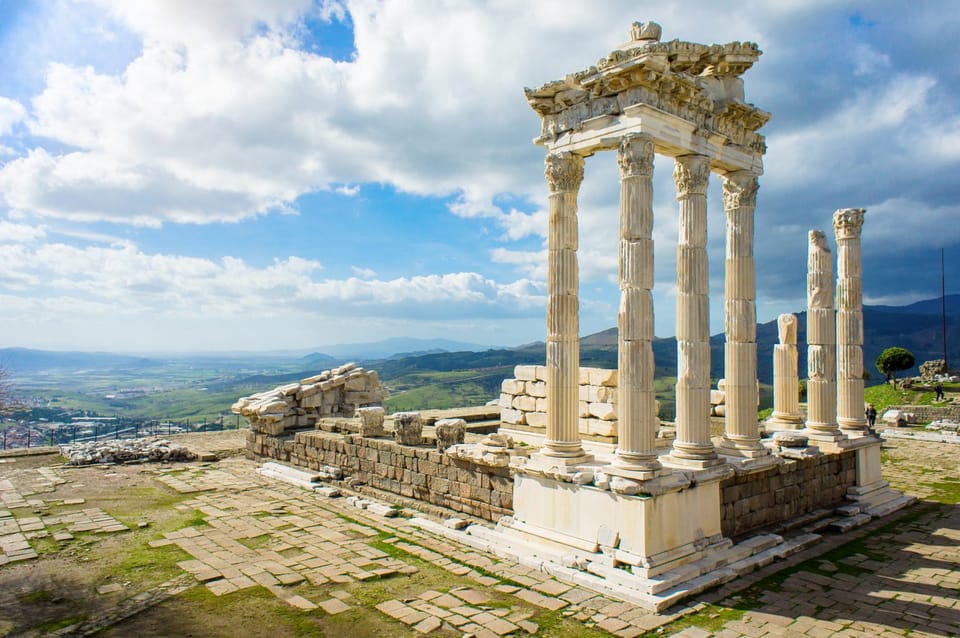
- Pergamon Acropolis viewpoints: You’ll get the big-hilltop perspective that makes the city feel strategic, not random.
- Library of Pergamon + parchment origin story: You’ll hear how papyrus politics helped create a new writing material.
- Altar of Zeus foundations: You see what’s left after the famous altar was moved to Berlin, with the scale still obvious on site.
- Asclepion medical center: You’ll connect the ruins to the study of Galen and the ancient healing tradition.
- Skip-the-line convenience: You’re not stuck waiting while your day gets colder or wetter.
Pergamon’s steep hilltop story (and why your guide matters)
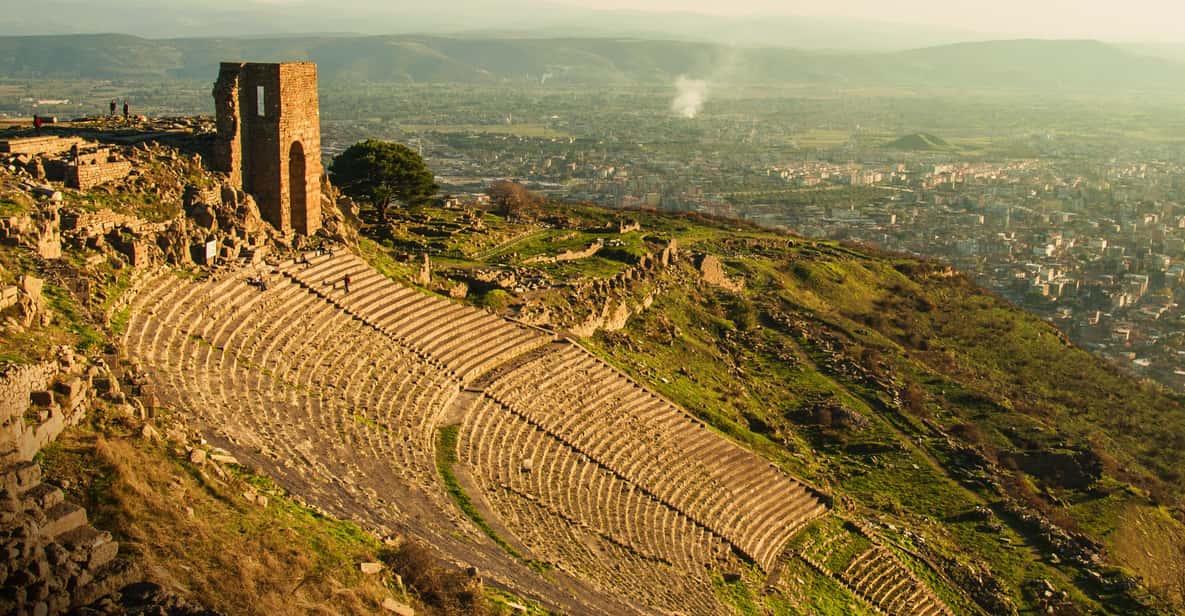
Pergamon sits about 1,000 feet above the plains where rivers Cetius and Selinus meet to form the Caicus River. That elevation is not just scenic. It explains why so much of the city’s power shows up as architecture clinging to a hillside—temples, terraces, and major public spaces built to dominate the view.
The city’s timeline is also a gift for a guided visit. Artifacts found at the site stretch back to the Hittite era, then you see early Greek settlements, later Persian domination, and a big rise during the Hellenistic period. Your guide’s job is to stitch that timeline to what you’ll actually see today: Attalid-era building projects, the famous library, major civic spaces, and later Roman influences.
The Attalids are a key reason Pergamon feels so “complete.” This is when many of the structures you’ll notice were undertaken, and it’s also when stories like the Charta Pergamenta (early sheepskin parchment) fit naturally into the site.
You can also read our reviews of more private tours in Izmir

Getting to Pergamon without turning the day into a logistics project
This trip runs from Izmir, Selcuk, or Kusadasi, with a private vehicle and an English-speaking guide. That matters because Pergamon is far enough that a rushed, public-bus plan can turn into stress. With private transport, you can keep a steady pace and actually enjoy the drive-time scenery rather than treating it like dead time.
In practical terms, I love that this format keeps your day smoother:
- Pickup and drop-off are handled for your group size (up to 4).
- You can move as a unit, instead of waiting for a slower traveler to catch up.
- Parking is included, which avoids the usual “where do we pay” confusion at the edge of big archaeology zones.
If you’re doing this as a follow-up to Ephesus, this is a nice counterpoint. Ephesus can feel crowded and busy; Pergamon, while famous, often feels more like you’re climbing into a specific story—Greek kingdoms, then Roman adaptation—rather than a single continuous tourist circuit.
Inside the Pergamon Acropolis: where the city shows its power
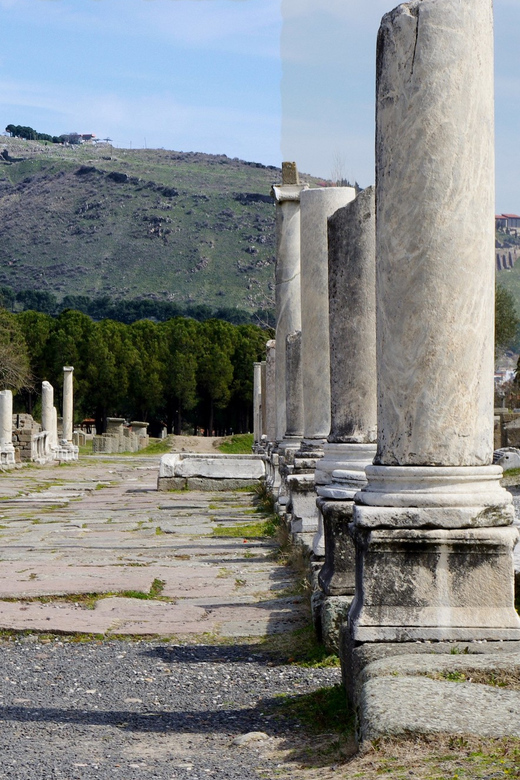
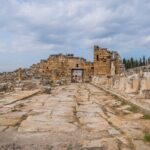
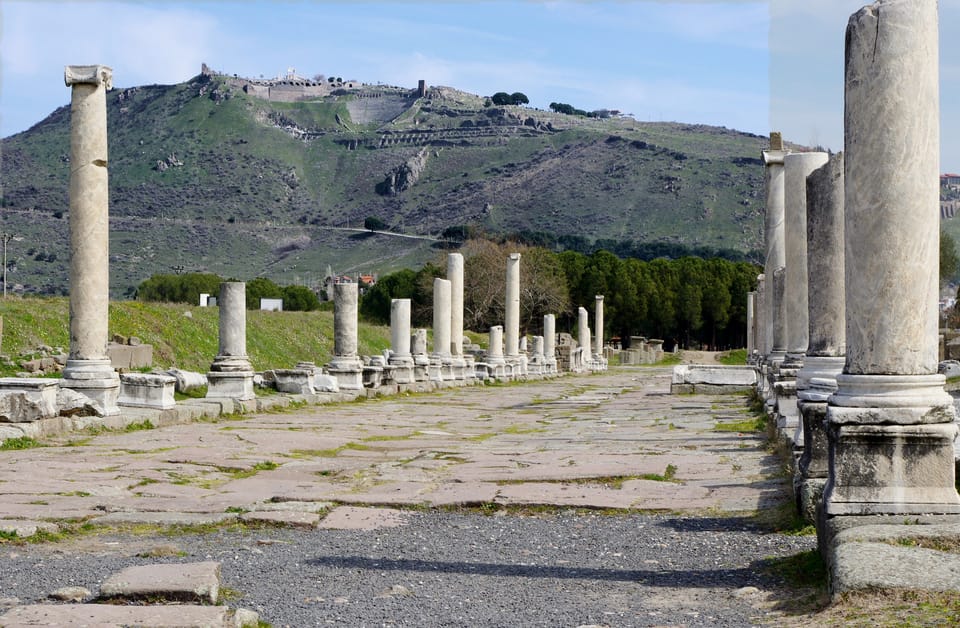
The core of your visit is the Acropolis of Pergamon, built on that steep hill. When you’re standing there, it’s easier to understand the city’s ambition. Pergamon wasn’t just a place people lived—it was a kingdom designed to impress.
Here’s what makes the Acropolis stop so valuable:
- You can see how the city’s layout supports movement up and down the slope.
- You’ll get context for how rulers used major structures as political statements.
- You’ll learn the difference between the early periods and the Hellenistic growth phase, which is when so many of the surviving remains date from.
Your guide should connect those dots with the historical facts attached to the stone. Pergamon’s Kingdom was founded in the 3rd century BC by Philetairos, and it faced repeated skirmishes with invading Gauls. Later, under Roman allegiance, Pergamon fought the Seleucids and won. That political roller coaster helps explain why the city invests so heavily in public monuments—because stability is always fragile.
What you might spot as you walk
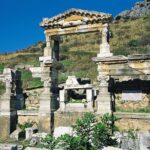
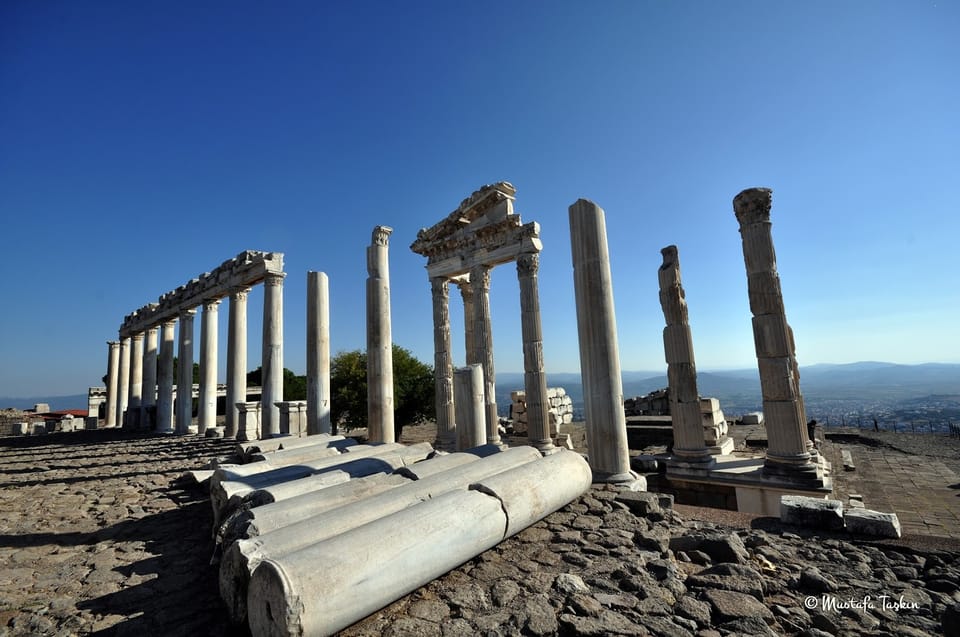
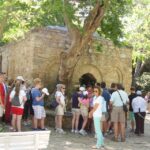
At Pergamon, you’ll have time around multiple major structures, including the incredible theatre set into the hillside, the Temple of Trajan, baths, and areas around the acropolis complex. Even when you only see portions, a good guide can point out where the “shape” of the building still tells you how it functioned in daily life.
The Zeus Altar and the reality check of what got moved
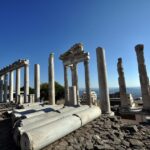
One of the most famous sights here is the Altar of Zeus—but here’s the useful expectation to set up front: the impressive altar itself was removed to the Pergamon Museum in Berlin. On site, you’ll see foundations and the scale as it exists today, often shaded by trees.
That can sound like a downgrade, but it’s actually a smart way to visit. Foundations tell you something museum displays can’t: the way the structure anchored to the hillside and how it would have dominated the surrounding space. With your guide’s help, the size still comes through, and you understand why it became such a cultural icon.
If you’re a photo person, plan on taking a few minutes to shoot from a couple angles. Foundations are level enough to frame, but the overall site slopes. Moving your vantage point helps you feel how the altar relates to the rest of the complex.
A few more Izmir tours and experiences worth a look



Library of Pergamon and the parchment origin story
The Library of Pergamon is one of those stops that turns ruins into ideas. It was founded and built by Eumenes II and became a serious rival to Alexandria’s famed library—enough that papyrus politics mattered.
The story goes like this: because Pergamon developed a strong library tradition, the Egyptian King Ptolemy banned the export of papyrus. The result, according to the account tied to the site, was the development of Charta Pergamenta—early sheepskin parchment.
Even if you don’t remember the name of every ruler, this stop sticks because it connects a physical place to something practical: the materials of writing. You’re standing in the archaeology of knowledge production, not just looking at old walls.
Your guide can also help you keep the sequence straight. It’s easy to treat Pergamon like one ancient pile. A good explanation makes it a chain: education, rivalry between powers, changes in technology, and the way a library becomes part of a kingdom’s identity.
The theatre and temples: reading the city from its public spaces
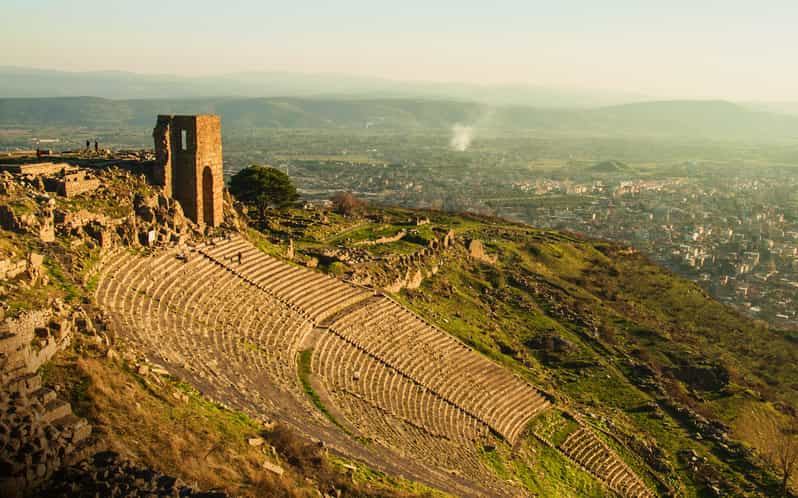
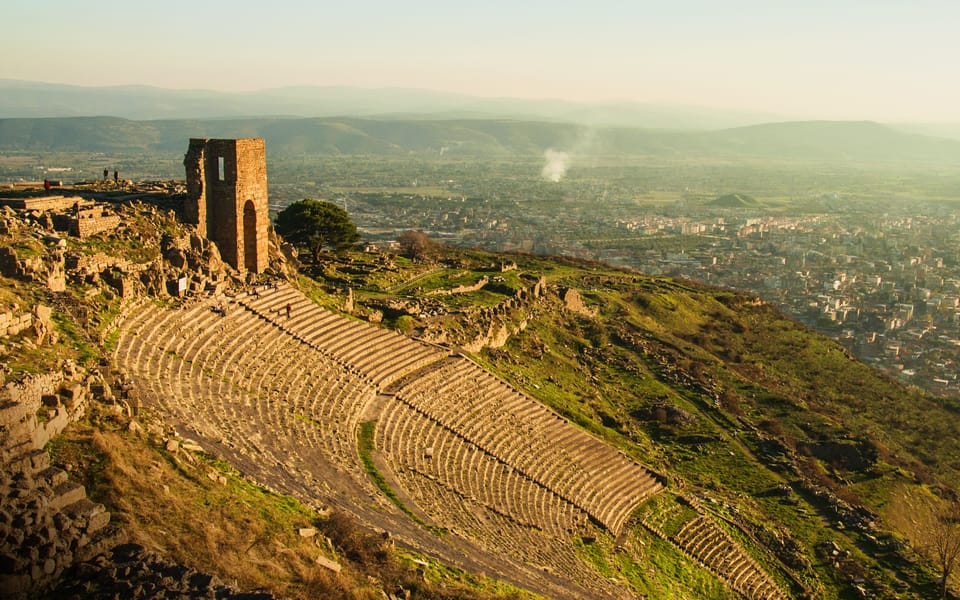
Pergamon isn’t only about temples. It’s about how public space worked. The theatre carved into the steep hillside is a standout because it shows how architecture handled crowds and acoustics in a dramatic setting. Even without a modern performance in view, you can still imagine the scale of gatherings and the role of public events.
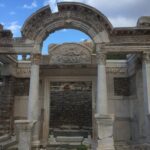
The visit also includes other significant points such as the Temple of Trajan and areas like baths. These stops round out the day by showing how Pergamon functioned under later Roman influence, not only in the Hellenistic spotlight.
If you’re traveling with kids or friends who get restless, theatre and bath areas often work well. They’re easier to picture as everyday civic life compared with purely sacred spaces.
Asclepion: Galen, medicine, and a different kind of site
A few kilometers south of the acropolis sits the Asclepion, one of the most compelling stops in the whole trip. This is where you connect Pergamon to medicine and healing.
The site is linked to the famous researcher and physician Galen, who studied there. That detail matters because it shifts your mindset as you walk. You’re not just seeing religious ruins. You’re seeing a place associated with medical thinking and treatment practices.
The Asclepion often feels like a change of tone from the acropolis. It’s a reminder that ancient cities didn’t just worship and rule. They also cared for bodies, and they turned research into something tied to real places.
How a private guide turns hours into meaning
For me, the best part of a private day trip is the pacing plus the personal Q&A. This tour is designed around a group of up to 4, which makes it realistic to stop when a question pops up.
From the experiences tied to guides like Eyüp and Vedat, the recurring strengths are practical:
- They explain the historical timeline in a way that fits what you’re seeing.
- They’re attentive while you walk the site, not just reciting facts from a distance.
- They adjust when conditions change, including when rain affects how clearly you can see.
When rain hits, flexibility matters. One person rushing ahead or stopping for long photos can make the entire day feel off. A private guide can correct that immediately—same plan, different pace.
Price and timing: what $420 per group actually buys you
The price is $420 per group up to 4 for about 8 hours. That’s not cheap in the abstract, but private Pergamon logistics add up fast: transport, a full English-speaking guide, parking, and the convenience of skipping the ticket line.
Here’s how I see the value math:
- If you fill the group (4 people), you’re paying about $105 per person for a full guided day.
- If you’re only 2 people, it’s closer to $210 each, and you should ask yourself whether you’d rather pay more for privacy than spend less for a crowded day.
If you’re trying to do Pergamon at the same time as another major site, this private day works best as the “quality stop.” You’ll get more out of your time than squeezing it into a half-day.
Also, because the ruins are spread out across an active hillside, private pacing prevents the common problem: you run out of energy right when the best viewpoints arrive.
What to bring for an 8-hour ruins day
Because the stops are outdoor and steep, I’d pack for comfort first, history second.
- Comfortable shoes with grip (the hillside can be slippery in wet weather)
- A rain layer if there’s any chance of drizzle
- Water (a past booking noted a small courtesy bottle, but plan as if you need your own too)
- A light snack if you’re sensitive to hunger, since lunch isn’t included
If you’re visiting from Izmir on a day where weather turns, you’ll still get a great experience. Just be realistic about how much fine detail you can read in heavy rain.
Who this private Pergamon day trip fits best
This works especially well if you:
- Want a private guided day without the stress of shared schedules
- Prefer understanding the story behind ruins rather than just photographing them
- Are traveling in a small group of friends or family (up to 4)
- Appreciate places where Greek and Roman layers overlap in the same walking route
It’s also a strong choice if you’ve already done a big crowd magnet and want something more focused. Pergamon’s scale is impressive, but it feels more like climbing into one coherent ancient city than bouncing between dozens of unrelated stops.
Should you book this Pergamon private day trip?
Yes, if you want a day that feels structured but not rushed. The combination of Pergamon’s hilltop Acropolis, major intellectual landmarks like the Library of Pergamon, and a medical focus at the Asclepion gives you variety without losing the thread of the city’s story.
I’d say book it sooner rather than later if:
- Your group is small enough to benefit from privacy
- You care about explanations in English (and not just signs)
- You want to maximize a single day in the region
Skip it (or at least plan carefully) if rain is extremely likely and you hate wet, outdoors walking. The site itself is spectacular, but the conditions can change how much you enjoy the details.
FAQ
What sites are included on the day trip?
You’ll visit the Acropolis of Pergamon, the Altar area connected with Zeus (with foundations on site), the Library of Pergamon, and the Asclepion.
How long is the private tour?
The duration is listed as 8 hours.
Is lunch included?
Lunch is not included.
Are entrance fees included?
Entrance fees are not included.
Do we have an English-speaking guide?
Yes. The guide is listed as English.
Is this a private group?
Yes, it’s a private group (up to 4 people).
Where can the tour start from?
The trip is available from Izmir, Selcuk, or Kusadasi.
Is ticket-line time saved?
Yes, it includes skip-the-ticket-line.
Are parking fees covered?
Parking fees are included.
Can I cancel for a full refund close to my trip?
Free cancellation is available up to 24 hours in advance for a full refund.