REVIEW · IZMIR
Izmir Synagogues Tour
Book on Viator →Operated by Gezenthi Travel Agency · Bookable on Viator
Five synagogues, one unforgettable circuit. This tour strings together Izmir’s Jewish story from centuries back, using real places, real architecture, and the kinds of details you do not spot on your own—like specific menorahs and the scars left by fires.
I love how practical it is: you get guided entry and public transportation included, so you spend your time looking instead of figuring out logistics. I also really like the focus on tangible history—at Stop 1 and Stop 2 you see notable menorah details, and at later stops you hear how each synagogue was damaged and rebuilt over time.
One thing to plan for: permission to enter can involve paperwork, and the Izmir Jewish Community Center may request your passport information. If that part gives you pause, it’s worth lining up your documents early so the day stays smooth.
In This Review
- Key Points You’ll Care About
- Why These Synagogues Feel Like a Time Machine
- Price and What’s Included (and Not Included)
- A 9:00 Start With Tram Hops (So You Don’t Waste Half a Day)
- Stop 1: Bikur Halim Havrası and Its Menorah Details
- Stop 2: Etz Hayim Sinagogu and the Fire-Damage Story
- Stop 3: Sinyora Sinagogu and Donna Gracia’s Legacy
- Stop 4: Şalom Sinagogu and the 1841 Fire Clue
- Between Stops: Tram Ride and a Chance for Boyoz
- Stop 5: Beth Israel (Bet Israel) and the Largest Sanctuary
- The Role of the Guide (Why Names Like Cenk Matter)
- Who Should Book This Tour
- Should You Book This Izmir Synagogues Tour?
- FAQ
- FAQ
- How long is the Izmir Synagogues Tour?
- What’s the meeting point and end point?
- Is the entry fee included?
- Do I need a passport?
- What languages is the guide?
- Is public transportation included?
- What about lunch during the tour?
- How many synagogues do you visit?
- Can I cancel and get a refund?
Key Points You’ll Care About
- Five synagogues in about 5 hours, with short, focused time at each stop
- Menorah details that are specifically tied to Hanukkah timing at some sites
- Fires, repairs, and rebuilding are part of the story you’ll actually see in the buildings
- Tram transport between stops, plus the chance to grab boyoz near the station
- Small group size (max 15), which keeps questions and pacing manageable
- Guide language options (English or Spanish), with professional commentary built for the route
Why These Synagogues Feel Like a Time Machine
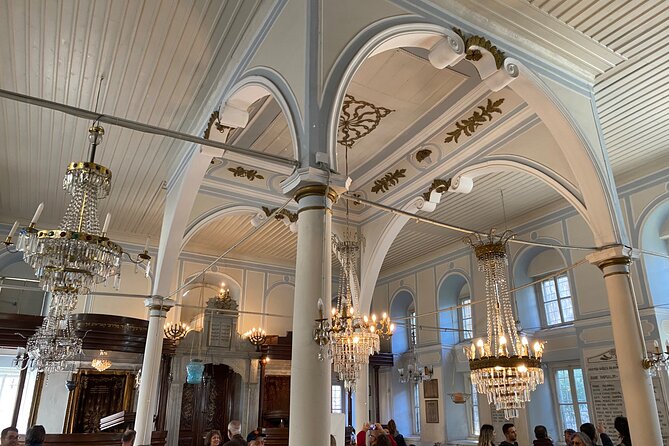
Izmir has a way of compressing centuries into a few blocks. This tour takes advantage of that. You do not just look at synagogues—you connect them to the Jewish presence in the city that reaches back to the 1500s, and to the big turning points that shaped community life.
What makes it work is the mix of art, survival, and identity. Some synagogues are remembered for their decorations and carvings. Others are remembered for what happened to them during fires—and how they were saved or rebuilt. When you hear the story while you’re standing in front of the doorway or inside the sanctuary, the place becomes the textbook.
You can also read our reviews of more tours and experiences in Izmir.

Price and What’s Included (and Not Included)
At $174.53 per person, this is not a budget gamble. The value comes from what’s wrapped into the cost:
Included
- Entry fees
- A professional guide in English or Spanish
- Public transportation fees
Not included
- Lunch
- Personal expenses
- Tips
For many visitors, the biggest hidden value is the access piece. These are not just “pretty stops.” The tour handles the process so you can get permission to visit the synagogues. That’s why the price feels more like a ticket to an experience than just paying for a walk.
One more practical note: the tour is typically booked about 24 days in advance on average. If your dates are fixed, you’ll feel better booking early rather than waiting for the last minute.
A 9:00 Start With Tram Hops (So You Don’t Waste Half a Day)
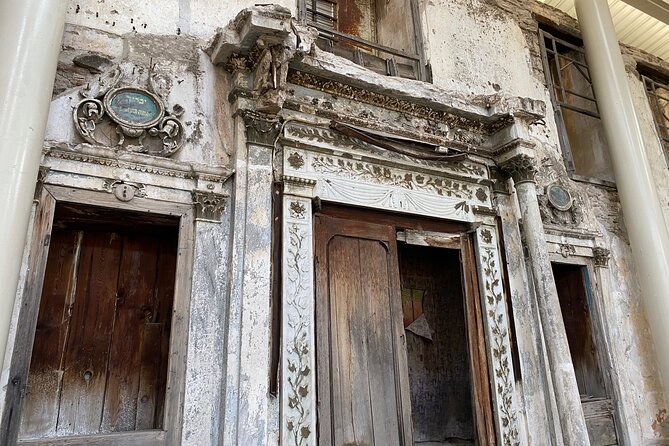
The tour begins at 9:00 am near İzmir Polis Anı EviYenigün in Konak and ends at Beth-Israel Synagogue in Konak.
The route is designed to keep the day moving without racing. After the fourth synagogue, you use the TRAM to reach the next site. That’s great because Izmir traffic can be unpredictable, and tram travel is usually easier to manage than buses when you’re keeping a group together.
Also, there’s a very real, very local break baked in: while walking toward the tram station, you can grab boyoz, a Sephardic Jewish pastry that fits the day’s theme. It’s not a full lunch plan, but it’s a smart snack option if you’ll be hungry.
Stop 1: Bikur Halim Havrası and Its Menorah Details
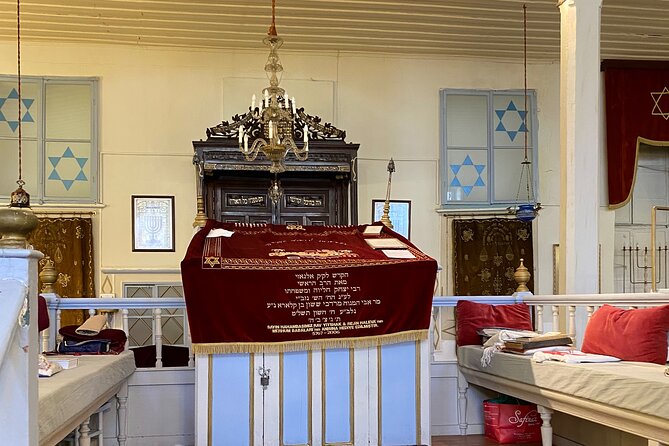
You start with Bikur Holim (Bikur Halim) Havrası, a synagogue where the guide focuses on the visual cues that point to different periods of change.
Two details I’d flag right away:
- You can see new parochets (ornamental coverings for the Torah reading area).
- During November 18–26 around Hanukkah, there are standout menorah displays: a seven-branched Temple Menorah and a nine-branched Hanukkah menorah.
This stop is a strong “set the stage” moment. You get oriented to what you’re looking for—ornamentation, symbolic objects, and how the community marks seasonal traditions.
Possible consideration: your time here is about 30 minutes, so don’t expect long wandering. If you want photos, plan to do it quickly and focus first on what your guide is pointing out.
Stop 2: Etz Hayim Sinagogu and the Fire-Damage Story
Next is Etz Hayim Sinagogu, whose name means Life of a Tree. The focus here is not just on ornament, but on age and layers.
What you might notice with the guide’s help:
- Some visible elements are linked to the Byzantine Empire period.
- The synagogue includes a Hanukkah menorah.
- It was damaged by fire, but it was reportedly saved just before a roof collapse. Those earlier “memories” from the fire are still part of what you see now.
This is one of those stops where the guide’s narration matters. Without context, you might treat the damage and repairs as random. With context, it becomes part of the community’s resilience—how a place can be hurt and still continue.
Possible consideration: again, about 30 minutes. If you’re the type who likes to read every plaque and stare at every detail, you’ll need to pick what matters most to you here—especially because the route continues immediately.
Stop 3: Sinyora Sinagogu and Donna Gracia’s Legacy
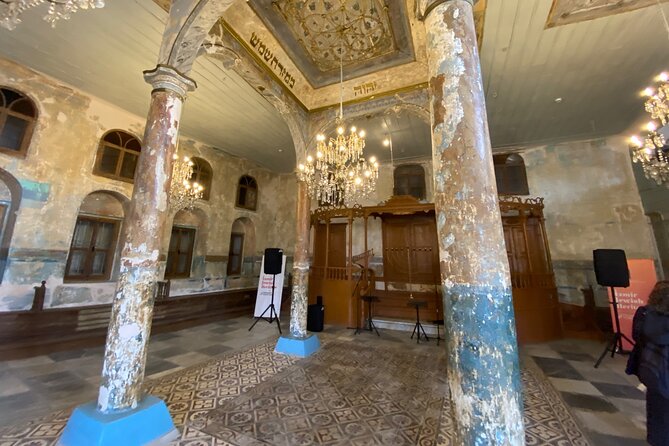
Then you head to Sinyora Sinagogu, a name tied to a Dutch Jewish woman. The story you’ll hear connects the synagogue’s foundation to Donna Gracia, sometimes also referred to as La Signora.
This stop also carries a repair-and-rebuild theme:
- The synagogue was damaged by fire multiple times in the 16th and 17th centuries.
- It was rebuilt again thanks to Moiz Bengiat Yerushalmi.
I like this stop because it adds a human storyline. Dates and architectural details are useful, but names like Donna Gracia put a face on the history, and the guide’s job is to connect those individuals to the physical building in front of you.
Possible consideration: time is still about 30 minutes, so focus on the bigger elements your guide highlights rather than trying to absorb everything at once.
Stop 4: Şalom Sinagogu and the 1841 Fire Clue
Şalom Sinagogu is also known as El Kal de la Tromba Synagogue. Here, the story shifts from foundations to organization and community leadership.
You’ll hear about:
- Joseph Escaba, religious leader of the Jewish Community in Izmir, connected to the synagogue’s first organization.
- A striking historical detail: in 1841, there was mention of the only church that was not damaged by the fire—and there is a signboard at the entrance that your guide will point out.
That kind of signboard detail can turn a stop from “interesting building” into “local detective work.” It ties the religious site into wider city history, and it helps you understand why fires show up again and again in these stories.
Possible consideration: this is the last stop before you switch to TRAM, so keep an eye on time. If you’re buying a snack or using the restroom, do it before you queue up for the next leg.
Between Stops: Tram Ride and a Chance for Boyoz
After Şalom, you ride the TRAM to the next synagogue. This is one of the most practical parts of the itinerary. You’re not hunting for taxis or guessing transit routes while managing a group.
And yes, this is the moment for boyoz. If you’re hungry after a couple of synagogue interiors, grabbing a bite here lets you stay comfortable through the final stop.
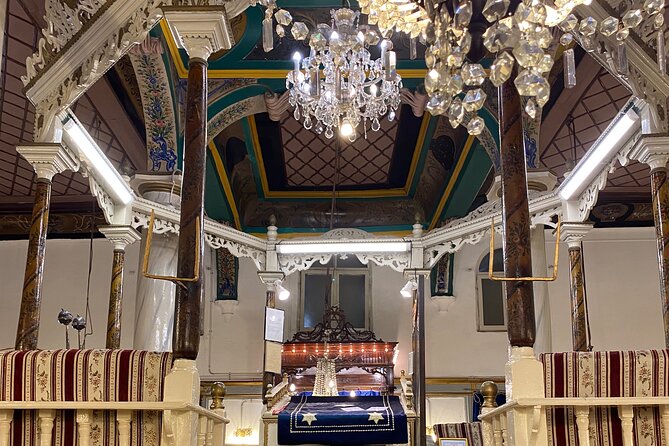
Stop 5: Beth Israel (Bet Israel) and the Largest Sanctuary
You finish at Beth Israel Synagogue (Bet Israel), and it’s the big one in Izmir.
Here are the facts that make this ending feel satisfying:
- It’s described as the biggest synagogue in Izmir.
- It opened to visitors in 1907.
- Decorations were completed around the 1950s, so the building carries a long finishing timeline.
- Wooden carvings were reportedly made by Italian artists.
- The sanctuary is now used for special events.
This stop tends to land well because size changes the feel. You can physically sense scale, and the guide’s explanation helps you connect the sanctuary layout and decorative work to the community’s priorities over time.
Possible consideration: you get about 45 minutes here, longer than earlier stops. Still, it’s not a half-day. If you want to linger, you’ll likely need to do it in short bursts while the guide’s attention rotates through questions and key points.
The Role of the Guide (Why Names Like Cenk Matter)
This tour leans heavily on the guide’s ability to connect details to the bigger story. In particular, the name Cenk comes up in feedback, with visitors praising how he’s attentive and generous with his time.
That matters because synagogue architecture is full of cues—ornamental areas, symbolic objects, and changes over time—that you may not catch instantly. With the right commentary, you start reading the building instead of just looking at it.
If you’re choosing between doing this route on your own versus taking a guide, my take is simple: this is the kind of walk where a guide saves you from missing the point.
Who Should Book This Tour
This works best if you:
- Want a structured route through five different synagogues without wasting hours on logistics
- Like the mix of architecture plus community story, including fires and rebuilds
- Enjoy hearing about Jewish life in Izmir reaching back to the 16th century
- Prefer smaller-group pacing (max 15), so questions feel normal
It might not be ideal if:
- You need a lot of free time inside buildings. Each stop is fairly time-limited.
- You dislike any administrative step tied to permission or potential passport requests.
Should You Book This Izmir Synagogues Tour?
I’d book it if you want more than sightseeing. The tour’s real strength is that it gives you access and context in the same package: entry fees and transport handled, a professional guide to explain what you’re seeing, and a route built around the story of the community and the specific objects and features inside.
I’d think twice only if the paperwork piece would be a hassle for you. If you can handle that, this is one of the better ways to understand Izmir’s Jewish heritage without turning it into a confusing self-guided scavenger hunt.
FAQ
FAQ
How long is the Izmir Synagogues Tour?
The tour lasts about 5 hours.
What’s the meeting point and end point?
You start near İzmir Polis Anı EviYenigün, Anafartalar Cd. No:493, 35240 Konak/İzmir. The tour ends at Beth-Israel Synagogue, Turgut Reis, Mithatpaşa Cd. No:265, 35280 Konak/İzmir.
Is the entry fee included?
Yes. Entry fees are included in the tour price.
Do I need a passport?
The Izmir Jewish Community Center may request your passport information. The agency will be in contact with you for the requirements.
What languages is the guide?
The guide is available in English or Spanish.
Is public transportation included?
Yes. Public transportation fees are included, and you also use TRAM between the synagogues.
What about lunch during the tour?
Lunch is not included.
How many synagogues do you visit?
You visit 5 synagogues in Izmir City.
Can I cancel and get a refund?
No. This experience is non-refundable and cannot be changed for any reason.