REVIEW · ISTANBUL
From Istanbul: Pamukkale Day Trip without Flights
Book on GetYourGuide →Operated by Booking Guide Turkey · Bookable on GetYourGuide
Cotton-white terraces and Roman ruins in one day. That mix is exactly why this Pamukkale trip works: you get the famous travertine “Cotton Castle” look plus a guided walk through Hierapolis, Turkey’s UNESCO ruins. I also like that it’s structured as a one-stop day, with hotel pickup and airport transfers built in. The main catch to plan around is the early flight schedule and the strong midday sun at the ruins.
This is a long day—about 17 hours—and it starts early from Istanbul. You’ll ride a private transfer to Istanbul Airport, fly to Denizli Airport, then connect to Pamukkale with your guide. If you’re the type who hates heat and long travel blocks, you’ll feel it; if you’re flexible and come prepared, it’s a very efficient use of time.
In This Review
- Key things that make this Pamukkale day trip special
- Price and logistics: what you’re really paying for at $508 per person
- Istanbul Airport to Pamukkale: how the early flight shapes your day
- Pamukkale “Cotton Castle” travertines and thermal hot springs
- Entering Hierapolis with a licensed guide: what the ruins mean
- Walk the ruins in the noon sun: a heat reality check
- The Cleopatra Pool question: what’s excluded and what that means
- Lunch in Pamukkale: included, traditional, and not a food-tour promise
- Skipping the ticket line: small timesaver, big payoff
- The private group feel: less waiting, more flexibility
- What to bring (and what not to forget) for Pamukkale and Hierapolis
- Who this trip suits best (and who should reconsider)
- Should you book this Pamukkale day trip?
- FAQ
- What’s included in the Pamukkale day trip price?
- Is the Istanbul to Denizli flight ticket included?
- How long is the day trip?
- What languages is the live guide available in?
- Is Cleopatra Pool entry included?
- What should I bring for Pamukkale and Hierapolis?
Key things that make this Pamukkale day trip special
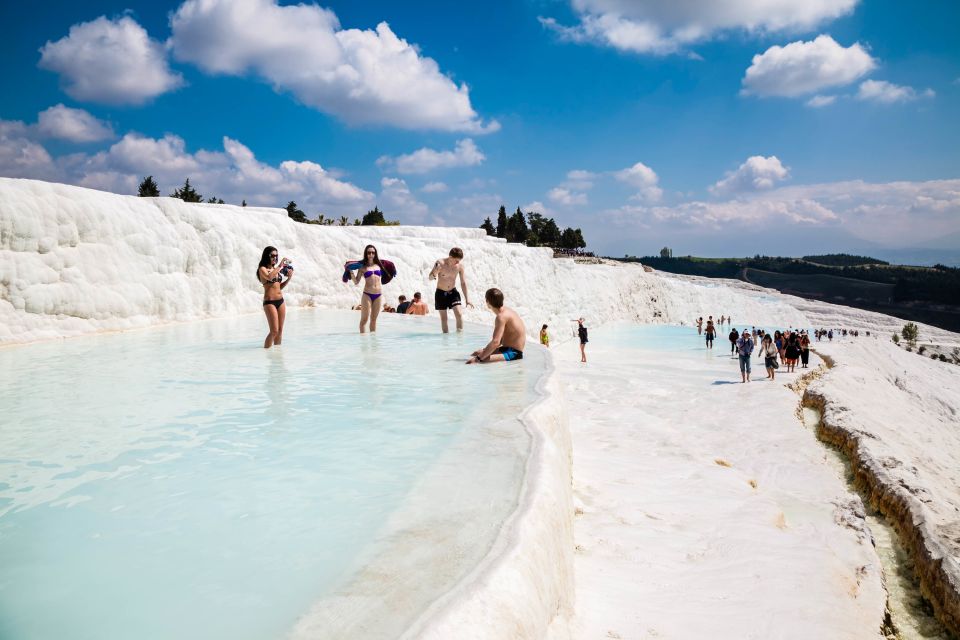
- Thermal hot springs time: You’re not just looking at white terraces; you’ll also get into the thermal water experience.
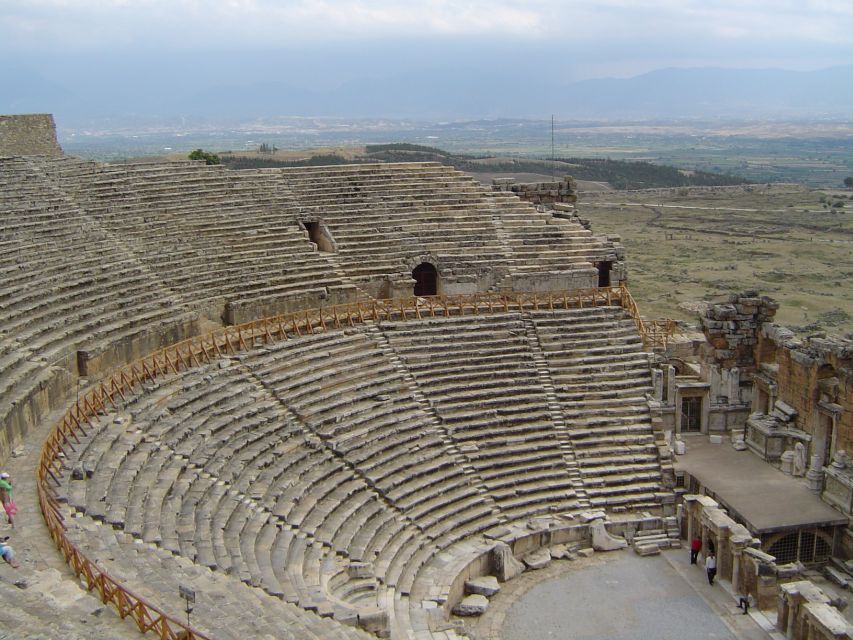
- Licensed guide for Hierapolis: You’ll cover major sights like the amphitheater, necropolis, Temple of Apollo, and St. Philip’s Martyrium.
- Cotton Castle views built into the route: The travertine pools are part of the story, not just a quick photo stop.
- Ticket-line savings: Entrance to Pamukkale Park is included, and you skip the ticket line.
- Private, hotel-to-airport transfers: You’re not piecing together public transport on a tight schedule.
- Lunch included (drinks not included): A traditional meal is part of the plan, so you’re not hunting for food mid-ruins.
Price and logistics: what you’re really paying for at $508 per person
$508 per person sounds steep until you break down what’s included. In addition to a licensed guide and lunch, you get two private transfer legs: Istanbul hotel to Istanbul Airport, and Denizli Airport to Pamukkale (and then back after). Those transfers alone can save you stress, especially on a day built around flights.
But here’s the important reality check: the Istanbul–Denizli flight ticket is not included. So your final cost will be higher once you add that flight. Still, the value idea here is clear: you’re paying to compress a lot of time and avoid turning Pamukkale into a multi-day logistical project.
Also note the tour day is roughly 17 hours, which means you’re trading comfort for efficiency. This isn’t the style of trip where you linger at every viewpoint for hours. It’s a “make the most of daylight” plan.
A few more Istanbul tours and experiences worth a look


Istanbul Airport to Pamukkale: how the early flight shapes your day
This is an early-morning flight day. You’ll start with a private transfer from your Istanbul downtown hotel on the European side, then head to Istanbul Airport. Your flight goes early to Denizli Airport, and once you land, the local guide meets you and escorts you to Pamukkale.
Transfers are not instant, either. The Istanbul Airport and Denizli Airport transfers take almost 1 hour each way, which matters because it eats into your usable time at Pamukkale and Hierapolis.
The upside of this schedule is simple: you arrive to see Pamukkale and Hierapolis with a good chunk of the day ahead, rather than losing hours to slower ground travel. The downside is also simple: you’ll feel fatigue. If you’re prone to motion sickness, don’t underestimate the whole-day effect (airport waits plus car rides plus walking).
Practical tip: plan your packing around the sun and the walking, not around the flight alone. You’ll be moving again shortly after landing.
Pamukkale “Cotton Castle” travertines and thermal hot springs
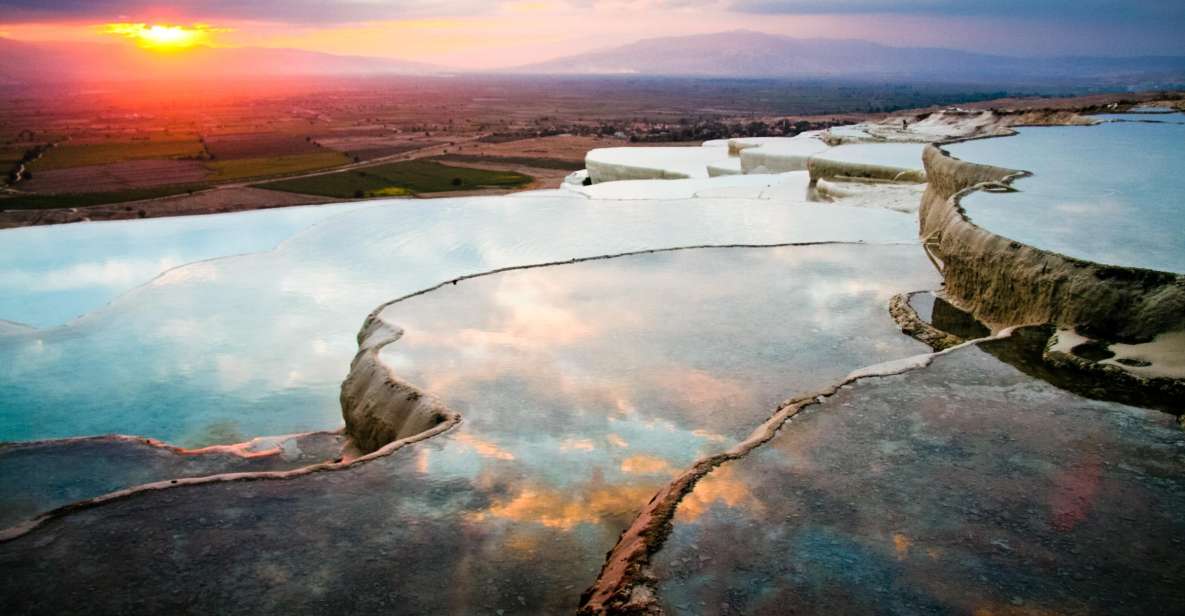
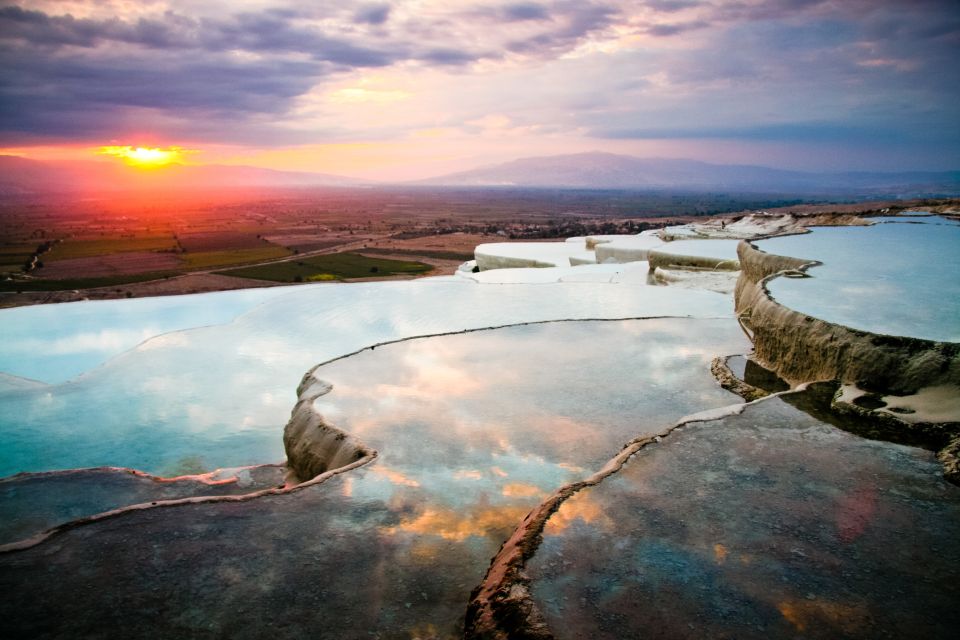
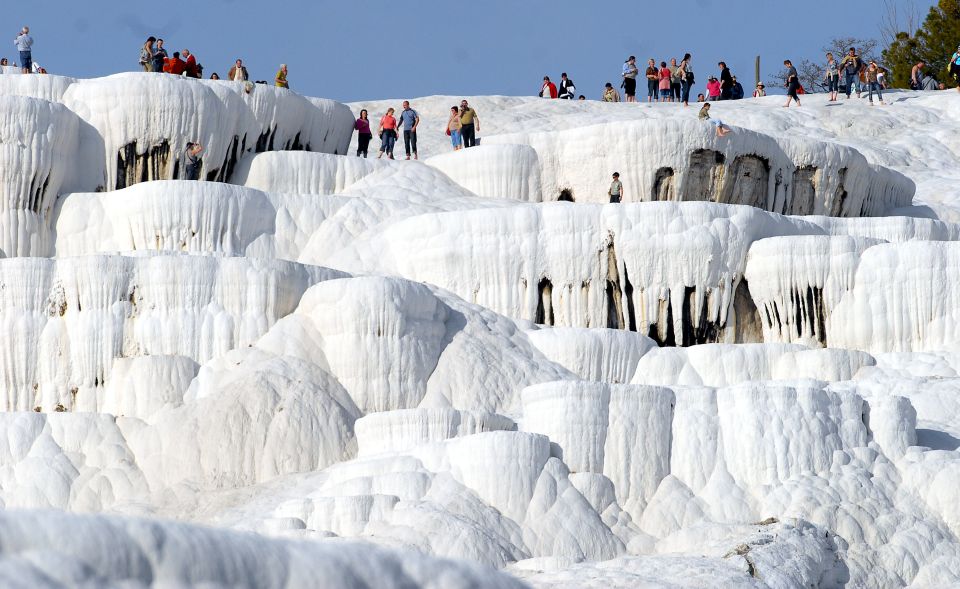
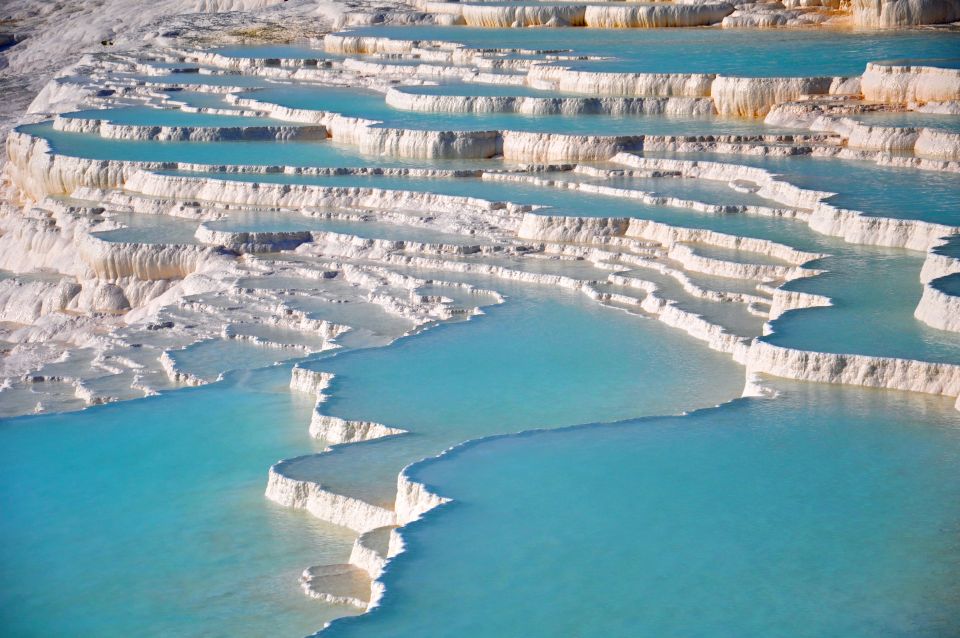
Pamukkale literally means Cotton Castle, and the name makes sense when you see the white travertine terraces. The terraces come from mineral-rich thermal water that builds up in layers over time. Up close, the look can be startling—like the ground is dusted in chalk, except it’s natural and still active.
What makes this stop more than a photo moment is the thermal hot springs component. Your day is set up so you’ll get that famous “therapeutic hot water” experience rather than only circling viewpoints. Even if you’re not chasing the health story, the water experience gives the site a sensory side. You’re not just reading history—you’re part of the setting.
One small detail that matters: swimwear is on your packing list. That signals what you should expect. Bring it even if you’re unsure. Worst case, you can choose what you use; best case, you get the full Pamukkale experience.
And yes, the sun can be intense. Pamukkale terraces and Hierapolis areas can expose you fast—especially around midday when there’s less shade. That’s not a reason to skip it. It’s a reason to manage your timing and hydration.
Entering Hierapolis with a licensed guide: what the ruins mean
After Pamukkale, your tour turns into history on foot. You’ll explore Hierapolis, a UNESCO World Heritage site where Roman planning meets later Byzantine-era layers. The guide route hits several landmark groups, and having a licensed guide matters here because so much of Hierapolis is spread out and tied together by context.
You’ll cover:
- Ancient amphitheater: a major public space where performance and civic life once happened.
- Vast necropolis: burial areas that show how the city organized death and remembrance.
- Temple of Apollo: a key cultural and religious point in the city’s Roman-era story.
- Martyrium of St. Philip the Apostle: a religious landmark that adds a later spiritual layer to the ruins.
The value of a guided approach is that these pieces stop feeling like random stones. You start to understand how a Roman city worked—public gatherings in theaters, major religious centers, and huge burial zones that shaped the city’s long-term geography.
Also, the guide speaks English and Spanish, which is helpful if you want clear explanations instead of just following along. You can ask questions when you see a structure that looks familiar but isn’t.
My practical advice: bring your curiosity, but also pace yourself. Hierapolis rewards attention, but it’s still a heat-and-walking day.
Walk the ruins in the noon sun: a heat reality check
One thing I’d plan for is sun at the ruins. Hierapolis has open areas, and if you hit the midday portion under strong light, it gets tiring quickly. Even if you’re a fast walker, you’ll feel it in your body.
So don’t rely on luck. Use the packing list as your script:
- Sunglasses
- Sun hat
- Sunscreen
- Comfortable shoes
- Water mindset (even though drinks during lunch aren’t included)
And then adjust your expectations: you might want shorter pauses and quicker photo stops rather than long lingering sessions when the light is harsh. If you can, focus on the “why” of each landmark rather than fighting the heat for perfect photos.






The Cleopatra Pool question: what’s excluded and what that means
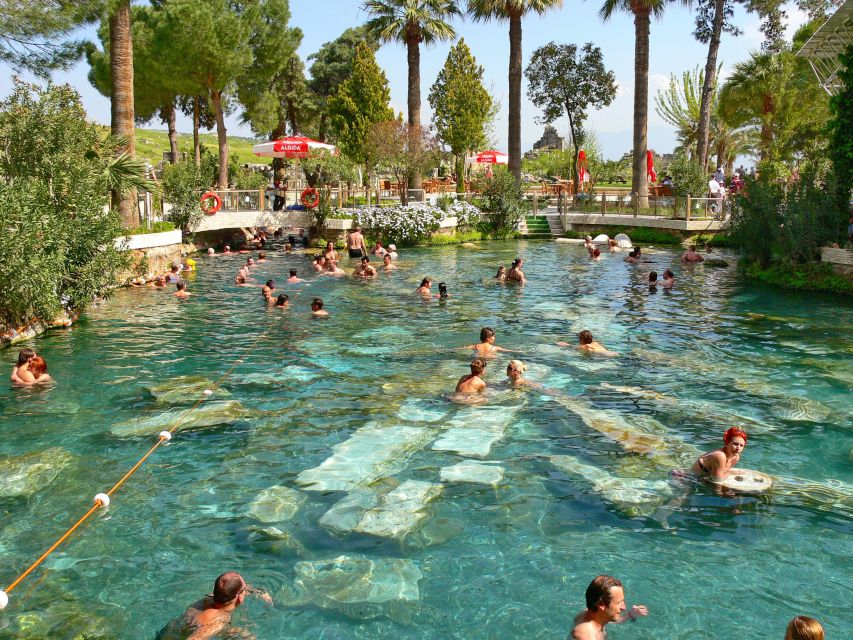
The tour includes entrance to Pamukkale Park, but Cleopatra Pool entry is not included. That matters because Cleopatra Pool is one of the most famous “add-on” water experiences at the site.
Practically, you have two options:
- If Cleopatra Pool is a must for you, you’ll need to plan for the extra cost and time needed to enter it on top of what’s included.
- If you’re mainly chasing the travertine terraces and thermal hot springs feel, you’re not missing the core Pamukkale experience.
Either way, it’s better to know upfront so you don’t end your day annoyed that one famous photo location isn’t part of your ticket.
Lunch in Pamukkale: included, traditional, and not a food-tour promise
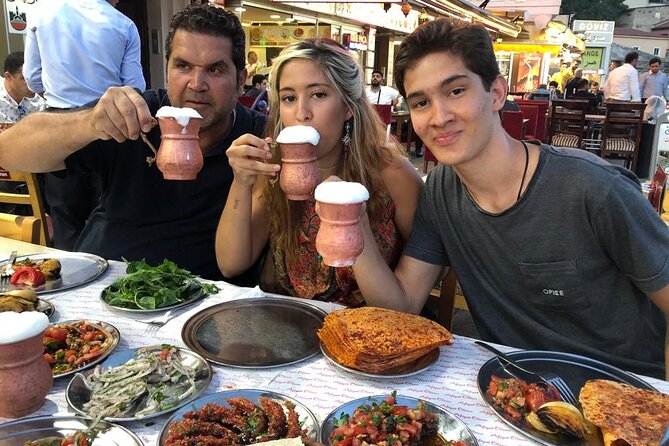
Lunch is included at a traditional restaurant. That’s a strong baseline because it reduces one more decision and one more expense during the day.
Still, set expectations appropriately. This is not positioned as a gourmet stop. Your included meal covers fuel, local flavors, and a chance to recover before the return trip. Drinks during lunch are not included, so if you want tea, soda, or something stronger, you’ll pay for it on site.
One more practical point: because this is a hot, long day, food that sits heavy isn’t ideal. If you know you’re sensitive, go lighter on the richest options. If you’re fine with hearty Turkish comfort food, you’ll probably feel right at home.
Skipping the ticket line: small timesaver, big payoff
Getting in with skip-the-ticket-line included can be surprisingly important on a day trip. Pamukkale is popular, and queues can slow down your momentum—especially when your schedule is tight and the best light and cooler hours don’t wait.
When a tour includes the entrance fee to Pamukkale Park, it reduces friction. You’re moving toward the terraces and thermal areas faster, and that means more usable time for walking and photos.
It also helps emotionally. You’re not spending energy on one more administrative step while you’re already dealing with early travel and tight timing.
The private group feel: less waiting, more flexibility
This tour is a private group, and that’s more than a marketing label. A private format usually means less time spent coordinating with strangers and less standing around. When you’re moving between Pamukkale and Hierapolis on a long day, that can make a real difference in how tired you feel.
Private also pairs well with the licensed guide. You can ask questions in the moment and get direct answers rather than waiting for a group rhythm.
Just remember: private groups still follow the day’s pace. This isn’t a “change the itinerary on the fly whenever you want” situation. It’s still a planned flow built around flights and time windows.
What to bring (and what not to forget) for Pamukkale and Hierapolis
Your packing list is practical, and it’s worth taking seriously because you’re dealing with heat, sun, and water.
Bring:
- Passport (you need it for the travel day)
- Comfortable shoes (ruins walking adds up)
- Sunglasses
- Sun hat
- Swimwear (for the thermal hot springs experience)
- Sunscreen
Don’t bring:
- Pets (not allowed)
Also plan your booking info carefully. At booking time, you must provide full name and passport details, including passport issue and expiry dates for all participants. That’s the kind of requirement that can delay travel if it’s handled late.
Who this trip suits best (and who should reconsider)
This day trip is a good match if:
- You want a high-impact, one-day visit to Pamukkale plus Hierapolis.
- You like having a guide connect the ruins to meaning, not just names on stones.
- You prefer private transfers over managing public transport with luggage and time pressure.
- You’re comfortable with a long day and early wake-up.
It may be less ideal if:
- You hate long travel days and would rather go slower.
- You struggle with strong sun exposure and long outdoor walking.
- You want a fully flexible schedule with lots of free time.
For families, it can work depending on ages and heat tolerance, but the walking and timing are the main constraints. For solo travelers, the private format is a big plus because you still get expertise without getting lost in crowds.
Should you book this Pamukkale day trip?
I’d book this if you want the Pamukkale and Hierapolis highlights in a single day and you value having everything arranged: hotel pickup, airport transfers, licensed guide time, lunch, and Pamukkale Park entry. The private structure makes the day feel organized, even when the schedule is packed.
I would pause if you’re mainly interested in Cleopatra Pool and want it included from the start, because it’s an extra. Also, check your tolerance for heat and the early flight commitment. If you can manage sun-smart travel and you’re okay with a long day, this is a strong way to see one of Turkey’s most distinctive natural-and-historical combinations.
If you go, prep like a local for sun and comfort, and you’ll make the day feel easier than it sounds on paper.
FAQ
What’s included in the Pamukkale day trip price?
The tour price includes return Istanbul Airport transfer, return Denizli Airport transfer, a professional licensed guide for the Pamukkale tour, lunch, and entrance fee to Pamukkale Park.
Is the Istanbul to Denizli flight ticket included?
No. The Istanbul–Denizli flight ticket is not included, even though the day trip involves flying.
How long is the day trip?
The duration is about 17 hours.
What languages is the live guide available in?
The live tour guide is available in English and Spanish.
Is Cleopatra Pool entry included?
No. Entry to the Cleopatra Pool is not included.
What should I bring for Pamukkale and Hierapolis?
Bring your passport, comfortable shoes, sunglasses, a sun hat, swimwear, and sunscreen.