REVIEW · ISTANBUL
Istanbul: Whirling Dervish Ceremony next to Hagia Sophia
Book on GetYourGuide →Operated by Cogito Istanbul Seyahat Turizm Bilet Organizasyon Gıda ve Ticaret LTD STI · Bookable on GetYourGuide
Sound, silence, and spinning all at once. This Istanbul whirling dervish ceremony feels closer to a real Sufi ritual than a staged show, right by the historic core of the city. I love the way the experience gives you context before and after (so you’re not just watching motions), and I also love the classic live Turkish music that sets the pace from the first notes. One thing to keep in mind: the ceremony is designed for quiet, and depending on where you sit, you might catch the host’s words better than the music speaker at the start.
Part of what makes it special is the setting. You’ll be in a traditional wooden-house-style venue with a calm room built for listening, not loud entertainment. And yes, it’s performed as Sufi sema—recognized as UNESCO Intangible Cultural Heritage—with traditional pieces said to date from the 1400s to the early 1800s.
My practical advice: treat this like a moment of respect. Keep your phone away during the turning (it’s easy to get pulled out of the rhythm), and plan a quick restroom stop before you sit down.
In This Review
- Key things I’d plan for before you go
- A Sema Ceremony Just Steps from Hagia Sophia
- Getting There: Meeting by Basilica Cistern and the White Wooden House
- Inside the Salon: The Short Intro That Makes the Ritual Click
- The Whirling Dervish Ceremony: Rhythm, Symbolism, and Sufi Sema
- Classic Live Turkish Music: What You’ll Hear and How to Hear It
- Tea or Sherbet: The Small Included Break That Feels Local
- Where You Sit, What You See, and Photo Reality
- Price and Value: Why This $17 Ticket Often Feels Fair
- Who This Works for (and Who Might Want a Different Evening)
- Should You Book This Istanbul Whirling Dervish Ceremony?
- FAQ
- Where is the meeting point for the whirling dervish ceremony?
- How long is the experience?
- What is included with the ticket?
- What languages are available for the audio guide and guide?
- Is this experience wheelchair accessible?
- Are there any rules during the ceremony?
- Is it suitable for children?
Key things I’d plan for before you go
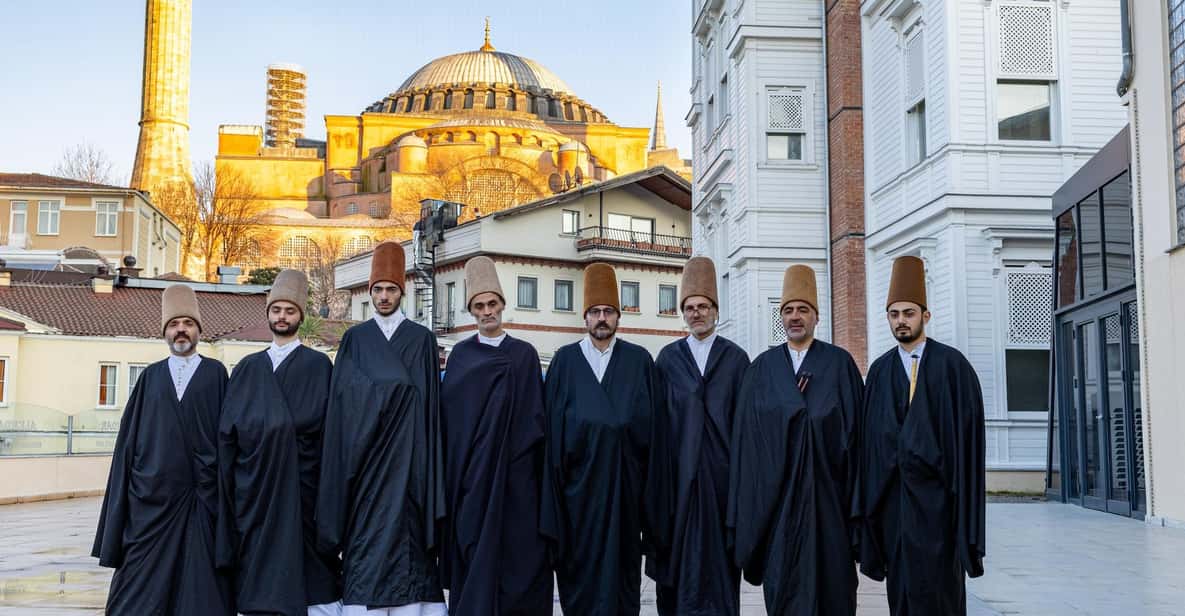
- UNESCO Intangible Cultural Heritage Sema: you’re watching a ritual, not a generic dance act
- Licensed host + multi-language smart audio guide (7 languages) so you understand the meaning
- Classic live Turkish music with traditional instruments as the ceremony builds
- Silence matters: the experience is built around quiet attention
- Tea or sherbet + water included, a small local break that helps you settle in
- The total time is about 55 minutes, with brief talk segments around the ritual
A Sema Ceremony Just Steps from Hagia Sophia
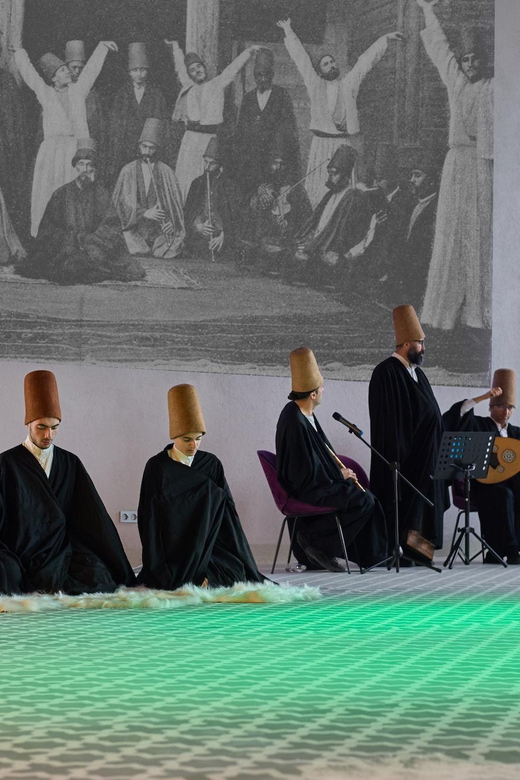
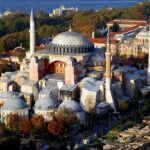
If you’re aiming to see a side of Istanbul that isn’t just marble monuments and busy streets, this is a smart pick. The whirling dervish ceremony (Sufi sema) is a spiritual ritual known worldwide, and UNESCO lists it as Intangible Cultural Heritage. Here, it’s presented close to the city’s most famous landmarks, so you can pair it with a Hagia Sophia day without feeling rushed.
What you’re actually attending is the prayer and music portion of a Sufi tradition. The turning isn’t random dancing. The hand positions and the changing pace connect to symbolism you’ll hear explained by the host. You’ll also learn that the ceremony is performed by local members of Sufi followers, which changes the feel immediately. It doesn’t come across as a performance built for tourists; it comes across as practice with meaning.
One more practical note: this is intentionally not a loud, dramatic spectacle. The strongest moments happen when you let the rhythm take over and stop trying to “figure it out” in your head. If you need constant stimulation, you might find the pace slow. If you like reflective experiences, you’ll likely feel it build.
You can also read our reviews of more tours and experiences in Istanbul.


Getting There: Meeting by Basilica Cistern and the White Wooden House
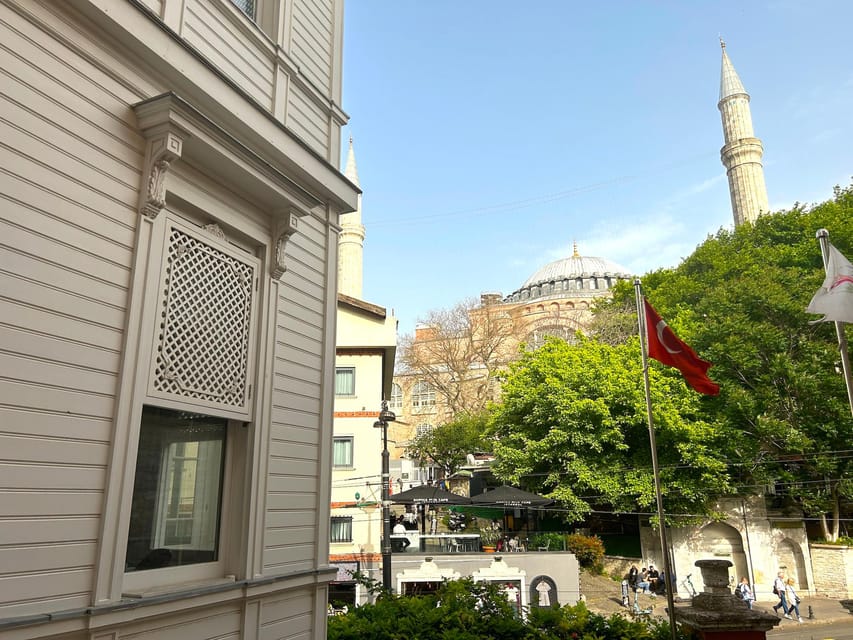
Your meeting point is next to the Basilica Cistern. More specifically, you’ll find the reception desk at the gate of a large white wooden house near that area. The gate opens about 30 minutes before the ceremony start, which gives you time to find the right room and settle.
Arriving early matters more than you might expect. First, it gives you a moment to hear the pre-ceremony explanation without rushing. Second, it helps if the room layout is new to you. One attendee found the instructions for a digital map link a bit confusing at first, so arriving with buffer time is a good move.
From there, you’ll go into a traditional salon area before the dervishes enter. This is where the host’s briefing matters. They’ll set up what you’re about to see—how the ceremony works, what the musical segments mean, and what the turning is trying to express.
If you’re planning your day around Hagia Sophia, build a little slack. The route around the historic center can be slow, and the gate timing is part of the experience. Showing up late can mean missing the explanation that makes the rest click.
Inside the Salon: The Short Intro That Makes the Ritual Click
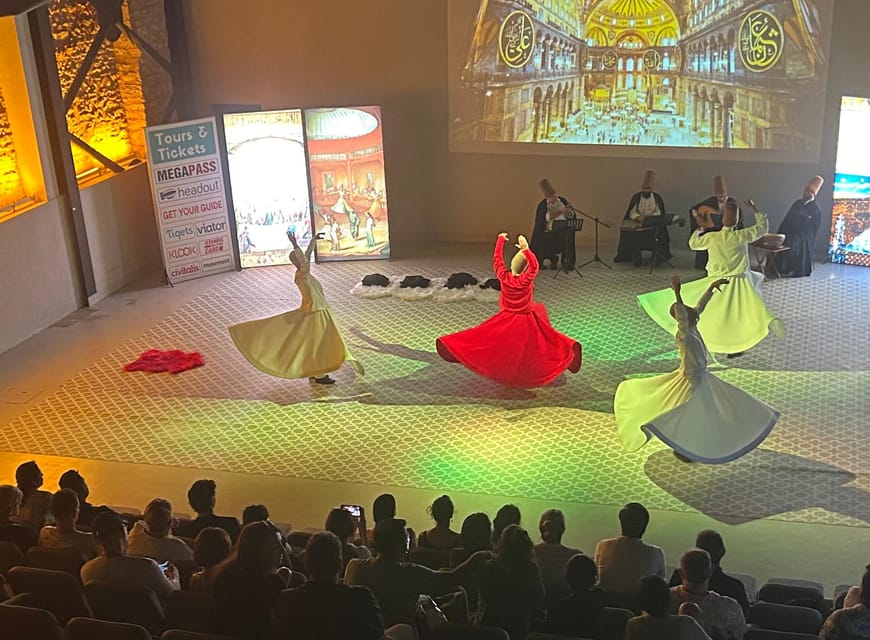
The experience starts in a traditional, wooden-house-style space. Before the turning begins, you’ll get an introduction from a professional host. The briefing is where you learn how to read the ceremony—so you don’t just watch for movement. You’ll also get a smart audio guide that works in multiple languages, listed as ENG, DE, FR, ITA, RUS, ESP, and ARB.
I like this setup because it respects your attention. A lot of shows toss information at you after the fact. Here, the context comes first, then the ritual unfolds. That means the music and turning land with more meaning.
The host also answers questions afterward. One guide name that comes up in people’s feedback is Kasl, who was praised for being helpful and especially accommodating for a wheelchair-dependent member of the group. Even if you don’t need accessibility support, it’s comforting to hear that the staff think in practical, human terms, not just logistics.
Tip for your listening: the intro can feel fast if you’re not used to live spoken English. If you want to follow every detail, arrive on time and give yourself a minute to get settled before the host starts.
The Whirling Dervish Ceremony: Rhythm, Symbolism, and Sufi Sema
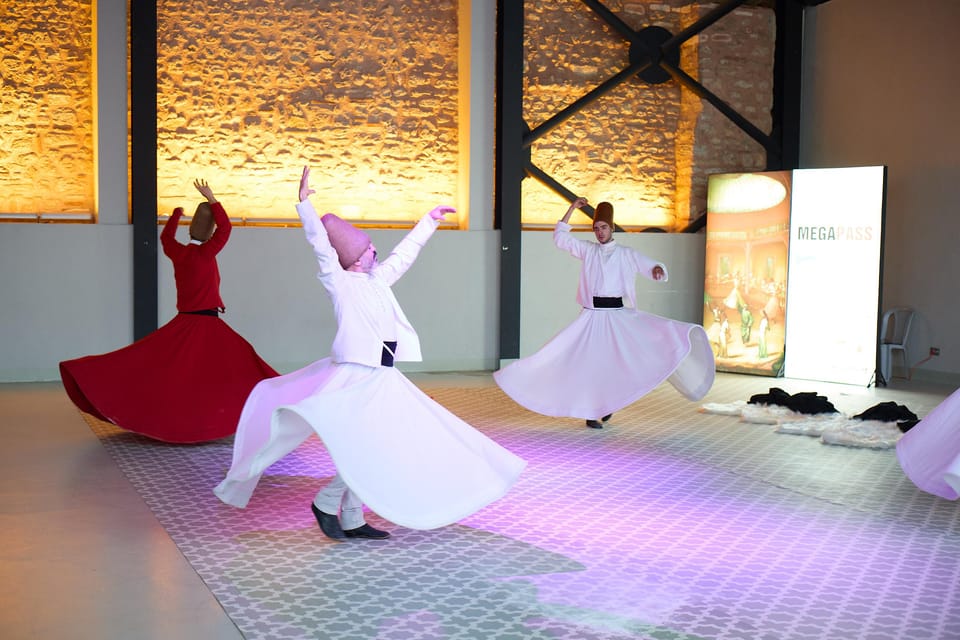
Now for the main event. The ceremony begins with instrumental music—traditional instruments including strings, drums, and flutes. This opening phase is the cue that the night will move on a different tempo than most tourist activities.
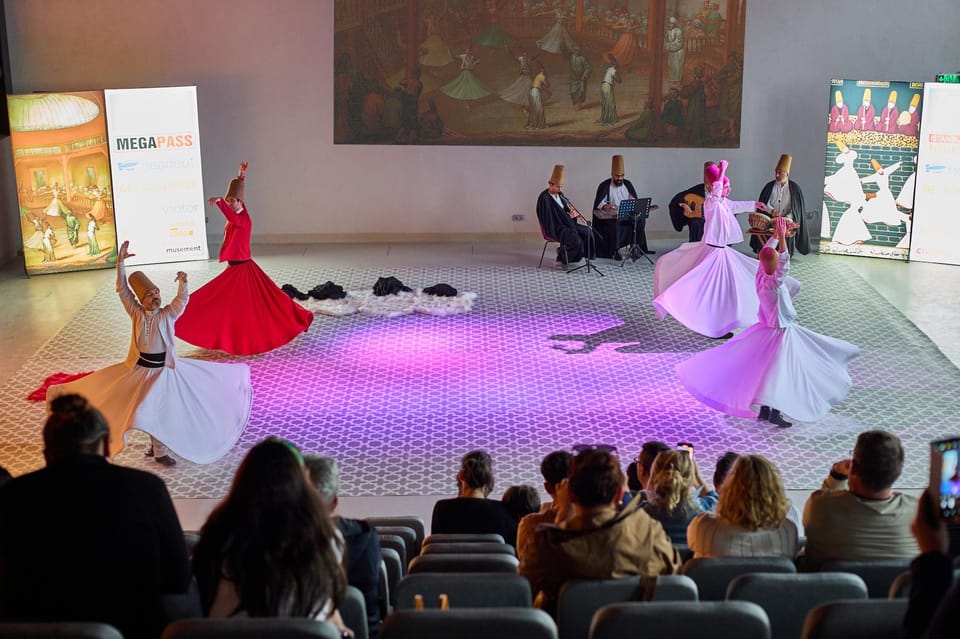
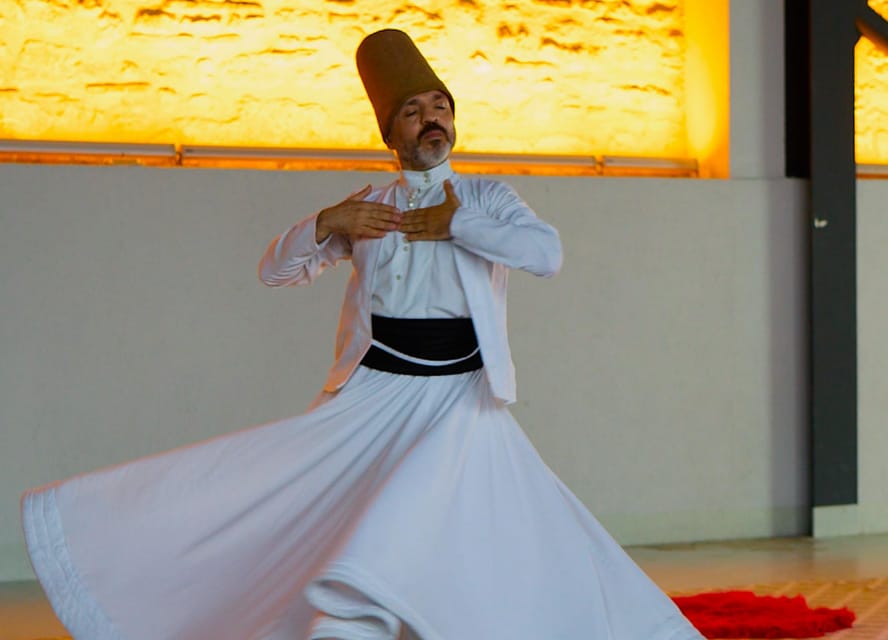
Then the prayers begin, and the whirling dervishes enter with serenity. As the rhythm continues, the spinning accelerates. The idea (as the ceremony is commonly explained) is that the motions reflect the harmony of the universe and the discipline of letting go of the ego.
You’ll also see symbolic gestures. For example, one classic explanation you’ll hear is that one hand points toward the heavens while the other gestures toward the earth—receiving divine blessings and sharing them. You might also be shown how the whole ritual combines chanting, music, and the distinctive spinning dance as a mystical journey toward divine love and unity.
Musically, the pieces performed here are described as composed between the 1400s and early 1800s. That’s a big part of why the music feels different from modern stage entertainment. It’s not built for radio. It’s built for a spiritual structure.
And then there’s the part that matters most: silence and respect. The rules are clear—making noise isn’t allowed. Silence helps the room feel like a single shared focus instead of individual sightseeing. If you want to experience the turning the way it’s intended, set your expectations that this is reflective, slow, and intentional.
Classic Live Turkish Music: What You’ll Hear and How to Hear It
The music is part of the ceremony’s engine. You’ll hear classic live Turkish music during the event, and the musicians use traditional instruments that shape the tempo. In some accounts, people specifically mention the ney (flute) as part of what makes the sound distinct, and it fits the wider idea that Sufi music relies on sustained, expressive tones.
Here’s the practical reality: sound quality can vary. In one feedback note, the speaker comments at the beginning weren’t easy to hear, even though the overall concert felt fine. That tells me you should treat audio clarity as a seating issue.
If you’re sensitive to missing spoken lines, arrive early and aim for a spot where you can see the host and the musicians clearly. Keep your voice off. Don’t talk during the briefing once the ceremony begins. The room design is meant for listening, so it pays to cooperate.
Also, avoid competing audio from your phone. One person’s advice was simple and strong: don’t use your phone during the ceremony. That’s not about rules for rules’ sake—it’s about not yanking yourself out of the rhythm. Even turning a screen on for a second can reset your brain into tourist mode.





Tea or Sherbet: The Small Included Break That Feels Local
This isn’t just a ticket and sit-down-and-stare. You’ll receive a local drink as part of the experience—either tea or sherbet, plus water. It’s a small thing, but it helps you land in the setting.
Why it matters: after you’ve listened to the music and watched the spinning, you’ll likely feel calmer than when you arrived. The drink gives you a gentle transition at the right moment, rather than ending abruptly into the street.
In Istanbul, sherbet and tea are everyday comforts. Here, they become part of the ritual atmosphere, not a separate commercial add-on. It’s also a useful option if you don’t want to plan snacks during your day around Hagia Sophia and Basilica Cistern.
If you’re the type who gets distracted by hunger during quiet experiences, the included drink is a nice safety net. Still, food is not included—so if you need a full meal, plan one around it.
Where You Sit, What You See, and Photo Reality
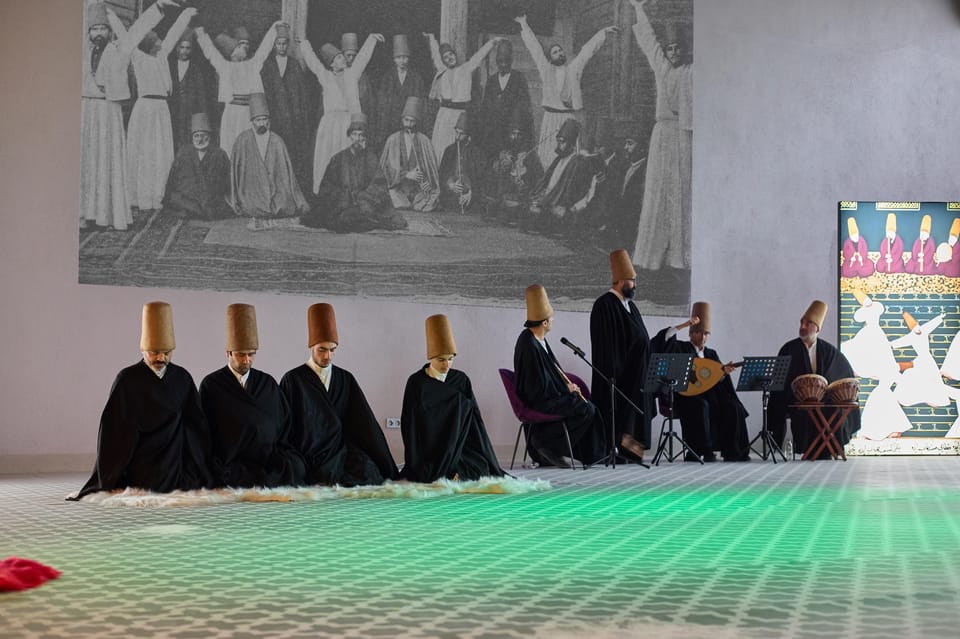
One thing people appreciated is that seating is comfortable and has good sightlines. That’s important because the ceremony is all about watching details: the arrival, the hand positions, and the gradual acceleration.
Photo and video are allowed in this experience. That said, you’ll want to balance recording with attention. A couple of notes hint at lighting quirks in the hall. For instance, illuminated panels on either side of the room created reflections that weren’t ideal for photography. Another person mentioned a background video that felt out of place and pulled focus at times.
My take for you: treat photos like a tool, not a mission. Get a couple of quick shots early if you want them, then put the phone away. The most meaningful moments aren’t the ones you freeze—they’re the ones you feel in the room as the rhythm builds.
And since the rules emphasize silence, don’t raise your voice or shuffle loudly to get a better angle. The turning deserves a respectful, steady audience.
Price and Value: Why This $17 Ticket Often Feels Fair
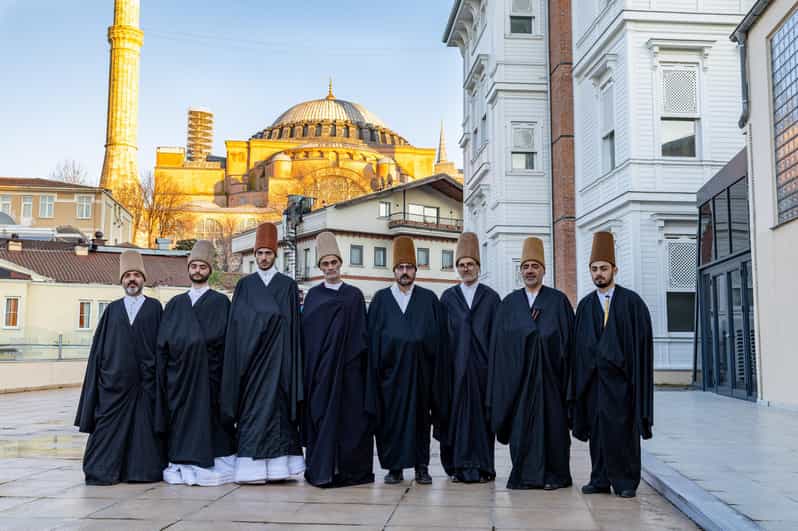
At about $17 per person for a 55-minute experience, this is priced in the realm of a local cultural evening rather than an overpriced “attraction show.” The value is mostly in what’s included:
- Entrance to the ceremony with live music
- A traditional drink (tea or sherbet) and water
- A smart audio guide in 7 languages
- A live English host for explanation
When you add that up, you’re not just paying for seats. You’re paying for interpretation—so you understand what you’re seeing while it happens. That’s a big deal for a ritual that relies on symbolism and rhythm, not plot twists.
There’s also the community angle. Some attendees mentioned that ticket income supports scholarships and that the event is linked to a non-profit arts or education effort. Even if you don’t care about that side at first, it changes the vibe: you’re supporting the preservation and teaching of the arts around the ceremony.
Realistic drawback on value: the ceremony may feel short if you expected a long stage show. But for many people, that’s exactly the point. A contained experience keeps the focus where it belongs—on the ritual itself.
Who This Works for (and Who Might Want a Different Evening)
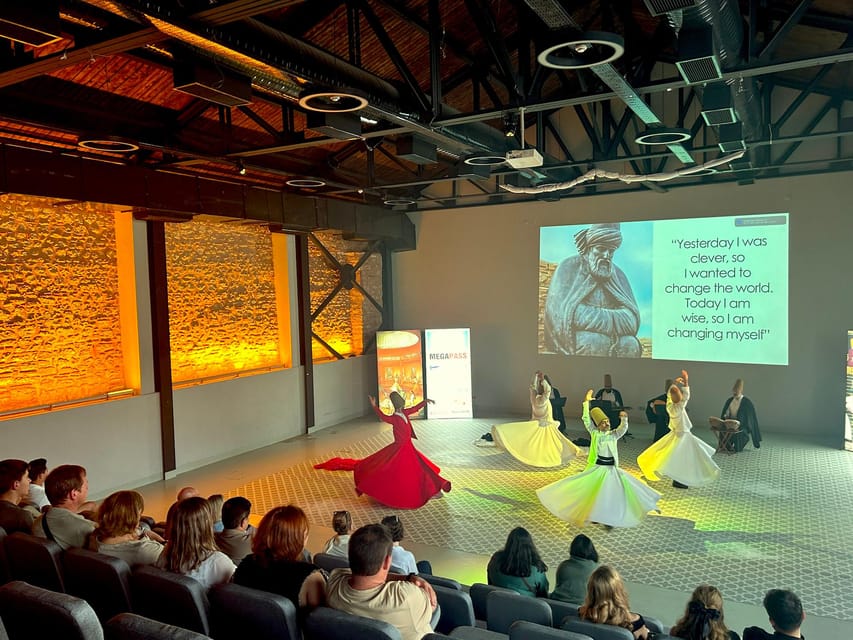
This is ideal if you:
- Want a true cultural experience tied to Sufi tradition
- Like learning before you watch, with a host and multi-language audio
- Prefer calm, reflective evenings over loud entertainment
- Enjoy live music and symbolic movement
It also suits first-timers who don’t know the terms yet. The intro helps you start from a baseline and build meaning as the ceremony unfolds.
You might think twice if you:
- Want a high-energy performance with dramatic storytelling
- Get impatient with slow, intentional pacing
- Need to constantly check your phone to feel comfortable (the ceremony is better when you put it away)
- Are traveling with very young children; the experience is listed as not suitable for children under 2 years
If you’re sensitive to sound clarity, pick your seating carefully and arrive early. If you’re sensitive to hearing fast speech, plan to focus more on the music and visuals, and use the audio guide to catch what you might miss.
Should You Book This Istanbul Whirling Dervish Ceremony?
I’d book it if you want a meaningful Istanbul evening that mixes UNESCO-listed tradition, live Turkish music, and clear context—right near Hagia Sophia. The combination of briefing + ritual + included tea/sherbet gives you more than the typical ticketed “watch and move on” experience.
If you’re on the fence, here’s the simple test: do you enjoy quiet rooms, careful listening, and symbolism you can learn as you go? If yes, this is a strong fit. If you’re expecting a blockbuster entertainment show, you’ll probably feel under-stimulated.
If you do book, my top practical advice is to treat it like a respectful event: stay quiet, keep your phone away during the turning, and arrive early enough to absorb the intro. That’s how you get the most out of the rhythm—and how the night becomes more than a photo moment.
FAQ
Where is the meeting point for the whirling dervish ceremony?
You meet your host next to the entrance of the Basilica Cistern. The reception desk is at the gate of the giant white wooden house, and the gate opens 30 minutes before the ceremony starts.
How long is the experience?
The duration is listed as 55 minutes. Check availability to see starting times.
What is included with the ticket?
Your ticket includes entrance to the whirling dervish ceremony with live music and an authentic ritual, a local traditional drink (tea or sherbet) plus water, and a smart audio guide in multiple languages.
What languages are available for the audio guide and guide?
The smart audio guide is available in English, German, French, Italian, Russian, Spanish, and Arabic. The live tour guide is English.
Is this experience wheelchair accessible?
Yes, it is listed as wheelchair accessible. One note from a guest mentioned they had to work to make it happen for a wheelchair-dependent person, so it’s smart to plan with the staff if you have special needs.
Are there any rules during the ceremony?
Making noise isn’t allowed. Silence is important, and you’re encouraged to visit the restroom before or after the ceremony.
Is it suitable for children?
It is not suitable for children under 2 years old.