REVIEW · SELCUK
Ephesus Entry Ticket: Discover a Wonder of the Ancient World
Book on GetYourGuide →Operated by Cosmic Tickets & Audios · Bookable on GetYourGuide
Ephesus turns into a mini time machine fast. This 3-day Ephesus entry ticket lets you roam one of the best-preserved ancient sites on the planet, including highlights like the Great Theater, Library of Celsus, and the Temple of Hadrian. I especially love how the scale still hits you in the Great Theater and how the Library of Celsus makes you stop and stare.
I also like that the ticket covers more than just big ruins. You get the Ephesus Experience Museum as part of the package, plus an optional mobile audio guide if you want extra context. The main drawback is you’re on your own: there’s no live guide and no meeting point listed, so plan to use audio well and wear shoes you can handle.
In This Review
- Quick take: what’s most worth your attention
- Why Ephesus still hits hard, even in ruins
- Price and what your $61 ticket really buys
- How to use your 3 days: a smart pacing plan
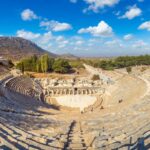
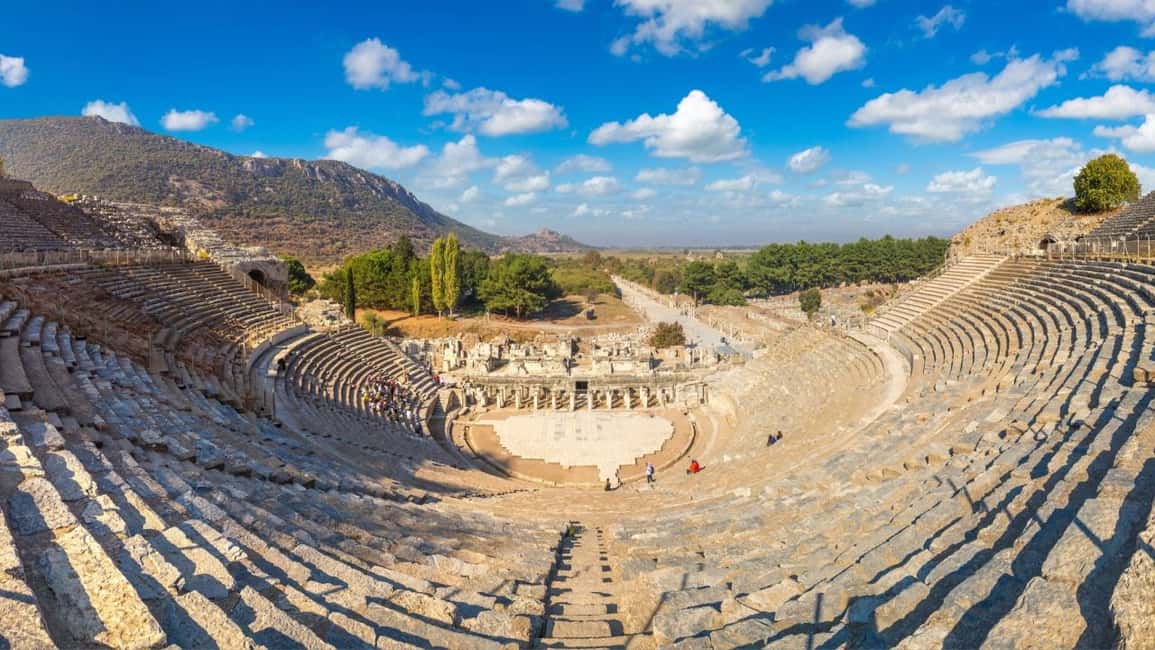
- Great Theater: where performances met 25,000 people
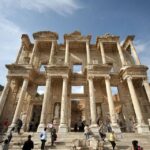
- Library of Celsus: why this ruin still feels organized
- Temple of Hadrian: the Roman layer you can’t skip
- Temple of Artemis: the Seven Wonders story, grounded
- Terrace Houses and mosaics: luxury you can actually picture
- Roman Baths and the agora: how the city ran
- Ephesus Experience Museum: context without a live guide
- Practical logistics: self-guided means you control the tempo
- Who this ticket is best for (and who might want a guide)
- Quick value check: is it worth $61 for 3 days?
- Should you book this Ephesus entry ticket?
- FAQ
- How much is the Ephesus entry ticket?
- How long is the ticket valid?
- What’s included with the ticket?
- Is a live guide included?
- Do I need to bring headphones?
- Is transportation included?
- Can I access the site with a wheelchair?
- Is there a meeting point provided?
- Are food and drinks included?
- Can I cancel, and how far in advance?
- How do starting times work?
Quick take: what’s most worth your attention
- Great Theater still feels built for massive crowds, once up to 25,000 spectators
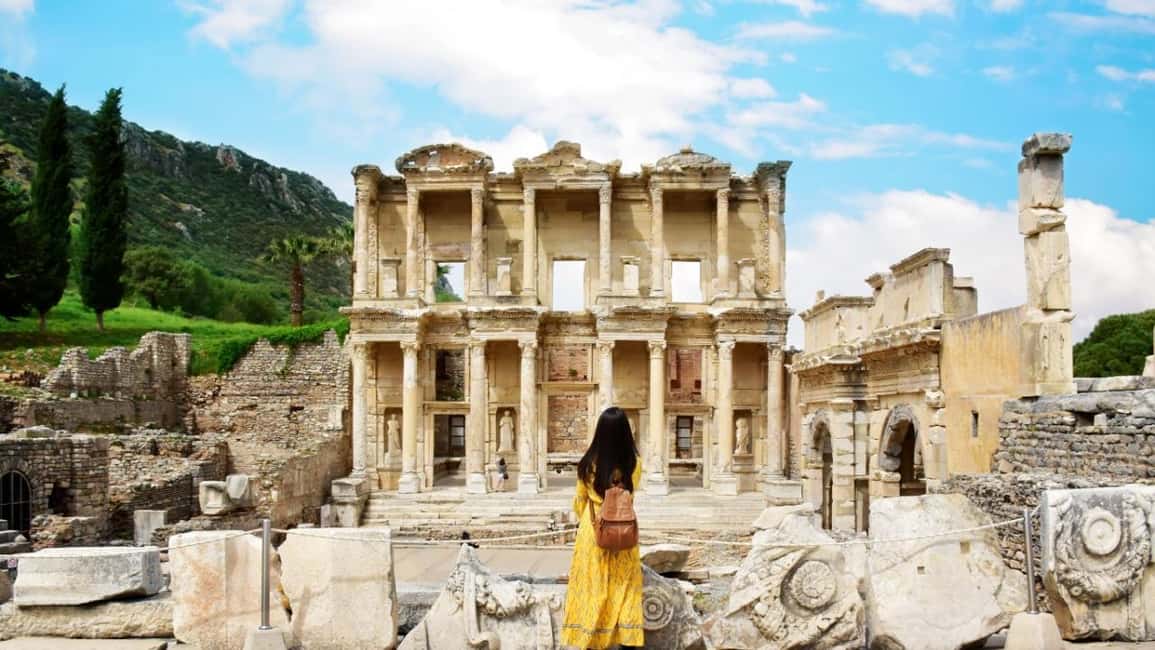
- Library of Celsus turns architecture into a scroll-storage story, once holding thousands of scrolls
- Temple of Hadrian shows you the Roman layer of the city, not just the Greek myths
- Terrace Houses help you picture daily wealth through mosaics and elegant spaces
- Experience Museum adds context without needing a live guide
- Three-day validity lets you pace the site instead of rushing it in one go
Why Ephesus still hits hard, even in ruins
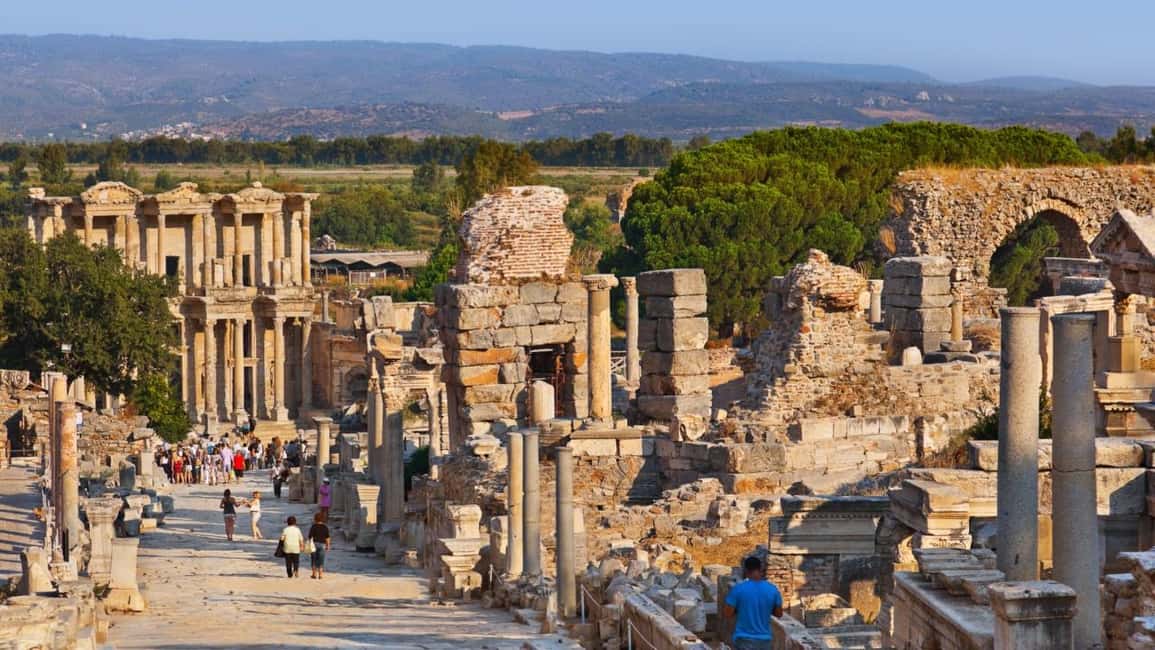
Ephesus was once a major Mediterranean port and trading center, and it shows in the layout and the variety of what’s left. At its peak, the city reached around 250,000 people, making it one of the largest cities in the Roman Empire. You’re not just visiting one monument; you’re walking through layers of Anatolian, Greek, Persian, and Roman rule.
What makes the ruins feel special is how much still has structure. Even when you know it’s broken, the spaces read clearly. That clarity makes it easier for you to imagine daily life—processions, performances, commerce—without needing a person standing next to you.
A few more Selcuk tours and experiences worth a look
Price and what your $61 ticket really buys
At $61 per person for 3 days, this ticket is best for people who want flexible self-guided time. You’re paying for entrance to the ancient city plus the Ephesus Experience Museum, with an optional mobile audio guide available.
Here’s the value math that matters: this isn’t a full-day guided tour, so the price is less about staffing and more about access. If you’re the type who likes to move at your own speed—lingering where you care and skipping what you don’t—this works well.
The cost is also easier to justify because Ephesus rewards time. With three days, you can come back to what hooked you the first day. If you only had one day, you’d likely feel like you ran through the highlights.
How to use your 3 days: a smart pacing plan
Because you have 3 days of validity, you can avoid the most common problem at big sites: the head-spinning rush. I’d split your visits so you’re not trying to absorb the entire city in one sweaty marathon.
A practical approach:
- Day 1 (the big wow circuit): start with the Great Theater area, then head toward the central monuments like the Library of Celsus and nearby Roman features.
- Day 2 (Roman and daily life): focus on the Temple of Hadrian, plus the Roman Baths and the agora areas so you understand how the city functioned.
- Day 3 (wealth and context): spend more time on the Terrace Houses and then use the Experience Museum to connect the dots.
You can shuffle this order based on your energy, but the idea stays the same: spread the main sites out so you actually remember what you saw.
Great Theater: where performances met 25,000 people
The Great Theater is one of the best places to “feel” ancient Ephesus because it’s designed for public gatherings. You can picture spectators filling the seating and turning the performance into a city event. At its height, the theater hosted up to 25,000 spectators, which helps your brain understand the scale of entertainment and civic life.
When you stand in the viewing area, look for how the shape channels attention toward the stage area. Even without sound effects, the space makes sense. If you’re traveling with kids or you’re just easily impressed, this is usually the moment that lands first.
One practical consideration: theaters and stone seating areas can be uneven underfoot. Wear shoes with solid grip, not slick sandals.
Library of Celsus: why this ruin still feels organized
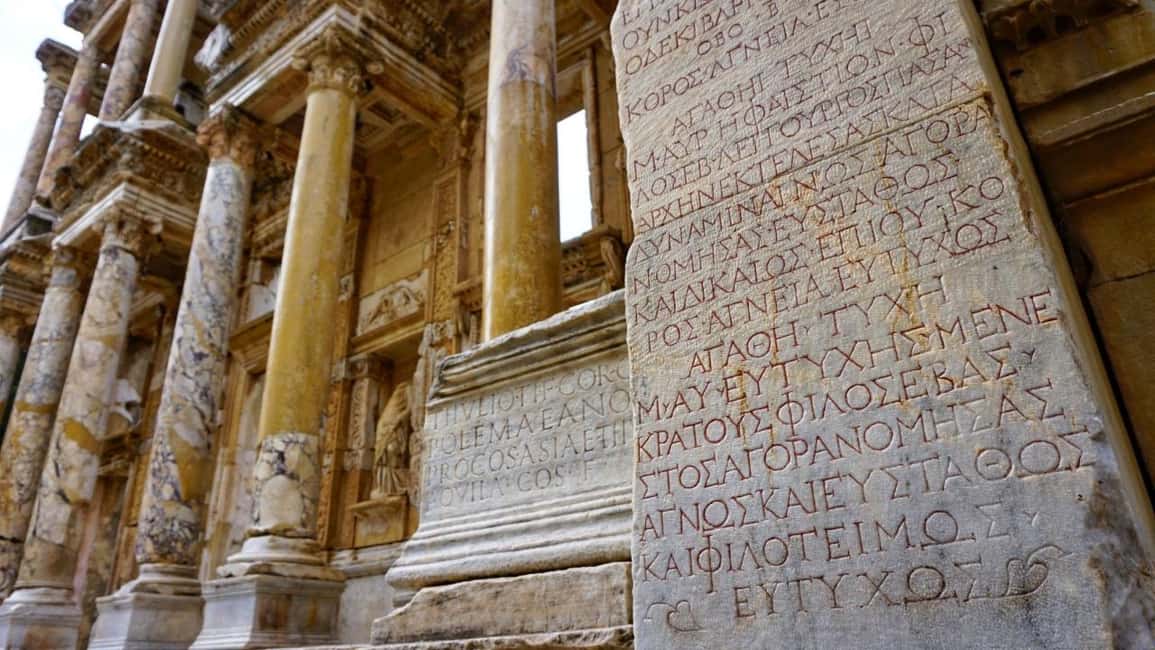
The Library of Celsus is a standout because it’s not just a pile of stone. It’s an architectural statement, and the design helps you grasp what the space once did. The library was built to store and house thousands of scrolls, so imagine it as a place where knowledge was public-facing, not locked away.
What I like about visiting it is that it gives you a clearer “how” of ancient life. You can stand where the structure was meant to guide movement and view the facade in a way that feels deliberate. It’s also a great pause point during your walk, since it slows you down naturally.
If you’re photographing, go early or later in the day if the sun is harsh. Bright midday light can flatten details, especially on carved stone and columns.



Temple of Hadrian: the Roman layer you can’t skip
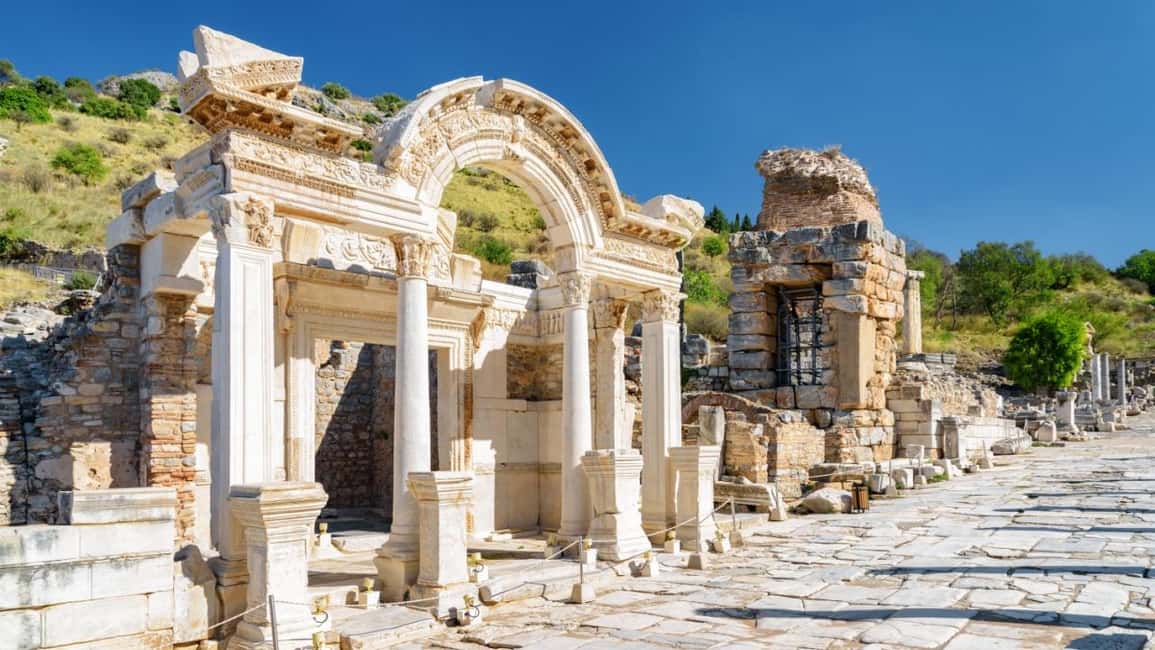
Many people come to Ephesus for the famous Greek wonders, but the Temple of Hadrian reminds you that this city became a Roman showpiece too. Roman influence comes through in how monumental the structures are and how the city’s public spaces were organized for power and ceremony.
You don’t need a long speech to appreciate it. Even from a distance, the placement and scale show you the intent: this was a city that wanted to impress. If you’ve ever wondered what Roman “presence” looks like outside of Rome itself, this is one of your answers.
I’d pair this stop with a look at nearby Roman-era features (like baths and agora areas) on the same day, so the story of public life connects.
Temple of Artemis: the Seven Wonders story, grounded
The Temple of Artemis is one of those names you already recognize, and Ephesus gives you the chance to place it in real geography. Artemis was once one of the Seven Wonders of the Ancient World, and the site of Ephesus is part of why the wonder became legendary in the first place.
Even if you can’t see everything the way it once stood, the significance doesn’t shrink. Seeing the broader area and understanding why Artemis mattered to the city helps the myth feel less like trivia and more like a civic identity.
Tip for first-timers: don’t treat Artemis as just a photo stop. Give yourself a couple minutes to orient yourself—where you are in relation to the rest of the ruins—so the wonder fits into your mental map.
Terrace Houses and mosaics: luxury you can actually picture
The Terrace Houses are where Ephesus turns from public spectacle into private life. You’re not only looking at stone; you’re trying to imagine how wealthy residents lived, moved, and decorated their spaces. The mosaics and elegant ruins matter because they show that art wasn’t only for temples and theaters.
What’s especially helpful for you here is time. If you rush, you’ll miss the patterns and the feeling of craftsmanship. If you slow down, the floors and layouts become a picture of status and taste.
A heat warning is smart for this stop, too. Some sections involve open-air walking, and summer can be intense.
Roman Baths and the agora: how the city ran
If temples are about beliefs and theaters are about spectacle, the Roman Baths and the agora reveal the daily engine. The baths signal routine and social life, while the agora connects to commerce and civic interaction. Together, they help you understand Ephesus as a living city, not only a museum of famous names.
I like these stops because they reduce the guesswork. You don’t have to imagine the routine from scratch; the idea of bath culture and market/civic space gives you a practical framework.
One thing to watch: the area can involve more walking than you expect. Build breaks into your day, especially if you’re visiting in hot months.
Ephesus Experience Museum: context without a live guide
One of the smartest pieces in this ticket is that you get the Ephesus Experience Museum included. Since there’s no live guide, the museum becomes your best friend for turning stones into stories.
Even if you’re skipping the museum at first, I’d suggest visiting at least once during your three days. Use it after you’ve seen a few ruins, so you can connect what you learned to what you already walked past outside.
This is also where an optional mobile audio guide can help. If you want to follow the site with extra narration, come prepared to use your phone comfortably.
Practical logistics: self-guided means you control the tempo
This is a self-guided experience. There’s no live guide, and there’s also no meeting point provided. That means you’re responsible for your route and timing, and you’ll want to show up ready to navigate.
Bring headphones. The ticket notes headphones and recommends earphones, and since you may use the optional mobile audio guide, you’ll want audio to be clear. Also make sure your smartphone is fully charged before you start. If your battery dies mid-ruin, you lose the main tool that replaces a live guide.
In hot summer months, plan for sun protection. The basics are called out for a reason: hat, sunscreen, and a water strategy of your own since food and drinks aren’t included.
Who this ticket is best for (and who might want a guide)
This works best for you if:
- You enjoy exploring at your own pace and like the freedom of a private group
- You’re comfortable reading the site without constant explanations
- You can handle a walk-heavy day with breaks
It may not be ideal if you want a structured commentary and a person to answer questions on the spot. Since no live guide is included, people who need ongoing guidance might find they’re constantly Googling in their own head.
Also consider your style. If you love one or two monuments and hate racing, the three-day validity is a major win.
Quick value check: is it worth $61 for 3 days?
For $61, you’re getting more than one attraction: entrance to the ancient city, the Experience Museum, and the option to add audio. The biggest value factor is the multi-day flexibility, which prevents the all-at-once burnout.
It’s a good deal if you’ll actually use the full validity window and revisit favorites. If you only go once and skip the museum, the per-day value drops. If you can use two or three visits, it becomes a calmer, more satisfying way to see Ephesus.
Should you book this Ephesus entry ticket?
Book it if you want freedom, flexibility, and the chance to learn through your own pace with museum context and optional audio. This is especially smart for independent travelers who can handle self-navigation and already know they prefer experiencing ruins step-by-step.
Skip it only if you strongly need a live guide to explain the story in real time. Without one, you’ll rely on your phone audio and the museum to do the heavy lifting.
If you’re deciding between a rushed one-day plan and a slower three-day approach, this ticket leans toward the slower, more memorable option.
FAQ
How much is the Ephesus entry ticket?
The price is $61 per person.
How long is the ticket valid?
This ticket is valid for 3 days.
What’s included with the ticket?
It includes Ephesus Ancient City entrance, the Ephesus Experience Museum, and an optional mobile audio guide.
Is a live guide included?
No. A live guide is not included.
Do I need to bring headphones?
Yes. Headphones are listed under what to bring, and earphones are recommended. Headphones are not included in the ticket.
Is transportation included?
No. Transportation is not included, and there is no hotel pick-up and drop-off.
Can I access the site with a wheelchair?
Yes. The activity is wheelchair accessible.
Is there a meeting point provided?
No meeting point is provided.
Are food and drinks included?
No. Food and drinks are not included.
Can I cancel, and how far in advance?
There is free cancellation up to 24 hours in advance for a full refund.
How do starting times work?
You can check availability to see starting times, since the ticket is valid for 3 days.