REVIEW · ISTANBUL
Dolmabahçe Palace Tour with Guide and Luxury Yacht Sunset Cruises
Book on Viator →Operated by Yacht Cruises: Bosphorus · Bookable on Viator
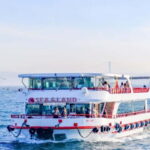
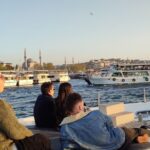
One Istanbul day, two totally different worlds. This Dolmabahçe Palace and Bosphorus sunset cruise combo links Ottoman splendor with big-water views. You get guided time inside the palace, then slide into golden-hour sailing with stories along the way.
I love the practical feel: small-group time (up to 20) and a guide who keeps the pace smooth. I also like the included treats on board—cookies, baklava, fruit plates, and Turkish tea—so you’re not scrambling for food while the sunset happens.
One consideration: it’s on the water, so it’s not recommended for vertigo or seasickness. If you’re sensitive to motion, you’ll want to think twice.
In This Review
- Key things to know before you go
- How this Dolmabahçe + Bosphorus day actually feels
- Start at Dolmabahçe Clock Tower, then get your bearings fast
- Dolmabahçe Palace inside the 3-hour window
- The Cıragan Palace story you’ll hear while passing the area
- Ortaköy and the Bosphorus Bridge views: where the skyline snaps into place
- Rumeli Hisarı and Anadolu Hisarı: Ottoman defenses, now open-air stages
- Beylerbeyi and Kucuksu: summer palaces with the water as the main character
- Galata Tower and Maiden’s Tower: skyline icons with legends attached
- Snacks, comfort, and the small-group advantage on board
- Price and value: what you’re really paying $78.27 for
- Should you book this Dolmabahçe + sunset yacht combo?
- FAQ
- How long is the Dolmabahçe Palace and sunset yacht experience?
- Is Dolmabahçe Palace entry included?
- What language is the tour offered in?
- What’s included on the yacht?
- Is alcohol included in the price?
- Where does the tour start and end?
- What if the weather is poor?
Key things to know before you go
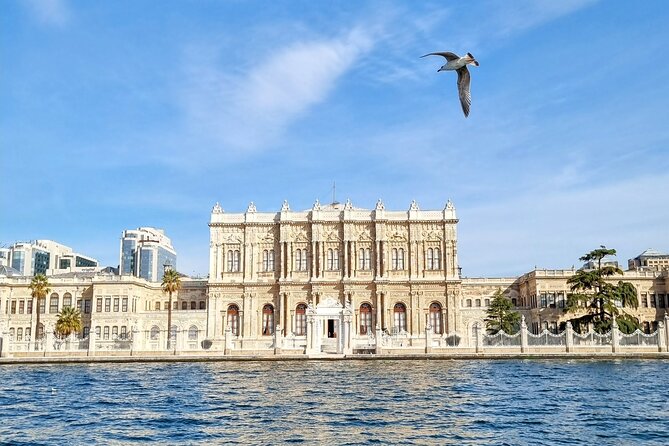
- Dolmabahçe Palace + sunset cruise in one ticket: you see the palace first, then transition to the Bosphorus light shift.
- Up to 20 people: the boat stays comfortable, not a cattle-car setup.
- Snack-and-tea included: baklava, fruit plates, lemonade, cookies, and water keep the ride easy.
- Guides you can meet by name: Aleyna, Taner, Erdem, Muhsin, Jaan, and Betul show up in the guide lineup.
- Bosphorus sights from the water: bridges, fortresses, palaces, and legend-filled skyline landmarks.
- English service: the tour is offered in English, with professional local guiding.
How this Dolmabahçe + Bosphorus day actually feels
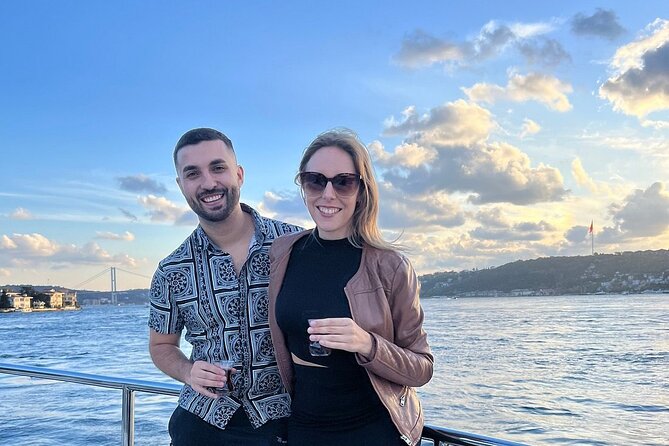
This tour is built for people who want Istanbul to make sense fast. You start with a major Ottoman stop—Dolmabahçe Palace—then you spend your evening on a luxury yacht sunset cruise, where the city’s geography becomes the story.
What makes it work is pacing. You’re not just rushing from photo spot to photo spot. You get guided context inside the palace, then on the water you get real “how Istanbul sits here” explanations as you pass the strait’s landmarks.
And because it’s a small group, you’re more likely to hear the details (and ask a question) without shouting over the crowd. The day is also practical: you have included snacks and a restroom on board, which matters more than most people admit.
You can also read our reviews of more boat tours in Istanbul
Start at Dolmabahçe Clock Tower, then get your bearings fast
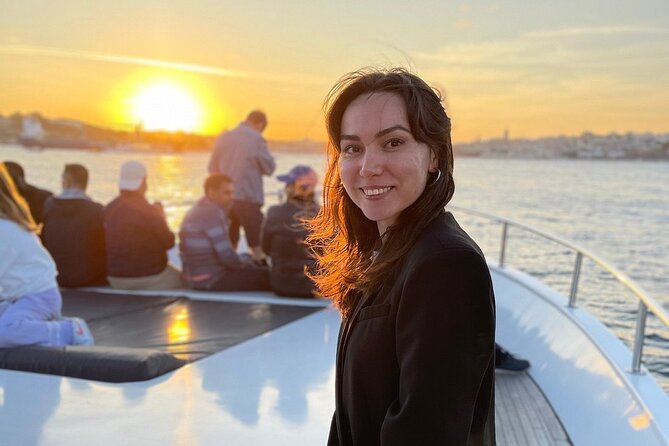
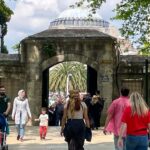
You begin at Dolmabahçe Clock Tower in Beşiktaş, then your day unfolds toward the Bosphorus. That start point is handy because it’s in the Dolmabahçe area—easy to tie to your other sightseeing plans on the European side.
From there, the Bosphorus orientation is the key early payoff. The strait connects the Sea of Marmara to the Black Sea and splits Istanbul between Europe and Asia. It runs roughly 30 kilometers and varies a lot in width, with an average depth of about 60 meters and a maximum reaching around 120 meters.
If you like geography with a story attached, your guide’s commentary helps you see why this waterway matters. Currents run surface-level one direction and deeper waters the other way, and those conditions shaped how ships and powers moved through Istanbul for centuries.
Dolmabahçe Palace inside the 3-hour window
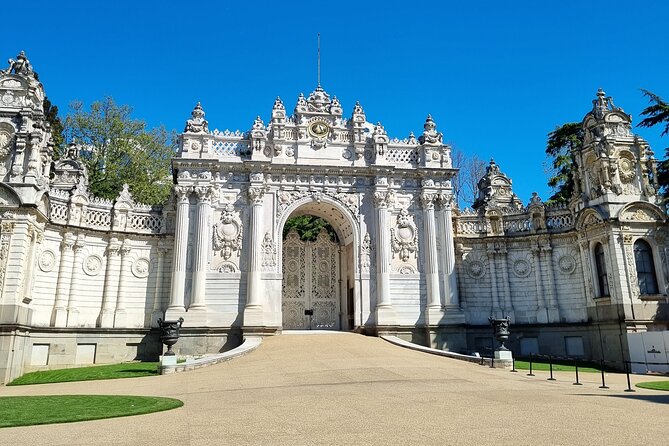
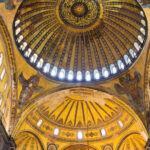
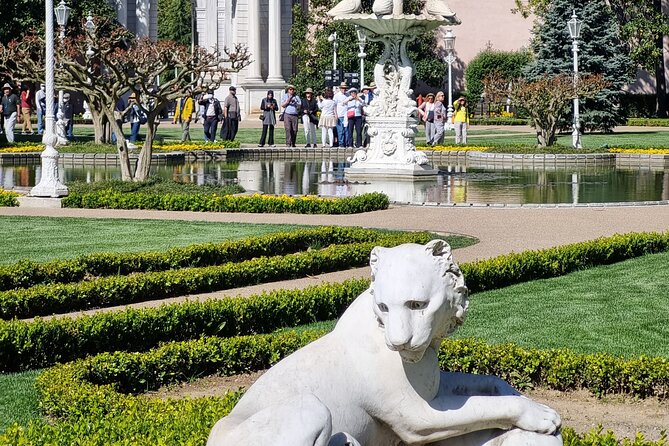
Dolmabahçe Palace is Ottoman grandeur on the waterfront. It spreads across about 250,000 square meters in Beşiktaş, on the left bank as you enter the Bosphorus from the Sea of Marmara—opposite Üsküdar and Kuzguncuk.
Your time inside is focused. Since the palace admission is included, you can concentrate on the visit itself rather than figuring out tickets. You’re also not stuck in an all-day maze of rooms; the visit is long enough to feel satisfying, but structured so you still get your sunset sailing.
What you’ll appreciate most is the palace’s relationship to the Bosphorus. This place was tied to ships anchoring in an earlier cove, and later it became a preferred residence of the sultanate. Even if you’re not a hardcore architecture buff, the setting and the scale do the heavy lifting.
The Cıragan Palace story you’ll hear while passing the area
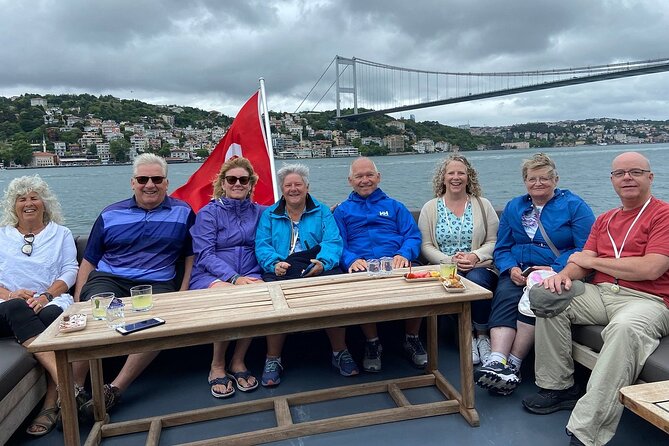
As you move along the Bosphorus side of Istanbul, your guide may bring up Çırağan Palace, and it’s one of those locations where the facts feel like drama.
Çırağan was commissioned by Sultan Abdulaziz and designed by Sarkis Balyan. It was finished in 1871 and covers about 80,000 square meters, built with marble. Abdulaziz was deposed and imprisoned there for years with his family, and later Murat V experienced a similar imprisonment for decades.
The palace also had political afterlife: after the Second Constitutional Monarchy in 1908, it was used as a House of Parliament, then damaged by fire in 1910. The grounds later shifted to sports use (Seref Stadium), and in the early 1990s it reopened as a luxury hotel after restoration.
Even if you’re only seeing it from outside, the story gives the waterfront architecture an extra layer.
Ortaköy and the Bosphorus Bridge views: where the skyline snaps into place
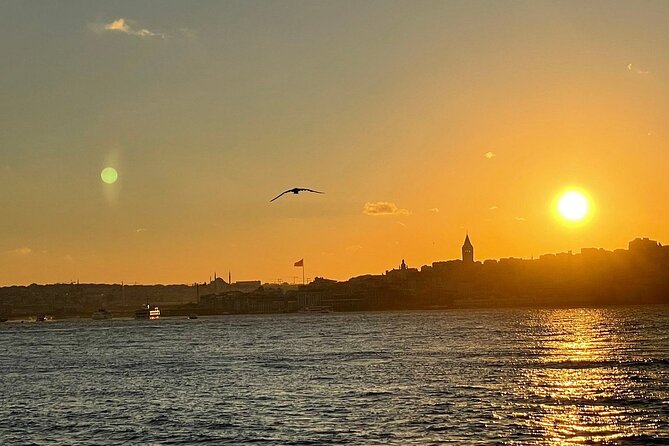
Once you’re on the Bosphorus, Ortaköy is a stop that’s easy to love even if you don’t get off the boat. It’s known for the bazaar atmosphere, souvenir shops, and cafés and restaurants around the area—though the day picks up more after 10:00 a.m.
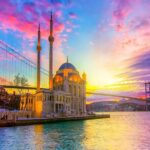
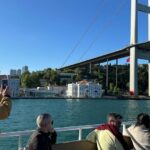
From the water, Ortaköy also frames one of Istanbul’s iconic crossings: the Bosphorus Bridge. This was the first bridge built across the Bosphorus. The idea was old, but construction began in 1970 and the bridge opened on 29 October 1973, tied to the Republic’s 50th anniversary.
On a good sunset, the bridge becomes less of a traffic object and more of a visual anchor. Plus, it’s part of Istanbul’s public life—used in events like the Istanbul Eurasa Marathon.
You can also read our reviews of more guided tours in Istanbul



Rumeli Hisarı and Anadolu Hisarı: Ottoman defenses, now open-air stages
One of the most rewarding parts of a Bosphorus cruise is that you see these sites in context. Instead of “here’s a fortress,” it becomes “here’s why they built it right here.”
Rumeli Hisarı (Rumeli Fortress) sits in Sariyer, directly across from Anadolu Hisarı. Construction began in 1453 under Sultan Mehmet the Conqueror, placed at the narrowest point of the strait. The famous part is speed: it was completed in just three months. It was used to guard against naval attacks before the conquest, and afterward it became an inspection point for maritime traffic.
Today the restored site is tied to summer concerts and functions as an open-air theater and museum. Even if you’re not going in, the shift from war-defense to cultural stage is a neat reminder of how Istanbul reuses space.
On the Asian side, Anadolu Hisarı is a parallel sight. Built in 1395 by Bayezit I, it includes a citadel and exterior walls. After the conquest, it lost strategic importance and became a military hospital. Later, restoration ran from 1991–1993, and it functions as an open-air museum, though only the outer walls are visitable.
From the yacht, you can usually clock the shape of the walls and imagine how the strait narrowed at that point.
Beylerbeyi and Kucuksu: summer palaces with the water as the main character
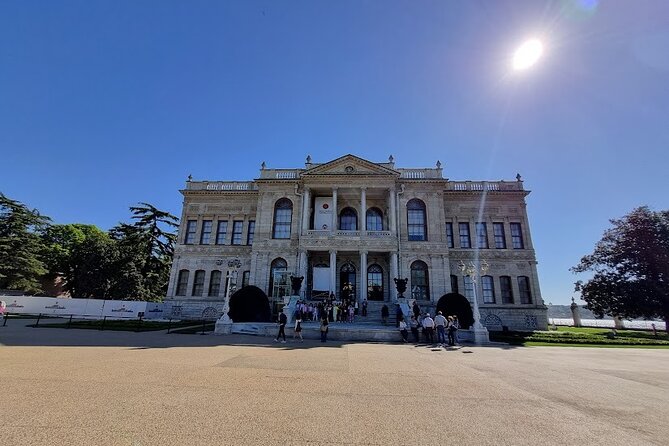
I like Bosphorus palaces because they’re not just buildings. They’re built around a view.
Küçüksu Palace is a small Ottoman summer palace ordered by Sultan Abdulmecit, designed by Nikogos Balyan. With a great Bosphorus outlook, it attracted sultans during the Ottoman period for relaxation, and in the Republican era it was opened as a museum because of the quality of furniture, paintings, carpets, and fine details.
Then there’s Beylerbeyi Palace, also a Bosphorus summer palace complex, built in the 1860s and located right under the Bosphorus Bridge area. It blends stylistic elements from both East and West, including Renaissance and Baroque influences. The main building is a two-storey stone structure on a raised basement, with 6 halls and 24 rooms, plus a hamam and a bathroom.
Your guide may also point out the lily pond and garden setting, which helps you see why these palaces weren’t meant to feel sealed off from life on the water.
Galata Tower and Maiden’s Tower: skyline icons with legends attached
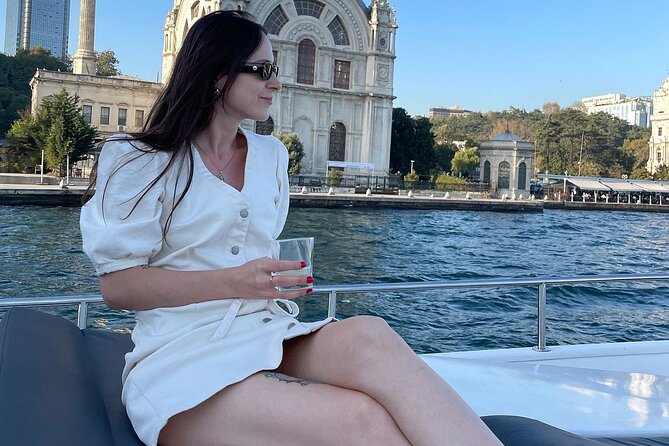
As you cruise, you’ll likely catch a view of Galata Tower. Built by Genoese in 1348, it stands about 66.90 meters and was the tallest building in the city when it was constructed. Historically it served multiple roles: fire observatory, jail, and more. One standout story is 1632, when Hezarfen Ahmet Çelebi reportedly glided from the top of the tower across the Bosphorus to Üsküdar using wings he built himself.
Galata Tower also has a more modern side: after damage to the conic roof in a storm in 1875, the cap was restored in the 1960s, and today the tower is open to the public. There’s also a restaurant and café on the upper floor, which makes it an easy “Istanbul moment” if you come back later.
Another iconic silhouette is Maiden’s Tower (Kız Kulesi). It sits on a tiny island about 200 meters from the shore of Üsküdar. The legend is the kind that sticks: an oracle warns that a sultan’s daughter will die from snakebite on her 18th birthday, and the solution becomes placing her in the tower—only for the fate to happen through a hidden snake in a basket of fruits.
Even if you only see the tower from a distance, the story makes it feel like part of Istanbul’s myth engine.
Snacks, comfort, and the small-group advantage on board
This is where the practical details do their job. The tour includes cookies, baklava, Turkish tea, lemonade, fruit plates, and water. There’s also a restroom on board, which is a lifesaver on a timed day.
The vibe tends to be relaxed rather than lecture-only. In particular, I like that guides such as Taner have a way of mixing humor into explanations, which keeps the history from feeling like a worksheet. If you’re with Erdem or Aleyna, you’re likely to get clear, friendly commentary tied to what you’re seeing right now, not just what happened long ago.
One thing to be aware of: alcoholic beverages are not included. If you want to toast to the sunset, you may need to treat that as an add-on.
And yes, it’s on open water. The tour notes it’s not recommended for travelers with vertigo and seasickness, so if you’re on the fence, choose based on your body, not your optimism.
Price and value: what you’re really paying $78.27 for
At $78.27 per person for roughly 5 hours, the value comes from the blend of items, not just one headline stop.
You get:
- Dolmabahçe Palace entry (admission included)
- A professional local guide
- A luxury yacht sunset cruise
- Included onboard food and drinks (snacks, tea, fruit, lemonade, water)
- A mobile ticket
- English-language guiding
The big question is whether you’d spend time on two separate days and still end up with good snack breaks and guided context. Here, you’re bundling the palace’s indoor immersion with the Bosphorus’s outdoor storytelling.
Also, the cap of 20 travelers helps justify the price. This isn’t a mass operation where the guide’s voice gets lost and your view becomes a smartphone forest.
Should you book this Dolmabahçe + sunset yacht combo?
If you want a smart Istanbul day that doesn’t require you to plan every step, this one makes sense. It’s especially good for you if:
- You want Dolmabahçe Palace without turning it into a full-day logistics headache.
- You care about sunset timing and want the Bosphorus views paired with guided context.
- You prefer small-group pacing and included onboard treats.
Skip it if you’re prone to motion sickness or you know the water makes you uncomfortable. In that case, your palace time might be better paired with a land-based Bosphorus option instead.
If you like your sightseeing with a bit of story—bridge dates, fortress build timelines, and legends like Kız Kulesi—this cruise pairing is a strong bet.
FAQ
How long is the Dolmabahçe Palace and sunset yacht experience?
It runs for about 5 hours. Exact timing can vary a bit, but the palace visit and Bosphorus sailing are planned to fit into one evening-length window.
Is Dolmabahçe Palace entry included?
Yes. Entry/Admission to Dolmabahçe Palace is included, so you don’t need to purchase a separate ticket for the palace.
What language is the tour offered in?
The tour is offered in English, with a professional local guide providing the commentary.
What’s included on the yacht?
You get snacks and drinks, including cookies, baklava, Turkish tea, lemonade, fruit plates, and water. There’s also a restroom on board.
Is alcohol included in the price?
No. Alcoholic beverages are not included.
Where does the tour start and end?
It starts at Dolmabahçe Clock Tower in Beşiktaş and ends at Ömer Avni, İnebolu Sk. 63/1, Beyoğlu near public transportation.
What if the weather is poor?
The experience requires good weather. If it’s canceled due to poor weather, you’ll be offered a different date or a full refund.
If you want, tell me your travel dates and whether you’re sensitive to boat motion—I can help you decide if the yacht part is worth it for you.