REVIEW · ISTANBUL
Whirling Dervish Ceremony
Book on Viator →Operated by Manolya Tours · Bookable on Viator
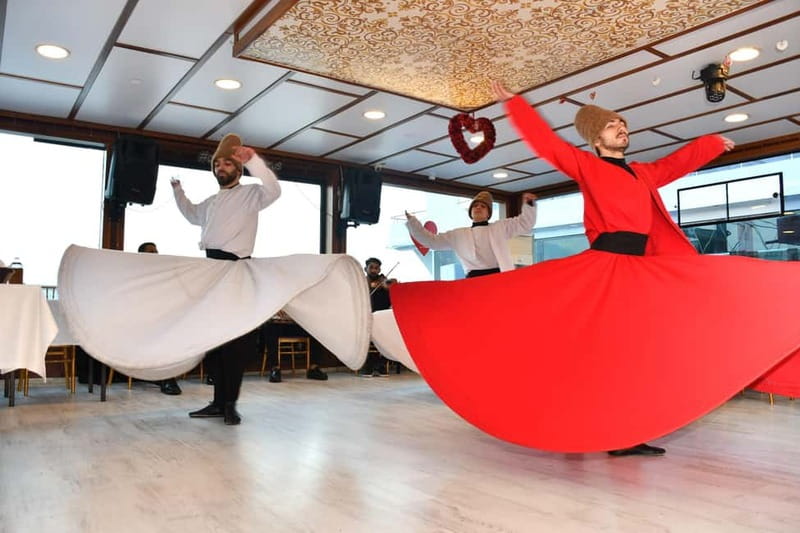
Spinning can feel like a prayer. In Istanbul, this Whirling Dervish ceremony centers on Sema, a ritual connected to the Mevlevi Order of Sufism and the teachings of Rumi. You’re not just watching movement—you’re seeing a form of active meditation and devotion unfold in real time.
What I really like is the authentic atmosphere. In the experiences I’ve heard described, it doesn’t feel over-produced or overly touristic, and the performers’ sincerity comes through. I also like that this is a strong first step into Sufi practice: even if you know little about it, the ceremony gives you a meaningful way to start.
One consideration: this experience depends on good weather, and kids under 5 can’t participate. If it’s a sensitive night for you (timing, kids, or weather concerns), plan accordingly.
In This Review
- Key Things to Know Before You Watch the Sema
- A Sema Ceremony in Istanbul: What You’re Actually Seeing
- Before You Go: 6:30 pm Timing and Getting There
- Inside the Hall: How the Sema Spinning Works (and How to Watch It)
- The Mevlevi Tradition: Why It Can Feel Sincere, Not Staged
- Price and Value: $20 With Admission Included
- Who This Fits Best (and Who Might Prefer Another Plan)
- Should You Book This Whirling Dervish Ceremony?
- FAQ
- How much does the Whirling Dervish Ceremony cost?
- How long is the experience?
- What time does the ceremony start?
- What’s included in the price?
- Is transportation included?
- Are children allowed?
- What happens if weather is poor, or if I need to cancel?
Key Things to Know Before You Watch the Sema
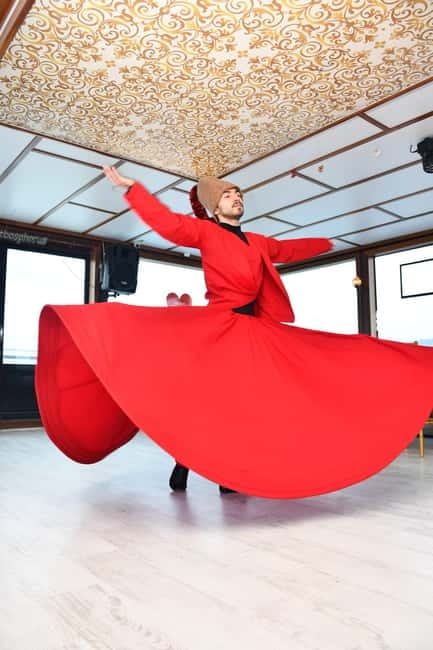
- Sema is “listening”: the spinning is part of devotion and active meditation, not a random performance.
- It’s tied to the Mevlevi Order and Rumi: the ceremony’s roots link to Jalaluddin Rumi and Mevlevi Sufism.
- Admission is included in the $20 price, so you’re paying for access, not add-ons.
- You’ll spend about 1 hour on site, starting at 6:30 pm.
- Weather matters: poor weather can lead to a rescheduled date or a refund.
- Kids under 5 can’t join, so it’s best for older children and adults.
A Sema Ceremony in Istanbul: What You’re Actually Seeing
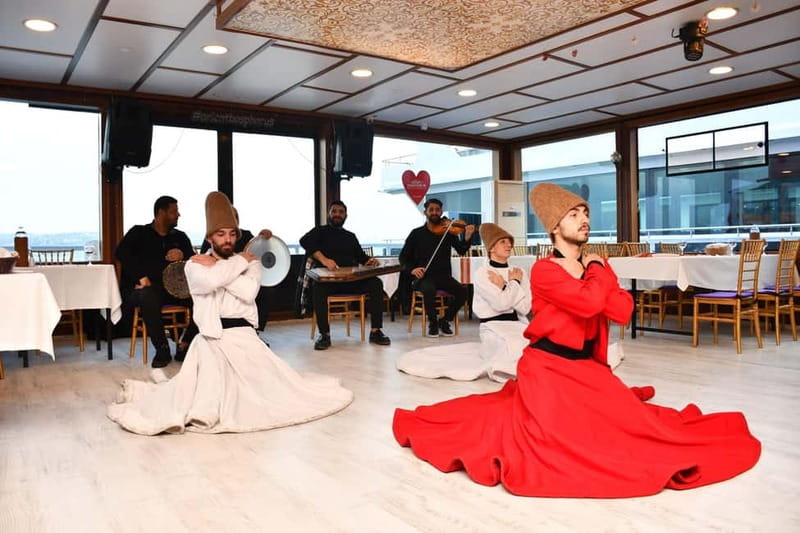
A Whirling Dervish ceremony can look like choreography at first glance. But the core idea is different: the Sema (meaning listening) is built around devotion and a kind of spiritual focus. The spinning circles are repetitive on purpose, designed to carry the participants through prayer-like concentration.
The ceremony connects to the Mevlevi Order of Sufism, a mystical branch of Islam. And it’s famously associated with Jalaluddin Rumi, the 13th-century Persian poet and mystic. That matters because it gives the ritual context: you’re seeing a tradition shaped by poetry, devotion, and the quest for spiritual unity.
Here’s the practical part for your expectations. If you come in thinking this will feel like a concert or a theatrical show, you may miss what makes it compelling. The most rewarding way to watch is to treat it like a moving ritual—pay attention to how the group stays steady and how the music supports the mood.
You can also read our reviews of more tours and experiences in Istanbul.


Before You Go: 6:30 pm Timing and Getting There
This starts at 6:30 pm and runs about 1 hour. I like evening experiences because Istanbul’s nights are cooler, and this kind of ritual tends to feel more atmospheric after sundown. Still, that start time also means you shouldn’t plan a late dinner right on top of it.
Transportation isn’t included, but the meeting area is near public transportation. That’s good news: you won’t need to line up a complicated route or rely on a long taxi ride. If you’re traveling on your own, check your transit options ahead of time so you arrive calm and on schedule.
You’ll receive confirmation at booking time. For most people, participation is straightforward. The only hard restriction is the one worth remembering early: kids under 5 aren’t allowed.
Finally, note the weather condition. The experience requires good weather, and if it’s canceled for poor weather, you’ll be offered another date or a full refund. That’s not something you want to discover at the last minute, so if the weather forecast looks shaky, keep your plans flexible that evening.
Inside the Hall: How the Sema Spinning Works (and How to Watch It)
The main moment is the Sema performance, where the dervishes whirl in circles for an extended stretch. The point isn’t speed; it’s consistency. The repetitive movement creates a trance-like rhythm, supported by music that sets the emotional tone.
The word “listening” can sound abstract until you experience the pacing. The spinning is described as a form of active meditation and devotion, so the ceremony asks you to watch with attention. I suggest you do something simple: pick a spot where you can see the group clearly, then focus on the flow rather than the minutes ticking by.
There’s also a subtle mindset shift that helps. Try not to judge what you see as either impressive or confusing. Instead, ask: What does this movement feel like in the moment? Many people find the longer, steady whirling more mesmerizing than they expected, especially once the music and group focus sync up.
From the reviews you can practically borrow this approach: the ceremony is often described as a blend of spirituality and art, with an atmosphere shaped by captivating music. That’s exactly the kind of combo where watching quietly works better than analyzing.
The Mevlevi Tradition: Why It Can Feel Sincere, Not Staged
One of the strongest reasons to book this is how it’s described in terms of tone. In the feedback I’ve seen reflected, the experience didn’t come off as overly touristic. People felt that participants were true believers rather than performers, which is a huge difference in how you experience the room.
That sincerity changes the energy. A staged show can be entertaining, but it often leaves you at a distance. A ritual like this tends to pull you closer—less like a spectator sport, more like being present for something meaningful. Even if you don’t share the faith, the devotion shows in how the group carries itself.
Also, starting with a whirling dervish ceremony is a smart cultural on-ramp. If you don’t know much about Sufism, you’re not starting with a textbook. You’re starting with an embodied practice—spinning, music, repetition, and focus—so the concept lands in your body as much as your brain.
Just keep one expectation aligned: it’s spiritual, not a comedy show. If you want loud explanations and fast punchlines, you might find the mood too calm. But if you enjoy slow attention and respectful observation, this style of event tends to stick with you.
Price and Value: $20 With Admission Included
At $20 per person for about 1 hour, this can feel like a reasonable cultural buy, especially because the entrance fee is included. That’s the kind of pricing I like when I’m planning: you know what you’re paying for.
What’s not included is tips and transportation. Tips are common in many tour situations, but since they’re not included in the price, you’ll want to decide for yourself based on service and your budget. And because transportation isn’t included, build that cost or time into your plan if you’re far from public transit.
Is it “worth it”? For me, yes if you’re the type who likes meaningful performances more than checklist sightseeing. The best value comes when you approach it as a cultural encounter: a chance to see a living Sufi practice connected to Rumi, not just a photo stop.






Who This Fits Best (and Who Might Prefer Another Plan)
This suits adults and families with older kids. The reason is simple: kids under 5 aren’t allowed, and the experience is about one hour long at evening time. If you’re traveling with little ones, this likely won’t work.
It also fits you if:
- You want an authentic-feeling cultural moment rather than a loud tourist spectacle
- You like music and ritual pacing
- You’re curious about Sufi spirituality and want a gentle introduction
It may be less ideal if:
- You need heavy, step-by-step explanations to understand what you’re seeing (this is a ritual first)
- You’re very sensitive to weather changes on a specific evening
- You’re hoping for something more interactive or modern than a traditional ceremony
As a planning tip, treat it as your “slow down” activity for the day. If your afternoon is packed with intense walking, this is a good counterweight.
Should You Book This Whirling Dervish Ceremony?
I’d book it if you’re after a sincere, spiritual performance with a strong cultural link to the Mevlevi Order and Rumi. The big selling point is the vibe people describe: mesmerizing, and often not overly touristic, with participants coming across as genuinely devoted.
If your schedule is tight or the weather looks questionable, still consider it—but stay flexible that evening. With good planning, this $20 experience can be a memorable Istanbul night that gives you more meaning than a typical show.
In short: if you want to watch a ritual built on meditation, music, and devotion, this is an easy yes.
FAQ
How much does the Whirling Dervish Ceremony cost?
It costs $20.00 per person.
How long is the experience?
It’s approximately 1 hour.
What time does the ceremony start?
The start time is 6:30 pm.
What’s included in the price?
The admission ticket (entrance fee) is included.
Is transportation included?
No. Transportation isn’t included.
Are children allowed?
Kids under 5 years old are not allowed. Most travelers can participate.
What happens if weather is poor, or if I need to cancel?
The experience requires good weather. If it’s canceled due to poor weather, you’ll be offered a different date or a full refund. You can cancel for a full refund up to 24 hours before the experience’s start time.