REVIEW · ISTANBUL
Walls of Contantinople and Byzantine Palace Tour
Book on GetYourGuide →Operated by layover in Istanbul · Bookable on GetYourGuide
Constantinople’s defenses are still there. This 4-hour walk-and-ride tour strings together the Walls of Constantinople with key gates and the Byzantine palace zone, so you can connect Roman, Byzantine, and Ottoman layers in one route. I especially like how the tour follows the logic of the fortifications, from towers to gates to the shoreline side of the old city. And I like the added stop at the Palace of the Porphyrogenitus, which helps you shift from walls-as-military to walls-as-empire.
The main thing to consider is that you’ll spend a good chunk of time outdoors and moving between stops. If you’re not a fan of uneven paths or you prefer to avoid stairs, ask your guide how the route looks on the day—some sections can be more step-heavy than they seem from a map.
In This Review
- Key takeaways (what matters most)
- Golden Gate to Yedikule: where the story starts
- Walking the Walls of Constantinople: what you’ll notice up close
- Gates, towers, and the Ottoman capture line you can visualize
- Palace of the Porphyrogenitus: turning fortifications into empire life
- Chora area and changing religious spaces
- Timing, comfort, and logistics that actually affect your day
- Is $100 a good value for this tour?
- Who this tour fits best
- Should you book the Walls of Constantinople and Byzantine Palace Tour?
- FAQ
- How long is the Walls of Constantinople and Byzantine Palace Tour?
- Is hotel pickup and drop-off included?
- What are the main sights included in the tour?
- Is entrance to Blachernea Palace included?
- Does the tour include ticketing time savings?
- What language is the tour conducted in?
- What does the price include?
- What cancellation policy is offered?
Key takeaways (what matters most)
- Golden Gate start + Yedikule fortress gives you a strong mental map fast.
- Walls from side to side helps you see what attackers faced and what defenders controlled.
- 3-empires storytelling turns stones into a timeline: Rome → Byzantium → Ottomans.
- Palace of the Porphyrogenitus stop adds context beyond the walls.
- Chora area option can include beautiful church-mosque architecture along the way.
Golden Gate to Yedikule: where the story starts
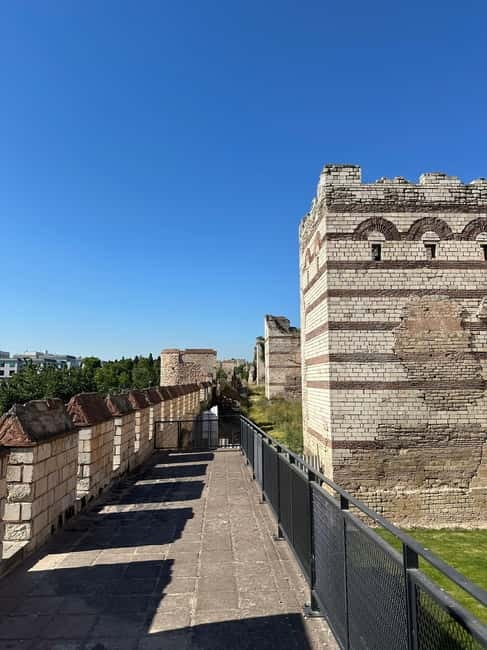
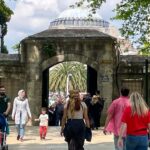
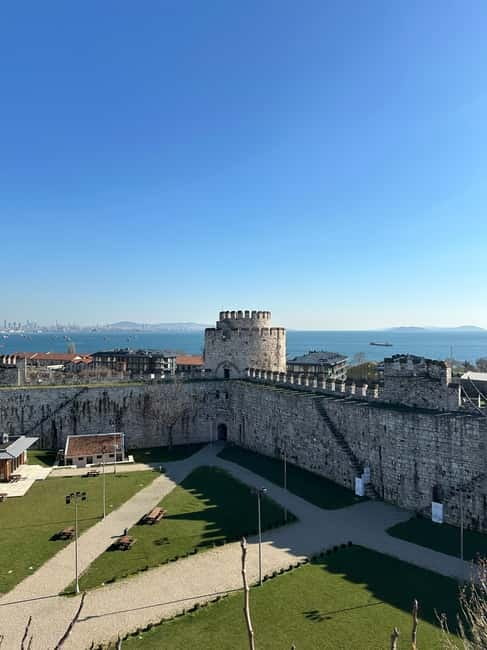
The tour begins with hotel pickup from city-center hotels, then you roll into Istanbul’s old-city orbit by car. The starting point is the Ottoman Fortress and the area around the Golden Gate of Constantinople, which is a smart way to open. Even if your brain feels overloaded by names, your feet start learning a route immediately.
From there, the guide points out towers linked to different periods, so you don’t just memorize locations. You learn how the city’s control points worked—where power was posted, where movement was allowed, and where you’d expect defenses to be strongest. Guides on this tour have strong communication habits too; one guide (Yasin) even checked in via WhatsApp before pickup, which is the kind of small thing that reduces stress in a busy city.
Price-wise, $100 per person for a 4-hour guided experience is most worth it if you like architecture, walls, and historical context. If you only want a quick photo loop, you can do that independently. But if you want meaning—why these walls mattered—this format is efficient.
You can also read our reviews of more tours and experiences in Istanbul.

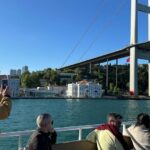

Walking the Walls of Constantinople: what you’ll notice up close
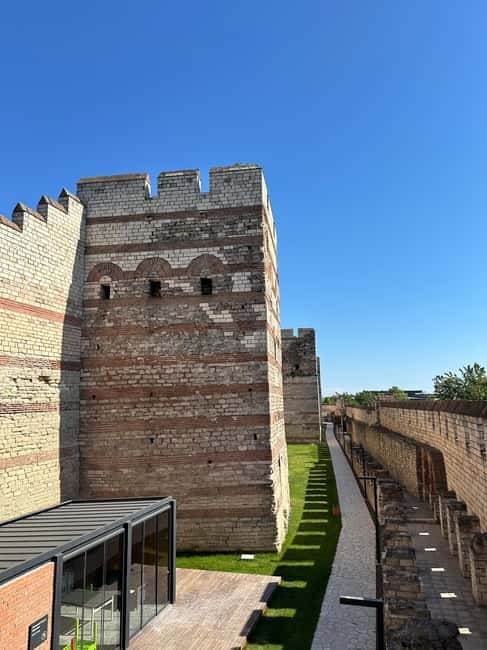
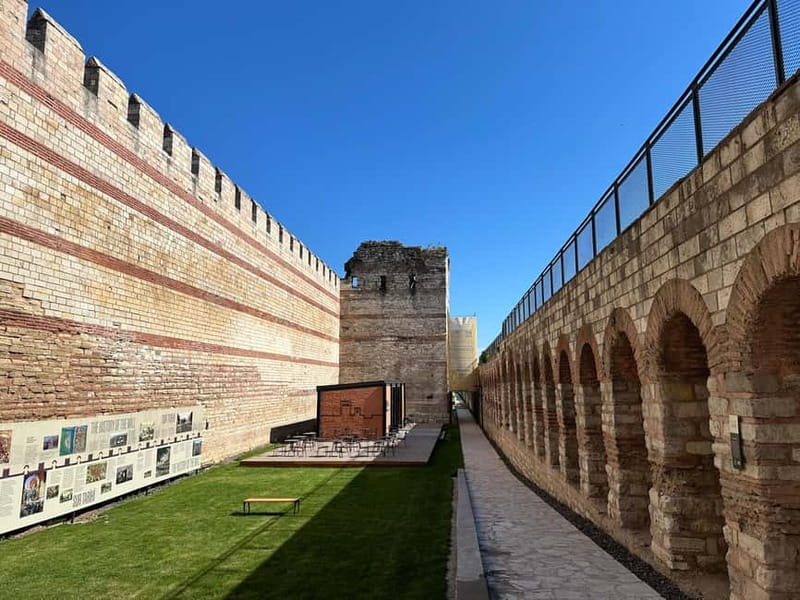
The heart of the tour is the Walls of Constantinople, and you’ll get to see them along the route in a way that feels more grounded than just viewing from a distance. Expect guided movement from one side of the defensive line to another, with time to pause and really look at structure and placement.
This is where the tour earns its reputation. In one example, the route included chances to walk on sections of the walls and even between them, so you can feel the narrowness and scale that a street-level view can hide. That’s a big difference. Walls aren’t just a “background.” They’re a system.
If you’re the type who likes details, the walls can reward that attitude. One guide (Emre) even pointed out old graffiti in a dungeon-tower area—Hungarian marks said to be around 500 years old. Whether or not you’re a graffiti person, it’s the kind of human detail that makes the defenses feel lived-in rather than museum-perfect.
And yes, the walls are still impressive in real life. Even with partial restorations, the basic engineering and strategic shape of the fortifications are easy to grasp when your guide points out what’s original, what’s reinforced, and how the line functions.
Gates, towers, and the Ottoman capture line you can visualize
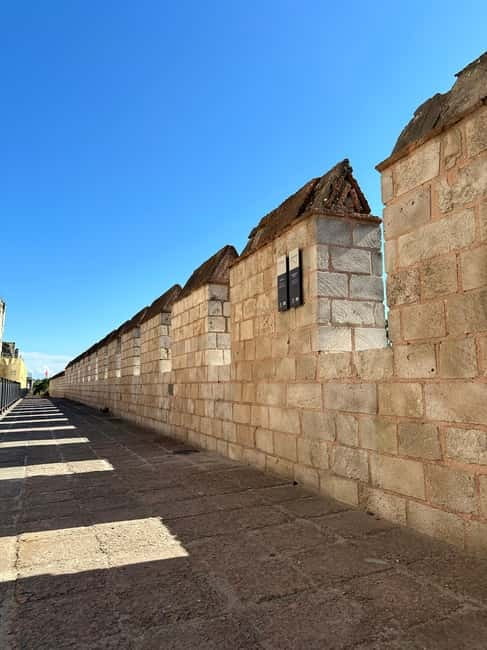
You’ll also visit gates of Constantinople as part of the route, and that’s where the tour turns from “pretty stone” into “city mechanics.” Gates explain movement—what entered, what exited, what got controlled. They also explain persuasion and politics: gates weren’t only military barriers; they were checkpoints for power.
The tour follows the walls toward the Golden Horn area, where the Ottoman forces conquered the city. This part is valuable because it connects the fortifications to outcome. When you walk toward the shoreline side, the walls start to make more sense as part of a bigger defensive geography—water on one side, land pressure on the other, and a city built to manage both.
One practical note: your guide’s ability to answer questions can make this section much more fun. On the tour, Yasin is noted for being a fountain of information and for handling lots of questions without making you feel like you’re slowing the group. If you’re the curious type—always asking what was happening in that year—this is the right kind of tour style.
Palace of the Porphyrogenitus: turning fortifications into empire life
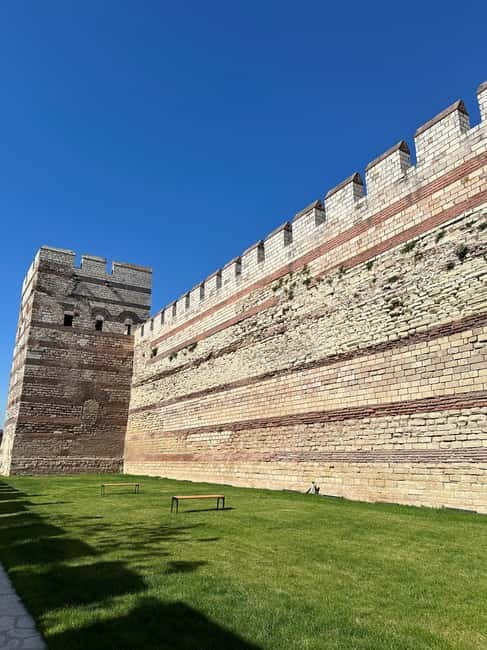
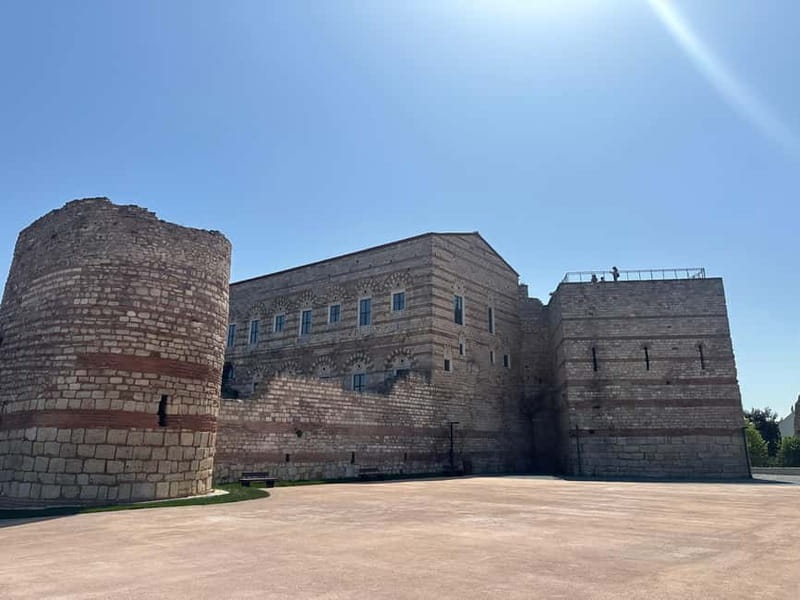
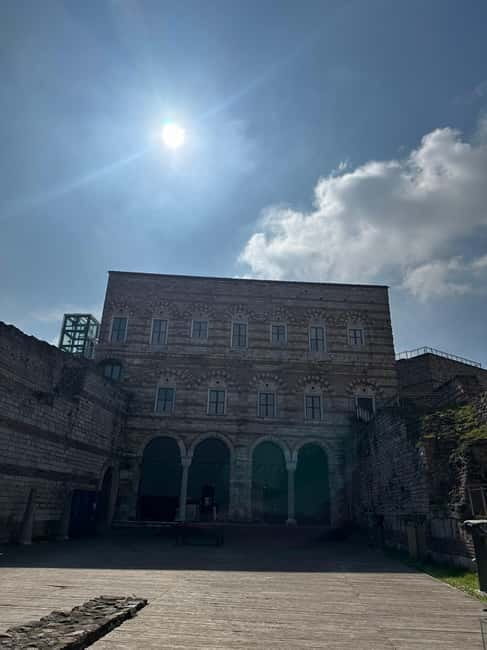
After walls and gates, you’ll move to the Palace of the Porphyrogenitus, with about an hour set aside for the visit. This stop helps you rebalance your perspective. Fortifications tell you what a city feared. Palaces and court architecture tell you what a city claimed.
Even if you’re not a hardcore Byzantium scholar, this is a worthwhile pivot. A lot of Istanbul history tours focus on one “wow” type of site: churches, mosques, bazaars, skyline views. This one stitches palace context into the same narrative as the defenses. That connection helps you understand why ruling families needed strong physical and symbolic presence.
The tour keeps it focused too. You’re not sent on a scattershot shopping spree of landmarks. You get a deliberate museum-palace stop that closes the loop on the Roman-to-Byzantine-to-Ottoman theme.
Chora area and changing religious spaces
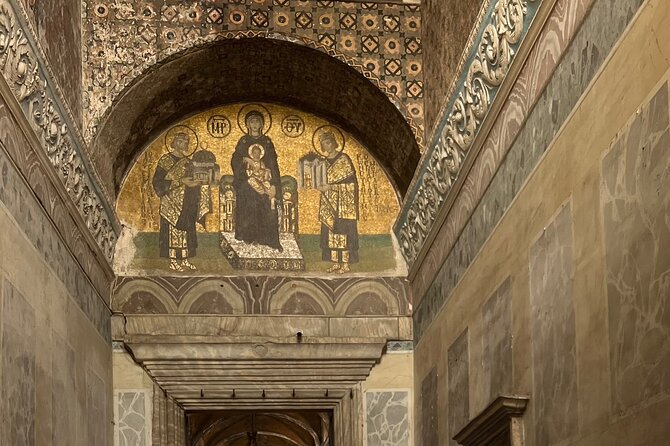
The route also includes the Chora area, and you may get time linked to church-mosque spaces in that zone. This is where Istanbul’s layers start feeling personal, not just academic. The guide can explain what changed over time—how religion, politics, and art routes overlapped and shifted.
In one case, Emre brought the group to the Chora Mosque area and adjusted the plan around prayer time. If the timing lands during worship, you might get a practical suggestion to step into a nearby café for Turkish tea, then rejoin once prayers end. That kind of flexibility is useful because it keeps you from feeling stranded by the city’s daily rhythm.
The Chora stop can also add a “reward for walking” feeling. After hours of walls and gates, you’re suddenly in a space where you can look up, slow down, and notice craftsmanship and atmosphere—without it turning into a separate tour inside the tour.






Timing, comfort, and logistics that actually affect your day
This is a 4-hour experience with hotel pickup and drop-off, plus transportation between stops. The schedule lists short drive segments (you’ll spend roughly 30 minutes in between the main points), which matters because old Istanbul locations aren’t close enough to walk between efficiently in a single half-day.
Comfort notes based on what tends to happen on the day:
- You’ll be outside for significant stretches, so plan for rain gear if weather is iffy.
- You may encounter stairs or step-heavy bits depending on which wall segments and viewpoints the guide chooses that day.
- If you have mobility limits, tell your guide early. One guide handled a situation where a guest didn’t want to go up 100-odd steps by adjusting the plan to a café for Turkish tea instead. That flexibility can help.
English is the guiding language, and the host or greeter communicates in English. Guides have also been described as patient and attentive even when it’s raining, so don’t assume poor weather cancels the experience—it usually just changes how quickly you move.
Included items are straightforward:
- Hotel pickup and drop-off
- Transportation
- Guiding
- Parking
- Entrance fee of the fortress
Not included:
- Entrance of the Blachernea Palace (optional)
That “optional” detail matters. If Blachernea is a priority for you, confirm on the day what’s actually included at the moment, because optional entrances can mean different add-ons depending on timing and pricing.
Is $100 a good value for this tour?
In plain terms: it’s good value if you want an organized, guided route through the oldest defensive spine of Istanbul plus a Byzantine palace stop. You’re paying for interpretation, not just access. The guide’s job is to connect what you’re seeing—walls, gates, towers, and palace spaces—into one clear story across three empires.
You’re also saving friction. The tour includes skip-the-ticket-line, which can be a real win in high-traffic areas. And because the pickup is from city-center hotels, you don’t waste your day doing taxi math and route planning.
If you’re on a tight budget, you could DIY the walls and gates, but you’ll miss a lot of the “why.” This kind of fortifications-and-palaces route benefits from a strong guide who can keep the timeline straight while you walk.
Who this tour fits best
This tour fits best if you:
- Like architecture and want to understand how buildings and walls worked
- Want a structured way to cover Roman, Byzantine, and Ottoman eras in one half-day
- Prefer a guide who answers questions and adjusts to real-world timing
It may be less ideal if you:
- Want a purely relaxed sightseeing stroll with minimal walking
- Are only interested in one monument type and don’t care about the connective tissue
Should you book the Walls of Constantinople and Byzantine Palace Tour?
I’d book it if your Istanbul wish list includes understanding the city’s defenses and empire logic, not just checking boxes. The mix of Walls of Constantinople, gates, and the Palace of the Porphyrogenitus is a smart pairing, and the hour-long pacing at major stops keeps it from feeling like a blur.
If you’re unsure, decide based on your walking tolerance and your interest in guided historical context. If you like asking questions and getting real explanations, guides on this tour have shown they can meet that energy—then you’ll come away with a much better mental map of old Istanbul than you started with.
FAQ
How long is the Walls of Constantinople and Byzantine Palace Tour?
The tour duration is 4 hours.
Is hotel pickup and drop-off included?
Yes. The tour includes pickup and drop-off from city center hotels, plus transportation.
What are the main sights included in the tour?
You’ll see the Ottoman Fortress and the Golden Gate area, walk parts of the Walls of Constantinople, visit gates of Constantinople, and include the Palace of the Porphyrogenitus. The Chora area is part of the route as well.
Is entrance to Blachernea Palace included?
Entrance to Blachernea Palace is optional and is not included in the tour price.
Does the tour include ticketing time savings?
Yes. The tour includes skip the ticket line.
What language is the tour conducted in?
The tour is guided in English.
What does the price include?
Included items are hotel pickup and drop-off, transportation, guiding, parking, and the entrance fee of the fortress.
What cancellation policy is offered?
Free cancellation is available up to 24 hours in advance for a full refund.