REVIEW · ISTANBUL
Turkish Marbling Paper Ebru Art Workshop
Book on GetYourGuide →Operated by Turkish Arts by Betul · Bookable on GetYourGuide
Ebru turns water into art. In Sultanahmet, Betül and Ali guide you through Ebru marbling so you can create classic Turkish patterns and take your paper home once it dries. The whole session feels calm, hands-on, and surprisingly satisfying.
What I love most is the peaceful, relaxing pace, the kind where your shoulders drop and you start working on instinct. I also like that you actually learn multiple techniques—so you’re not just making one pretty sheet, you’re building skills you can reuse later.
One thing to plan for: the studio is on the 3rd floor with no elevator, so stairs may be difficult for elderly visitors and anyone with mobility limits.
In This Review
- Key Highlights You’ll Care About
- Ebru Marbling: A Calm Art Session in the Middle of Istanbul
- Sultanahmet Meeting Point: Topkapi Nearby, Bosphorus Views On the Same Trip
- How the 2 Hours Typically Feel: Learn, Practice, Make Several Pieces
- Your Hands-On Toolkit: Stone, Back-and-Forth, Comb, and Flower Motifs
- Stone (the foundational swirl)
- Back and forth (making movement look controlled)
- Comb design (for crisp, branching lines)
- Flowers: tulip, hyacinth, and carnation
- What You Actually Get: Materials, Tea and Coffee, and Real Instruction
- Small Group Energy: Better Corrections, Less Waiting, More Confidence
- The View Factor: Rooftop Relax Time Makes It Worth the Trip
- Price and Value: Why $64 Feels Fair Here
- Who Should Book This Ebru Workshop (and Who Might Skip It)
- Should You Book Turkish Arts by Betül?
- FAQ
- How long is the Turkish Marbling Paper Ebru Art Workshop?
- What is the price per person?
- What’s included in the workshop?
- What techniques will I learn?
- Can I take my artwork home?
- What languages are the instructors able to teach in?
- How big is the group?
- Where is the meeting point?
- Is it wheelchair accessible and suitable for babies?
- What is the cancellation policy?
Key Highlights You’ll Care About
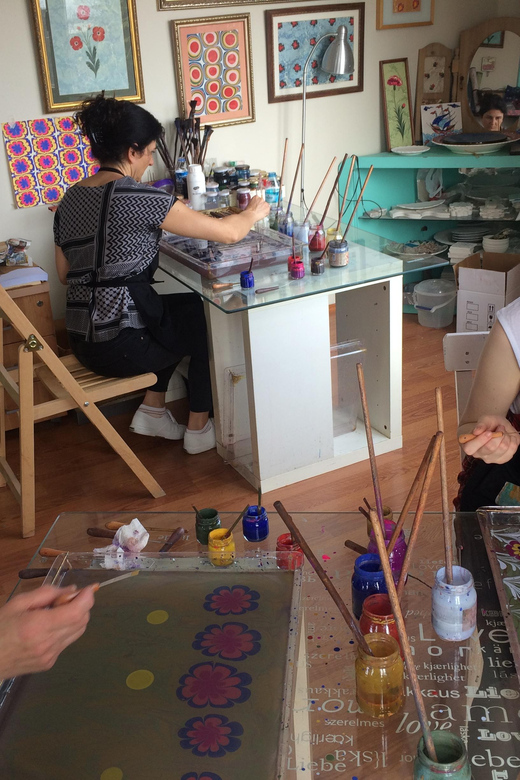
- Bosphorus views from the studio terrace and rooftop make the break as nice as the art
- Classic ebru techniques taught step-by-step: stone, back-and-forth, comb, and tulip/hyacinth/carnation
- Small groups (up to 10) so the instructors can correct your motion in real time
- Tea and coffee included to match the slow, meditative rhythm of the work
- You create multiple marbled papers that you’ll take home after drying
- English and Japanese instruction with a patient teaching style for beginners
Ebru Marbling: A Calm Art Session in the Middle of Istanbul
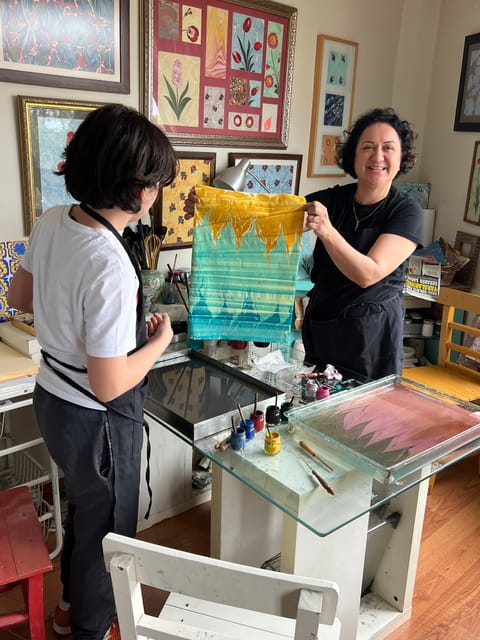
Ebru (Turkish paper marbling) is one of those art forms that looks complicated, then quickly feels like a gentle puzzle. You dip and drag color across a prepared surface, and suddenly you’re making swirling patterns that feel almost alive. The process isn’t about rushing or being perfect. It’s about staying steady and letting the technique do its job.
What makes this workshop especially appealing is the tone. It’s meditational and inspiring, with a relaxed flow that works even if you’re not an art person. You’ll be focused—yes—but in a good way. This is the kind of activity that can balance a day of mosques, crowds, and tight schedules.
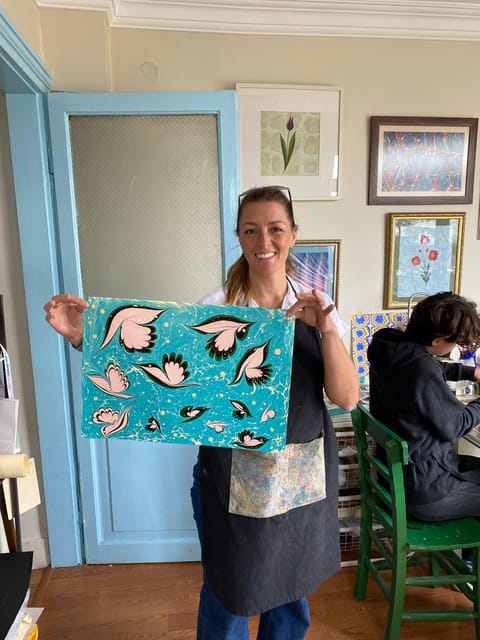
There’s also a practical payoff: you leave with finished marbled paper. Not just a photo. Not just a souvenir shop bag. Your hands did the work.
A few more Istanbul tours and experiences worth a look

Sultanahmet Meeting Point: Topkapi Nearby, Bosphorus Views On the Same Trip
You’ll meet in Sultanahmet on Ishakpasa Street No.6, on the 3rd floor. The location is convenient for walking days around the historic core—specifically about 2 minutes from Topkapi Palace—and it also fits well if you’re already planning to visit Hagia Sophia and the Blue Mosque.
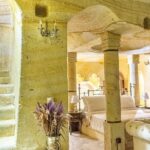
The studio setup is part of the experience. Many classes happen in a basic room. This one has a softer vibe: a cosy atelier atmosphere, plus a terrace/rooftop space where the Bosphorus view really shows off. In plain terms, you get a nice visual reward before and after you work.
The one logistical catch is the building itself. There’s no elevator access, and that can matter if you’re traveling with someone who struggles with stairs. If that’s you, you’ll want to plan accordingly.
How the 2 Hours Typically Feel: Learn, Practice, Make Several Pieces
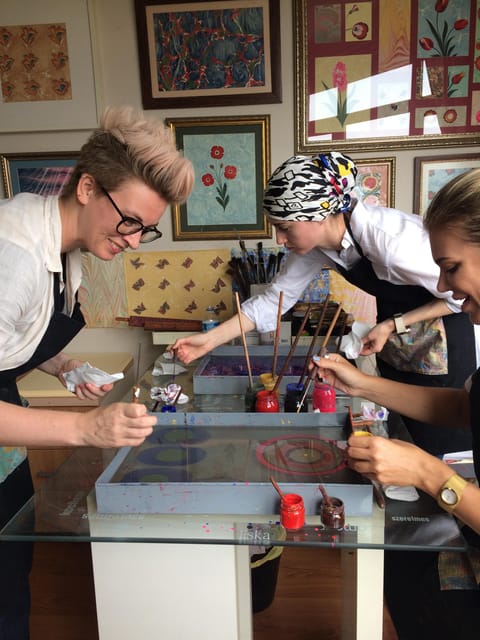
The workshop runs for about 2 hours, and the pacing is beginner-friendly. You’re not sent off alone with a set of instructions and a wing and a prayer. Betül and Ali explain the materials, demonstrate techniques, then guide you as you try them yourself.
A practical way to think about the structure:
- You start with the basics of the materials and how the surface works
- You practice a technique long enough to feel what changes when you move slower or faster
- You build up toward more decorative designs, then finish with your own freestyle variation
One detail that’s easy to miss when booking is drying time. Even if you create your designs during the session, the final pieces may need time to fully dry before pickup/packaging. The workshop description says you can take your painting home once dry, and you should plan your schedule with drying in mind.
If you’re trying to fit this into a tight itinerary, it helps to know that the studio treats this like a proper craft process, not a quick craft-table stunt.
Your Hands-On Toolkit: Stone, Back-and-Forth, Comb, and Flower Motifs
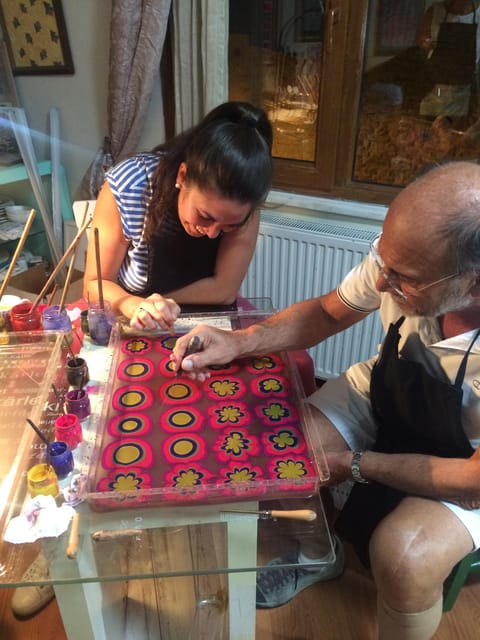
This class is built around traditional ebru designs. Instead of random patterns, you’ll learn techniques with names and recognizable looks—so your finished sheets feel connected to the art’s heritage.
Here are the designs taught in the workshop:
Stone (the foundational swirl)
The stone technique is often a great first taste of how marbling behaves. You’re learning how the color spreads and how your timing affects the final pattern. Expect to practice the motion until it starts to look intentional instead of accidental.






Back and forth (making movement look controlled)
This method focuses on repetition—going and returning—to create structure in the randomness. It’s a good way to understand the cause-and-effect of your brush or comb-like motion, and it helps you get more consistent results across multiple attempts.
Comb design (for crisp, branching lines)
The comb technique creates those signature lines that make ebru instantly recognizable. It’s where your finished work tends to look most dramatic, because the pattern can become sharper and more web-like depending on how you apply and lift.
Flowers: tulip, hyacinth, and carnation
The floral section is where the workshop shifts from technique practice into decorative artistry. You’re not just making swirls—you’re learning how to shape petal-like forms in marbled color. Tulip, hyacinth, and carnation each give a different visual personality, so your take-home pieces look varied rather than repetitive.
One of the best things about learning named techniques is that you can re-create the look later. Even if you don’t try ebru again at home right away, the designs stick in your memory.
What You Actually Get: Materials, Tea and Coffee, and Real Instruction
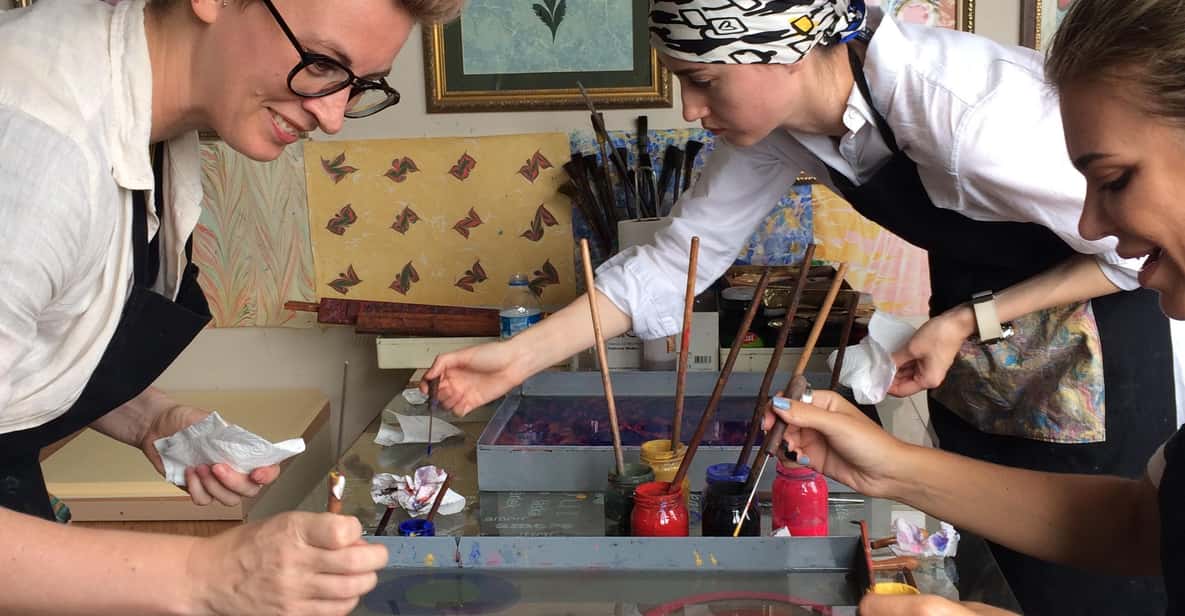
All materials are provided, which is a big deal for a craft like this. There’s no need to buy supplies or worry you’re missing a tool. You show up, and the studio handles the rest.
You’ll also be offered tea and coffee, which sounds simple until you realize how much it improves the rhythm. The session is calmer than a typical “do this, then this” tourist activity. Having a warm drink nearby makes it feel more like being welcomed into a local studio than attending a class you quickly move on from.
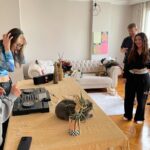
The instruction is offered in English and Japanese, and the group is small—limited to 10 participants. In practice, that means you’re not competing for the instructor’s attention. You can ask for clarification, and you’re more likely to get feedback on your hand motion and timing.
Small Group Energy: Better Corrections, Less Waiting, More Confidence
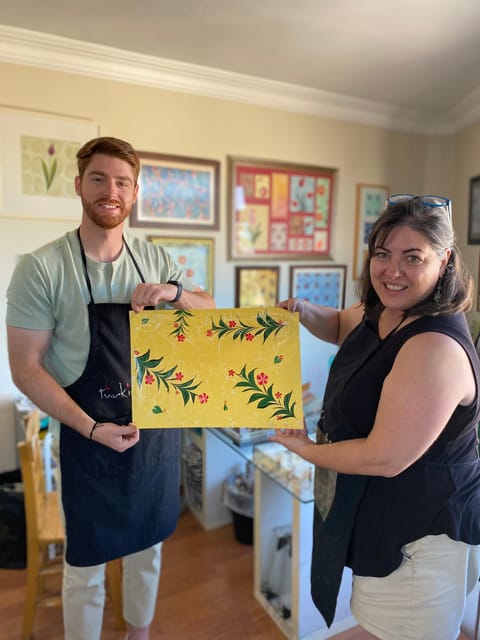
This workshop is built for a small group, not a packed room. With a limit of 10 people, you’ll spend more time making art and less time watching someone else do the demonstration.
That matters because ebru rewards fine control. Even if you understand the concept, the results depend on small movements—how you place the tool, how you lift, how you repeat. In a bigger group, you’d likely lose momentum. Here, the pace stays supportive.
I also like that the teaching style is patient and encouraging, especially for beginners. You can go in knowing nothing about marbling and still leave feeling capable.
Families can do this too. The workshop is not restricted by age in the general data, but it’s not suitable for babies under 1 year. For kids, this kind of hands-on craft can be a welcome break from long sightseeing days—just keep in mind the studio is on a higher floor.
The View Factor: Rooftop Relax Time Makes It Worth the Trip
Art classes are often over before you’ve fully processed what you did. Here, the experience includes time to pause and look around. Many people love the terrace/rooftop atmosphere and the Bosphorus view, especially if you’re already planning to see major landmarks nearby.
It’s a nice way to re-center after the fine-motor work of marbling. You get to shift from concentration mode to relaxation mode without changing locations or hopping on transit.
If you’re the type who plans your days around views, this is an easy win. You’ll likely feel like you got more than a craft project—you got a small Istanbul moment that feels local.
Price and Value: Why $64 Feels Fair Here
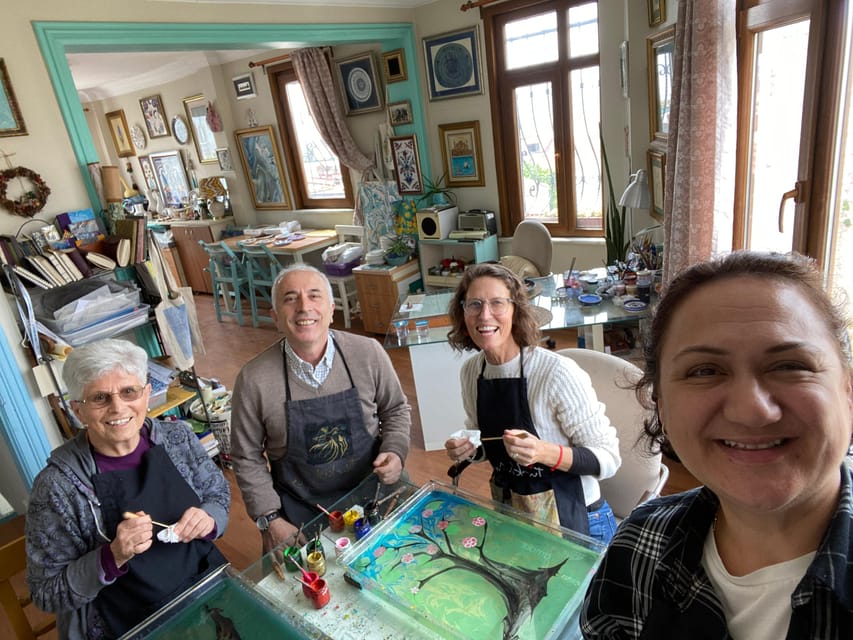
At $64 per person, this workshop can sound like “just” a short art class. But when you look at what’s included, the value makes sense.
You’re getting:
- All materials provided
- Tea and coffee included
- Step-by-step instruction in multiple ebru techniques
- A small group limit that makes the teaching practical
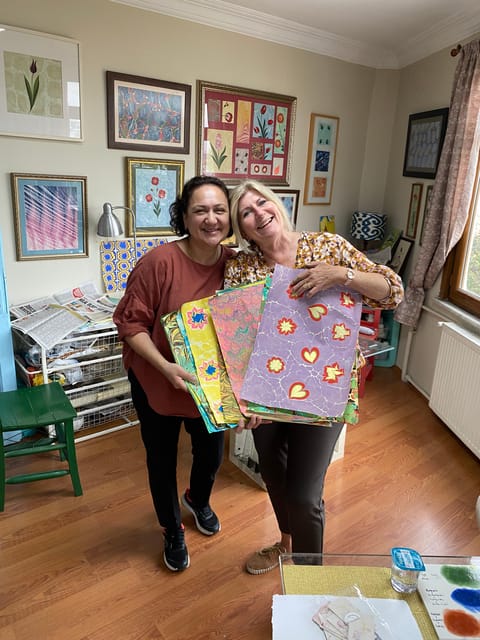
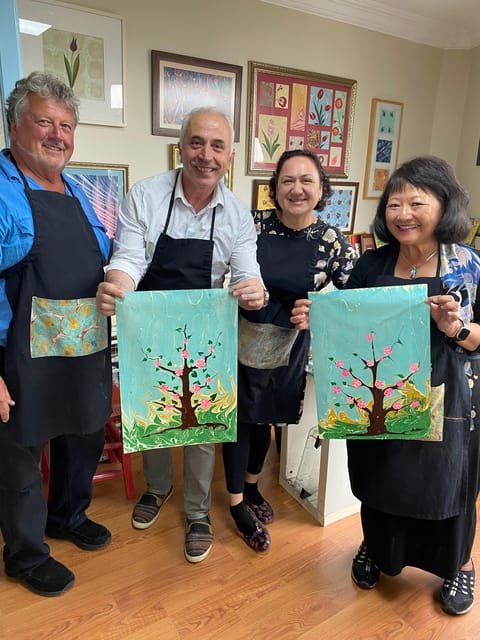
- Finished marbled paper you keep once it dries
Compared with buying marbled paper as a souvenir, this is the key difference. Buying gives you finished art. Taking the class gives you finished art plus the process—and that’s what makes it memorable. Also, you usually leave with more than one piece, which makes the keepsakes feel substantial rather than token.
If you’re budgeting for one “do something hands-on” experience in Istanbul, this is a strong contender.
Who Should Book This Ebru Workshop (and Who Might Skip It)
Book it if you:
- want a calm break from big sightseeing days
- like creative activities where you actually make something
- enjoy crafts and want a skill-based souvenir
- are comfortable with a studio session in a historic neighborhood
It’s also a good fit if you’re traveling in a small group—friends, families, or even a couple—because the class stays focused.
Maybe skip or adjust plans if you:
- need wheelchair access, because the studio is not suitable for wheelchair users and sits on the 3rd floor with no elevator
- are traveling with a baby under 1 year
And if you’re scheduling tightly on the last day of your trip, keep the drying/pickup reality in mind. This is paper art, and paper needs time.
Should You Book Turkish Arts by Betül?
If you’re deciding between a quick tour and something more personal, I think this ebru workshop is the smarter pick. It’s a rare activity that mixes traditional craft, a relaxed rhythm, and a real, take-home result. The instructors (often described as Betül and Ali) create an environment where beginners feel guided instead of overwhelmed.
The Bosphorus view adds a bonus layer. You’re not just doing art—you’re doing it in a place that makes you slow down for a moment.
If stairs are a concern, plan around that—otherwise, it’s an experience that tends to stick in your memory long after Istanbul photos fade.
FAQ
How long is the Turkish Marbling Paper Ebru Art Workshop?
It lasts about 2 hours.
What is the price per person?
The price is $64 per person.
What’s included in the workshop?
All materials are provided, and tea and coffee are offered during the class.
What techniques will I learn?
You’ll learn traditional ebru techniques including stone, back and forth, comb design, and floral designs such as tulip, hyacinth, and carnation.
Can I take my artwork home?
Yes. You can take your marbled paper artwork home once it is dry.
What languages are the instructors able to teach in?
The workshop instruction is available in English and Japanese.
How big is the group?
It’s a small group, limited to 10 participants.
Where is the meeting point?
The studio is in Sultanahmet on Ishakpasa Street No.6, on the 3rd floor. It’s about 2 minutes from Topkapi Palace.
Is it wheelchair accessible and suitable for babies?
It is not suitable for wheelchair users. It is also not suitable for babies under 1 year.
What is the cancellation policy?
Free cancellation is available up to 24 hours in advance for a full refund.