REVIEW · ISTANBUL
Skip-the-Line Hagia Sophia Digital Tickets w/Audio Guide
Book on GetYourGuide →Operated by City-Pass.Tr · Bookable on GetYourGuide
The Hagia Sophia is bigger than you think. This skip-the-line ticket plus smartphone audio guide is a practical way to experience the building on your schedule, while learning what changed here across the Byzantine and Ottoman eras.
I like two things right away: you can explore at your own pace instead of matching a group’s rhythm, and the audio guide gives you enough context to notice details you’d otherwise miss. I also appreciate the way entry is set up for foreigners, including access to the upper floor galleries via a gentle ramp.
One consideration: this isn’t a guaranteed fast pass into the building. Your ticket skips one part of the process, but you may still face security lines, and the visit time is capped at about 1 hour, with some people finding that too tight.
In This Review
- Quick take: Hagia Sophia ticket in 60 minutes
- Hagia Sophia in 60 minutes: what you can realistically see
- Skip-the-line, but not skip-security: how entry actually feels
- Getting in near Topkapi: meeting point and first steps
- Using the smartphone audio guide in English without wasting time
- Inside the experience: dome, mosaics, calligraphy, and what to look for
- Renovation reality: why timing and expectations matter
- Price and value: is $41 worth it?
- Who this self-guided ticket suits best
- Should you book this Hagia Sophia skip-the-line + audio guide ticket?
- FAQ
- How long is the Hagia Sophia visit with this ticket?
- Is the audio guide included, and what language is it in?
- Where do I go to start the experience?
- Does the ticket provide priority access?
- What items should I bring?
- Are there restrictions inside Hagia Sophia?
- Can I cancel for a full refund?
Quick take: Hagia Sophia ticket in 60 minutes
- English audio guide on your phone helps you connect what you’re seeing to Byzantine and Ottoman history
- Skip-the-line helps, but security checkpoints can still slow things down
- Foreigners enter near Topkapi Palace and get a ramp into the upper galleries
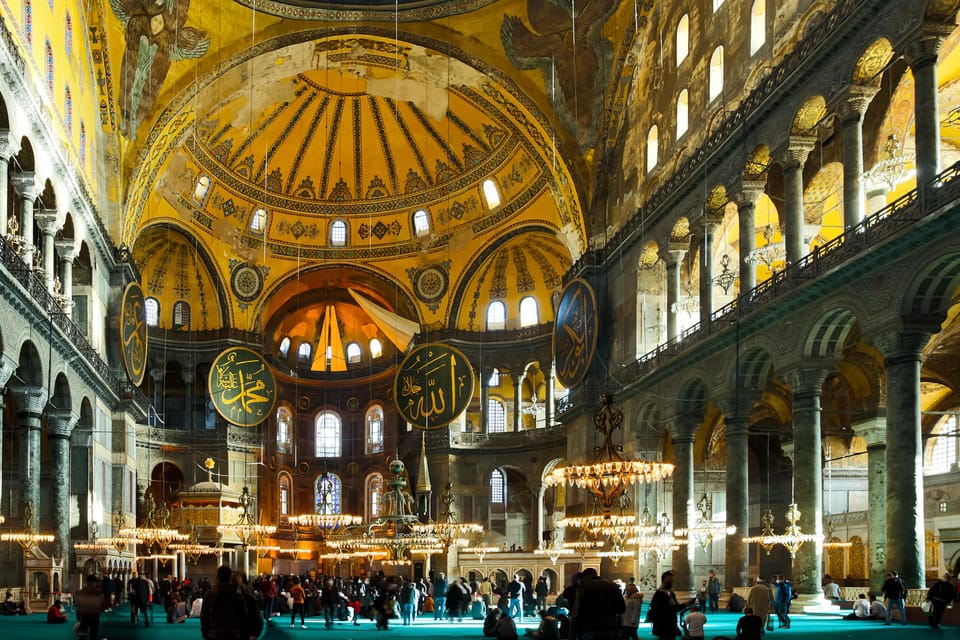
- See the dome, mosaics, and historic calligraphy without rushing
- Expect moderate walking and possible renovation noise outside while you’re on-site
Hagia Sophia in 60 minutes: what you can realistically see

A 1-hour self-guided visit is just enough time to get the big wow moments without sprinting. The highlights here are clear: the famous dome, the mosaics, and the historic calligraphy. If you’ve got limited time in Istanbul (or you’re juggling other top sites on the same day), this format can work well.
Here’s how to make the hour feel longer. Start by finding a viewpoint that lets you take in the dome and the scale of the space. Then shift your attention to surface details: mosaics and calligraphy tend to reward slow looking. With an audio guide running, you can stop when something catches your eye and still feel like you’re staying on track.
One more timing note from real-life use: some visitors found that the audio guide references more than one level, but access can be restricted. If you plan as if everything will be open, you might feel disappointed. Instead, treat the experience as: prioritize the areas you can access first, then see what’s extra if it’s available.
A few more Istanbul tours and experiences worth a look


Skip-the-line, but not skip-security: how entry actually feels
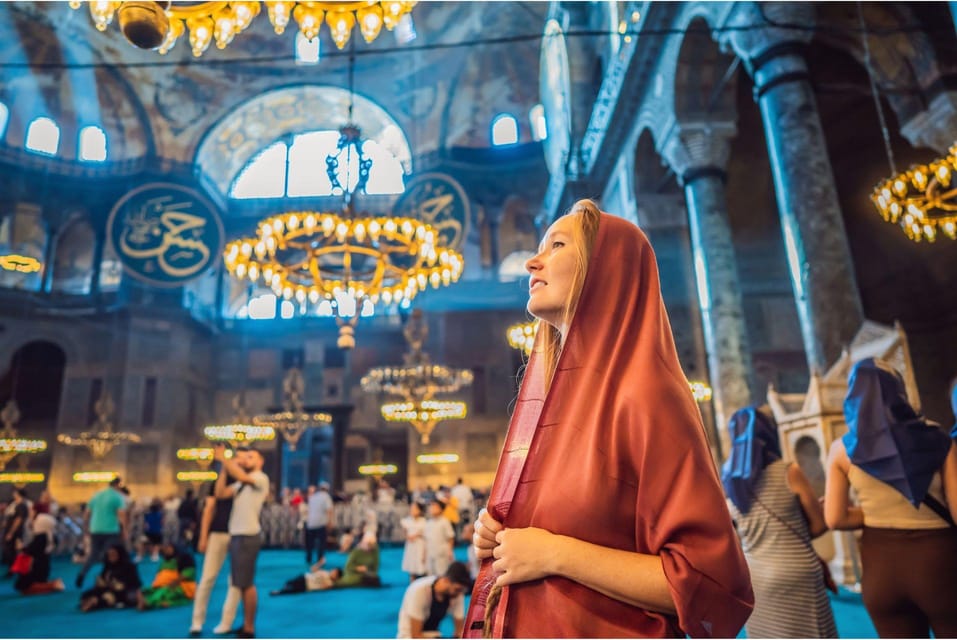
This ticket is marketed as skip-the-line, but the building still has security checkpoints. The important detail is that the ticket does not provide priority access, and during peak periods you should expect lines at security.
So what does that mean for you? It means the savings can be real, but they’re not total. You’re usually trading one kind of waiting for another, and the difference depends on the day and the flow of visitors. If you’re visiting in high season or on a busy time slot, build in buffer time so your visit doesn’t feel like a countdown.
Also keep in mind that there can be operational hiccups around digital entry. People reported problems with QR codes and needing extra time to get the correct ticket details unlocked. When that happens, it can eat into your 1-hour window fast. Your best defense is simple: arrive earlier than you think you need to, and keep your phone charged.
Getting in near Topkapi: meeting point and first steps
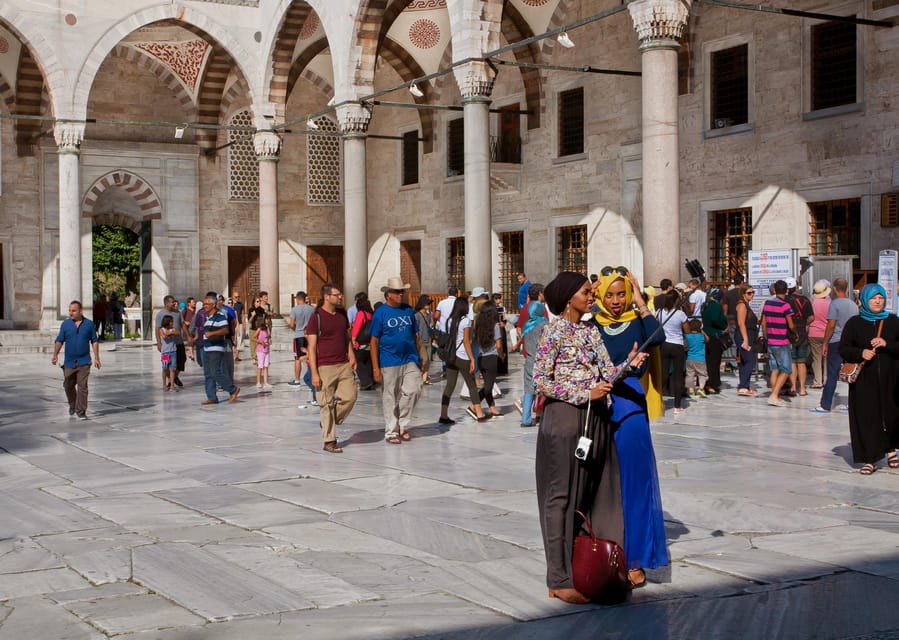
You don’t need a guide to meet you. The meeting point is straightforward: go to Hagia Sophia (Ayasofya) and enter on your own.
For foreigners, there’s a specific entry flow: you use the newly opened tourist entrance located near Topkapi Palace. From there, you get direct access to the upper floor galleries through a gentle ramp. That matters because it can reduce backtracking once you’re inside. Instead of wandering, you’ll likely begin on higher levels and work down from there (depending on what areas are open).
Once you’re at the entrance area, don’t be surprised if the first bottleneck is security. During peak seasons, that’s normal. Wear comfortable shoes because the visit includes a moderate amount of walking, and the space encourages you to move—slowly, but steadily.
Using the smartphone audio guide in English without wasting time
The audio guide is included and available in English. That’s a big deal here because the Hagia Sophia’s story isn’t just one era—it’s the layered history of the Byzantine and Ottoman empires, and the building is the kind of place where context makes the details click.
Practical tip: before you reach the entry line, make sure your phone is ready to go. Have the ticket details available, and be ready to follow the instructions to access the audio. Flash photography is not allowed inside, so you’ll want to rely on your phone or camera without lighting tricks.
If you want a smoother start, treat the first few minutes as setup time: open the audio, confirm it’s playing, and then move into the main areas. That way you’re not trying to troubleshoot mid-visit while your hour is ticking.
One more reality check from firsthand issues: some people ran into trouble getting a working QR code or receiving the audio guide correctly, which caused waits. In those cases, the company behind the experience (City-Pass.Tr) may be responsive, but you still lose time. So it’s worth carrying patience and arriving early enough that a small delay won’t derail your plans.
Inside the experience: dome, mosaics, calligraphy, and what to look for
This is a self-guided visit, so the “itinerary” is really your route through the building. The included audio guide is there to help you connect what you’re seeing to what this place meant during major chapters of its life.
Here’s the simple way to focus your attention:
- Start with the dome: stand where you can see it and take in the scale. The dome is the centerpiece people come for, and it’s easiest to appreciate when you’re not rushing.
- Then shift to mosaics: these are one of the strongest visual signatures of the Byzantine craftsmanship referenced in the experience description. Don’t just glance—look for patterns and fine detail.
- Finish with historic calligraphy: it’s a different kind of visual language from mosaics, and pairing it with what the audio guide explains helps the building feel more like a living record of changing cultures.
The best part of the audio guide is that it’s not only telling you facts. It’s shaping how you look. You’ll likely notice more when you know what to connect—Byzantine craftsmanship on one hand, and Ottoman influence on the other. The building becomes a story you can walk through.
You can also read our reviews of more guided tours in Istanbul




Renovation reality: why timing and expectations matter
A few practical notes can save you disappointment. One visitor highlighted that scaffolding and renovations can limit how much of the surrounding exterior you can appreciate. That doesn’t ruin the interior, but it can affect the mood before you step inside and how good the photo moments feel.
Inside, the 1-hour cap is the main expectation limiter. If you like museums with time to wander and read everything, you might want more than an hour at Hagia Sophia. If you prefer a focused highlight route—plus audio context—this format can be a good match.
Also remember what you can’t do: flash photography is not allowed inside, and food and drinks aren’t permitted in the building. Plan around that by bringing water for before and after your visit, and keep snacks out of the mix.
Price and value: is $41 worth it?
$41 per person for a skip-the-line ticket and a smartphone audio guide can be good value—if what you want is convenience and context, not a long guided tour.
Where the value really lands:
- You avoid hunting for an audio system on-site by having it included.
- You get history context (Byzantine and Ottoman empires) delivered while you’re looking at the dome, mosaics, and calligraphy.
- You set your own pace, which is often the best way to enjoy a place this visual.
Where the price can feel high:
- If you end up waiting anyway—security lines can still take time—the skip-the-line advantage shrinks.
- If a QR code or ticket activation problem pops up, you might lose time and feel like you paid for convenience that didn’t fully work.
- If you’re expecting more than highlights in a short window, the 1-hour limit can make the visit feel truncated.
So I’d frame it like this: this ticket is best for travelers who want a high-impact visit with minimal hassle. If you’re the type who loves long, slow museum time, you’ll likely wish you had a longer duration option.
Who this self-guided ticket suits best
This is a strong fit if you:
- want a self-guided visit rather than a rigid schedule
- like learning through an audio guide instead of a live lecture
- are comfortable navigating historic buildings on foot
- want to hit the Hagia Sophia highlights without spending hours
It’s not suitable for people with mobility impairments or wheelchair users, based on the info provided. If that’s your situation, you’ll want to look for an option that explicitly matches accessibility needs.
Should you book this Hagia Sophia skip-the-line + audio guide ticket?

Book it if you’re planning a busy day in Istanbul and you want the dome, mosaics, and calligraphy with a helpful English audio guide, while keeping the overall experience tight and manageable. I also like it for travelers who don’t mind self-direction as long as the history is built in.
Skip this version (or at least choose your time slot carefully) if you strongly need a guaranteed fast entry, because security lines can still slow things down and the visit time is limited. Also, arrive early enough to handle small digital hiccups, since QR code problems have shown up in real use.
If your priority is convenience plus context, this ticket is a solid buy. If your priority is a long, worry-free visit with fully open access to every area mentioned in audio, you may want to plan for flexibility.
FAQ
How long is the Hagia Sophia visit with this ticket?
The duration is 1 hour. It’s designed for a self-paced visit within that time window.
Is the audio guide included, and what language is it in?
Yes, an audio guide on your smartphone is included. It’s available in English.
Where do I go to start the experience?
Go to Hagia Sophia (Ayasofya) and enter on your own. Foreigners can enter through the tourist entrance near Topkapi Palace.
Does the ticket provide priority access?
No. The ticket does not provide priority access, and during peak periods you may still face lines at security checkpoints.
What items should I bring?
Bring comfortable shoes and a camera. Water is also recommended.
Are there restrictions inside Hagia Sophia?
Yes. Flash photography is not allowed, and food and drinks are not allowed inside.
Can I cancel for a full refund?
You can cancel up to 24 hours in advance for a full refund.