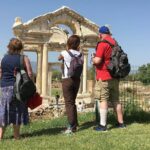
Revelation walks these Turkish ruins in real time. This tour is interesting because it links the text of Revelation to the places themselves, with a guide who turns stone, streets, and symbols into something you can think about after you leave. I especially love the spiritual, reflective rhythm built into the day, and I also like how the route pairs famous ruins with shorter stops so the long driving doesn’t feel endless.
On the ground, guides and drivers like Buğra and Turgay Abe are the kind of people who make the history feel personal, not like a checklist. The one drawback to keep in mind is that you’re doing a lot across three days, including full-day sightseeing and a big Ephesus block on day three, so it helps to have decent stamina and a flexible pace.
In This Review
- Key highlights you’ll actually feel
- Why the Seven Churches route makes sense from Izmir
- Day 1: Pergamon’s Acropolis and the Revelation symbolism you’ll notice
- Pergamon Ancient City (the big foundation)
- Red Basilica (Kızıl Avlu)
- Thyateira Hill Tombs (Akhisar) and Lydia’s purple connection
- Day 2: Pamukkale’s mineral water, then Laodicea through Sardis
- Hierapolis and Pamukkale: the white terraces
- Laodicea: the last of the seven
- Philadelphia (Alasehir): the only church not censured
- Sardis (Sart): dying church plus major monuments
- Day 3: Mary’s House, Ephesus, and St. John’s final connection
- Meryemana (The Virgin Mary’s House)
- Ephesus: huge ruins, clear storyline
- Basilica of St. John + Temple of Artemis
- Private van, real hotels, and how the pacing works
- Price and value: what $1,500 per person really buys
- Comfort tips so you enjoy the ruins, not fight them
- Who should book this tour (and who might want a different plan)
- Should you book the Seven Churches of Revelation Tour?
- FAQ
- What area of Turkey is this tour based in?
- Where do you get picked up?
- How long is the tour?
- Is the tour private?
- What language is the tour offered in?
- What’s included in the price?
- What’s not included?
- Is there free cancellation?
Key highlights you’ll actually feel
- Revelation text + on-site reading time: You get quiet moments to connect the letters to what you’re seeing.
- Pergamon’s major sights in one focused sweep: Acropolis, theatre, Asklepion, and the famous Altar of Zeus.
- Pamukkale without the rush: Hot mineral-water terraces take real time, not a quick photo stop.
- All the key churches are on the route: Laodicea, Philadelphia (Alasehir), Sardis, Thyatira (Akhisar), and Pergamon—plus Ephesus as part of the common plan.
- Private transportation and hotel meals included: Fewer logistics headaches, more time for the sites.
- Human touches from your driver: Small, thoughtful moments that make long days lighter.
Why the Seven Churches route makes sense from Izmir
This part of Turkey sits at the crossroads of the Roman world and early Christianity. When you visit places tied to the seven Revelation letters, the setting matters: you’re not reading about distant cities. You’re walking through trade routes, civic centers, and spiritual landmarks that shaped daily life.
What makes this tour appealing is the way the day is paced. You’re not only moving from monument to monument. You also get structured time to pause and reflect while your guide connects the Bible text to the geography and the culture of each city. That’s a big deal if you want meaning, not just photos.
Another value point: the tour is set up to be easy from the start. Pickup works from any point in Izmir, and you’re in a private setup, so you’re not squeezed into a large bus where you’re always asking, Where’s the bathroom? or Did we miss that stop?
You can also read our reviews of more tours and experiences in Izmir.

Day 1: Pergamon’s Acropolis and the Revelation symbolism you’ll notice
Day one is the heavy hitter. You meet your guide at 08:30 at your hotel lobby and head to Pergamon (Bergama). This city is a feast of different eras, and the order of what you see helps you understand why it mattered.
Pergamon Ancient City (the big foundation)
You’ll spend about 2 hours here, and you’ll cover several core sights in a logical loop:
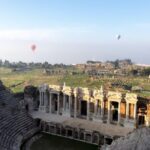
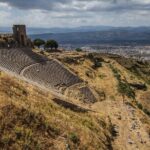
- Acropolis: Expect sweeping views from the steep site, with ruins that make the scale feel real.
- The theatre (noted as the steepest theatre in the world): Even without perfect acoustics, you get why gatherings mattered in ancient cities.
- Asklepion (medical center): The connection between faith, healing, and public life becomes visible.
- Altar of Zeus: The tour frames it with Revelation symbolism, sometimes described as the throne of Satan. Even if you don’t lean on the imagery, it’s still striking.
- Temple of Trajan + marble columns
- Pergamon Library: The library’s estimated 200,000 volumes also connects to the practical story of how parchment became a key writing surface.
For me, the best part of Pergamon is how the guide helps you read the city. You start seeing patterns: civic power, spiritual messaging, and the role of public spaces.
Red Basilica (Kızıl Avlu)
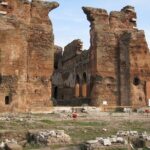
After all that, you get a smaller breather: about 20 minutes at the Red Basilica, with entry free. It’s short on purpose, and that’s good. You can reset your attention so day one doesn’t turn into one long blur.
Thyateira Hill Tombs (Akhisar) and Lydia’s purple connection
The last stop day one is in today’s Akhisar area, formerly Thyatira. You’ll spend about 30 minutes here. This is a key church location tied to Revelation themes, and the tour adds a helpful cultural detail: Thyatira was known for purple dye.
That matters because the story of Lydia, a seller of purple, clicks into place. You’re not just looking at stones; you’re thinking about work, craft, and how trade shaped people’s lives.
You’ll then drive back to Izmir for dinner and overnight.
Possible drawback for day one: you’ll be on the move early, and Pergamon is packed into a single block. If you get tired easily in heat or on uneven ground, pace yourself inside the ruins.
Day 2: Pamukkale’s mineral water, then Laodicea through Sardis
Day two is a two-part day: healing springs first, then the remaining church sites in sequence. It’s a smart structure because you start with something physical and calming, then you shift back into cities and scripture.
Hierapolis and Pamukkale: the white terraces
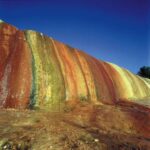
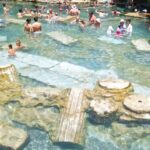
You’ll drive to the healing city area of Hierapolis/Pamukkale. Plan for about 2 hours at the white cotton fortress terraces, where hot mineral water spills over steep cliffs into pools and channels.
This stop is famous for a reason, but the real value on a tour like this is time. You’re not trapped in a quick in-and-out. You have enough time to notice how the water has carved and shaped the scene, and to understand why it became tied to healing traditions—well before modern tourism.
After Pamukkale, you check in for dinner and overnight in a thermal hotel. That’s practical value: fewer decisions about meals and a chance to recover before the next round of ruins.
Laodicea: the last of the seven
Next you visit Laodicea, about 1.5 hours. The tour ties the city’s story to its founder and to its position as a commercial crossroad on important roads. That “crossroad” idea is useful. It helps you picture why messages in Revelation landed the way they did.
Philadelphia (Alasehir): the only church not censured
Then you move to Alasehir, the site identified with Philadelphia. You’ll spend about 1 hour here. The tour notes that this church is the only one not censured, and the ruins support that feeling of steadiness: you’ll see a Byzantine basilica built of brick, with parts of a high arch and some 11th-century frescoes.
Sardis (Sart): dying church plus major monuments
Finally comes Sardis (about the morning departure to match the day’s route). You’ll spend time at major sights like the Temple of Artemis, plus a restored gymnasium and a reconstructed synagogue. You’ll also notice the royal Persian road route from Susa to Sardis, and the river Pactolus, described with a golden connection.
Sardis is the kind of stop where you benefit from a guide who can connect the biblical framing to physical evidence—why this city reads as important, powerful, and troubled all at once.
Then it’s back to Izmir.
Possible drawback for day two: it’s the most logistically intense day. You’re moving from natural wonder to multiple archaeological zones. Wear comfortable shoes and keep expectations flexible.
Day 3: Mary’s House, Ephesus, and St. John’s final connection
Day three is all about Christian pilgrimage sites plus one of the most impressive ancient cities in the world: Ephesus. You’ll start with Meryemana, then take in Ephesus, and finish at Saint John’s church and nearby major sights.
Meryemana (The Virgin Mary’s House)
You’ll visit the House of the Virgin Mary, an active pilgrimage site connected to Christian tradition. The tour notes that Pope Paul VI visited in 1967, Pope John Paul II visited in 1979, and Pope Benedict XVI visited in 2006.
This stop is about atmosphere as much as buildings. You get about 1 hour, which is enough time to slow down and take it in without turning it into a chore.
Ephesus: huge ruins, clear storyline
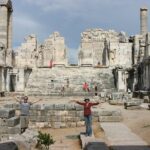
You’ll spend about 2 hours at Ancient Ephesus. This is one of the best-preserved Greco-Roman city experiences, and it’s easy to see why people get emotional here. The city is strongly tied to Apostle Paul, who preached and lived here for three years, and the tour frames Ephesus as a place that received one of his letters.
You’ll cover key public buildings and famous spaces, including:
- Odeon (small theatre)
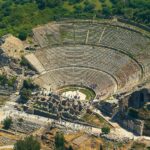
- Theatre associated with preaching history (the tour notes capacity around 25,000)
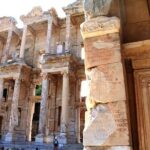
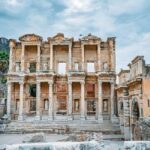
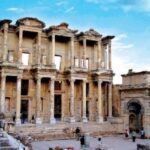
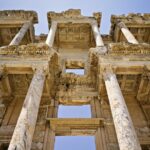
- Library of Celsus
- Roman baths and fountains
- Agora
- Love House (as it’s commonly labeled)
- Public toilets (one of the details that makes ancient life feel surprisingly normal)
- Temple of Hadrian
- Temple of Diana of the Ephesians (also described as one of the seven wonders of the ancient world)
I like that the guide’s approach makes the city feel navigable. You aren’t just standing in front of ruins; you’re walking through a civic map.
Basilica of St. John + Temple of Artemis
After Ephesus, you visit Saint John Church / Basilica of St. John, tied to the tradition of John’s final years and burial. Then you also visit Temple of Artemis again as part of the final stop.
This end section is shorter (about 30 minutes), which helps you finish strong without feeling dragged.
Possible drawback for day three: it can feel long even with the time blocks listed. If you’ve got museum-fatigue, focus on the spaces that connect most to why you booked the tour.
Private van, real hotels, and how the pacing works
A private tour isn’t just a comfort upgrade. It changes how the whole day feels.
Here, you get:
- Pickup from any point in Izmir
- A private group setup (only your group participates)
- Private transportation across the region
- An English-speaking guide (offered in English)
- 2 nights accommodation with dinner and breakfast
- 3 days lunch included
That last part matters more than it sounds. When meals are built in, you spend less mental energy deciding what to eat and more time staying present on site. You also get dinner and breakfast tied to the hotel stay, which reduces end-of-day stress.
The itinerary also uses a pattern: big anchor site, short stop, anchor site. Pergamon is the anchor on day one. Pamukkale and Laodicea take turns being the anchor on day two. Mary’s House resets the pace before the long Ephesus walk on day three.
From the guide and driver stories tied to this tour, the best teams treat the day like a journey, not a shift. People highlight the storytelling and the way small moments get handled smoothly—like the kind of thoughtful extras a good driver remembers to bring.
Price and value: what $1,500 per person really buys
At $1,500 per person, this isn’t a bargain-basement day trip. But it’s also not just “transport plus ruins.”
What’s included:
- All fees and taxes
- Entrance fees to the sites
- Private transportation
- 2 nights accommodation with dinner and breakfast
- 3 days lunch
What’s not included:
- Drinks during meals
- Personal expenses
- Tips to the driver & guide
So the value equation is mostly about what you’d otherwise pay for on your own: hotels in the thermal area, entrances across multiple sites, and private transport between far-flung ancient cities. If you’ve tried to DIY this route, you know the hidden cost isn’t just money. It’s the time and friction.
One more small practical note: you’ll get a mobile ticket, and confirmation happens at booking time. That reduces the pre-trip admin stress.
Comfort tips so you enjoy the ruins, not fight them
This tour includes multiple archaeological sites with uneven ground, plus Pamukkale’s terraces. To keep the day enjoyable:
- Wear shoes with grip. These places can be slippery or rough underfoot.
- Bring sun protection. Day one and day two include long outdoor chunks.
- Plan for short stops. The schedule includes brief visits like the Red Basilica, then moves quickly to the next site.
- Take water and snacks into account even though lunch is included. Drinks during meals are not included.
If you prefer a slower pace, tell your guide early. They can often adjust how you spend time within the blocks you have.
Who should book this tour (and who might want a different plan)
This Seven Churches-style route is a great match if you want:
- A Christian-themed itinerary tied to Revelation locations
- Strong guiding, not just directions
- A smooth plan that handles transport and meals for you
- Plenty of time at major ruins like Pergamon and Ephesus
It’s also a good fit for solo travelers who like structure and care. The tour’s private format helps you stay comfortable without being the only one asking questions in a crowd.
You might consider a different approach if:
- You already know Ephesus well and don’t want to spend a full chunk there.
- You prefer minimal driving and fewer sites in three days.
One helpful tip from guidance you can request: if Ephesus is already on your personal list, ask for a schedule tweak. The tour can be shaped around your timing and what you’ve already seen.
Should you book the Seven Churches of Revelation Tour?
I’d book it if you want the Revelation sites with a guide who connects the text to what you’re walking through, and you value a plan that includes hotels and meals so you can focus on the experience. Pergamon and Ephesus alone can be worth the effort, and the added stops at Thyatira, Laodicea, Philadelphia (Alasehir), and Sardis give the tour its core payoff.
I’d pause only if you’re sensitive to intense three-day itineraries. This is not a slow spiritual stroll. It’s a guided route with real driving and multiple archaeological zones.
If your goal is meaning with comfort, this one checks the boxes.
FAQ
What area of Turkey is this tour based in?
The tour is based in and around Izmir, Turkey.
Where do you get picked up?
Pickup is available from any point in Izmir.
How long is the tour?
It runs for approximately 3 days.
Is the tour private?
Yes. It’s a private tour/activity, and only your group will participate.
What language is the tour offered in?
The tour is offered in English.
What’s included in the price?
The price includes all fees and taxes, entrance fees to the sites, private transportation, 2 nights of accommodation with dinner and breakfast, and lunch for 3 days.
What’s not included?
Drinks during meals, personal expenses, and tips for the driver and guide are not included.
Is there free cancellation?
Yes. You can cancel up to 24 hours in advance for a full refund.