Seven towers set the tone fast.
This Roman-Byzantine heritage tour turns Istanbul into a readable story, not a blur of stops. I especially like how you get panoramic views early at Yedikule and then keep following the city’s “layers of power” mindset all day—Romans to Byzantines to Ottomans. The second thing I love is the focus on places that most standard routes race past, so you spend real time on the bones of old Constantinople.
The main drawback is simple: not all entrances are included. You’ll likely pay extra for key museum stops (and you’ll also want a plan for lunch), so the day costs a bit more than the $120 headline price.
In This Review
- Key things that make this tour worth your time
- Why This Istanbul Route Feels Like a Roman-Era Time Machine
- Getting Started at Sirkeci: How the Day Actually Runs
- Yedikule Castle of the Seven Towers: Views First, History Second
- Practical tip
- Mevlanakapı: Roman Walls That Still Feel Monumental
- Chora Museum: Why the Mosaics Make This Day Feel Different
- The payoff
- Tekfur Sarayi: An Emperor’s Palace, Seen Close and Read Slowly
- Consideration
- Fatih Mosque and Complex: Sultan Mehmed’s Roman Connection
- What to expect
- Valens Aqueduct (Bozdogan Kemeri): Infrastructure With Real Weight
- Zeyrek Mosque: Byzantine-Ottoman Blending After Damage and Recovery
- Why this works late in the day
- Tickets, Transit, and Budget: What $120 Really Covers
- Your Guide Matters: What a Great Day With Ünsal Looks Like
- Who This Tour Suits Best (And Who Might Want Something Else)
- Should You Book This Roman-Byzantine Heritage Tour?
- FAQ
- FAQ
- How long is the Roman Byzantine Heritage of Istanbul tour?
- What is the price per person?
- What’s included in the tour price?
- Are museum or attraction tickets included?
- Is the tour private or shared?
- What language is the tour offered in?
- What is the meeting point and start time?
Key things that make this tour worth your time
- Roman walls you can actually stand on at Mevlanakapı, not just photos from afar
- Chora Museum for its packed wall-to-wall mosaics and frescos (yes, it’s that important)
- Tekfur Sarayi timing works: you get its exterior character and optional interior time
- You’ll see infrastructure, not only churches: Valens Aqueduct is a 4th-century water line in stone
- A private, flexible pace with a guide who adjusts to your energy and questions
Why This Istanbul Route Feels Like a Roman-Era Time Machine
Istanbul is famous for big landmarks, but this tour is for people who want the quieter proof of power: fortifications, water systems, imperial buildings, and the art that survived centuries of change. The itinerary is built like a timeline you can walk—then look up at—because you keep moving between structures that were designed for defense, worship, and everyday city life.
What makes it special for me is the way the day keeps connecting dots. Sultan Mehmed’s mosque complex isn’t treated as a standalone Ottoman stop. Instead, it’s framed as a place where Roman and Christian history still shows up through names, titles, and architecture. That kind of linking is what makes the city feel less like a checklist.
You can also read our reviews of more historical tours in Istanbul
Getting Started at Sirkeci: How the Day Actually Runs
You start at Merhaba Pastaneleri Sirkeci Hoca Paşa (Ankara Cd.) with a 9:00 am departure, and you return to the same meeting point. Expect about 6 to 8 hours total. This is a private tour, so your group stays together, and the guide can slow down or shift things based on what you care about most.
In practice, the route mixes walking with quick rides to cover ground efficiently. That matters because several stops are spread out in the historical peninsula area. A private guide also helps because you’re not stuck waiting for a large group to finish a single museum hall.
Yedikule Castle of the Seven Towers: Views First, History Second
Stop 1 is Yedikule (Castle of the Seven Towers), tied to two major eras of Istanbul’s story: it once functioned as the Romans’ Golden Gate, and later as the Ottomans’ Seven Towers. Even if you don’t memorize every architectural term, you’ll feel the intention of the place—control the approach, control the entry, control the view.
You get about 1 hour here, and you’ll be ready for photos. The attraction isn’t only the towers; it’s the panoramic angle over Istanbul that gives you a sense of why empires fought over this city. Admission isn’t included, so budget time and money for the ticket before you fully commit to the climb and viewpoints.
Practical tip
If you want the best views, don’t rush the early minutes. Yedikule is one of those stops where you’ll understand more once you can see how the city spreads out around you.
Mevlanakapı: Roman Walls That Still Feel Monumental
Next up is Mevlanakapı, one of the best-preserved examples of Istanbul’s Roman-era walls—described as some of the largest and most complex urban fortifications of their time. This is a stop that rewards attention: you’re looking at stone that was built to last and to resist.
You have about 1 hour, and the admission is free. That makes it one of the best value moments of the day. It also sets you up mentally for the art stops later, because walls explain the logic behind why Byzantines and Ottomans inherited a city already designed to defend itself.




Chora Museum: Why the Mosaics Make This Day Feel Different
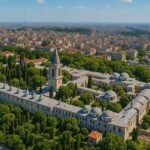
Chora Museum (often referred to as a top Byzantine art stop) is where the tour earns its reputation. This is one of the most famous ways to experience the Byzantine artistic approach in Istanbul: nearly the entire space is decorated with mosaics and frescos. It’s not just pretty. It’s densely narrative—biblical scenes told through color, pattern, and fine detail.
You’ll get about 1 hour here, but admission isn’t included. That’s the tradeoff: it’s worth planning money for the ticket because this is a major museum experience on the schedule. If you’re an art person, you’ll likely want slightly more time than the average visitor—so use the hour actively. Stand where you can see the overall composition first, then go back for the smaller details.
The payoff
This stop changes how you look at the rest of the day. After Chora, the religious architecture and iconography in other parts of the tour start to feel like they belong to a continuous visual language.
Tekfur Sarayi: An Emperor’s Palace, Seen Close and Read Slowly
Tekfur Sarayi comes next, once a palace connected with Roman emperors. The inside has been reconstructed and turned into a museum, but the exterior preserves the building’s character well. This is a nice break in intensity because you don’t spend the whole time inside unless you want to.
You get about 30 minutes. Admission isn’t included. You’ll examine it from the outside as part of the core plan, and you can visit inside if you prefer. That optionality is smart: if you want to keep energy for later stops, outside viewing still delivers plenty.
Consideration
Since this is a shorter stop, you’ll get more out of it if you’re comfortable asking questions in the moment—especially about what reconstruction can and can’t replicate.
Fatih Mosque and Complex: Sultan Mehmed’s Roman Connection
Then you’ll reach Fatih Mosque and Complex, built by Sultan Mehmed, the ruler famous for conquering Constantinople. He carried the title Caesar of Rome among his other names, and that historical angle is part of what makes this stop feel like more than just a grand mosque visit.
This is also where the day connects to Christian-era memory through the unusual layering of meanings around the site. You’ll visit about 1 hour, and admission is free. You’ll also find Sultan’s tomb in the courtyard.
What to expect
Architecturally, it’s the scale and layout that hit first. Historically, it’s the story of titles and succession—why a conqueror would borrow from the Roman brand of legitimacy.
Valens Aqueduct (Bozdogan Kemeri): Infrastructure With Real Weight
Stop 6 is Valens Aqueduct (Bozdogan Kemeri)—a surviving section of a long Roman water network. This is the kind of stop that makes me smile because it’s not trying to be flashy. It’s monumental in its own way, and you can stand near something that was built to move water in the 4th century under Emperor Valens.
You’ll spend about 30 minutes, and admission is free. If you like history that shows how cities functioned—food, water, plumbing, maintenance—this is a high-impact moment.
Zeyrek Mosque: Byzantine-Ottoman Blending After Damage and Recovery
Finally, you’ll visit Zeyrek Mosque, a site with a long life and a scarred one. The core building is Roman-era (12th century), and you still see a blend of Byzantine and Ottoman art within the structure. Strong earthquakes and devastating fires caused major damage, so the current form carries both survival and repair in its story.
You’ll get about 1 hour here, and admission is free. The stop also includes another good city-view angle around the area, which is a nice finishing touch after the earlier towers and walls.
Why this works late in the day
By the time you reach Zeyrek, your brain has learned the pattern: look at structure, then look for the layer that came later. This is one of those stops where the city’s resilience becomes part of the sightseeing.
Tickets, Transit, and Budget: What $120 Really Covers
The headline price is $120.00 per person, and the big included value is professional licensed guide service. But the day has some paid elements you should plan for up front:
- Museum entrance tickets are not included and are listed as €25.00 per person. That matters most for museum stops like Chora Museum and other non-free admissions.
- Public transportation is not included, listed as about €3.00 per person.
- Lunch is not included.
So is it still good value? For me, yes—because you’re not just collecting landmarks. You’re getting a guided interpretation across several major Byzantine and Roman sites in one organized run. Paying a guide to connect the dots saves you time and keeps you from wandering into confusing connections alone.
A good budget estimate mindset is to treat $120 as the guided portion, then add the museum entry fee and a small transit/lunch allowance.
Your Guide Matters: What a Great Day With Ünsal Looks Like
The strongest reviews focus on one theme: the guide makes the route feel personal. Many people cite Ünsal specifically, describing him as exceptional and highly attentive to interest level and pacing. That means you don’t just move through rooms—you get context that stays with you.
A few practical examples from the guidance style:
- He adjusts the timing to your energy level and questions rather than forcing a rigid pace.
- He uses digital materials on an iPad, including personal photo references to highlight details in churches and mosques.
- He helps with day rhythm beyond the sites, including lunch suggestions and even dinner choices later.
- He can arrange transport support at the end of the day, including calling a taxi, and in at least one case, staying with the plan until the traveler is safely on their way.
One extra real-life note: prayer schedules can affect timing around mosque areas. Some visits may require a bit of hurry to catch the right moment. It’s not a dealbreaker, but it’s better to know this day runs on human schedules, not just museum opening times.
Who This Tour Suits Best (And Who Might Want Something Else)
This is a strong fit if you:
- care about Roman and Byzantine Istanbul specifically, not just Ottoman-era highlights
- love art details, especially mosaics and frescos at Chora
- want a private guide who can guide in a way that feels tailored and not rushed
- like stops that include infrastructure, like the aqueduct, not only churches and castles
You might consider a different style tour if you:
- hate paying add-on museum tickets and prefer everything included
- want a very short, low-walking outing (this is a half-day to near-full-day program)
- are hoping for only inside visits—this route includes strong exterior viewing and outdoor panoramas
Should You Book This Roman-Byzantine Heritage Tour?
I’d book it if you’re the kind of traveler who wants Istanbul’s layers explained in plain language, with time to look and ask. The combination of Yedikule views, Chora mosaics, Roman walls, and the aqueduct gives you a day that feels coherent instead of random. And because it’s private, you’re more likely to get a pacing and explanation style that matches your attention span.
One last practical check: the experience requires good weather. If that’s an issue for your travel dates, plan to keep some flexibility. Also remember the day includes free stops and paid museum entries, so factor in the museum fee and lunch when you set your travel budget.
FAQ
FAQ
How long is the Roman Byzantine Heritage of Istanbul tour?
It lasts about 6 to 8 hours.
What is the price per person?
The price is $120.00 per person.
What’s included in the tour price?
The tour includes a professional licensed tourist guidance service.
Are museum or attraction tickets included?
No. Entrance ticket to museums is €25.00 per person and is not included. Some stops on the route are listed as free, while others are not.
Is the tour private or shared?
This is private, meaning only your group participates.
What language is the tour offered in?
The tour is offered in English.
What is the meeting point and start time?
The start is at Merhaba Pastaneleri Sirkeci Hoca Paşa, Ankara Cd., 34112 Fatih/İstanbul, and the start time is 9:00 am. It ends back at the meeting point.