REVIEW · ISTANBUL
Private & Mini Group Istanbul 7 hours Tour with TRAM. Save time
Book on Viator →Operated by Private & Small Group Ephesus & Istanbul & Turkey Tours · Bookable on Viator
A city this big can feel like a blur. This is a smart tram-first Istanbul day that hits the big icons without sitting in traffic for hours. You get a licensed guide, a small group pace, and local transport tickets so you can spend more time looking up and less time stuck on roads.
Two things I really like: the group stays small (max 10 people), which makes it easier to hear your guide and keep the day moving. And the plan uses Istanbul’s tram system to connect the cruise area to Sultanahmet fast—so you’re not guessing your way across a crowded day.
One consideration: it’s still a packed, walk-heavy 7 hours. You’ll be among lots of people at major landmarks, and if you’re the type who gets tired without long breaks, you may find it a long day.
In This Review
- Key highlights worth caring about
- Tram-first Istanbul: why this route feels less painful
- Getting started at Galataport and staying in the right rhythm
- Hippodrome Square: a quick stop with big context
- Blue Mosque: what to expect, plus the Friday timing twist
- Topkapi Palace: the highlight that costs extra, and what’s included
- Hagia Sophia Grand Mosque: the headset rule is real
- Grand Bazaar: 90 minutes is not enough, but it’s the right amount
- The actual day math: timing, walking, and crowd management
- Price and value: what $89 buys you (and when it might feel pricey)
- Who this tour fits best (and who should choose something else)
- Should you book this Istanbul tram tour?
- FAQ
- What’s the duration of this Istanbul tour?
- How big is the group?
- What transportation is included?
- Are entrance fees included for all attractions?
- Is lunch included?
- What should I wear for the mosque visits?
- Will there be live guiding inside Hagia Sophia?
- Does the tour work for cruise passengers?
Key highlights worth caring about
- Max 10-person group for a calmer feel and easier logistics
- Licensed guide who can keep you moving through major sights
- Tram tickets included to beat traffic from the cruise port area
- Skip-the-line support via pre-paid tickets the guide arranges
- Hagia Sophia headset requirement after Jan 15, 2024, if you don’t have your own
- On-time return focus designed for shore-excursion timing
Tram-first Istanbul: why this route feels less painful
If you’re visiting from Galataport after a cruise docking, traffic is your enemy. This tour leans on local transit—the tram—to get you from the port area toward Sultanahmet quickly. In practical terms, that means less time watching a driver wrestle Istanbul’s roads, and more time inside the places you actually came for.
The tour also makes a big deal of timing: it’s designed as a shore excursion with a worry-free approach and a guaranteed on-time return to your port. That matters because Istanbul’s top sights are popular, so queues and crowd flow can stretch your day if you’re doing everything on your own.
And the most “Rick Steves” part of all this? The guide doesn’t just shepherd you. They help you pick efficient movement—walking short segments and using tram legs where it saves real time.
You can also read our reviews of more private tours in Istanbul

Getting started at Galataport and staying in the right rhythm
Your day begins at Galataport Istanbul, in front of the Istanbul Galata Port Terminal Building, where you’ll meet your guide holding a sign with your name. Then it’s a short walk (about 200 meters) to the Tophane Tram Station.
From there, you take the tram to the Sultanahmet area. The plan keeps this leg compact—around 20 minutes—so you arrive while your energy is still intact. After that, you transition into sightseeing on foot, which is how the historic core works best anyway: trams move you between zones, and walking gets you the close-up views.
One smart thing here: this tour is set up as a small-group experience with a plan. That doesn’t mean you’re rushed at every stop, but it does mean you aren’t drifting in the wrong direction while other people sprint ahead.
Hippodrome Square: a quick stop with big context
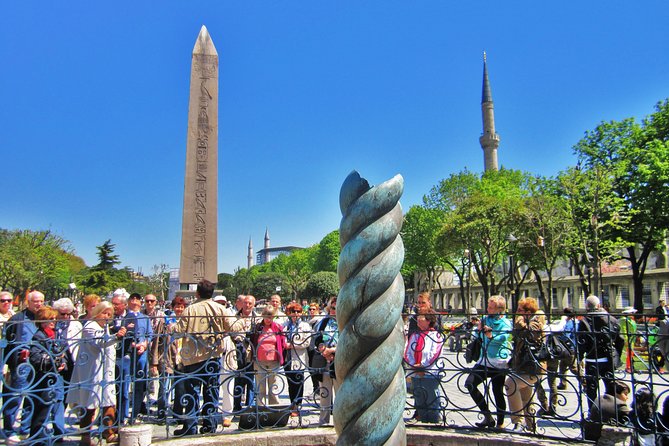
Next up is Hippodrome Square, the former center of sport and political life in Constantinople. Even if you’re not a hardcore history person, this stop helps you “read” the city you’re standing in.
Here’s why it’s useful: it gives you a mental map of what Istanbul was before the Ottoman era took over the skyline. It also sets you up for the next iconic stop, Blue Mosque, since you’ll be seeing the city’s layered timeline in order.
You’ll spend about 30 minutes here, and the tempo stays steady—just long enough to orient you, not long enough to burn your energy.
Blue Mosque: what to expect, plus the Friday timing twist
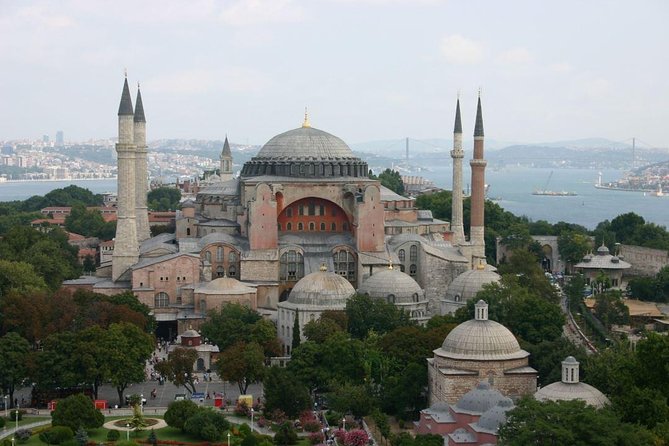
Blue Mosque is next, and yes, it’s a skyline star. The guide frames it as 17th-century Ottoman architecture with famous blue tile work and six minarets. It’s one of the places where photos don’t capture the scale and light.
Admission is free on this stop, and you’ll have about 30 minutes on site. That’s a reasonable window, but Istanbul crowd flow can be unpredictable. The tour’s value is that you’re not doing this as a solo battle.
A key practical note: Friday hours. The mosque is open 14:30–16:30 on Fridays. If your day lands on a Friday and the timing doesn’t match your arrival, you may have limited access. The tour handles schedule-driven alternatives in some cases, but it’s worth paying attention to your day of week when planning.
Also, follow basic holy-site rules: bare shoulders aren’t permitted and you should plan for appropriate clothing and respect inside. (Shoes off in mosques is also part of the deal.)
Topkapi Palace: the highlight that costs extra, and what’s included
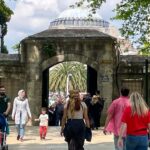
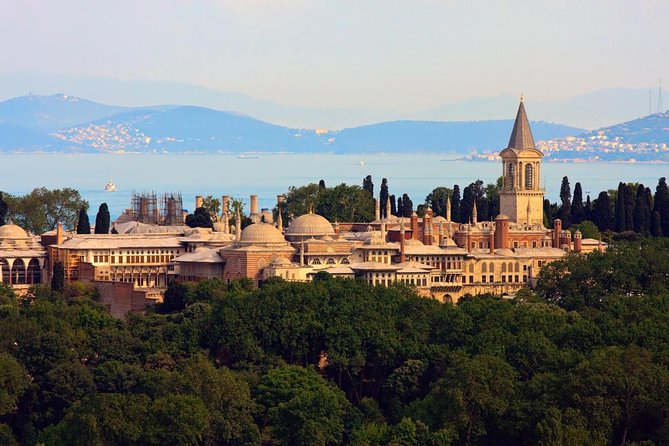
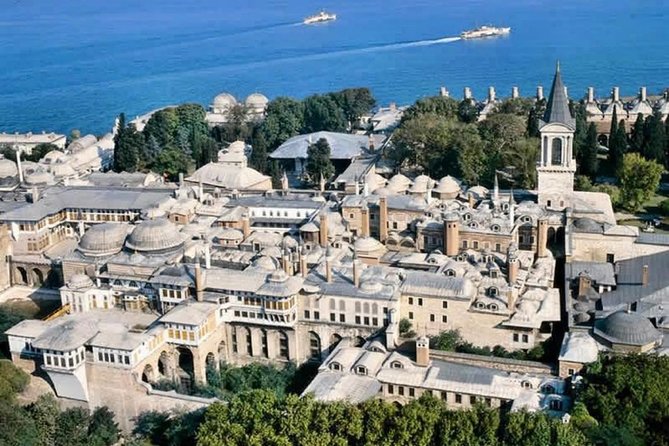
After Blue Mosque, you’re close to Topkapi Palace—a residence of Ottoman sultans and also the administrative and educational center of the state. This is where Istanbul’s power shifts feel real, not abstract.
You’ll have about 2 hours here, and this is one of the stops where the entrance fee is not included. Still, the guide arranges pre-paid tickets to help you skip lines, which is the difference between spending your time admiring art versus standing in a queue wondering if time has stopped.
This tour specifically includes the weapons section, which is a nice choice because it tends to be both visually striking and easier to understand than more abstract palace spaces. If you like military history, craftsmanship in metalwork, or you just want a tangible anchor point for Ottoman power, this part makes the visit feel less like wandering and more like learning.
One caution: palace interiors and courtyards can be visually dense. With limited time, your best move is to listen closely to your guide’s pacing decisions and don’t try to “see everything.” You’ll enjoy it more if you focus on the areas that matter most to your guide’s story.






Hagia Sophia Grand Mosque: the headset rule is real
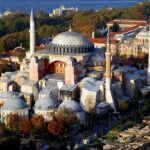
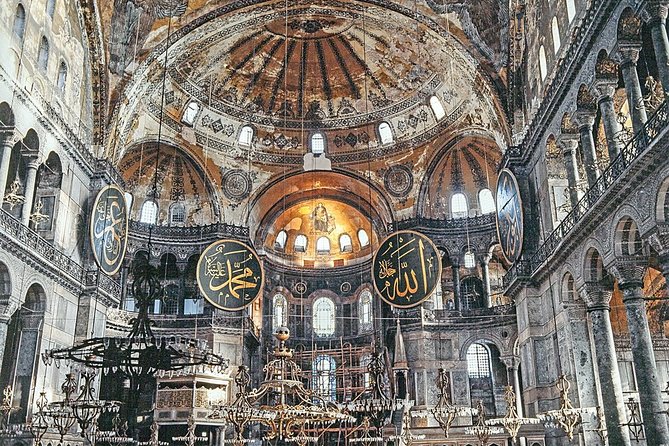
Then comes Hagia Sophia—the giant name everyone wants to see. It’s described here as a magnificent Byzantine church and one of the world’s great architectural works. Even with no deep prep, you can feel why it’s a landmark.
Admission is not included for this stop, and your guide’s help with access matters more than you might think, because crowds can be intense.
Now the big update: live guiding is not allowed inside Hagia Sophia after January 15, 2024. That means you won’t have the typical back-and-forth commentary the whole time. Instead, you’ll follow information signage and a headset-style audio system approach.
Practically, the tour advises this:
- You should bring a smart phone and headphones.
- If you don’t have headphones, you can buy them at the entrance for about 3.5 USD.
This is one of those “small logistics” rules that can change your experience a lot. If you show up without headphones, you’ll still get information, but you’ll lose some ease. If you do bring them, the visit tends to feel smoother and more self-guided without being disconnected.
You’ll spend about 30 minutes there—enough time to appreciate the space, but not enough to go full deep-research mode. The tradeoff is you’re stacking multiple top sights in one shore-friendly day.
Grand Bazaar: 90 minutes is not enough, but it’s the right amount
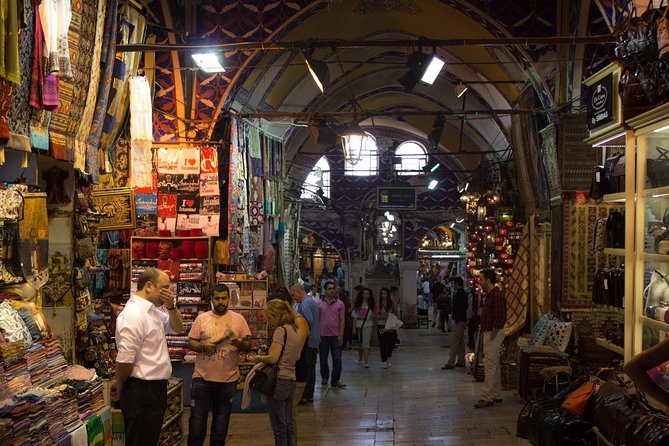
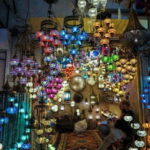
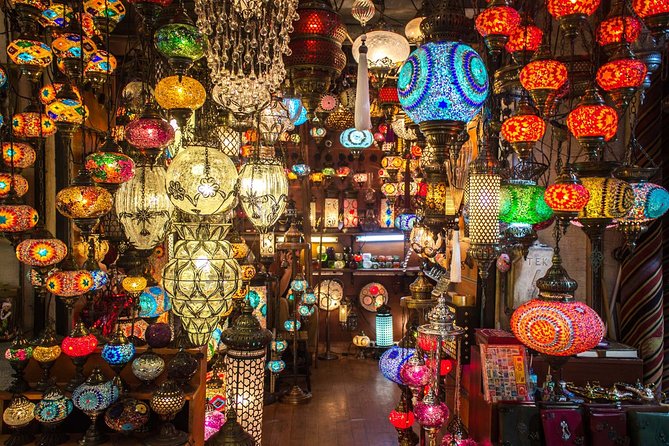
Finishing with the Grand Bazaar is a smart way to end. This covered market is massive, with 58+ streets and over 1,200 shops. It’s been around since 1461, and it’s especially known for jewelry, pottery, spices, and carpets.
Your time here is about 1 hour 30 minutes, and admission is free. That’s a perfect window for browsing, spotting your favorite crafts, and grabbing a few edible souvenirs without turning the whole evening into a chaotic shopping marathon.
A practical note for your money and your energy:
- Be ready for dense crowds and tight aisles.
- Decide what you’re shopping for before you enter (spices vs. ceramics vs. a small textile). Otherwise, the place can steal your time in a hurry.
The guide helps with movement, and that’s key. Grand Bazaar is one of the places where getting lost is easy and getting “back on track” can take longer than you think.
The actual day math: timing, walking, and crowd management
This is listed as about 7 hours, and it generally works like this: tram legs that keep you moving fast, plus short-to-medium visits inside the most popular sights.
Expect walking between stops and inside sites. Istanbul is compact in the historic core, but it’s also crowd-heavy, so your pace will feel slower than you’d expect at home.
From the tour context, I’d plan around these realities:
- Major sites will be crowded no matter what.
- You might be doing around 14,000 steps if you keep moving and don’t take long detours.
- Even in a small group, it can be hard to hear your guide when you’re inside the densest areas.
The best way to handle this is simple: keep your focus on where you’re going and what you’re seeing, not on perfecting every photo angle. If you’re prone to getting overwhelmed by crowds, bring a calm mindset and plan to slow down at the most intense entrances.
One more good-to-know: the itinerary includes fallbacks if something closes. For example:
- If Topkapi can’t be visited, it may be swapped with the Underground Cistern on Tuesdays.
- If Grand Bazaar is replaced on certain days, it can be substituted with places like Spice Market (Sundays) or Arasta Bazaar (when Grand Bazaar is closed for religious holidays).
This keeps the day productive even when Istanbul has a surprise.
Price and value: what $89 buys you (and when it might feel pricey)
At $89 per person, the value depends on how you compare it. This price isn’t just for “a guide holding a flag.” It covers several practical items that add up:
- Licensed guide
- Small group setup
- Local transportation tickets (tram-focused)
- Skip-the-line support via pre-paid tickets for entrance-related routing
- On-time return to the port focus
If you’ve ever tried to solve a cruise shore day by yourself, you know how quickly costs rise when you add taxis, entrance delays, and time lost to traffic. Here, you’re buying time and coordination.
Where you should watch your expectations: entrance fees for Topkapi Palace and Hagia Sophia are not included. The tour can still be a good deal because you’re supported with ticket handling and line avoidance. But you should mentally budget for those additional entries when you plan your day.
Also, lunch and drinks are not included, so set aside money for a meal break. Some guides recommend restaurants, and having that advice can prevent you from making tired, overpriced choices while hungry and surrounded by people.
Who this tour fits best (and who should choose something else)
This tram + highlights format fits best if you:
- Want a structured day that works from the cruise port area
- Like seeing major landmarks without needing to plan transit on your own
- Prefer a small group (up to 10) rather than a bus crowd
- Are okay with a full-day rhythm and some walking
It may feel less ideal if you:
- Don’t handle crowded interiors well
- Need long seated breaks every hour
- Expect very flexible wandering time at each stop
The good news: many guides on this route focus on keeping the group together and adjusting pacing. Names you may encounter include Ada, Mustafa, Ceran, Necmi, Erikan, Leyla, and Orkun—and the consistent theme is moving efficiently and explaining what you’re looking at so the day doesn’t feel like a checklist.
Should you book this Istanbul tram tour?
I’d book it if your top goal is getting from Galataport to Sultanahmet without traffic drama, while still seeing the big names: Blue Mosque, Hagia Sophia, Topkapi Palace, Hippodrome Square, and Grand Bazaar. The small group size and tram-first planning are the heart of the value.
I’d think twice if you know you struggle with long, crowded days or you hate walking. In that case, you might prefer a slower-paced option that spends more time at fewer sights.
FAQ
What’s the duration of this Istanbul tour?
The tour runs for about 7 hours.
How big is the group?
It’s a small-group experience with a maximum of 10 people, though one note lists a maximum of 15 travelers.
What transportation is included?
Local transportation tickets are included, and the itinerary uses the tram to get from the port area to the old city area.
Are entrance fees included for all attractions?
No. The Blue Mosque, Hippodrome Square, and Grand Bazaar stops are listed as free admissions, while Topkapi Palace and Hagia Sophia are not included.
Is lunch included?
No. Lunch and drinks are not included.
What should I wear for the mosque visits?
Bare shoulders are not permitted in holy places of worship, and shoes are not allowed in mosques.
Will there be live guiding inside Hagia Sophia?
Live guiding is not allowed inside Hagia Sophia after January 15, 2024. You’ll need to use the audio/headphone system, and you may be able to buy headphones at the entrance for about 3.5 USD if you don’t have your own.
Does the tour work for cruise passengers?
Yes. Cruise guests are picked up at the Istanbul Cruise Terminal, and the tour is designed to return you on time to the port.