REVIEW · KUSADASI
Private Full Day Ephesus Tour from Bodrum
Book on Viator →Operated by OTTI Travel · Bookable on Viator
Ephesus is two religions in one day. This private full-day tour links the quiet, stone House of the Virgin Mary on Bulbul Mountain with big-name Roman sights in Ephesus, all with pickup from Bodrum and skip-the-line handling. If you get guides like Selim or Ulas, you’ll likely get clear, story-driven context as you move between sites.
I especially like the comfort factor: a brand new, A/C Mercedes Vito with a professional driver makes the long ride feel much shorter. I also like the way the day is structured, giving you real time slices at major stops like the Library of Celsus and the Great Theatre instead of rushing every photo spot.
One drawback to plan for: major entrance fees are not included in the tour price. On top of the tour cost ($259 per person), you’ll pay the Ephesus Ancient City fee (€40) and the Virgin Mary House fee (€18), plus lunch is an extra ($15). Some shopping stops can also feel pushy, so decide how you want to handle that before you go.
In This Review
- Key things that make this tour work
- Price and what you really pay for Ephesus
- The drive from Bodrum: plan for time, not promises
- Getting picked up smoothly (Bodrum hotels and cruise passengers)
- The flow of your day: why the stops are arranged this way
- Stop 1: Meryemana (House of the Virgin Mary) and its quiet atmosphere
- Stop 2: Ancient City of Ephesus (the anchor of the day)
- Stop 3: State Agora—meeting place, not a shopping bazaar
- Stop 4: Odeion—small theatre, big political function
- Stop 5: Temple of Hadrian—so well preserved it’s almost smug
- Stop 6: Temple of Domitian—an emperor temple on a wide terrace
- Stop 7: Hercules Gate—what remains, and why it matters
- Stop 8: Ephesus Terrace Houses—Roman family life, shown in mosaics
- Stop 9: Library of Celsus—beauty with a practical twist
- Stop 10: Great Theatre—25,000 seats and real-world intensity
- Stop 11: Basilica of St. John—tradition meets Byzantine-era structure
- Stop 12: Temple of Artemis ruins—foundation-only, still famous
- Shopping stops: value if you want them, stress if you don’t
- What made the tour score so high in practice
- Who this tour is best for
- Should you book Private Full Day Ephesus from Bodrum?
- FAQ
- How long is the Ephesus and Virgin Mary House private tour?
- Where does pickup happen?
- Is the tour private?
- Is there an English-speaking guide?
- Are entrance tickets included in the tour price?
- Do you get skip-the-line access?
- What is the drive time from Bodrum to Ephesus?
- Is lunch included?
- What entrance fees should I expect to pay on the day?
- Can I cancel for a refund?
Key things that make this tour work
- A true private setup: only your group rides together, so pacing stays in your control
- Comfort on the long drive: A/C Mercedes Vito plus an experienced driver helps on a hot day
- Big Ephesus hits are scheduled: Library of Celsus, Great Theatre, Terrace Houses, plus several smaller landmarks
- Faith + ruins mix is intentional: Meryemana first, then the Roman city core
- Shopping stops are part of the route: a carpet or leather stop may be included, with mixed feelings from past guests
Price and what you really pay for Ephesus
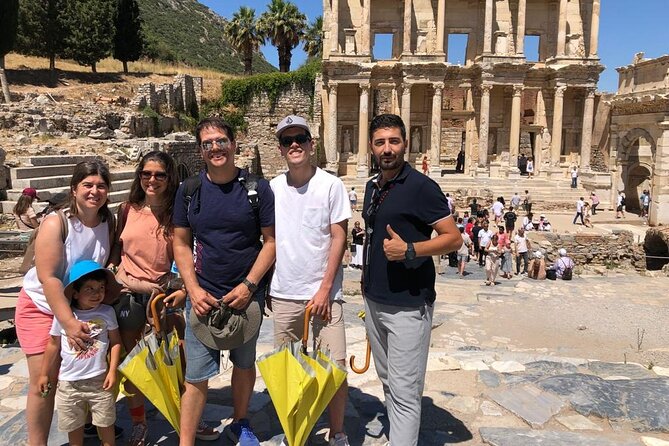
At $259 per person, this is priced like a premium private day trip from Bodrum. The big value is that you’re not cobbling together transport, tickets, and a guide on your own—you get the private ride, a licensed English-speaking guide, parking fees covered, and taxes handled.
But you still need to budget for entrances. The tour price does not include:
- Ephesus Ancient City: €40 per person
- House of Virgin Mary: €18 per person
- Lunch: about $15 per person
So the realistic total usually lands higher than the headline price once you add site fees. That’s not automatically bad—Ephesus entrances are the kind of thing you can’t skip if you want the full experience—but it helps to go in with a clear math check.
You can also read our reviews of more private tours in Kusadasi
The drive from Bodrum: plan for time, not promises
This is a full-day run, and the schedule hinges on the road time. The operator notes it takes about 2 hours from Bodrum to Ephesus by drive, and the day is built around that assumption.
In real life, timing can stretch when traffic or weather turns unfriendly. One past guest reported closer to 3 hours from the Bodrum cruise port, and the provider replied that traffic and conditions can move it (with one example of an arrival around 2 hours 25 minutes). That means your best strategy is simple: treat the tour start time as flexible and keep your expectations focused on arriving before the key ruins time.
Getting picked up smoothly (Bodrum hotels and cruise passengers)
Logistics matter on day trips. This one covers pickup and drop-off from your hotel or the cruise port, with set meeting points.
For cruise passengers, you meet at the exit gate of the immigration terminal at the Bodrum cruise port with an Ott i Travel sign. For Bodrum hotels, you meet by the hotel reception. For Bodrum airport (BJV), the meeting point is at the exit gate of the domestic terminal with an Ott i Travel sign.
The best part here is that you avoid the extra hassle of finding your driver in a busy port or figuring out local transport. The less you stress about getting to Kusadasi, the more energy you have for the ruins.
The flow of your day: why the stops are arranged this way
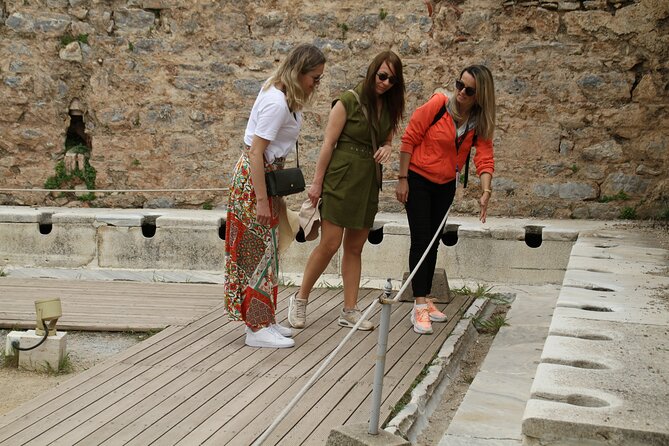
This itinerary is built as a loop through major Ephesus landmarks, starting with the spiritual pause at Meryemana (The Virgin Mary’s House) and then moving into the main archaeological zone.
The structure is practical:
- Spend time on the mountain shrine first, when you’re fresher
- Then hit the dense Ephesus core, where you’ll want guide context to connect the dots
- Finish with several key monuments and viewpoints so you leave with the big images in your head
It’s also paced to fit a 6 to 8 hour day. If you’re traveling during peak heat, that matters. You’ll still be walking, but you’re not stuck in one exhausting section without breaks.
Stop 1: Meryemana (House of the Virgin Mary) and its quiet atmosphere
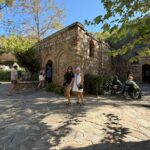
The House of Virgin Mary sits on top of Bulbul Mountain, about 9 km ahead of Ephesus. The setting is part of the experience: tucked into greenery, it feels calmer than the city ruins that come later. The house is described as a typical Roman stone construction.
Why this stop is worth your time:
- It’s not just a photo stop. The route and stone walls create a sense of retreat
- You get historical framing: a church combining the house and grave was built in the 4th century AD
- The guide can link the tradition of Mary spending her last days here with the early Christian spread in the area
You’ll have about 45 minutes at the site. Admission is not included, so budget the €18. If you prefer a faster pace, that’s the one time block you might trim—though most people find it a meaningful reset before walking through centuries of stone and marble in Ephesus.
A few more Kusadasi tours and experiences worth a look


Stop 2: Ancient City of Ephesus (the anchor of the day)
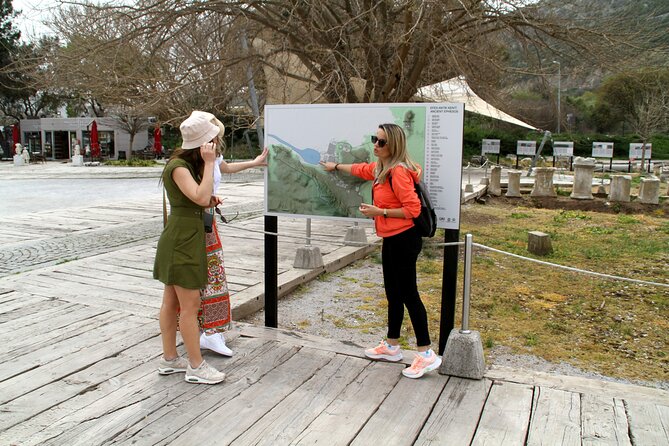
After Meryemana, you get into the archaeological heart of the region. The Ancient City of Ephesus is one of those places where the guide’s job is huge: you’re surrounded by ruins, but the stories only click when someone explains what you’re looking at.
The overview highlights two big anchors:
- Artemisium: Greeks built a colossal Ionic temple for Artemis around 356 BC
- Roman power: by the 2nd century BC, Ephesus was a major city in the eastern Roman Empire, known for the Temple of Artemis and the Library of Celsus among other institutions
You’ll get about 1 hour 30 minutes here. Admission is not included, so plan to pay the €40 entrance fee. For me, the value of this chunk is that it gives you enough time to actually understand what you’re seeing instead of playing marble catch-up.
Stop 3: State Agora—meeting place, not a shopping bazaar
The State Agora is on the southern part of the Basilica area and built in the Roman period around the first century BC. Here’s the key point: this was used for business and governmental discussions, not commerce in the everyday sense.
You’ll notice details like:
- An excavation area with graves from the 7th to 6th centuries BC
- A stone-paved road nearby
- A water reservoir corner, with water brought via the Pollio Aqueduct (and you can see the aqueduct remains about 5 km away along the Selçuk-Aydin highway)
This is a shorter stop (about 15 minutes), but it adds structure to the city story. Ephesus wasn’t only temples and theatres; it was a working civic machine.
Stop 4: Odeion—small theatre, big political function
The Odeion looks like a small theatre with a stage building, seating, and an orchestra. It had a double function:
- Bouleuterion: meetings for the Boules or Senate
- Odeum: performances as a concert hall
Built in the 2nd century AD under Publius Vedius Antonius and his wife Flavia Paiana, it held about 1,500 spectators. If you’ve only seen large theatres, this stop helps you understand how Roman entertainment and politics blended in the same architectural language.
Expect around 15 minutes. It’s short, but it gives you a powerful “oh, that’s what that building was for” moment.
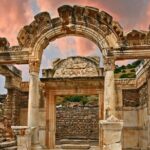
Stop 5: Temple of Hadrian—so well preserved it’s almost smug
The Temple of Hadrian sits on Curetes Street and is one of the best-preserved structures there. It was built before 138 AD and dedicated to Emperor Hadrian.
The facade details are the real hook:
- Four Corinthian columns supporting a curved arch
- A relief of Tyche (goddess of victory) in the arch area
- Pedestal inscriptions with bases for statues of emperors between 293 and 305 CE (original statues not found)
This one is about 15 minutes. It’s a quick stop, but if you like architecture, this is one of the places where your guide’s explanation makes the stones feel less random.
Stop 6: Temple of Domitian—an emperor temple on a wide terrace
The Temple of Domitian is at the south end of Domitian Street and is described as the first known structure in Ephesus dedicated to an emperor.
The architecture is a highlight:
- It’s on a high terrace (about 50 x 100 meters) with vaulted foundations
- Pro-style plan with columns: eight on the short side and thirteen on the long side
- An altar on the northern side (an u-shaped altar is now displayed in the Izmir Museum)
This stop is listed as having admission included. So if you’re tracking what you pay separately versus included, this is one of the few monuments where the ticket situation is a bit simpler.
Stop 7: Hercules Gate—what remains, and why it matters
Hercules Gate sits toward the end of Curetes Street. The name comes from a relief of Hercules on it. The gate was brought from another place in the 4th century AD to its current location, while the relief dates back to the 2nd century AD.
Today, only the two sides of the columns remain. Still, the gate matters because it helps explain how access to Curetes Street changed over time. It narrowed vehicle movement and, by the 4th century, the street became more pedestrian in feel.
You’ll likely spend about 15 minutes here.
Stop 8: Ephesus Terrace Houses—Roman family life, shown in mosaics
These houses are on the hill opposite the Hadrian Temple and are often called the houses of wealthy Romans. They were built on an urban grid plan with roads intersecting at right angles (Hippodamian plan).
What I’d want you to notice:
- Six residential units on three terraces
- Oldest building dates to the 1st century BC and usage continues until the 7th century AD
- Protective roofing, plus consolidated mosaics and frescos
- Two houses opened to the public as a museum
You’ll get about 30 minutes. This stop is valuable because it shifts you from public monuments to daily living. You’re not just looking at power; you’re looking at home décor, floors, and how people arranged space.
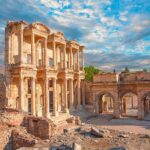
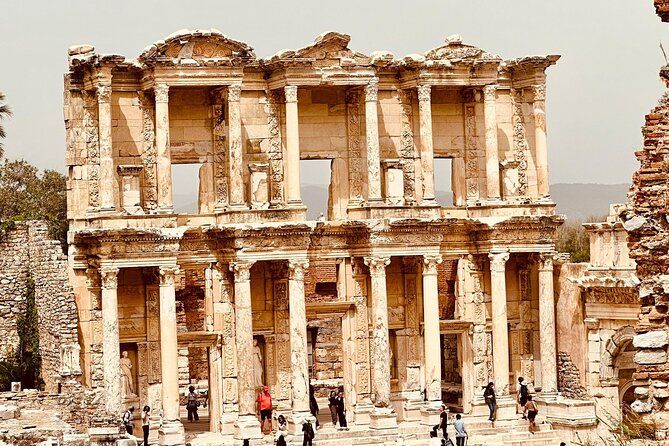
Stop 9: Library of Celsus—beauty with a practical twist
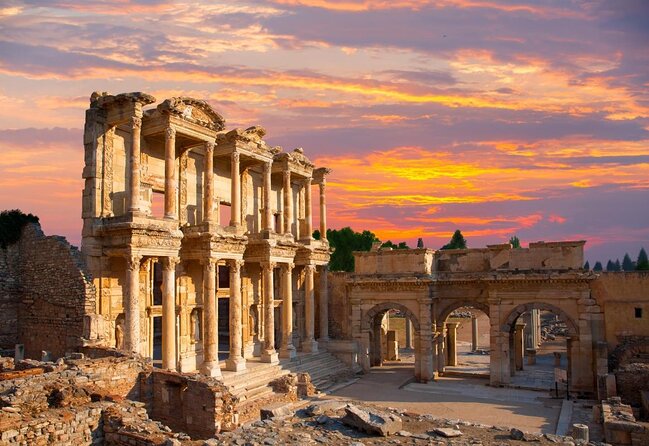
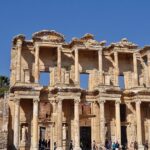
Celsus Library is one of the most beautiful structures in Ephesus, built in 117 AD as a monumental tomb for Gaius Julius Celsus Polemaeanus, commissioned by his son.
The design is smart as well as grand:
- The grave sits beneath the ground floor across from the entrance
- Scrolls were stored in niches on the walls
- There were double walls behind bookcases to protect manuscripts from extremes of temperature and humidity
- Capacity is listed as more than 12,000 scrolls—and it’s described as the third richest library in ancient times after Alexandria and Pergamum
You’ll have about 15 minutes. With the time you’re given, it’s enough to take in the facade and understand what the building was meant to do.
Stop 10: Great Theatre—25,000 seats and real-world intensity
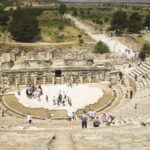
The Ephesus Great Theatre is the big visual payoff. It sits on the slope of Panayir Hill, opposite Harbor Street, and is easy to spot when entering from the south entrance.
The timeline here matters:
- First constructed in the Hellenistic period in the 3rd century BC
- Enlarged and formed its Roman-style layout later
- Listed as the largest theatre in Anatolia, with capacity about 25,000 seats
The architectural sectioning is part of the story: sixty-six rows of seats divided into three horizontal sections. It also served more than entertainment. The description includes religious, political, and philosophical discussions, plus gladiator and animal fights.
You’ll get about 15 minutes. This is also where a good guide helps you imagine crowd energy and leadership speeches instead of just standing in the shade staring at stone.
Stop 11: Basilica of St. John—tradition meets Byzantine-era structure
The Basilica of St. John is tied to tradition that the evangelist spent his last years in the region and was buried on the southern slope of Ayosolug Hill. A chapel was built over the grave in the 4th century, and later the church became a basilica during Justinian’s reign (527–565 AD).
This stop connects Christian history to the geography of Ephesus:
- The text mentions persecutions in the late 1st century
- It also notes the tradition that John took Mary to Ephesus
- The Gospel is linked to Ephesus, while Revelation is linked to Patmos in 96 AD
Time here is about 30 minutes. Even if you’re not religious, it’s a meaningful chapter because it shows how sacred memory turns into architecture.
Stop 12: Temple of Artemis ruins—foundation-only, still famous
The Temple of Artemis is one of the Seven Wonders of the ancient world, built in a flat area that turned swampy over centuries. Today, you mostly see the ruins of foundations rather than standing columns.
Still, the story is why this matters:
- It was a major Hellenistic marble project with sculptured column capitals and shafts
- The most beautiful remaining pieces are said to be exhibited in the British Museum in London
This stop is about 25 minutes and is listed as free. It’s a good wrap-up point because you can compare your mental image of a wonder to the reality of what time leaves behind.
Shopping stops: value if you want them, stress if you don’t
One part of this day can feel like a mixed bag: stops tied to carpets and possibly leather or related demonstrations. In some cases, guests described a carpet weaving or rug shop visit. Others disliked feeling pushed to buy.
Here’s my practical take: go in with a plan. If you love artisan goods, use the stop to ask how pieces are made and compare quality. If you don’t want sales pressure, set boundaries early and remember you can always politely pass. A private guide can often help you focus on what you care about, but the shop time still exists in the day.
What made the tour score so high in practice
The strongest praise across guides and logistics points to a few things you should expect to benefit from:
- Guides who stayed flexible and didn’t rush you, including support for an elderly traveler during walking at Ephesus
- Drivers who made the long road feel manageable, with smooth control of the day’s timing
- A guide-led explanation that made the ruins feel connected instead of random
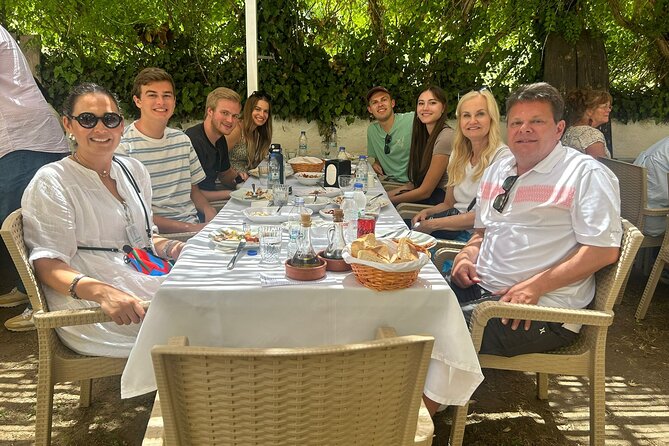
- Lunch described as plentiful and tasty by some guests, including recommendations to local restaurants
I’d read those as a signal that this isn’t just a bus-to-ruins package. The experience quality depends heavily on the person behind the microphone. When you get someone like Melahat, Eylem, Selim, Nur, or Tas, the day tends to land well.
Who this tour is best for
This is a great fit if you:
- Want a private Ephesus day with pickup from Bodrum (or a cruise-port meeting that’s actually spelled out)
- Like a mix of religion and archaeology in one routing
- Prefer A/C comfort on a long drive
- Enjoy having someone explain what you’re looking at, stop by stop
It’s less ideal if you:
- Hate any shopping component and want zero sales pressure
- Need a day with fully bundled ticket costs and no pay-on-arrival add-ons
- Are super time-sensitive and can’t handle the possibility of road delays
If you want the best match, go in knowing the day includes multiple major sites, plus possibly a carpet-related stop.
Should you book Private Full Day Ephesus from Bodrum?
Book it if you value a comfortable private ride, a licensed English guide, and a structured day that hits the big Ephesus monuments plus Meryemana. The high rating and the repeated mentions of friendly, helpful guides (like Selim, Nur, Ulas, and others) are exactly what you want from a day with lots of walking and lots of stone.
Hold off or ask questions first if your budget can’t handle entrance fees on top of the tour price, or if you strongly dislike shopping stops. In that case, you’ll want to confirm what’s included in your exact itinerary and how flexible the route will be.
If you’re the kind of traveler who likes to understand the places you visit, this day trip is a strong way to do Ephesus from Bodrum without turning your vacation into a logistics spreadsheet.
FAQ
How long is the Ephesus and Virgin Mary House private tour?
The tour runs about 6 to 8 hours.
Where does pickup happen?
Hotel pickup is arranged by meeting you at the hotel reception. Cruise passengers meet at the exit gate of the immigration terminal at the Bodrum cruise port with an Ott i Travel sign. Airport pickup at BJV is at the exit gate of the domestic terminal with an Ott i Travel sign.
Is the tour private?
Yes. It’s a private tour/activity, and only your group will participate.
Is there an English-speaking guide?
Yes. The guide is listed as English speaking.
Are entrance tickets included in the tour price?
No. Ephesus Ancient City (€40 per person) and the Virgin Mary House (€18 per person) are not included. The Temple of Domitian is listed as admission included, and the Temple of Artemis is free.
Do you get skip-the-line access?
The tour includes guaranteed skip-the-line.
What is the drive time from Bodrum to Ephesus?
The operator states it takes about 2 hours by drive. Timing can be affected by conditions.
Is lunch included?
No. Lunch is not included, and it’s listed as about $15 per person.
What entrance fees should I expect to pay on the day?
You’ll likely pay €40 for Ephesus Ancient City and €18 for the Virgin Mary House, plus lunch at around $15 per person.
Can I cancel for a refund?
Yes. You can cancel up to 24 hours in advance for a full refund.