REVIEW · ISTANBUL
Private Day-Tour of Ancient Battle Fields (Troy & Gallipoli)
Book on Viator →Operated by TRAVELIUM · Bookable on Viator
You get two unforgettable chapters in one long day. Troy brings Greek myth into real ruins, and Gallipoli turns the First World War into personal stories you can stand beside.
I like how the tour mixes big sights with practical pacing. You’ll get hotel pickup and drop-off, plus a guide who helps you make sense of what you’re looking at instead of just taking photos.
One thing to consider: it’s a 12-hour day, and museum/ruin entry fees and meals aren’t included, so you’ll want to budget extra cash and plan a lunch.
In This Review
- Key highlights worth knowing
- A Six-thirty Start Means More Time on Site
- Istanbul Pickup and the Private Comfort Factor
- The Dardanelles Strait Drive and Ferry: A Geography Lesson That Feels Physical
- Troy in One Day: Myth Meets Real Stone
- Temple of Athena Views That Are Actually Worth Walking For
- A Quick Stop That Changes the Conversation: The Aristotle Connection
- Gallipoli: WWI Battlefields You Can Feel in Your Legs
- ANZAC Cove and the Landing: The Story Gets Specific Fast
- Cemeteries and Remembrance: Where the Day Turns Quiet
- Price and What You Actually Get for $541.85
- What Reviews Help Me Recommend: Guides Matter
- Tips to Make the Day Feel Manageable (Not Exhausting)
- Who Should Book This Private Troy and Gallipoli Combo?
- Should You Book It?
- FAQ
- What time does the tour start?
- Is hotel pickup included?
- Is this tour private?
- What language is the tour guide?
- Are meals included?
- Do I need to pay museum or site entrance fees?
- Is there skip-the-line access?
- What’s the tour duration?
- What kind of fitness level do I need?
- Can I cancel and get a refund?
Key highlights worth knowing
- Early start, quieter sites: A 6:30am start helps you beat the worst crowds at major stops.
- Dardanelles crossing adds context: The drive to the strait and then the ferry makes the geography feel real.
- Troy is hands-on: You can climb inside the reconstructed Trojan Horse and see the Odeon’s stonework.
- Clear-day viewpoints at the Temple of Athena: The view can reach as far as Lesbos, Pergamum, and Mount Ida on a clear day.
- Gallipoli is emotional in the best way: Ottoman and ANZAC fighting, cemeteries, and local memories give it weight.
- Private format: Only your group participates, so you’re not dodging crowds during explanations.
A Six-thirty Start Means More Time on Site
This tour begins at 6:30am, and that matters more than you’d think. You’re traveling from Istanbul to the Gallipoli-Troy region, so you want daylight for the ferry crossing, good light for ruins, and enough time to slow down when something hits you.
The schedule is built around long but efficient blocks: drive first, ferry next, then major walking time at Troy and the Gallipoli battlefields. If you prefer rushed sightseeing, this might feel like a marathon. If you like purpose and quiet moments, the early start is a big win.
And yes, you’ll be out until around sunset. One review noted a return around 8pm, which lines up with the pace of two major regions in one day.
You can also read our reviews of more private tours in Istanbul

Istanbul Pickup and the Private Comfort Factor
You can get hotel pickup and drop-off, so you’re not coordinating trains, taxis, or meeting points on your own. For a day this long, that reduces stress fast.
This is also a private tour, meaning only your group is involved. You’ll ride with transportation included, and you’ll have your guide handling timing, directions, and the “what am I looking at?” questions that usually come up the minute you arrive.
In reviews, people mentioned comfortable vehicles like a BMW with a driver and guide, and that kind of added comfort helps on long road stretches and on a ferry. It doesn’t change the sights, but it makes the day easier to enjoy.
The Dardanelles Strait Drive and Ferry: A Geography Lesson That Feels Physical
Before you reach Troy and Gallipoli, you start at the Dardanelles Strait area—one of the narrow waterways that has shaped history for centuries. The strait connects the Sea of Marmara with the Aegean and Mediterranean, and it sits right on the Europe-Asia divide in northwestern Turkey.
Early on, you’ll also see the Ottoman-era idea of control from both sides: the text notes there were castles on each side called together the Dardanelles. Even if you don’t memorize details, it helps you understand why these battles were fought here and why ships mattered.
Then you board a ferry across the Dardanelles. That boat ride does something plain but powerful: it turns “map history” into actual distance and direction. You’ll likely notice how the strait narrows and how quickly the water becomes a strategic corridor.
Troy in One Day: Myth Meets Real Stone
Troy is famous because of the Iliad, but you’ll get a clearer view of what that means once you’re standing amid the ruins. One key reality check: Troy is a Bronze Age site, not a fully preserved palace complex. If you expect grand marble everywhere, you might get disappointed.
But if you’re open to ruins that still communicate power, trade, and siege life, Troy delivers. You’ll explore city walls and major temple areas with a guide who ties the stories to the layout of the archaeological site.
Two highlights I’d prioritize once you’re there:
- Athena’s Temple area and the dramatic Odeon (a well-preserved stone theatre).
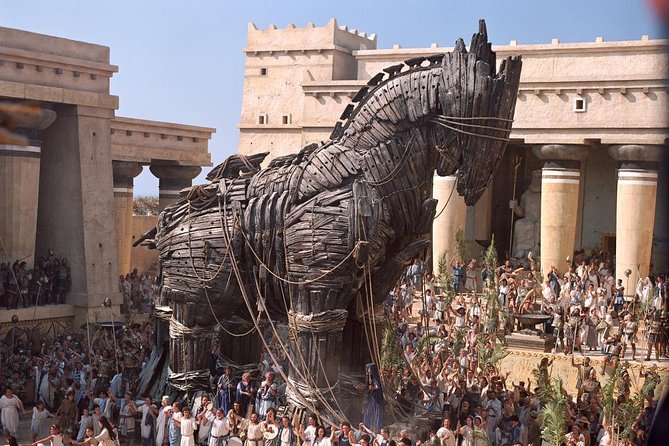
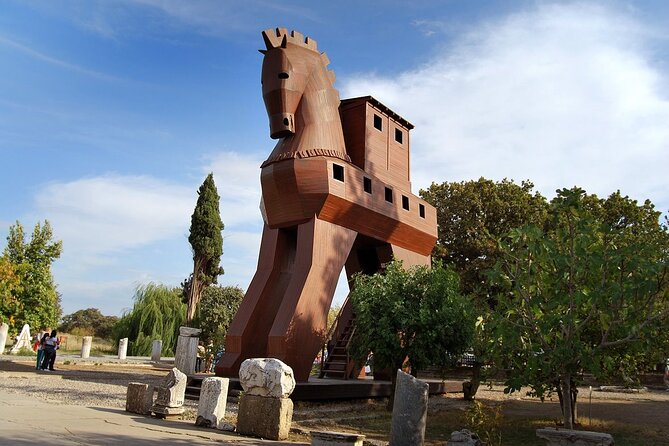
- The reconstructed Trojan Horse, where you can actually climb inside, which makes the myth feel less like a lecture.
Also, you’ll get that “real place” feeling: you can look across the plain and connect what you’re seeing to why Homer’s story stuck to this particular geography.
Temple of Athena Views That Are Actually Worth Walking For
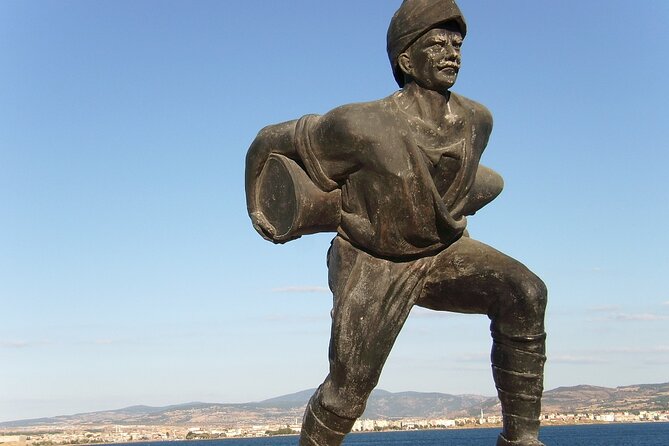
At Athena’s Temple, the point isn’t just ancient stone—it’s the view. On a clear day, the described sightlines can extend toward Lesbos to the south, Pergamum to the southeast, and Mount Ida to the east. The Tuzla River is noted nearby, and two massive columns still mark the gate area on the northwest side.
That’s the value of this stop: it helps you understand how ancient people chose locations. You’re not just touring; you’re learning why a place would matter for sightlines, movement, and defense.
You’ll also see physical markers of the city’s structure. Even when details are fragmentary, your guide’s explanations help you connect the dots between walls, temples, and major civic spaces.
If you’re the type who likes viewpoints, plan to spend a few extra minutes just standing still here. You’ll get more out of it than a quick photo.






A Quick Stop That Changes the Conversation: The Aristotle Connection
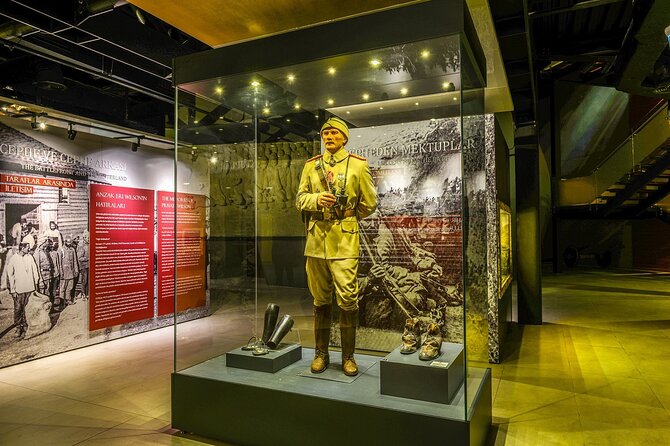
One of the less obvious parts of the day is a stop labeled Behram, tied to the story of Aristotle and his time connected with Assos. The information shared includes Aristotle working with figures like Xenocrates, teaching and philosophical activity in Assos, and a chain of political events involving King Hermias and later Aristotle’s move toward Macedonia.
There’s also a practical detail: the description notes a modern statue of Aristotle at the town entrance, and the stop is listed as free time-wise.
This isn’t a “big museum moment,” but it’s smart travel value. It breaks the day out of a strict myth-and-war loop and reminds you that Greek thinkers and power politics lived in this same broad region long after Troy and before the First World War.
Gallipoli: WWI Battlefields You Can Feel in Your Legs
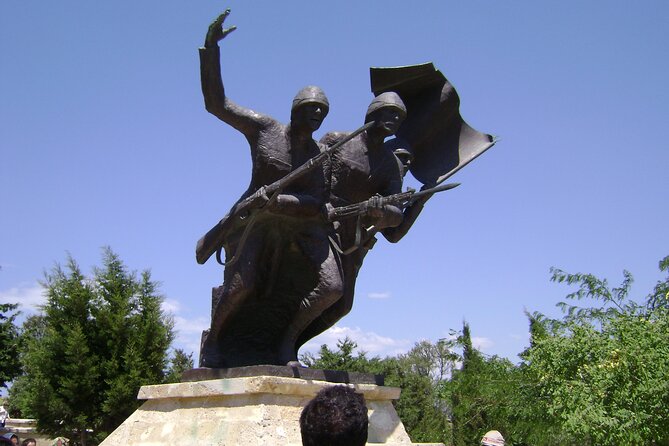
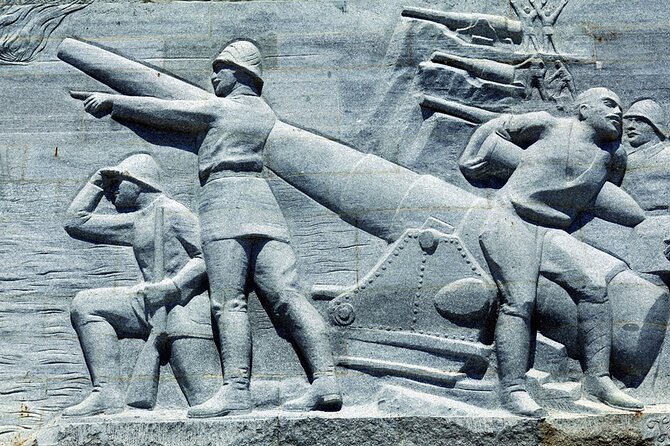
After Troy, you return toward the European side of the Dardanelles to Gallipoli. The First World War campaign here is described as the Dardanelles campaign, starting in February 1915 and running through January 1916.
The big strategic idea is clear: the Allies wanted control of the straits to pressure the Ottoman Empire and affect the supply route toward Russia. The narrative also notes that the initial attacks on Ottoman forts in February failed, then the amphibious landing in April aimed at capturing Constantinople (Istanbul).
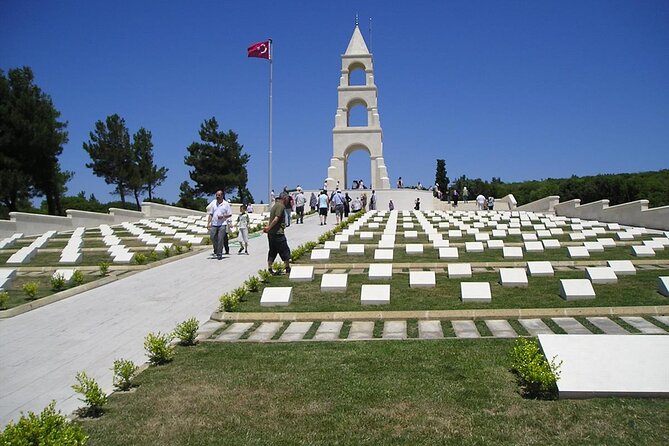
What makes this part of the tour meaningful is how it’s tied to specific ground: you visit the battlefield areas, then move to memorial cemeteries where the stories become more personal. It’s not just “where a battle happened.” It’s where people were buried and where names and sacrifice took on permanent form.
Walking is part of it. Bring shoes you can trust. Even if you’re not doing a brutal hike, you’ll still be on uneven paths and need steady footing.
ANZAC Cove and the Landing: The Story Gets Specific Fast
One of the most iconic locations is Anzak Bay Beach, connected to the landing at Anzac Cove on Sunday, 25 April 1915, also known as the landing at Gaba Tepe. The described framing includes the conflict between the Ottoman forces and the ANZAC assault units from the British Empire.
This stop’s value is in the “how it actually went” details. The information provided notes the troops landed at night on the western side of the peninsula, were put ashore about one mile (1.6 km) north of their intended landing beach, and that darkness mixed formations and changed plans. Some groups reached objectives while others were diverted, and the resistance intensified as they moved inland.
That’s why the place feels different from a book. You can look at the coastal outline and imagine night landings, confusion, and the slow tightening of the fight.
Your guide also works in the human angle. The day includes explanations of fighting between Ottoman and ANZAC troops, and why some called the clash a Gentleman’s War. Even if you’ve heard that phrase before, it hits harder when you’re standing where it played out.
Cemeteries and Remembrance: Where the Day Turns Quiet
As the tour continues, you’ll pay respects at cemeteries tied to soldiers who fought and died along the Dardanelles. This is the part of the day where the atmosphere changes. The route keeps moving, but your attention slows down.
A practical note: come with the right mindset. If you only want spectacle, this day might feel heavy. If you want understanding, it becomes one of the most grounded tours you’ll take in Turkey.
In multiple reviews, people singled out the emotional impact of Gallipoli, plus the value of hearing from a local perspective. That’s one reason the tour is worth it: you’re not just reading plaques; you’re hearing how the story is remembered.
Price and What You Actually Get for $541.85
At $541.85 per person for a 12-hour private day, the price isn’t “cheap,” and you shouldn’t compare it to casual bus trips. You’re paying for a full-day setup: guide, transportation, hotel pickup/drop-off, and time at two major destinations.
That value adds up if:
- you want a guide who ties myth and war to the ground you’re seeing,
- you’d rather sit in a private car than figure out intercity logistics,
- you care about explanations more than just walking through ruins.
However, read the fine print lifestyle-wise. Meals and drinks aren’t included, and museum entrance ticket fees aren’t included. That means your true budget is the base price plus:
- lunch (or snacks you buy on the way),
- any site entry you’re required to pay on the day.
One review specifically mentioned that entry fee to the ruins wasn’t included, and it would have felt nicer given the overall cost. You can treat that as a heads-up: have some cash ready for tickets you’ll likely need.
If you’re doing this on a tight schedule and you only have one full day in the Istanbul area, this type of combo tour can still be good value—because you’re squeezing time efficiently.
What Reviews Help Me Recommend: Guides Matter
This tour lives or dies by interpretation, and the guide quality can vary by person and by what’s available that day. The good news: the tour does attract strong specialists.
In reviews, guide Ali was praised for exceptional specialist knowledge about the war, history of the battles, and the political environment of the time. Another review highlighted Cenk, describing him as attentive, personable, and knowledgeable. A third mentioned Sevinc Kalik with strong experiences on both Troy and Gallipoli.
On the flip side, one review noted average English and average knowledge base. That doesn’t mean you’ll get that, but it does suggest you should treat the guide as a key part of your planning. Ask questions early, and if anything feels off, speak up so the guide can adjust.
Tips to Make the Day Feel Manageable (Not Exhausting)
A day like this can either feel like a great achievement or like a blur. You can tilt it toward great.
Here’s what I’d do:
- Wear comfortable walking shoes. You’ll do museum-style walking plus battlefield paths.
- Bring a small amount of cash for tips. One review advised bringing tip money for both driver and guide.
- Pack water and snacks, even if it’s not officially included. Meals aren’t covered, and long days are where energy dips happen.
- If you care about photos, plan for the fact you’ll be in motion most of the day. Focus on key stops for time on images rather than trying to shoot everything.
Also, because the tour includes skip-the-line access with your guide, you’ll often save time at busy stops. Still, you should expect waiting periods—especially on a busy travel day or at major sites.
Who Should Book This Private Troy and Gallipoli Combo?
Book this if you fit one of these profiles:
- You’re a myth + history person. Troy’s connection to the Iliad is central, and the day doesn’t shy away from big narratives.
- You want First World War sites with context, not just names and dates.
- You prefer private touring and want pickup, drop-off, and a guide to manage the flow.
- You only have one day and want two heavyweight stops.
If you’re traveling with kids, or if you’re looking for a short, light day, this might feel like too much. The day includes walking at ancient sites and on battlefield ground, and it’s built for adults who like time on foot.
This is also a strong choice if you want an early start and you don’t mind returning late. The tour is designed around using morning light and ending with sunset over the Marmara Sea.
Should You Book It?
I’d book it if you want a single-day answer to two big questions: where did the Trojan story take hold, and why did the straits become such a brutal WWI battleground? The combination of Troy + Gallipoli is the headline, but what makes it worth it is the guide-led pacing and the fact that transportation and hotel pickup remove most of the hassle.
Pass if you need meals included, hate long days, or expect Troy to feel like a fully intact “palace museum.” This isn’t that kind of place. It’s ruins, viewpoints, and story—plus a very real emotional weight at Gallipoli.
If you can handle a long day and budget for food and entry fees, this is a solid way to use one visit to Istanbul’s wider region.
FAQ
What time does the tour start?
The tour starts at 6:30am.
Is hotel pickup included?
Yes. Pickup from your hotel or port is included, and drop-off back to your location is included at the end of the tour.
Is this tour private?
Yes. It’s listed as a private tour/activity with only your group participating.
What language is the tour guide?
The tour is offered in English.
Are meals included?
No. Meals and drinks are not included.
Do I need to pay museum or site entrance fees?
Yes. Museum entrance ticket fees are not included. Some stops are described as admission free in the schedule, but you should still expect that you may pay entry fees for certain ruins or sites.
Is there skip-the-line access?
Yes. The tour includes skip-the-line access with your guide.
What’s the tour duration?
It’s listed as about 12 hours.
What kind of fitness level do I need?
It’s marked as requiring moderate physical fitness.
Can I cancel and get a refund?
Yes. Free cancellation is available if you cancel up to 24 hours in advance for a full refund.