REVIEW · ISTANBUL
Multi Cultural Istanbul: Galata Tower – Fener and Balat – Golden Horn by Ferry
Book on Viator →Operated by Tematique Tours · Bookable on Viator
One tower, two continents, and a neighborhood walk with a big story. This multicultural Istanbul outing strings together panoramic views, major faith landmarks, and the photo-ready streets of Fener and Balat, with a guide doing the heavy lifting. I also like how guides such as Ergil and Erol focus on what you’re actually seeing as you move through the city.
What I like most is the way the day balances views and walking with real context. The Galata Tower visit gets you up high for the skyline, and the stops around Fener and Balat explain how Byzantine, Ottoman, and modern Istanbul overlap in everyday streets. I also appreciate that the tour keeps it small, with a maximum of 8 travelers, and it strings together ferry, tram, and bus so you’re not burning time in taxis.
One consideration: this is not stroller friendly, and some of the neighborhood streets are steep. Also, the Galata Tower entry fee depends on the option you select, so check what’s included before you go.
In This Review
- Key Things I’d Plan for
- Galata Tower: Panoramas and Genoese Clues Above Beyoğlu
- Art Nouveau Stairs and Beyoğlu: Getting Your Bearings Fast
- Golden Horn Links: Bascule Bridge, Water Views, and Fortifications
- Fener Rum Patrikhanesi: The Spiritual Center Feeling
- Fener and Balat Streets: Byzantine-to-Ottoman-to-Modern in One Walk
- Bulgarian Orthodox Church and Vlaherna Meryem Ana: Short Stops With Emotional Weight
- A Jewish Museum Stop for Wider Istanbul Context
- Karaköy and the Ferry Back: Ending Near the Water
- Price and Timing: Does $79.39 Feel Fair?
- Practical Tips: Shoes, Photo Stops, and a Real Pace
- Who Should Book This Tour (and Who Might Not)
- Should You Book Multi Cultural Istanbul? My Decision Guide
- FAQ
- What’s included in the tour price?
- How long is the tour, and how big is the group?
- Do I need to pay extra for Galata Tower?
- Where do I meet the guide, and where does the tour end?
- Is this tour stroller accessible?
- What’s the cancellation window?
Key Things I’d Plan for
- Panorama time at Galata Tower with entry and donations included in the all-inclusive option
- Small group (max 8) for a more personal pace and easier questions
- Golden Horn crossings via ferry and bridges, plus strong photo viewpoints
- Fener & Balat faith landmarks including multiple churches and the Patriarchate area
- Steep streets + moderate walking, so comfy shoes matter
Galata Tower: Panoramas and Genoese Clues Above Beyoğlu
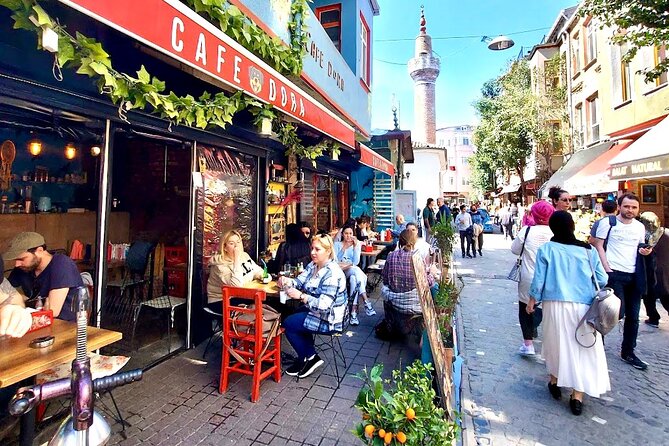
Galata Tower is the kind of landmark that instantly gives you orientation. From the top, you can connect the dots: the Golden Horn waterway, the bridge line, and the shape of Istanbul spreading out in layers. The tower’s fortification roots go back to the 1300s, and your guide frames that Genoese Italian origin so it doesn’t feel like a random stop.
This is also where the tour starts to feel efficient. You get a full hour here, and the group isn’t just herded around a gift-shop loop. You’ll see why the tower is “the” skyline reference point, then you’ll move on foot with context instead of just sightseeing for sightseeing’s sake.
If you’re the type who likes to ask questions, this part tends to deliver. Several guides on this route are known for answering everything from architecture basics to the meaning of the neighborhoods you’ll walk through next, and that makes the tower time more than just photos.
You can also read our reviews of more tours and experiences in Istanbul.

Art Nouveau Stairs and Beyoğlu: Getting Your Bearings Fast
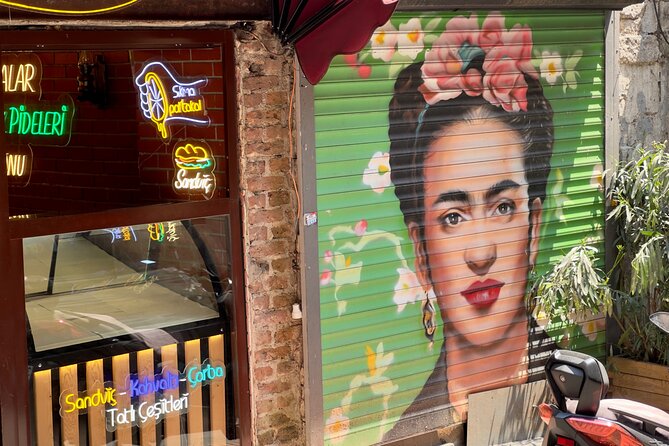
Before you even get fully into the Galata Tower area, you’ll pass through one of those Istanbul details that turns the whole neighborhood into a living museum. The 19th-century art nouveau stairs are famous for photos, yes, but they’re also a shortcut to understanding how Beyoğlu (historically called Pera) functioned as Istanbul’s European quarter.
Your guide puts Beyoğlu into historical context: embassies and trading centers, plus those Paris-style apartment buildings that show how the city’s culture shifted with trade and diplomacy. It helps you understand why this area looks the way it does compared with the older halves of the city.
This stop is short, but it’s smart. It gives you something visually distinctive while the group is still fresh, and it keeps the pace from turning into a nonstop march.
Golden Horn Links: Bascule Bridge, Water Views, and Fortifications
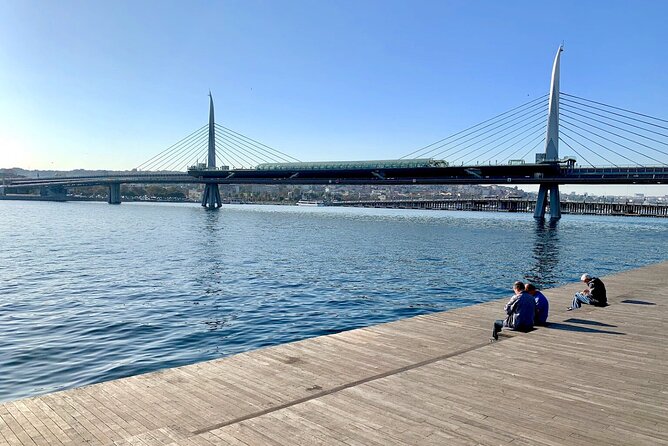
Then the route turns toward what makes Istanbul feel like a city built on geography: the Golden Horn. You’ll see the bascule bridge spanning the inlet, and you’ll get the idea that Istanbul is not only a collection of buildings. It’s a system—water, walls, and crossings shaping daily life.
Your guide also points out why the view matters. Halic, the Golden Horn inlet, separates older and newer parts of the city, so you’re looking at a natural divider that history and politics couldn’t ignore. If you time it right, the light can look best at dawn or dusk, but even in the middle of the day you’ll still get that “two worlds in one frame” effect.
One more thing you’ll notice here is that Istanbul keeps its military scars. The walls of Constantinople were the medieval-age fortifications that protected the city, and large sections still stand. It’s one of those moments where the city’s age feels literal, not just discussed.
You also hear the bigger framing: Istanbul is the only city in the world located on two continents, and it served as a capital for Roman, Byzantine, and Ottoman empires. That kind of timeline helps when you later see churches and communities layered over the centuries.
Fener Rum Patrikhanesi: The Spiritual Center Feeling
Next up is Fener Rum Patrikhanesi, a stop that changes the mood. In the Eastern Orthodox world, this is recognized as the spiritual center, often described like the “Vatican” equivalent for Eastern Orthodoxy. You’ll spend around 15 minutes here, which is enough time to absorb the setting without rushing every detail.
This part is valuable even if you’re not a deep church-history person. It gives a sense of continuity: religious authority and community identity that have persisted through huge political changes. Your guide helps you see the difference between a building that’s old and a place that still functions as a living center.
Plan to keep your questions practical. Ask what to notice, like architectural cues or how the site relates to the surrounding neighborhood. Guides who are strong on explanation make these short faith stops feel meaningful instead of checklist-like.
Fener and Balat Streets: Byzantine-to-Ottoman-to-Modern in One Walk
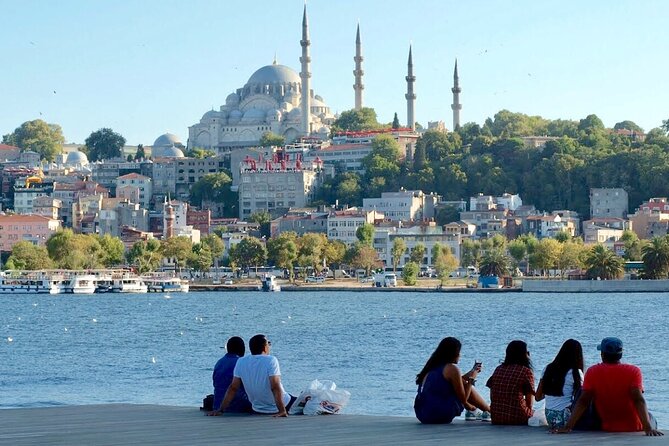
This is the main “wow” zone for many people, and it’s easy to see why. Fener and Balat are known for colorful streets and tight historical texture. The area around Ayvansaray, Balat, and Fener can feel like a miniature timeline where Byzantine, Ottoman, and modern life sit close enough to compare.
You’ll have about an hour here, which is a good length. Long enough to get beyond the first photo corners, short enough that the group doesn’t splinter. Your guide typically highlights how these streets hosted influential empires and supported a mosaic of communities, so you understand why buildings, signs, and religious spaces exist side-by-side.
One practical note: the streets can be steep. That’s not a reason to skip the tour, but it is a reason to wear shoes you can trust. If you’re traveling with knee issues, you’ll want to pace yourself and be ready for uneven sidewalks.
Also, this is the part where the guide’s personality shows. Some guides in this route are especially flexible, adjusting pace for families and making room for questions. When the group stays small, that kind of tailoring becomes more realistic.






Bulgarian Orthodox Church and Vlaherna Meryem Ana: Short Stops With Emotional Weight
Two church visits anchor the “faith landmarks” section, and they’re very different in feel.
First is the Bulgarian Orthodox Church, a neo-Gothic white-painted building made from cast iron sections. The story is part of the impact: those iron parts were cast in Vienna in 1896 and transported to Istanbul. That’s the kind of detail you remember because it connects industrial history to sacred architecture.
You’ll spend roughly 15 minutes here. It’s enough time to notice the visual style and let the guide explain why this building is a curious cultural bridge. If you like architecture facts, this stop delivers.
Then there’s Vlaherna Meryem Ana Church, a 10-minute stop your guide frames as emotional and spiritual. Even if you’re not sure what to look for in a church setting, you’ll feel how the space is meant to be experienced. This isn’t about speed; it’s about presence.
A Jewish Museum Stop for Wider Istanbul Context
Along the way, the route can include the Museum of Turkish Jews. This is one of the better “context stops” because it’s not only about dates—it’s about artifacts that trace the history of Jewish people in Turkey, plus an art gallery and a synagogue.
Even if your main interest is neighborhoods and architecture, this museum adds a crucial layer. Istanbul’s diversity isn’t a slogan here—it’s visible across faith communities and shared city space. A short museum stop also gives your feet a breather before you continue through the older streets.
Karaköy and the Ferry Back: Ending Near the Water
After the neighborhood walking, the tour finishes near the Karaköy Ferry Terminal, close to Galata Bridge. You also get transport connections designed to move you across Istanbul efficiently, including ferry segments as part of the overall plan.
One review-style theme you should be aware of: ferry operations can be impacted at times. If you’re visiting in rough weather or the schedule is disrupted, the guide can adjust the flow so you still end near your return point. That kind of flexibility matters, especially when your itinerary relies on transit timing.
Either way, the ending feels right for this tour. You’ve spent hours connecting the city’s layers on foot, and then you slide back toward the water where Istanbul’s geography becomes obvious again.
Price and Timing: Does $79.39 Feel Fair?
This tour runs about 4 hours and typically books around 34 days in advance. With a price of $79.39 per person and English-speaking guides, the value comes down to one big question: what you get included.
In the all-inclusive option, you get Galata Tower entry plus donations included. In the non-all-inclusive option, the Galata Tower fee is not included, and you’ll pay 30 EUR per person. Either way, the tour is still doing something useful: it bundles guided orientation, multiple neighborhood stops, and ferry/tram/bus transport into one ticket.
Is $79.39 a bargain? If the all-inclusive option applies, it’s strong value because the tower entry alone can swing the cost. If it’s not included, you should budget for that extra 30 EUR and decide if you still prefer a guided route over exploring on your own.
The small group size (max 8) also supports the price. With fewer people, the guide can slow down when streets get steep or when someone asks a real question. You’ll feel that difference on the walking portions.
Practical Tips: Shoes, Photo Stops, and a Real Pace
Here’s how I’d prep if I were joining this route tomorrow:
- Wear comfortable, grippy shoes. Expect uneven sidewalks and steep sections in Fener and Balat.
- Bring a small water bottle. There’s walking time, plus short stops where you might not want to keep refilling.
- Keep your camera ready for the art nouveau stairs and the Golden Horn viewpoints.
- Plan to stand and look. Galata Tower and bridge-and-water segments require a bit of waiting for your turn.
- If you want snacks, know that guides may include time for treats like Turkish sweets or tea in the area. That’s not a guarantee you should plan around, but it often fits naturally into the neighborhood breaks.
Also note: this tour is not stroller accessible. If you’re traveling with a stroller, you’ll likely find the steep, tight streets limiting.
Who Should Book This Tour (and Who Might Not)
This is a great fit if you want Istanbul through everyday neighborhoods, not only big-ticket monuments. You’ll get a guided structure that connects Galata Tower to Fener, Balat, the Golden Horn, and multiple church landmarks in a single afternoon.
It also suits travelers who enjoy moderate walking with purpose. You’ll move through different settings—viewpoint, streets, faith landmarks—so the time doesn’t drag.
You might consider a different option if you:
- need a low-walking day (steep streets and moderate walking are part of the experience)
- cannot do stair-and-cobble-style mobility challenges
- hate transit changes when ferry schedules get disrupted (it can happen, and the route depends on water crossings)
Should You Book Multi Cultural Istanbul? My Decision Guide
I’d book this tour if you want a compact, guided way to understand why Istanbul looks the way it does across faith communities and neighborhood layers. The biggest strengths are the Galata Tower panorama, the careful linking of places around the Golden Horn, and the guided walk through Fener and Balat with context you can actually use.
I would not book it blindly if you’re unsure about the Galata Tower fee inclusion. Check whether you’re selecting the all-inclusive option so you’re not surprised later.
If you’re on the fence, the decision is simple: if you like walking plus explanations, go for it. If you want minimal walking or a completely predictable transit flow regardless of weather, you might choose a different Istanbul plan.
FAQ
What’s included in the tour price?
The package includes Galata Tower entry fees and donations (if the all-inclusive option is selected), plus transport by ferry, tram, and bus, and a small group with a professional guide. If the all-inclusive option is not selected, the Galata Tower entry fee is not included.
How long is the tour, and how big is the group?
The tour lasts about 4 hours. It has a maximum group size of 8 travelers.
Do I need to pay extra for Galata Tower?
Only if you do not choose the all-inclusive option. When the all-inclusive option is not selected, the Galata Tower admission fee is 30 EUR per person and is not included in the tour price.
Where do I meet the guide, and where does the tour end?
You start at Anemon Koleksiyon Galata Otel in Beyoğlu (Bereketzade, Büyük Hendek Cd. No:5). You end near the Karaköy Ferry Terminal by Galata Bridge, with the endpoint listed as Kadıköy and Üsküdar Pier.
Is this tour stroller accessible?
No. The tour is not stroller accessible and includes moderate walking.
What’s the cancellation window?
You can cancel for a full refund up to 24 hours before the experience starts. If you cancel less than 24 hours before, the amount paid is not refunded.