REVIEW · ISTANBUL
Istanbul Modern City Walking: Taksim to Galata With Secret Passages
Book on Viator →Operated by Tematique Tours · Bookable on Viator
Istanbul rewards quiet curiosity. Starting at Taksim and ending near Galata Tower, you’ll follow secret passages that connect today’s Beyoğlu streets with older church, arcade, and foreign-quarter stories, and you’ll get practical tips on where locals snack—especially around Balık Pazarı. Two things I really like: the route mixes modern Istanbul with older layers of the city, and the guide attention to food and street life makes it feel usable right away.
One caution: it’s roughly 3 hours of steady walking, and the route is not stroller-friendly. If you’re set on going up Galata Tower, keep expectations flexible, since maintenance has affected access at least some times, and your guide may shift emphasis to the surrounding streets and views instead.
In This Review
- Key highlights worth your time
- Start at Taksim Square, then read the Republic-era clues in Gezi Park
- Balık Pazarı to Beyoğlu: street-level Istanbul for people who like to eat
- Hagia Triada Church and St Antoine: Ottoman-era faith, foreign communities, and change
- Çiçek Pasajı and the Beyoğlu passages: arcades that turn wandering into a plan
- Istiklal Caddesi and Pera Museum: the European quarter vibe, but with depth
- Galata Tower and Kamondo Stairs: the big view, then the descent toward Karaköy
- Golden Horn (Halic) and the bridge: watching the city do its daily job
- Getting the most from the 3-hour pace: shoes, crowd sense, and how to stay heard
- Price and value: what you actually get for $66.38
- Should you book this Taksim to Galata walk?
- FAQ
- How long is the Taksim to Galata walking tour?
- What is the price per person?
- Where do I meet, and what time does it start?
- Is hotel pickup included?
- Is the tour offered in English?
- Is the tour suitable for strollers?
Key highlights worth your time
- Small group, max 8 travelers means more questions and less lost time at street corners
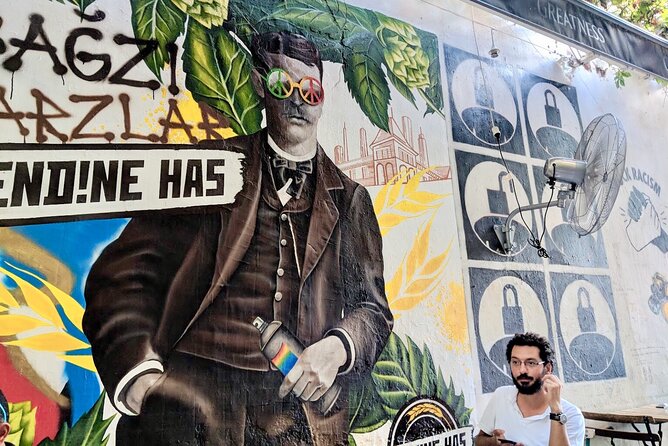
- Secret passages in the Pera/Beyoğlu area help you spot Istanbul’s quieter side away from the main crush
- Arcades and churches in one walk show how this neighborhood changed with different communities and empires
- Balık Pazarı stop for fish meze culture gives you food context, not just photo stops
- Galata Tower plus Kamondo Stairs and Karaköy lets you connect the high landmark to the waterfront district below
- English-guided storytelling (professional guide) keeps the walk understandable even when the street signs are doing their best impression of chaos
Start at Taksim Square, then read the Republic-era clues in Gezi Park
Your afternoon begins at Cafe MarmaraGümüşsuyu in Beyoğlu, right around Taksim Square. This is where Istanbul performs. People watch here is instant entertainment—families strolling, commuters cutting across, and locals doing that multi-tasking thing where they’re simultaneously talking, checking their phones, and navigating around you.
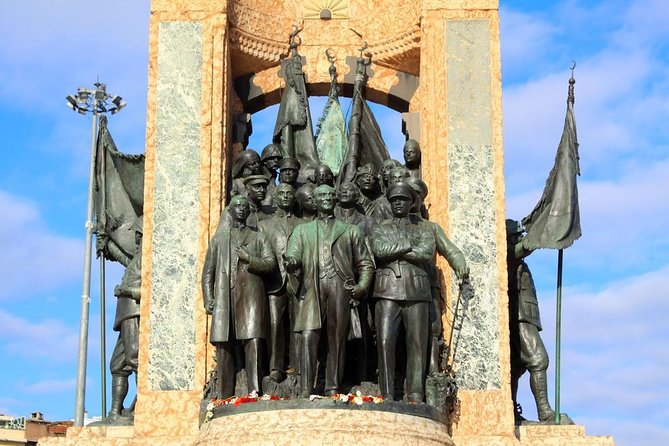
From there, the walk threads toward Taksim Gezi Park, which sits in the heart of modern Istanbul and commemorates the formation of the Turkish Republic in 1923. You’ll notice something on this part of the walk: Taksim isn’t just a landmark. It’s a transition point between the city’s modern identity and the older neighborhoods you’ll explore next.
You can also read our reviews of more walking tours in Istanbul



Balık Pazarı to Beyoğlu: street-level Istanbul for people who like to eat
One of the most satisfying parts of this experience is how it treats Beyoğlu like a living neighborhood. You’ll stop at Balık Pazarı, a stretch packed with bars and fish meze restaurants. This is the kind of place where the food culture is the attraction. Even if you don’t sit down for a full meal, you get a feel for what locals order and how the street works as a social space.
Then you move into Beyoğlu, guided with a focus on the places regular people hang out—where to eat, what to notice, and how the neighborhood’s character changes block by block. If you like walking tours that help you return later on your own, this is the sweet spot. It gives you practical mental maps: which lanes feel lively, which ones feel more local, and where the “busy” part is actually busy for a reason.
Hagia Triada Church and St Antoine: Ottoman-era faith, foreign communities, and change
Beyoğlu (then often linked with Pera in older references) became the go-to area for foreign communities and non-Muslim Ottoman subjects. That idea isn’t abstract here. You see it in the architecture and the way different religious buildings sit within everyday streets.
You’ll visit Hagia Triada Church, and the guide frames it as part of the wider story of Beyoğlu as a cosmopolitan district. Next comes St Antoine Catholic Church, described as Venetian Neogothic style and noted for the size of its Roman Catholic community that follows its masses. Even if you’re not the type who can read every architectural detail on a busy street, the context helps. It turns a church you might’ve walked past into a clue about who lived here and how they shaped the neighborhood.
Çiçek Pasajı and the Beyoğlu passages: arcades that turn wandering into a plan
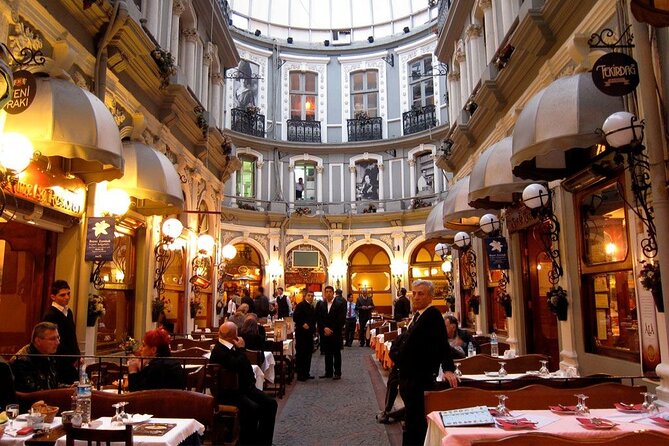
This is where the tour’s title gets real. Beyoğlu is famous for passages—covered arcades that range from fully roofed corridors to open sections in the sun—stuffed with shops and places to eat.
You’ll stop at Çiçek Pasajı, likely the most famous of these, plus you’ll see other passageways such as Avrupa Pasajı and Passage Hazzopulo. The effect is kind of perfect for visitors: you get shade when streets are cooking, and you get architectural variety without needing to buy museum tickets for every stop.
These passages also teach you how the neighborhood handles commerce. Instead of big, single-purpose buildings, Beyoğlu often works like a network of small connectors. After this walk, you’ll start noticing the same pattern everywhere: narrow lanes that quietly lead to an arcade, a doorway that seems ordinary until it opens into a corridor of shops.
Istiklal Caddesi and Pera Museum: the European quarter vibe, but with depth
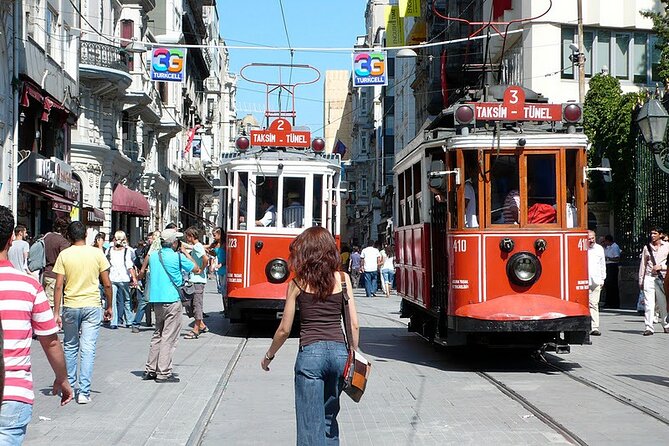
Next you’ll head to İstiklal Caddesi, the famous main drag of Beyoğlu. In the Ottoman era, this area (known as Pera) served as an European quarter with embassies and trading centers. The street also carries that 19th-century Paris-style apartment house feel, which helps explain why people compare Istanbul’s skyline and architecture in this area to European cities.
You’ll also get a stop for Pera Museum. Even if you’re not going inside, it helps to understand the building’s role in the neighborhood’s identity. It’s another piece of the puzzle: why this district felt different from the Old City, and how foreign presence shaped the streets, institutions, and even the rhythm of daily life.
If you want one practical tip here: stand back for a minute before you move again. İstiklal is famous for a reason, but stepping off to the side during the walk lets the guide explain what you’re seeing instead of just watching crowds.
You can also read our reviews of more city tours in Istanbul





Galata Tower and Kamondo Stairs: the big view, then the descent toward Karaköy
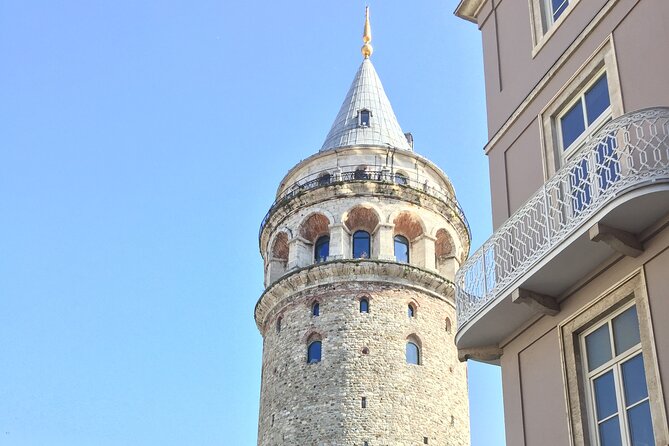
Your route ends at Galata Tower or very near it, with the tower as a headline sight for this whole walk. The fortification dates back to 1348 and is linked to mercantile Genoese Italians—so you’re not just seeing a “pretty tower.” You’re seeing a historic anchor point for trade and movement in Istanbul’s neighborhoods.
Now for the practical part: if you want the view from the top, plan for a separate fee. One guide note from the experience data called out a figure around 175 lira for going up. Also, there’s a real chance that access could be limited due to maintenance, so don’t structure your entire day around a single ticket.
Then comes Kamondo Stairs, which adds a vertical element to the walk. Stairs sound simple until you realize Istanbul loves them. This is one of those moments where comfortable shoes matter more than your optimism.
From there, you’ll transition toward Karaköy, described as one of Istanbul’s oldest historic districts and now a commercial center and transport hub. The point is to connect the tower’s high vantage to the working district below—so your photos feel like they belong to a bigger story.
Golden Horn (Halic) and the bridge: watching the city do its daily job
The walk also connects to Halic, the Golden Horn. The meaning is literally included here: Halic means inlet in English, and it’s what separates the old and new parts of Istanbul.
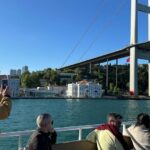
You’ll pass by the bridge that spans the Golden Horn. This is a great “breather” segment because you’re not staring at a single monument—you’re watching how the city moves around a natural divider. You can often spot regular commuting patterns, and the guide’s framing helps you see the Golden Horn as infrastructure, not just a scenic backdrop.
If your day includes other major Istanbul sights, this part is useful for a different reason: it reminds you that Istanbul isn’t one timeline. It’s layered. You can feel it when the view shifts from tower and arcades to waterfront district and movement.
Getting the most from the 3-hour pace: shoes, crowd sense, and how to stay heard
This is a walking tour at a human pace, but it’s still a few hours of motion across dense streets. You’ll want comfortable shoes, especially because the route includes passage areas and Kamondo Stairs. If you’re traveling with a stroller, it’s not the right fit, since the tour is not suitable for that.
The experience is also designed for a small group (max 8), so you’ll likely stay close to your guide and move as a unit. One useful planning note from the experience feedback: in busy areas, sound can be tricky if the guide speaks softly. I’d handle that in a simple way—keep yourself near the front of the group, and if you need it, use your own audio solution rather than trying to hear over street noise.
Price and value: what you actually get for $66.38
At $66.38 per person for about 3 hours, you’re paying for three things: a professional guide, a small group setup, and focused storytelling that connects multiple parts of Beyoğlu in one go.
Most of the listed stops are marked as ticket-free, which matters because it keeps your day predictable. Your main potential extra costs come from optional attractions—most notably Galata Tower top access, which can have a separate fee. So think of the tour price as paying for guidance and route design, not for a stack of museum entries.
The small group limit is where the value really clicks. In a group of up to 8, the guide can adjust when streets get crowded and can answer questions without herding you like luggage. The tour also runs in English, which is a big deal here because the tour’s power is in interpretation—explaining what you’re seeing and why it developed that way.
Should you book this Taksim to Galata walk?
Book it if you want a first-time Istanbul fix that’s not just a checklist. This walk is especially good for you if you like:
- Walking through neighborhoods instead of jumping between monuments
- Learning why Beyoğlu feels European in parts, while still being unmistakably Istanbul
- Food context, including the Balık Pazarı fish meze street vibe
- A guided connection between Galata Tower and the Golden Horn area
Skip it if you can’t handle steady walking or you need stroller-friendly routes. And if you’re extremely dependent on Galata Tower top access, plan a backup—maintenance happens, and your guide can only work with what’s open.
If you’re aiming to get your bearings fast in the Taksim/Beyoğlu side of town, this one is a smart buy. It helps you see the city as a set of connected places, not isolated sights—and that’s how you get more out of the rest of your trip.
FAQ
How long is the Taksim to Galata walking tour?
It runs for about 3 hours.
What is the price per person?
The price is $66.38 per person.
Where do I meet, and what time does it start?
You meet at Cafe MarmaraGümüşsuyu in Beyoğlu, and the start time is 2:30 pm.
Is hotel pickup included?
No. Hotel pickup and drop-off are not included.
Is the tour offered in English?
Yes, the tour is offered in English.
Is the tour suitable for strollers?
No, it’s not suitable for strollers.