REVIEW · ISTANBUL
Istanbul: Hagia Sophia & Blue Mosque Entry Tickets
Book on GetYourGuide →Operated by Istanbul Tourist Pass® · Bookable on GetYourGuide
Hagia Sophia and the Blue Mosque in one go. That is what makes this ticket plan so appealing: you get a guided walkthrough where it counts, plus Hagia Sophia audio that you can follow in your own language. Two things I really like are the pairing of both landmarks in a single block of time and the way a host helps you handle the busiest parts (meeting, entry, and what to look for). One thing to consider: even with skip-line access, you still have security checks and waiting during peak hours.
This is a private group format with an English-speaking host, so you spend less time figuring things out and more time actually looking. The Hagia Sophia side includes entry and audio, while the Blue Mosque visit is free and guided, with you stepping inside at your own pace afterward.
In This Review
- Key Things to Know Before You Go
- The Big Picture: A Smart Single-Day Split in Sultanahmet
- Meeting at Dsign Cafe: Where the Day Starts (and How Not to Waste It)
- Picking Your Entry Times: Hagia Sophia vs. Blue Mosque Schedules
- Hagia Sophia guided tours
- Blue Mosque guided tours
- Hagia Sophia Entry: What You’ll See and What Your Ticket Covers
- Dress code and entry rules for Hagia Sophia
- Hagia Sophia Audio Guide: 25 Languages That Actually Help
- Blue Mosque Visit: Six Minarets, Blue İznik Tiles, and a Calm Pace
- Price and Value: Is $42 Worth It for Two Landmarks?
- Accessibility and Group Feel: Private, Hosted, and Easier to Manage
- Weather, Ramadan, and Closures: Small Constraints That Matter
- Who This Tour Suits Best (and Who Might Prefer Something Else)
- Should You Book This Hagia Sophia and Blue Mosque Tour?
- FAQ
- What is included with the Hagia Sophia and Blue Mosque tickets?
- How much does this experience cost?
- Where do I meet the host?
- What time slots are available for Hagia Sophia and the Blue Mosque?
- Is Hagia Sophia guided on Tuesdays?
- Does the Hagia Sophia ticket include the mosque prayer areas?
- What are the clothing rules for visiting?
Key Things to Know Before You Go
- Two iconic stops, one practical route: You’ll do Hagia Sophia first, then move to the nearby Blue Mosque without bouncing around the city.
- Audio guide that does the heavy lifting: Hagia Sophia comes with a 25-language audio guide, so you can learn without reading your phone.
- Hosts keep entry smooth: A professional host meets you at Dsign Cafe and guides you to the right entrances.
- Security checks can still take time: Skip-the-ticket-line is not the same as skipping security.
- Dress code and hair covering matter: Plan modest clothing; women need a head scarf.
- Hagia Sophia ticket has limits: It covers visitor areas, but not the mosque prayer areas.
The Big Picture: A Smart Single-Day Split in Sultanahmet
If you’re doing Istanbul for the first time, Sultanahmet is where you start to feel the city’s layers. This experience is built around two landmarks that sit within easy reach of each other and share the same “stop, stare, and listen” vibe—Hagia Sophia for the architecture and faith shifts, and the Blue Mosque for its tilework and calm interior.
The value here is not just that you see two buildings. It’s that you see them in a way that reduces guesswork. A host meets you in front of Dsign Cafe with a white flag carrying the Istanbul Tourist Pass logo, and you go straight to the entrance flow rather than wandering. Then, at Hagia Sophia, you get a 25-language audio guide. That matters because Hagia Sophia is visually overwhelming; the audio helps you know what you’re actually looking at, not just that it’s big.
There are also scheduling realities. These guided tours do not run on Fridays, and Hagia Sophia has specific guided start times. The Blue Mosque also has two guided slots on days it runs. If your timing is flexible, you can pick the slot that best matches your energy level that day.
A few more Istanbul tours and experiences worth a look


Meeting at Dsign Cafe: Where the Day Starts (and How Not to Waste It)
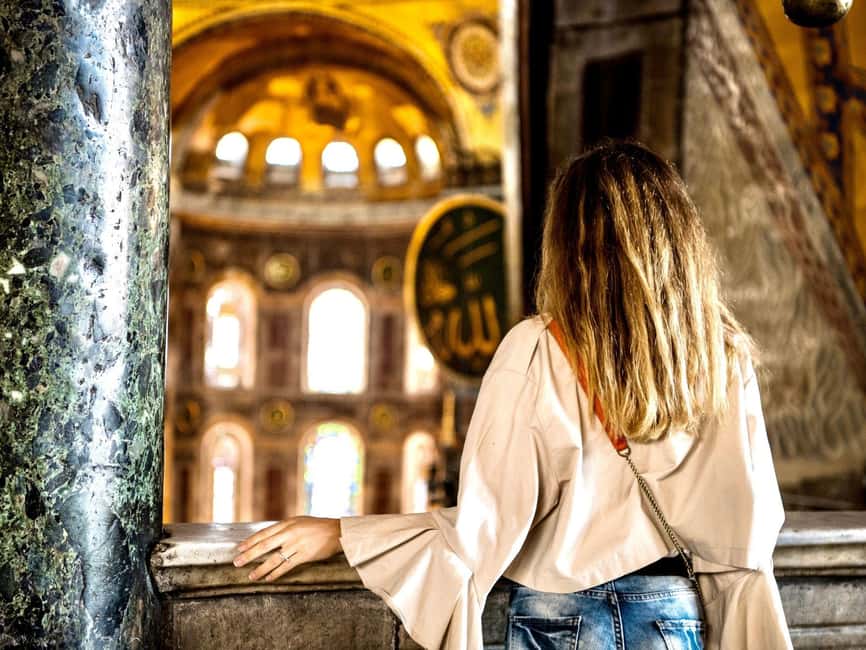
Your meeting point is Dsign Cafe, right next to Sultanahmet Tram Station. Show up 20 minutes early. This isn’t overkill. It’s your buffer against the reality that Istanbul’s big sites don’t start when you arrive—they start when your group lines up, clears security, and reaches the right entrance.
A small detail that makes a difference: your host is easy to spot, holding a white flag with the Istanbul Tourist Pass logo. That removes the usual stress of meeting points near famous monuments, where everyone looks like they belong to a tour.
From there, your host will guide you to the entrance. Expect that you still pass through security checks. The ticket does include skip-line access, but it does not include priority access for security. During busy periods, security lines can build, and waiting can take up to 30 minutes. So if you’re the kind of person who hates being late, arriving early is how you stay relaxed.
If you’re planning your day around this, keep the area around Sultanahmet Tram Station as your “home base.” That way, if you do lose a little time to security, you’re not also fighting Istanbul traffic or transit delays.
Picking Your Entry Times: Hagia Sophia vs. Blue Mosque Schedules
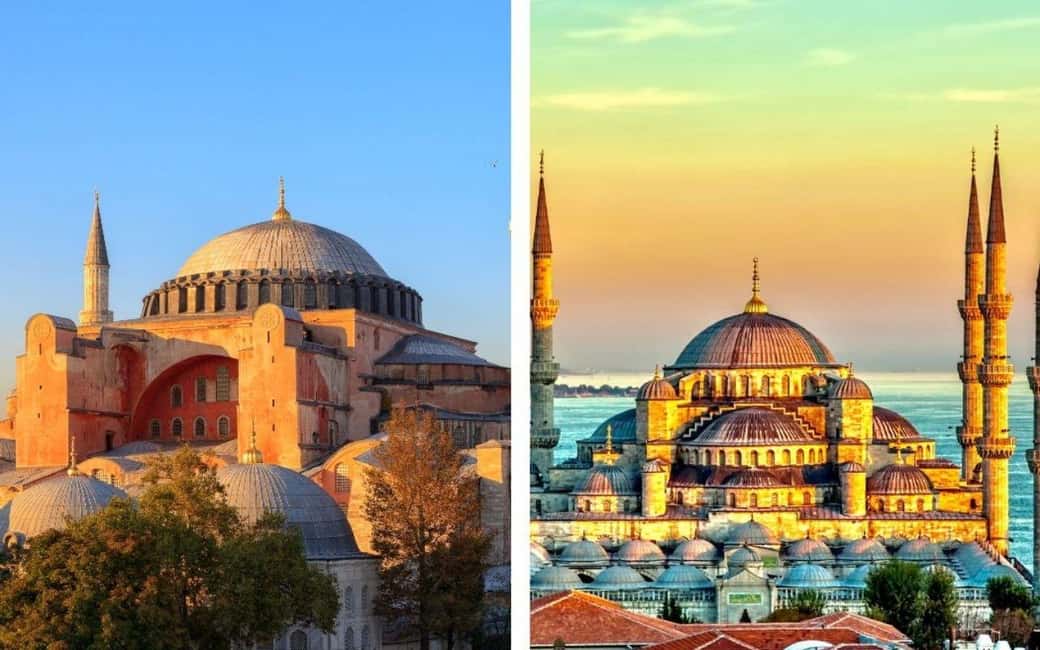
This experience works because it locks you into real time slots instead of vague meet-and-greet plans. Here’s how the guided timing is set up:
Hagia Sophia guided tours
Guided entry times are listed as 09:00, 11:15, and 14:15, available every day except Fridays. On Tuesdays, there’s an important twist: there is no guided tour at Hagia Sophia, but you can enter independently using your ticket between 09:00 and 19:00.
Blue Mosque guided tours
Blue Mosque guided tours run at 09:15 and 16:30 in one schedule listing, and 09:15 and 16:15 in another schedule listing. Both are shown as available every day except Fridays. The safe move is to confirm the exact late-afternoon time shown for your booking.
One more timing note that affects your plan: you have to participate at one of the listed time slots. So don’t book this if you’re hoping to casually wander in “sometime today.” It’s designed as a set visit.




Hagia Sophia Entry: What You’ll See and What Your Ticket Covers
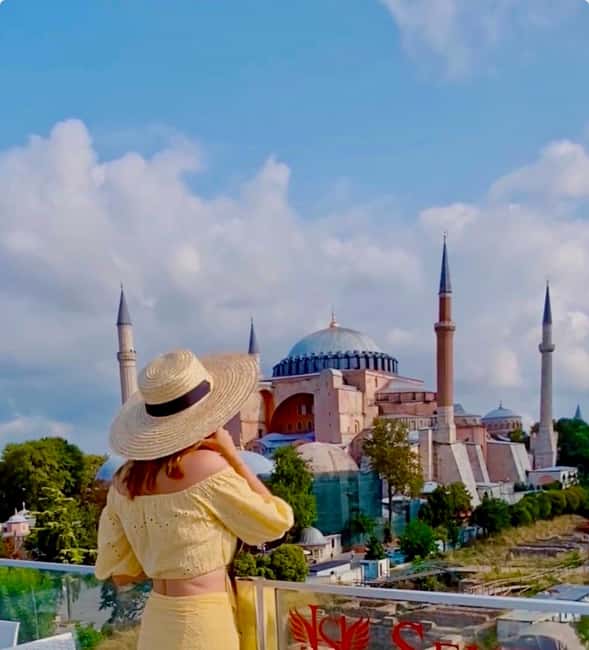
Let’s talk about Hagia Sophia, because this is the part where expectations can get tangled.
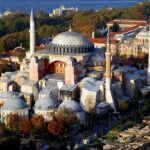
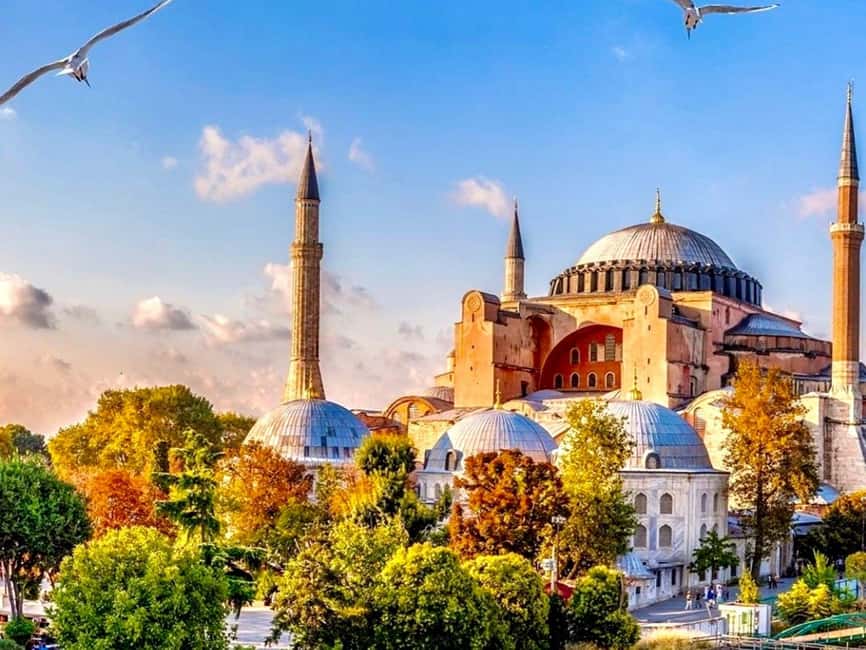
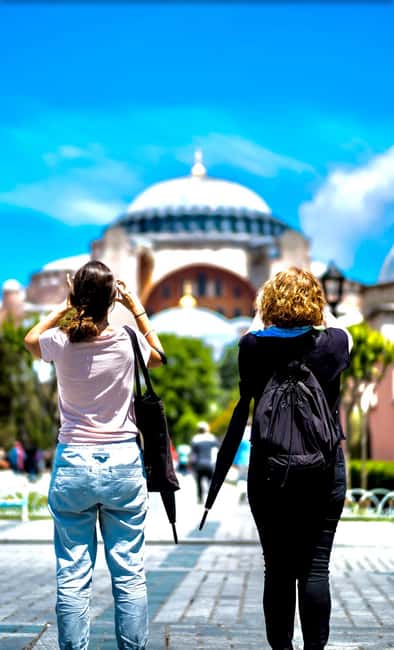
Hagia Sophia is the former church turned mosque, now functioning as a museum—its identity changes over time, and you’ll feel that in the building itself. Inside, you’re looking at grand domes, shimmering mosaics, and towering marble columns. The scale hits you fast. The audio guide then helps you slow down and understand what you’re seeing.
Now the practical part: the Hagia Sophia museum entrance ticket in this experience gives access to the 2nd-floor visitor areas, but not to the mosque’s prayer areas. That’s key. If you were hoping for access to specific prayer spaces, this ticket won’t cover that.
Also, restoration work is ongoing, and some areas may be temporarily closed. Closures can change during your visit. That means you should treat it like a “plan for what’s open,” not a checklist that must match perfectly.
Security checks still apply here. So if your slot is later in the day, you might be trading sleep-in comfort for longer lines and less patience. If you prefer a smoother arrival, the earlier Hagia Sophia slots usually make things easier.
Dress code and entry rules for Hagia Sophia
Both men and women should wear modest clothing, covering arms and legs. Women also need to cover their hair with a scarf. If you forget, you might be able to pick up a scarf nearby, but don’t count on it—bring one if you can.
Children may be asked to show passports at the entrance to confirm age. If you’re traveling with kids, keep documents handy.
Hagia Sophia Audio Guide: 25 Languages That Actually Help
The audio guide is included, and it’s offered in 25 languages. That range matters because Hagia Sophia is not a “read the signs and you’re done” place. The building is layered. There are details you’d miss if you only look up and move on.
What I like about the audio format is that it gives you control. You’re not stuck listening to a monologue while people shuffle past. You can hear the story in your own language and stay with the best parts a little longer.
The audio also helps you connect the dots between the architectural features and the building’s different eras. You’ll understand why domes and mosaics are such a big deal, and you’ll notice the marble and structural elements with more meaning than decoration.
One more timing reality: this is a guided tour plus audio. So you get the host’s orientation, then you keep going with audio as you explore. That’s a good combo for most people—enough structure to orient you, enough freedom to make your own pace.
Blue Mosque Visit: Six Minarets, Blue İznik Tiles, and a Calm Pace
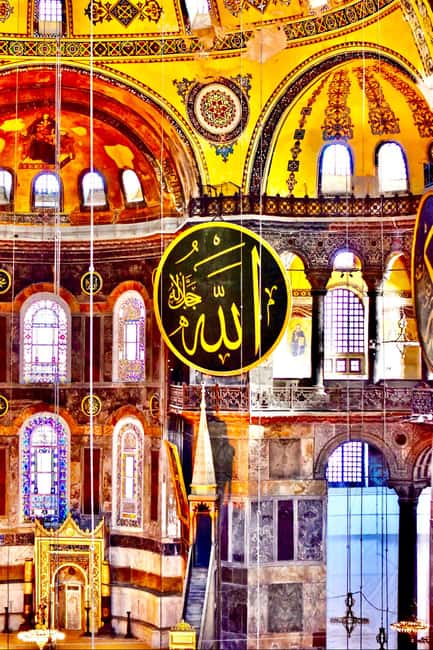
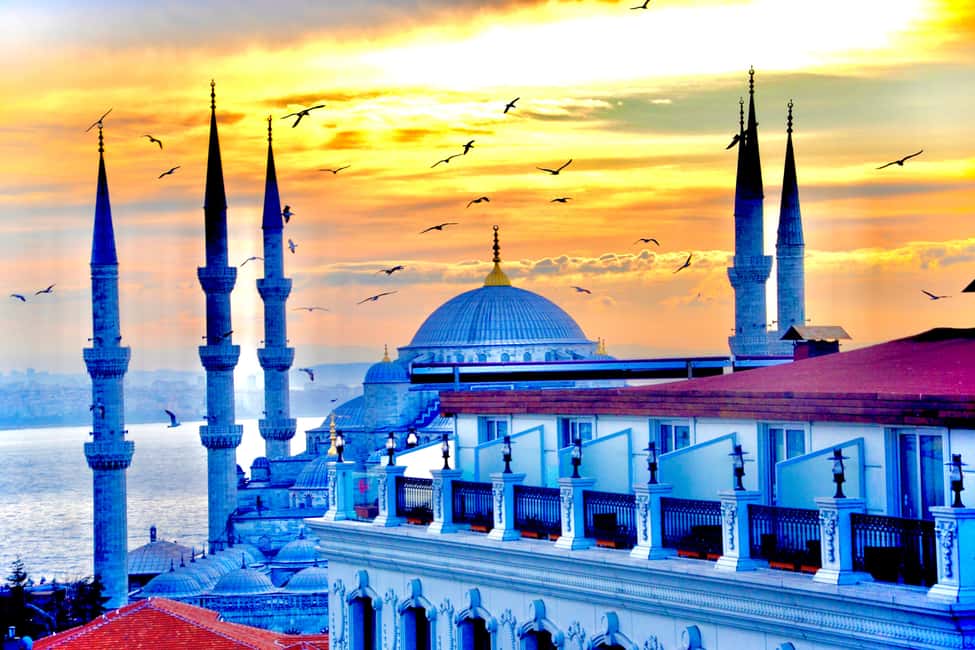
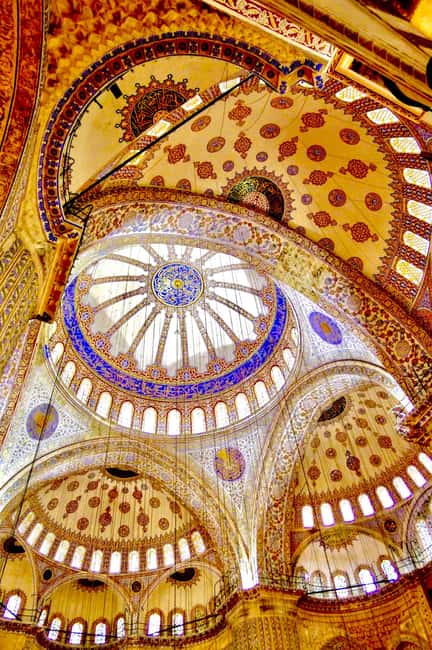
After Hagia Sophia, you head to the nearby Blue Mosque. This part of the experience is different in a good way. Before you go in, your host shares design and significance insights. Then you step inside and experience the mosque at your own pace.
The headline features are famous for a reason:
- Six minarets
- More than 20,000 handmade blue İznik tiles
When you’re inside, the tiles and the interior light do the heavy visual work. You’ll likely spend longer here just looking because the space feels quieter than the route that brought you in. That peaceful vibe is part of why guided planning is helpful—once you arrive, you don’t need to fight your way through an info overload.
As with Hagia Sophia, dress matters. Modest clothing is expected and women must cover their hair. If you’re comfortable with these rules, the visit tends to feel respectful and easy.
Also, the mosque is open only half a day on the first day of Ramadan and on the Sacrifice Festivals. If your trip overlaps those dates, you’ll want to confirm your exact plan based on what’s scheduled.
Price and Value: Is $42 Worth It for Two Landmarks?
At $42 per person, this isn’t the cheapest way to do Istanbul’s top sights, but it also isn’t priced like a luxury splurge. The value comes from what you’re paying for, not just what you’re paying.
Here’s where that price adds up:
- Hagia Sophia entry ticket is included (with audio).
- You get guided support at both landmarks.
- You get the 25-language audio guide, which is a real upgrade over wandering with no context.
- You get a host who handles the “how to start” piece: meeting, timing, and entry guidance.
Now, the honest side: security lines can still slow you down, and Hagia Sophia ticket coverage is not unlimited access to everything in the building (it excludes prayer areas). So you’re paying for guided help and audio, not for magic priority through every step.
Still, for many first-time visitors, this kind of arrangement is exactly what you want. It reduces wasted time and turns “I saw it” into “I understood what I saw.” If your travel style is more independent, you might compare this to doing Hagia Sophia and Blue Mosque on your own. But if you know you’ll appreciate structure in a crowded place, this price can feel fair.
Accessibility and Group Feel: Private, Hosted, and Easier to Manage
This is listed as wheelchair accessible. Also, it’s a private group. That doesn’t mean you’ll never encounter crowds inside the monuments—it means your experience won’t feel like you’re trapped in a giant bus herd.
In practice, that private format pairs well with the nature of these sites. You’re moving between two major entrances, and you need to be where you’re supposed to be at the right time slot. A host helps keep things on track so you don’t lose your morning to navigation confusion.
The host language is English. The audio guide covers many other languages at Hagia Sophia, so you can choose what feels easiest for you and still follow along.
Weather, Ramadan, and Closures: Small Constraints That Matter
Istanbul changes day to day, and these sites can have schedule shifts. A few constraints to keep in your mental checklist:
- Friday schedule: guided tours aren’t available on Fridays in the times listed.
- Ramadan and Sacrifice Festivals: the mosque can be open only half a day on the first day of Ramadan and the Sacrifice Festivals.
- Restoration at Hagia Sophia: some areas can be closed, and closures vary.
If any of this affects you, choose your slot carefully. Earlier in the day is often calmer for logistics, but the real win is aligning your visit with what’s actually open.
Also remember: you’re expected to dress modestly and women should have a scarf for hair covering.
Who This Tour Suits Best (and Who Might Prefer Something Else)
This experience is a strong fit if you:
- Want a guided plan for two major landmarks in one day.
- Like learning with an audio guide rather than reading on the go.
- Prefer a host to handle the meeting point and entry flow.
- Are traveling with someone who enjoys structure but still wants time to look around.
You might want a different approach if you:
- Hate time slots and scheduled participation.
- Know you only want the Blue Mosque (or only Hagia Sophia) and you’re happy doing everything independently.
- Are expecting access to every interior area, including mosque prayer spaces at Hagia Sophia. This ticket limits you to visitor areas on the 2nd floor, not prayer areas.
Should You Book This Hagia Sophia and Blue Mosque Tour?
If you want the easiest route through Istanbul’s most famous icons, I think this is a solid choice. The biggest reasons are simple: guided help at both stops and Hagia Sophia’s 25-language audio guide, which makes the visit feel meaningful instead of chaotic.
At $42, it’s also priced in a way that feels reasonable when you factor in entry to Hagia Sophia and the guided support. Just be sure you pick a time slot that works for your schedule (and double-check the exact late-afternoon Blue Mosque time shown for your booking). If you’re traveling during Ramadan or a major festival, confirm openness ahead of time.
If your goal is to understand what you’re seeing and get through the busiest entry steps with less stress, this is worth booking.
FAQ
What is included with the Hagia Sophia and Blue Mosque tickets?
The package includes an entry ticket for Hagia Sophia, guided tours for both Hagia Sophia and the Blue Mosque, and a Hagia Sophia audio guide available in 25 languages, plus a professional host at both attractions.
How much does this experience cost?
The price is listed as $42 per person.
Where do I meet the host?
Meet your host 20 minutes before your scheduled entry time at Dsign Cafe next to the Sultanahmet Tram Station. The host will be holding a white flag with the Istanbul Tourist Pass logo.
What time slots are available for Hagia Sophia and the Blue Mosque?
Hagia Sophia guided tour times are 09:00, 11:15, and 14:15 (available every day except Fridays). Blue Mosque guided tours are offered at 09:15 and again in the late afternoon (listed as 16:30 in one place and 16:15 in another), available every day except Fridays. Participation is required at one of the listed time slots.
Is Hagia Sophia guided on Tuesdays?
On Tuesdays, there is no guided tour for Hagia Sophia, but you can enter independently using your ticket between 09:00 and 19:00.
Does the Hagia Sophia ticket include the mosque prayer areas?
No. The Hagia Sophia museum entrance ticket only gives access to the 2nd-floor visitor areas and not the mosque’s prayer areas.
What are the clothing rules for visiting?
Both men and women should wear modest clothes that cover arms and legs. Women also need to cover their hair with a scarf. Children may be asked to present passports at the entrance to confirm age.