REVIEW · FETHIYE
Fethiye: Pamukkale Hot Spring & Hierapolis Small-Group Tour
Book on GetYourGuide →Operated by TOURMANIA · Bookable on GetYourGuide
Pamukkale looks unreal from the hilltop. This day trip pairs the Cotton Castles of travertine with Hierapolis ruins, so you see springs, history, and big Roman stonework in one long stretch. It’s a high-impact way to experience one of Turkey’s top UNESCO sites without doing the driving yourself.
I really like the way the day balances nature and ancient city life. A good guide (I’ve seen names like Yelcin, Yalcin, Curly, and Caleb come up) ties the geology to the Roman-Greek story, and the coach logistics make the 200 km trip feel manageable. I also appreciate the included lunch, plus time built in for photos and wandering.
One possible drawback: Cleopatra’s Pool may be temporarily closed for renovations, so you might miss the classic pool-area stop even if the rest of Pamukkale still looks spectacular.
In This Review
- Key things I’d prioritize on this tour
- The long ride from Fethiye to Pamukkale, and how the day stays organized
- Cotton Castles at Pamukkale: what you’re actually looking at
- Hierapolis ruins: amphitheater scale, Roman bath details, and St. Philippe
- Cleopatra’s Pool and hot springs time: plan for a change in conditions
- The Necropolis of Anatolia: sarcophagi that feel oddly personal
- Lunch, comfort on the coach, and the optional gemstone stop
- Entrance fees and true cost: what $74 really covers
- Who should book this tour, and who might skip it
- Should you book the Fethiye: Pamukkale Hot Spring & Hierapolis tour?
- FAQ
- Is lunch included?
- How long is the tour, and how far do you travel?
- Are entrance fees included in the $74 price?
- Is Cleopatra’s Pool included?
- What should I bring for the day?
- What languages are the guides?
Key things I’d prioritize on this tour
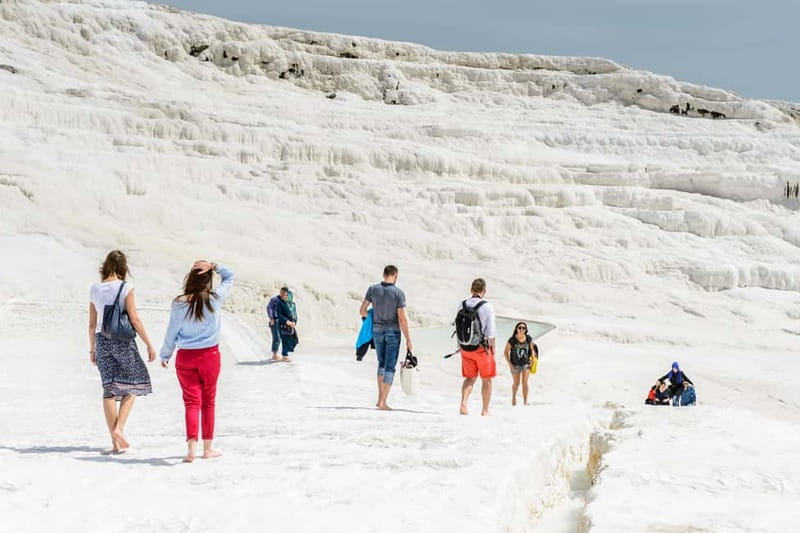
- Travertine “cotton” terraces at Pamukkale, viewed from the hillside for the best first impression
- Hierapolis ruins laid out in an easy flow: amphitheater, Turkish Bath (as a museum), and more
- Hot springs time where available, with swimwear and towel handy just in case
- Necropolis of Anatolia and major sarcophagi, including one tied to Marcus Aurelius Ammianos
- Skip-the-ticket-line help, so you spend less time standing around
The long ride from Fethiye to Pamukkale, and how the day stays organized
This is a full-day tour: about 12 hours total, with the main sightseeing happening at Pamukkale and Hierapolis. Fethiye to Pamukkale is around 200 km, so yes, you’ll be in a coach for a while. The upside is that the tour controls the schedule: pickup, transport, a guided flow between sites, and enough breaks to reset.
What makes the long distance tolerable is the small-group feel and the steady rhythm. In practice, guides tend to keep the group moving early, then slow down once you’re at the ruins and terraces. If the day includes heavy heat, the air-conditioned bus (and the frequent stops) matter a lot for keeping energy up.
You’ll also want to plan your expectations: you can see a lot, but you won’t have the kind of slow, solo pacing you might want if you’re the type who likes to linger in every corner. This tour is built for “see it all, understand it, don’t waste daylight.”
You can also read our reviews of more tours and experiences in Fethiye.

Cotton Castles at Pamukkale: what you’re actually looking at
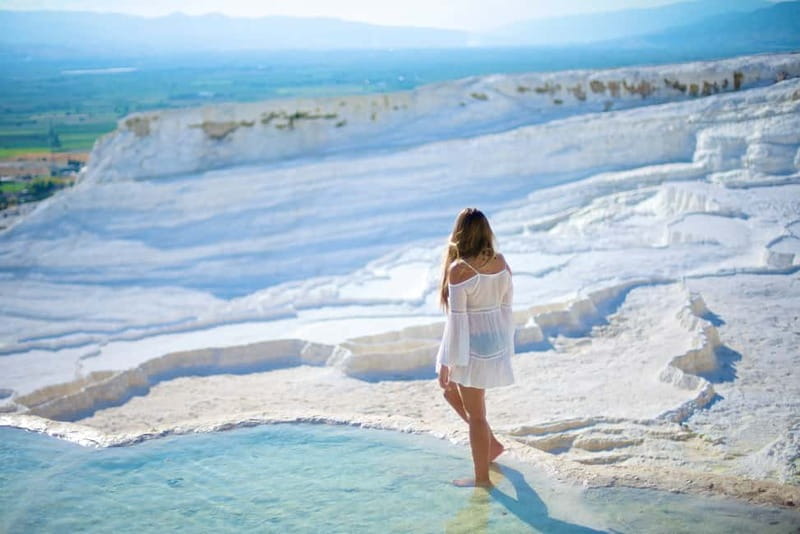
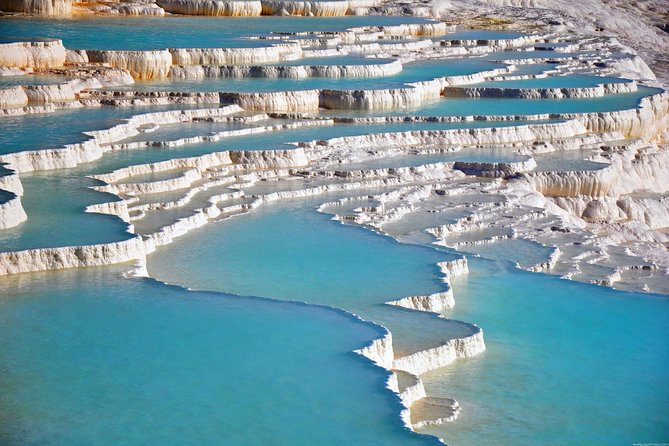
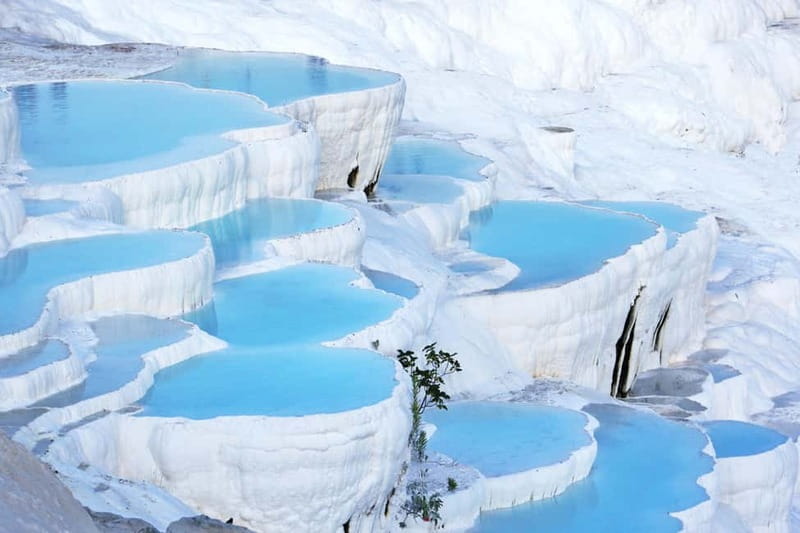
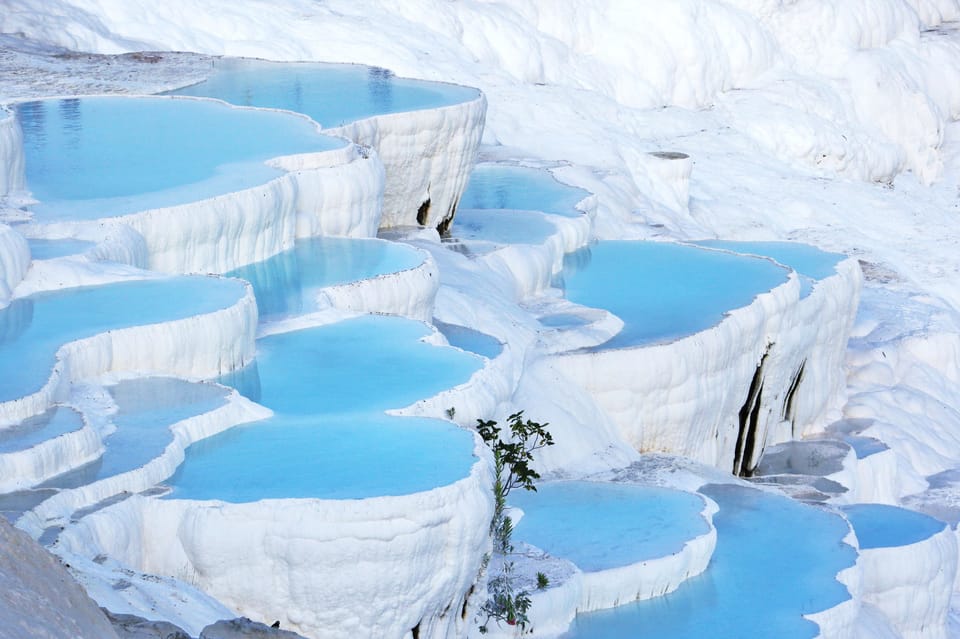
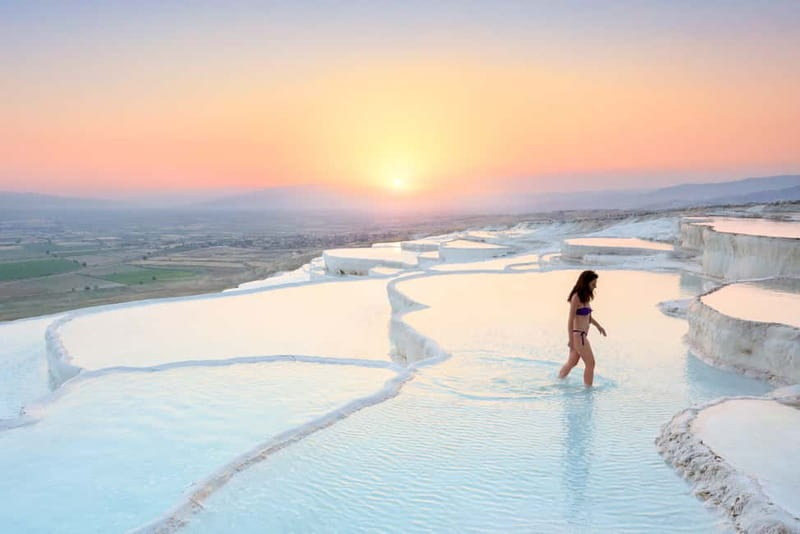
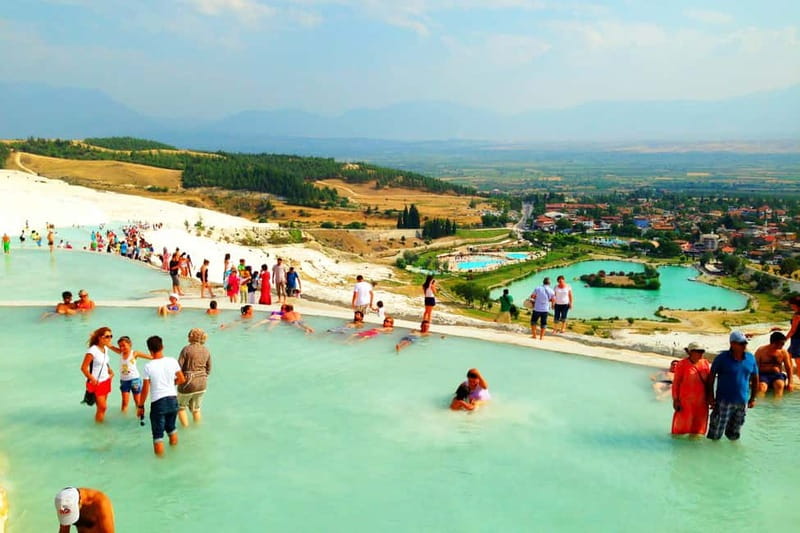
Pamukkale’s star attraction is its travertine terraces—white, mineral-built steps formed over time by hot, mineral-rich water flowing down the slopes. It’s often called the Cotton Castles, and the name makes sense: from certain angles, the terraces look soft and “layered,” like something carved rather than grown.
A smart part of the experience is that you get a viewpoint across the valley in Denizli, where you can take in the terraces as a whole. Don’t underestimate this first wide view. It’s your mental map, and it helps you understand what you’re seeing up close—pools and cascades that look random until your brain gets the larger picture.
Pamukkale is also a UNESCO World Cultural Heritage Site (listed in 1988). For me, the value of that label isn’t just prestige. It’s a clue that the site has layers of meaning: natural processes, ancient use of thermal water, and a city built on top of it later.
One realistic note: Pamukkale doesn’t always look like the perfect brochures. Even when the terraces are gorgeous, some sections may have less water than classic photos show, so the look can vary by season and current conditions. That doesn’t ruin it. It just means you’ll want to look at the terraces and mineral patterns, not only the water sparkle.
Hierapolis ruins: amphitheater scale, Roman bath details, and St. Philippe
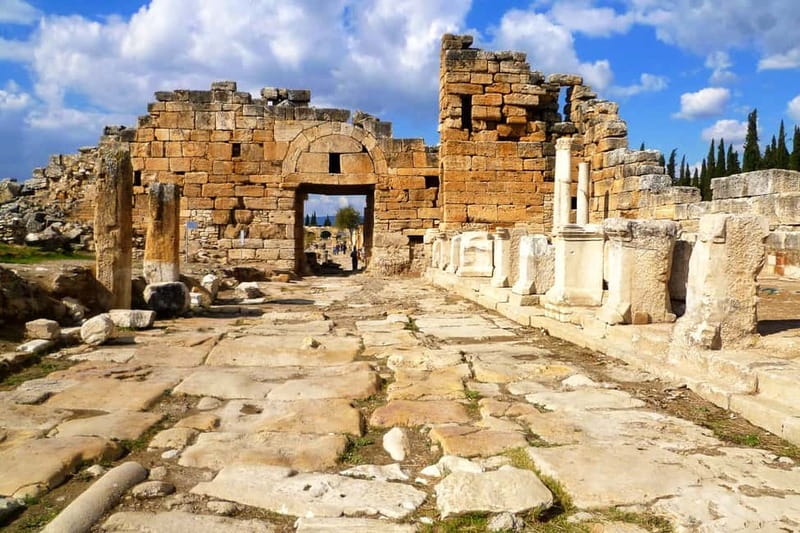
After Pamukkale, the tour shifts from natural wonder to ancient city power—Hierapolis, built above the travertines. Hierapolis is a Greek-Roman site from around the 2nd century BC onward, with major Roman-era remains that help you picture how the thermal city worked as an attraction and settlement.
The big scene here is the amphitheater. It’s the kind of structure that makes you quickly understand Roman entertainment and civic pride. Even if you don’t memorize every historical fact, you can still “read” the space: the shape, the seating, the way the arena would hold sound and crowd energy.
Next is the former Turkish Bath, now used as an archaeological museum. This stop is valuable because it shows a practical side of the Roman world. You’re not only looking at ruins in the abstract; you’re seeing how the thermal bath concept stayed relevant across different eras and cultures.
The tour also includes Cleopatra’s bathing pool in the highlights list, plus the monumental tomb of the Christian apostle St. Philippe. Having these specific stops helps turn the ruins from scattered stones into a route with meaning—imperial-era wellness at Pamukkale, city life and architecture in Hierapolis, and later spiritual significance layered on top.
Cleopatra’s Pool and hot springs time: plan for a change in conditions
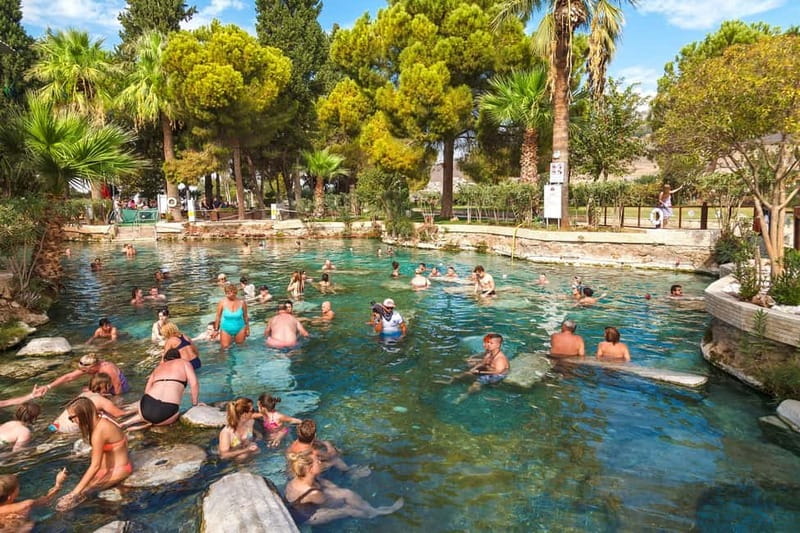
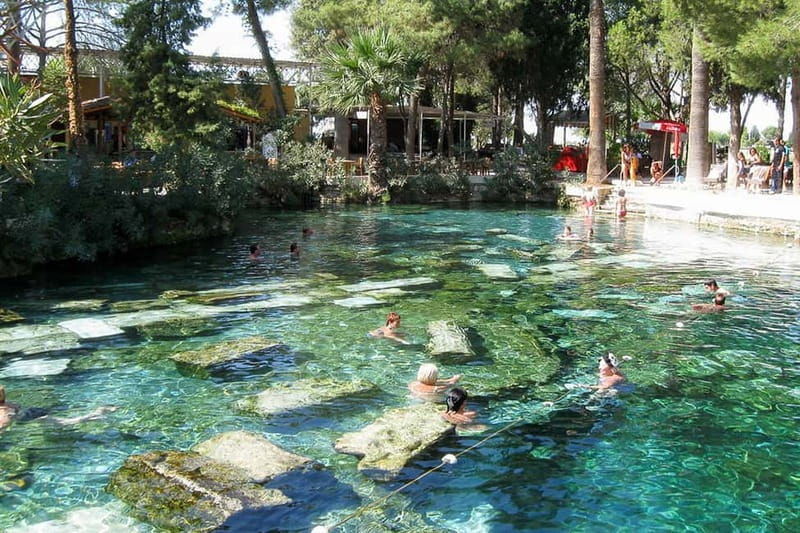
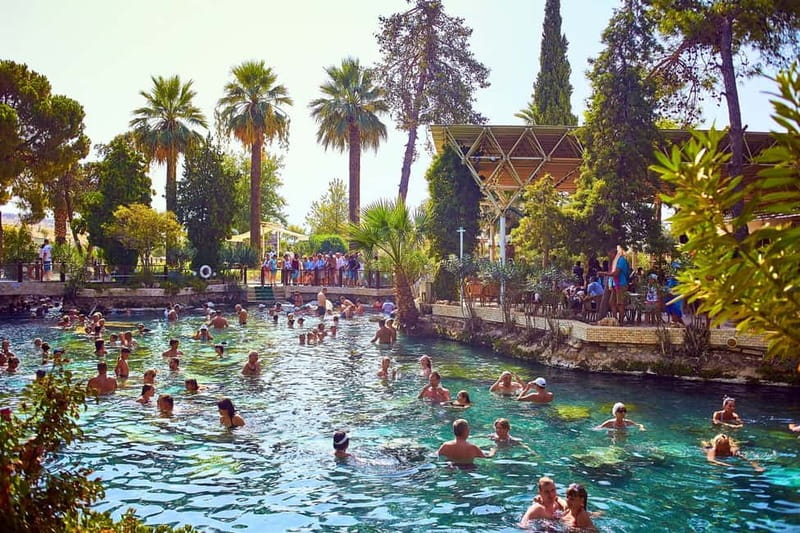
Cleopatra’s Pool is the most famous “hot water” image tied to Pamukkale. The tour usually frames it as a key moment, but there’s an important practical update: Cleopatra’s Pool is temporarily closed for renovations, and access to the pool area isn’t available at this time.
So how should you think about it? Treat it like this: even without that specific pool-area stop, Pamukkale still delivers the main show—the travertine terraces and hot spring atmosphere. You can still get the classic scenery and the geothermal feel; you just might not get the exact pool experience you expected.
If you’re packing, I’d still bring swimwear and a towel. Sometimes tours can adjust to what’s open, and at minimum the option matters. Just don’t build your day around one single photo moment.
Also, water-friendly footwear can be useful if your route includes wetter areas, but the tour data here only specifies swimwear and towel. So if you want extra comfort, you can bring simple sandals or water shoes, but keep it practical—don’t bring anything fragile.
The Necropolis of Anatolia: sarcophagi that feel oddly personal
One of the most memorable parts of Hierapolis for many people is the Necropolis of Anatolia—filled with sarcophagi. This stop shifts the tone from “city ruins” to “the way people kept memory visible,” sometimes in a big, sculpted way.
The highlight here is a sarcophagus connected to Marcus Aurelius Ammianos. Even without a deep background, you’ll feel the attention given to status and identity. Sarcophagi aren’t only history; they’re a visual record of how families wanted to be remembered.
I like this part of the day because it adds contrast. After bright white terraces and open-air theater space, the necropolis gives you a different emotional flavor: heavier, more reflective, and sharply human.
If you’re short on time at the necropolis area, don’t rush the first 10–15 minutes. Take a slower look to figure out the layout. It makes the later moments easier to follow, and you’ll remember more than if you sprint from one stone to the next.


Lunch, comfort on the coach, and the optional gemstone stop
This tour includes lunch and transportation by air-conditioned bus, plus a guide. Drinks are not included, so plan on buying water or soft drinks along the way if you need them.
On hot days, bus comfort matters. Some guides and drivers put extra attention into timing, and people have praised the air-conditioning and the way the day stays safe and controlled. I’d treat the coach ride as part of the experience: use it to cool down, charge your phone, and get ready for the sun when you arrive.
You might also see a stop at a gemstone factory if time permits. It’s optional in practice, and you can decide how much you want to engage. If you enjoy crafts and sales culture, it can be a quick break. If you’d rather protect energy for the ruins and terraces, just keep an open mind and don’t let it steal your best light at Pamukkale.
Entrance fees and true cost: what $74 really covers
The price is listed as $74 per person, with hotel pickup and drop-off, air-conditioned bus transport, a guide, and lunch included. There’s also a major extra: the entrance fee for Pamukkale & Hierapolis is 30 EUR and is not included.
To judge value, add up what you’re buying:
- You’re paying for a long-distance day with guided structure, not just transportation.
- You’re getting guided stops at two major sites that many people find hard to navigate well on their own.
- Lunch is included, which helps on a day where you’ll likely spend more than you expect on food.
So the real budget picture is roughly $74 plus the 30 EUR entry cost. If you’re traveling with limited time in the region, this still tends to be good value—because you’re outsourcing both logistics and interpretation. If you’re the type who likes total freedom and can handle train/bus schedules and ticket lines yourself, you might spend less overall. But you’d also lose the guided pacing that makes a 12-hour day feel “worth it.”
The tour also includes help to skip the ticket line, which is one of those small perks that matters more in real life than it sounds.
Who should book this tour, and who might skip it
I’d recommend this tour if you want one strong day that hits two UNESCO-level stops without the stress of planning. It fits best for:
- First-timers to the area
- People who like a mix of natural wonders and classical ruins
- Travelers who don’t want to drive the long distance from Fethiye
It might be less ideal if:
- You hate long travel days and would rather split into two shorter outings
- You mainly came for one specific experience like Cleopatra’s Pool (given the current closure)
- You prefer slow museum-style pacing and deep reading for hours (this day is structured to see a lot)
The guide component is a big deciding factor. I’ve seen names like Yelcin, Yalcin, Curly, and Caleb show up with the same pattern: energetic explanations and a focus on both history and geography. Even if you don’t catch every detail, the good guides help you connect what you see to why it matters.
Should you book the Fethiye: Pamukkale Hot Spring & Hierapolis tour?
If your goal is a high-value, guided day trip that takes you from white travertine terraces to major Roman-Greek ruins, I’d say book it. The combination is the point: Pamukkale for the geology and thermal pools, then Hierapolis for architecture, theater scale, museum-bath remnants, and a necropolis stop that adds weight to the story.
I’d only hesitate if Cleopatra’s Pool is the one thing you’re counting on. With the current closure, you’ll still get the main Pamukkale scenery, but you shouldn’t plan your day around that specific pool-area moment.
If you’re flexible, pack swimwear and a towel anyway, wear sun-smart clothes, and treat this as a “see, learn, and enjoy the big hits” day. That’s exactly how this tour is designed to land.
FAQ
Is lunch included?
Yes. Lunch is included in the tour.
How long is the tour, and how far do you travel?
The duration is about 12 hours. Fethiye to Pamukkale is around 200 km, so expect a long coach ride.
Are entrance fees included in the $74 price?
No. The entrance fee for Pamukkale & Hierapolis is listed as 30 EUR and is not included.
Is Cleopatra’s Pool included?
The highlights mention Cleopatra’s Pool, but access is currently not available because Cleopatra’s Pool is temporarily closed for renovations.
What should I bring for the day?
Bring swimwear and a towel.
What languages are the guides?
The tour offers a live guide in English and Russian.