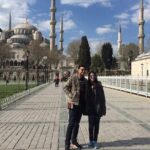
Four Istanbul icons in one outing.
This tour is interesting because it strings together Blue Mosque, Hagia Sophia, the Basilica Cistern, and the Hippodrome with a guide who explains why these places matter, not just what they look like. I like that the key sites use pre-reserved tickets to keep things moving, and that you get guided context for both Ottoman and Byzantine eras. One thing to weigh: entry is timed, and if you’re late or the mosques close, you can’t just stroll in whenever you want.
The best part for me is the comfort of a small group (max 20) plus headsets, so you can actually follow the story without leaning in on your seatmate. I also appreciate how the itinerary doesn’t stop at the two big mosques—ending with the cistern and then the Hippodrome helps you understand Istanbul as a city built on layers.
The main drawback is operational strictness: you must arrive 15 minutes early for the timed entry flow, and the tour can’t be joined once it starts. Because Blue Mosque and Hagia Sophia are functioning mosques, they can close to visitors with little/no notice, so you’ll need to stay flexible on the day.
In This Review
- Key highlights worth planning for
- Why this Istanbul circuit works so well
- Pre-reserved tickets and what skip-the-line really means
- Stop 1: Blue Mosque courtyard, İznik tiles, and mosque rules
- Stop 2: Hagia Sophia’s dome, mosaics, and Ottoman details
- Stop 3: Basilica Cistern’s marble forest and Medusa heads
- Stop 4: Hippodrome monuments and the Byzantine civic stage
- Pace, group size, and comfort tips that really matter
- Price and value: what you’re paying for at $116.43
- Who should book this tour
- Should you book this Blue Mosque, Hagia Sophia, and Cistern tour?
- FAQ
- What sites are included on the tour?
- How long is the tour?
- Are admission tickets included?
- Is the tour in English?
- Do I need to arrive early?
- What are the dress rules for the mosques?
- What happens if Basilica Cistern is closed?
- Are children allowed?
Key highlights worth planning for
- Timed entry strategy (and what “skip-the-line” really means here) so you spend less time stuck in slow queues
- Small group size (max 20) for a calmer pace and more room for questions
- Headsets included, plus a heads-up that some people prefer bringing their own headphones
- Basilica Cistern backup plan if it’s closed, you’ll go to Şerefiye or Binbirdirek
- Hippodrome monuments included: Serpent Column, Obelisk of Theodosius, and the German Fountain
- Mosque etiquette covered with clear rules on headscarf, shoulder/knee coverage, and dress code
Why this Istanbul circuit works so well
Istanbul can be a lot in one day. Lines, crowds, and weather can mess up your plans fast. This tour helps by bundling four of the city’s anchor sights into one guided walk, so your time feels “spent” instead of “wasted commuting between landmarks.”
You’ll also get the kind of framing that makes the buildings click. Blue Mosque and Hagia Sophia aren’t just pretty—they show how power, religion, and art changed over centuries. Then you drop underground into the Basilica Cistern, and finish back up with the Hippodrome, the public stage of Byzantine civic life.
A few more Istanbul tours and experiences worth a look


Pre-reserved tickets and what skip-the-line really means
Here’s the part I’d want you to understand before you book: there isn’t a magic wand that lets you ignore mosque lines whenever you please. The operator notes that nobody can skip the line at either mosque. The win is that you’re equipped with pre-reserved, timed entry and you move through more efficiently with a guide who handles this daily.
This matters because timed tickets can get you in with less waiting, but they still require you to be punctual. The tour instructions are strict: you need to be at the meeting point 15 minutes before the start time, since entry is timed and once the group is inside, you can’t join late.
Practical note: this tour is in English, and it includes mobile tickets. That’s handy when your day includes a lot of stops and you don’t want paper tickets flapping around.
Stop 1: Blue Mosque courtyard, İznik tiles, and mosque rules
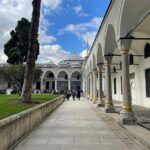
Your first stop is the Blue Mosque, one of Istanbul’s headline landmarks. You’ll get time in the courtyard first, which is a nice rhythm break before the interior. Then you move inside to see the elegant domes and the hand-painted İznik blue tiles that give the mosque its signature look.
What I like about doing this with a guide is the story thread. You’ll hear about Sultan Ahmet I and how the mosque fits into Ottoman history, so the space feels intentional, not random. You’re not just collecting photos—you’re building a mental map of how the empire expressed faith and authority through architecture.
Two etiquette items to plan for up front:
- Women are required to wear a headscarf inside.
- Both men and women should dress with shoulders and knees covered; shorts and sleeveless tops aren’t permitted.
And yes, for the Blue Mosque, plan on taking off your shoes—socks help a lot if the floor is cold or busy.
A timing reality: Blue Mosque is still a functioning mosque. If it closes to visitors for any reason (even without much notice), the day can shift. That’s the nature of visiting active religious sites.
Stop 2: Hagia Sophia’s dome, mosaics, and Ottoman details
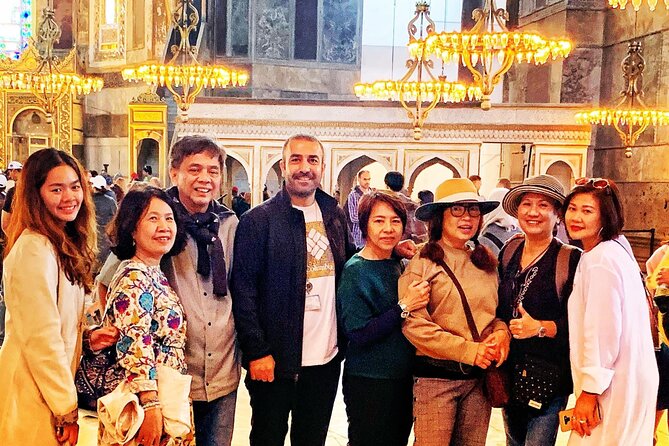
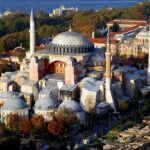
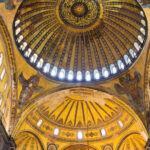
Next up is Hagia Sophia Grand Mosque. This is the one that can make people go quiet, because the scale is hard to process at street level. With pre-reserved tickets, you’re set up to enter efficiently, and the guide focuses your attention on specific artworks and architectural features.
Inside, you’ll look up at the massive dome and then shift to the visual storytelling on the walls. The tour highlights key works like the Deesis Mosaic, the Imperial Gate, and the scene of the Virgin Mary with Child. What a good guide does here is connect what you’re seeing to what those images meant to the people who commissioned and used the space.
You’ll also notice the blend of Byzantine and Ottoman layers. Hagia Sophia is one of those buildings where you can feel the change of eras just by looking at how elements were adapted rather than erased.
Important rules for Hagia Sophia:
- It’s a functioning mosque, so it can close to visitors.
- You can’t bring signs, banners, flags, or materials that represent political, ideological, or religious beliefs inside.
- Dress code rules still apply: shoulders and knees covered.
One more detail I found useful: some people said the provided audio is helpful, but the ear pieces can be fiddly. If audio matters to you, bringing your own headphones is a simple way to control the sound quality.
Stop 3: Basilica Cistern’s marble forest and Medusa heads
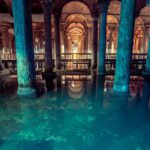
Then you descend into the Basilica Cistern, and the mood flips instantly. One moment you’re in daylight Istanbul; the next you’re in cool, quiet underground air. The cistern was built in the 6th century by Emperor Justinian, and it shows.
The big visual is the “forest” of marble columns—hundreds of vertical lines disappearing into the dim. It’s not just atmospheric; it helps you understand how infrastructure shaped the city’s daily life. You’ll hear what the cistern did for Istanbul and why it mattered historically.
The tour also points out the mysterious Medusa heads. They’re a weirdly memorable detail because you expect religion or politics above ground, not mythic sculpture reused in a water system below ground. With a guide explaining what’s going on, those heads stop being just a photo backdrop and turn into a conversation about reuse, meaning, and survival of artifacts.
Basilica Cistern is also subject to closure. If it’s closed, the tour doesn’t leave you empty-handed—it visits Şerefiye (cistern of Theodosius) or Binbirdirek (Cistern of Philoxenos) instead. That backup plan is the kind of small safeguard that can save your day.


Stop 4: Hippodrome monuments and the Byzantine civic stage
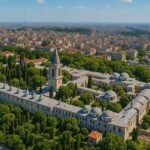
The final stop is the Hippodrome, a reminder that Istanbul wasn’t only temples and palaces. This was the center of Byzantine civic life—where crowds gathered, politics played out, and public spectacle mattered.
You’ll walk through key monuments such as:
- the Serpent Column
- the Obelisk of Theodosius
- the German Fountain, a gift connected to Kaiser Wilhelm II as a symbol of Ottoman–German friendship
I like ending here because it widens your lens. After Blue Mosque and Hagia Sophia explain religious power and architectural ambition, the Hippodrome connects to public space and civic identity. You start to see Istanbul as a machine that ran on ceremony—religious and political—above and below the surface.
Pace, group size, and comfort tips that really matter
This is a 3-hour tour for up to 20 people, so it’s not an all-day endurance slog. Still, it is walking, and the sites involve stairs and time in areas that can feel packed. Wear comfortable shoes you can stand in for a while—especially since Hagia Sophia and the cistern are cool and the walking flow can be stop-and-start.
Also, plan your day around the start time. The tour won’t wait for you to arrive late, because entry times are fixed. If you like buffer time, build it in before the meeting point so you don’t start the day stressed.
Audio is included with headsets, which is great for city noise. One practical tip from real-world experience: if the ear pieces bug you or fall out, bring your own headphones so you control comfort and sound.
Price and value: what you’re paying for at $116.43
At $116.43 per person for about 3 hours, this isn’t a budget “just tickets” deal. You’re paying for the combination of:
- guided visits across four major sites
- pre-reserved/timed entry for Hagia Sophia and Basilica Cistern
- admission tickets included at each stop
- small-group handling (max 20)
- licensed guide time, plus headsets
For me, that bundle is the value. Istanbul’s biggest landmarks eat up attention and time; a good guide helps you use the time you’re already spending in lines, entry checks, and crowds. You’re also getting context on Ottoman and Byzantine history, not just a checklist of what to photograph.
If you’re the type who wants to wander independently and read quietly on your own, you could DIY parts of this. But if you want the fastest route to “I get what I’m looking at,” this price starts to make sense.
Who should book this tour
This fits best if you:
- want the main Istanbul sights in one organized circuit
- like historical context and art interpretation tied to what you see
- prefer a small group (max 20) and better audio with headsets
- are okay following mosque dress rules and headscarf requirements
It may not fit as well if you:
- need a highly flexible schedule, since timed entry and potential mosque closures can affect the day
- dislike rules and want to show up late without consequences (this tour doesn’t do that)
Age note: children under 7 aren’t permitted on this tour, and skip-the-line style access is adult-only.
Should you book this Blue Mosque, Hagia Sophia, and Cistern tour?
I’d book it if your priority is getting real context at the top sights without turning the day into a logistics puzzle. The timed ticket plan plus guided interpretation is what makes it worth it, especially for Hagia Sophia, where the details are easy to miss if you’re not pointed toward the right mosaics and architectural features.
If you’re booking, do the boring prep:
- bring a headscarf if needed and plan shoulder/knee coverage
- show up 15 minutes early so you’re there for timed entry
- wear shoes that handle walking and stairs without drama
- if audio matters, consider bringing your own headphones
If you want a day that feels organized, thoughtful, and efficient, this is a strong choice.
FAQ
What sites are included on the tour?
You’ll visit the Blue Mosque, Hagia Sophia Grand Mosque, Basilica Cistern, and the Hippodrome.
How long is the tour?
The duration is about 3 hours.
Are admission tickets included?
Yes. Admission tickets are included for the Blue Mosque, Hagia Sophia, and the Basilica Cistern.
Is the tour in English?
Yes, it’s offered in English.
Do I need to arrive early?
Yes. You must arrive at the meeting point 15 minutes before the start time due to timed entry.
What are the dress rules for the mosques?
Women need a headscarf. For both men and women, shoulders and knees must be covered. Shorts, sleeveless tops, and revealing clothing are not permitted.
What happens if Basilica Cistern is closed?
If it’s closed, the tour visits Şerefiye (cistern of Theodosius) or Binbirdirek (Cistern of Philoxenos).
Are children allowed?
Children under 7 are not permitted on this tour. Skip-the-line access is available for adults only.