REVIEW · ISTANBUL
Istanbul: Basilica Cistern Skip-the-Ticket Line Entry
Book on GetYourGuide →Operated by Istanbul Tourist Pass® · Bookable on GetYourGuide
One of Istanbul’s strangest sights is underground. Basilica Cistern feels like stepping into a flooded cathedral, where a forest of marble columns and the famous Medusa heads turn history into something you can actually see. I like that your ticket builds in skip-the-line entry and—if you choose it—a 25-language audio guide, so you can match the visit to your pace. One possible drawback: the cistern runs very humid, and water can drip from the ceiling, so bring electronic devices with care.
If you prefer a quick, low-stress visit, this fits well. It’s set for about 30 minutes, and you can go any day between 09:00 and 18:00. If you go the guided route, you’ll meet at Dsign Cafe and follow a guide holding a purple and fuchsia umbrella—handy, but it does mean you’ll be tied to specific departure times.
In This Review
- Quick hits before you go
- Entering the Basilica Cistern fast: what “skip-the-ticket-line” changes
- What you’ll actually see inside: columns, Medusa heads, and the underground “cathedral”
- The water story that makes it click: Justinian-era engineering in plain terms
- Audio guide vs guided tour: how to choose without wasting your money
- Independent entry + 25-language audio guide
- Guided tour (short group walk + explanation)
- Views, lighting, and the reality of noise: making your visit feel calm
- Price and logistics: is $62 good value for Basilica Cistern?
- Practical tips that prevent the usual “why didn’t I bring…” moments
- Who this experience suits best (and who should rethink it)
- Should you book this Basilica Cistern skip-the-ticket-line entry?
- FAQ
- What time can I visit Basilica Cistern?
- How long does the experience take?
- Does the independent entry option have a meeting point?
- Where do guided tours meet, and when should I arrive?
- What’s included with the ticket?
- Do I need internet for the audio guide?
- Do I still go through security checks?
- What do the audio guides support?
- Are there restrictions inside the cistern?
Quick hits before you go
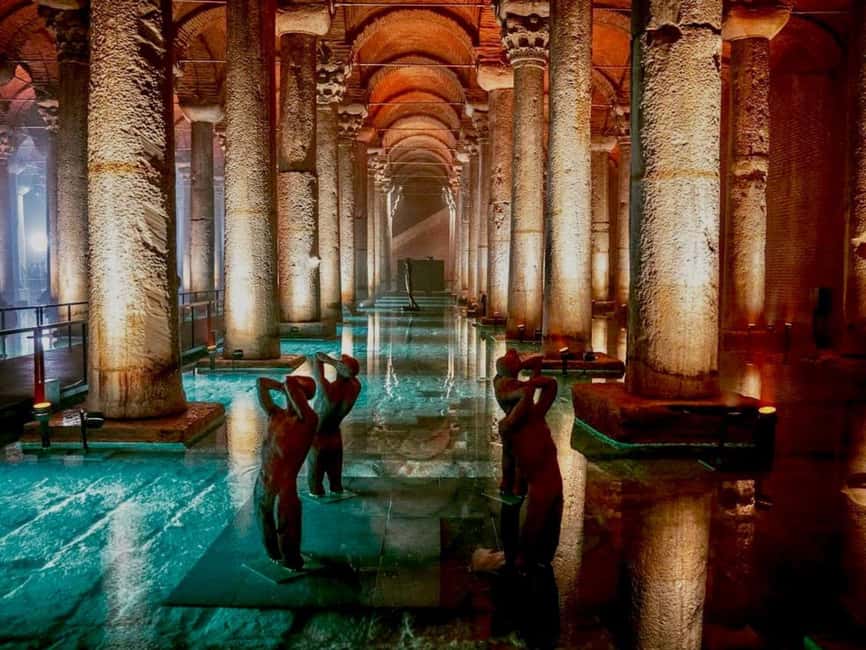
- Fifty-two stone steps lead you down into the chamber, so plan for a stair-filled start
- Medusa heads and the column forest are the visual anchors you’ll keep seeing in photos
- Built for water storage: up to 80,000 cubic meters, supplied via Justinian-era aqueducts
- Optional guided times (every day except Friday) at 10:30, 1:30, and 3:45
- Humidity up to 96% and occasional dripping: protect your phone and power bank
- Audio guide is available in 25 languages, and the first download needs internet
Entering the Basilica Cistern fast: what “skip-the-ticket-line” changes
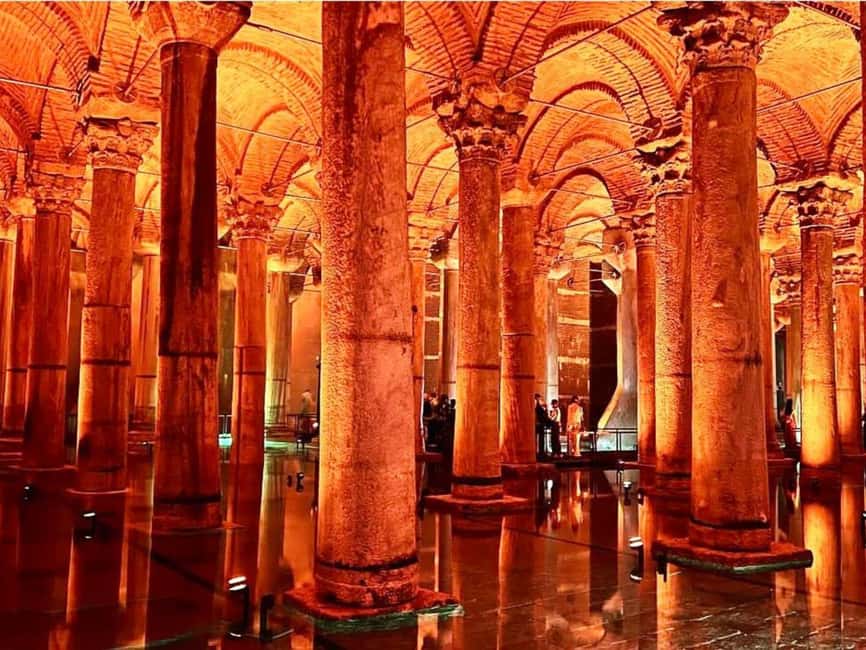
The Basilica Cistern is famous, which means lines can be long. The big value of this experience is straightforward: your entry uses a skip-the-ticket-line ticket, which helps you avoid the worst waiting in the sun. That matters because you’re not just buying access—you’re buying time and comfort.
Your visit slot is flexible by day. You can enter any day between 09:00 and 18:00, and the listed duration is 30 minutes. That half-hour window is a sweet spot for most people: long enough to see the key sights (the columns and Medusa heads), but short enough that you don’t spend the whole trip dealing with slow-moving crowds.
If you choose the independent entry option, there’s no meeting point. You simply go to the entrance and show your ticket at the gate. If you choose guided, your anchor becomes the meeting time and location: Dsign Cafe, at least 15 minutes early, and the guide will be holding a purple and fuchsia umbrella.
A few more Istanbul tours and experiences worth a look


What you’ll actually see inside: columns, Medusa heads, and the underground “cathedral”
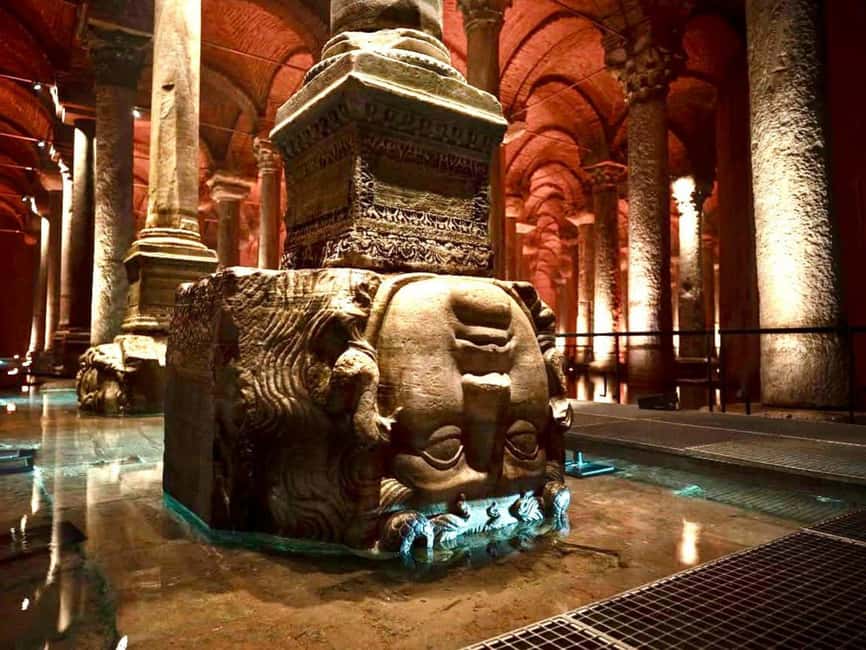
Basilica Cistern’s layout is part of the effect. You descend 52 stone steps, then you’re in a wide underground reservoir designed to store and manage water for the city. Visually, it’s like the ground opens up into a chamber that was meant to be functional—and ended up being dramatic.
Here’s what to look for as you move through:
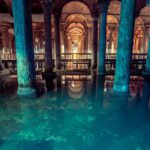
- Marble column forest: The cistern is known for its repeating lines and submerged architectural rhythm. Even when you’re just standing still, the space keeps pulling your eye forward.
- The Medusa heads: These are the headline objects. You’ll hear the story behind them through the audio guide or a live explanation. They’re inspired by Greek mythology, but the cistern turns the myth into something darker and stranger than a museum display.
- The mood: Low light, stone surfaces, and the feeling of water all around you create that “this shouldn’t exist” sensation.
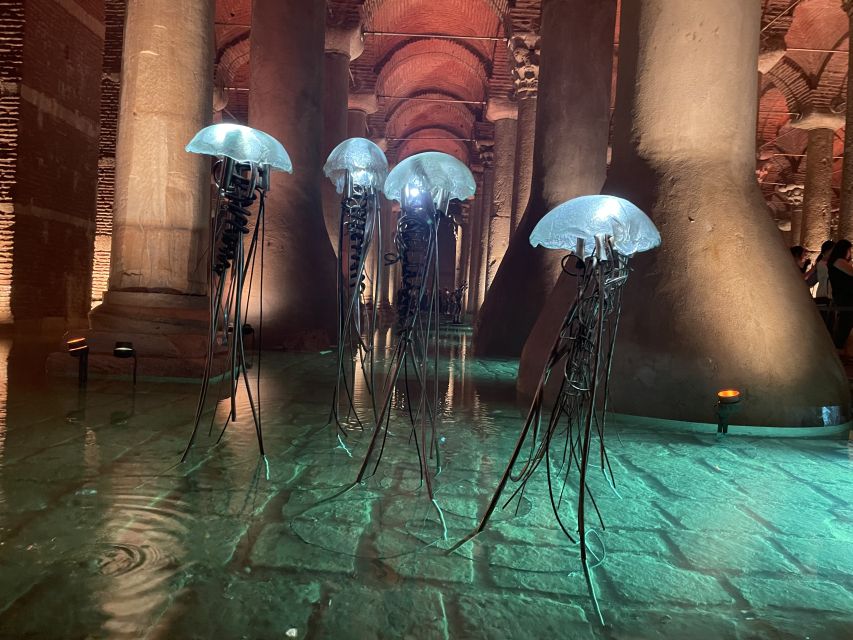
One practical thing I’d plan for: you might notice odd modern elements depending on what’s installed at the moment—lights, displays, or artworks. Those don’t erase the main experience, but if you’re going for pure Byzantine atmosphere, keep your expectations flexible.
The water story that makes it click: Justinian-era engineering in plain terms
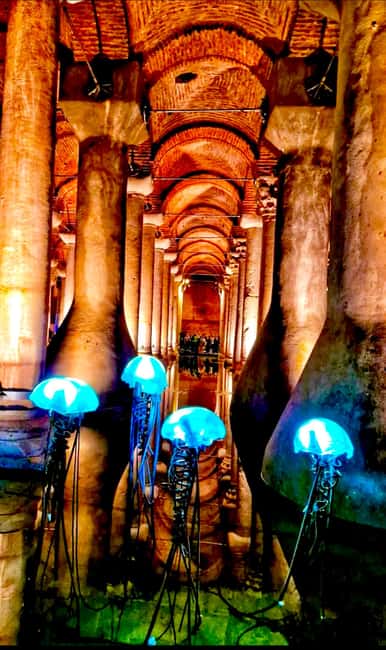
What makes Basilica Cistern more than a cool photo stop is the water engineering. This place wasn’t built to impress tourists. It was built to supply the Great Palace.
The cistern originated in the 4th century and was expanded in 532 AD during the reign of Emperor Justinian I. It functioned as a vast underground reservoir, storing up to 80,000 cubic meters of water. To move that water, the system relied on aqueducts: a network delivered water from a reservoir near the Black Sea via about 20 kilometers of aqueducts.
As you walk, you’ll hear details that connect the cistern to the wider city water system, including:
- Water coming through the Eğrikapı Water Distribution Center in the Belgrade Forest
- The Valens Aqueduct (about 971 meters)
- The Mağlova Aqueduct (about 115 meters)
There’s also a technical layer that helps the space make sense. Around the entrance area, there’s a firebrick wall about 4 meters thick, coated with waterproofing mortar. That’s the kind of detail you only appreciate once you’re standing in the damp, stone-heavy environment.
Audio guide vs guided tour: how to choose without wasting your money
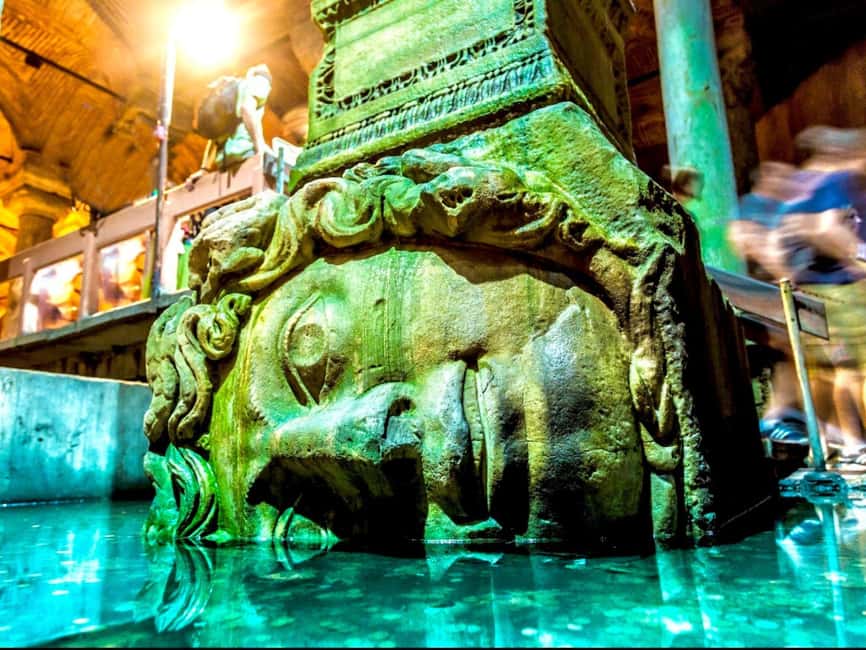
You basically have two ways to experience Basilica Cistern:
Independent entry + 25-language audio guide
This is the “go when you want” option. Your ticket includes the entry, and the audio guide in 25 languages if you select that choice.
A big practical bonus: you can control pacing. If you like reading your way through a site, you’ll do well with audio. If you’re more of a “walk and look” person, you can use the audio for context only when you want it.
But don’t leave the tech to chance. You’ll receive your ticket QR codes and an audio guide link by email from Istanbul Tourist Pass®. The cistern has no Wi‑Fi, so the first audio download needs internet. Once downloaded, it should work offline, but the first time is the make-or-break moment.




Guided tour (short group walk + explanation)
If you want someone to point out what matters and keep you from wandering aimlessly, the guided option is a good fit. Guided tours run every day except Friday with departures at 10:30 AM, 1:30 PM, and 3:45 PM.
Even with a guide, keep your head in reality: this is still a 30-minute experience. The guide’s job is to give you the “what you’re looking at and why it matters” version fast—then you continue on your own.
Based on what people consistently mention, the strongest guides tend to be clear and organized, and they handle questions well. Some guides also help you pick the best spots for photos without turning it into a long lecture.
Views, lighting, and the reality of noise: making your visit feel calm
Two things can affect your enjoyment beyond the obvious sights.
First is lighting. The cistern often uses colorful lighting that changes the feel of the columns. That can be great for photos, but it also means the place looks different hour to hour. If you’re sensitive to harsh light or you prefer darker, more natural views, plan on adjusting your expectations once you get inside.
Second is noise. The chamber is enclosed, so sound carries. School groups and busy tour moments can make it loud. If you want a quieter experience, you’ll usually do better by going earlier—especially if you’re trying to hear an audio guide clearly or you’re easily distracted by background chatter.
Also note that the cistern’s environment isn’t just “atmospheric.” It’s very humid (up to 96%), and water may drip from the ceiling. So treat electronics like you’re in a steamy greenhouse:
- Bring a small towel if you can
- Keep your phone in a sealed bag or case if you have one
- Wipe your lens before you start photographing
Price and logistics: is $62 good value for Basilica Cistern?
At $62 per person, this isn’t a bargain ticket. The value comes from what you’re paying to avoid and to gain.
You’re paying for:
- Skip-the-ticket-line entry, which can save a lot of time and help you avoid waiting in heat
- A 25-language audio guide (if selected), which adds a lot of context for a relatively short visit
This price makes the most sense if you:
- Want your time protected (you’re on a tight schedule)
- Prefer hearing the story rather than just walking past the sights
- Care about not spending your vacation hours in queues
It may feel steep if you’re the type who’s fine with arriving, joining a long line, and doing only a quick look without explanation. In that case, you’d be paying mostly for the skip and convenience.
My practical recommendation: if you’re choosing this for the full-cistern experience, you’ll usually feel the cost was fair because the total time is short and you get both entry speed and guided storytelling.
Practical tips that prevent the usual “why didn’t I bring…” moments
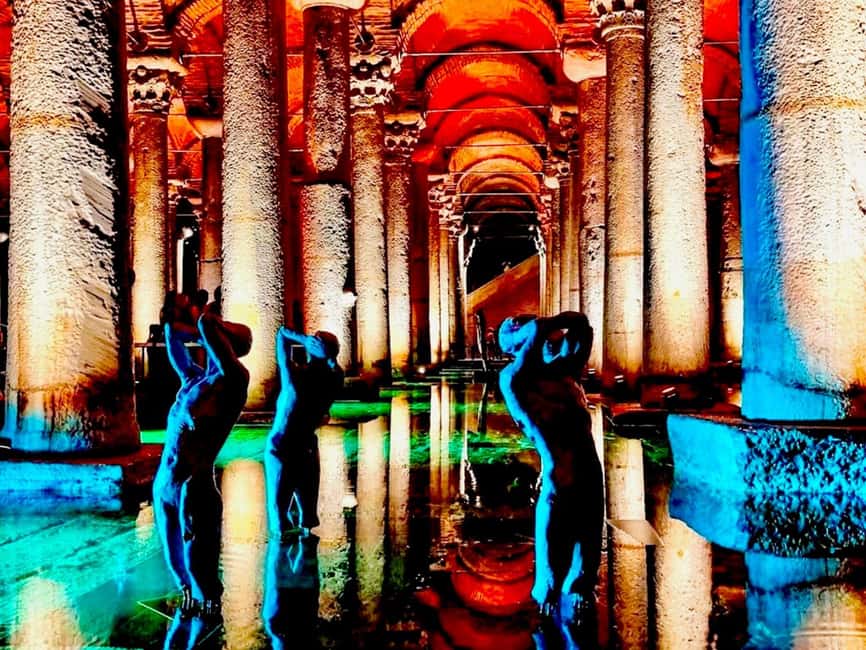
This site has a few predictable friction points. If you plan for them, the visit feels smooth.
Protect your electronics from humidity
The humidity can reach 96%, and water can drip. If you bring a phone for photos, use a protective case and avoid handling it directly under drip zones.
Download the audio before you’re stuck
Since there’s no Wi‑Fi in the cistern, the audio guide link must be downloaded the first time using internet. Download it ahead of time when you have signal.
Bring ID
You’ll need a passport or ID card.
Know the rules inside
Touching or entering the water is forbidden, and you shouldn’t remove or interact with wish coins.
Security checks still happen
Even with a skip-the-ticket-line ticket, you’ll still go through mandatory security checks. Peak hours can mean longer waits than you’d expect, but usually not the same scale as a full queue.
If you go guided, arrive early
For the guided tour, meet at Dsign Cafe at least 15 minutes early, and look for the guide with the purple and fuchsia umbrella.
Who this experience suits best (and who should rethink it)
This is a strong match if:
- You want a quick, structured visit to one of Istanbul’s most distinctive underground sites
- You enjoy architectural sights with a story behind them
- You prefer audio or a guide to turn generic sightseeing into “I get it now”
It’s less ideal if:
- You’re highly uncomfortable in dark, damp spaces
- You’re extremely sensitive to humidity or dripping water
- You don’t want to deal with tech prep for the audio download
If your priority is simply a brief look, independent entry can work well. If you want the history and engineering explained while you’re standing among the columns, guided is the better choice.
Should you book this Basilica Cistern skip-the-ticket-line entry?
Yes—if you’re aiming for smart use of time. Basilica Cistern is one of those places where short visits still feel meaningful, because the space is so visually powerful. Paying for skip-the-ticket-line entry helps you avoid the biggest tourist pain point, and the audio guide in 25 languages keeps the experience from becoming just a photo stop.
Book it especially if:
- You’re visiting during busier hours and want to reduce waiting
- You like understanding what you’re seeing while you’re there
- You can handle humid conditions and take basic precautions for your phone
If you’re on a strict budget and don’t mind potential waiting, you might be able to do it cheaper another way. But for most people, this ticket’s combination of speed, short duration, and built-in storytelling makes it feel like money well spent.
FAQ
What time can I visit Basilica Cistern?
You can enter any day between 09:00 and 18:00.
How long does the experience take?
The duration listed is 30 minutes.
Does the independent entry option have a meeting point?
No. For independent visits, you go directly to the entrance and show your ticket at the gate.
Where do guided tours meet, and when should I arrive?
Guided tours meet at Dsign Cafe. You should arrive at least 15 minutes before the scheduled start time, and the guide will be holding a purple and fuchsia umbrella.
What’s included with the ticket?
The ticket includes skip-the-ticket-line entry. If you select the audio guide option, it also includes an audio guide in 25 languages.
Do I need internet for the audio guide?
You need internet for the first download because the cistern has no Wi‑Fi. After the audio is downloaded, it can be used offline.
Do I still go through security checks?
Yes. Security checks are mandatory and not skipped with the ticket.
What do the audio guides support?
Audio guide languages include English, Arabic, Bulgarian, Chinese, Croatian, Dutch, French, German, Urdu, Greek, Hindi, Persian, Hungarian, Indonesian, Italian, Japanese, Korean, Polish, Portuguese, Romanian, Russian, Spanish, Swedish, Turkish, Ukrainian.
Are there restrictions inside the cistern?
Yes. Touching or entering the water is forbidden, and you should not remove or interact with wish coins.