Ephesus day trips live or die by logistics, and this one has a smooth rhythm. You get a private, licensed guide with entrance fees pre-paid so you spend more time seeing and less time waiting. I especially like how the order of stops makes sense for the big sights, and how flexible it feels if you want extra minutes somewhere.
My other favorite part is the mix: Ephesus ruins for the ancient-city wow, plus Virgin Mary’s House and St. John’s Basilica for the spiritual side of the region. The one drawback to consider is that the day includes a chance to shop, and if you dislike store stops (ceramics, leather, jewelry), you may want to be firm about skipping them. Also, expect a fair amount of walking and uneven surfaces at the ancient sites.
In This Review
- Key Highlights You’ll Actually Care About
- Price and Value: What $139 Really Buys You
- How the Day Starts in Kusadasi (Without the Usual Stress)
- Ephesus Ancient City: The Ruins That Still Feel Like a Real Place
- The House of the Virgin Mary: Quiet, Views, and a Different Pace
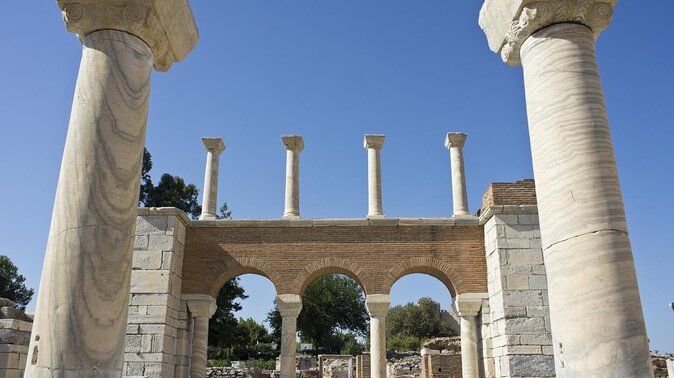
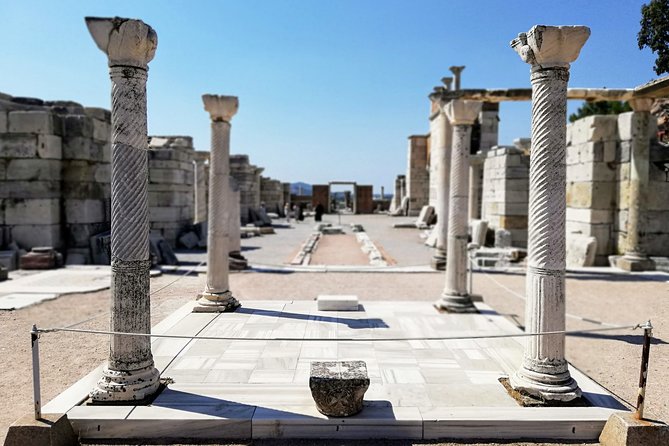
- St. John’s Basilica: Where Tradition Places His Final Years
- Artemis Temple: A Quick Stop That Still Lands
- Terrace Houses Option: Worth It, But Know the Steps
- Walking, Timing, and Photo Breaks
- Guides Matter: What You Can Learn From the Best Ones
- The Shopping Question: A Small Tradeoff You Can Control
- Should You Book This Private Ephesus + Mary + St. John Tour?
- FAQ
- FAQ
- How long is the tour?
- Where does pickup happen?
- Do you include entrance fees?
- Is this tour private?
- What language is the tour offered in?
- What stops are included?
- Do I need to pay for meals?
- Are tips included?
- Can I add Terrace Houses?
- Is the tour good for people with mobility limits?
- What’s the cancellation window?
Key Highlights You’ll Actually Care About
- Meet your guide at Kusadasi Port or your hotel with a sign showing your name
- Skip-line entry with pre-paid tickets handled by your guide
- A balanced route through Ephesus, Virgin Mary’s House, and St. John’s Basilica
- Artemis Temple as a fast, satisfying history stop before you head back
- Optional Terrace Houses if you want more depth (at an extra entrance fee)
- On-time return to the port you’re sailing from (built in)
Price and Value: What $139 Really Buys You
At $139 per person, this tour isn’t trying to compete on price alone. It competes on what’s included. Your day covers a private licensed guide, A/C private transportation, parking and facility fees, and the entrance tickets for the major sites. That package matters in Turkey because the real cost isn’t only ticket price—it’s also time. When you don’t have to scramble for admissions or stand in queues, your visit stretches farther.
The tour is also structured around cruise-day reality. You’re promised an on-time return to the port, and the guide and driver stay with you from arrival through departure. In other words, you’re not hunting down tickets while your transport waits in a traffic bottleneck.
One note: meals aren’t included, and tips for the guide and driver are not included. If you want lunch, you’ll need to plan for it during the day (the operator suggests you can find Turkish food options in Kusadasi).
You can also read our reviews of more tours and experiences in Kusadasi.


How the Day Starts in Kusadasi (Without the Usual Stress)
This is where the tour does something simple but smart. Your guide meets you either at listed hotels or at the Kusadasi Cruise Terminal. They’re there with a sign with your name, and you can be picked up at the time you prefer (your confirmation message should share the suggested pickup time).
Why I like this: it removes the worst part of shore excursions—standing around with confusion and everyone blaming everyone. With a private setup, your schedule is yours. You also don’t have to wait for a group of strangers. The tour is private, meaning it’s only your group.
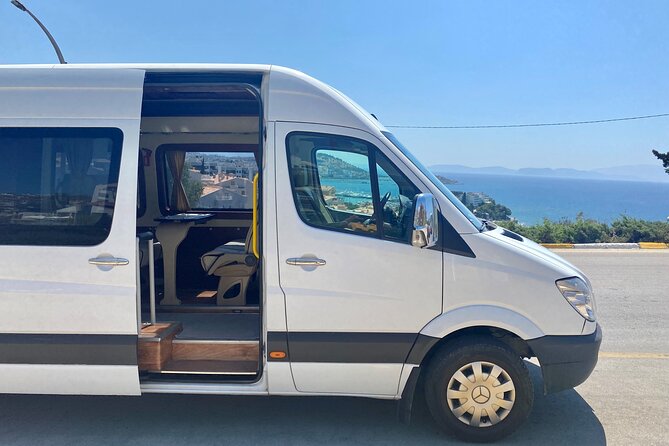
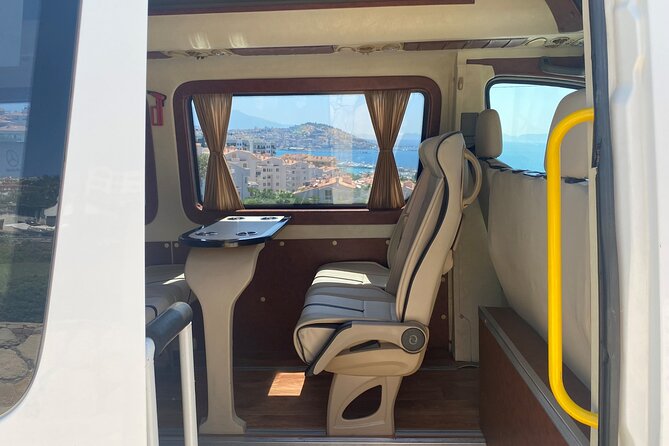
The ride itself is in an A/C vehicle, which matters because the drive to Ephesus and the surrounding hills can be hot, even in comfortable weather.
Ephesus Ancient City: The Ruins That Still Feel Like a Real Place
Ephesus is the main event. And the way this tour approaches it is practical: you don’t just “see stuff,” you walk through a city with a guide who helps you connect the dots.
You’ll spend about 2 hours in the ancient city area, moving along marble streets and past major public buildings. Key stops include:
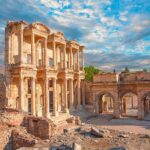
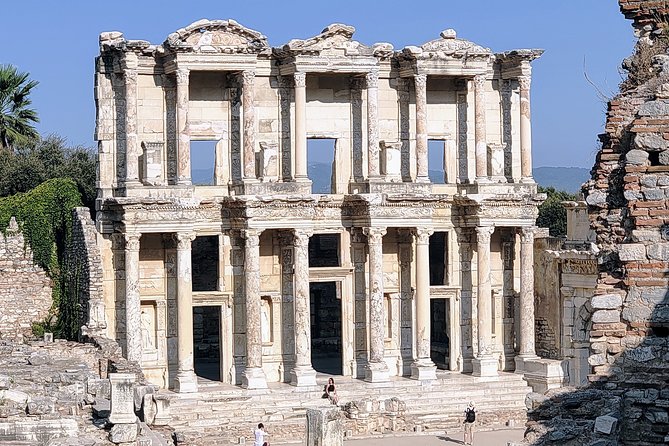
- Library of Celsus, built in the early 2nd century A.D. as a memorial, and one of the most iconic facades in the region
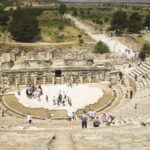
- Grand Theater, originally from the 3rd century B.C., later expanded under the Romans to seat up to 24,000 people
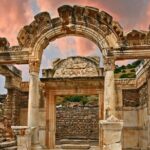
- Temple of Hadrian
- Baths of Scholastica
- More open-air ruins that help you picture daily life beyond the postcard views
Here’s what makes the visit click: your guide’s job is to help you read the site. When you understand why a building was here (instead of just what it looks like), the ruins feel less random. It also helps you avoid the common mistake of rushing because you think you already know the highlights.
Also, this is walking. The surfaces can be uneven and the ground is real stone, not a museum floor. If you have moderate mobility, plan for a steady pace and stop when you need to.
The House of the Virgin Mary: Quiet, Views, and a Different Pace
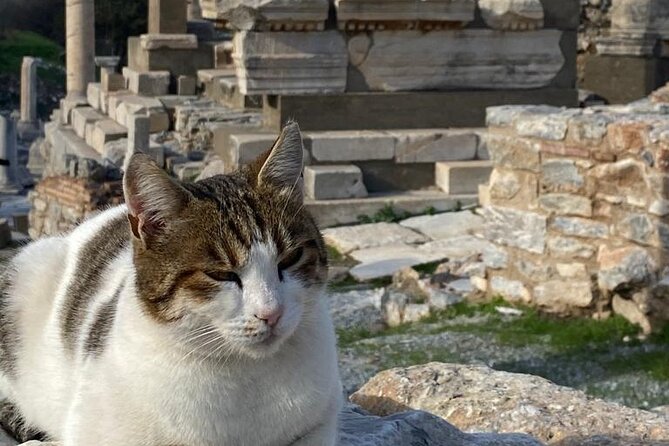
After Ephesus, you head to the House of the Virgin Mary, located on the Aladag Mountains, about 5 miles away. The visit is scheduled for about 1 hour, which is enough time to slow down and actually absorb the setting.
What makes this stop meaningful is the spiritual geography. The tour frames it with the tradition that Mary came to Ephesus with St. John and lived there until her death. It also notes key milestones: the site became a pilgrimage place after a declaration in 1892, and Pope Paul VI visited on July 26, 1967.
Even if you’re not visiting for religious reasons, the location changes your perspective. You go from the density of ruins to a simpler space with mountain air and a calmer rhythm. This is a good moment to reset before you head to another major religious site.
St. John’s Basilica: Where Tradition Places His Final Years
Next is the Basilica of St. John, with about 45 minutes on the schedule. The tour explains that tradition places St. John’s last years around Ephesus and his burial in the southern slope of Ayosolug Hill.
This stop is shorter than Ephesus but emotionally different. Instead of street-level ruins and theatrical scale, you’re in a more focused setting. If you like to connect local sites to wider religious history, it helps to listen for your guide’s framing of why this location became important in the first place.
Practical consideration: weather can affect what you’re able to see comfortably. One past experience noted that heavy rain limited what could be seen at this basilica. If rain is possible during your travel window, consider bringing a compact umbrella or rain layer so you can still move at a comfortable pace.




Artemis Temple: A Quick Stop That Still Lands
You wrap up with the Temple of Artemis. The schedule gives this about 15 minutes, and that time is intentional. Artemis is huge in story even when the surviving remnants are smaller than the imagination in your head.
The tour frames the temple as once part of the seven wonders of the ancient world, so even a short visit can feel satisfying if you come with the right expectation: this is a site where context matters as much as the stones you can still see.
If you’re the type who enjoys photos with a clear “history backdrop,” this stop gives you that. If you want a long, detailed archaeology session, you may wish the route spent more time here—but the tradeoff is you get more time at Ephesus and the Mary and John sites.
Terrace Houses Option: Worth It, But Know the Steps
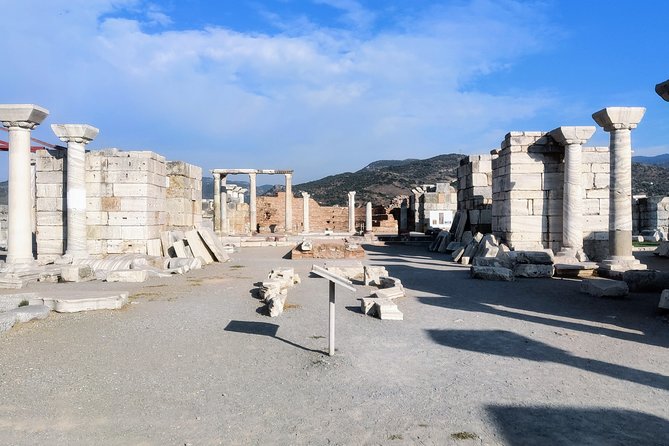
There’s an optional add-on: you can include the Terrace Houses by paying the entrance fee. You get that flexibility during the day, which I really like because you can choose based on energy.
The big heads-up is physical. One experience noted that Terrace Houses involve a lot of steps, so it can be tiring if you’re already feeling the walk at Ephesus. If you’re comfortable with stairs and want extra depth into daily life of elite residents, it can be a great choice.
If stairs are a concern, you might prefer sticking to the main highlights where the walking is still substantial but the terrain is typically more straightforward.
Walking, Timing, and Photo Breaks
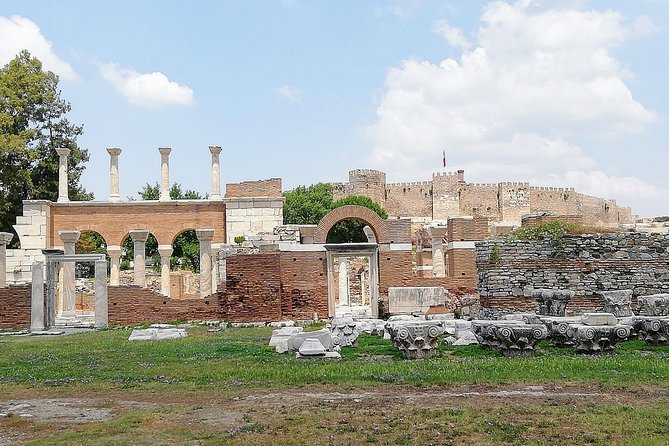
This tour runs about 5 to 7 hours. The exact length depends on how long you want at each stop and the pace you set with your guide. You also have room to make small changes to the order or timing, and you can spend more time where you care most.
Your guide also creates time for photos. You’ll have chances for pictures during the day, which is important because Ephesus is a place where the best photos happen when you slow down, not when you sprint.
Fitness note: the tour is best with moderate physical fitness. That doesn’t mean you need to be a marathoner. It means you should be ready for walking, stairs in places, and standing for short stretches while you take in the sites.
Guides Matter: What You Can Learn From the Best Ones
The operator’s strength shows up in the guides’ approach—especially around pacing and explaining what you’re looking at. Names that have come up include:
- Ozlem, praised for steering around lines and busy spots and sharing lots of stories
- Selda, noted for being patient and accommodating and moving at the group’s pace
- Nilgun Boz, described as very engaged and actively managing wait times
- Gonca, highlighted for making the day feel stress-free and informative
- Zey, recognized for finding the group quickly at the pier and starting early to beat crowds
- Melih and Nejdet, mentioned for detailed historical guidance
You won’t always have the same guide, of course. But you can take this as a sign of what you should expect: a guide who can turn monuments into understanding, and who thinks about timing so your day doesn’t feel like a constant scramble.
The Shopping Question: A Small Tradeoff You Can Control
One caution based on real experiences: the day can include a mild push toward shopping, including ceramic, leather, and jewelry stores. It’s not necessarily the center of the tour, but it’s present.
If you’re not interested, you can still enjoy the day. Just be clear with your guide about what you want. You don’t have to treat it like a must-do. Your time in Ephesus and the religious sites is what will make or break the day.
Should You Book This Private Ephesus + Mary + St. John Tour?
I think this is a strong pick if you want a single-day plan that hits the big Ephesus icons plus two of the region’s major Christian sites. It’s especially appealing if you care about:
- Less waiting thanks to pre-paid admissions
- A guide who connects the history to what you’re seeing
- A private pace, not a forced group march
- A day that ends with a reliable return to the port
You might want a different approach if you:
- Dislike store stops and want a strictly ruins-and-churches itinerary
- Have trouble with hills, uneven surfaces, or stair-heavy attractions like Terrace Houses
If you fit the first group, booking makes sense. This is one of those days where the value isn’t only what you get—it’s also how smoothly it runs.
FAQ
FAQ
How long is the tour?
The tour runs about 5 to 7 hours.
Where does pickup happen?
Pickup is available from listed hotels and the Kusadasi Cruise Terminal for cruise guests.
Do you include entrance fees?
Yes. Entrance fees are included, and your guide has pre-paid tickets to help you skip lines.
Is this tour private?
Yes. It’s a private tour, with only your group participating.
What language is the tour offered in?
The tour is offered in English.
What stops are included?
The main stops are Ephesus Ancient City, House of the Virgin Mary, Basilica of St. John, and a stop at Temple of Artemis (plus a drop-off in Kusadasi at the end).
Do I need to pay for meals?
Meals are not included. If you want lunch, you’ll need to arrange it during the day.
Are tips included?
No. Tips to your guide and driver are not included.
Can I add Terrace Houses?
Yes, you can add Terrace Houses by paying the entrance fee.
Is the tour good for people with mobility limits?
It’s best for travelers with moderate physical fitness.
What’s the cancellation window?
Cancellation is free up to 24 hours in advance for a full refund. If you cancel less than 24 hours before, the amount paid is not refunded.