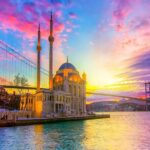
Blue domes start the day right. This half-day tour strings together Sultanahmet and Hagia Sophia with clear guidance on what you’re actually seeing—spiritual space, political power, and layered architecture. You’ll move efficiently with pickup, a small group feel, and quick stop times that keep the pace manageable.
What I like most is how the guide turns monuments into stories you can hold onto. You get tickets included for the Blue Mosque and the Hippodrome area, and the pacing gives you time to look closely instead of racing through. Also, the tour caps at 35 people, which usually means better flow inside big sites.
One consideration: the Hagia Sophia admission is extra (30 Euro per person) and that stop can feel loud, crowded, and strict with security. On a cold, snowy day, even one good experience still required some patience, especially around access and staff checks.
In This Review
- Key points before you go
- Afternoon Istanbul: how this half-day fits your schedule
- Stop 1: Blue Mosque, 45 minutes that actually works
- Stop 2: Hagia Sophia Grand Mosque—mosaics, mihrab, and upper views
- Stop 3 and 4: Sultanahmet Square and the Hippodrome—obelisk drama, explained
- What you’re really paying for: price and value
- Timing, group size, and the reality of crowds
- Comfort, security, and accessibility: plan for the strict parts
- Who this tour suits best (and who should skip it)
- Should you book this half-day Sultanahmet and Hagia Sophia tour?
- FAQ
- What’s the total price of the tour?
- How long is the tour?
- What time does the tour start?
- Do I get pickup and drop-off?
- Are tickets included for all the stops?
- What language is the tour guide?
- Is this a large group tour?
- Do I need a printed ticket?
- Where does the tour start and end?
- Is free cancellation available?
Key points before you go
- Pickup + drop-off in an air-conditioned vehicle so you’re not herding yourself across Sultanahmet
- Blue Mosque ticket included as part of the stop time (45 minutes)
- Hagia Sophia guided visit with specific highlights like the Emperor’s Door, mihrab, upper galleries, and courtyard time
- Hippodrome landmarks included: Obelisk of Theodosius, Serpent Column, and the Walled Obelisk
- Max 35 people keeps the group easier to manage in tight interiors
Afternoon Istanbul: how this half-day fits your schedule
This tour is built for your afternoon, starting at 12:00 pm and running about 4 to 5 hours. That timing is nice when you want big-ticket sights without consuming your whole day. It also lets you see how light and activity change across Sultanahmet—useful when you’re planning later photos or museum time.
You meet in Sultanahmet, Alemdar (34110 Fatih, Istanbul), and the guide waits in front of the Sultanahmet Mosque with a flag. That sounds simple, but it matters in a neighborhood packed with entrances, street corners, and signs. The closer you can stay to the landmarks, the less time you burn figuring out where to line up.
The tour also uses a mobile ticket, which cuts down on fumbling with paper. Add pickup and drop-off, and you’re basically trading your own navigation headaches for a guided route with comfort built in. The vehicle is air-conditioned, which is a real win in hot months and still helpful on windy afternoons when you don’t want to linger in transit.
You can also read our reviews of more tours and experiences in Istanbul.

Stop 1: Blue Mosque, 45 minutes that actually works
Your first main stop is the Blue Mosque (Sultanahmet Mosque). The tour frames this place as more than a famous photo spot. You’ll get a deeper look at its cultural, spiritual, and architectural meaning, with guidance meant to help you connect the dots while you’re standing there.
Forty-five minutes inside a major mosque sounds short, but it’s a smart duration for this style of tour. It’s long enough to understand the design language and still short enough that you aren’t exhausted before you reach Hagia Sophia. When a guide gives you the “what to notice” points, that time turns into clarity instead of just standing in a line.
One practical upside: the Blue Mosque admission ticket is included. So you can focus on the experience instead of hunting down ticket counters while you’re already managing clothing rules and security checks.
What to do with your time here:
- Look for details that your guide points out, not only the big silhouette.
- Slow down for a few breaths. The point is to register the architecture, not just capture it.
- If you’re visiting during busy prayer moments, stay flexible. Mosques run on real routines, not tour clocks.
Stop 2: Hagia Sophia Grand Mosque—mosaics, mihrab, and upper views
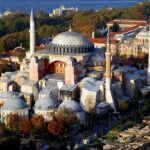
Next up is Hagia Sophia Grand Mosque, and this is the heavyweight stop. The tour promises a guided walkthrough that starts with the exterior impact—towering minarets and the huge dome—then moves inside to explain why this building matters across eras.
Inside is where your brain gets rewarded. You’ll see the blend of Byzantine Christian mosaics alongside Islamic calligraphy and Ottoman design elements. That mix can feel abstract if you’re just reading plaques, so having a guide connect what you see to the building’s transformations is the whole point.
Specific highlights you’ll cover:
- Byzantine mosaics with images of Christ and the Virgin Mary
- Islamic calligraphy integrated into the visual program
- The shift from cathedral to mosque, explained in plain language
- Emperor’s Door as a standout historical feature
- The mihrab, which helps you orient the space for prayer
- The engineering story behind the dome, including why it’s so impressive structurally
There’s also time for views from the upper galleries. Getting up there matters because the mosaics can look different when you change your angle. You’re not just seeing more—you’re seeing the same message with different perspective. The tour also includes a stop in the courtyard for a quieter reset.
Important money note: the Hagia Sophia ticket is not included. It’s listed as 30 Euro per person. This can be a surprise if you skim the price and assume all entrances are covered. I treat it as a simple add-on budget item, the way you’d plan for a major museum ticket.
Also plan for your senses. Hagia Sophia can feel noisy and crowded, especially at peak hours. That’s not a reason to skip it—it’s just a reason to stay calm and let the guide steer you to the moments that still land.
One more thing: if your timing hits prayer time, the tour notes you can experience the call to prayer. Even if you’re not there for religion, it changes the atmosphere fast. It makes the building feel alive, not just historic.
Stop 3 and 4: Sultanahmet Square and the Hippodrome—obelisk drama, explained
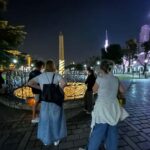
After Hagia Sophia, you step into a different kind of history at Sultanahmet Square, tied to the Hippodrome of Istanbul. Here the focus shifts from sacred space to public spectacle—chariot races, ceremonies, and imperial power played out in an open arena.
The tour includes a look at key monuments from that era:
- Obelisk of Theodosius
- Serpent Column
- Walled Obelisk
These aren’t random stones. Your guide’s job here is to connect them to what the Hippodrome meant: a public stage where politics and entertainment mixed. If you walk through only as a tourist, the Hippodrome can feel like an open area with interesting leftovers. With guidance, it becomes a sense of place: where crowds gathered, where rulers showed off, where events echoed through the empire.
A smart aspect of this stop is how the tour connects the Hippodrome area with the nearby monuments—linking the big religious buildings around you to the older Byzantine setting. In a neighborhood like Sultanahmet, everything is stacked on top of everything else. The tour helps you read that layering instead of bumping into it.
Time here is again around 45 minutes, which is enough for three landmarks plus the “why it matters” explanation. It’s also a good buffer after Hagia Sophia’s interior intensity. You’re outdoors, your feet get a chance to reset, and you can look across the square with less pressure.
What you’re really paying for: price and value
The tour price is $71.01 per person, and the structure matters. For that money, you’re getting:
- Guide
- Air-conditioned vehicle
- Pick-up and drop-off
- Blue Mosque admission included
- Sultanahmet Square/Hippodrome admission included
- Mobile ticket
The Hagia Sophia ticket is the one entrance that’s not included, at 30 Euro per person. So the real total you should plan for is your tour price plus that additional Hagia Sophia admission.
Is it good value? For me, yes, because you’re buying three things that are hard to replicate on your own:
- Time savings with organized entry (especially in a busy zone).
- Interpretation, not just sightseeing—particularly at Hagia Sophia, where the art and symbolism are the main event.
- Logistics ease, with pickup/drop-off and a guide who keeps the day on track.
Where I’d adjust expectations: this is not a slow, lingering art-study course. It’s a well-paced half-day. If you want to spend hours in the galleries, you may want to add extra time on your own after the tour.




Timing, group size, and the reality of crowds
The tour size is capped at 35 people. That’s not tiny, but it’s not overwhelming either. In places like Hagia Sophia, the building layout still creates crowd compression, so group size helps, but it can’t remove lines or security checks.
Because this tour runs from midday into early afternoon, expect the energy to build. You can also hit prayer-related moments. The tour mentions that Hagia Sophia may include the call to prayer if your visit overlaps with prayer time. When that happens, don’t plan to “rush it.” Treat it as part of the experience.
Weather matters too. Istanbul weather can turn without warning. On a cold day with snow and sleet, one guide named Hamza handled the situation with practical care. My group needed warmth, so he took them to a restaurant to warm up and then got everyone back to the meeting area on public transport at his own expense. That kind of calm, human problem-solving is rare—and it’s exactly what you hope for from a guide on a rough day.
Still, keep your own plan simple:
- Dress in layers.
- Bring something warm for later.
- Don’t schedule something strict right after this tour.
Comfort, security, and accessibility: plan for the strict parts
A heads-up that’s worth taking seriously: major religious sites run security checks, and staff decisions can feel abrupt. In one instance, a wheelchair used by a visitor led to awkward adjustments, with the visitor being asked to move because staff felt the wheelchair was not clean. The takeaway isn’t to panic—it’s to be prepared.
If you use mobility equipment:
- Keep items as clean as possible before arrival.
- Be patient with staff who may request changes quickly.
- Ask your guide early about the safest way to navigate inside.
Also, Hagia Sophia can be noisy and disorganized when crowds surge. That doesn’t mean the visit fails; it means you should let the guide lead you to the right spots at the right time instead of chasing your own route.
Who this tour suits best (and who should skip it)
This tour fits best if you want:
- A guided way to connect Blue Mosque + Hagia Sophia + Hippodrome in one afternoon
- Clear explanation of what you’re seeing, especially at Hagia Sophia
- A pace that doesn’t eat your entire day
It’s not ideal if:
- You want to read every detail without time pressure
- You’re sensitive to noise and tight crowd movement inside major monuments
- You’re only interested in one site and would rather spend more time there independently
For many first-timers, though, this is a smart way to get oriented in Sultanahmet. You’ll learn the “why” behind the buildings, not just the “where.”
Should you book this half-day Sultanahmet and Hagia Sophia tour?
I’d book it if you want a guided afternoon that covers the core Sultanahmet highlights without chaos. The tour does a good job of balancing sacred art (Hagia Sophia), architectural meaning (Blue Mosque), and imperial-era public life (the Hippodrome). With pickup/drop-off, a small-ish group, and tickets handled for two of the major stops, it’s practical for people who don’t want to wrestle with logistics.
I’d think twice if Hagia Sophia is your only priority and you hate crowds or strict security. In that case, you might prefer a more flexible plan where you can control timing and linger where you want. But if you’re okay with the realities of these famous sites, this tour is a solid use of a half-day—and your guide’s explanations are the part that will stick with you after you leave.
FAQ
What’s the total price of the tour?
The tour costs $71.01 per person. The Hagia Sophia admission is not included and is listed as 30 Euro per person.
How long is the tour?
It lasts about 4 to 5 hours.
What time does the tour start?
The start time is 12:00 pm.
Do I get pickup and drop-off?
Yes. Pick up and drop off are included, and the guide meets you in front of the Sultanahmet Mosque with a flag.
Are tickets included for all the stops?
No. Blue Mosque and the Sultanahmet Square/Hippodrome area include admission tickets. Hagia Sophia ticket is not included.
What language is the tour guide?
The tour is offered in English.
Is this a large group tour?
It has a maximum group size of 35 travelers.
Do I need a printed ticket?
No. The tour includes a mobile ticket.
Where does the tour start and end?
It starts at Sultanahmet, Alemdar, 34110 Fatih/İstanbul and ends back at the same meeting point.
Is free cancellation available?
Yes. Free cancellation is available if you cancel at least 24 hours before the start time for a full refund.